v2.webp)
- The Avenue of Mausoleums — a narrow, stepped street lined with dozens of tightly packed tomb chambers that feels like walking through a three-dimensional history book; the procession of portals and domes creates a unique, rhythmic architectural experience you won’t find in many other sites.
- Tomb of Kusam ibn Abbas (Shah-i-Zinda) — the complex’s spiritual heart: believed to be the burial place of a cousin of the Prophet, it’s an active pilgrimage site with candles and offerings, which gives the place a living cultural atmosphere beyond its monuments.
— the rich, luminous tiles (turquoise, cobalt, gold) are a showcase of Timurid-era glazing and mosaic techniques; the color and patterning are the visual reason people travel half a world to see this courtyard. - Masterful domes and portals — many mausoleums have exquisitely tiled domes, muqarnas cornices and ornately framed entrances; up close the geometry and layering of tiles reveal craftsmanship that’s surprisingly tactile and intimate.
- Architectural timeline in one spot — Shah-i-Zinda preserves work from the 11th through the 15th century (and restorations beyond), so you can literally read changes in style, technique and materials as you walk the complex.
- Intricate decorative details — carved wooden ceilings, stucco patterns, inlaid marble and calligraphic inscriptions reward slow looking; these micro-details are where the site’s artistry really shows itself to patient visitors.
- Hillside setting and views — the necropolis climbs a slope, so between mausoleums you get framed views over Samarkand’s plain and a peaceful sense of elevation that contrasts with the crowded ornamentation below.
Spotted a mistake or missing something? Contact us.

A City Tour Of Samarkand: The Pearl Of The East

Private Samarkand City Tour With Transportation

Guide / excursion service in Samarkand

Samarkand: Historical Monuments Group Walking Tour

Samarkand City Highlights Guided Walking Tour

Samarkand City Tour: Registan, Bibi-Khanym & Shah-i-Zinda

Samarkand City Tour with a Professional Photographer

Samarkand City Tour

Uzbekistan in 7 days Tashkent Samarkand Bukhara and Khiva



 Best Backpacking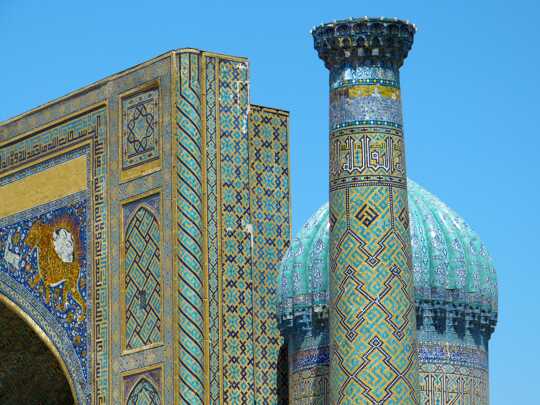
.jpg) Hi, I’m Johan (Netherlands 🇳🇱), the creator of TakeYourBackpack. Over the past decade, I’ve backpacked through 80+ countries across six continents, gaining extensive experience with independent travel, long-term trips, and overland routes.
Hi, I’m Johan (Netherlands 🇳🇱), the creator of TakeYourBackpack. Over the past decade, I’ve backpacked through 80+ countries across six continents, gaining extensive experience with independent travel, long-term trips, and overland routes.