×

Uzbekistan🇺🇿 | festivalsStihia Festivaldesert venue, electronic sets, immersive visuals | things to do and best time to go

Explore Silk and Spices FestivalExplore Boysun Bahori

Backpacking in Stihia
👍 Recommendedfestival ranked #7
By Johan Kruseman 🇳🇱 | Updated October 15, 2026

Sleeping steps from the dance floor saves you the nightly taxi hunt, which is the biggest practical win at Stihia. The festival sits in the Kyzylkum desert around Aydarkul lake, in the Navoi region, northeast of the town of Nurata. Expect techno, house and ambient sets under open sky, a crowd of Uzbek and Russian-speaking ravers with a growing international contingent, and a camp mood that stays friendly instead of loud. Costs creep up in three places: last-minute rides from Samarkand or Bukhara, cash-only extras, and food bought on site. Book transport early, carry soum, and bring snacks and a refillable bottle. Delays happen on desert roads, so never schedule a flight the same night you leave. Before going, pack a scarf and sunscreen for the sun and the sand.

Discover everything you want to know in the 📖 Uzbekistan Travel Guide.


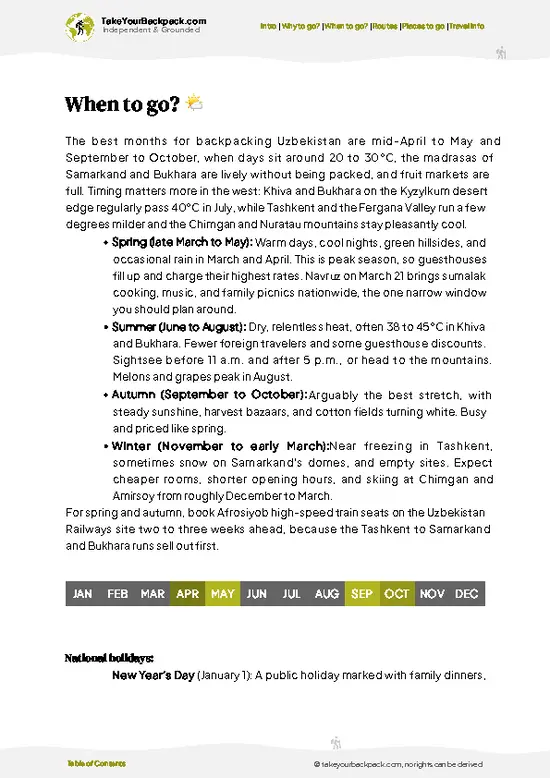
example page 0 from our offline Travel Guide for Uzbekistan
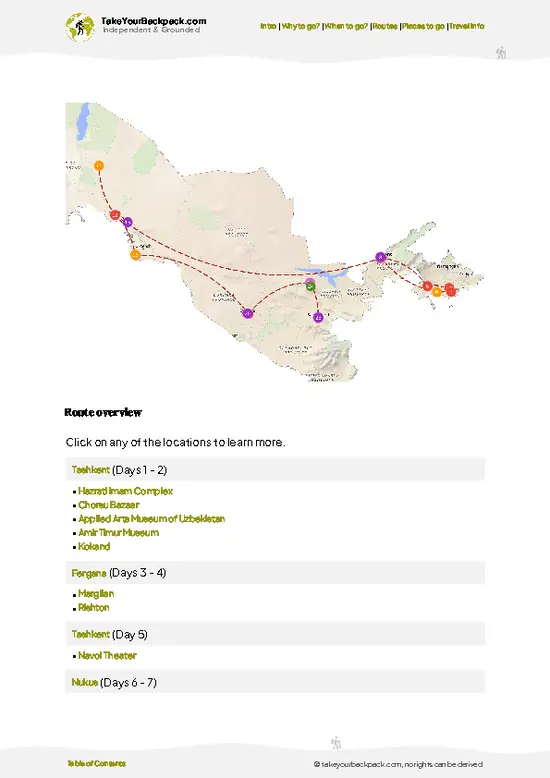
example page 1 from our offline Travel Guide for Uzbekistan
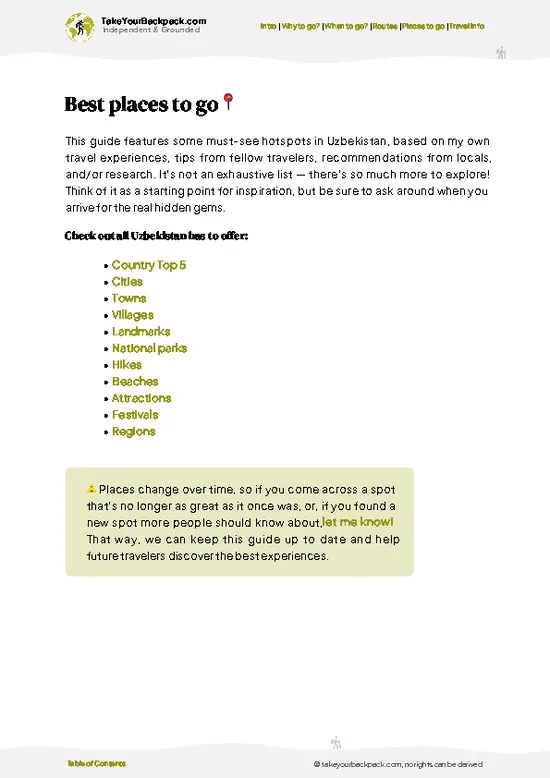
example page 2 from our offline Travel Guide for Uzbekistan
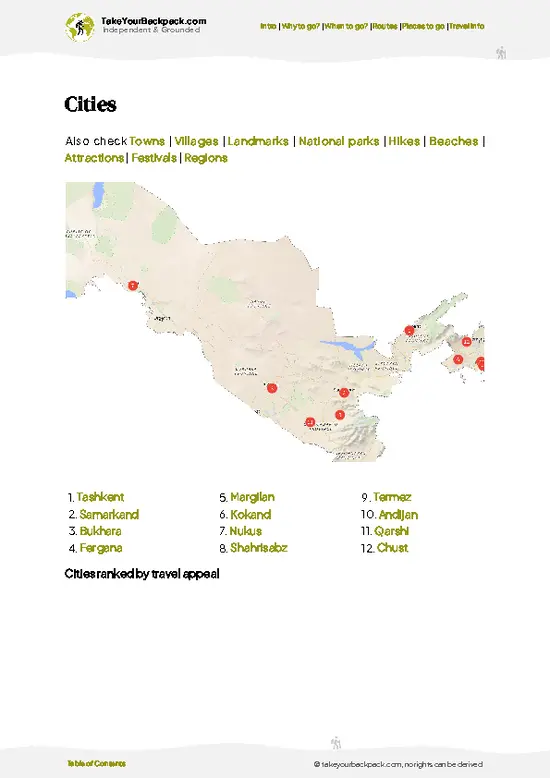
example page 3 from our offline Travel Guide for Uzbekistan
example page 4 from our offline Travel Guide for Uzbekistan
example page 5 from our offline Travel Guide for Uzbekistan
example page 6 from our offline Travel Guide for Uzbekistan
example page 7 from our offline Travel Guide for Uzbekistan
Loading the map 🌍
CLICK TO FILTER
cities
towns
villages
landmarks
national parks
hikes
beaches
attractions
festivals
regions
SHOW COUNTRY’S BESTSHOW ALL

✨ Why go?
Ranked #7 festival in Uzbekistan
What sets this place apart

Backpackers build a Silk Road loop around Stihia because it drops a proper dance weekend into the middle of a route that otherwise runs on mosques and madrasas. Registan in Samarkand and the old center of Bukhara are both within reach, so the festival becomes a hinge between two heritage legs instead of a detour. The setting does the rest: Aydarkul lake in the Kyzylkum desert gives you a swim in salty water by day and a sound system by night, a combination you will not find at a European field festival. The crowd is small enough that you end up sharing a yurt tea or a ride back with people you met on the dance floor, and many are locals happy to explain the country. Compared with big festivals in Europe, the setting is far more unusual, and a night here often becomes the story you tell about all of Central Asia.

💡 HighlightsMust-see experiences and standout moments

  1. Dance floor above Aydarkul lake: The main stage looks out over the huge desert lake, and the sets run from dusk into the pale hours of morning. Dancing with water on one side and dunes on the other is the reason people come.
  2. Sunrise sets in the Kyzylkum: When the sky turns from black to orange over the sand, the music usually slows into something warmer. Bring a layer, because desert nights get properly cold before the sun clears the horizon.
  3. Yurt camps on the shore: Many guests sleep in felt yurts instead of tents. Rugs, low beds and the smell of woodsmoke make rest between sets feel part of the trip rather than a chore.
  4. Swimming in Aydarkul: The lake is salty enough to float easily, and it is the best way to recover from a night of dancing. Afternoons here mean slow floating, shared melon and
… read more 👉
  1. Dance floor above Aydarkul lake: The main stage looks out over the huge desert lake, and the sets run from dusk into the pale hours of morning. Dancing with water on one side and dunes on the other is the reason people come.
  2. Sunrise sets in the Kyzylkum: When the sky turns from black to orange over the sand, the music usually slows into something warmer. Bring a layer, because desert nights get properly cold before the sun clears the horizon.
  3. Yurt camps on the shore: Many guests sleep in felt yurts instead of tents. Rugs, low beds and the smell of woodsmoke make rest between sets feel part of the trip rather than a chore.
  4. Swimming in Aydarkul: The lake is salty enough to float easily, and it is the best way to recover from a night of dancing. Afternoons here mean slow floating, shared melon and a quiet sound check in the background.
  5. Chashma spring and the Nurata ruins: Near the town of Nurata, the Chashma spring with its sacred fish and a mosque beside it makes a calm morning stop. Above the town stand the earthen ruins of an old fortress tied to Alexander the Great, with a view across the valley.
Skip the fortress ruins if time is short, because the lake and the spring give you more for the same hour.
Spotted a mistake or missing something? Contact us.

Things to do near Stihia Festival

Ratings based on Tripadvisor reviews. When you book through this link, you support our work at no extra cost to you.

🌤️ When to go?When is the celebration of Stihia Festival?

Stihia is held in late spring or early summer (recent editions have run in May and June) over a long weekend, usually three to four days, on the desert shores of Aydarkul Lake near Nurota, in Navoiy region, a few hours from Bukhara and Samarkand. Exact dates change each year.
  • Best day: Friday evening gives you the opening sets with room to move, while the main Saturday night has the biggest headliners and the thickest crowd.
  • Weather: Days reach roughly 30 to 38°C (86 to 100°F), nights drop to about 15 to 22°C (59 to 72°F), and rain is rare. Bring a wide-brim hat, sunscreen, a liter-plus water bottle, a scarf for dust and a warm layer for dawn.
  • Booking: Buy tickets and secure a bed or tent spot two to three months ahead. Nearby rooms and transfers can cost 30 to 60 percent more on festival weekends.
… read more 👉
Stihia is held in late spring or early summer (recent editions have run in May and June) over a long weekend, usually three to four days, on the desert shores of Aydarkul Lake near Nurota, in Navoiy region, a few hours from Bukhara and Samarkand. Exact dates change each year.
  • Best day: Friday evening gives you the opening sets with room to move, while the main Saturday night has the biggest headliners and the thickest crowd.
  • Weather: Days reach roughly 30 to 38°C (86 to 100°F), nights drop to about 15 to 22°C (59 to 72°F), and rain is rare. Bring a wide-brim hat, sunscreen, a liter-plus water bottle, a scarf for dust and a warm layer for dawn.
  • Booking: Buy tickets and secure a bed or tent spot two to three months ahead. Nearby rooms and transfers can cost 30 to 60 percent more on festival weekends.
  • Travel: Leave Bukhara or Samarkand by mid-morning on day one, and depart Monday morning, because Sunday evening roads and shared taxis fill fast.
Arrive before sunset on the first day so you can pitch in daylight.


source: climatestotravel.comJANJanuary: not recommended for travelingFEBFebruary: not recommended for travelingMARMarch: not recommended for travelingAPRApril: not recommended for travelingMAYMay: excellent for travelingJUNJune: not recommended for travelingJULJuly: not recommended for travelingAUGAugust: not recommended for travelingSEPSeptember: not recommended for travelingOCTOctober: not recommended for travelingNOVNovember: not recommended for travelingDECDecember: not recommended for traveling

✈️ The backpacker research shortcutUzbekistan Travel Guide

An offline-friendly backpacking guide with optimized travel routes, ranked highlights, transport advice, and the best areas to stay.
example page 0 from our offline Travel Guide for Uzbekistan
example page 1 from our offline Travel Guide for Uzbekistan
example page 2 from our offline Travel Guide for Uzbekistan
example page 3 from our offline Travel Guide for Uzbekistan
example page 4 from our offline Travel Guide for Uzbekistan
example page 5 from our offline Travel Guide for Uzbekistan
example page 6 from our offline Travel Guide for Uzbekistan
example page 7 from our offline Travel Guide for Uzbekistan
The digital guide (246 pages) contains:
✅ 74 highlights, ranked by travel appeal
✅ Optimized 5, 10 & 15-day travel routes
✅ Cities, national parks, landmarks, beaches
✅ How to get around
✅ Offline-friendly for travel without Wi-Fi
👉 Click to see all 30+ guide features

📅 Plan smarter in minutes, not weeks
✅ Month by month travel advice
✅ Festivals & national holidays
✅ Budget expectations

🗺️ Go to the right places, skip the overrated ones
✅ Honest pros & cons of destinations
✅ Top hikes, parks & viewpoints
✅ Lesser-known places most travelers miss
✅ Clear “worth it vs skip it” guidance

🛏️ Travel smoothly without rookie mistakes
✅ Best areas to stay
✅ Transport systems explained simply
✅ Common scams & safety advice
✅ SIM cards, money & practical tips

🌍 Understand the country, not just visit it
✅ Culture & traditions
✅ 52 Essential phrases & customs
✅ Festivals worth planning around
✅ Traveler-friendly historical context
✅ Insights that make places more meaningful

📱 Built for real travel conditions
✅ Fully downloadable PDF
✅ Works completely offline
✅ Optimized for phone use
✅ Useful in remote areas & buses
✅ Everything in one place
Stop searching, start planning
Get instant access to your full guide. 30‑day money-back guarantee.
+ Add another guide for just

By proceeding you agree to our terms.
Sent to your inbox immediately after payment • 100% Secure Checkout
Best Backpacking Travel Advisor 2025 tourism awardBest Backpacking
Travel Advisor
2025
What others say about Take Your Backpack Guides:
⭐⭐⭐⭐⭐
Fantastic, amazing amount of information!
⭐⭐⭐⭐⭐
My goodness this is amazing, it's what I've been looking for hats off too you!
⭐⭐⭐⭐⭐
I think this is absolutely BRILLIANT
⭐⭐⭐⭐
Very complete and informative. It's still missing places, but I gotta to commend you
⭐⭐⭐⭐⭐
This is truly amazing, thank you, can't wait to explore it with my kids!
⭐⭐⭐⭐⭐
Awesome resource, thank you!
⭐⭐⭐⭐⭐
This is amazing! Can't wait to explore the ones I haven't seen
⭐⭐⭐⭐
I love this! Well done, great idea.
⭐⭐⭐⭐⭐
Thanks for taking the time to make this gem!
⭐⭐⭐⭐⭐
This might be the best website I've ever seen.
⭐⭐⭐⭐⭐
Congratulations, and thank you so much for your work; it's incredibly valuable.
⭐⭐⭐⭐
In all seriousness I think you did a great job pointing out the important spots
⭐⭐⭐⭐⭐
10/10 very good
⭐⭐⭐⭐⭐
As someone who's only just starting to visit regularly this is awesome, thank you.
⭐⭐⭐⭐
Thank you very much! I'm going to visit my dad, it's going to be very useful!
⭐⭐⭐⭐⭐
This is really cool! We'll be travelling for the first time and this definitely come in handy.
⭐⭐⭐⭐⭐
You are now our minister of culture, congratulations 👨‍💼
⭐⭐⭐⭐⭐
Just wanted to tell you that this is a pearl! Going to follow your recommendations.
⭐⭐⭐⭐⭐
This is so cool. I'll definitely be using the resource for my travels soon.
⭐⭐⭐⭐⭐
This is very impressive! Good work.
⭐⭐⭐⭐⭐
This is an amazing and informative site. Very well done!

🛏️ Where to stay?Choosing the right base

The easiest base for backpackers is on-site camping or the festival’s own tent zones beside the lake, where you wake up steps from the dance floor and meet people by default. Bring your own tent and a sleeping mat if camping is allowed, since the desert ground is hard and nights are cool.

If you want a real bed and a shower, Bukhara is the social choice. Its old town, around Lyabi-Hauz, is packed with guesthouses and dorm-style options, plenty of solo travelers, and walkable, well-lit streets that feel safe at night. Plan on roughly 3 to 4 hours by road to the site.

Samarkand around the Registan … read more 👉
The easiest base for backpackers is on-site camping or the festival’s own tent zones beside the lake, where you wake up steps from the dance floor and meet people by default. Bring your own tent and a sleeping mat if camping is allowed, since the desert ground is hard and nights are cool.

If you want a real bed and a shower, Bukhara is the social choice. Its old town, around Lyabi-Hauz, is packed with guesthouses and dorm-style options, plenty of solo travelers, and walkable, well-lit streets that feel safe at night. Plan on roughly 3 to 4 hours by road to the site.

Samarkand around the Registan area works similarly, with a bigger traveler scene, though the drive is a little longer.

Nurota town is the closest alternative, with small family-run guesthouses and homestays. It is quieter and less social, but it cuts the transfer to a short ride and puts you among locals rather than a crowd. Book early here, because beds are few and fill up when the festival is on. Whatever you choose, arrange return transport in advance, as late-night rides out of the desert are limited.

👛 Costs (as of 15 October 2026)What things cost and how to budget

A realistic budget for Stihia is about US$90 to 170 a day, including the ticket spread across the festival days.
CategoryBudget RangeLocal Reality
Festival ticketsUS$30 to 60 per dayMulti-day passes run roughly US$90 to 180 and rise as release phases sell out.
AccommodationUS$15 to 45Camping or a tent zone is cheapest, while guesthouses in Nurota, Bukhara or Samarkand cost more in high season.
Local transportUS$10 to 30Shared taxis or festival shuttles from Bukhara or Samarkand; private cars cost more split among several people.
Food & drinksUS$15 to 25Stall meals cost US$3 to 6, with water and tea at a few cents to US$1, and drinks priced higher on site.
Miscellaneous expensesUS$20 to 10Sunscreen, dust gear, phone charging and a little cash buffer.
Total Daily BudgetUS$90 to 170Costs fall with shared rides and camping.
⚠️ Prices can change and everyone travels differently, so take this as a rough guide. Hope it helps you plan your adventure!

🍲 FoodLocal Flavors for Backpackers

Food at Stihia is a mix of festival stalls and Uzbek basics, so expect grilled shashlik skewers, fresh non bread from the tandoor, lagman noodles and the occasional bubbling pot of plov. Vendors tend to serve quick, filling portions that suit a long night of dancing, usually a few dollars a plate.

Try the samsa straight from the oven when you can find it, and cool down with chilled green tea, ayran or sour-cherry compote, which cut through the desert heat better than sugary soda. Watermelon and melon slices in season are a small ritual in the afternoon.

Bring cash in Uzbek som, as card terminals and signal can be unreliable out by the lake. Lines swell right after headline sets and at sunset, so eat early or late. Uzbek hospitality means flatbread and tea are often shared among neighbors, … read more 👉
Food at Stihia is a mix of festival stalls and Uzbek basics, so expect grilled shashlik skewers, fresh non bread from the tandoor, lagman noodles and the occasional bubbling pot of plov. Vendors tend to serve quick, filling portions that suit a long night of dancing, usually a few dollars a plate.

Try the samsa straight from the oven when you can find it, and cool down with chilled green tea, ayran or sour-cherry compote, which cut through the desert heat better than sugary soda. Watermelon and melon slices in season are a small ritual in the afternoon.

Bring cash in Uzbek som, as card terminals and signal can be unreliable out by the lake. Lines swell right after headline sets and at sunset, so eat early or late. Uzbek hospitality means flatbread and tea are often shared among neighbors, so accept a piece if offered. Alcohol is sold at the site, but stock water first and carry more than you think you need, because the sun is relentless.

FAQFrequently asked questions about Stihia

Stihia usually runs over a long weekend in late spring or early summer, with recent editions in May and June. It lasts about three to four days at Aydarkul Lake near Nurota, in Navoiy region. Exact dates shift each year, so check the organizers before booking transport from Bukhara or Samarkand, roughly 3 to 4 hours away.
Expect to spend about US$90 to 170 per day all in, with multi-day passes costing roughly US$90 to 180. Camping keeps accommodation near US$15 a night, while guesthouses in Bukhara or Samarkand cost more. Shared transfers add US$10 to 30 a day, and stall meals cost US$3 to 6.
Yes, buy tickets in advance, because releases sell out in phases and later ones cost more. Booking two to three months ahead also helps you secure a tent spot or a guesthouse bed in Nurota, Bukhara or Samarkand. Door sales are not something to rely on, as the remote desert site has limited capacity.
⚠️ Things can change over time, so always validate details locally before you go.

Other Uzbek festivals near Stihia

Explore more nearby:


💡 Not sure where to go next?
Create a personalized itinerary for Uzbekistan including Stihia and the places that fit your trip.

Generate my itinerary

👉 Discover all festivals

Or checkout all Uzbekistan has to offer (think cities, towns, villages, national parks, hikes, beaches, festivals)
Country photo of Uzbekistan

We 💚 feedbackFinal thoughts on celebrating the Stihia

The classic mistake is treating Stihia like a city weekend and arriving with a thin jacket and no plan for the way out. Desert nights run cold, and rides leaving the lake fill fast on the last morning. Pack a warm layer, agree your onward lift before the final set, and give yourself a spare day afterward to rest in Nurata.

✍️ Help improve this page!
The information on this page is based on in-depth research, insights shared by experienced travelers, and feedback from the local travel community in Uzbekistan. While every effort is made to keep the information accurate and current, conditions can change — so if you spot anything incorrect or outdated, please get in touch.


🙋‍♂️ Give feedback

👋 Meet the founderWho’s Behind Take Your Backpack?

Johan, backpacker and founder of TakeYourBackpackHi, I’m Johan (Netherlands 🇳🇱), the creator of TakeYourBackpack. Over the past 3 decades, I’ve backpacked through 90+ countries across six continents, gaining extensive experience with independent travel, long-term trips, and overland routes.

This site is built on a combination of firsthand travel experience and carefully curated insights from other backpackers. Many guides are based on places I’ve personally visited, while others bring together tips, observations, and practical advice shared by trusted travelers I’ve met along the way.

The goal is to provide realistic, experience-driven guidance — not generic itineraries — so you can explore destinations with better context, clearer expectations, and more confidence.