×

Uzbekistan🇺🇿 | best festivalsWhere to Find the 11 Best festivals in Uzbekistan

Festivals in Uzbekistan come in two flavors: state-run spectacles staged in Silk Road cities, and village celebrations tied to the harvest and the calendar. The big ones in Samarkand, Bukhara and Khiva draw tour groups, so book beds early, but entry is often free or cheap. Rural events in the Fergana Valley and the Surkhandarya and Kashkadarya regions feel more local, with fewer foreigners and more shared plov. For an independent traveler, the trick is to ride the cheap shared taxis and trains, arrive a day early, and ask your homestay host which neighborhood hosts the real party.

By Johan Kruseman 🇳🇱 | Updated October 19, 2026
Explore the best regions in Uzbekistan

Why go?What Makes Them Special

Uzbekistan suits festivals because old traditions survived Soviet rule in family life, and the state has revived them as public holidays since independence in 1991. Spring and autumn fit the calendar of an agricultural, Muslim-majority country, so the biggest dates follow the solar new year, the harvest and the Islamic lunar calendar. That last point matters: Islamic dates shift about 11 days earlier each year, so check them before booking flights.

The country is compact and well linked. The Afrosiyob high-speed train connects Tashkent, Samarkand and Bukhara, and the historic cities sit within a few hours of each other, so one trip can catch more than one event. Hotels and homestays are plentiful but fill quickly around headline dates, so reserve ahead.

Know the character before you commit. … read more 👉
Uzbekistan suits festivals because old traditions survived Soviet rule in family life, and the state has revived them as public holidays since independence in 1991. Spring and autumn fit the calendar of an agricultural, Muslim-majority country, so the biggest dates follow the solar new year, the harvest and the Islamic lunar calendar. That last point matters: Islamic dates shift about 11 days earlier each year, so check them before booking flights.

The country is compact and well linked. The Afrosiyob high-speed train connects Tashkent, Samarkand and Bukhara, and the historic cities sit within a few hours of each other, so one trip can catch more than one event. Hotels and homestays are plentiful but fill quickly around headline dates, so reserve ahead.

Know the character before you commit. Many events are government-organized, with stages, costumes and set programs, and they can feel polished rather than spontaneous. Music and craft gatherings often draw international visitors, while rural celebrations stay family-centered and are easiest to join if invited. Dress modestly, carry some cash in som because cards are patchy outside cities, and accept hospitality when it is offered. Refusing tea or bread can offend.
Behind the Scenes of Selection
The list of best festivals in Uzbekistan is created based on energy, traditions, crowd experience, activities, and overall excitement. If you feel a festival is missing in this list, please let us know.

When to go?When to Plan Your Trip

Best months: April to June and September to October are the best months for festivals in Uzbekistan, because daytime temperatures sit around 18 to 30°C and outdoor events run comfortably. The country has a continental climate, so the extremes are sharp.
Spring and autumn: Spring brings the biggest crowds, especially around the March equinox new year and in May. Rainfall peaks from March to April, with Tashkent averaging roughly 100 mm a month, so pack a light shell. Autumn is dry, golden and slightly cheaper. The harvest season of September and October is the most relaxed time to travel, with melons and grapes piled in every market.
Summer and winter: From July to August the desert cities of Bukhara, Khiva and Nukus regularly top 38 to 42°C, so plan outdoor events for early morning or evening. … read more 👉
Best months: April to June and September to October are the best months for festivals in Uzbekistan, because daytime temperatures sit around 18 to 30°C and outdoor events run comfortably. The country has a continental climate, so the extremes are sharp.
Spring and autumn: Spring brings the biggest crowds, especially around the March equinox new year and in May. Rainfall peaks from March to April, with Tashkent averaging roughly 100 mm a month, so pack a light shell. Autumn is dry, golden and slightly cheaper. The harvest season of September and October is the most relaxed time to travel, with melons and grapes piled in every market.
Summer and winter: From July to August the desert cities of Bukhara, Khiva and Nukus regularly top 38 to 42°C, so plan outdoor events for early morning or evening. Mountain areas near Tashkent and Samarkand stay a little cooler. Winter is quiet and cold, with Tashkent often falling to between -5 and 5°C. Prices are lowest then, but few outdoor events run.
Prices and booking: Rooms in Samarkand, Bukhara and Khiva can rise 20 to 50 percent around headline dates, and the best homestays sell out weeks ahead. Book trains and rooms as soon as you set your dates. Islamic holidays move yearly and cause transport rushes, so reserve seats early and avoid last-day travel.

festival hoppingTips for Visiting Multiple Destinations

How many days: A trip combining several festivals in Uzbekistan needs 10 to 14 days, enough to cover the main Silk Road cities without constant packing.
Grouping the regions: The classic cluster is Tashkent, Samarkand, Bukhara and Khiva. Many travelers run it west, flying into Tashkent and finishing in Khiva, then flying back from Urgench. The Afrosiyob train covers Tashkent to Samarkand in about 2 to 2.5 hours and Samarkand to Bukhara in about 1.5 hours. Bukhara to Khiva is a 5 to 7 hour road trip across the Kyzylkum desert, usually by shared taxi or private car. The Fergana Valley sits separately, about 4 to 6 hours by train or road from Tashkent, so give it its own 2 to 3 days. Rural festivals in the south around Termez or Shahrisabz need extra time and local transport.
Time per stop: Give … read more 👉
How many days: A trip combining several festivals in Uzbekistan needs 10 to 14 days, enough to cover the main Silk Road cities without constant packing.
Grouping the regions: The classic cluster is Tashkent, Samarkand, Bukhara and Khiva. Many travelers run it west, flying into Tashkent and finishing in Khiva, then flying back from Urgench. The Afrosiyob train covers Tashkent to Samarkand in about 2 to 2.5 hours and Samarkand to Bukhara in about 1.5 hours. Bukhara to Khiva is a 5 to 7 hour road trip across the Kyzylkum desert, usually by shared taxi or private car. The Fergana Valley sits separately, about 4 to 6 hours by train or road from Tashkent, so give it its own 2 to 3 days. Rural festivals in the south around Termez or Shahrisabz need extra time and local transport.
Time per stop: Give Samarkand and Bukhara 2 to 3 nights each, Khiva 1 to 2, and Tashkent 1 to 2 for arrival and rest.
Common mistakes: Travelers often stack too many cities in too few days. Build in a spare day around any date you cannot move. Another mistake is booking fixed dates for movable Islamic holidays without confirming them. Check the calendar, book the key city first, then fit the rest around it. Avoid overnight desert drives in summer heat and leave buffer days before flights.

The ListThe Best festivals of Uzbekistan

2 Sharq Taronalari International Music Festival

Registan Square, world music, cultural exchange

Listen to musicians from dozens of countries perform in Samarkand’s iconic square, with concerts that blend ancient and modern sounds.

3 Silk and Spices Festival

Bukhara bazaar, spice stalls, silk displays

Wander through Bukhara’s old town as traders, dancers, and chefs recreate the atmosphere of the ancient Silk Road marketplace.

4 Boysun Bahori

mountain villages, folk rituals, spring renewal

Experience remote mountain life as villagers revive ancient customs, share seasonal foods, and celebrate spring’s arrival with music and dance.

5 Tashkent International Jazz Festival

live jazz, international acts, city clubs

Hear jazz musicians from Uzbekistan and abroad perform in intimate venues, with jam sessions and collaborations throughout the city.

6 Stihia Festival

desert venue, electronic sets, immersive visuals

Dance under open skies as DJs and visual artists transform a remote landscape into a temporary hub for experimental music and art.

7 Tashkent International Film Festival

cinema premieres, global filmmakers, red carpet

Watch new films from Central Asia and beyond, attend director Q&As, and join audiences for screenings in Tashkent’s main theaters.

8 Tashkent International Biennale

contemporary art, gallery exhibitions, cross-cultural projects

Encounter installations and multimedia works by artists from across the region, with curated exhibitions highlighting new perspectives in visual art.

9 International Festival of Traditional Textile

ikat weaving, silk workshops, textile markets

Observe artisans at work, learn about dyeing techniques, and shop for handwoven fabrics that reflect centuries of textile heritage.

10 Tashkent Book Fest

literary events, author signings, publishing houses

Join readings, meet writers, and browse books from Uzbek and international publishers in a festival dedicated to literature and ideas.

11 Art Week Style.Uz

fashion shows, emerging designers, creative workshops

See runway collections, attend talks with industry leaders, and explore the intersection of fashion, art, and design in Uzbekistan’s capital.

Loading the map 🌍

Expert viewInsights from Locals and Experts

How many to attend: Two or three festivals is the right number for most backpackers. Each one needs a full day plus travel, and the cities themselves deserve time. Going beyond three turns the trip into a schedule. Pick one big, organized event and one smaller local one for contrast.
Which kind to choose: If you are on a first trip, choose a city-based cultural festival. Transport and rooms are simple, English is more common, and you can see monuments between events. If you want local color, choose a village or regional celebration, but go with a host, driver or guide who can explain customs and introduce you. Those with a short trip should choose one anchor event and base around it. Photographers and music fans should pick evening performances, which have the best light and atmosphere.
Costs: … read more 👉
How many to attend: Two or three festivals is the right number for most backpackers. Each one needs a full day plus travel, and the cities themselves deserve time. Going beyond three turns the trip into a schedule. Pick one big, organized event and one smaller local one for contrast.
Which kind to choose: If you are on a first trip, choose a city-based cultural festival. Transport and rooms are simple, English is more common, and you can see monuments between events. If you want local color, choose a village or regional celebration, but go with a host, driver or guide who can explain customs and introduce you. Those with a short trip should choose one anchor event and base around it. Photographers and music fans should pick evening performances, which have the best light and atmosphere.
Costs: Budget US$30 to 55 a day on a backpacker setup, including dorm or homestay beds (US$10 to 25), meals (US$8 to 15), and local transport. Most public festival events are free or cost about US$2 to 10 for seating or entry. Ticketed concerts or special performances can run US$10 to 30. A local guide for the day costs about US$30 to 60, which is worth paying for rural events. Shared taxis between nearby towns cost roughly US$3 to 10 a seat. Carry cash in som, since ATMs can be unreliable and some vendors take no cards.
Safety and etiquette: Uzbekistan is generally safe for travelers, and the main hazards at festivals are crowds, pickpockets and heat. Keep your phone and wallet in front pockets, and drink bottled water. Dress modestly, with covered shoulders and knees, especially at religious gatherings. Ask before photographing people, particularly women and elders, and never photograph police, military or government buildings. At family celebrations, accept tea and bread with your right hand, and remove your shoes when entering a home. Alcohol is available in cities but not appropriate at religious events. Registration rules for foreign visitors have eased, but keep your passport and hotel receipts with you.
Planning watch-outs: Book rooms as soon as dates are confirmed. Event schedules can shift at short notice, so confirm times with your host the day before. Dress in layers, because evenings in the desert fall quickly, and carry sun protection for daytime programs.

✈️ The backpacker research shortcutUzbekistan Travel Guide

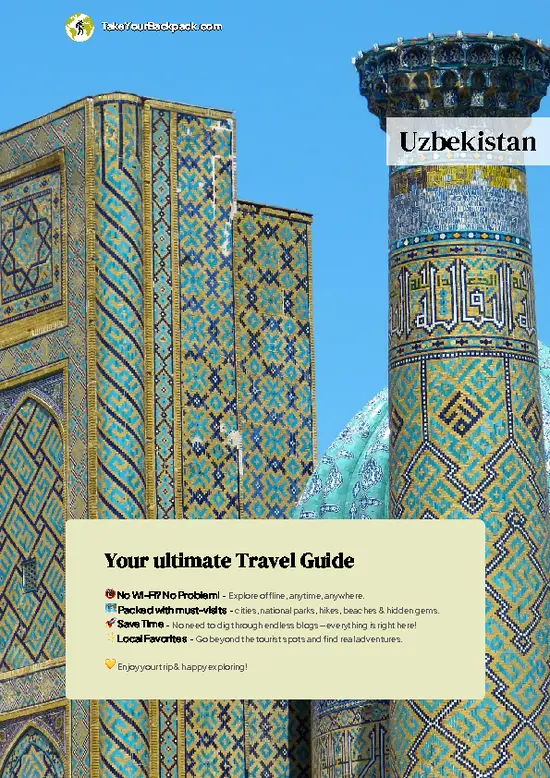
An offline-friendly backpacking guide with optimized travel routes, ranked highlights, transport advice, and the best areas to stay.
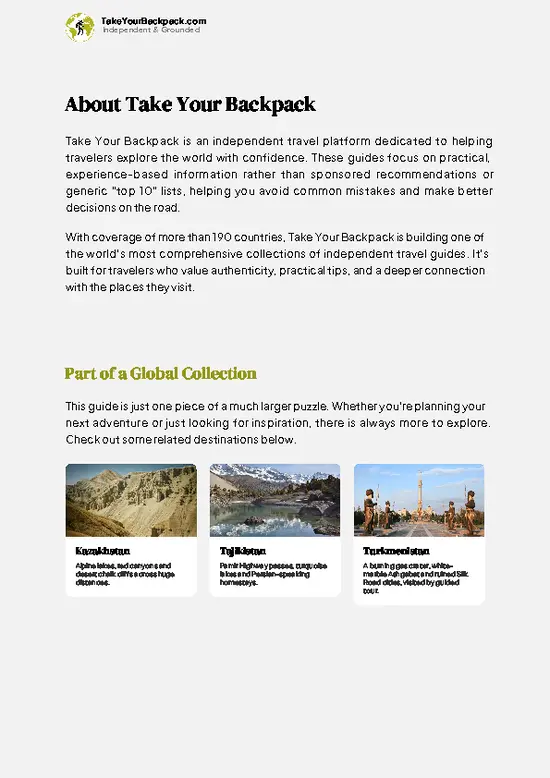
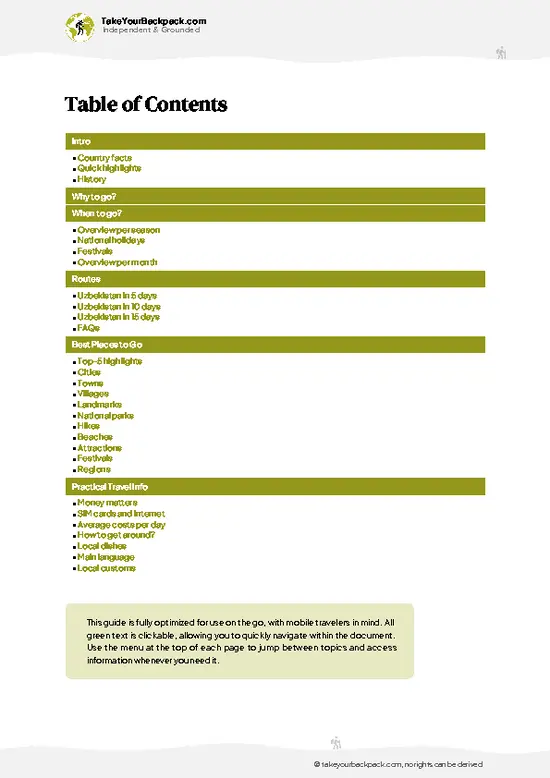
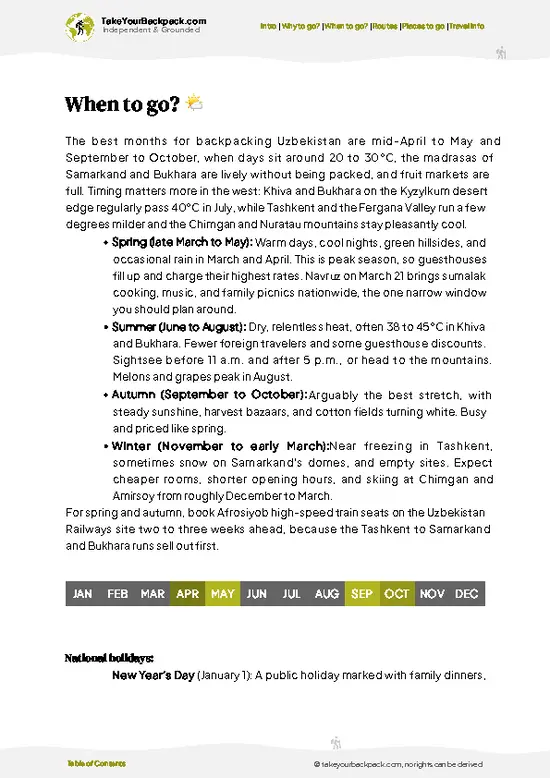
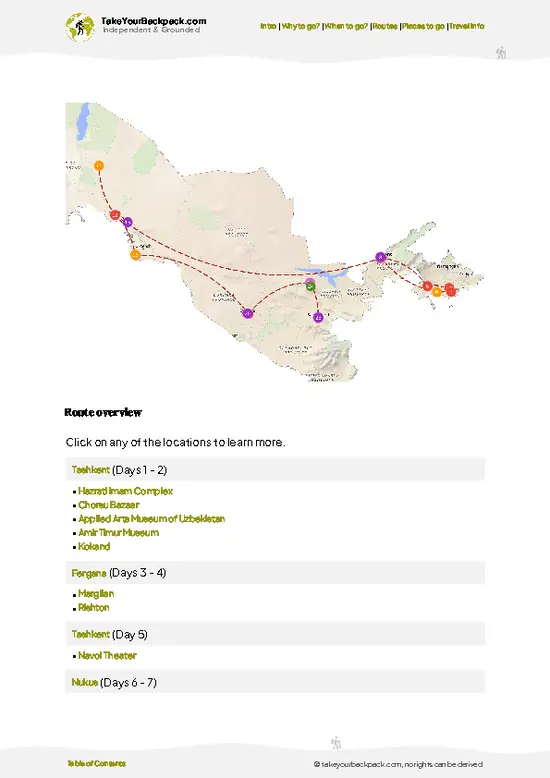
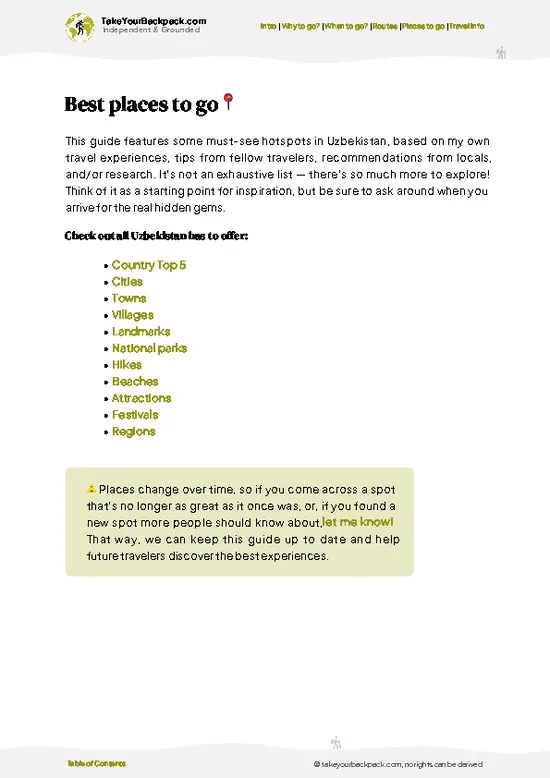
example page 0 from our offline Travel Guide for Uzbekistan
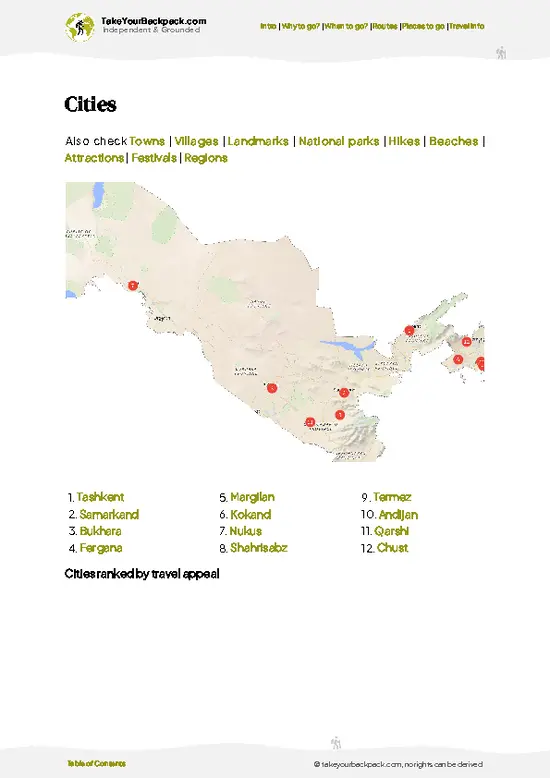
example page 1 from our offline Travel Guide for Uzbekistan
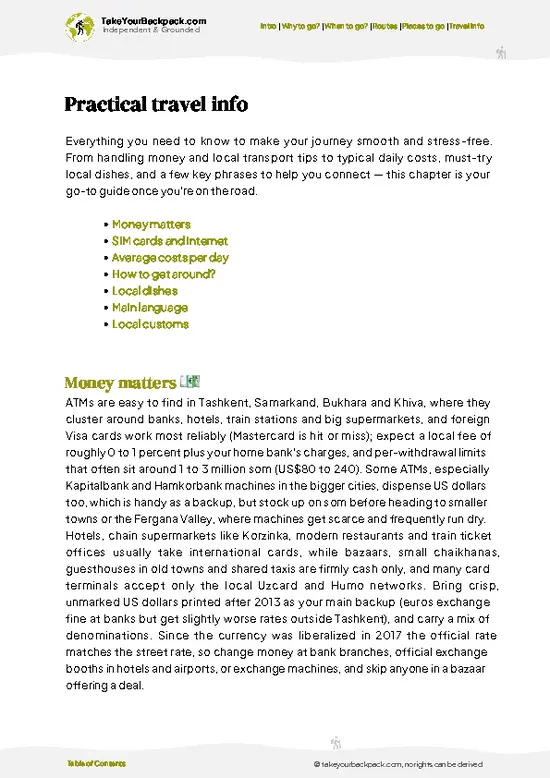
example page 2 from our offline Travel Guide for Uzbekistan
example page 3 from our offline Travel Guide for Uzbekistan
example page 4 from our offline Travel Guide for Uzbekistan
example page 5 from our offline Travel Guide for Uzbekistan
example page 6 from our offline Travel Guide for Uzbekistan
example page 7 from our offline Travel Guide for Uzbekistan
The digital guide (246 pages) contains:
✅ 74 highlights, ranked by travel appeal
✅ Optimized 5, 10 & 15-day travel routes
✅ Cities, national parks, landmarks, beaches
✅ How to get around
✅ Offline-friendly for travel without Wi-Fi
👉 Click to see all 30+ guide features

📅 Plan smarter in minutes, not weeks
✅ Month by month travel advice
✅ Festivals & national holidays
✅ Budget expectations

🗺️ Go to the right places, skip the overrated ones
✅ Honest pros & cons of destinations
✅ Top hikes, parks & viewpoints
✅ Lesser-known places most travelers miss
✅ Clear “worth it vs skip it” guidance

🛏️ Travel smoothly without rookie mistakes
✅ Best areas to stay
✅ Transport systems explained simply
✅ Common scams & safety advice
✅ SIM cards, money & practical tips

🌍 Understand the country, not just visit it
✅ Culture & traditions
✅ 52 Essential phrases & customs
✅ Festivals worth planning around
✅ Traveler-friendly historical context
✅ Insights that make places more meaningful

📱 Built for real travel conditions
✅ Fully downloadable PDF
✅ Works completely offline
✅ Optimized for phone use
✅ Useful in remote areas & buses
✅ Everything in one place
Stop searching, start planning
Get instant access to your full guide. 30‑day money-back guarantee.
+ Add another guide for just

By proceeding you agree to our terms.
Sent to your inbox immediately after payment • 100% Secure Checkout
Best Backpacking Travel Advisor 2025 tourism awardBest Backpacking
Travel Advisor
2025
What others say about Take Your Backpack Guides:
⭐⭐⭐⭐⭐
Fantastic, amazing amount of information!
⭐⭐⭐⭐⭐
My goodness this is amazing, it's what I've been looking for hats off too you!
⭐⭐⭐⭐⭐
I think this is absolutely BRILLIANT
⭐⭐⭐⭐
Very complete and informative. It's still missing places, but I gotta to commend you
⭐⭐⭐⭐⭐
This is truly amazing, thank you, can't wait to explore it with my kids!
⭐⭐⭐⭐⭐
Awesome resource, thank you!
⭐⭐⭐⭐⭐
This is amazing! Can't wait to explore the ones I haven't seen
⭐⭐⭐⭐
I love this! Well done, great idea.
⭐⭐⭐⭐⭐
Thanks for taking the time to make this gem!
⭐⭐⭐⭐⭐
This might be the best website I've ever seen.
⭐⭐⭐⭐⭐
Congratulations, and thank you so much for your work; it's incredibly valuable.
⭐⭐⭐⭐
In all seriousness I think you did a great job pointing out the important spots
⭐⭐⭐⭐⭐
10/10 very good
⭐⭐⭐⭐⭐
As someone who's only just starting to visit regularly this is awesome, thank you.
⭐⭐⭐⭐
Thank you very much! I'm going to visit my dad, it's going to be very useful!
⭐⭐⭐⭐⭐
This is really cool! We'll be travelling for the first time and this definitely come in handy.
⭐⭐⭐⭐⭐
You are now our minister of culture, congratulations 👨‍💼
⭐⭐⭐⭐⭐
Just wanted to tell you that this is a pearl! Going to follow your recommendations.
⭐⭐⭐⭐⭐
This is so cool. I'll definitely be using the resource for my travels soon.
⭐⭐⭐⭐⭐
This is very impressive! Good work.
⭐⭐⭐⭐⭐
This is an amazing and informative site. Very well done!

🛏️ Where to stay?Accommodation Highlights

Uzbekistan has a growing hostel scene, with dorm beds typically running 100,000 to 190,000 so’m (US$8 to 15) and family-run guesthouses with breakfast offering private rooms from about US$20 to 35. In Tashkent, Mirabad and the streets around Amir Timur Square put you near metro lines, cafés and the city’s modest bar scene, while the Chorsu area in the old town is cheaper and closer to the bazaar but quieter after dark. In Samarkand, beds clustered between the Registan and Gur-e-Amir keep the big monuments walkable. Staying inside Bukhara’s old town around Lyabi-Hauz or within Khiva’s walled Itchan Kala gives you the most atmosphere and very safe, sleepy nights, though nightlife is close to nonexistent. … read more 👉
Uzbekistan has a growing hostel scene, with dorm beds typically running 100,000 to 190,000 so’m (US$8 to 15) and family-run guesthouses with breakfast offering private rooms from about US$20 to 35. In Tashkent, Mirabad and the streets around Amir Timur Square put you near metro lines, cafés and the city’s modest bar scene, while the Chorsu area in the old town is cheaper and closer to the bazaar but quieter after dark. In Samarkand, beds clustered between the Registan and Gur-e-Amir keep the big monuments walkable. Staying inside Bukhara’s old town around Lyabi-Hauz or within Khiva’s walled Itchan Kala gives you the most atmosphere and very safe, sleepy nights, though nightlife is close to nonexistent.

If you enjoy meeting fellow travelers, consider choosing hostels with high ratings for atmosphere. On the other hand, if you prefer having your own space, a hotel might be a better option.

UzbekistanSee More of Uzbekistan

👋 Meet the founderWho’s Behind Take Your Backpack?

Johan, backpacker and founder of TakeYourBackpackHi, I’m Johan (Netherlands 🇳🇱), the creator of TakeYourBackpack. Over the past 3 decades, I’ve backpacked through 90+ countries across six continents, gaining extensive experience with independent travel, long-term trips, and overland routes.

This site is built on a combination of firsthand travel experience and carefully curated insights from other backpackers. Many guides are based on places I’ve personally visited, while others bring together tips, observations, and practical advice shared by trusted travelers I’ve met along the way.

The goal is to provide realistic, experience-driven guidance — not generic itineraries — so you can explore destinations with better context, clearer expectations, and more confidence.