v2.webp)

- Giuseppe Valadier’s gallery architecture — The room itself is the main event: an elegant early-19th-century, neoclassical corridor with high ceilings, rhythmic columns and a clean axial perspective. It was designed to show off large ancient sculptures the way a stage shows actors, so the architecture and the art play off each other beautifully.
- Roman imperial portrait busts — A dense, well-preserved run of imperial heads and portrait busts gives you a quick lesson in Roman power and propaganda. Look for differences in hair, expression and carving style; the small details tell political stories across centuries.
- Large-scale statues and full-length figures — Braccio Nuovo houses several massive standing statues that feel almost cinematic in that long hall. Seeing these life-size (and larger)
- Giuseppe Valadier’s gallery architecture — The room itself is the main event: an elegant early-19th-century, neoclassical corridor with high ceilings, rhythmic columns and a clean axial perspective. It was designed to show off large ancient sculptures the way a stage shows actors, so the architecture and the art play off each other beautifully.
- Roman imperial portrait busts — A dense, well-preserved run of imperial heads and portrait busts gives you a quick lesson in Roman power and propaganda. Look for differences in hair, expression and carving style; the small details tell political stories across centuries.
- Large-scale statues and full-length figures — Braccio Nuovo houses several massive standing statues that feel almost cinematic in that long hall. Seeing these life-size (and larger) figures at eye level hits harder than the smaller museum rooms.
- Mythological and narrative groups — Interspersed among the portraits are myth scenes and carved groups that let you compare styles and stories side-by-side. They’re great for spotting workshop patterns or just geeking out on drama frozen in marble.
- Great lighting and viewing distance — Unlike cramped rooms elsewhere in the Museums, the Braccio Nuovo’s spacing and light make it easy to step back, study anatomy and drapery, and actually photograph details without elbowing a crowd. For anyone who likes to examine technique, it’s a treat.
- Connection to the Pio-Clementino and the Belvedere complex — The wing links visually and historically to the older Pio-Clementino collection and the Belvedere courtyard beyond, so it’s a good pivot point if you’re routing through the Vatican’s classical displays. It helps make sense of how the papal collections were assembled and arranged.
- Personal favorite — the quiet, museum-study vibe — The thing I like most about Braccio Nuovo is the calm. Compared with the crush near the Sistine Chapel, you can actually linger, sketch, read the labels and feel like you’re doing field research rather than surviving a crowd.
Spotted a mistake or missing something? Contact us.

Skip the Line: Vatican Museums & Sistine Chapel Tour + Basilica

Early Morning Vatican, Sistine, St. Peter's Semi or Private Tour
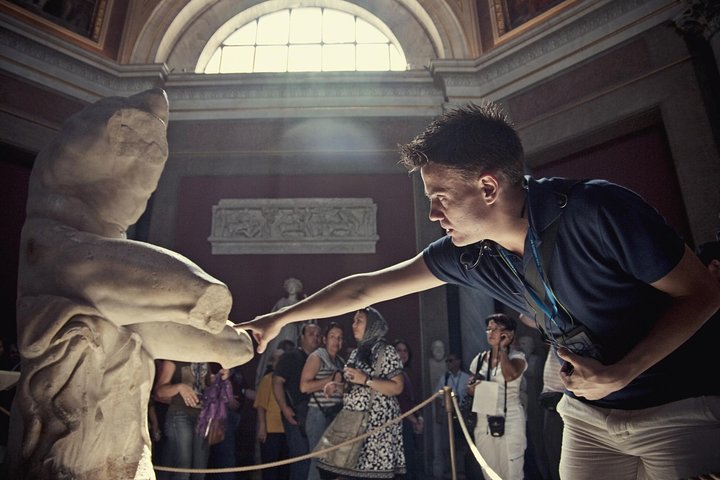
Rome: Skip the Line Vatican, Sistine Chapel, St Peter Small Group

Rome: Complete Early Morning Vatican Tour | Small Group

Skip the Line: Vatican Museums, Sistine Chapel Tour & St. Peter's

Skip the Line: Small Group Vatican Museums & Sistine + St. Peter

Express Early Morning Sistine Chapel Tour with Max 6 People

Exclusive First Access Vatican Tour with Skip the Line Basilica

Exclusive Private Tour: Vatican Museums, Sistine Chapel and St Peter's Basilica


 Best Backpacking
.jpg) Hi, I’m Johan (Netherlands 🇳🇱), the creator of TakeYourBackpack. Over the past 3 decades, I’ve backpacked through 90+ countries across six continents, gaining extensive experience with independent travel, long-term trips, and overland routes.
Hi, I’m Johan (Netherlands 🇳🇱), the creator of TakeYourBackpack. Over the past 3 decades, I’ve backpacked through 90+ countries across six continents, gaining extensive experience with independent travel, long-term trips, and overland routes.