×

Venezuela🇻🇪 | citiesAcariguasavanna crossroads, grain silos, roadside eateries | things to do and best time to go

Explore GuarenasExplore El Vigía

Backpacking in Acarigua
👌 Worth visitingcity ranked #14
By Johan Kruseman 🇳🇱 | Updated May 30, 2026

Acarigua is not for checklist tourists chasing beaches, big-name sights, or a ready-made backpacker scene. It rewards travelers who like seeing how a country actually runs between the postcards. Sitting in the agricultural heart of Portuguesa state in central-western Venezuela, it’s a workaday city with a compact center, a few pleasant plazas, low-key bars, and everyday markets rather than headline attractions. It’s cheap, transport connections are decent, and you’ll mostly meet locals, not other foreigners. Safety is very context-dependent: fine by day with street sense, edgy at night. Compared with Mérida or Barinas, Acarigua feels more functional than charming, but that’s exactly its value.

Discover everything you want to know in the 📖 Venezuela Travel Guide.
Safety warning

The current risk level for Venezuela is high. Check the advice before going.


Get your Venezuela guide
102 ranked highlights, routes & tips, works offline (386 pages)
Loading the map 🌍
CLICK TO FILTER
cities
towns
villages
landmarks
national parks
hikes
beaches
attractions
festivals
regions
SHOW COUNTRY’S BESTSHOW ALL

✨ Why go?
Ranked #14 city in Venezuela
What sets this place apart

Acarigua is a strategic stop for backpackers weaving through Venezuela. It offers a solid mix of affordability and comfort, making it a great base for day trips. The hostels here are welcoming and budget-friendly, often buzzing with fellow travelers sharing tips. You’ll find delicious local food that won’t break the bank, fueling your adventures. The city is walkable, allowing you to explore its vibrant streets without the hassle of transport. When the sun sets, the nightlife kicks in, offering a taste of local culture. Plus, Acarigua’s location makes onward travel to other destinations seamless. If you’re after a place that balances value and experience, this city is worth your time, whether for a quick stop or a longer stay.
Get the complete Travel Guide for Venezuela
Everything organized for offline planning — routes, highlights, costs & tips

See what’s inside 👉

Get the Travel Guide -

💡 HighlightsTop highlights of Acarigua

  1. Plaza Bolívar de Acarigua — The city’s central square and social heartbeat: statue of Simón Bolívar, benches, street vendors and municipal buildings around it. Great for people-watching and feeling the town’s everyday rhythm.
  2. Catedral diocesana de Acarigua-Araure — The main Catholic church serving the Acarigua-Araure diocese. Impressive interior for a city of this size, regular masses, and a place to see local religious life and architecture up close.
  3. Mercado Municipal de Acarigua — Bustling covered market where farmers and vendors sell fresh produce, regional cheeses, meats and quick local meals. Best spot to try street food, buy ingredients, and soak up local commerce and smells.
  4. Casa de la Cultura de Acarigua — Local cultural center hosting art exhibits, small concerts, theater and
read more 👉
  1. Plaza Bolívar de Acarigua — The city’s central square and social heartbeat: statue of Simón Bolívar, benches, street vendors and municipal buildings around it. Great for people-watching and feeling the town’s everyday rhythm.
  2. Catedral diocesana de Acarigua-Araure — The main Catholic church serving the Acarigua-Araure diocese. Impressive interior for a city of this size, regular masses, and a place to see local religious life and architecture up close.
  3. Mercado Municipal de Acarigua — Bustling covered market where farmers and vendors sell fresh produce, regional cheeses, meats and quick local meals. Best spot to try street food, buy ingredients, and soak up local commerce and smells.
  4. Casa de la Cultura de Acarigua — Local cultural center hosting art exhibits, small concerts, theater and folkloric dance nights. Good place to catch community events and meet local artists and performers.
A few close, visitable day-trip highlights outside the city: the neighboring twin town Araure, Parque Nacional Dinira and Parque Nacional Yacambú, plus wide Llanos landscapes for birding and cattle-country scenery.
Spotted a mistake or missing something? Contact us.

🏘️ NeighborhoodsWhere things are and how it's laid out

Acarigua offers a unique blend of local culture and accessibility for backpackers. Here’s a breakdown of key neighborhoods to help you navigate your stay.

Centro: The heart of Acarigua, Centro is bustling with local markets and eateries. It’s affordable and walkable, making it easy to explore. Nightlife is vibrant, with bars and music spilling into the streets. Perfect for short stays, but longer visits can feel repetitive.

La Paz: This area has a more laid-back vibe, ideal for those seeking a quieter experience. It’s slightly pricier but offers cozy cafes and parks. Walkability is decent, and public transport is accessible. Great for longer stays if you want to recharge.

El Samán: Known for its nightlife, El Samán is where you’ll find lively clubs and late-night food stalls. It’s a bit … read more 👉
Acarigua offers a unique blend of local culture and accessibility for backpackers. Here’s a breakdown of key neighborhoods to help you navigate your stay.

Centro: The heart of Acarigua, Centro is bustling with local markets and eateries. It’s affordable and walkable, making it easy to explore. Nightlife is vibrant, with bars and music spilling into the streets. Perfect for short stays, but longer visits can feel repetitive.

La Paz: This area has a more laid-back vibe, ideal for those seeking a quieter experience. It’s slightly pricier but offers cozy cafes and parks. Walkability is decent, and public transport is accessible. Great for longer stays if you want to recharge.

El Samán: Known for its nightlife, El Samán is where you’ll find lively clubs and late-night food stalls. It’s a bit more expensive, but the energy is infectious. Walkable, but be prepared for late nights. Best for short stays if you’re looking to party.

Las Flores: A residential area with a local feel, Las Flores is affordable and offers a glimpse into daily life. It’s less touristy, so expect a quieter atmosphere. Transport options are available, making it suitable for both short and longer stays.

⌛️ 1 day1-day itinerary for Acarigua

Acarigua, Venezuela, is a city that pulses with local life and culture, often overlooked by travelers. It’s a place where you can taste the essence of Venezuelan hospitality and experience daily rhythms that are refreshingly authentic.

Start your morning in the vibrant neighborhood of La Paz. Grab a breakfast arepa from a local vendor—nothing beats the crunch of freshly made cornmeal filled with cheese and avocado. After fueling up, stroll through the Parque José Antonio Páez, where you can soak in the morning sun and watch locals engage in their daily routines. The park is a hub of activity, offering a glimpse into the heart of Acarigua.

As the afternoon rolls in, head to the Mercado Municipal. This bustling market is a sensory overload of colors and sounds. Here, you can sample local fruits … read more 👉
Acarigua, Venezuela, is a city that pulses with local life and culture, often overlooked by travelers. It’s a place where you can taste the essence of Venezuelan hospitality and experience daily rhythms that are refreshingly authentic.

Start your morning in the vibrant neighborhood of La Paz. Grab a breakfast arepa from a local vendor—nothing beats the crunch of freshly made cornmeal filled with cheese and avocado. After fueling up, stroll through the Parque José Antonio Páez, where you can soak in the morning sun and watch locals engage in their daily routines. The park is a hub of activity, offering a glimpse into the heart of Acarigua.

As the afternoon rolls in, head to the Mercado Municipal. This bustling market is a sensory overload of colors and sounds. Here, you can sample local fruits and perhaps pick up a handmade souvenir. Don’t skip the chance to chat with vendors; their stories add depth to your experience.

In the evening, make your way to the Plaza Bolívar. This iconic square is perfect for unwinding. Grab a seat at a nearby café and enjoy a cup of Venezuelan coffee while people-watching. For a unique twist, venture to the lesser-known neighborhood of El Samán, where you can find local music and dance performances that showcase the city’s cultural richness.

By the end of the day, you’ll have woven through the fabric of Acarigua, experiencing its soul in a way that’s both enriching and memorable.
Build the Right Itinerary
Use the Venezuela Travel Guide’s 5, 10 & 15-day routes as a starting point to plan a trip that actually works on the ground.

Get the Travel Guide -

🌤️ When to go?Weather, crowds, and seasonal trade-offs


  • Weather: Acarigua experiences a tropical climate with a pronounced wet season from May to November. Heavy rains can turn trails muddy and slow your pace, so the dry season from December to April is your best bet for reliable hiking conditions.

  • Temperature: Temperatures hover between 24°C and 32°C (75°F to 90°F) year-round, but the dry season feels less oppressive thanks to lower humidity. Expect hotter, stickier days during the wet months.

  • Daylight Hours: Near the equator, daylight remains steady at about 12 hours daily, so no need to adjust your schedule seasonally.

  • Crowds: Tourist traffic peaks during the dry season, especially around holidays. If you want fewer people, aim for the shoulder months of December or April.

  • Seasonal Activities: The dry season opens up outdoor adventures
read more 👉

  • Weather: Acarigua experiences a tropical climate with a pronounced wet season from May to November. Heavy rains can turn trails muddy and slow your pace, so the dry season from December to April is your best bet for reliable hiking conditions.

  • Temperature: Temperatures hover between 24°C and 32°C (75°F to 90°F) year-round, but the dry season feels less oppressive thanks to lower humidity. Expect hotter, stickier days during the wet months.

  • Daylight Hours: Near the equator, daylight remains steady at about 12 hours daily, so no need to adjust your schedule seasonally.

  • Crowds: Tourist traffic peaks during the dry season, especially around holidays. If you want fewer people, aim for the shoulder months of December or April.

  • Seasonal Activities: The dry season opens up outdoor adventures like river rafting and wildlife spotting, while the wet season is better for cultural festivals but less for trekking.

  • Price Fluctuations: Expect accommodation and transport costs to rise during the dry season due to demand. The wet season offers better deals but at the cost of comfort and accessibility.


Pro-tip: Prioritize the dry season for a smoother, more active experience, but if budget and solitude matter more, the wet season’s trade-offs might just pay off.


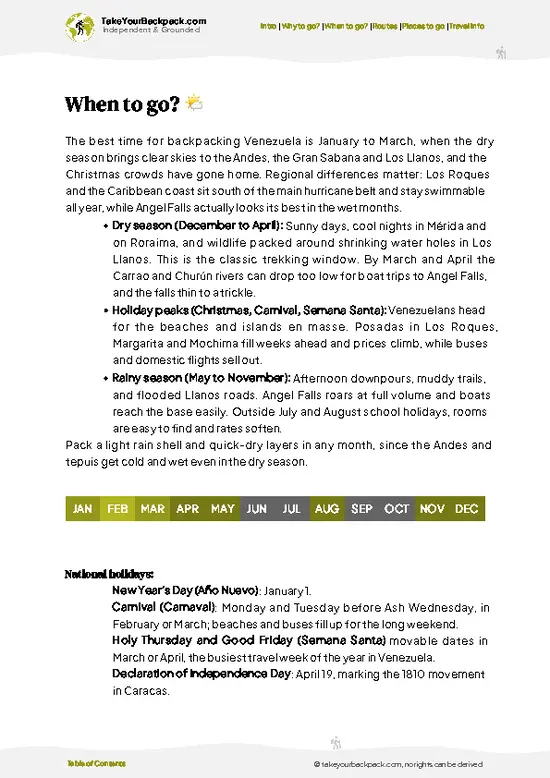
source: climatestotravel.comJANJanuary: excellent for travelingFEBFebruary: excellent for travelingMARMarch: excellent for travelingAPRApril: highly recommended for travelingMAYMay: fair for travelingJUNJune: fair for travelingJULJuly: fair for travelingAUGAugust: fair for travelingSEPSeptember: fair for travelingOCTOctober: fair for travelingNOVNovember: fair for travelingDECDecember: highly recommended for traveling
when-to-go

✈️ The backpacker research shortcutVenezuela Travel Guide

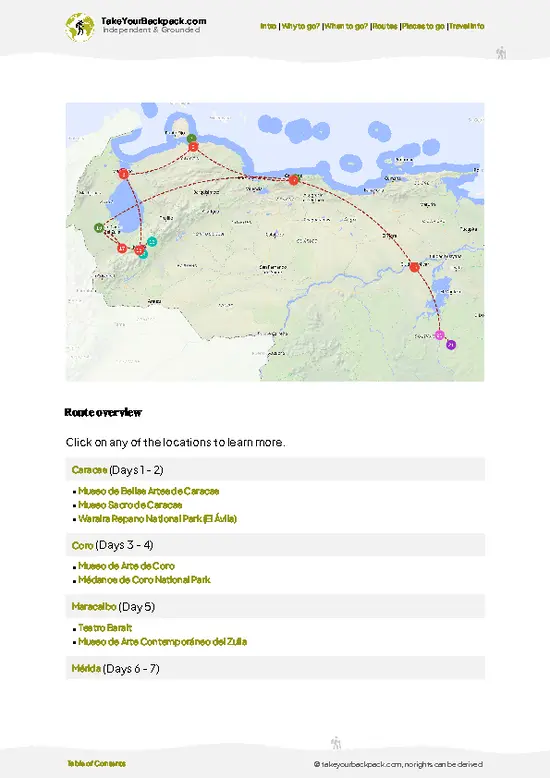
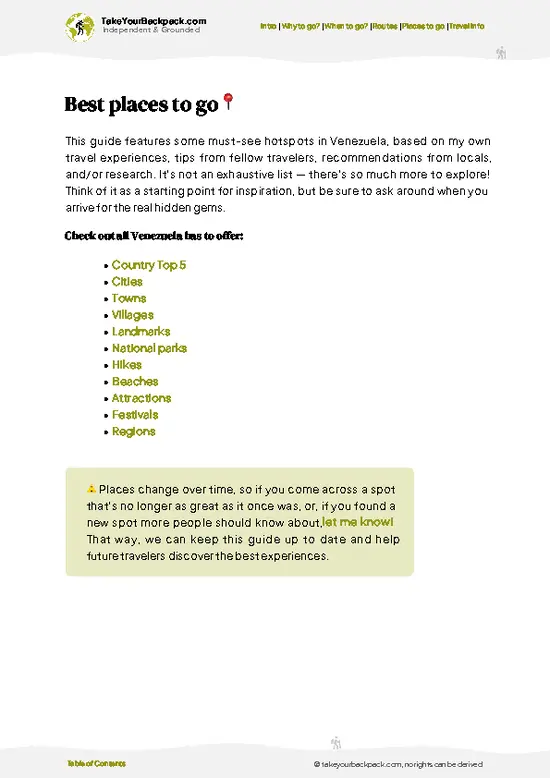
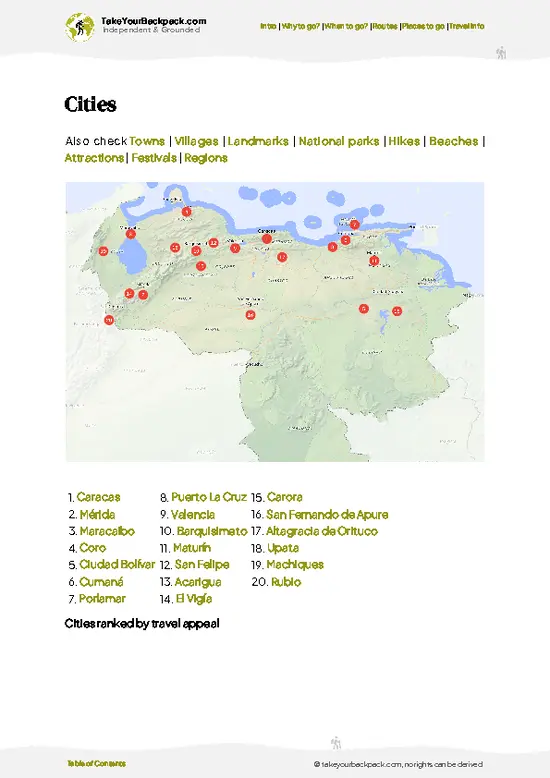
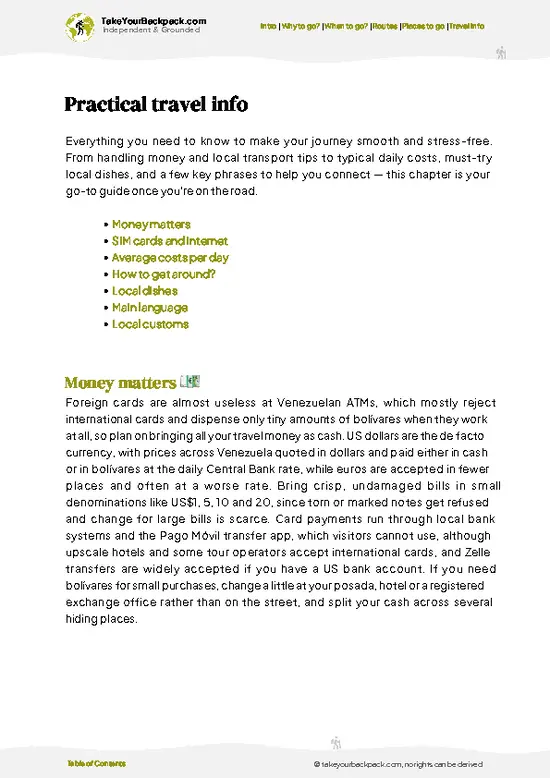
An offline-friendly backpacking guide with optimized travel routes, ranked highlights, transport advice, and the best areas to stay.
example page 0 from our offline Travel Guide for Venezuelaexample page 1 from our offline Travel Guide for Venezuelaexample page 2 from our offline Travel Guide for Venezuelaexample page 3 from our offline Travel Guide for Venezuelaexample page 4 from our offline Travel Guide for Venezuelaexample page 5 from our offline Travel Guide for Venezuelaexample page 6 from our offline Travel Guide for Venezuelaexample page 7 from our offline Travel Guide for Venezuela
The digital guide (386 pages) contains:
102 highlights, ranked by travel appeal
Optimized 5, 10 & 15-day travel routes
Cities, national parks, beaches, historical sites, ...
How to get around
Offline-friendly for travel without Wi-Fi
👉 Click to see all 30+ guide features

📅 Plan smarter in minutes, not weeks
Month by month travel advice
Festivals & national holidays
Budget expectations

🗺️ Go to the right places, skip the overrated ones
Honest pros & cons of destinations
Top hikes, parks & viewpoints
Lesser-known places most travelers miss
Clear “worth it vs skip it” guidance

🛏️ Travel smoothly without rookie mistakes
Best areas to stay
Transport systems explained simply
Common scams & safety advice
SIM cards, money & practical tips

🌍 Understand the country, not just visit it
Culture & traditions
52 Essential phrases & customs
Festivals worth planning around
Traveler-friendly historical context
Insights that make places more meaningful

📱 Built for real travel conditions
Fully downloadable PDF
Works completely offline
Optimized for phone use
Useful in remote areas & buses
Everything in one place
Save weeks of stressful planning
Get instant access to the full guide directly. 30-day money-back guarantee.


Sent to your inbox immediately after payment • 100% Secure Checkout
Best Backpacking Travel Advisor 2025 tourism awardBest Backpacking
Travel Advisor
2025
What others say about Take Your Backpack Guides:
⭐⭐⭐⭐⭐
Fantastic, amazing amount of information!
⭐⭐⭐⭐⭐
My goodness this is amazing, it's what I've been looking for hats off too you!
⭐⭐⭐⭐⭐
I think this is absolutely BRILLIANT
⭐⭐⭐⭐
Very complete and informative. It's still missing places, but I gotta to commend you
⭐⭐⭐⭐⭐
This is truly amazing, thank you, can't wait to explore it with my kids!
⭐⭐⭐⭐⭐
Awesome resource, thank you!
⭐⭐⭐⭐⭐
This is amazing! Can't wait to explore the ones I haven't seen
⭐⭐⭐⭐
I love this! Well done, great idea.
⭐⭐⭐⭐⭐
Thanks for taking the time to make this gem!
⭐⭐⭐⭐⭐
This might be the best website I've ever seen.
⭐⭐⭐⭐⭐
Congratulations, and thank you so much for your work; it's incredibly valuable.
⭐⭐⭐⭐
In all seriousness I think you did a great job pointing out the important spots
⭐⭐⭐⭐⭐
10/10 very good
⭐⭐⭐⭐⭐
As someone who's only just starting to visit regularly this is awesome, thank you.
⭐⭐⭐⭐
Thank you very much! I'm going to visit my dad, it's going to be very useful!
⭐⭐⭐⭐⭐
This is really cool! We'll be travelling for the first time and this definitely come in handy.
⭐⭐⭐⭐⭐
You are now our minister of culture, congratulations 👨‍💼
⭐⭐⭐⭐⭐
Just wanted to tell you that this is a pearl! Going to follow your recommendations.
⭐⭐⭐⭐⭐
This is so cool. I'll definitely be using the resource for my travels soon.
⭐⭐⭐⭐⭐
This is very impressive! Good work.
⭐⭐⭐⭐⭐
This is an amazing and informative site. Very well done!

🛏️ Where to stay?Where staying makes the most sense

In Acarigua, the sweet spot for backpackers is the central district around Avenida 23 de Enero. This area strikes a rare balance: it’s safe enough to walk after dark, lively enough to meet other travelers, and packed with budget-friendly spots. You won’t find a sprawling hostel scene here like in bigger cities, but small guesthouses and hostels cluster around this zone, making it the social hub for solo adventurers. Compared to the quieter, more residential neighborhoods on the outskirts, this central area offers a pulse—street vendors, local cafés, and easy access to public transport. It’s where … read more 👉
In Acarigua, the sweet spot for backpackers is the central district around Avenida 23 de Enero. This area strikes a rare balance: it’s safe enough to walk after dark, lively enough to meet other travelers, and packed with budget-friendly spots. You won’t find a sprawling hostel scene here like in bigger cities, but small guesthouses and hostels cluster around this zone, making it the social hub for solo adventurers. Compared to the quieter, more residential neighborhoods on the outskirts, this central area offers a pulse—street vendors, local cafés, and easy access to public transport. It’s where you trade a bit of comfort for connection and convenience. Avoid the industrial zones and less-policed neighborhoods; they’re not worth the risk or the isolation. In Acarigua, your best bet is to stay where the city’s rhythm is palpable, and your wallet stays intact.

🚌 Getting aroundHow to get around Acarigua

Acarigua moves at a pace that’s neither frantic nor sluggish—it’s a city where schedules exist but bend to local rhythms. You won’t find the rigid clockwork of a metropolis like Tokyo, nor the freewheeling chaos of a sprawling megacity. Instead, Acarigua’s flow is a blend of predictability and improvisation, where buses and colectivos run on a loose timetable, and locals navigate the streets with a mix of patience and savvy. Understanding this balance is your key to mastering the city’s transit game: you can either lean into the system’s rough edges or carve your own path on foot.


  • Walking: The most reliable and cost-free way to get around, especially within the central neighborhoods. Streets are generally flat and safe during the day, making it easy to explore markets, plazas, and local
read more 👉
Acarigua moves at a pace that’s neither frantic nor sluggish—it’s a city where schedules exist but bend to local rhythms. You won’t find the rigid clockwork of a metropolis like Tokyo, nor the freewheeling chaos of a sprawling megacity. Instead, Acarigua’s flow is a blend of predictability and improvisation, where buses and colectivos run on a loose timetable, and locals navigate the streets with a mix of patience and savvy. Understanding this balance is your key to mastering the city’s transit game: you can either lean into the system’s rough edges or carve your own path on foot.


  • Walking: The most reliable and cost-free way to get around, especially within the central neighborhoods. Streets are generally flat and safe during the day, making it easy to explore markets, plazas, and local eateries without spending a dime. Walking lets you control your pace and soak in the city’s character up close.

  • Urban Buses: These run roughly from 5:30 AM to 9:00 PM, with fares typically under $0.50 USD. Buses cover main routes connecting Acarigua’s core to surrounding barrios. They’re slow and often crowded, but unbeatable for budget travelers who want to cover distance without breaking the bank. Expect stops on demand and a bit of waiting during off-peak hours.

  • Colectivos (Shared Taxis): Faster than buses and more flexible, colectivos operate from dawn until late evening. Prices hover around $1 USD per ride, depending on distance. They leave when full, so timing can be unpredictable, but they offer a comfortable, air-conditioned alternative to buses, especially on longer routes.

  • Mototaxis: Ideal for short hops or when you’re in a hurry. These motorcycle taxis are cheap—usually under $1 USD—and weave through traffic with ease. Comfort is minimal, and safety standards vary, so use them selectively and always negotiate the fare upfront.

👛 Costs (as of 8 April 2026)Travel costs and budget guide for Acarigua

Backpacking in Acarigua, Venezuela, offers a unique cost structure shaped by local economic conditions and travel infrastructure. Understanding these costs helps you decide where to save and where to invest for a smoother trip.
  • Dorm Accommodation (High Season): Expect to pay around $8 to $12 per night. High season sees a slight bump due to demand, but options remain basic and functional rather than luxurious.
  • Dorm Accommodation (Off-Season): Prices drop to about $5 to $8 per night. Off-season travel here rewards you with better deals and less competition for beds.
  • Meals: Local eateries offer meals for $2 to $5. Street food and small restaurants dominate, so you get hearty, filling dishes without breaking the bank. Avoid tourist spots to keep costs low.
  • Local Transport: Bus or shared taxi
read more 👉
Backpacking in Acarigua, Venezuela, offers a unique cost structure shaped by local economic conditions and travel infrastructure. Understanding these costs helps you decide where to save and where to invest for a smoother trip.
  • Dorm Accommodation (High Season): Expect to pay around $8 to $12 per night. High season sees a slight bump due to demand, but options remain basic and functional rather than luxurious.
  • Dorm Accommodation (Off-Season): Prices drop to about $5 to $8 per night. Off-season travel here rewards you with better deals and less competition for beds.
  • Meals: Local eateries offer meals for $2 to $5. Street food and small restaurants dominate, so you get hearty, filling dishes without breaking the bank. Avoid tourist spots to keep costs low.
  • Local Transport: Bus or shared taxi rides typically cost between $0.20 and $0.50 per trip. This is the backbone of getting around town cheaply but expect basic conditions and variable schedules.
  • City Transport Pass: A monthly pass isn’t common here; daily transport costs add up, so budget around $1 to $2 per day if you plan to move frequently.
  • Basic Activities/Entry Fees: Most local attractions are free or charge nominal fees, usually under $2. Museums or cultural sites keep prices low, reflecting the local economy.
  • Miscellaneous Expenses: Budget $1 to $3 for essentials like bottled water, snacks, or small personal items. Prices can fluctuate, so keep a buffer for unexpected needs.

In total, a realistic daily budget for backpacking in Acarigua ranges from about $10 on a tight off-season plan to $20 if you lean toward more comfort or frequent travel. This balance lets you control your spending while still engaging fully with the city’s offerings.


source: mintur.gob.ve
⚠️ Prices can change and everyone travels differently, so take this as a rough guide. Hope it helps you plan your adventure!

🚌 Day tripsExploring the surroundings

Acarigua is a strategic launchpad for day trips that blend adventure with cultural immersion. Here’s how to make the most of your time without breaking the bank.

Los Llanos Wildlife Safari
Just a couple of hours from Acarigua, Los Llanos offers a chance to see wildlife in its natural habitat. Think capybaras, caimans, and a plethora of bird species. The best time to visit is during the dry season, from December to April, when animals congregate around water sources. Expect to spend around $30 for a guided tour, which is worth every bolívar for the experience. A common mistake? Underestimating the need for insect repellent—those mosquitoes can be relentless.


Coro’s Colonial Charm
A three-hour bus ride takes you to Coro, a UNESCO World Heritage site. The colonial architecture and vibrant … read more 👉
Acarigua is a strategic launchpad for day trips that blend adventure with cultural immersion. Here’s how to make the most of your time without breaking the bank.

Los Llanos Wildlife Safari
Just a couple of hours from Acarigua, Los Llanos offers a chance to see wildlife in its natural habitat. Think capybaras, caimans, and a plethora of bird species. The best time to visit is during the dry season, from December to April, when animals congregate around water sources. Expect to spend around $30 for a guided tour, which is worth every bolívar for the experience. A common mistake? Underestimating the need for insect repellent—those mosquitoes can be relentless.


Coro’s Colonial Charm
A three-hour bus ride takes you to Coro, a UNESCO World Heritage site. The colonial architecture and vibrant streets are a feast for the eyes. You can wander through the historic center, visit the local markets, and even dip your toes in the nearby beaches. Budget around $20 for transport and snacks. The best months to go are from November to March when the weather is cooler. First-timers often miss the local food stalls—don’t skip the arepas!
👉 Explore Coro

Mérida’s Mountain Vibes
About four hours away, Mérida is a mountain town that offers stunning views and outdoor activities. You can hike, take a cable car ride, or explore the local culture. Costs can vary, but you can manage on $25 for transport and a meal. The ideal time to visit is during the dry season. A rookie mistake? Not checking the weather; it can change rapidly in the mountains.
👉 Explore Mérida

El Morro Natural Park
Just under two hours from Acarigua, El Morro is a natural park perfect for hiking and picnicking. The trails are well-marked, and the scenery is breathtaking. You’ll spend around $15 for transport and snacks. The best time to go is early morning to avoid the heat. Many first-timers overlook the importance of staying hydrated—bring plenty of water!
Want to know what more Venezuela offers?
The Venezuela Travel Guide describes 102 highlights, from cities to national parks, from beaches to hikes

Get the Travel Guide -

🍲 FoodLocal Flavors for Backpackers

In Acarigua, food is a vibrant expression of local culture. Don’t miss the chance to try arepas, those cornmeal pockets filled with everything from cheese to shredded beef. They’re a staple, often enjoyed at any hour. Street vendors serve them hot, their sizzling sounds mingling with the chatter of locals.

Pabellón criollo is another must-try, a hearty dish featuring rice, black beans, shredded beef, and fried plantains. It’s a meal that tells a story of tradition and flavor.

For drinks, sample chicha, a sweet, refreshing rice beverage that’s perfect for cooling off in the heat.

Eating here is casual and communal. Expect to share tables and engage in lively conversations. Embrace the local pace; meals are often leisurely, allowing you to savor each bite and soak in the atmosphere.

🛡️ SafetySafety Tips and Common Scams in Acarigua

Acarigua is generally safe, but like any city, it has its quirks. Stay aware in crowded markets and bus stations; pickpockets can be sneaky. If you’re solo, avoid wandering too far after dark. The streets can feel deserted, and it’s best to stick to well-lit areas.

Common scams include overly friendly locals who might offer to guide you for a fee. Politely decline and trust your instincts. Everyday annoyances can pop up, like vendors who won’t take no for an answer. A firm but friendly demeanor works wonders. Carry your belongings close and keep your phone out of sight when not in use. Stay alert, and you’ll navigate Acarigua just fine.

Other Venezuelan cities near Acarigua

Explore more nearby:

  • Barquisimeto—musical heritage, twilight skies, arid plains| 60 km away
  • Quíbor—artisan pottery, arid landscape, roadside stalls| 64 km away
  • San Felipe—Yaracuy valley, agricultural trade, low-rise center| 100 km away

👉 Discover all cities

Or checkout all Venezuela has to offer (think cities, towns, villages, national parks, hikes, beaches, festivals)
Country photo of Venezuela

We 💚 feedbackParting advice and final tips

Acarigua has a raw, unfiltered vibe that’s hard to find elsewhere. The best surprise? The local food scene—don’t skip the arepas from street vendors; they’re a game-changer. Just a heads up: the heat can be relentless, so stay hydrated and pace yourself. Embrace the chaos; it’s part of the charm.

✍️ Help improve this page!
The information on this page is based on in-depth research, insights shared by experienced travelers, and feedback from the local travel community in Venezuela. While every effort is made to keep the information accurate and current, conditions can change — so if you spot anything incorrect or outdated, please get in touch.


🙋‍♂️ Give feedback

👋 Meet the founderWho’s Behind Take Your Backpack?

Johan, backpacker and founder of TakeYourBackpackHi, I’m Johan (Netherlands 🇳🇱), the creator of TakeYourBackpack. Over the past decade, I’ve backpacked through 80+ countries across six continents, gaining extensive experience with independent travel, long-term trips, and overland routes.

This site is built on a combination of firsthand travel experience and carefully curated insights from other backpackers. Many guides are based on places I’ve personally visited, while others bring together tips, observations, and practical advice shared by trusted travelers I’ve met along the way.

The goal is to provide realistic, experience-driven guidance — not generic itineraries — so you can explore destinations with better context, clearer expectations, and more confidence.

Get full Venezuela guide •
Instant download • 102 highlights • Full Offline guide