×

Venezuela🇻🇪 | citiesCoroadobe facades, wind-swept dunes, colonial grid | things to do and best time to go

Explore CaracasExplore Maracaibo

Backpacking in Coro
UNESCO World Heritage site
🏆 Top pickcity ranked #4
By Johan Kruseman 🇳🇱 | Updated June 9, 2026

Everyone talks about Coro for the sand dunes at Médanos de Coro, but the real value for a backpacker is how cheaply you can time-travel through history while still keeping your logistics simple. Coro sits in northwest Venezuela, between the Paraguaná Peninsula and the Caribbean, and feels more like a sun-baked colonial outpost than a modern city. The adobe houses and churches in the historic center are the main draw; the vibe is slow, slightly worn, and very human. It’s cheaper and calmer than Maracaibo or Caracas, but also quieter on the backpacker circuit, so you’ll meet more locals than hostel-hoppers. Transport in and out is straightforward by Venezuelan standards, but infrastructure is fragile and power cuts happen. Safety is better than in the big cities, yet you still move with street smarts. Nightlife is low-key; the payoff is atmosphere, not adrenaline.

Discover everything you want to know in the 📖 Venezuela Travel Guide.
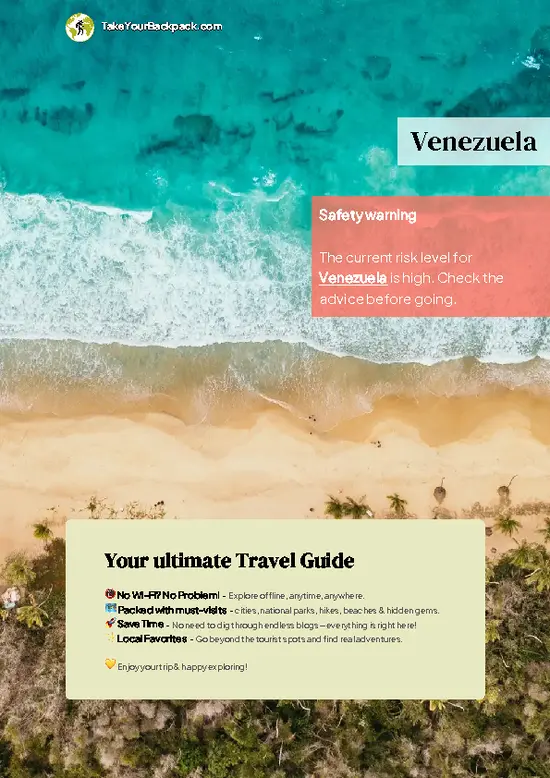
Safety warning

The current risk level for Venezuela is high. Check the advice before going.


Get your Venezuela guide
102 ranked highlights, routes & tips, works offline (386 pages)
Loading the map 🌍
CLICK TO FILTER
cities
towns
villages
landmarks
national parks
hikes
beaches
attractions
festivals
regions
SHOW COUNTRY’S BESTSHOW ALL

✨ Why go?
Ranked #4 city in Venezuela
Why visitors keep coming back

Coro is a strategic stop for backpackers weaving through Venezuela. Its walkability makes it easy to explore on foot, with vibrant streets that pulse with local life. You’ll find a range of hostels that cater to budget travelers, offering both comfort and community. The food scene is a delightful mix of street vendors and cozy eateries, perfect for fueling your adventures.

Coro serves as a solid basecamp for day trips to nearby natural wonders, allowing you to maximize your time without the hassle of constant packing. The nightlife is laid-back yet lively, giving you a taste of local culture after a day of exploration. Plus, its easy onward travel options keep you connected to the rest of Venezuela. If you’re looking for a place that balances high-value experiences with a relaxed vibe, Coro fits the bill.
Want to include Coro in your Venezuela route?
Create a personalized Venezuela itinerary that includes Coro and the places that fit your trip — based on your travel style, budget, and available time. Get your route in seconds.

Generate my trip

💡 HighlightsEssential experiences to have while visiting Coro

  1. Centro Histórico de Coro (Historic Centre) — The compact UNESCO-listed heart of the city where entire blocks of adobe and bahareque houses, narrow streets and colonial façades show how Spanish-Venezuelan urban life looked for centuries; walking the center is the clearest way to feel Coro’s identity and see its fragile, evocative architecture up close.
  2. Catedral de Santa Ana (Catedral de Coro) — Dominant on the main plaza, this colonial cathedral is the city’s spiritual and architectural anchor; the exterior and bell tower are classic colonial, and the interior contains religious art and atmosphere that connect you to Coro’s history.
  3. Museo de Arte Religioso / Museo de la Catedral — Housed in the cathedral complex, this museum displays colonial-era liturgical silver, religious paintings and
read more 👉
  1. Centro Histórico de Coro (Historic Centre) — The compact UNESCO-listed heart of the city where entire blocks of adobe and bahareque houses, narrow streets and colonial façades show how Spanish-Venezuelan urban life looked for centuries; walking the center is the clearest way to feel Coro’s identity and see its fragile, evocative architecture up close.
  2. Catedral de Santa Ana (Catedral de Coro) — Dominant on the main plaza, this colonial cathedral is the city’s spiritual and architectural anchor; the exterior and bell tower are classic colonial, and the interior contains religious art and atmosphere that connect you to Coro’s history.
  3. Museo de Arte Religioso / Museo de la Catedral — Housed in the cathedral complex, this museum displays colonial-era liturgical silver, religious paintings and carved woodwork; it’s the best place in Coro to see genuine artifacts that explain local devotional life and craftsmanship.
  4. Plaza Bolívar / Plaza de la Catedral — The social pulse of Coro: shady trees, benches, vendors and surrounding colonial buildings. Sit here for people-watching, easy photos of the cathedral, and to feel how the city’s public life still centers on the old square.
  5. Casa de las Ventanas de Hierro — One of Coro’s most photographed houses, its heavy iron-grilled windows set into earthen walls show the unique blend of local construction techniques and colonial aesthetics; the façade is a textbook example of what makes Coro’s built environment special.
  6. Mercado Municipal (Mercado de Coro) — A noisy, colorful local market where you’ll find fresh produce, regional cheeses, dried fish, street food and everyday life; it’s the easiest place to taste local flavors and see Coroans at work outside the tourist circuit.
Nearby day-trip highlights outside the city include the Médanos de Coro sand dunes, the coastal hamlet and port at La Vela de Coro, and the beaches/islands of Parque Nacional Morrocoy.
Spotted a mistake or missing something? Contact us.
🏘️ NeighborhoodsNeighborhood guide to Coro

Coro, with its colonial charm and vibrant culture, offers a unique backpacking experience. Here’s how its neighborhoods stack up for your adventure:

Centro Histórico: This is the heart of Coro. You’ll find colorful colonial buildings and bustling markets. It’s walkable, making it easy to explore on foot. Costs are moderate, and the nightlife is lively, with local bars and music. Perfect for short stays to soak in the history.

La Vela: A coastal area with stunning beaches. It’s quieter than the city center, ideal for relaxation after a day of exploration. Prices are slightly higher due to the beach access, but you can find budget options. Great for longer stays if you want to unwind and enjoy the sun.

Los Médanos: Known for its sand dunes, this area offers a unique landscape. It’s a bit … read more 👉
Coro, with its colonial charm and vibrant culture, offers a unique backpacking experience. Here’s how its neighborhoods stack up for your adventure:

Centro Histórico: This is the heart of Coro. You’ll find colorful colonial buildings and bustling markets. It’s walkable, making it easy to explore on foot. Costs are moderate, and the nightlife is lively, with local bars and music. Perfect for short stays to soak in the history.

La Vela: A coastal area with stunning beaches. It’s quieter than the city center, ideal for relaxation after a day of exploration. Prices are slightly higher due to the beach access, but you can find budget options. Great for longer stays if you want to unwind and enjoy the sun.

Los Médanos: Known for its sand dunes, this area offers a unique landscape. It’s a bit further from the city center, so transport is necessary. Costs are reasonable, and the vibe is adventurous. Perfect for those who want a mix of nature and culture, suitable for both short and longer visits.

San Luis: A residential area with a local feel. It’s less touristy, offering a glimpse into everyday life. Costs are low, and it’s walkable, but nightlife is minimal. Ideal for longer stays if you want to immerse yourself in local culture.

⌛️ 1 dayHow to make the most of one day

Coro, Venezuela, is a city where history and culture collide in a vibrant tapestry of colonial architecture and local life. As one of the oldest cities in Venezuela, it boasts a UNESCO World Heritage designation, thanks to its well-preserved buildings and rich history.

Start your morning in the historic center, where the sun spills over the colorful facades of Plaza Bolívar. Grab a coffee at a local café and soak in the atmosphere. The nearby Catedral de Coro is a must-see; its stunning baroque altar is a feast for the eyes.

Afterward, wander through the streets of La Vela, a neighborhood that feels like stepping back in time. Here, you’ll find artisans crafting traditional goods. Don’t miss the chance to visit the Museo de Arte de Coro, which showcases local artists and offers a glimpse … read more 👉
Coro, Venezuela, is a city where history and culture collide in a vibrant tapestry of colonial architecture and local life. As one of the oldest cities in Venezuela, it boasts a UNESCO World Heritage designation, thanks to its well-preserved buildings and rich history.

Start your morning in the historic center, where the sun spills over the colorful facades of Plaza Bolívar. Grab a coffee at a local café and soak in the atmosphere. The nearby Catedral de Coro is a must-see; its stunning baroque altar is a feast for the eyes.

Afterward, wander through the streets of La Vela, a neighborhood that feels like stepping back in time. Here, you’ll find artisans crafting traditional goods. Don’t miss the chance to visit the Museo de Arte de Coro, which showcases local artists and offers a glimpse into the region’s creative spirit.

In the afternoon, head to the nearby Médanos de Coro National Park. This isn’t on every tourist’s radar, but the vast sand dunes are a playground for exploration. Spend a couple of hours hiking or simply enjoying the unique landscape.

As evening falls, return to the city and dine at a local eatery. Try the arepas or fresh seafood, and chat with locals who are eager to share stories. This day in Coro isn’t just about sights; it’s about connecting with the heart of Venezuela.
Turn your Coro visit into an Venezuela adventure
Build a complete Venezuela route with Coro, hidden gems, must-see destinations, and realistic travel times included.

Generate my trip

🌤️ When to go?When to go for the best experience


  • Topic: Weather – Coro’s climate is hot and dry most of the year, with a rainy season from May to November. If you want to avoid soggy trails and humidity that feels like a sauna, aim for December to April when rainfall drops sharply.

  • Topic: Temperature – Expect highs around 30–35°C (86–95°F) year-round, but the dry season feels more bearable. Nights cool to about 20–24°C (68–75°F), perfect for camping without sweating through your sleeping bag.

  • Topic: Daylight Hours – Near the equator, daylight stays steady at roughly 12 hours daily. No drastic shifts, so your hiking and exploring windows remain consistent year-round.

  • Topic: Crowds – Peak tourist flow hits during the dry season, especially around Easter and Christmas. If you prefer solitude and better deals, shoulder months like November
read more 👉

  • Topic: Weather – Coro’s climate is hot and dry most of the year, with a rainy season from May to November. If you want to avoid soggy trails and humidity that feels like a sauna, aim for December to April when rainfall drops sharply.

  • Topic: Temperature – Expect highs around 30–35°C (86–95°F) year-round, but the dry season feels more bearable. Nights cool to about 20–24°C (68–75°F), perfect for camping without sweating through your sleeping bag.

  • Topic: Daylight Hours – Near the equator, daylight stays steady at roughly 12 hours daily. No drastic shifts, so your hiking and exploring windows remain consistent year-round.

  • Topic: Crowds – Peak tourist flow hits during the dry season, especially around Easter and Christmas. If you prefer solitude and better deals, shoulder months like November or late April offer fewer people without the full wet-season hassle.

  • Topic: Seasonal Activities – Dry months unlock access to natural parks and sand dunes without mud or closures. The rainy season can swell rivers, making some water-based activities risky or off-limits.

  • Topic: Price Fluctuations – Accommodation and transport costs spike in the dry season’s high demand. Traveling just before or after this window can save you a chunk of cash while still enjoying decent weather.


Pro-tip: Target the early dry season (December to February) for the best balance of weather, crowd size, and prices—smart timing turns Coro from a gamble into a calculated win.


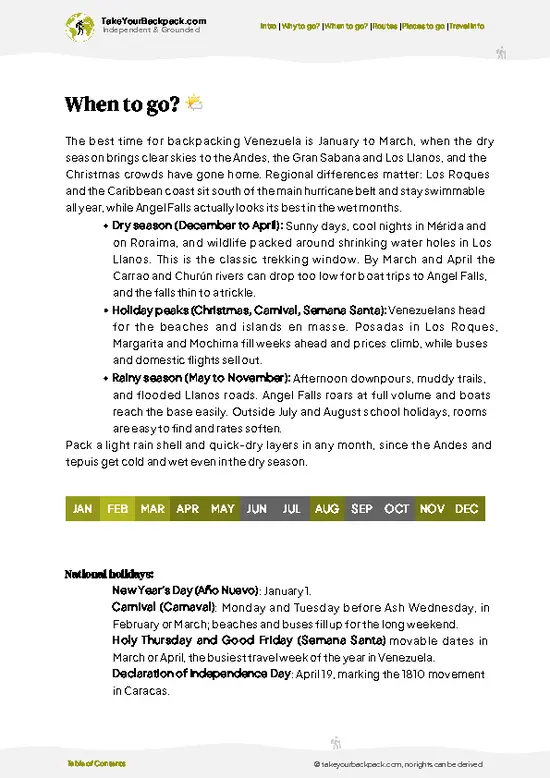
source: climatestotravel.comJANJanuary: excellent for travelingFEBFebruary: excellent for travelingMARMarch: highly recommended for travelingAPRApril: highly recommended for travelingMAYMay: fair for travelingJUNJune: fair for travelingJULJuly: fair for travelingAUGAugust: fair for travelingSEPSeptember: fair for travelingOCTOctober: fair for travelingNOVNovember: good for travelingDECDecember: excellent for traveling
when-to-go

✈️ The backpacker research shortcutVenezuela Travel Guide

An offline-friendly backpacking guide with optimized travel routes, ranked highlights, transport advice, and the best areas to stay.
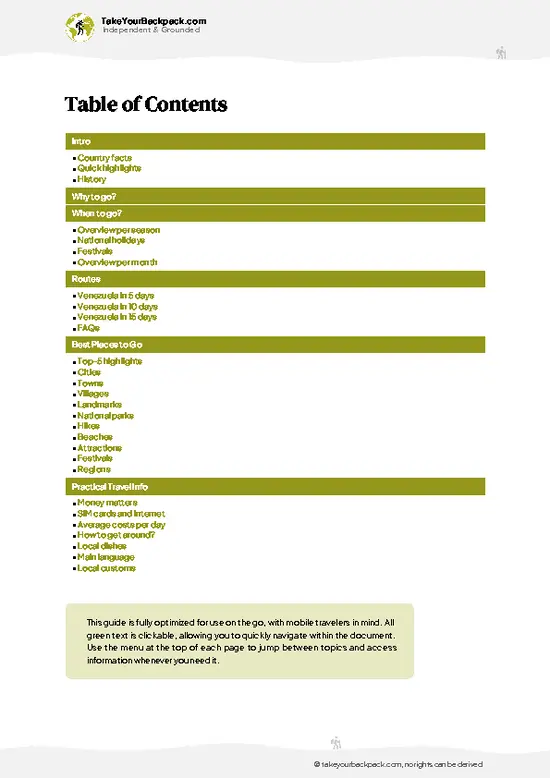
example page 0 from our offline Travel Guide for Venezuela
example page 1 from our offline Travel Guide for Venezuela
example page 2 from our offline Travel Guide for Venezuela
example page 3 from our offline Travel Guide for Venezuela
example page 4 from our offline Travel Guide for Venezuela
example page 5 from our offline Travel Guide for Venezuela
example page 6 from our offline Travel Guide for Venezuela
example page 7 from our offline Travel Guide for Venezuela
The digital guide (386 pages) contains:
102 highlights, ranked by travel appeal
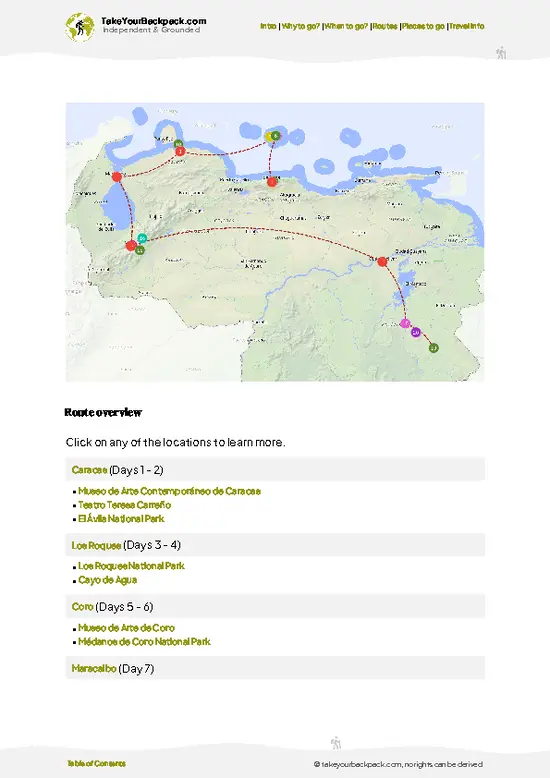
Optimized 5, 10 & 15-day travel routes
Cities, national parks, landmarks, beaches
How to get around
Offline-friendly for travel without Wi-Fi
👉 Click to see all 30+ guide features

📅 Plan smarter in minutes, not weeks
Month by month travel advice
Festivals & national holidays
Budget expectations

🗺️ Go to the right places, skip the overrated ones
Honest pros & cons of destinations
Top hikes, parks & viewpoints
Lesser-known places most travelers miss
Clear “worth it vs skip it” guidance

🛏️ Travel smoothly without rookie mistakes
Best areas to stay
Transport systems explained simply
Common scams & safety advice
SIM cards, money & practical tips

🌍 Understand the country, not just visit it
Culture & traditions
52 Essential phrases & customs
Festivals worth planning around
Traveler-friendly historical context
Insights that make places more meaningful

📱 Built for real travel conditions
Fully downloadable PDF
Works completely offline
Optimized for phone use
Useful in remote areas & buses
Everything in one place
Save weeks of stressful planning
Get instant access to your full guide. 30‑day money-back guarantee.


By proceeding you agree to our terms.
Sent to your inbox immediately after payment • 100% Secure Checkout
Best Backpacking Travel Advisor 2025 tourism awardBest Backpacking
Travel Advisor
2025
What others say about Take Your Backpack Guides:
⭐⭐⭐⭐⭐
Fantastic, amazing amount of information!
⭐⭐⭐⭐⭐
My goodness this is amazing, it's what I've been looking for hats off too you!
⭐⭐⭐⭐⭐
I think this is absolutely BRILLIANT
⭐⭐⭐⭐
Very complete and informative. It's still missing places, but I gotta to commend you
⭐⭐⭐⭐⭐
This is truly amazing, thank you, can't wait to explore it with my kids!
⭐⭐⭐⭐⭐
Awesome resource, thank you!
⭐⭐⭐⭐⭐
This is amazing! Can't wait to explore the ones I haven't seen
⭐⭐⭐⭐
I love this! Well done, great idea.
⭐⭐⭐⭐⭐
Thanks for taking the time to make this gem!
⭐⭐⭐⭐⭐
This might be the best website I've ever seen.
⭐⭐⭐⭐⭐
Congratulations, and thank you so much for your work; it's incredibly valuable.
⭐⭐⭐⭐
In all seriousness I think you did a great job pointing out the important spots
⭐⭐⭐⭐⭐
10/10 very good
⭐⭐⭐⭐⭐
As someone who's only just starting to visit regularly this is awesome, thank you.
⭐⭐⭐⭐
Thank you very much! I'm going to visit my dad, it's going to be very useful!
⭐⭐⭐⭐⭐
This is really cool! We'll be travelling for the first time and this definitely come in handy.
⭐⭐⭐⭐⭐
You are now our minister of culture, congratulations 👨‍💼
⭐⭐⭐⭐⭐
Just wanted to tell you that this is a pearl! Going to follow your recommendations.
⭐⭐⭐⭐⭐
This is so cool. I'll definitely be using the resource for my travels soon.
⭐⭐⭐⭐⭐
This is very impressive! Good work.
⭐⭐⭐⭐⭐
This is an amazing and informative site. Very well done!

🛏️ Where to stay?How to pick the right area

In Coro, the backpacker sweet spot is the historic center, known locally as Casco Histórico. This area strikes a rare balance between safety, social buzz, and budget-friendly options. It’s where you’ll find a cluster of hostels catering to solo travelers and small groups, making it easy to plug into the backpacker community without the usual tourist overload. The streets here are compact and walkable, so you’re never far from local markets, street food stalls, or the colonial architecture that gives Coro its character.

Compared to newer or more residential neighborhoods, Casco Histórico offers … read more 👉
In Coro, the backpacker sweet spot is the historic center, known locally as Casco Histórico. This area strikes a rare balance between safety, social buzz, and budget-friendly options. It’s where you’ll find a cluster of hostels catering to solo travelers and small groups, making it easy to plug into the backpacker community without the usual tourist overload. The streets here are compact and walkable, so you’re never far from local markets, street food stalls, or the colonial architecture that gives Coro its character.

Compared to newer or more residential neighborhoods, Casco Histórico offers a more vibrant, lived-in feel without tipping into sketchy. It’s a place where you can wander after dark with confidence, thanks to a steady presence of locals and fellow travelers. The trade-off is that it’s not the quietest part of town—expect some nightlife noise and the occasional street vendor—but that’s part of the charm if you want to feel connected rather than isolated.

Other areas might offer more modern comforts or lower prices, but they lack the social pulse and safety net that make Casco Histórico the logical choice for backpackers who want to maximize their experience without unnecessary risk or isolation.

🚌 Getting aroundHow to get from A to B

Coro moves at its own rhythm—a blend of laid-back coastal charm and the occasional burst of market-day frenzy. It’s not a city where you’ll find strict timetables etched in stone; instead, the pulse here is more about reading the room, catching the right wave of local energy, and adapting on the fly. The streets invite you to slow down, but if you want to cover ground, you’ll need to understand the trade-offs between time, money, and comfort. This is where knowing your transit options becomes a strategic game, not just a necessity.


  • Walking: The ultimate budget option and the best way to soak in Coro’s colonial architecture and vibrant street life. It’s free, obviously, but expect to spend more time getting between neighborhoods—perfect if you’re not in a rush and want to catch the city’s
read more 👉
Coro moves at its own rhythm—a blend of laid-back coastal charm and the occasional burst of market-day frenzy. It’s not a city where you’ll find strict timetables etched in stone; instead, the pulse here is more about reading the room, catching the right wave of local energy, and adapting on the fly. The streets invite you to slow down, but if you want to cover ground, you’ll need to understand the trade-offs between time, money, and comfort. This is where knowing your transit options becomes a strategic game, not just a necessity.


  • Walking: The ultimate budget option and the best way to soak in Coro’s colonial architecture and vibrant street life. It’s free, obviously, but expect to spend more time getting between neighborhoods—perfect if you’re not in a rush and want to catch the city’s small details.


  • Local Bus (Buseta): Runs roughly from 6 a.m. to 8 p.m., fares hover around a few cents to a dollar. It’s slow and often crowded, but it’s the cheapest way to cover longer distances. Comfort is minimal, and schedules are loose, so you’ll need patience and flexibility.


  • Shared Taxi (Colectivo): These minibuses or cars operate on popular routes, leaving when full rather than on a fixed schedule. Prices are low to moderate, and they’re faster than buses but less predictable. Comfort varies—some vehicles are cramped, others surprisingly decent.


  • Private Taxi: More expensive, but if you’re short on time or traveling with gear, it’s a direct, comfortable option. Expect to negotiate fares upfront; no meters here. It’s the quickest way to get from point A to B without waiting, but it will cost you.


  • Bicycle Rental: A middle ground between walking and motorized transport. Rentals are affordable, and you gain speed and flexibility. Coro’s flat terrain makes cycling pleasant, though watch out for uneven pavement and traffic. It’s a smart choice if you want to cover more ground without breaking the bank or sacrificing comfort.


Mastering Coro’s transit means balancing your priorities. Want to save money? Walk or hop on a bus, but budget extra time. Need speed and comfort? Private taxis deliver, but your wallet will feel it. The sweet spot often lies in mixing these modes—cycling to a bus stop, then catching a colectivo—turning your travel into a tactical puzzle you’re solving with every step.

👛 Costs (as of 12 April 2026)Money, prices, and spending tips

Backpacking in Coro, Venezuela, demands a sharp eye on your budget because the balance between cost, comfort, and time can shift quickly in this less-touristy city. Here’s the breakdown of what you’re likely to spend daily as an independent traveler.
  • Dorm Accommodation (High Season): Expect to pay around $8 to $12 per night. High season brings a slight bump due to increased demand, but dorms remain basic, often with shared bathrooms and minimal amenities.
  • Dorm Accommodation (Off-Season): Prices drop to about $5 to $8 per night. Fewer travelers mean more negotiating power, but don’t expect luxury—comfort is functional, not fancy.
  • Meals: Street food and local eateries dominate here. Budget $3 to $6 per meal if you stick to arepas, empanadas, or simple plates of rice and beans. A full day’s
read more 👉
Backpacking in Coro, Venezuela, demands a sharp eye on your budget because the balance between cost, comfort, and time can shift quickly in this less-touristy city. Here’s the breakdown of what you’re likely to spend daily as an independent traveler.
  • Dorm Accommodation (High Season): Expect to pay around $8 to $12 per night. High season brings a slight bump due to increased demand, but dorms remain basic, often with shared bathrooms and minimal amenities.
  • Dorm Accommodation (Off-Season): Prices drop to about $5 to $8 per night. Fewer travelers mean more negotiating power, but don’t expect luxury—comfort is functional, not fancy.
  • Meals: Street food and local eateries dominate here. Budget $3 to $6 per meal if you stick to arepas, empanadas, or simple plates of rice and beans. A full day’s food can run $9 to $18, depending on how much you indulge in snacks or occasional sit-down meals.
  • Local Transport: Bus rides and shared taxis are dirt cheap, usually $0.20 to $0.50 per trip within the city. Budget around $1 to $2 daily if you move around frequently.
  • City Transport Pass: Coro doesn’t have a formal city transport pass system. Instead, rely on cash for individual rides, which keeps things flexible but requires small change on hand.
  • Basic Activities/Entry Fees: Museums and local attractions typically charge between $1 and $3. Some natural sites might have a small entrance fee or require a guide, pushing costs up to $5 occasionally.
  • Miscellaneous Expenses: This covers bottled water, occasional snacks, phone credit, or small tips. Set aside $2 to $5 daily to avoid surprises.

In total, you’re looking at roughly $20 to $35 per day to cover the essentials in Coro. This range gives you a clear picture of where your money goes and what you’re trading off—whether it’s a few extra dollars for a bit more comfort or saving by sticking to street food and shared rides. Understanding these trade-offs lets you control your experience rather than letting the city’s quirks dictate your budget.


source: mintur.gob.ve
⚠️ Prices can change and everyone travels differently, so take this as a rough guide. Hope it helps you plan your adventure!

🚌 Day tripsBest day trips from Coro

Coro, Venezuela, is a strategic launchpad for day trips that blend adventure with cultural immersion. Here are some standout options that make the most of your time and budget.

Los Médanos de Coro
Just a short 30-minute drive from Coro, the vast sand dunes of Los Médanos de Coro are a playground for the adventurous. You can hike, sandboard, or simply soak in the surreal landscape. The entrance fee is minimal, usually around $2, making it a budget-friendly outing. The best time to visit is early morning or late afternoon to avoid the heat. A common mistake? Forgetting to bring plenty of water—those dunes can be deceptively draining.


Parque Nacional Morrocoy
About an hour and a half from Coro, this national park offers stunning beaches and vibrant marine life. You can explore the cays, … read more 👉
Coro, Venezuela, is a strategic launchpad for day trips that blend adventure with cultural immersion. Here are some standout options that make the most of your time and budget.

Los Médanos de Coro
Just a short 30-minute drive from Coro, the vast sand dunes of Los Médanos de Coro are a playground for the adventurous. You can hike, sandboard, or simply soak in the surreal landscape. The entrance fee is minimal, usually around $2, making it a budget-friendly outing. The best time to visit is early morning or late afternoon to avoid the heat. A common mistake? Forgetting to bring plenty of water—those dunes can be deceptively draining.


Parque Nacional Morrocoy
About an hour and a half from Coro, this national park offers stunning beaches and vibrant marine life. You can explore the cays, swim, or even snorkel among colorful fish. Expect to spend around $10 for transportation and entry fees. The dry season from December to April is ideal for beach lovers. Many first-timers underestimate the time needed to explore; plan for a full day to truly enjoy the park.


Cayo de Agua
This remote paradise is a bit of a trek, taking about two hours by boat from Morrocoy, but it’s worth every minute. Picture pristine beaches and crystal-clear waters, perfect for a day of relaxation or snorkeling. Costs can vary, but budget around $30 for the boat ride and snacks. The best time to go is during the dry season. A rookie mistake is not checking the tide schedules; you want to ensure you can return easily.
👉 Explore Cayo de Agua

Coro’s Historic Center
You don’t have to venture far to find treasures. Spend a day wandering Coro’s historic center, a UNESCO World Heritage site. The colonial architecture and vibrant street life are captivating. It’s free to explore, but you might want to budget for a few local snacks—try the arepas! Anytime is good for a visit, but mornings are lively with local markets. Many overlook the charm of the city itself, so don’t rush through.
Want to know what more Venezuela offers?
The Venezuela Travel Guide describes 102 highlights, from cities to national parks, from beaches to hikes

Get the Travel Guide -

🍲 FoodLocal Flavors for Backpackers

Coro’s culinary scene is a vibrant tapestry of flavors that beckons you to dive in. Start with arepas, those cornmeal pockets stuffed with everything from cheese to shredded beef. They’re a staple, and you’ll find them sizzling at street stalls, where the aroma pulls you in.

Don’t miss the pabellón criollo, a hearty dish featuring rice, black beans, shredded beef, and fried plantains. It’s a plate that tells the story of Venezuela’s rich heritage.

For a refreshing drink, try chicha, a sweet rice-based beverage that’s both cooling and energizing. Vendors serve it from colorful carts, often topped with a sprinkle of cinnamon.

Eating here is a communal affair. Expect to share tables at bustling markets, where locals chat over meals. Embrace the casual vibe; it’s all about connection. Just … read more 👉
Coro’s culinary scene is a vibrant tapestry of flavors that beckons you to dive in. Start with arepas, those cornmeal pockets stuffed with everything from cheese to shredded beef. They’re a staple, and you’ll find them sizzling at street stalls, where the aroma pulls you in.

Don’t miss the pabellón criollo, a hearty dish featuring rice, black beans, shredded beef, and fried plantains. It’s a plate that tells the story of Venezuela’s rich heritage.

For a refreshing drink, try chicha, a sweet rice-based beverage that’s both cooling and energizing. Vendors serve it from colorful carts, often topped with a sprinkle of cinnamon.

Eating here is a communal affair. Expect to share tables at bustling markets, where locals chat over meals. Embrace the casual vibe; it’s all about connection. Just remember, in Coro, food is not just sustenance; it’s a celebration of life.

🛡️ SafetyTraveler Safety Guide

Coro is generally safe for travelers, but like any city, it has its quirks. Stay alert in crowded markets and avoid flashing valuables. Solo travelers should stick to well-lit areas at night; the historic center is lively but can feel quiet after dark.

Common scams include overly friendly locals offering unsolicited help, which can lead to inflated prices. Politely decline and keep your distance. Annoyances like aggressive street vendors can be managed with a firm but friendly “no gracias.”

Carry yourself confidently, and engage with locals when it feels right. This approach not only enhances your experience but also helps you navigate the city with ease.

Other Venezuelan cities near Coro

Explore more nearby:

  • Carora—colonial mansions, dry riverbeds, wine cellars| 142 km away
  • Barquisimeto—musical heritage, twilight skies, arid plains| 152 km away
  • San Felipe—Yaracuy valley, agricultural trade, low-rise center| 156 km away

💡 Not sure where to go next?
Create a personalized itinerary for Venezuela including Coro and the places that fit your trip.

Generate my itinerary

👉 Discover all cities

Or checkout all Venezuela has to offer (think cities, towns, villages, national parks, hikes, beaches, festivals)
Country photo of Venezuela

We 💚 feedbackParting advice and final tips

Coro has a raw, unfiltered vibe that feels like stepping back in time. The best surprise? The warmth of the locals; they’ll share stories and smiles that make you feel at home. Just a heads-up: the heat can be relentless. Stay hydrated and embrace the slower pace. It’s all part of the charm. Enjoy the ride!

✍️ Help improve this page!
The information on this page is based on in-depth research, insights shared by experienced travelers, and feedback from the local travel community in Venezuela. While every effort is made to keep the information accurate and current, conditions can change — so if you spot anything incorrect or outdated, please get in touch.


🙋‍♂️ Give feedback

👋 Meet the founderWho’s Behind Take Your Backpack?

Johan, backpacker and founder of TakeYourBackpackHi, I’m Johan (Netherlands 🇳🇱), the creator of TakeYourBackpack. Over the past decade, I’ve backpacked through 80+ countries across six continents, gaining extensive experience with independent travel, long-term trips, and overland routes.

This site is built on a combination of firsthand travel experience and carefully curated insights from other backpackers. Many guides are based on places I’ve personally visited, while others bring together tips, observations, and practical advice shared by trusted travelers I’ve met along the way.

The goal is to provide realistic, experience-driven guidance — not generic itineraries — so you can explore destinations with better context, clearer expectations, and more confidence.

Get full Venezuela guide •
Instant download • 102 highlights • Full Offline guide