×

Venezuela🇻🇪 | villagesCanaimaTea-colored lagoon, Sapo Falls walk, Pemón lanes, airstrip access | things to do and best time to go

Explore Cerro AutanaExplore Gran Roque

Backpacking in Canaima
🏆 Top pickvillage ranked #1
By Johan Kruseman 🇳🇱 | Updated October 19, 2026

Canaima is not where Angel Falls is; the tallest waterfall on earth sits roughly 50 kilometers away up the Carrao and Churun rivers, and you reach it by motorized canoe, not on foot from town. Canaima itself lies in the southeast of Venezuela, in Bolívar state, inside Canaima National Park. The village is a cluster of sand lanes, thatched-roof posadas and a small airstrip beside a lagoon with seven waterfalls spilling into it. Skip the souvenir stalls near the airstrip. Spend your time at Sapo Falls, where a rock path leads behind a curtain of water and you get soaked and deafened in the best way. Evenings are quiet: generators hum, communal dinners fill posadas, and you will meet other travelers over rum at a long table by nine. Many people fly in on package trips and leave in a day or two. That is a mistake if you can afford the time. Unlike Uruyén, a remote Pemón community with fewer lodgings, Canaima has a regular flight link and organized tours.

Discover everything you want to know in the 📖 Venezuela Travel Guide.
Safety warning

The current risk level for Venezuela is high. Check the advice before going.


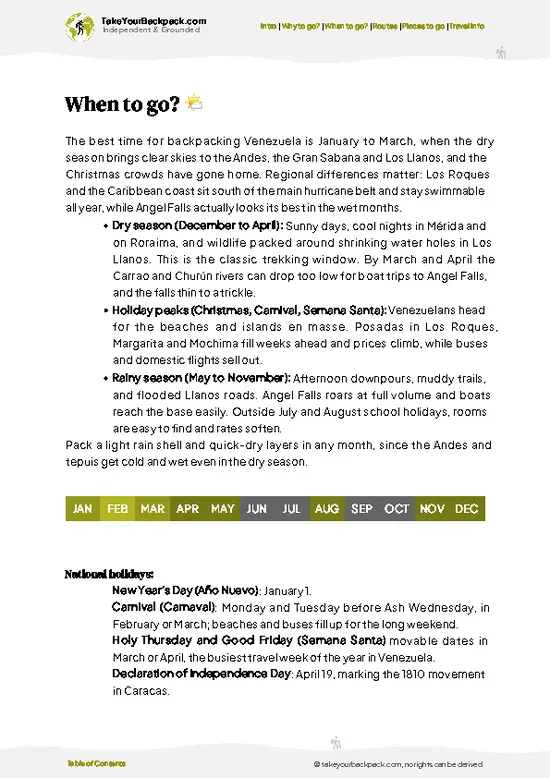
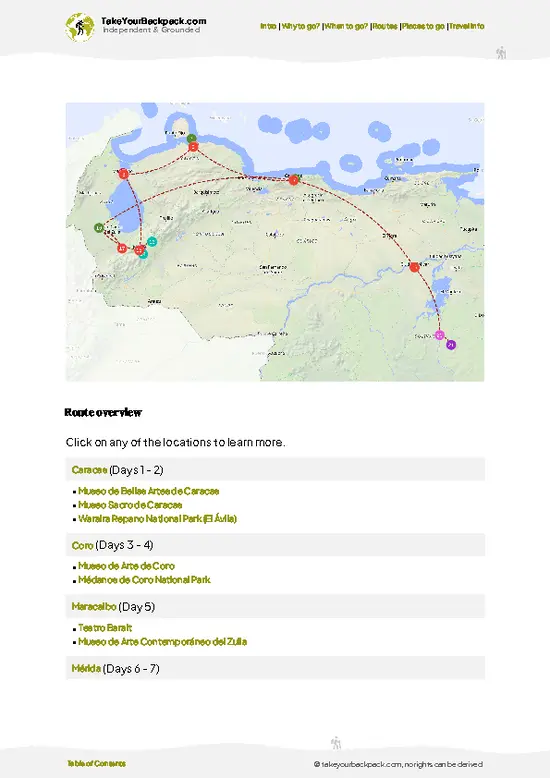
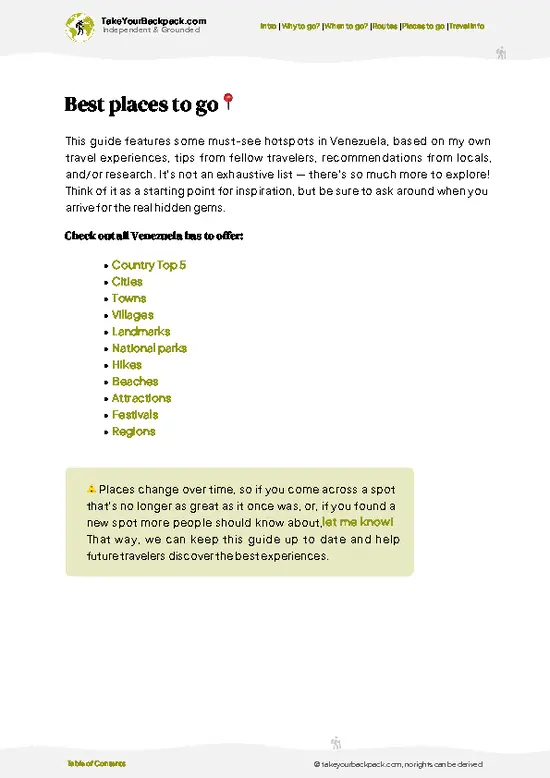
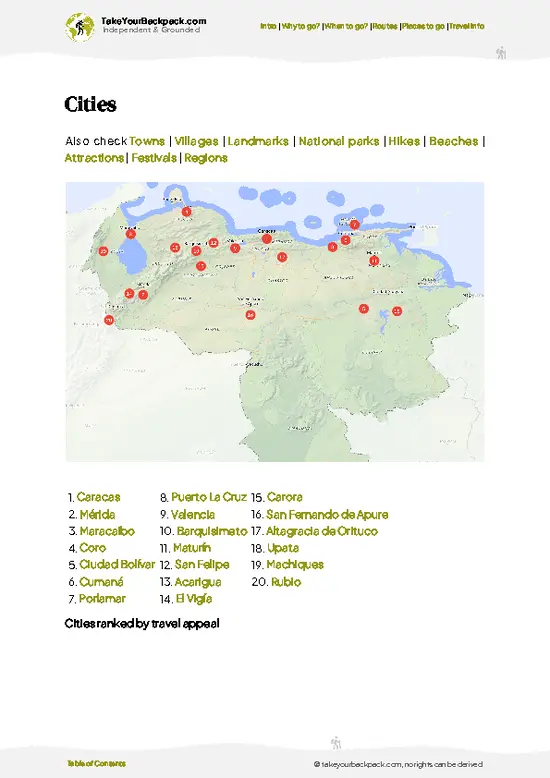
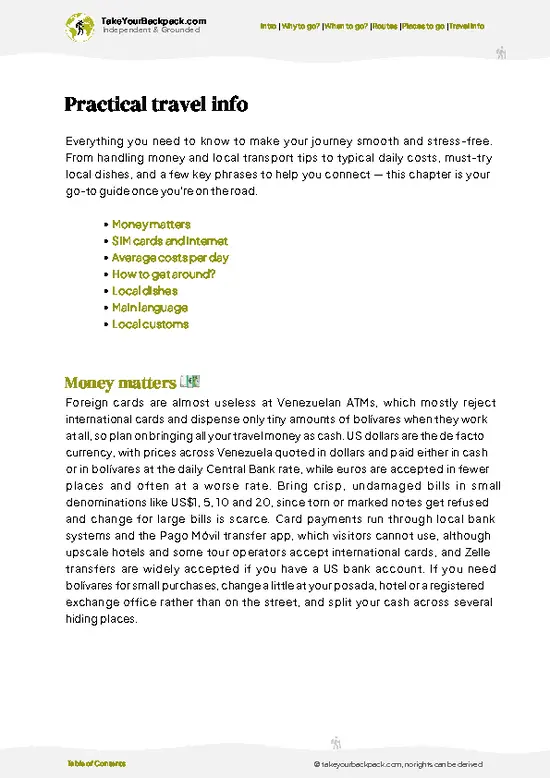
example page 0 from our offline Travel Guide for Venezuela
example page 1 from our offline Travel Guide for Venezuela
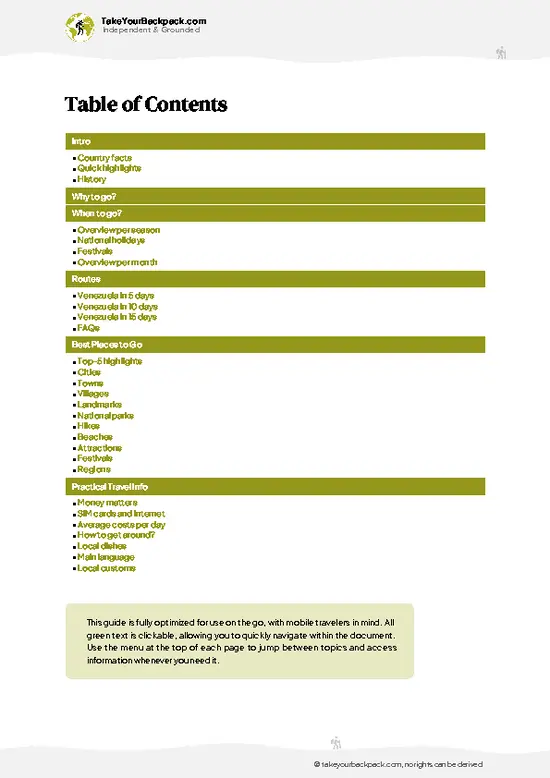
example page 2 from our offline Travel Guide for Venezuela
example page 3 from our offline Travel Guide for Venezuela
example page 4 from our offline Travel Guide for Venezuela
example page 5 from our offline Travel Guide for Venezuela
example page 6 from our offline Travel Guide for Venezuela
example page 7 from our offline Travel Guide for Venezuela
Loading the map 🌍
CLICK TO FILTER
cities
towns
villages
landmarks
national parks
hikes
beaches
attractions
festivals
regions
SHOW COUNTRY’S BESTSHOW ALL

✨ Why go?
Ranked #1 village in Venezuela
What makes it a must-see village

Canaima gives you a base for the Venezuelan tepui country, and that is the reason backpackers put up with the cost and the logistics. The lagoon, with its pink-tinted sand and tannin-dark water, is the village’s own show, but the real draw is that every boat trip, Angel Falls included, starts from here. Most travelers stay two to four nights, long enough for a river excursion and a day of walking around the lagoon, and a few linger longer because the pace is so slow. The village is run largely by the Pemón people, and guides, boatmen and posada owners are mostly from local families, so the place feels lived in rather than staged. Days begin early, with boats leaving after breakfast, and end early too, with hammocks strung under tin roofs and a loud chorus of frogs. Solo travelers meet people … read more 👉
Canaima gives you a base for the Venezuelan tepui country, and that is the reason backpackers put up with the cost and the logistics. The lagoon, with its pink-tinted sand and tannin-dark water, is the village’s own show, but the real draw is that every boat trip, Angel Falls included, starts from here. Most travelers stay two to four nights, long enough for a river excursion and a day of walking around the lagoon, and a few linger longer because the pace is so slow. The village is run largely by the Pemón people, and guides, boatmen and posada owners are mostly from local families, so the place feels lived in rather than staged. Days begin early, with boats leaving after breakfast, and end early too, with hammocks strung under tin roofs and a loud chorus of frogs. Solo travelers meet people easily at shared dinners. It suits hikers, photographers and anyone happy to trade nightlife for Sapo Falls, the Canaima Lagoon and a seat on a curiara canoe heading upriver. If you want constant movement, this is a short stop.

💡 HighlightsThe experiences that define the visit

  1. Canaima Lagoon and Hacha Falls viewpoint: The lagoon is what Canaima is best known for, a wide, tea-colored pool at the foot of several falls, with a beach of pale pink sand. Walk along the shore at the village edge for the classic view of the falls lined up across the water. Early morning gives the calmest water and best photos. Entering the park requires a national park fee that tour operators usually fold into packages, around US$10 to 30. Allow 1 to 2 hours.
  2. Sapo Falls (Salto El Sapo): The signature walk of the area. A trail leads you behind the curtain of water, where spray lashes you and the roar fills your chest. Go in the morning when the light is better and the group sizes are smaller. You will need a guide and a short boat ride across the lagoon, which most posadas include in a day
… read more 👉
  1. Canaima Lagoon and Hacha Falls viewpoint: The lagoon is what Canaima is best known for, a wide, tea-colored pool at the foot of several falls, with a beach of pale pink sand. Walk along the shore at the village edge for the classic view of the falls lined up across the water. Early morning gives the calmest water and best photos. Entering the park requires a national park fee that tour operators usually fold into packages, around US$10 to 30. Allow 1 to 2 hours.
  2. Sapo Falls (Salto El Sapo): The signature walk of the area. A trail leads you behind the curtain of water, where spray lashes you and the roar fills your chest. Go in the morning when the light is better and the group sizes are smaller. You will need a guide and a short boat ride across the lagoon, which most posadas include in a day tour costing around US$30 to 60. Bring a dry bag and waterproof sandals, and expect to be soaked. Allow 2 to 3 hours.
  3. Canaima Pemón community and local crafts: Wander the sandy lanes to see how the Pemón live here, from the small church to the school and the open-air houses. Handmade baskets, beadwork and carved wood are sold by local families and prices are usually modest, from US$2 to 15. Late afternoon, when the day tours return, is when the village is liveliest. Allow about 1 hour.
For day trips beyond the village, the main choice is Angel Falls by river and trail to the Raton Island lookout, plus Ucaima and Yuri falls along the way.
All three together fit comfortably into one full day, with an extra half day if you linger on the lagoon beach.
Spotted a mistake or missing something? Contact us.

🌤️ When to go?Choosing the right time of year

  • Wet Season (May to November): The falls run at full volume and Angel Falls shows as a long ribbon rather than a mist. Highs sit at 28 to 32°C (82 to 90°F), nights at 21 to 23°C (70 to 73°F). Rain comes in heavy afternoon bursts, boat rides get soaked, and river levels make trips to the Sapo and Hacha falls the most dramatic of the year.
  • Dry Season (December to March): Skies are clearer, the sand beaches of the lagoon open up, and flights are less likely to be grounded. Highs reach 30 to 34°C (86 to 93°F). Tour prices and flight seats tighten around Christmas, Carnival and Easter, and some falls shrink to a trickle.
  • Transition Months (April and late November): Showers start or fade, crowds thin, and posadas often come down in price. Daylight stays at roughly 11.5 to 12.5 hours all year.
  • Holidays:
… read more 👉
  • Wet Season (May to November): The falls run at full volume and Angel Falls shows as a long ribbon rather than a mist. Highs sit at 28 to 32°C (82 to 90°F), nights at 21 to 23°C (70 to 73°F). Rain comes in heavy afternoon bursts, boat rides get soaked, and river levels make trips to the Sapo and Hacha falls the most dramatic of the year.
  • Dry Season (December to March): Skies are clearer, the sand beaches of the lagoon open up, and flights are less likely to be grounded. Highs reach 30 to 34°C (86 to 93°F). Tour prices and flight seats tighten around Christmas, Carnival and Easter, and some falls shrink to a trickle.
  • Transition Months (April and late November): Showers start or fade, crowds thin, and posadas often come down in price. Daylight stays at roughly 11.5 to 12.5 hours all year.
  • Holidays: Venezuelan school breaks fill the small posadas, so expect higher rates.
Book your flight and tour package for late May or June if you want full waterfalls without the holiday crowds.


source: climatestotravel.comJANJanuary: excellent for travelingFEBFebruary: excellent for travelingMARMarch: excellent for travelingAPRApril: highly recommended for travelingMAYMay: good for travelingJUNJune: fair for travelingJULJuly: fair for travelingAUGAugust: fair for travelingSEPSeptember: fair for travelingOCTOctober: good for travelingNOVNovember: good for travelingDECDecember: highly recommended for traveling
venezuela-city-canaima
© Google | Yoha Ar

✈️ The backpacker research shortcutVenezuela Travel Guide

An offline-friendly backpacking guide with optimized travel routes, ranked highlights, transport advice, and the best areas to stay.
example page 0 from our offline Travel Guide for Venezuela
example page 1 from our offline Travel Guide for Venezuela
example page 2 from our offline Travel Guide for Venezuela
example page 3 from our offline Travel Guide for Venezuela
example page 4 from our offline Travel Guide for Venezuela
example page 5 from our offline Travel Guide for Venezuela
example page 6 from our offline Travel Guide for Venezuela
example page 7 from our offline Travel Guide for Venezuela
The digital guide (290 pages) contains:
✅ 91 highlights, ranked by travel appeal
✅ Optimized 5, 10 & 15-day travel routes
✅ Cities, national parks, landmarks, beaches
✅ How to get around
✅ Offline-friendly for travel without Wi-Fi
👉 Click to see all 30+ guide features

📅 Plan smarter in minutes, not weeks
✅ Month by month travel advice
✅ Festivals & national holidays
✅ Budget expectations

🗺️ Go to the right places, skip the overrated ones
✅ Honest pros & cons of destinations
✅ Top hikes, parks & viewpoints
✅ Lesser-known places most travelers miss
✅ Clear “worth it vs skip it” guidance

🛏️ Travel smoothly without rookie mistakes
✅ Best areas to stay
✅ Transport systems explained simply
✅ Common scams & safety advice
✅ SIM cards, money & practical tips

🌍 Understand the country, not just visit it
✅ Culture & traditions
✅ 52 Essential phrases & customs
✅ Festivals worth planning around
✅ Traveler-friendly historical context
✅ Insights that make places more meaningful

📱 Built for real travel conditions
✅ Fully downloadable PDF
✅ Works completely offline
✅ Optimized for phone use
✅ Useful in remote areas & buses
✅ Everything in one place
Stop searching, start planning
Get instant access to your full guide. 30‑day money-back guarantee.
+ Add another guide for just

By proceeding you agree to our terms.
Sent to your inbox immediately after payment • 100% Secure Checkout
Best Backpacking Travel Advisor 2025 tourism awardBest Backpacking
Travel Advisor
2025
What others say about Take Your Backpack Guides:
⭐⭐⭐⭐⭐
Fantastic, amazing amount of information!
⭐⭐⭐⭐⭐
My goodness this is amazing, it's what I've been looking for hats off too you!
⭐⭐⭐⭐⭐
I think this is absolutely BRILLIANT
⭐⭐⭐⭐
Very complete and informative. It's still missing places, but I gotta to commend you
⭐⭐⭐⭐⭐
This is truly amazing, thank you, can't wait to explore it with my kids!
⭐⭐⭐⭐⭐
Awesome resource, thank you!
⭐⭐⭐⭐⭐
This is amazing! Can't wait to explore the ones I haven't seen
⭐⭐⭐⭐
I love this! Well done, great idea.
⭐⭐⭐⭐⭐
Thanks for taking the time to make this gem!
⭐⭐⭐⭐⭐
This might be the best website I've ever seen.
⭐⭐⭐⭐⭐
Congratulations, and thank you so much for your work; it's incredibly valuable.
⭐⭐⭐⭐
In all seriousness I think you did a great job pointing out the important spots
⭐⭐⭐⭐⭐
10/10 very good
⭐⭐⭐⭐⭐
As someone who's only just starting to visit regularly this is awesome, thank you.
⭐⭐⭐⭐
Thank you very much! I'm going to visit my dad, it's going to be very useful!
⭐⭐⭐⭐⭐
This is really cool! We'll be travelling for the first time and this definitely come in handy.
⭐⭐⭐⭐⭐
You are now our minister of culture, congratulations 👨‍💼
⭐⭐⭐⭐⭐
Just wanted to tell you that this is a pearl! Going to follow your recommendations.
⭐⭐⭐⭐⭐
This is so cool. I'll definitely be using the resource for my travels soon.
⭐⭐⭐⭐⭐
This is very impressive! Good work.
⭐⭐⭐⭐⭐
This is an amazing and informative site. Very well done!

🛏️ Where to stay?Where staying makes the most sense

Most backpackers sleep in a posada or hammock camp right on the lagoon, and expect to pay US$ 20 to 60 per person per night in dollars.
Hammock camps: The budget standard is a hammock under a roof with a mosquito net, often US$ 15 to 30 a night, sometimes bundled into tour packages. Bring your own sleeping sheet because bedding is thin, and a padlock for the shared storage.
Simple posadas: Family-run places such as Posada Kusary offer basic private rooms with fans, mostly US$ 30 to 60 per person, and some include breakfast. Rooms near the lagoon catch the breeze and the sound of Sapo and Hacha in … read more 👉
Most backpackers sleep in a posada or hammock camp right on the lagoon, and expect to pay US$ 20 to 60 per person per night in dollars.
Hammock camps: The budget standard is a hammock under a roof with a mosquito net, often US$ 15 to 30 a night, sometimes bundled into tour packages. Bring your own sleeping sheet because bedding is thin, and a padlock for the shared storage.
Simple posadas: Family-run places such as Posada Kusary offer basic private rooms with fans, mostly US$ 30 to 60 per person, and some include breakfast. Rooms near the lagoon catch the breeze and the sound of Sapo and Hacha in the distance. Electricity and water can be intermittent, so charge devices when you can.
Lodge-style camps: Larger operators run camps across the lagoon, often selling all-inclusive packages (US$ 100 and up per person per day with meals and excursions). They are comfortable but pricey, so only worth the money if the package covers your tours.
Practical notes: Canaima has few shops, so food is usually arranged at your posada. Book ahead in the dry season and at holiday peaks. Bring small US dollar bills, since card payments and ATMs are unreliable.

🚌 Day tripsShort trips worth adding

Canaima works as a base for day trips because nearly every worthwhile outing leaves by boat or on foot from the lagoon, and most take half a day.
Salto El Sapo and Sapito:
The trail leads you behind a curtain of falling water, which is the main reason to go. Allow 2 to 3 hours with a guide, and carry a dry bag and sandals with grip, because the rock path is slick and you will be soaked. Many first-timers wear a camera around the neck and ruin it. The walk is best in the dry season, when the spray is lighter. Expect US$ 20 to 40 including the guide.

Salto Hacha:
A motorized curiara boat crosses the lagoon, passing sandy beaches and Hacha falls dropping straight into the water. Count on 3 to 5 hours and US$ 40 to 80 for the group boat. Go in the wet season for the heaviest flow, and bring a … read more 👉
Canaima works as a base for day trips because nearly every worthwhile outing leaves by boat or on foot from the lagoon, and most take half a day.
Salto El Sapo and Sapito:
The trail leads you behind a curtain of falling water, which is the main reason to go. Allow 2 to 3 hours with a guide, and carry a dry bag and sandals with grip, because the rock path is slick and you will be soaked. Many first-timers wear a camera around the neck and ruin it. The walk is best in the dry season, when the spray is lighter. Expect US$ 20 to 40 including the guide.

Salto Hacha:
A motorized curiara boat crosses the lagoon, passing sandy beaches and Hacha falls dropping straight into the water. Count on 3 to 5 hours and US$ 40 to 80 for the group boat. Go in the wet season for the heaviest flow, and bring a poncho for the spray. Some first-timers expect to swim at the base, but currents are strong and guides decide.

Angel Falls Overflight:
The tepui walls that frame the world’s tallest waterfall, 979 meters, are best seen by plane. Small aircraft take about 45 minutes to 1 hour and often cost US$ 150 to 300 per person. Mornings and the wet season give the clearest views, though cloud can cover the top. The common mistake is booking late, because planes are filled by holiday groups.
👉 Explore Angel Falls

FAQFrequently asked questions about Canaima

Most travelers fly to Canaima from Puerto Ordaz (Ciudad Guayana) or Ciudad Bolívar on small planes, with a flight time of about 1 to 1.5 hours. Return fares usually run US$ 150 to 300, and many pay as part of a tour package that includes meals and excursions. No road reaches Canaima, so everyone flies in and book at least a day ahead in the dry season.
Canaima is worth the trip if you want to stand behind Sapo falls and see the lagoon with its string of waterfalls beneath tepui walls. Two nights is the practical minimum, three if you add an overflight of Angel Falls. Costs are high by Venezuelan standards, with tours at US$ 20 to 80 each and basic rooms around US$ 30 to 60 per person, but the scenery justifies it.
Canaima can be done in a single day, but only through an organized day tour that flies in and out from Puerto Ordaz or Ciudad Bolívar. Such tours typically cost US$ 250 to 400, and include a lagoon boat ride, the Sapo and Sapito walk, and lunch. One day is rushed, though, and an overnight lets you see Hacha falls without hurrying.
⚠️ Things can change over time, so always validate details locally before you go.

Expanding your trip beyond this stop

Canaima isn’t the only highlight in Venezuela. Explore all what Venezuela has to offer.
Country photo of Venezuela

We 💚 feedbackParting advice and final tips

Most visitors rush to Angel Falls and miss the lagoon at dawn, when the water is flat and the falls line up in a mirror. I would set an alarm for that, then eat breakfast slowly. Pack insect repellent and a dry bag; the sandflies here are relentless and the spray at Sapo Falls will get everything.

✍️ Help improve this page!
The information on this page is based on in-depth research, insights shared by experienced travelers, and feedback from the local travel community in Venezuela. While every effort is made to keep the information accurate and current, conditions can change — so if you spot anything incorrect or outdated, please get in touch.


🙋‍♂️ Give feedback

👋 Meet the founderWho’s Behind Take Your Backpack?

Johan, backpacker and founder of TakeYourBackpackHi, I’m Johan (Netherlands 🇳🇱), the creator of TakeYourBackpack. Over the past 3 decades, I’ve backpacked through 90+ countries across six continents, gaining extensive experience with independent travel, long-term trips, and overland routes.

This site is built on a combination of firsthand travel experience and carefully curated insights from other backpackers. Many guides are based on places I’ve personally visited, while others bring together tips, observations, and practical advice shared by trusted travelers I’ve met along the way.

The goal is to provide realistic, experience-driven guidance — not generic itineraries — so you can explore destinations with better context, clearer expectations, and more confidence.