×

Venezuela🇻🇪 | villagesGran RoqueSand streets, cay boat days, lighthouse hill, flown-in posadas | things to do and best time to go

Explore CanaimaExplore Teleférico de Mérida

Backpacking in Gran Roque
👍 Recommendedvillage ranked #2
By Johan Kruseman 🇳🇱 | Updated October 19, 2026

Gran Roque was a fishing settlement of lobster boats and sand streets, and it still has the sand streets, but today the lobster boats share the shore with posadas and kitesurf crews. It sits in the Los Roques archipelago, a national park about 130 kilometers north of the Venezuelan mainland in the Caribbean Sea, and it is the only real village in the islands. Good news first: the water is absurdly clear, reef snorkeling starts a short boat ride away, and the village is flat, safe to wander and walkable end to end in 15 minutes. The downsides are plain. Everything is flown in, so it is pricey, and posada packages often bundle meals and boat trips. There is no nightlife and no sight worth a special trip inside the village itself. Evenings are quiet: dinner at the posada, a beer on the sand, bed early. Meeting travelers is easy, since boats leave together each morning. A good first day: arrive by morning flight, drop your bag, climb to the lighthouse ruin for the view, then swim off the village beach.

Discover everything you want to know in the 📖 Venezuela Travel Guide.
Safety warning

The current risk level for Venezuela is high. Check the advice before going.


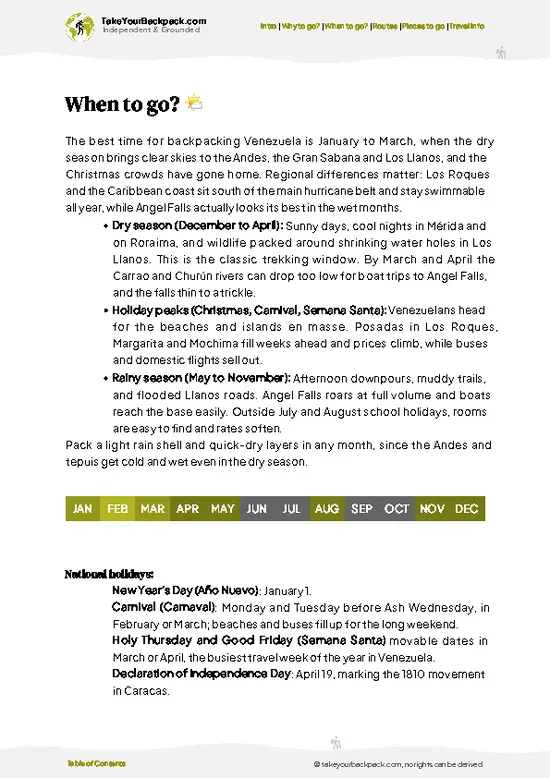
example page 0 from our offline Travel Guide for Venezuela
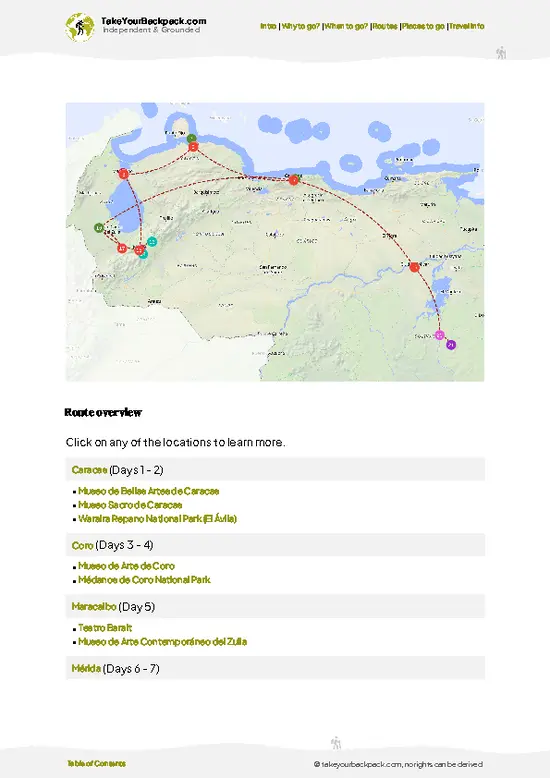
example page 1 from our offline Travel Guide for Venezuela
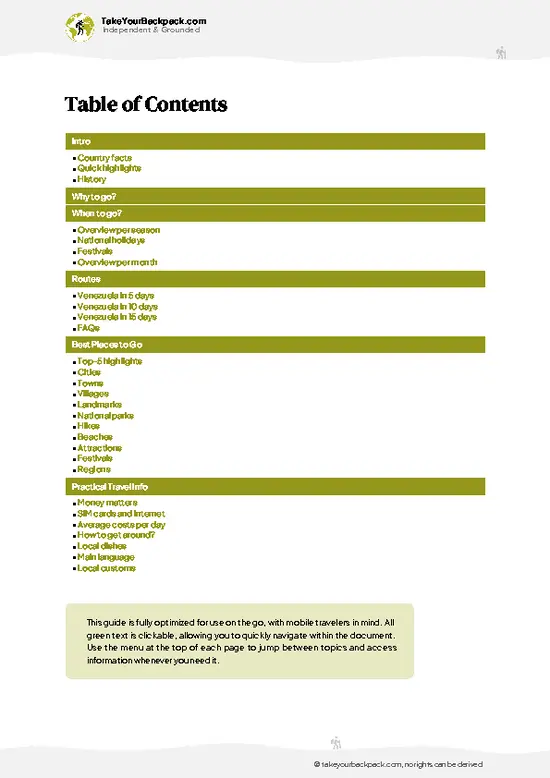
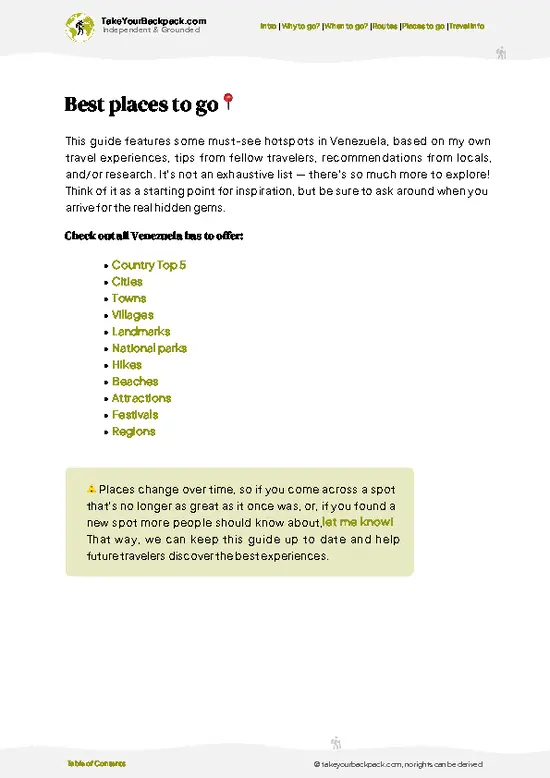
example page 2 from our offline Travel Guide for Venezuela
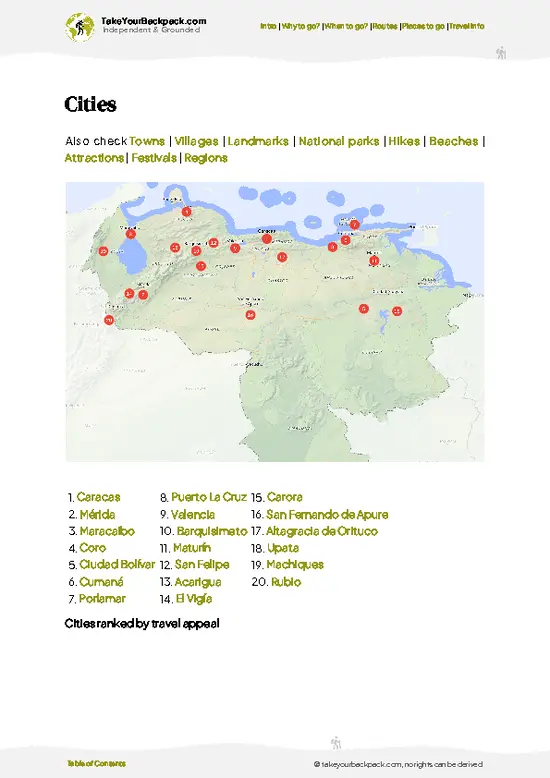
example page 3 from our offline Travel Guide for Venezuela
example page 4 from our offline Travel Guide for Venezuela
example page 5 from our offline Travel Guide for Venezuela
example page 6 from our offline Travel Guide for Venezuela
example page 7 from our offline Travel Guide for Venezuela
Loading the map 🌍
CLICK TO FILTER
cities
towns
villages
landmarks
national parks
hikes
beaches
attractions
festivals
regions
SHOW COUNTRY’S BESTSHOW ALL

✨ Why go?
Ranked #2 village in Venezuela
Why Gran Roque should be on your travel list

Gran Roque is the only inhabited island of the Los Roques archipelago, so anyone who wants the cays has to sleep here. Backpackers come for the boat days to Crasquí, Madrisquí and Francisqui, where you step onto white sand with almost no one else around. Evenings stay calm, and the lighthouse hill above the village gives you the whole reef-ringed lagoon at a glance. It is not a pause between busy stops. Most people stay three to five days, long enough for two or three boat trips and a rest day, and it suits couples, snorkelers, kitesurfers and solo travelers who like sharing a boat with strangers. Posadas often include meals, which makes the budget easier to plan. If you need cheap beds, hiking, nightlife or city energy, Gran Roque will feel expensive and small. If you want clear water, a … read more 👉
Gran Roque is the only inhabited island of the Los Roques archipelago, so anyone who wants the cays has to sleep here. Backpackers come for the boat days to Crasquí, Madrisquí and Francisqui, where you step onto white sand with almost no one else around. Evenings stay calm, and the lighthouse hill above the village gives you the whole reef-ringed lagoon at a glance. It is not a pause between busy stops. Most people stay three to five days, long enough for two or three boat trips and a rest day, and it suits couples, snorkelers, kitesurfers and solo travelers who like sharing a boat with strangers. Posadas often include meals, which makes the budget easier to plan. If you need cheap beds, hiking, nightlife or city energy, Gran Roque will feel expensive and small. If you want clear water, a dry sandy village and long beach hours, it is hard to beat anywhere in the southern Caribbean.

💡 HighlightsTop highlights of Gran Roque

  1. Faro Holandés (Dutch Lighthouse hill): A short climb from the village leads to the old lighthouse and the best panorama of the archipelago, with the lagoon shifting from pale green to deep blue. Go in late afternoon for softer light and cooler air. Free, 30 to 60 minutes including the walk.
  2. Village beach and Plaza Bolívar waterfront: Fishing boats pull up beside the sand, pelicans work the shallows, and you can swim a few steps from the posadas. Early morning is calmest, when fishermen clean the catch. Free, 1 to 2 hours.
  3. Boat day to the nearby cays: The reason to be here. Local boatmen run you to sandbars such as Francisqui, Madrisquí and Crasquí for swimming, snorkeling and beach time with a shaded umbrella. Go in the morning for calmer water and fewer boats. Usually US$25 to 60 per person
… read more 👉
  1. Faro Holandés (Dutch Lighthouse hill): A short climb from the village leads to the old lighthouse and the best panorama of the archipelago, with the lagoon shifting from pale green to deep blue. Go in late afternoon for softer light and cooler air. Free, 30 to 60 minutes including the walk.
  2. Village beach and Plaza Bolívar waterfront: Fishing boats pull up beside the sand, pelicans work the shallows, and you can swim a few steps from the posadas. Early morning is calmest, when fishermen clean the catch. Free, 1 to 2 hours.
  3. Boat day to the nearby cays: The reason to be here. Local boatmen run you to sandbars such as Francisqui, Madrisquí and Crasquí for swimming, snorkeling and beach time with a shaded umbrella. Go in the morning for calmer water and fewer boats. Usually US$25 to 60 per person depending on cays, often with lunch extra, 5 to 7 hours.
Skip the village beach if time is short and put every hour into the boat day. For day trips, Francisqui, Madrisquí, Crasquí and the Dos Mosquises research area are reachable by boat from Gran Roque.
Spotted a mistake or missing something? Contact us.

🌤️ When to go?Seasonal considerations and timing

  • Dry Season (December to April): Trade winds blow steadily, rain is rare, and days run 28 to 31°C (82 to 88°F) with nights around 24°C (75°F). Kitesurfers and divers arrive, so flights and posadas fill and prices peak.
  • Holiday Peaks (Christmas, Carnival, Easter): Venezuelan vacationers book out the island and nightly rates climb well above normal. Reserve months ahead.
  • Shoulder Months (May to June, November): Showers are brief, seas stay warm at about 27 to 29°C (81 to 84°F), and crowds thin. Posadas often negotiate.
  • Wetter Season (July to October): Expect afternoon squalls and hotter, stickier air near 32°C (90°F). Visibility for snorkeling can dip, but beaches are quiet and rates are lowest.
Daylight stays close to 11 to 13 hours all year, so timing hinges on wind and crowds, not light. Book … read more 👉
  • Dry Season (December to April): Trade winds blow steadily, rain is rare, and days run 28 to 31°C (82 to 88°F) with nights around 24°C (75°F). Kitesurfers and divers arrive, so flights and posadas fill and prices peak.
  • Holiday Peaks (Christmas, Carnival, Easter): Venezuelan vacationers book out the island and nightly rates climb well above normal. Reserve months ahead.
  • Shoulder Months (May to June, November): Showers are brief, seas stay warm at about 27 to 29°C (81 to 84°F), and crowds thin. Posadas often negotiate.
  • Wetter Season (July to October): Expect afternoon squalls and hotter, stickier air near 32°C (90°F). Visibility for snorkeling can dip, but beaches are quiet and rates are lowest.
Daylight stays close to 11 to 13 hours all year, so timing hinges on wind and crowds, not light. Book a midweek flight outside holidays for the best rates.


source: climatestotravel.comJANJanuary: excellent for travelingFEBFebruary: excellent for travelingMARMarch: excellent for travelingAPRApril: highly recommended for travelingMAYMay: fair for travelingJUNJune: fair for travelingJULJuly: fair for travelingAUGAugust: fair for travelingSEPSeptember: fair for travelingOCTOctober: fair for travelingNOVNovember: highly recommended for travelingDECDecember: excellent for traveling
when-to-go

✈️ The backpacker research shortcutVenezuela Travel Guide

An offline-friendly backpacking guide with optimized travel routes, ranked highlights, transport advice, and the best areas to stay.
example page 0 from our offline Travel Guide for Venezuela
example page 1 from our offline Travel Guide for Venezuela
example page 2 from our offline Travel Guide for Venezuela
example page 3 from our offline Travel Guide for Venezuela
example page 4 from our offline Travel Guide for Venezuela
example page 5 from our offline Travel Guide for Venezuela
example page 6 from our offline Travel Guide for Venezuela
example page 7 from our offline Travel Guide for Venezuela
The digital guide (290 pages) contains:
✅ 91 highlights, ranked by travel appeal
✅ Optimized 5, 10 & 15-day travel routes
✅ Cities, national parks, landmarks, beaches
✅ How to get around
✅ Offline-friendly for travel without Wi-Fi
👉 Click to see all 30+ guide features

📅 Plan smarter in minutes, not weeks
✅ Month by month travel advice
✅ Festivals & national holidays
✅ Budget expectations

🗺️ Go to the right places, skip the overrated ones
✅ Honest pros & cons of destinations
✅ Top hikes, parks & viewpoints
✅ Lesser-known places most travelers miss
✅ Clear “worth it vs skip it” guidance

🛏️ Travel smoothly without rookie mistakes
✅ Best areas to stay
✅ Transport systems explained simply
✅ Common scams & safety advice
✅ SIM cards, money & practical tips

🌍 Understand the country, not just visit it
✅ Culture & traditions
✅ 52 Essential phrases & customs
✅ Festivals worth planning around
✅ Traveler-friendly historical context
✅ Insights that make places more meaningful

📱 Built for real travel conditions
✅ Fully downloadable PDF
✅ Works completely offline
✅ Optimized for phone use
✅ Useful in remote areas & buses
✅ Everything in one place
Stop searching, start planning
Get instant access to your full guide. 30‑day money-back guarantee.
+ Add another guide for just

By proceeding you agree to our terms.
Sent to your inbox immediately after payment • 100% Secure Checkout
Best Backpacking Travel Advisor 2025 tourism awardBest Backpacking
Travel Advisor
2025
What others say about Take Your Backpack Guides:
⭐⭐⭐⭐⭐
Fantastic, amazing amount of information!
⭐⭐⭐⭐⭐
My goodness this is amazing, it's what I've been looking for hats off too you!
⭐⭐⭐⭐⭐
I think this is absolutely BRILLIANT
⭐⭐⭐⭐
Very complete and informative. It's still missing places, but I gotta to commend you
⭐⭐⭐⭐⭐
This is truly amazing, thank you, can't wait to explore it with my kids!
⭐⭐⭐⭐⭐
Awesome resource, thank you!
⭐⭐⭐⭐⭐
This is amazing! Can't wait to explore the ones I haven't seen
⭐⭐⭐⭐
I love this! Well done, great idea.
⭐⭐⭐⭐⭐
Thanks for taking the time to make this gem!
⭐⭐⭐⭐⭐
This might be the best website I've ever seen.
⭐⭐⭐⭐⭐
Congratulations, and thank you so much for your work; it's incredibly valuable.
⭐⭐⭐⭐
In all seriousness I think you did a great job pointing out the important spots
⭐⭐⭐⭐⭐
10/10 very good
⭐⭐⭐⭐⭐
As someone who's only just starting to visit regularly this is awesome, thank you.
⭐⭐⭐⭐
Thank you very much! I'm going to visit my dad, it's going to be very useful!
⭐⭐⭐⭐⭐
This is really cool! We'll be travelling for the first time and this definitely come in handy.
⭐⭐⭐⭐⭐
You are now our minister of culture, congratulations 👨‍💼
⭐⭐⭐⭐⭐
Just wanted to tell you that this is a pearl! Going to follow your recommendations.
⭐⭐⭐⭐⭐
This is so cool. I'll definitely be using the resource for my travels soon.
⭐⭐⭐⭐⭐
This is very impressive! Good work.
⭐⭐⭐⭐⭐
This is an amazing and informative site. Very well done!

🛏️ Where to stay?Choosing the right base

Gran Roque has no hostels, so backpackers sleep in family-run posadas, and the cheapest rooms cost about US$40 to 80 per person per night. Most include breakfast, and many offer full board with lunch or dinner for a bit more, which helps because food on the island is pricey. All sit within a few minutes’ walk of each other along the sand streets, so location barely matters. Pick by what is included.
Budget rooms are simple: a fan or small air conditioner, a private bathroom, and sometimes salty water. Posadas facing the beach cost more but put you steps from the boat landing and the sunset. Rooftop … read more 👉
Gran Roque has no hostels, so backpackers sleep in family-run posadas, and the cheapest rooms cost about US$40 to 80 per person per night. Most include breakfast, and many offer full board with lunch or dinner for a bit more, which helps because food on the island is pricey. All sit within a few minutes’ walk of each other along the sand streets, so location barely matters. Pick by what is included.
Budget rooms are simple: a fan or small air conditioner, a private bathroom, and sometimes salty water. Posadas facing the beach cost more but put you steps from the boat landing and the sunset. Rooftop terraces are common, and they are where you will meet other travelers over a rum.
Prices jump at Christmas, Carnival and Easter, and many posadas ask for a deposit by bank transfer or international card. Cash in US dollars is widely accepted, so bring more than you think, since there are few ATMs and they are unreliable. Camping is restricted in the Los Roques archipelago, and permits are tied to the park, so plan on a posada. Message owners directly on WhatsApp to confirm what the rate covers, including the park fee.

🚌 Day tripsEasy escapes and nearby places

Gran Roque works as an excellent base because nearly every day trip is a boat ride to a sandbar or reef, with posadas arranging them each morning.
Madrisquí:
A flat island of white sand, shallow turquoise water and rented umbrellas, about 15 to 25 minutes by boat. Expect to pay roughly US$25 to 40 per person for the boat, with a cooler of drinks and lunch costing extra. Go early before the sun gets fierce, and bring reef-safe sunscreen, since there is almost no natural shade.

Cayo de Agua:
This is the postcard strip, a sand spit joining two small islands with water on both sides. The boat takes 30 to 45 minutes and the day usually costs US$30 to 50 per person. Dry season is best because calm seas make the crossing smooth. First-timers often forget a hat and a long-sleeve shirt, and they burn … read more 👉
Gran Roque works as an excellent base because nearly every day trip is a boat ride to a sandbar or reef, with posadas arranging them each morning.
Madrisquí:
A flat island of white sand, shallow turquoise water and rented umbrellas, about 15 to 25 minutes by boat. Expect to pay roughly US$25 to 40 per person for the boat, with a cooler of drinks and lunch costing extra. Go early before the sun gets fierce, and bring reef-safe sunscreen, since there is almost no natural shade.

Cayo de Agua:
This is the postcard strip, a sand spit joining two small islands with water on both sides. The boat takes 30 to 45 minutes and the day usually costs US$30 to 50 per person. Dry season is best because calm seas make the crossing smooth. First-timers often forget a hat and a long-sleeve shirt, and they burn within an hour.
👉 Explore Cayo de Agua
Francisquí:
A cluster of low cays with calm, clear shallows and easy snorkeling right off the beach. The ride is 15 to 25 minutes and the price is about US$25 to 40 per person, often shared in a group boat. Bring your own mask if you can, since rentals are limited and cost around US$5 to 10.

Crasquí:
A quiet cay on the far side of the lagoon with a mellow beach and good snorkeling over seagrass and coral. It takes about 30 to 40 minutes by boat and costs roughly US$30 to 45 per person. Arrange pickup times clearly with the captain, because getting stranded after a late afternoon change in wind is a common headache.

FAQFrequently asked questions about Gran Roque

Most travelers fly to Gran Roque from Caracas, a flight of about 40 to 60 minutes on small propeller planes that typically costs US$180 to 300 round trip. Flights also leave from some other airports such as Margarita, and many posadas sell packages that bundle transfers and meals. Book weeks ahead in dry season, and note that baggage allowances on the small aircraft are tight, often around 10 to 15 kg.
Yes, Gran Roque is worth the trip if you want clear shallow water, white sand cays and snorkeling without crowds, and you can accept island prices. Expect to spend roughly US$100 to 180 a day with a posada, boat trips and food, which is steep for Venezuela. Three to four days is enough to see the nearby cays, and the lighthouse viewpoint above the village is free.
Gran Roque is possible as a day trip from Caracas, but it is rushed and rarely cost-effective. Morning flights take about 40 to 60 minutes and return flights leave in the afternoon, which gives only a few hours on the sand. Staying at least one night, at roughly US$40 to 80 per person in a posada, lets you reach cays like Madrisquí and Cayo de Agua without watching the clock.
⚠️ Things can change over time, so always validate details locally before you go.

Other destinations worth considering

Gran Roque isn’t the only highlight in Venezuela. Explore all what Venezuela has to offer.
Country photo of Venezuela

We 💚 feedbackFinal thoughts on visiting Gran Roque

Gran Roque is for water people: snorkelers, kitesurfers, couples and solo travelers who are happy with a sandy street, a shared boat and an early night. Book a posada with meals and bring cash, plus reef-safe sunscreen and a hat, because shade is rare on the cays. Skip it if you need nightlife or a tight budget.

✍️ Help improve this page!
The information on this page is based on in-depth research, insights shared by experienced travelers, and feedback from the local travel community in Venezuela. While every effort is made to keep the information accurate and current, conditions can change — so if you spot anything incorrect or outdated, please get in touch.


🙋‍♂️ Give feedback

👋 Meet the founderWho’s Behind Take Your Backpack?

Johan, backpacker and founder of TakeYourBackpackHi, I’m Johan (Netherlands 🇳🇱), the creator of TakeYourBackpack. Over the past 3 decades, I’ve backpacked through 90+ countries across six continents, gaining extensive experience with independent travel, long-term trips, and overland routes.

This site is built on a combination of firsthand travel experience and carefully curated insights from other backpackers. Many guides are based on places I’ve personally visited, while others bring together tips, observations, and practical advice shared by trusted travelers I’ve met along the way.

The goal is to provide realistic, experience-driven guidance — not generic itineraries — so you can explore destinations with better context, clearer expectations, and more confidence.