×

Venezuela🇻🇪 | citiesCaracasmountain skyline, urban sprawl, street murals | things to do and best time to go

Explore Playa ParguitoExplore Coro

Backpacking in Caracas
🏆 Top pickcity ranked #1
By Johan Kruseman 🇳🇱 | Updated May 28, 2026

Caracas used to be the classic big Latin American capital: busy but manageable, nightlife-heavy, with travelers using it as a launchpad to the coast and the Andes. Today it’s sharper-edged and more complicated. You feel the shift as soon as you land in this valley city on the northern edge of Venezuela, tucked between steep green mountains and the Caribbean coast. For backpackers, Caracas is intense value and high friction at the same time: museums like the Museo de Arte Contemporáneo, grand spaces like Plaza Bolívar, the cable car up El Ávila, and a nightlife scene that still goes hard if you’re plugged in with locals. Costs can be very low, but logistics, cash, and safety require constant attention, and you’ll meet far fewer foreign travelers here than in Mérida or coastal hubs. The vibe is raw, proud, creative, and survival-focused rather than easygoing.

Discover everything you want to know in the 📖 Venezuela Travel Guide.
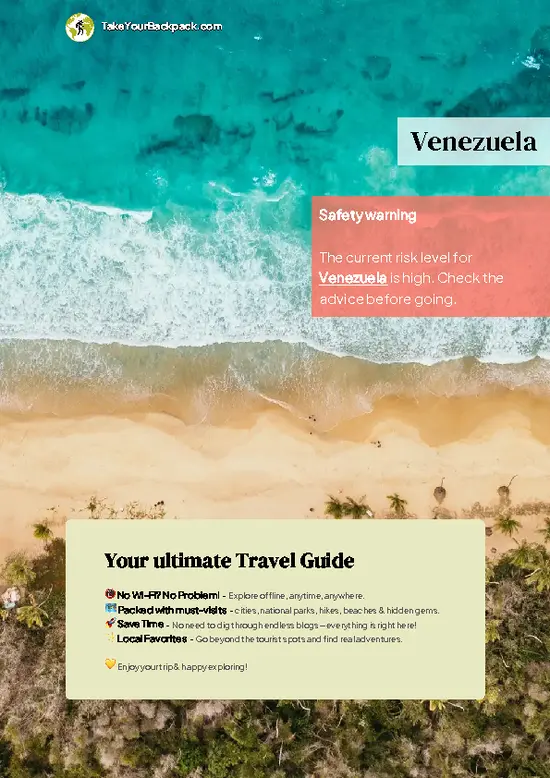
Safety warning

The current risk level for Venezuela is high. Check the advice before going.


Get your Venezuela guide
102 ranked highlights, routes & tips, works offline (386 pages)
Loading the map 🌍
CLICK TO FILTER
cities
towns
villages
landmarks
national parks
hikes
beaches
attractions
festivals
regions
SHOW COUNTRY’S BESTSHOW ALL

✨ Why go?
Ranked #1 city in Venezuela
The unique appeal for travelers

Caracas is a strategic hub for backpackers, balancing time, money, and comfort in a way that can elevate your trip. The city offers a surprising array of highlights and activities that can keep you engaged without breaking the bank. You’ll find affordable hostels that cater to the backpacker vibe, making it easy to meet fellow travelers and share tips. The food scene is a delightful mix of local flavors and street eats, allowing you to indulge without overspending.

Caracas is also walkable, with neighborhoods that invite exploration on foot. This not only saves you money but also immerses you in the local culture. When the sun sets, the nightlife kicks in, offering a range of options from laid-back bars to lively clubs, perfect for unwinding after a day of adventure.

As a basecamp for read more 👉
Caracas is a strategic hub for backpackers, balancing time, money, and comfort in a way that can elevate your trip. The city offers a surprising array of highlights and activities that can keep you engaged without breaking the bank. You’ll find affordable hostels that cater to the backpacker vibe, making it easy to meet fellow travelers and share tips. The food scene is a delightful mix of local flavors and street eats, allowing you to indulge without overspending.

Caracas is also walkable, with neighborhoods that invite exploration on foot. This not only saves you money but also immerses you in the local culture. When the sun sets, the nightlife kicks in, offering a range of options from laid-back bars to lively clubs, perfect for unwinding after a day of adventure.

As a basecamp for day trips, Caracas is well-positioned for excursions into the surrounding natural beauty, making it a practical stop on your journey. Whether you stay for a few days or just a quick pit stop, the city’s unique blend of experiences makes it a worthwhile addition to your backpacking route.
Get the complete Travel Guide for Venezuela
Everything organized for offline planning — routes, highlights, costs & tips

See what’s inside 👉

Get the Travel Guide -

💡 HighlightsEssential experiences to have while visiting Caracas

  • Waraira Repano (El Ávila) and the Teleférico — The mountain that looms over the city; hike trails, take the teleférico for skyline-to-sea views, and enjoy a cool break from the heat with native forest and lookout points that give you Caracas from above.
  • Plaza Bolívar and Catedral Metropolitana — The colonial heart of Caracas: a compact square surrounded by historic buildings, churches and street life that’s perfect for feeling the city’s origins and watching everyday Caracas unfold.
  • Panteón Nacional — The mausoleum for Venezuela’s founding figures, including Simón Bolívar. Powerful for history buffs and anyone who wants to see where the country’s national memory is literally housed.
  • Casa Natal de Simón Bolívar — The modest birthplace turned museum in the historic quarter; period rooms,
read more 👉
  • Waraira Repano (El Ávila) and the Teleférico — The mountain that looms over the city; hike trails, take the teleférico for skyline-to-sea views, and enjoy a cool break from the heat with native forest and lookout points that give you Caracas from above.
  • Plaza Bolívar and Catedral Metropolitana — The colonial heart of Caracas: a compact square surrounded by historic buildings, churches and street life that’s perfect for feeling the city’s origins and watching everyday Caracas unfold.
  • Panteón Nacional — The mausoleum for Venezuela’s founding figures, including Simón Bolívar. Powerful for history buffs and anyone who wants to see where the country’s national memory is literally housed.
  • Casa Natal de Simón Bolívar — The modest birthplace turned museum in the historic quarter; period rooms, artifacts and context for Bolívar’s early life make it a concrete link to Venezuela’s independence story.
  • Museo de Arte Contemporáneo de Caracas (MACC) — One of Latin America’s best modern art collections, set in a distinctive building near Parque Central; it’s a must for contemporary Venezuelan and international works, including some surprising masterpieces.
  • Museo de Bellas Artes — Classical and pre-Columbian collections under one roof; the museum walks you through colonial painting, sculpture and indigenous art that help explain Venezuela’s visual heritage.
  • Teatro Teresa Carreño — Venezuela’s main performing-arts complex: striking modernist architecture, frequent concerts, ballet and theatre, plus guided tours that show off its huge halls and backstage areas.
  • Plaza Altamira (Plaza Francia) — An upscale, lively square with the iconic obelisk and fountain; great cafes, people-watching and a sense of contemporary Caracas civic life—also where many public demonstrations and celebrations happen.
  • Paseo Los Próceres — A dramatic ceremonial avenue lined with statues and monumental architecture celebrating independence heroes; it’s photogenic, gives a strong sense of national symbolism, and offers wide-open city views.
  • El 23 de Enero neighborhood — Not your typical tourist spot, but invaluable for understanding Caracas’ social history: large communal housing projects, vivid murals, rooftop viewpoints and guided community tours that explain its role in modern Venezuelan politics and culture.
A few great day trips just outside Caracas include the German-flavored mountain village Colonia Tovar, the nearby mountain town El Junquito for cool air and roast pork, and the coastal beaches and Afro-Venezuelan village of Choroní.
Spotted a mistake or missing something? Contact us.

🏘️ NeighborhoodsHow different areas shape the experience

Caracas is a city of contrasts, where vibrant culture meets urban challenges. Understanding its neighborhoods can help you maximize your experience while balancing time, money, and comfort.

Chacao
This area is the heart of the city’s nightlife. Trendy bars and restaurants line the streets, making it a hotspot for socializing. Expect higher prices, but the lively atmosphere is worth it. Walkable and safe, it’s ideal for short stays where you want to soak up the local vibe without straying far from the action.

Las Mercedes
Known for its upscale dining and shopping, Las Mercedes offers a more polished experience. It’s a bit pricier, but you’ll find a mix of local and international cuisine. The area is well-connected by public transport, making it easy to explore other parts of the city. … read more 👉
Caracas is a city of contrasts, where vibrant culture meets urban challenges. Understanding its neighborhoods can help you maximize your experience while balancing time, money, and comfort.

Chacao
This area is the heart of the city’s nightlife. Trendy bars and restaurants line the streets, making it a hotspot for socializing. Expect higher prices, but the lively atmosphere is worth it. Walkable and safe, it’s ideal for short stays where you want to soak up the local vibe without straying far from the action.

Las Mercedes
Known for its upscale dining and shopping, Las Mercedes offers a more polished experience. It’s a bit pricier, but you’ll find a mix of local and international cuisine. The area is well-connected by public transport, making it easy to explore other parts of the city. Perfect for longer stays if you enjoy a blend of comfort and convenience.

El Hatillo
This charming neighborhood feels like a small town within the city. Cobblestone streets, local artisan shops, and a quieter vibe make it a refreshing escape. Prices are moderate, and it’s walkable, but you’ll need to rely on taxis or rideshares for longer trips. Great for those looking to unwind after a day of exploring.

Sabana Grande
A bustling commercial area, Sabana Grande is where you’ll find street vendors, shops, and a lively atmosphere. It’s budget-friendly, making it ideal for backpackers. While it can be noisy, the energy is infectious. Good for short stays if you want to experience the local hustle and bustle.

La Candelaria
Rich in history, this area is home to museums and cultural sites. It’s less touristy, offering a more authentic experience. Prices are lower, but the walkability can vary. Suitable for longer stays if you want to immerse yourself in Caracas’s cultural scene.

⌛️ 1 day1-day itinerary for Caracas

Caracas, Venezuela, is a city that pulses with life, a blend of modernity and rich history, set against the backdrop of the majestic Ávila Mountain. It’s a place where vibrant street art meets colonial architecture, and the warmth of its people can turn a simple visit into a memorable experience.

Start your day in the charming neighborhood of El Hatillo. This area is known for its cobblestone streets and colorful houses. Grab a breakfast arepa at a local café—trust me, it’s a must. The flavors will energize you for the day ahead. After breakfast, stroll through the artisan market, where you can find handmade crafts and local art. This isn’t just a shopping stop; it’s a chance to connect with the culture.

As the morning unfolds, make your way to Parque Nacional El Ávila. A cable car ride … read more 👉
Caracas, Venezuela, is a city that pulses with life, a blend of modernity and rich history, set against the backdrop of the majestic Ávila Mountain. It’s a place where vibrant street art meets colonial architecture, and the warmth of its people can turn a simple visit into a memorable experience.

Start your day in the charming neighborhood of El Hatillo. This area is known for its cobblestone streets and colorful houses. Grab a breakfast arepa at a local café—trust me, it’s a must. The flavors will energize you for the day ahead. After breakfast, stroll through the artisan market, where you can find handmade crafts and local art. This isn’t just a shopping stop; it’s a chance to connect with the culture.

As the morning unfolds, make your way to Parque Nacional El Ávila. A cable car ride up to the summit offers breathtaking views of the city and the surrounding mountains. Spend some time hiking the trails; the fresh air and stunning vistas are invigorating. This is a high-value experience that many tourists overlook, but it’s worth every moment.

In the afternoon, head to the historic center of Caracas. Visit Plaza Bolívar, where you can admire the impressive architecture of the surrounding buildings. The nearby Catedral de Caracas is a peaceful spot to reflect and soak in the atmosphere. For lunch, try a local spot like La Casa de las Arepas, where you can savor traditional Venezuelan dishes.

As evening approaches, venture to the Sabana Grande area for a taste of local nightlife. This bustling street is lined with shops and eateries. Grab a drink at a bar and enjoy the lively atmosphere. If you’re feeling adventurous, seek out a small venue featuring live music—this is where you’ll truly feel the city’s heartbeat.

Spending a day in Caracas is about balancing time, money, and comfort. You’ll leave with a deeper understanding of its culture and a sense of connection that goes beyond the typical tourist experience.
Build the Right Itinerary
Use the Venezuela Travel Guide’s 5, 10 & 15-day routes as a starting point to plan a trip that actually works on the ground.

Get the Travel Guide -

🌤️ When to go?When to go for the best experience


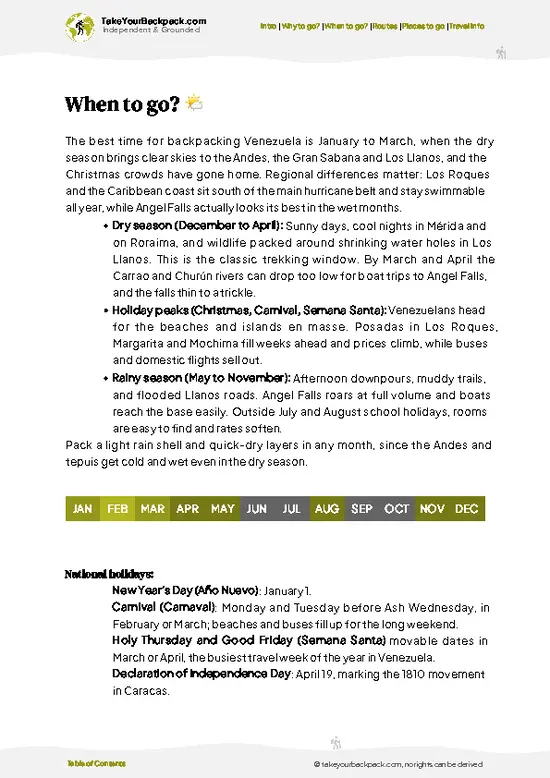
  • Weather: Caracas sits at about 900 meters elevation, which keeps it from the worst tropical heat. The dry season runs from December to April, offering mostly sunny days and minimal rain—ideal for trekking and exploring without soggy gear or muddy trails.

  • Temperature: Expect daytime highs around 26-29°C (79-84°F) during the dry months, with cooler nights dipping to 16-18°C (61-64°F). The rainy season (May to November) is warmer and more humid, pushing highs closer to 30-32°C (86-90°F), which can sap your energy faster.

  • Daylight Hours: Caracas enjoys roughly 11.5 to 12.5 hours of daylight year-round, thanks to its proximity to the equator. This steady rhythm means you won’t lose precious daylight to seasonal shifts, so your hiking and sightseeing windows stay consistent.

  • Crowds: Tourist
read more 👉

  • Weather: Caracas sits at about 900 meters elevation, which keeps it from the worst tropical heat. The dry season runs from December to April, offering mostly sunny days and minimal rain—ideal for trekking and exploring without soggy gear or muddy trails.

  • Temperature: Expect daytime highs around 26-29°C (79-84°F) during the dry months, with cooler nights dipping to 16-18°C (61-64°F). The rainy season (May to November) is warmer and more humid, pushing highs closer to 30-32°C (86-90°F), which can sap your energy faster.

  • Daylight Hours: Caracas enjoys roughly 11.5 to 12.5 hours of daylight year-round, thanks to its proximity to the equator. This steady rhythm means you won’t lose precious daylight to seasonal shifts, so your hiking and sightseeing windows stay consistent.

  • Crowds: Tourist traffic peaks during the dry season, especially around Christmas and Easter holidays. If you want fewer people and better deals, aim for the shoulder months—late November or early May—when the weather is still manageable but the city feels less packed.

  • Seasonal Activities: The dry season aligns with most outdoor festivals and cultural events, making it the best time to catch local music, food fairs, and open-air markets. The rainy season tends to push activities indoors, limiting your options for authentic street-level experiences.

  • Price Fluctuations: Accommodation and flights spike during the dry season’s peak months. Booking in shoulder seasons can save you 20-30% on lodging, plus the bonus of negotiating rates in person. The rainy season sees the lowest prices but comes with trade-offs in comfort and accessibility.


Pro-tip: Prioritize the dry season for comfort and cultural immersion, but if you want to stretch your budget and don’t mind a little rain, the shoulder months offer a smart balance of savings and decent weather.


source: climatestotravel.comJANJanuary: excellent for travelingFEBFebruary: excellent for travelingMARMarch: excellent for travelingAPRApril: excellent for travelingMAYMay: highly recommended for travelingJUNJune: good for travelingJULJuly: good for travelingAUGAugust: good for travelingSEPSeptember: good for travelingOCTOctober: good for travelingNOVNovember: highly recommended for travelingDECDecember: excellent for traveling
venezuela-city-caracas
© Google | Elio Guzman

✈️ The backpacker research shortcutVenezuela Travel Guide

An offline-friendly backpacking guide with optimized travel routes, ranked highlights, transport advice, and the best areas to stay.
example page 0 from our offline Travel Guide for Venezuelaexample page 1 from our offline Travel Guide for Venezuelaexample page 2 from our offline Travel Guide for Venezuelaexample page 3 from our offline Travel Guide for Venezuelaexample page 4 from our offline Travel Guide for Venezuelaexample page 5 from our offline Travel Guide for Venezuelaexample page 6 from our offline Travel Guide for Venezuelaexample page 7 from our offline Travel Guide for Venezuela
The digital guide (386 pages) contains:
102 highlights, ranked by travel appeal
Optimized 5, 10 & 15-day travel routes
Cities, national parks, beaches, historical sites, ...
How to get around
Offline-friendly for travel without Wi-Fi
👉 Click to see all 30+ guide features

📅 Plan smarter in minutes, not weeks
Month by month travel advice
Festivals & national holidays
Budget expectations

🗺️ Go to the right places, skip the overrated ones
Honest pros & cons of destinations
Top hikes, parks & viewpoints
Lesser-known places most travelers miss
Clear “worth it vs skip it” guidance

🛏️ Travel smoothly without rookie mistakes
Best areas to stay
Transport systems explained simply
Common scams & safety advice
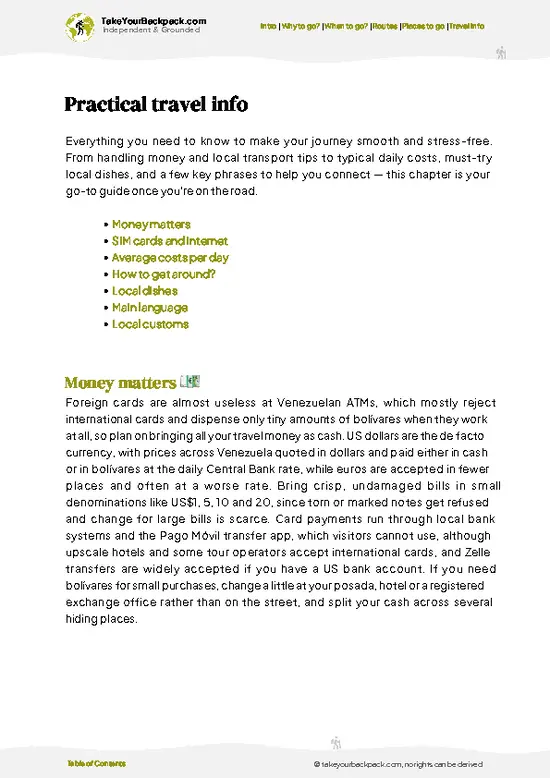
SIM cards, money & practical tips

🌍 Understand the country, not just visit it
Culture & traditions
52 Essential phrases & customs
Festivals worth planning around
Traveler-friendly historical context
Insights that make places more meaningful

📱 Built for real travel conditions
Fully downloadable PDF
Works completely offline
Optimized for phone use
Useful in remote areas & buses
Everything in one place
Save weeks of stressful planning
Get instant access to the full guide directly. 30-day money-back guarantee.


Sent to your inbox immediately after payment • 100% Secure Checkout
Best Backpacking Travel Advisor 2025 tourism awardBest Backpacking
Travel Advisor
2025
What others say about Take Your Backpack Guides:
⭐⭐⭐⭐⭐
Fantastic, amazing amount of information!
⭐⭐⭐⭐⭐
My goodness this is amazing, it's what I've been looking for hats off too you!
⭐⭐⭐⭐⭐
I think this is absolutely BRILLIANT
⭐⭐⭐⭐
Very complete and informative. It's still missing places, but I gotta to commend you
⭐⭐⭐⭐⭐
This is truly amazing, thank you, can't wait to explore it with my kids!
⭐⭐⭐⭐⭐
Awesome resource, thank you!
⭐⭐⭐⭐⭐
This is amazing! Can't wait to explore the ones I haven't seen
⭐⭐⭐⭐
I love this! Well done, great idea.
⭐⭐⭐⭐⭐
Thanks for taking the time to make this gem!
⭐⭐⭐⭐⭐
This might be the best website I've ever seen.
⭐⭐⭐⭐⭐
Congratulations, and thank you so much for your work; it's incredibly valuable.
⭐⭐⭐⭐
In all seriousness I think you did a great job pointing out the important spots
⭐⭐⭐⭐⭐
10/10 very good
⭐⭐⭐⭐⭐
As someone who's only just starting to visit regularly this is awesome, thank you.
⭐⭐⭐⭐
Thank you very much! I'm going to visit my dad, it's going to be very useful!
⭐⭐⭐⭐⭐
This is really cool! We'll be travelling for the first time and this definitely come in handy.
⭐⭐⭐⭐⭐
You are now our minister of culture, congratulations 👨‍💼
⭐⭐⭐⭐⭐
Just wanted to tell you that this is a pearl! Going to follow your recommendations.
⭐⭐⭐⭐⭐
This is so cool. I'll definitely be using the resource for my travels soon.
⭐⭐⭐⭐⭐
This is very impressive! Good work.
⭐⭐⭐⭐⭐
This is an amazing and informative site. Very well done!

🛏️ Where to stay?Best areas and accommodation options

Caracas is a city of contrasts, and where you stay can make or break your experience. For backpackers, the key is balancing safety, social energy, and budget. The standout neighborhood is El Hatillo. It’s a bit removed from the chaotic core, offering a safer, more relaxed vibe without losing the city’s pulse. El Hatillo has a small but lively backpacker scene, with hostels that foster social interaction—perfect for solo travelers looking to connect. The cobblestone streets and plazas invite evening strolls and casual meetups, which is a rare luxury in Caracas.

Compare that to Chacao, which is … read more 👉
Caracas is a city of contrasts, and where you stay can make or break your experience. For backpackers, the key is balancing safety, social energy, and budget. The standout neighborhood is El Hatillo. It’s a bit removed from the chaotic core, offering a safer, more relaxed vibe without losing the city’s pulse. El Hatillo has a small but lively backpacker scene, with hostels that foster social interaction—perfect for solo travelers looking to connect. The cobblestone streets and plazas invite evening strolls and casual meetups, which is a rare luxury in Caracas.

Compare that to Chacao, which is more upscale and business-oriented. It’s safer than many parts of the city but less budget-friendly and less social for backpackers. You’ll find fewer hostels and more hotels aimed at business travelers. It’s a good fallback if you want comfort and security but expect to pay for it and miss out on the communal hostel vibe.

Avoid downtown Caracas and neighborhoods like Petare for backpacking. These areas are notorious for safety issues and lack the infrastructure that makes a backpacker’s life easier—think reliable hostels, social spaces, and easy access to transport.

In short, El Hatillo nails the balance: safety without isolation, budget without sacrificing comfort, and a social scene that turns a solo trip into a shared adventure. It’s the sweet spot where you’re not just surviving Caracas—you’re getting to know it.

🚌 Getting aroundHow to get around Caracas

Caracas moves to a rhythm that’s part clockwork, part improvisation. The city’s pulse is a blend of strict timetables and the chaotic dance of street vendors, honking cars, and pedestrians weaving through traffic. You’ll find moments where the metro arrives like clockwork, but just as often, you’ll navigate a maze of informal buses and shared taxis that run on gut feeling and street smarts. Understanding this flow is your first win: Caracas demands you read between the lines, balancing time, money, and comfort like a chess player plotting three moves ahead.


  • Metro de Caracas: The backbone of the city’s transit, the metro runs from 5:30 AM to 11:00 PM. It’s fast, reliable, and dirt cheap—about $0.10 per ride—making it the best bang for your buck if you want to avoid traffic jams. Comfort
read more 👉
Caracas moves to a rhythm that’s part clockwork, part improvisation. The city’s pulse is a blend of strict timetables and the chaotic dance of street vendors, honking cars, and pedestrians weaving through traffic. You’ll find moments where the metro arrives like clockwork, but just as often, you’ll navigate a maze of informal buses and shared taxis that run on gut feeling and street smarts. Understanding this flow is your first win: Caracas demands you read between the lines, balancing time, money, and comfort like a chess player plotting three moves ahead.


  • Metro de Caracas: The backbone of the city’s transit, the metro runs from 5:30 AM to 11:00 PM. It’s fast, reliable, and dirt cheap—about $0.10 per ride—making it the best bang for your buck if you want to avoid traffic jams. Comfort is basic but consistent, with air-conditioned cars and clear signage. The trade-off? Limited coverage outside the main urban areas.


  • Busetas (Mini Buses): These are the wild cards of Caracas transit. They cover routes beyond the metro’s reach and run almost 24/7, but schedules are fluid and fares vary, usually around $0.05 to $0.15. You’ll sacrifice comfort—expect crowded, sometimes rickety rides—but gain access to neighborhoods that the metro ignores. Time is unpredictable here; you might wait or get whisked away immediately.


  • Colectivos (Shared Taxis): Faster than busetas and more flexible, colectivos run on fixed routes but leave only when full. Prices hover around $0.20 to $0.50 depending on distance. They offer a middle ground in comfort—usually air-conditioned cars but packed tight. The catch is negotiating the right price and route, which requires street savvy and a bit of patience.


  • Walking: Caracas is a city of steep hills and sprawling neighborhoods, so walking is a double-edged sword. It costs nothing and lets you soak in the city’s texture, but it’s slow and sometimes physically demanding. Use walking strategically—short hops between transit points or exploring safe, flat areas. Time is your biggest investment here, but the payoff is a deeper connection to the city’s pulse.


  • Taxi Services (App-Based and Street Hails): For those moments when time trumps money, taxis offer door-to-door convenience. Prices vary widely, often starting around $1.50 and climbing steeply with distance and traffic. Comfort is high, but Caracas traffic can turn a quick ride into a slow crawl. Use taxis sparingly to save cash and avoid getting stuck in gridlock.


Mastering Caracas transit means juggling these options with a clear eye on what you’re trading off: the metro saves time and money but limits reach; busetas and colectivos extend your range but demand flexibility and patience; walking deepens your experience at the cost of speed; taxis buy comfort but drain your budget fast. Play these pieces right, and you’re not just getting around—you’re decoding the city’s rhythm.

👛 Costs (as of 9 April 2026)Travel costs and budget guide for Caracas

Backpacking in Caracas, Venezuela, demands a sharp eye on your budget because the city’s economic fluctuations ripple through every expense. Here’s how your daily costs typically stack up:
  • Dorm Accommodation (High Season): Expect to pay around $10 to $15 per night in a basic hostel dorm. High season can push prices slightly higher due to demand, but options remain limited and modest.
  • Dorm Accommodation (Off-Season): Prices drop to about $7 to $12 per night. The off-season offers a bit more breathing room for negotiation, but quality and availability can vary widely.
  • Meals: Street food and local eateries will cost you roughly $3 to $6 per meal. A full day of eating on a budget can be managed for $9 to $15, focusing on arepas, empanadas, and simple local dishes.
  • Local Transport: Bus and
read more 👉
Backpacking in Caracas, Venezuela, demands a sharp eye on your budget because the city’s economic fluctuations ripple through every expense. Here’s how your daily costs typically stack up:
  • Dorm Accommodation (High Season): Expect to pay around $10 to $15 per night in a basic hostel dorm. High season can push prices slightly higher due to demand, but options remain limited and modest.
  • Dorm Accommodation (Off-Season): Prices drop to about $7 to $12 per night. The off-season offers a bit more breathing room for negotiation, but quality and availability can vary widely.
  • Meals: Street food and local eateries will cost you roughly $3 to $6 per meal. A full day of eating on a budget can be managed for $9 to $15, focusing on arepas, empanadas, and simple local dishes.
  • Local Transport: Bus and metro rides are incredibly cheap, typically $0.10 to $0.25 per trip. This makes getting around the city affordable, though be prepared for crowded conditions and irregular schedules.
  • City Transport Pass: A monthly metro card costs about $5 to $7, which is a smart investment if you plan to stay several days and move around frequently.
  • Basic Activities/Entry Fees: Museums and cultural sites usually charge between $1 and $3. Some parks and public spaces are free, but guided tours or special exhibitions can push costs higher.
  • Miscellaneous Expenses: Budget around $2 to $5 for essentials like bottled water, snacks, or small personal items. Keep some extra cash for unexpected needs, especially given the city’s fluctuating availability of goods.

In total, a savvy backpacker can expect to spend between $25 and $45 per day in Caracas, balancing low-cost transport and meals with modest accommodation. This range lets you navigate the city comfortably without overspending, turning your logistical choices into a strategic advantage.


source: venezuelatuya.com
⚠️ Prices can change and everyone travels differently, so take this as a rough guide. Hope it helps you plan your adventure!

🚌 Day tripsShort trips worth adding

Caracas serves as a surprisingly strategic base for day trips, offering a mix of natural beauty and cultural richness just a short ride away. Here are some standout options that pack a punch without draining your wallet.

El Ávila National Park
Just a quick 30-minute ride from Caracas, El Ávila is a breath of fresh air. This national park offers stunning views of the city and lush trails that cater to all levels of hikers. You can take the cable car up for a leisurely ascent or hike the trails for a more challenging experience. Bring a packed lunch to enjoy at the summit while soaking in the panoramic views. The best time to visit is during the dry season, from December to April, when the skies are clear. A common mistake? Underestimating the weather; it can change quickly, so pack layers. … read more 👉
Caracas serves as a surprisingly strategic base for day trips, offering a mix of natural beauty and cultural richness just a short ride away. Here are some standout options that pack a punch without draining your wallet.

El Ávila National Park
Just a quick 30-minute ride from Caracas, El Ávila is a breath of fresh air. This national park offers stunning views of the city and lush trails that cater to all levels of hikers. You can take the cable car up for a leisurely ascent or hike the trails for a more challenging experience. Bring a packed lunch to enjoy at the summit while soaking in the panoramic views. The best time to visit is during the dry season, from December to April, when the skies are clear. A common mistake? Underestimating the weather; it can change quickly, so pack layers.
👉 Explore El Ávila National Park

La Guaira
Only about 45 minutes from Caracas, La Guaira is a coastal town that offers a refreshing escape from the city heat. Spend your day lounging on the beach or exploring the local seafood scene. The beach is free, but if you want to indulge, try a fresh catch at one of the local eateries. The best time to go is early in the morning to beat the crowds. Many first-timers overlook the local bus system, which is both affordable and efficient for getting there.


Los Roques Archipelago
While technically a bit of a stretch for a day trip, if you catch an early flight (about an hour), Los Roques is worth the effort. This paradise of white-sand beaches and crystal-clear waters is perfect for snorkeling or simply relaxing. Flights can be found for around $100 round-trip, so it’s a splurge, but the experience is unparalleled. The dry season is ideal, but be mindful of flight availability. A common pitfall is not booking in advance; these flights fill up quickly.


Cerro El Ávila
For those who want a more immersive experience, consider hiking Cerro El Ávila. This trek can take about 3-4 hours one way, depending on your pace. The trail is well-marked and offers breathtaking views of Caracas and the surrounding landscape. Bring plenty of water and snacks, as there are limited facilities along the way. The best time to hike is early morning or late afternoon to avoid the heat. First-timers often underestimate the trail’s difficulty; be prepared for a workout!


Petare
Dive into local culture with a trip to Petare, one of the largest barrios in Latin America, just a 30-minute bus ride from Caracas. Here, you can explore vibrant street art, local markets, and authentic Venezuelan cuisine. The experience is rich and eye-opening, offering a glimpse into daily life. The best time to visit is during the day when the markets are bustling. A common mistake is sticking to tourist areas; venturing into Petare will give you a more genuine experience.
Want to know what more Venezuela offers?
The Venezuela Travel Guide describes 102 highlights, from cities to national parks, from beaches to hikes

Get the Travel Guide -

🍲 FoodWhat to Eat & Drink

In Caracas, food is a vibrant expression of culture, and you’ll want to dive into the local scene. Start with the arepa, a cornmeal pocket stuffed with everything from cheese to shredded beef. It’s a staple that you can find at street stalls, where the aroma of grilled corn fills the air. Pair it with pabellón criollo, a hearty dish of rice, black beans, shredded beef, and fried plantains. This meal is a true taste of Venezuelan comfort.

Markets are your best bet for authentic flavors. The bustling Mercado de Chacao offers a sensory overload of fresh produce, spices, and street food. Grab a tequeño, a cheese-filled pastry, from a vendor and savor it while mingling with locals.

When it comes to drinks, don’t miss out on chicha, a sweet rice drink often flavored with cinnamon. It’s refreshing … read more 👉
In Caracas, food is a vibrant expression of culture, and you’ll want to dive into the local scene. Start with the arepa, a cornmeal pocket stuffed with everything from cheese to shredded beef. It’s a staple that you can find at street stalls, where the aroma of grilled corn fills the air. Pair it with pabellón criollo, a hearty dish of rice, black beans, shredded beef, and fried plantains. This meal is a true taste of Venezuelan comfort.

Markets are your best bet for authentic flavors. The bustling Mercado de Chacao offers a sensory overload of fresh produce, spices, and street food. Grab a tequeño, a cheese-filled pastry, from a vendor and savor it while mingling with locals.

When it comes to drinks, don’t miss out on chicha, a sweet rice drink often flavored with cinnamon. It’s refreshing and perfect for the tropical heat. For something stronger, try a ron venezolano; the rum here is smooth and often enjoyed neat or in cocktails.

Eating in Caracas is a communal affair. Expect to share tables and engage in lively conversations. Embrace the local pace—meals can stretch into hours, filled with laughter and stories. This isn’t just about food; it’s about connection.

🛡️ SafetyStaying Safe: What Travelers Should Know

In Caracas, safety is about awareness and smart choices. While many areas are generally safe, neighborhoods like El Hatillo and Chacao are more traveler-friendly. Stick to these zones, especially at night. If you’re venturing out solo after dark, opt for well-lit streets and avoid empty areas.

Common scams can catch you off guard. Be cautious of overly friendly strangers offering unsolicited help or guiding you to places. They might expect a tip or lead you to a shop with inflated prices. Always keep your belongings close; pickpocketing can happen in crowded areas, especially near markets or public transport.

Annoyances like aggressive street vendors can be a nuisance, but a polite “no, gracias” usually does the trick. Carry yourself confidently, and don’t flash valuables. A calm demeanor … read more 👉
In Caracas, safety is about awareness and smart choices. While many areas are generally safe, neighborhoods like El Hatillo and Chacao are more traveler-friendly. Stick to these zones, especially at night. If you’re venturing out solo after dark, opt for well-lit streets and avoid empty areas.

Common scams can catch you off guard. Be cautious of overly friendly strangers offering unsolicited help or guiding you to places. They might expect a tip or lead you to a shop with inflated prices. Always keep your belongings close; pickpocketing can happen in crowded areas, especially near markets or public transport.

Annoyances like aggressive street vendors can be a nuisance, but a polite “no, gracias” usually does the trick. Carry yourself confidently, and don’t flash valuables. A calm demeanor goes a long way in navigating the city. Embrace the experience, and you’ll find Caracas has much to offer beyond the surface.

Other Venezuelan cities near Caracas

Explore more nearby:

  • Guarenas—commuter suburbs, hillside barrios, local bakeries| 31 km away
  • San Juan de los Morros—limestone hills, thermal springs, regional fairs| 81 km away
  • Villa de Cura—artisan bakeries, rural festivals, central plaza| 82 km away

👉 Discover all cities

Or checkout all Venezuela has to offer (think cities, towns, villages, national parks, hikes, beaches, festivals)
Country photo of Venezuela

We 💚 feedbackParting advice and final tips

Caracas has a pulse that’s hard to ignore. The street art? It’s a vibrant conversation between the city and its people. You’ll stumble upon incredible local eateries where the arepas are life-changing. But be cautious; the vibe can shift quickly. Stick to well-trodden paths and travel in groups. The warmth of the locals is a surprise that’ll stick with you, but don’t let your guard down. Embrace the chaos, and you’ll find beauty in the unexpected.

✍️ Help improve this page!
The information on this page is based on in-depth research, insights shared by experienced travelers, and feedback from the local travel community in Venezuela. While every effort is made to keep the information accurate and current, conditions can change — so if you spot anything incorrect or outdated, please get in touch.


🙋‍♂️ Give feedback

👋 Meet the founderWho’s Behind Take Your Backpack?

Johan, backpacker and founder of TakeYourBackpackHi, I’m Johan (Netherlands 🇳🇱), the creator of TakeYourBackpack. Over the past decade, I’ve backpacked through 80+ countries across six continents, gaining extensive experience with independent travel, long-term trips, and overland routes.

This site is built on a combination of firsthand travel experience and carefully curated insights from other backpackers. Many guides are based on places I’ve personally visited, while others bring together tips, observations, and practical advice shared by trusted travelers I’ve met along the way.

The goal is to provide realistic, experience-driven guidance — not generic itineraries — so you can explore destinations with better context, clearer expectations, and more confidence.

Get full Venezuela guide •
Instant download • 102 highlights • Full Offline guide