
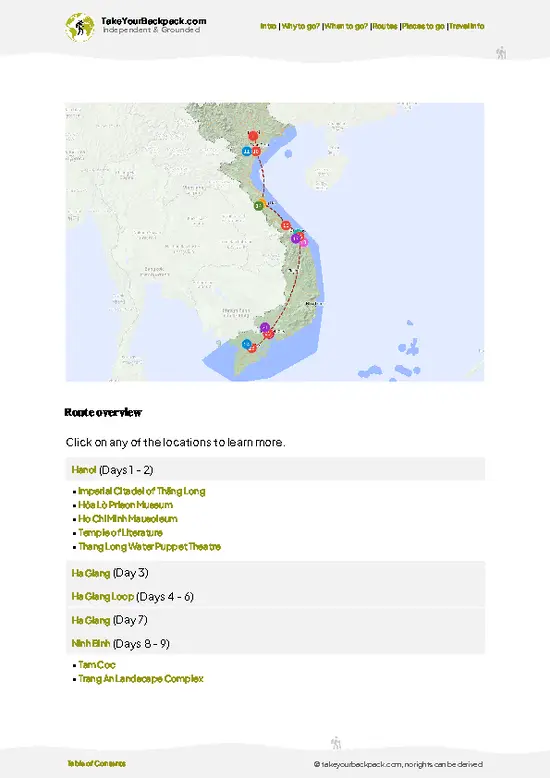
- Xuan Huong Lake — The city’s calm heart: a round, walkable lake where locals exercise at dawn, street vendors sell bánh tráng and coffee, and sunsets feel like an unofficial local ritual. Great for people-watching and a relaxed introduction to Dalat’s pace.
- Da Lat Market (Chợ Đà Lạt) — A bustling indoor market where you can taste cao lầu-esque snacks, buy fresh highland strawberries, dried mushrooms, and chat with sellers from surrounding mountain communities. It’s the best place to sample street food and feel the real, everyday commerce of the city.
- Crazy House (Hang Nga Guesthouse) — A trippy, Gaudí-like house made by architect Đặng Việt Nga that you can wander through (and even sleep in if you’re brave). It’s less a “tourist trap” and more an immersive piece of living art—great photos
- Xuan Huong Lake — The city’s calm heart: a round, walkable lake where locals exercise at dawn, street vendors sell bánh tráng and coffee, and sunsets feel like an unofficial local ritual. Great for people-watching and a relaxed introduction to Dalat’s pace.
- Da Lat Market (Chợ Đà Lạt) — A bustling indoor market where you can taste cao lầu-esque snacks, buy fresh highland strawberries, dried mushrooms, and chat with sellers from surrounding mountain communities. It’s the best place to sample street food and feel the real, everyday commerce of the city.
- Crazy House (Hang Nga Guesthouse) — A trippy, Gaudí-like house made by architect Đặng Việt Nga that you can wander through (and even sleep in if you’re brave). It’s less a “tourist trap” and more an immersive piece of living art—great photos and a quirky way to see local creative energy.
- Bao Dai’s Summer Palace (Dinh Bảo Đại) — The preserved residence of Vietnam’s last emperor offers a peek at 1930s-1950s colonial-era furnishings, royal routines, and the cooler mountain lifestyle of the elite. It’s small but full of context for Dalat’s role as a colonial hill station.
- Domaine de Marie Church (Pink Church) — A compact, rosy-painted French-era Catholic complex with a quiet cemetery and convent buildings set on a low hill. It’s compact, photogenic, and gives a clear sense of the French architectural and religious imprint on Dalat.
- Da Lat Railway Station — An unusually pretty Art Deco station with a short heritage train ride option and retro locomotives on display. Even if you skip the ride, the station itself is atmospheric and worth a slow wander for fans of vintage travel vibes.
- Linh Phuoc Pagoda — A mosaic-covered pagoda outside the old town that looks like a craft project gone delightfully giant: dragons, tiled murals, and a cathedral-scale Buddha made of broken glass and pottery. It’s one of the most visually distinctive religious sites in the area and still actively used.
- Lam Vien Square & Artichoke Fountain — A modern public square right by Xuan Huong Lake featuring the giant floral/vegetable-inspired fountain and nighttime light shows; it’s where young locals hang out and occasional festivals happen. Good for evening strolls and local vibes without the heavy tourist tackiness.
- Yersin Park & Museum — A small museum and garden honoring Alexandre Yersin, the scientist who helped put Dalat on the map; the site covers his life, scientific work, and how Dalat developed as a hill station. It’s modest but historically important and quietly informative.
- Da Lat Flower Park (Công viên hoa Đà Lạt) — A working showcase of the city’s flower industry: themed gardens, seasonal displays, and greenhouses that explain why Dalat is Vietnam’s floral capital. It’s touristy but educational, especially if you’re into horticulture or photography.
Spotted a mistake or missing something? Contact us.

The Central Highlands Explorer Loop

Combo Activity Trekking, Sup Paddling, Camping and Canyoning

Trekking Tour to Hidden Waterfall & Sturgeon Farm for dog-lovers

ATV Tour In The Dalat Mountains

Da Lat Easy Rider Group Waterfall Motorcycle Adventure

Da Lat Easy Rider Tour | Home-Cooked Lunch & Authentic Local Life

Half-Day Da Lat Tour to Countryside by Easy Rider

Dalat Private Tour Package in 2 Days

Da Lat Sunrise Hiking at Hon Bo Peak


 Best Backpacking
 Hi, I’m Johan (Netherlands 🇳🇱), the creator of TakeYourBackpack. Over the past 3 decades, I’ve backpacked through 90+ countries across six continents, gaining extensive experience with independent travel, long-term trips, and overland routes.