×

Vietnam🇻🇳 | best citiesDiscover the 10 Best cities Across Vietnam

Cities in Vietnam run on motorbike engines, sidewalk stools and steaming broth, and each region plays the game differently. The north is cooler, more traditional and tangled with old trading streets. The center trades chaos for coastline, with slower rhythms, heritage sites and beaches a short ride away. The south hits hardest: humid, fast, commercial and loud until late. Costs stay low everywhere (a bed in a hostel dorm runs roughly US$5 to 10), though big-city hotels and tourist-area prices climb noticeably. Getting around is easy: sleeper buses, trains and cheap domestic flights link every hub, which makes independent travel and backpacking straightforward even on a first trip. Crowds peak in the most famous old quarters and coastal towns, while smaller provincial cities stay calm. Pick your region by mood, then go chase the street food, crossings and café corners that define Vietnam.

By Johan Kruseman 🇳🇱 | Updated October 18, 2026
Explore the best towns in Vietnam

Why go?Key Factors That Shape the Experience

Vietnam is built for urban exploring because cities here are lived in, not staged. Life spills onto the pavement: families eat on plastic stools, barbers set up under trees, and cooks work from a single pot on a corner. That street-level culture comes from dense populations, narrow shophouse plots and a climate warm enough to keep everything outdoors for most of the year. You do not need a museum ticket to feel the place. You need a free hour and an appetite.

History layers the map. Chinese influence shaped northern temples and trading quarters, French colonial planning left boulevards, opera houses and cafés, and the American War left museums, tunnels and memorials that give context to what you see. Geography stretches the country into a long, thin S, so cities differ sharply in climate, … read more 👉
Vietnam is built for urban exploring because cities here are lived in, not staged. Life spills onto the pavement: families eat on plastic stools, barbers set up under trees, and cooks work from a single pot on a corner. That street-level culture comes from dense populations, narrow shophouse plots and a climate warm enough to keep everything outdoors for most of the year. You do not need a museum ticket to feel the place. You need a free hour and an appetite.

History layers the map. Chinese influence shaped northern temples and trading quarters, French colonial planning left boulevards, opera houses and cafés, and the American War left museums, tunnels and memorials that give context to what you see. Geography stretches the country into a long, thin S, so cities differ sharply in climate, food and pace. Expect three distinct regional cuisines and three accents.

Infrastructure is a strength. Cheap transport connects major hubs by train, sleeper bus and budget flight, and mobile apps for ride-hailing and food delivery work in the largest urban areas. Accommodation covers every budget, from dorm beds to boutique hotels.

Know the trade-offs before you commit. Traffic is relentless, and crossing a street means walking steadily while bikes flow around you. Air quality can be poor in big cities, especially in the north in winter. Summer heat and humidity are heavy, and typhoon season hits the central coast. Pavements are often occupied by parked bikes and food stalls, so walking can mean stepping into the road. Many sights are best done early, before the heat. Bring patience, carry small bills, and let the chaos become part of the fun.
Our Approach to Ranking
The list of best cities in Vietnam is created based on culture, vibe, attractions, transport ease, and local charm. If you feel a city is missing in this list, please let us know.

When to go?When to Plan Your Trip

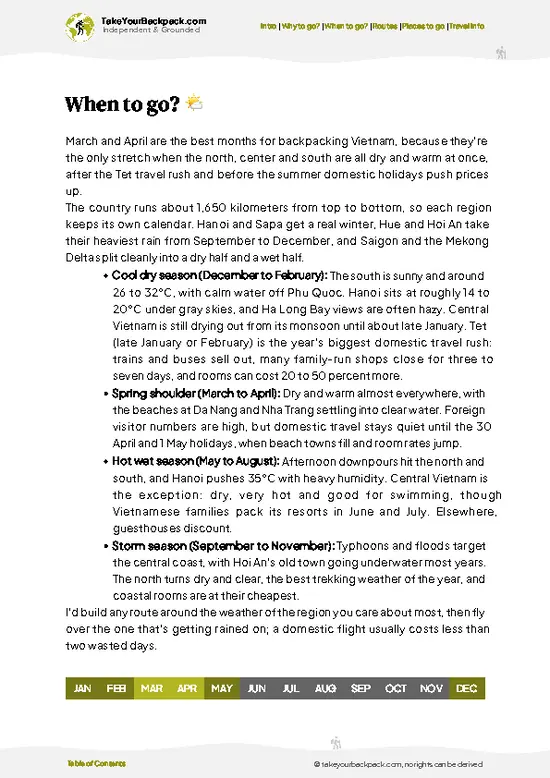
Best Months for City Travel: The best months for cities in Vietnam are March to April and October to November, when temperatures are comfortable across much of the country and rainfall is lower than in summer. Vietnam stretches so far north to south that no single window fits every region, so match your timing to where you are heading.
Regional Weather: The north has four seasons. Winter (December to February) brings damp, gray days and temperatures that can drop to 8 to 15°C, while summer (June to August) is hot and wet, often 30 to 35°C with heavy downpours. Spring and autumn are the pleasant shoulders. The center is driest from roughly February to August, with a rainy and typhoon-prone period from September to December, when flooding can disrupt travel. The south has two seasons: dry from … read more 👉
Best Months for City Travel: The best months for cities in Vietnam are March to April and October to November, when temperatures are comfortable across much of the country and rainfall is lower than in summer. Vietnam stretches so far north to south that no single window fits every region, so match your timing to where you are heading.
Regional Weather: The north has four seasons. Winter (December to February) brings damp, gray days and temperatures that can drop to 8 to 15°C, while summer (June to August) is hot and wet, often 30 to 35°C with heavy downpours. Spring and autumn are the pleasant shoulders. The center is driest from roughly February to August, with a rainy and typhoon-prone period from September to December, when flooding can disrupt travel. The south has two seasons: dry from November to April with highs around 32 to 35°C, and wet from May to October, with short, heavy afternoon rain that usually clears within an hour or two.
Peak Periods and Prices: The big date to plan around is Tet (Lunar New Year), falling in late January or February. Many shops and restaurants close for several days, transport sells out weeks ahead, and prices rise by 20 to 50 percent. The cities feel quieter and emptier, but the flowers and festive decorations are a bonus if you book early. Domestic holiday weeks around April 30 to May 1 and September 2 also fill buses, trains and beach hotels.
Shoulder Season Strategy: Outside those peaks, low season (summer in the north and center, rainy months in the south) brings discounts of 10 to 30 percent on mid-range rooms. Pack a light rain jacket, start early to beat the heat, and use the rain as an excuse to duck into a café.

city hoppingOptimizing Your Multi-Stop Itinerary

How Long to Allow: A trip combining several cities in Vietnam needs 10 to 21 days, with two weeks working well for the classic north to south line. Vietnam is long, roughly 1,650 km from top to bottom, so every extra stop costs real travel time.
Direction and Regional Clusters: Most travelers group the country into north, center and south. Either direction works. Starting in the north (Hanoi as the entry hub) and finishing in the south (Ho Chi Minh City) suits the seasons in spring, while going south to north can work in autumn when the center is wetter. Fly into one hub and out of the other to avoid backtracking, and book open-jaw tickets. The center sits between them, with Da Nang as its main airport and rail link.
Time per Stop and Between Regions: Allow 2 to 3 nights in each major urban … read more 👉
How Long to Allow: A trip combining several cities in Vietnam needs 10 to 21 days, with two weeks working well for the classic north to south line. Vietnam is long, roughly 1,650 km from top to bottom, so every extra stop costs real travel time.
Direction and Regional Clusters: Most travelers group the country into north, center and south. Either direction works. Starting in the north (Hanoi as the entry hub) and finishing in the south (Ho Chi Minh City) suits the seasons in spring, while going south to north can work in autumn when the center is wetter. Fly into one hub and out of the other to avoid backtracking, and book open-jaw tickets. The center sits between them, with Da Nang as its main airport and rail link.
Time per Stop and Between Regions: Allow 2 to 3 nights in each major urban stop, and 3 to 4 if you want day trips. Between regions, the train from Hanoi to Da Nang takes roughly 15 to 17 hours, and from Da Nang to Ho Chi Minh City around 16 to 18 hours. Flights take 1 to 2 hours and often cost US$30 to 80. Sleeper buses are cheaper but slower and less restful. Within the center, short trains and buses link cities in 2 to 4 hours.
Planning Mistakes to Avoid: The most common error is trying to see everything, which turns the trip into a series of night buses and airport queues. Pick two regions in a short trip and go deeper. Another is booking tight connections in the center during typhoon season, when flights and trains are delayed. Leave a buffer day. Travelers also underestimate airport transfer times in big cities, where traffic can add an hour or more. Finally, overnight transport saves a hotel bill but can wreck the next day, so mix one or two night journeys with daytime rides and enjoy the landscape.

The ListHighly Recommended cities of Vietnam

1 Hanoi

Old Quarter, lakes, street food

Wander narrow alleys, sip coffee by the water, and experience the layered history of Vietnam’s capital.

Vietnam - Hanoi

2 Ho Chi Minh City

skyscrapers, colonial boulevards, markets

Navigate busy streets, discover rooftop views, and sample a wide range of cuisines in Vietnam’s economic center.

3 Hoi An

lantern-lit streets, riverside town, tailor shops

Stroll through preserved architecture, cross ancient bridges, and enjoy local dishes along the Thu Bon River.

vietnam-city-hoi-an
© Google |

4 Hue

imperial citadel, royal tombs, Perfume River

Tour palaces and pagodas, cruise the river, and learn about the city’s role as a former seat of power.

5 Dalat

pine forests, French villas, cool climate

Stroll hilly streets lined with colonial architecture, visit flower farms, and enjoy a temperate escape from Vietnam’s tropical lowlands.

6 Nha Trang

beachfront promenade, seafood markets, offshore islands

Swim in clear waters, sample fresh catch at bustling markets, and take boat trips to nearby islands for snorkeling and quiet coves.

7 Phu Quoc

island beaches, fish sauce factories, night market

Swim in turquoise waters, tour pepper farms, and sample grilled seafood after sunset on Vietnam’s largest island.

8 Ha Giang

limestone peaks, ethnic markets, mountain passes

Navigate winding roads through remote highlands, encountering minority villages and panoramic views that reveal Vietnam’s rugged northern frontier.

9 Can Tho

floating markets, Mekong canals, riverfront promenade

Wake early to witness boat trading on the water, then wander leafy boulevards and sample southern specialties along the riverside.

10 Quy Nhon

quiet beaches, Cham towers, seafood stalls

Swim in clear waters, explore ancient ruins, and dine on fresh catch in a city where local life unfolds by the sea.

11 Vũng Tàu

peninsula beaches, hilltop statue, offshore oil

Swim at city beaches, hike to panoramic viewpoints, and observe the blend of tourism and industry along the coast.

12 Ninh Binh

limestone karsts, rural paddies, boat rides

Glide through flooded valleys, bike past rice fields, and climb to viewpoints overlooking dramatic landscapes.

13 Chau Doc

border town, floating villages, pilgrimage sites

Board a boat to visit stilted homes, observe cross-border trade, and climb Sam Mountain for views over rice fields and Cambodia.

vietnam-city-chau-doc
© Google |

14 Ben Tre

coconut groves, quiet canals, rural homestays

Cycle shaded paths, stay with local families, and experience the slower rhythms of the Mekong’s coconut heartland.

15 My Tho

Mekong islets, fruit orchards, river cruises

Board a sampan to explore narrow waterways, sample tropical fruits, and glimpse rural life in the delta.

16 Cam Ranh

deep-water bay, fishing fleets, airport gateway

Arrive by air, watch boats unload their catch, and use the city as a transit point for southern beaches.

17 Phan Rang

Cham heritage, dry climate, grape vineyards

Tour ancient towers, sample local wine, and experience the arid landscapes unique to Vietnam’s south-central coast.

18 Ha Tien

limestone caves, river delta, border crossing

Discover hidden grottos, wander riverside markets, and use this laid-back town as a gateway to Cambodia or the Gulf islands.

19 Dong Hoi

riverfront, gateway to caves, sandy beaches

Base yourself here for excursions to Phong Nha’s caves, then return for quiet evenings along the Nhat Le River.

20 Buon Ma Thuot

coffee capital, waterfalls, Ede villages

Visit bustling coffee markets, trek to nearby cascades, and learn about the Ede people’s traditions in the highlands.

21 Pleiku

volcanic lakes, coffee farms, Jarai culture

Travel through the Central Highlands, visit crater lakes, and learn about the traditions of local ethnic groups.

22 Rach Gia

ferry port, coastal city, seafood markets

Catch boats to the islands, wander local markets, and enjoy a taste of the Gulf coast’s daily routines.

23 Soc Trang

Buddhist temples, noodle markets, ethnic mix

Sample regional dishes, visit colorful shrines, and witness the coexistence of Vietnamese, Khmer, and Chinese communities.

24 Phan Thiet

sand dunes, dragon fruit farms, fishing ports

Explore shifting dunes, visit orchards, and watch daily routines unfold in coastal villages.

25 Quang Ngai

war memorials, fishing harbors, My Lai site

Reflect at historical sites, watch fishermen at work, and visit the village that shaped global perceptions of the Vietnam War.

26 Quang Tri

demilitarized zone, riverside town, war cemeteries

Tour former conflict zones, visit memorials, and learn about the region’s pivotal role in Vietnam’s modern history.

27 Dong Ha

border crossing, DMZ tours, highway junction

Use this practical stop for access to the DMZ, then continue along the main north-south route.

28 Kon Tum

wooden churches, Bahnar villages, coffee plantations

Experience traditional stilt houses, meet indigenous communities, and travel through highland landscapes dotted with pepper and coffee farms.

29 Lao Cai

border crossing, Sapa access, mountain rail

Arrive by train, cross into China, or continue to Sapa’s highland trails and ethnic markets.

30 Long Xuyen

river city, Khmer pagodas, floating homes

Observe daily life on the Hau River, visit ornate temples, and see how communities adapt to the delta’s waterways.

31 Nam Dinh

cathedrals, textile workshops, Red River delta

Explore ornate churches, observe traditional crafts, and navigate the waterways of the northern delta.

32 Thai Nguyen

tea plantations, university town, museum of cultures

Tour lush tea fields, mingle with students in cafes, and visit exhibits on Vietnam’s ethnic diversity.

33 Thanh Hoa

citadel ruins, coastal plains, local markets

Visit ancient stone walls, explore bustling food stalls, and travel to beaches popular with domestic visitors.

34 Tuy Hoa

empty beaches, rice fields, Cham ruins

Relax on uncrowded sands, explore rural backroads, and visit ancient towers scattered across the coastal plain.

35 Vinh

industrial hub, Ho Chi Minh birthplace, river port

Stop in this practical city to visit historical sites and use it as a transit point for journeys north or south.

36 Tra Vinh

Khmer culture, ancient pagodas, rural canals

Cycle through villages, admire intricate temple carvings, and experience the unique blend of Vietnamese and Khmer traditions.

37 Yen Bai

rice terraces, river valleys, gateway to mountains

Hike through layered fields, cross scenic rivers, and use the city as a starting point for northern adventures.

38 Son La

prison museum, tea hills, mountain scenery

Walk through a former colonial prison, travel winding roads, and take in views of misty uplands.

39 Thai Binh

rice paddies, folk festivals, river crossings

Travel through flat countryside, attend local celebrations, and cross rivers that define the region’s landscape.

40 Tuyen Quang

revolutionary sites, green hills, rural villages

Visit places tied to Vietnam’s independence, travel through quiet countryside, and meet locals in small settlements.

41 Ca Mau

southernmost point, mangrove forests, shrimp farms

Travel to Vietnam’s tip, explore wetland reserves, and see how aquaculture shapes the region’s economy.

42 Lai Chau

mountain valleys, ethnic diversity, remote trekking

Hike through dramatic landscapes, encounter varied minority groups, and experience the isolation of Vietnam’s far northwest.

Think you know Vietnam?

Prove you’re a true local — uncover 32 lesser-known cities in Vietnam that locals tend to keep to themselves.
Loading the map 🌍

Expert viewPro Tips for Exploring the Best

How Many Cities to Visit: I advise four to six cities on a trip of two to three weeks. That number leaves two or three nights in each place, enough to eat well, wander without a plan and recover from transport. Below four, you miss the regional contrast. Above six, you spend more time in station queues than on the streets. The reward for restraint is the slow morning: a coffee on a plastic stool while the day starts around you.
Choosing Between Kinds of Cities: Match the type to your travel style. If you crave energy and food, pick the big northern and southern hubs, where motorbike traffic roars, markets run before dawn and a bowl of noodles can cost US$1.50 to 3. If you want heritage and calm, choose the central cities with imperial citadels, old merchant quarters and lantern-lit rivers. … read more 👉
How Many Cities to Visit: I advise four to six cities on a trip of two to three weeks. That number leaves two or three nights in each place, enough to eat well, wander without a plan and recover from transport. Below four, you miss the regional contrast. Above six, you spend more time in station queues than on the streets. The reward for restraint is the slow morning: a coffee on a plastic stool while the day starts around you.
Choosing Between Kinds of Cities: Match the type to your travel style. If you crave energy and food, pick the big northern and southern hubs, where motorbike traffic roars, markets run before dawn and a bowl of noodles can cost US$1.50 to 3. If you want heritage and calm, choose the central cities with imperial citadels, old merchant quarters and lantern-lit rivers. If beaches and easy living matter, coastal cities offer sand, seafood grills and surf bars, with higher prices and more tourists. Slower provincial towns give you quiet lanes and few foreigners, though English is less common and menus are rarely translated.
What It Costs: Budget travelers can live on US$25 to 40 a day: a dorm bed at US$5 to 10, street meals at US$1.50 to 4, local beer at under US$1 and short taxi-app rides at US$1 to 3. Mid-range travelers should plan US$50 to 90 with private rooms at US$20 to 45 and sit-down dinners. Entry fees run roughly US$2 to 8 for most museums and citadels, with a few major heritage complexes charging up to US$10 to 15. A local guide for a half day costs about US$25 to 50, and a food tour US$30 to 60, usually worth it for the stories behind the stalls. Budget US$30 to 80 for a flight between regions, or US$20 to 45 for a long-distance sleeper berth.
Safety on the Ground: Cities here are generally safe for walking at night, but bag snatching from passing motorbikes is the common crime. Carry your phone and bag on the side away from the road, and keep them zipped. Crossing streets takes confidence: walk at a slow, steady pace, never dash and never stop abruptly. The traffic parts around you, and you reach the other side with your dignity intact. Use ride-hailing apps rather than unmetered taxis, and confirm the price before you start. Scams like inflated bills at tourist-area restaurants are avoidable by checking menu prices first.
Cultural Etiquette: Dress modestly at temples and pagodas: cover shoulders and knees, and take off shoes where others do. Greet people with a smile, hand over cash or cards with two hands to elders and accept change politely. Haggling is normal in markets, but keep it light and stop when you reach a fair price, which is often 20 to 30 percent below the first quote. Avoid pointing your feet at altars or touching people’s heads. At war museums, expect sobering exhibits, and treat the history with respect. A little Vietnamese goes far, and “xin chào” and “cảm ơn” earn warm smiles, extra chilies and sometimes a free cup of tea.

✈️ The backpacker research shortcutVietnam Travel Guide

An offline-friendly backpacking guide with optimized travel routes, ranked highlights, transport advice, and the best areas to stay.
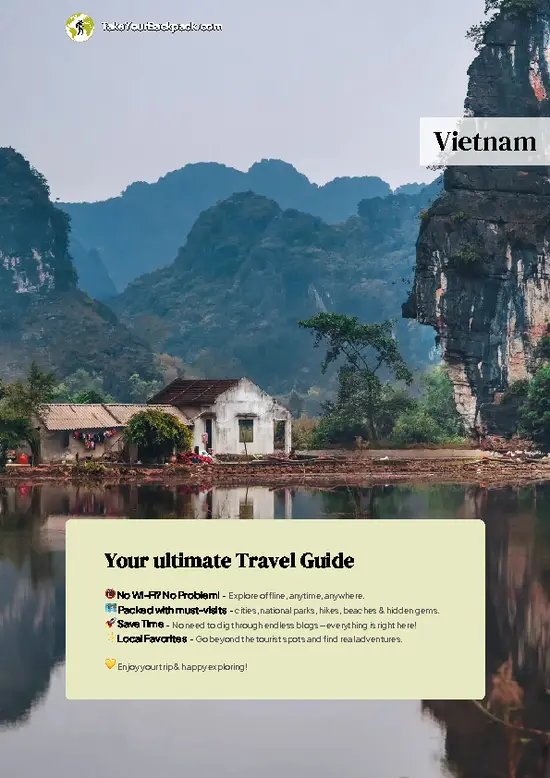
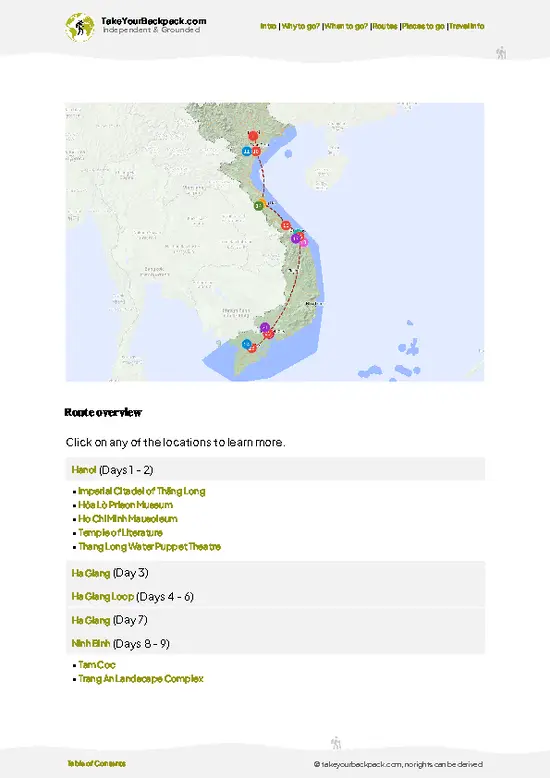
example page 0 from our offline Travel Guide for Vietnam
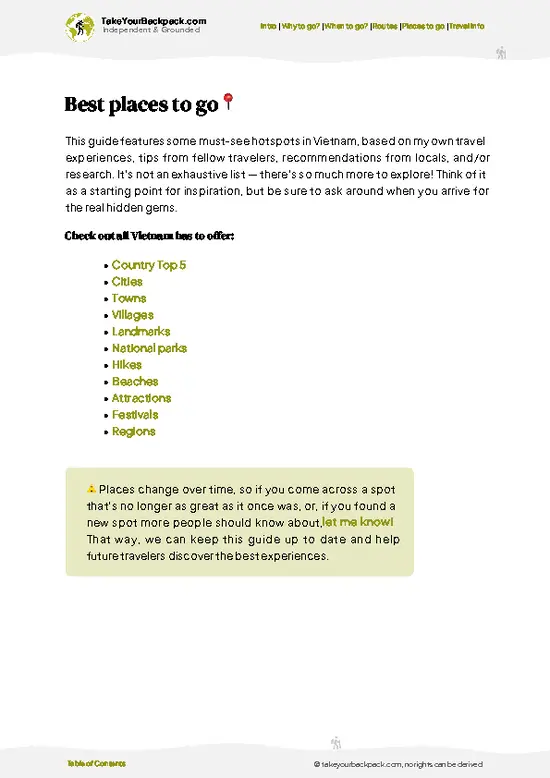
example page 1 from our offline Travel Guide for Vietnam
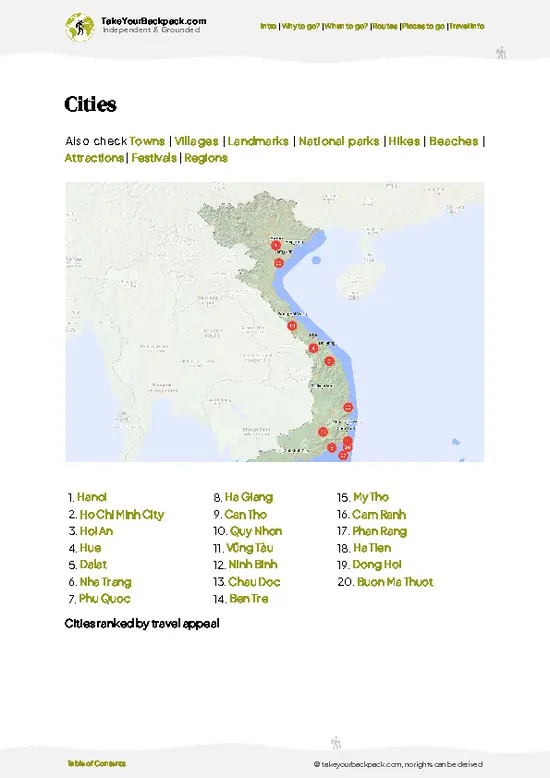
example page 2 from our offline Travel Guide for Vietnam
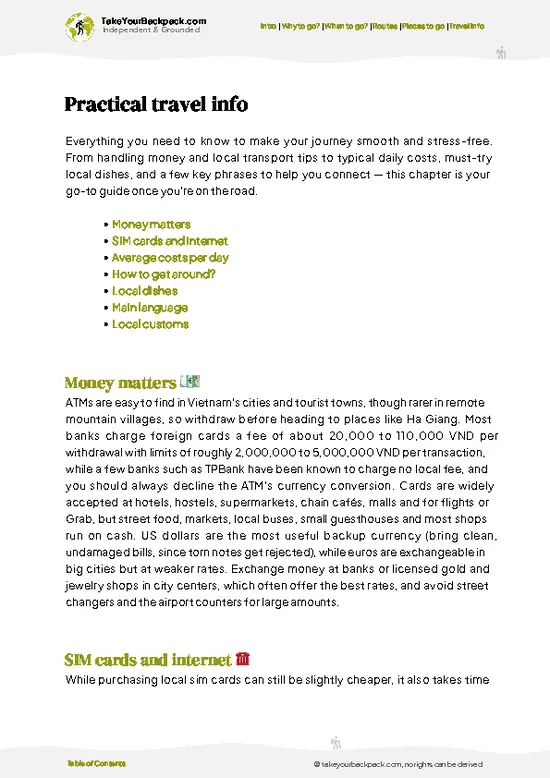
example page 3 from our offline Travel Guide for Vietnam
example page 4 from our offline Travel Guide for Vietnam
example page 5 from our offline Travel Guide for Vietnam
example page 6 from our offline Travel Guide for Vietnam
example page 7 from our offline Travel Guide for Vietnam
The digital guide (422 pages) contains:
✅ 118 highlights, ranked by travel appeal
✅ Optimized 7, 14 & 21-day travel routes
✅ Cities, national parks, landmarks, beaches
✅ How to get around
✅ Offline-friendly for travel without Wi-Fi
👉 Click to see all 30+ guide features

📅 Plan smarter in minutes, not weeks
✅ Month by month travel advice
✅ Festivals & national holidays
✅ Budget expectations

🗺️ Go to the right places, skip the overrated ones
✅ Honest pros & cons of destinations
✅ Top hikes, parks & viewpoints
✅ Lesser-known places most travelers miss
✅ Clear “worth it vs skip it” guidance

🛏️ Travel smoothly without rookie mistakes
✅ Best areas to stay
✅ Transport systems explained simply
✅ Common scams & safety advice
✅ SIM cards, money & practical tips

🌍 Understand the country, not just visit it
✅ Culture & traditions
✅ 52 Essential phrases & customs
✅ Festivals worth planning around
✅ Traveler-friendly historical context
✅ Insights that make places more meaningful

📱 Built for real travel conditions
✅ Fully downloadable PDF
✅ Works completely offline
✅ Optimized for phone use
✅ Useful in remote areas & buses
✅ Everything in one place
Stop searching, start planning
Get instant access to your full guide. 30‑day money-back guarantee.
+ Add another guide for just

By proceeding you agree to our terms.
Sent to your inbox immediately after payment • 100% Secure Checkout
Best Backpacking Travel Advisor 2025 tourism awardBest Backpacking
Travel Advisor
2025
What others say about Take Your Backpack Guides:
⭐⭐⭐⭐⭐
Fantastic, amazing amount of information!
⭐⭐⭐⭐⭐
My goodness this is amazing, it's what I've been looking for hats off too you!
⭐⭐⭐⭐⭐
I think this is absolutely BRILLIANT
⭐⭐⭐⭐
Very complete and informative. It's still missing places, but I gotta to commend you
⭐⭐⭐⭐⭐
This is truly amazing, thank you, can't wait to explore it with my kids!
⭐⭐⭐⭐⭐
Awesome resource, thank you!
⭐⭐⭐⭐⭐
This is amazing! Can't wait to explore the ones I haven't seen
⭐⭐⭐⭐
I love this! Well done, great idea.
⭐⭐⭐⭐⭐
Thanks for taking the time to make this gem!
⭐⭐⭐⭐⭐
This might be the best website I've ever seen.
⭐⭐⭐⭐⭐
Congratulations, and thank you so much for your work; it's incredibly valuable.
⭐⭐⭐⭐
In all seriousness I think you did a great job pointing out the important spots
⭐⭐⭐⭐⭐
10/10 very good
⭐⭐⭐⭐⭐
As someone who's only just starting to visit regularly this is awesome, thank you.
⭐⭐⭐⭐
Thank you very much! I'm going to visit my dad, it's going to be very useful!
⭐⭐⭐⭐⭐
This is really cool! We'll be travelling for the first time and this definitely come in handy.
⭐⭐⭐⭐⭐
You are now our minister of culture, congratulations 👨‍💼
⭐⭐⭐⭐⭐
Just wanted to tell you that this is a pearl! Going to follow your recommendations.
⭐⭐⭐⭐⭐
This is so cool. I'll definitely be using the resource for my travels soon.
⭐⭐⭐⭐⭐
This is very impressive! Good work.
⭐⭐⭐⭐⭐
This is an amazing and informative site. Very well done!

🛏️ Where to stay?Accommodation Highlights

Vietnam has one of Southeast Asia’s densest hostel scenes, with dorm beds typically running 120,000 to 250,000 VND (about US$5 to 10) a night and private rooms in family-run guesthouses from around 300,000 VND (US$12). In Hanoi, the Old Quarter puts you within walking distance of Hoan Kiem Lake and the Ta Hien beer street, but scooter horns and late bars carry on well past midnight. In Ho Chi Minh City, Pham Ngu Lao around Bui Vien in District 1 is the cheapest and loudest base, where you should keep a hand on your phone, while Hoi An’s rice-field homestays near An Bang beach and Da Nang’s An Thuong area by My Khe beach trade nightlife for quiet nights and a short bike or Grab ride to the sights. … read more 👉
Vietnam has one of Southeast Asia’s densest hostel scenes, with dorm beds typically running 120,000 to 250,000 VND (about US$5 to 10) a night and private rooms in family-run guesthouses from around 300,000 VND (US$12). In Hanoi, the Old Quarter puts you within walking distance of Hoan Kiem Lake and the Ta Hien beer street, but scooter horns and late bars carry on well past midnight. In Ho Chi Minh City, Pham Ngu Lao around Bui Vien in District 1 is the cheapest and loudest base, where you should keep a hand on your phone, while Hoi An’s rice-field homestays near An Bang beach and Da Nang’s An Thuong area by My Khe beach trade nightlife for quiet nights and a short bike or Grab ride to the sights.

If you enjoy meeting fellow travelers, consider choosing hostels with high ratings for atmosphere. On the other hand, if you prefer having your own space, a hotel might be a better option.

VietnamSee More of Vietnam

👋 Meet the founderWho’s Behind Take Your Backpack?

Johan, backpacker and founder of TakeYourBackpackHi, I’m Johan (Netherlands 🇳🇱), the creator of TakeYourBackpack. Over the past 3 decades, I’ve backpacked through 90+ countries across six continents, gaining extensive experience with independent travel, long-term trips, and overland routes.

This site is built on a combination of firsthand travel experience and carefully curated insights from other backpackers. Many guides are based on places I’ve personally visited, while others bring together tips, observations, and practical advice shared by trusted travelers I’ve met along the way.

The goal is to provide realistic, experience-driven guidance — not generic itineraries — so you can explore destinations with better context, clearer expectations, and more confidence.