×

Vietnam🇻🇳 | attractionsVietnam National Museum of Historybronze drums, dynastic artifacts, ancient ceramics | things to do and best time to go

Explore Fine Arts MuseumExplore Vietnamese Women’s Museum

Backpacking in Vietnam National Museum of History
👍 Recommendedattraction ranked #10
By Johan Kruseman 🇳🇱 | Updated May 10, 2026

A bead of sweat rolls down your back as you lean in, nose inches from a chipped bronze drum, the air thick with the scent of old lacquer and humidity. Outside, Hanoi’s motorbike chaos is a dull thrum, but in here, it’s just you and the ghosts of dynasties. The Vietnam National Museum of History sits right in central Hanoi, a stone’s throw from the Opera House—easy to find, impossible to rush. Here’s the deal: you won’t get the selfie crowds of Ha Long Bay or the adrenaline of Sapa’s peaks, but you will get a crash course in Vietnam’s soul for the price of a street meal. It’s not flashy, but if you want to understand what shaped this country—beyond the war stories—this is where you start.

Discover everything you want to know in the 📖 Vietnam Travel Guide.


Get your Vietnam guide
122 ranked highlights, routes & tips, works offline (437 pages)
Loading the map 🌍
CLICK TO FILTER
cities
towns
villages
landmarks
national parks
hikes
beaches
attractions
festivals
regions
SHOW COUNTRY’S BESTSHOW ALL

✨ Why go?
Ranked #10 attraction in Vietnam
Reasons people choose to visit here

The Vietnam National Museum of History isn’t just another stop on the tourist checklist—it’s a heavyweight in understanding Vietnam’s soul. Sure, it’s not Instagram-perfect like Halong Bay’s limestone karsts, but its cultural significance runs deep. This museum packs centuries of history into one spot, from ancient artifacts to relics of colonial struggles. Backpackers who make the trek here aren’t just ticking a box; they’re diving into the historical depth that shapes modern Vietnam. It’s a reality check against the glossy postcards, revealing the grit behind the country’s resilience. The crowds can be a grind, but the payoff is massive: you walk away with a clearer picture of Vietnam’s identity, making it a crucial milestone on any serious route through the country. If you want more than … read more 👉
The Vietnam National Museum of History isn’t just another stop on the tourist checklist—it’s a heavyweight in understanding Vietnam’s soul. Sure, it’s not Instagram-perfect like Halong Bay’s limestone karsts, but its cultural significance runs deep. This museum packs centuries of history into one spot, from ancient artifacts to relics of colonial struggles. Backpackers who make the trek here aren’t just ticking a box; they’re diving into the historical depth that shapes modern Vietnam. It’s a reality check against the glossy postcards, revealing the grit behind the country’s resilience. The crowds can be a grind, but the payoff is massive: you walk away with a clearer picture of Vietnam’s identity, making it a crucial milestone on any serious route through the country. If you want more than surface-level snapshots, this is where the real story hits.
Want to include Vietnam National Museum of History in your Vietnam route?
Create a personalized Vietnam itinerary that includes Vietnam National Museum of History and the places that fit your trip — based on your travel style, budget, and available time. Get your route in seconds.

Generate my trip

💡 HighlightsDon't-miss highlights and experiences

The Dong Son Drums
Forget the glass-case fatigue—these ancient bronze drums are the real deal. Crafted over 2,000 years ago, they’re not just museum pieces; they’re the heartbeat of Vietnam’s earliest civilization. The intricate patterns aren’t just pretty—they’re coded messages about power, ritual, and rain. Stand in front of one and you’re staring at the original Vietnamese playlist, used to summon the gods and rally the people. This is the kind of artifact that makes you realize history isn’t just old—it’s loud.


The Cham Sculpture Gallery
If you think Southeast Asian art is all about temples and Buddhas, the Cham gallery will shake you awake. These sandstone figures—some serene, some wild-eyed—are survivors from a vanished kingdom that once ruled central Vietnam. There’s a rawness here, … read more 👉
The Dong Son Drums
Forget the glass-case fatigue—these ancient bronze drums are the real deal. Crafted over 2,000 years ago, they’re not just museum pieces; they’re the heartbeat of Vietnam’s earliest civilization. The intricate patterns aren’t just pretty—they’re coded messages about power, ritual, and rain. Stand in front of one and you’re staring at the original Vietnamese playlist, used to summon the gods and rally the people. This is the kind of artifact that makes you realize history isn’t just old—it’s loud.


The Cham Sculpture Gallery
If you think Southeast Asian art is all about temples and Buddhas, the Cham gallery will shake you awake. These sandstone figures—some serene, some wild-eyed—are survivors from a vanished kingdom that once ruled central Vietnam. There’s a rawness here, a sense of lost grandeur and spiritual hunger. The room feels like a time capsule cracked open, with gods and demons staring you down from every corner.


The Prehistoric Tools and Fossils
Stone axes, jawbones, and ancient pottery—this isn’t just a parade of old rocks. The museum’s prehistoric section is a crash course in human grit. You’ll see the actual tools early Vietnamese used to carve out a life from jungle and riverbank, long before emperors and armies. It’s a reminder that civilization didn’t start with palaces; it started with survival.


The Imperial Costumes and Ceramics
Here’s where the museum flexes its style muscles. The imperial robes and court ceramics aren’t just pretty—they’re a masterclass in subtle power moves. Every dragon, every glaze, every embroidered sleeve is a status update from a time when fashion could get you killed or crowned. If you want to see how Vietnam’s elite lived (and schemed), this is your window.


The French Colonial Architecture (Personal Favorite)
Yes, the building itself. The museum’s yellow façade and grand staircases are pure French Indochina—equal parts elegance and faded empire. It’s a rare case where the container is as compelling as the contents. I love how the creaking floors and sunlit halls remind you that history isn’t just in the displays; it’s in the bones of the place. If you want atmosphere, skip the gift shop and linger in the corridors.
Spotted a mistake or missing something? Contact us.

Things to do around Vietnam National Museum of History

Ratings based on Tripadvisor reviews. When you book through this link, you support our work at no extra cost to you.

🌤️ When to go?Best time to visit Vietnam National Museum of History


  • Topic: Weather and Temperature – Hanoi’s climate swings between hot, humid summers and cool, dry winters. From May to September, expect 28-35°C (82-95°F) with heavy rains that can dampen your museum stroll. October to April offers a more comfortable 15-22°C (59-72°F), perfect for wandering without sweating buckets.

  • Topic: Daylight Hours – Daylight is fairly consistent year-round, roughly 11-13 hours daily. However, winter months (December-February) have shorter days, so plan museum visits earlier to maximize light and avoid rushing.

  • Topic: Crowds – Tourist influx peaks during summer holidays (June-August) and Tet (Vietnamese New Year, late January or early February). The museum can get crowded then, especially with school groups. Off-peak months like March or November offer a quieter,
read more 👉

  • Topic: Weather and Temperature – Hanoi’s climate swings between hot, humid summers and cool, dry winters. From May to September, expect 28-35°C (82-95°F) with heavy rains that can dampen your museum stroll. October to April offers a more comfortable 15-22°C (59-72°F), perfect for wandering without sweating buckets.

  • Topic: Daylight Hours – Daylight is fairly consistent year-round, roughly 11-13 hours daily. However, winter months (December-February) have shorter days, so plan museum visits earlier to maximize light and avoid rushing.

  • Topic: Crowds – Tourist influx peaks during summer holidays (June-August) and Tet (Vietnamese New Year, late January or early February). The museum can get crowded then, especially with school groups. Off-peak months like March or November offer a quieter, more intimate experience.

  • Topic: Seasonal Activities – The museum hosts special exhibitions and cultural events mostly in spring and autumn, aligning with national holidays. Catching these can add depth to your visit but expect more visitors.

  • Topic: Price Fluctuations – Entry fees remain stable year-round, but accommodation and flights spike during peak tourist seasons and Tet. Visiting in shoulder months (March-April, September-November) saves money and stress.


Pro-tip: Aim for late autumn or early spring—cooler weather, manageable crowds, and a chance to catch cultural events without the tourist crush.


source: climatestotravel.comJANJanuary: fair for travelingFEBFebruary: fair for travelingMARMarch: highly recommended for travelingAPRApril: highly recommended for travelingMAYMay: fair for travelingJUNJune: fair for travelingJULJuly: fair for travelingAUGAugust: fair for travelingSEPSeptember: good for travelingOCTOctober: highly recommended for travelingNOVNovember: highly recommended for travelingDECDecember: good for traveling
when-to-go

✈️ The backpacker research shortcutVietnam Travel Guide

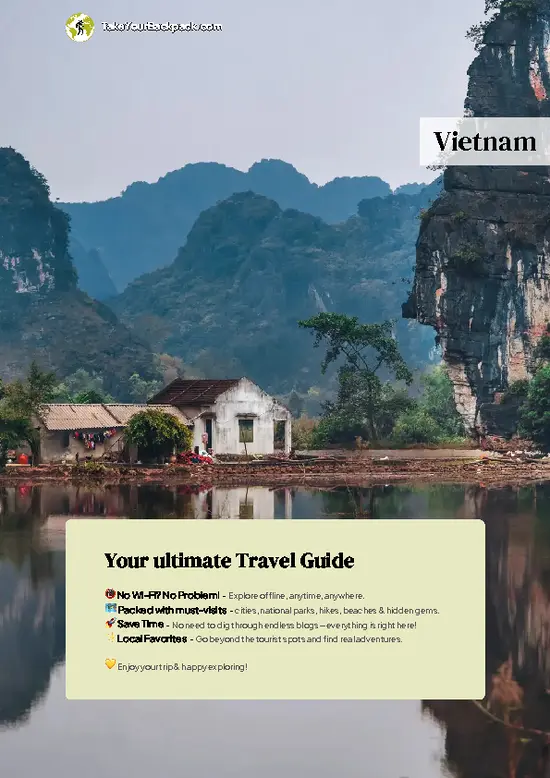
An offline-friendly backpacking guide with optimized travel routes, ranked highlights, transport advice, and the best areas to stay.
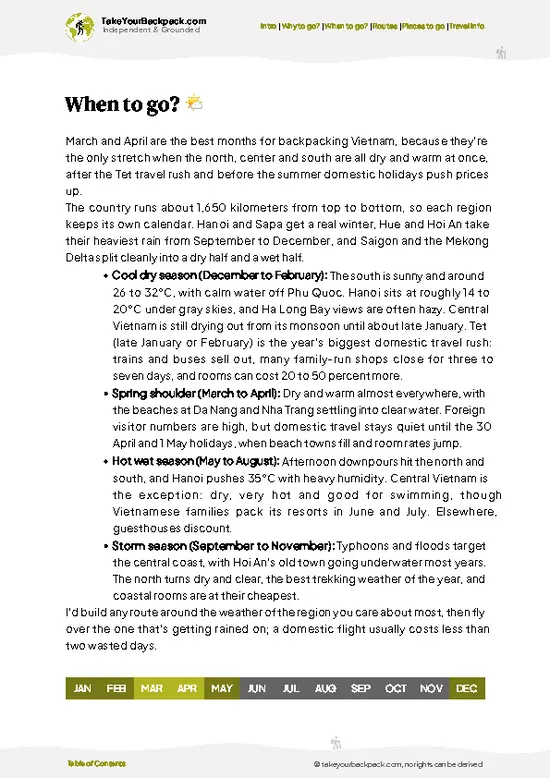
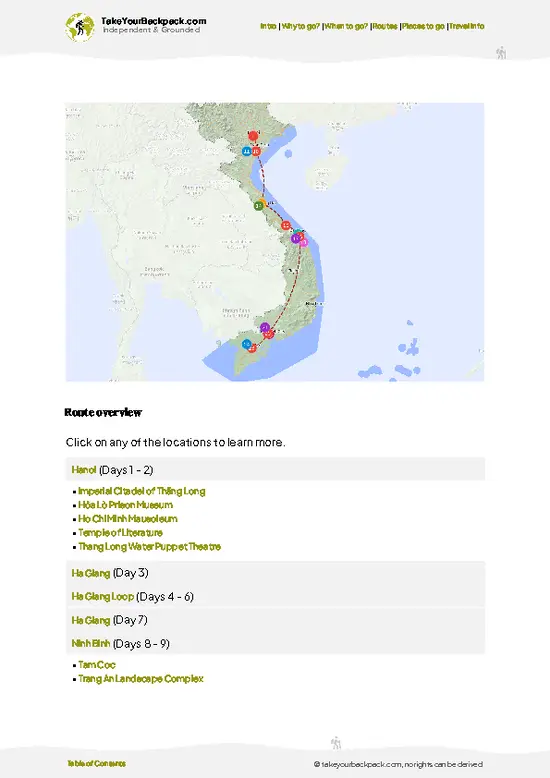
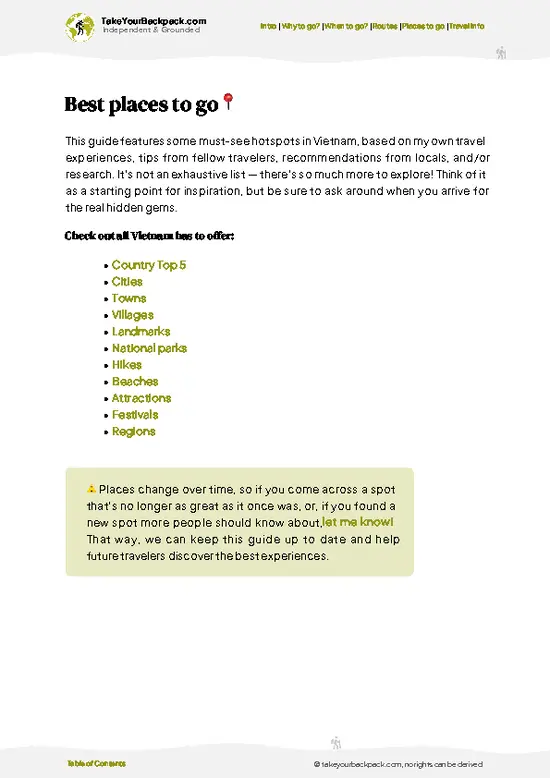
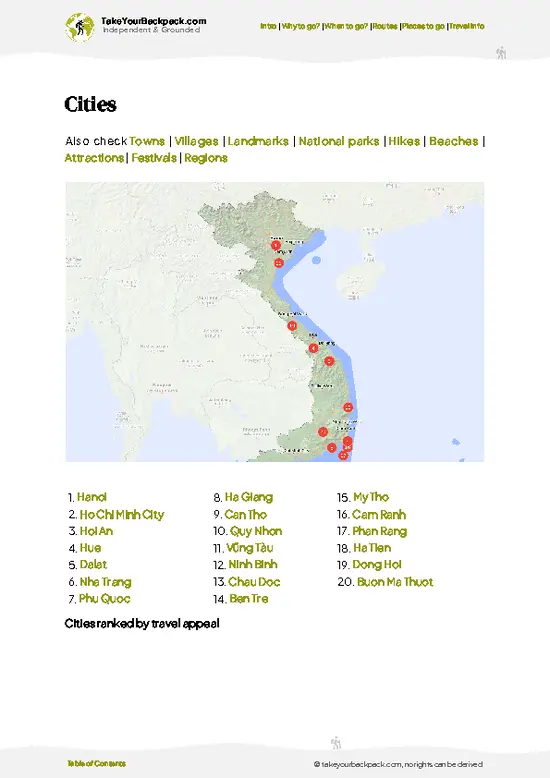
example page 0 from our offline Travel Guide for Vietnam
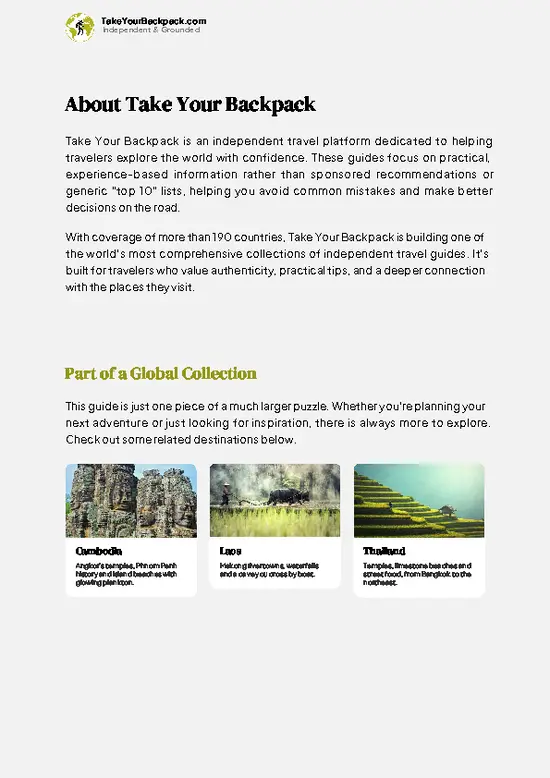
example page 1 from our offline Travel Guide for Vietnam
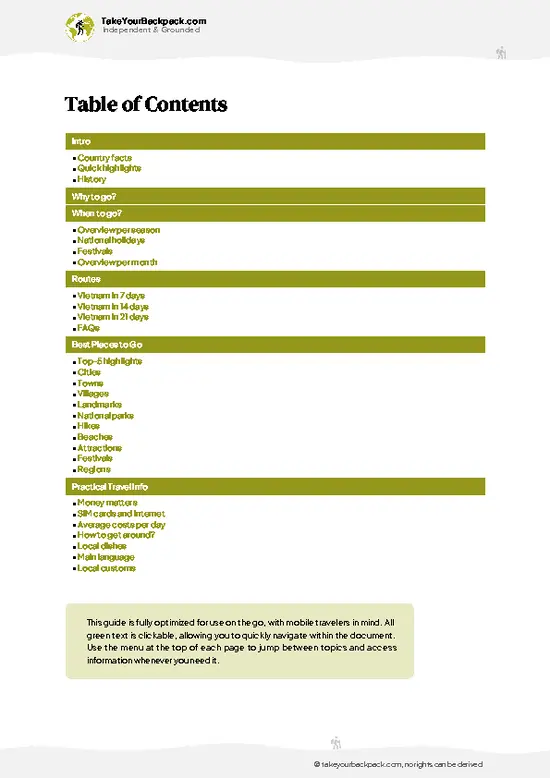
example page 2 from our offline Travel Guide for Vietnam
example page 3 from our offline Travel Guide for Vietnam
example page 4 from our offline Travel Guide for Vietnam
example page 5 from our offline Travel Guide for Vietnam
example page 6 from our offline Travel Guide for Vietnam
example page 7 from our offline Travel Guide for Vietnam
The digital guide (437 pages) contains:
122 highlights, ranked by travel appeal
Optimized 7, 14 & 21-day travel routes
Cities, national parks, landmarks, beaches
How to get around
Offline-friendly for travel without Wi-Fi
👉 Click to see all 30+ guide features

📅 Plan smarter in minutes, not weeks
Month by month travel advice
Festivals & national holidays
Budget expectations

🗺️ Go to the right places, skip the overrated ones
Honest pros & cons of destinations
Top hikes, parks & viewpoints
Lesser-known places most travelers miss
Clear “worth it vs skip it” guidance

🛏️ Travel smoothly without rookie mistakes
Best areas to stay
Transport systems explained simply
Common scams & safety advice
SIM cards, money & practical tips

🌍 Understand the country, not just visit it
Culture & traditions
52 Essential phrases & customs
Festivals worth planning around
Traveler-friendly historical context
Insights that make places more meaningful

📱 Built for real travel conditions
Fully downloadable PDF
Works completely offline
Optimized for phone use
Useful in remote areas & buses
Everything in one place
Save weeks of stressful planning
Get instant access to your full guide. 30‑day money-back guarantee.


By proceeding you agree to our terms.
Sent to your inbox immediately after payment • 100% Secure Checkout
Best Backpacking Travel Advisor 2025 tourism awardBest Backpacking
Travel Advisor
2025
What others say about Take Your Backpack Guides:
⭐⭐⭐⭐⭐
Fantastic, amazing amount of information!
⭐⭐⭐⭐⭐
My goodness this is amazing, it's what I've been looking for hats off too you!
⭐⭐⭐⭐⭐
I think this is absolutely BRILLIANT
⭐⭐⭐⭐
Very complete and informative. It's still missing places, but I gotta to commend you
⭐⭐⭐⭐⭐
This is truly amazing, thank you, can't wait to explore it with my kids!
⭐⭐⭐⭐⭐
Awesome resource, thank you!
⭐⭐⭐⭐⭐
This is amazing! Can't wait to explore the ones I haven't seen
⭐⭐⭐⭐
I love this! Well done, great idea.
⭐⭐⭐⭐⭐
Thanks for taking the time to make this gem!
⭐⭐⭐⭐⭐
This might be the best website I've ever seen.
⭐⭐⭐⭐⭐
Congratulations, and thank you so much for your work; it's incredibly valuable.
⭐⭐⭐⭐
In all seriousness I think you did a great job pointing out the important spots
⭐⭐⭐⭐⭐
10/10 very good
⭐⭐⭐⭐⭐
As someone who's only just starting to visit regularly this is awesome, thank you.
⭐⭐⭐⭐
Thank you very much! I'm going to visit my dad, it's going to be very useful!
⭐⭐⭐⭐⭐
This is really cool! We'll be travelling for the first time and this definitely come in handy.
⭐⭐⭐⭐⭐
You are now our minister of culture, congratulations 👨‍💼
⭐⭐⭐⭐⭐
Just wanted to tell you that this is a pearl! Going to follow your recommendations.
⭐⭐⭐⭐⭐
This is so cool. I'll definitely be using the resource for my travels soon.
⭐⭐⭐⭐⭐
This is very impressive! Good work.
⭐⭐⭐⭐⭐
This is an amazing and informative site. Very well done!

🛏️ Where to stay?How to pick the right area

If you’re hitting the Vietnam National Museum of History, forget the polished tourist zones and dive into the Old Quarter. It’s loud, chaotic, and packed with backpackers who want more than just a museum selfie. This area is the heartbeat of Hanoi’s street life—think narrow alleys buzzing with scooters, street food stalls that serve up pho at all hours, and a social vibe that’s impossible to fake. It’s safe enough if you keep your wits, and you’ll find plenty of budget guesthouses and hostels where you can swap stories with fellow travelers over a cold bia hoi.

If you want something a bit quieter … read more 👉
If you’re hitting the Vietnam National Museum of History, forget the polished tourist zones and dive into the Old Quarter. It’s loud, chaotic, and packed with backpackers who want more than just a museum selfie. This area is the heartbeat of Hanoi’s street life—think narrow alleys buzzing with scooters, street food stalls that serve up pho at all hours, and a social vibe that’s impossible to fake. It’s safe enough if you keep your wits, and you’ll find plenty of budget guesthouses and hostels where you can swap stories with fellow travelers over a cold bia hoi.

If you want something a bit quieter but still social, the French Quarter is your spot. It’s a short walk from the museum, with tree-lined boulevards and colonial architecture that feels like a breath of fresh air after the Old Quarter’s sensory overload. It’s pricier but still doable on a backpacker budget if you hunt around. Plus, it’s got a more relaxed café culture for those late-night map planning sessions. Both areas put you close to the museum without sacrificing the raw, real Hanoi experience.

👛 Costs (as of 27 March 2026)What things cost and how to budget

As of March 2026, the Vietnam National Museum of History in Hanoi charges an admission fee of 40,000 VND (approximately €1.60) for adults, 20,000 VND (€0.80) for college and university students, and 10,000 VND (€0.40) for primary to high school students. Children under 6 years old and individuals with disabilities are granted free entry. Photography is permitted with an additional fee of 15,000 VND (€0.60) per camera, while filming requires a fee of 30,000 VND (€1.20) per camera. Please note that these fees are subject to change; it's advisable to check the museum's official website for the most current information before your visit.

source: baotanglichsu.vn
⚠️ Prices can change and everyone travels differently, so take this as a rough guide. Hope it helps you plan your adventure!

Other Vietnamese attractions near Vietnam National Museum of History

Explore more nearby:


💡 Not sure where to go next?
Create a personalized itinerary for Vietnam including Vietnam National Museum of History and the places that fit your trip.

Generate my itinerary

👉 Discover all attractions

Or checkout all Vietnam has to offer (think cities, towns, villages, national parks, hikes, beaches, festivals)
Country photo of Vietnam

We 💚 feedbackIs it worth it?

The Vietnam National Museum of History isn’t a flashy tourist magnet, but it’s a treasure trove if you want to grasp the country’s deep, tangled past beyond the usual war stories. Heads-up: it can feel a bit cramped and dusty, especially on busy days. Still, the real draw is how it stitches together Vietnam’s ancient roots with its modern identity—something you won’t get scrolling Instagram.

✈️ When did I visit Vietnam?
I have backpacked through the northern part of Vietnam all the way back in 1998.

✍️ Help improve this page!
The information on this page is based on my own backpacking experience in Vietnam, supplemented with up-to-date research and feedback from other travelers. Travel details can change, so if you notice anything outdated or incomplete, feel free to let me know.


🙋‍♂️ Give feedback

👋 Meet the founderWho’s Behind Take Your Backpack?

Johan, backpacker and founder of TakeYourBackpackHi, I’m Johan (Netherlands 🇳🇱), the creator of TakeYourBackpack. Over the past decade, I’ve backpacked through 80+ countries across six continents, gaining extensive experience with independent travel, long-term trips, and overland routes.

This site is built on a combination of firsthand travel experience and carefully curated insights from other backpackers. Many guides are based on places I’ve personally visited, while others bring together tips, observations, and practical advice shared by trusted travelers I’ve met along the way.

The goal is to provide realistic, experience-driven guidance — not generic itineraries — so you can explore destinations with better context, clearer expectations, and more confidence.

Get full Vietnam guide •
Instant download • 122 highlights • Full Offline guide