×

Western Sahara🇪🇭 | festivalsFestival of the Camelcamel parades, desert tents, traditional herding | things to do and best time to go

Explore Laayoune MoussemExplore Assa

Backpacking in of the Camel
🌟 Highlightfestival ranked #2
By Johan Kruseman 🇳🇱 | Updated May 21, 2026

If you crave air-conditioned comfort, gourmet food trucks, or Instagram-perfect festival grounds, the Festival of the Camel will chew you up and spit you out. But if you’re the kind of backpacker who sees a sandstorm as a plot twist and values stories over souvenirs, this is your proving ground. Deep in the Saharan interior, near the town of Smara in Western Sahara, the festival is less a polished event and more a living, breathing collision of nomadic tradition and raw endurance. Expect hypnotic Berber drumming, ululating chants, and the kind of camel races that kick up enough dust to coat your teeth. The crowd? Local Sahrawis, a handful of regional traders, and a smattering of wide-eyed travelers who didn’t read the fine print. The vibe is communal, gritty, and fiercely proud—think more desert encampment than Coachella. It runs for several days, and if you can handle the elements, you’ll walk away with a story that feels earned, not bought.

Discover everything you want to know in the 📖 Western Sahara Travel Guide.
Loading the map 🌍
CLICK TO FILTER
cities
towns
villages
landmarks
hikes
beaches
festivals
regions
SHOW COUNTRY’S BESTSHOW ALL

✨ Why go?
Ranked #2 festival in Western Sahara
Why of the Camel should be on your travel list

Backpackers flock to the Festival of the Camel in the Western Sahara for a reason. This isn’t just another event; it’s a social energy powerhouse. Picture this: a temporary community springs to life, where laughter and music fill the air, and the spirit of the desert pulses through every gathering. You’re not just a spectator; you’re part of something bigger, a cultural immersion that’s hard to replicate.

The festival offers a unique blend of affordability compared to similar events worldwide. You can dive into local traditions, taste authentic cuisine, and engage with nomadic tribes without breaking the bank. This is where your budget stretches further, allowing you to save for those unforgettable moments that truly matter.

Planning your route around the festival also makes sense for longer … read more 👉
Backpackers flock to the Festival of the Camel in the Western Sahara for a reason. This isn’t just another event; it’s a social energy powerhouse. Picture this: a temporary community springs to life, where laughter and music fill the air, and the spirit of the desert pulses through every gathering. You’re not just a spectator; you’re part of something bigger, a cultural immersion that’s hard to replicate.

The festival offers a unique blend of affordability compared to similar events worldwide. You can dive into local traditions, taste authentic cuisine, and engage with nomadic tribes without breaking the bank. This is where your budget stretches further, allowing you to save for those unforgettable moments that truly matter.

Planning your route around the festival also makes sense for longer travel plans. It’s a natural waypoint, connecting you to other adventures in the Sahara. You’ll find that the festival enhances your journey, adding layers of experience that transform a simple trip into a rich tapestry of memories. Embrace the challenge of navigating this vibrant scene; it’s a rewarding detour that fuels your wanderlust.
Want to include Festival of the Camel in your Western Sahara route?
Create a personalized Western Sahara itinerary that includes Festival of the Camel and the places that fit your trip — based on your travel style, budget, and available time. Get your route in seconds.

Generate my trip

💡 HighlightsTop highlights of of the Camel

  • Camel races and endurance displays — The heartbeat of the festival: watching dromedaries sprinting across open sand up close is nothing like seeing them in a zoo. Expect raw speed, improvised grandstands of locals, and the contrast between the animal’s importance as a working partner and the spectacle of competition.
  • Camel beauty parades and ornamentation — Owners spend days dressing camels in braided tassels, silver bits and embroidered cloth; the parade is equal parts pride show and folk-fashion runway. The decorations, grooming styles and the fanfare around winners say a lot about local aesthetics and social ties.
  • Traditional Sahrawi music, poetry and oral storytelling — Evening gatherings feature poetic recitals in Hassaniya and music led by lute-like strings and hand drums. The performances
read more 👉
  • Camel races and endurance displays — The heartbeat of the festival: watching dromedaries sprinting across open sand up close is nothing like seeing them in a zoo. Expect raw speed, improvised grandstands of locals, and the contrast between the animal’s importance as a working partner and the spectacle of competition.
  • Camel beauty parades and ornamentation — Owners spend days dressing camels in braided tassels, silver bits and embroidered cloth; the parade is equal parts pride show and folk-fashion runway. The decorations, grooming styles and the fanfare around winners say a lot about local aesthetics and social ties.
  • Traditional Sahrawi music, poetry and oral storytelling — Evening gatherings feature poetic recitals in Hassaniya and music led by lute-like strings and hand drums. The performances are communal: call-and-response singing, improvised verses about desert life, and storytelling that hands down history and humor in a way recordings never do.
  • Desert camp life, night skies and tea rituals — Part of the festival is camping with nomad families: simple tents, shared meals, endless stars. The ceremonial pouring of mint tea, late-night songs around the fire, and that quiet Milky Way view are as much a highlight as any scheduled event—pure atmosphere that grounds the whole thing.
  • Handcraft souks and nomad demonstrations — Little markets pop up with woven rugs, silver jewelry, leatherwork and ornately beaded camel tack. Craftspeople often demonstrate techniques (weaving, tent-repair) and you can barter directly with families—great for souvenirs and for seeing how everyday desert skills are made and valued.
Spotted a mistake or missing something? Contact us.
🌤️ When to go?When is the celebration of Festival of the Camel?


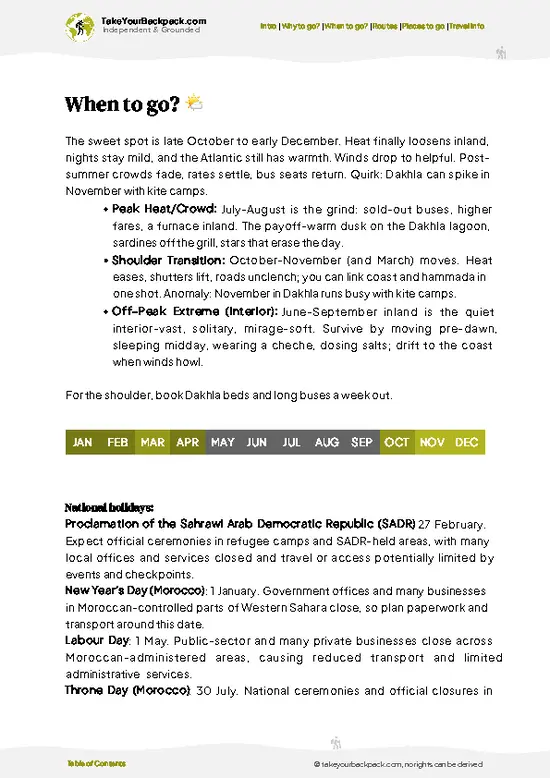
  • Weather: The Festival of the Camel takes place in the cooler months, typically January or February. This timing avoids the brutal Saharan summer heat, which can soar above 45°C (113°F), making daytime exploration a grind rather than a joy.

  • Temperature: Expect daytime highs around 20-25°C (68-77°F), perfect for trekking and camel rides without overheating. Nights can dip to 5°C (41°F), so pack layers to stay comfortable after sunset.

  • Daylight Hours: Winter days are shorter, with roughly 10 hours of daylight. This means starting early is key to maximize your time outdoors and catch all the festival’s action before dark.

  • Crowds: The festival draws a mix of locals and adventurous travelers, but it’s not overrun. Visiting during the official festival dates ensures you catch the full cultural
read more 👉

  • Weather: The Festival of the Camel takes place in the cooler months, typically January or February. This timing avoids the brutal Saharan summer heat, which can soar above 45°C (113°F), making daytime exploration a grind rather than a joy.

  • Temperature: Expect daytime highs around 20-25°C (68-77°F), perfect for trekking and camel rides without overheating. Nights can dip to 5°C (41°F), so pack layers to stay comfortable after sunset.

  • Daylight Hours: Winter days are shorter, with roughly 10 hours of daylight. This means starting early is key to maximize your time outdoors and catch all the festival’s action before dark.

  • Crowds: The festival draws a mix of locals and adventurous travelers, but it’s not overrun. Visiting during the official festival dates ensures you catch the full cultural experience without the shoulder-season lull or off-season silence.

  • Seasonal Activities: The festival’s timing aligns with traditional camel racing and folk performances, events that vanish outside this window. Missing these means missing the heart of the experience.

  • Price Fluctuations: Accommodation and transport costs spike during the festival. Booking early locks in better rates, while last-minute plans risk premium prices and limited availability.


Pro-tip: Arrive a day early to acclimate and secure your spot at key events—this buffer saves you stress and energy for the real adventure.


source: climatestotravel.comJANJanuary: excellent for travelingFEBFebruary: not recommended for travelingMARMarch: not recommended for travelingAPRApril: not recommended for travelingMAYMay: not recommended for travelingJUNJune: not recommended for travelingJULJuly: not recommended for travelingAUGAugust: not recommended for travelingSEPSeptember: not recommended for travelingOCTOctober: not recommended for travelingNOVNovember: not recommended for travelingDECDecember: not recommended for traveling

✈️ The backpacker research shortcutWestern Sahara Travel Guide

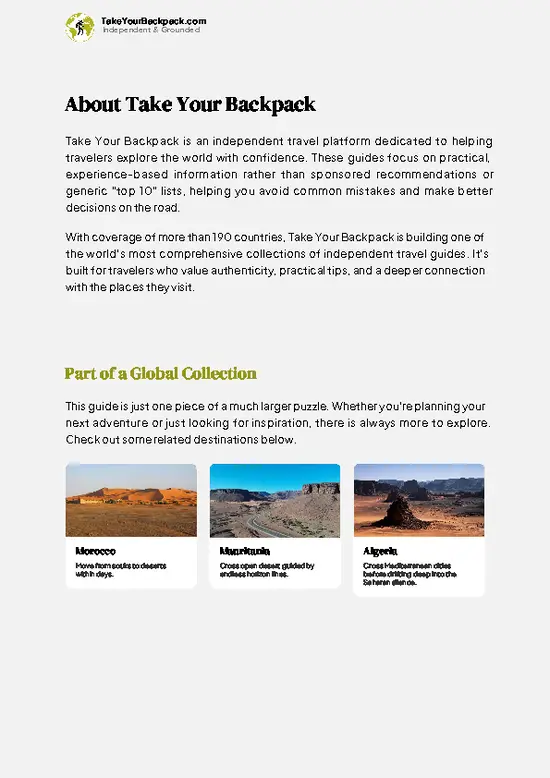
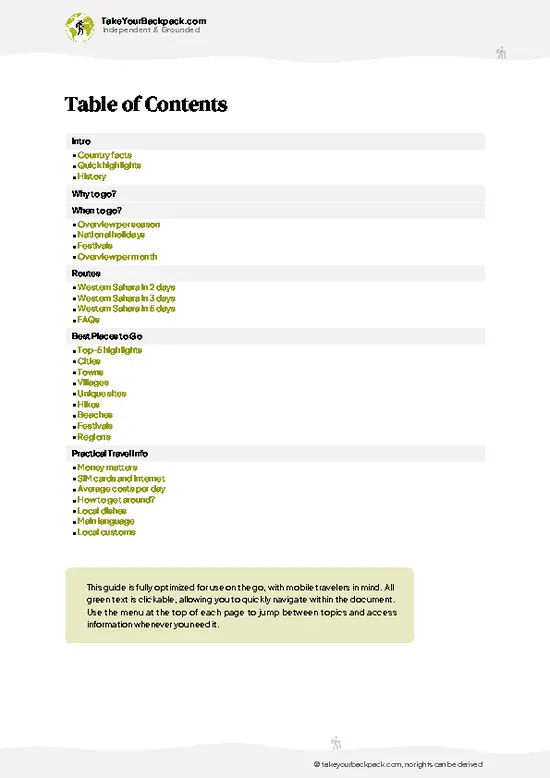
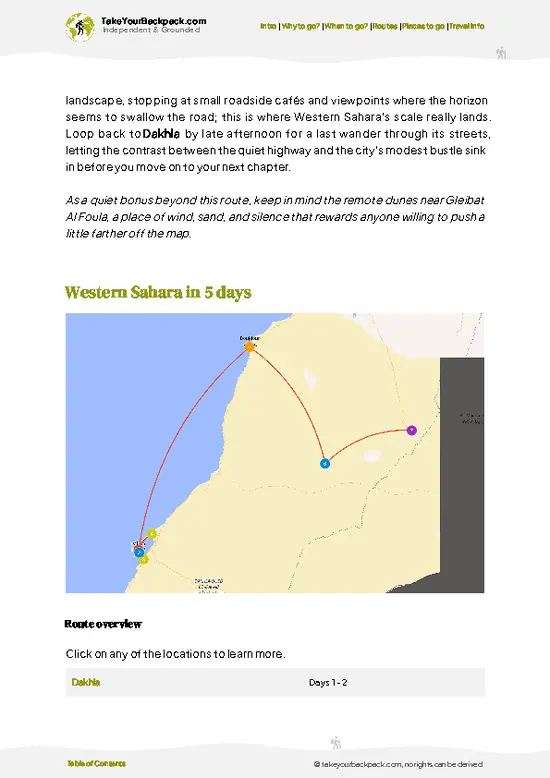
An offline-friendly backpacking guide with optimized travel routes, ranked highlights, transport advice, and the best areas to stay.
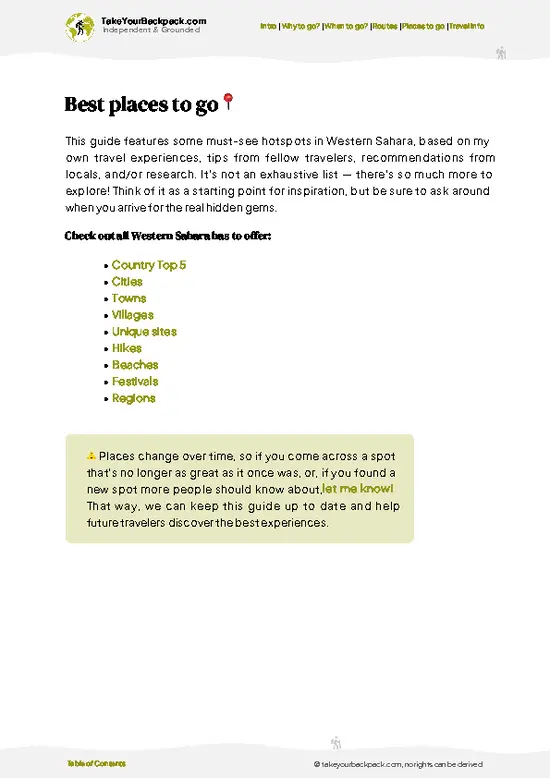
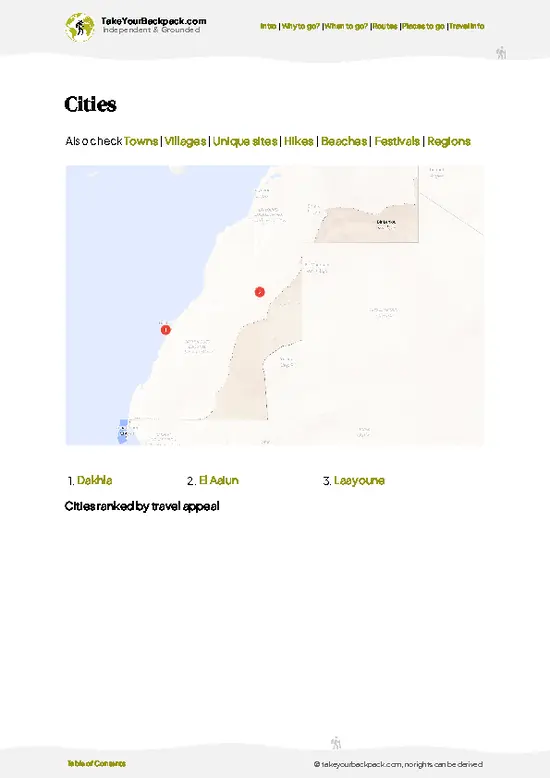
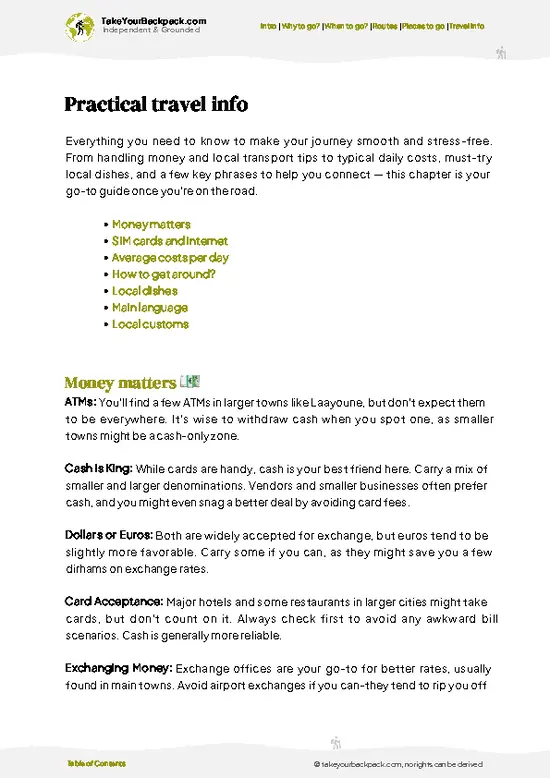
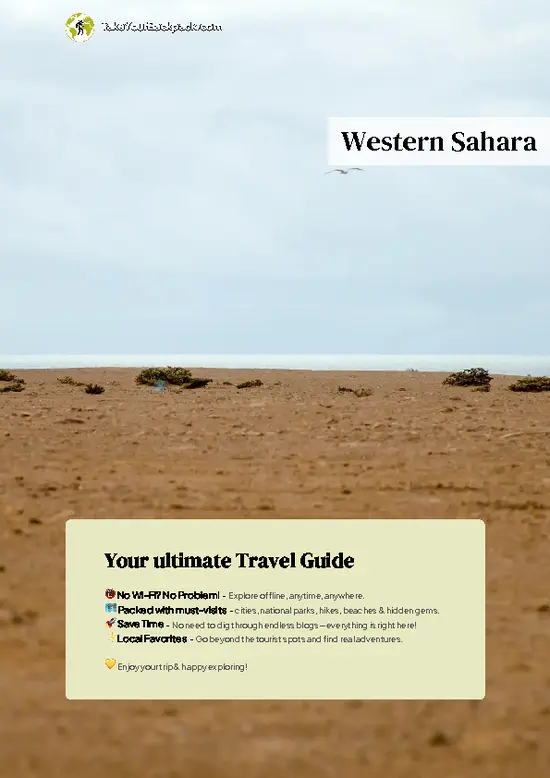
example page 0 from our offline Travel Guide for Western Sahara
example page 1 from our offline Travel Guide for Western Sahara
example page 2 from our offline Travel Guide for Western Sahara
example page 3 from our offline Travel Guide for Western Sahara
example page 4 from our offline Travel Guide for Western Sahara
example page 5 from our offline Travel Guide for Western Sahara
example page 6 from our offline Travel Guide for Western Sahara
example page 7 from our offline Travel Guide for Western Sahara
The digital guide (117 pages) contains:
22 highlights, ranked by travel appeal
Optimized 2, 3 & 5-day travel routes
Cities, national parks, landmarks, beaches
How to get around
Offline-friendly for travel without Wi-Fi
👉 Click to see all 30+ guide features

📅 Plan smarter in minutes, not weeks
Month by month travel advice
Festivals & national holidays
Budget expectations

🗺️ Go to the right places, skip the overrated ones
Honest pros & cons of destinations
Top hikes, parks & viewpoints
Lesser-known places most travelers miss
Clear “worth it vs skip it” guidance

🛏️ Travel smoothly without rookie mistakes
Best areas to stay
Transport systems explained simply
Common scams & safety advice
SIM cards, money & practical tips

🌍 Understand the country, not just visit it
Culture & traditions
52 Essential phrases & customs
Festivals worth planning around
Traveler-friendly historical context
Insights that make places more meaningful

📱 Built for real travel conditions
Fully downloadable PDF
Works completely offline
Optimized for phone use
Useful in remote areas & buses
Everything in one place
Save weeks of stressful planning
Get instant access to your full guide. 30‑day money-back guarantee.


By proceeding you agree to our terms.
Sent to your inbox immediately after payment • 100% Secure Checkout
Best Backpacking Travel Advisor 2025 tourism awardBest Backpacking
Travel Advisor
2025
What others say about Take Your Backpack Guides:
⭐⭐⭐⭐⭐
Fantastic, amazing amount of information!
⭐⭐⭐⭐⭐
My goodness this is amazing, it's what I've been looking for hats off too you!
⭐⭐⭐⭐⭐
I think this is absolutely BRILLIANT
⭐⭐⭐⭐
Very complete and informative. It's still missing places, but I gotta to commend you
⭐⭐⭐⭐⭐
This is truly amazing, thank you, can't wait to explore it with my kids!
⭐⭐⭐⭐⭐
Awesome resource, thank you!
⭐⭐⭐⭐⭐
This is amazing! Can't wait to explore the ones I haven't seen
⭐⭐⭐⭐
I love this! Well done, great idea.
⭐⭐⭐⭐⭐
Thanks for taking the time to make this gem!
⭐⭐⭐⭐⭐
This might be the best website I've ever seen.
⭐⭐⭐⭐⭐
Congratulations, and thank you so much for your work; it's incredibly valuable.
⭐⭐⭐⭐
In all seriousness I think you did a great job pointing out the important spots
⭐⭐⭐⭐⭐
10/10 very good
⭐⭐⭐⭐⭐
As someone who's only just starting to visit regularly this is awesome, thank you.
⭐⭐⭐⭐
Thank you very much! I'm going to visit my dad, it's going to be very useful!
⭐⭐⭐⭐⭐
This is really cool! We'll be travelling for the first time and this definitely come in handy.
⭐⭐⭐⭐⭐
You are now our minister of culture, congratulations 👨‍💼
⭐⭐⭐⭐⭐
Just wanted to tell you that this is a pearl! Going to follow your recommendations.
⭐⭐⭐⭐⭐
This is so cool. I'll definitely be using the resource for my travels soon.
⭐⭐⭐⭐⭐
This is very impressive! Good work.
⭐⭐⭐⭐⭐
This is an amazing and informative site. Very well done!

🛏️ Where to stay?Choosing the right base

When you’re gearing up for the Festival of the Camel in the Western Sahara, your choice of where to stay can make or break your experience. Aim for the bustling town of Merzouga. This is the heartbeat of the festival, where the energy crackles with excitement. You’ll find a mix of budget-friendly guesthouses and communal spaces that foster camaraderie among travelers.

Look for spots near the dunes. You want to be close enough to feel the pulse of the festival but far enough to escape the noise when you need a breather. The local vibe here is welcoming, and you’ll often find fellow backpackers … read more 👉
When you’re gearing up for the Festival of the Camel in the Western Sahara, your choice of where to stay can make or break your experience. Aim for the bustling town of Merzouga. This is the heartbeat of the festival, where the energy crackles with excitement. You’ll find a mix of budget-friendly guesthouses and communal spaces that foster camaraderie among travelers.

Look for spots near the dunes. You want to be close enough to feel the pulse of the festival but far enough to escape the noise when you need a breather. The local vibe here is welcoming, and you’ll often find fellow backpackers eager to share stories over a cup of mint tea.

Another solid option is Rissani, just a short ride from Merzouga. It’s less touristy, giving you a taste of authentic Moroccan life. The markets are vibrant, and you can snag some local delicacies while mingling with residents.

Safety is generally good, but keep your wits about you, especially at night. Stick to well-lit areas and travel in groups when possible. This way, you’ll preserve your energy and budget for the unforgettable moments that the festival promises.

👛 Costs (as of 4 February 2026)Travel costs and budget guide for of the Camel

The Festival of the Camel in Western Sahara is an exhilarating experience, but knowing the costs upfront can keep your adventure smooth and enjoyable.
  • Festival Tickets: Expect to pay around €10 to €20 for entry. This gets you access to the vibrant festivities, camel races, and cultural performances. Prices can vary based on the day and specific events, so check ahead.
  • Accommodation: Options range from basic campsites to more comfortable lodges. Budget around €15 to €50 per night. Campsites are cheaper, while lodges offer more amenities. Booking in advance can save you from last-minute price hikes.
  • Local Transport: Getting around can cost between €5 and €15 per day. Shared taxis or local buses are your best bets. They’re affordable and give you a taste of local life. Just be ready for some wait
read more 👉
The Festival of the Camel in Western Sahara is an exhilarating experience, but knowing the costs upfront can keep your adventure smooth and enjoyable.
  • Festival Tickets: Expect to pay around €10 to €20 for entry. This gets you access to the vibrant festivities, camel races, and cultural performances. Prices can vary based on the day and specific events, so check ahead.
  • Accommodation: Options range from basic campsites to more comfortable lodges. Budget around €15 to €50 per night. Campsites are cheaper, while lodges offer more amenities. Booking in advance can save you from last-minute price hikes.
  • Local Transport: Getting around can cost between €5 and €15 per day. Shared taxis or local buses are your best bets. They’re affordable and give you a taste of local life. Just be ready for some wait time and a bit of negotiation.
  • Food & Drinks: Plan on spending about €10 to €25 daily. Street food is delicious and cheap, while restaurants will charge more. Try local dishes for an authentic experience, but keep an eye on portion sizes to avoid overspending.
  • Miscellaneous Expenses: Set aside around €5 to €15 for souvenirs, tips, or unexpected costs. This cushion helps you enjoy spontaneous moments without stress. Remember, cash is king here, so keep some on hand.

Understanding these costs will help you navigate the festival with confidence, ensuring you can focus on the thrill of the experience rather than financial surprises.


source: visitmorocco.com
⚠️ Prices can change and everyone travels differently, so take this as a rough guide. Hope it helps you plan your adventure!

🍲 FoodLocal Flavors for Backpackers

At the Festival of the Camel in Western Sahara, food and drink are as much a part of the experience as the vibrant atmosphere. Expect a feast of local specialties like tagine, where tender meat simmers with spices and vegetables, served with fluffy couscous. Street stalls burst with the aroma of grilled meats and fresh bread, inviting you to dive in.

Don’t miss the mint tea—a ritual in itself. It’s sweet, refreshing, and often served in ornate glasses. Sharing a cup with locals is a must; it’s a gesture of hospitality that opens doors to conversations and connections.

Be prepared for some quirks. Lines can form quickly, and patience is key. Cash is king here; many stalls won’t accept cards, so stock up on dirhams before you dive in. Serving sizes can vary, so don’t hesitate to ask for … read more 👉
At the Festival of the Camel in Western Sahara, food and drink are as much a part of the experience as the vibrant atmosphere. Expect a feast of local specialties like tagine, where tender meat simmers with spices and vegetables, served with fluffy couscous. Street stalls burst with the aroma of grilled meats and fresh bread, inviting you to dive in.

Don’t miss the mint tea—a ritual in itself. It’s sweet, refreshing, and often served in ornate glasses. Sharing a cup with locals is a must; it’s a gesture of hospitality that opens doors to conversations and connections.

Be prepared for some quirks. Lines can form quickly, and patience is key. Cash is king here; many stalls won’t accept cards, so stock up on dirhams before you dive in. Serving sizes can vary, so don’t hesitate to ask for recommendations or share dishes with fellow festival-goers. This isn’t just about eating; it’s about immersing yourself in the culture.

So, grab a plate, find a spot in the bustling crowd, and savor every bite while soaking in the lively spirit around you. This festival isn’t just a destination; it’s a delicious journey.

Other Sahrawi festivals near of the Camel

Explore more nearby:


💡 Not sure where to go next?
Create a personalized itinerary for Western Sahara including of the Camel and the places that fit your trip.

Generate my itinerary

👉 Discover all festivals

Or checkout all Western Sahara has to offer (think cities, towns, villages, national parks, hikes, beaches, festivals)
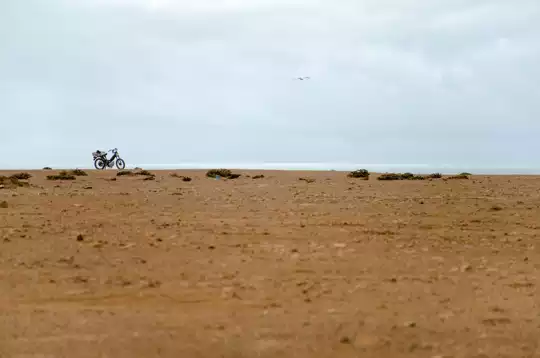
Country photo of Western Sahara

We 💚 feedbackWhat to keep in mind

The Festival of the Camel is a whirlwind of energy and culture, where the air buzzes with laughter and the scent of spiced food. Expect the unexpected—like the impromptu dance-offs that break out in the sand. But here’s the kicker: stay hydrated and don’t underestimate the desert sun; it’ll zap your energy faster than you can say “camel race.” Embrace the chaos, soak in the camaraderie, and let the rhythm of the festival carry you. You’ll leave with stories that outlast any souvenir.

✍️ Help improve this page!
The information on this page is based on in-depth research, insights shared by experienced travelers, and feedback from the local travel community in Western Sahara. While every effort is made to keep the information accurate and current, conditions can change — so if you spot anything incorrect or outdated, please get in touch.


🙋‍♂️ Give feedback

👋 Meet the founderWho’s Behind Take Your Backpack?

Johan, backpacker and founder of TakeYourBackpackHi, I’m Johan (Netherlands 🇳🇱), the creator of TakeYourBackpack. Over the past decade, I’ve backpacked through 80+ countries across six continents, gaining extensive experience with independent travel, long-term trips, and overland routes.

This site is built on a combination of firsthand travel experience and carefully curated insights from other backpackers. Many guides are based on places I’ve personally visited, while others bring together tips, observations, and practical advice shared by trusted travelers I’ve met along the way.

The goal is to provide realistic, experience-driven guidance — not generic itineraries — so you can explore destinations with better context, clearer expectations, and more confidence.

Get full country guide •
Instant download • 22 highlights • Full Offline guide