×

Western Sahara🇪🇭 | citiesLaayouneSpanish colonial remnants, palm-lined avenues, city squares, regional transport hub | things to do and best time to go

Explore El AaiunExplore Boujdour Festival

Backpacking in Laayoune
👌 Worth visitingcity ranked #3
By Johan Kruseman 🇳🇱 | Updated June 1, 2026

If you crave postcard-perfect medinas, bustling backpacker bars, or a city that feels instantly Instagrammable, Laayoune will frustrate you. But that’s exactly why it works for the right kind of traveler. Laayoune sits in the northern reaches of Western Sahara, a place where the desert meets the Atlantic and the politics are as present as the sand. The city itself is a curious blend: part Moroccan administrative hub, part Sahrawi outpost, with wide boulevards, palm-lined squares, and a low-key, almost surreal calm. You won’t find a backpacker scene—hostels are rare, and most visitors are here for work, not wanderlust. But that means costs are low, locals are curious, and you’ll have the Spanish Cathedral, dusty colonial-era buildings, and the surprisingly lively Place Mechouar mostly to yourself. Safety is high, but nightlife is nearly nonexistent. Compared to Agadir or Dakhla, Laayoune is less polished, more real, and—if you’re game—quietly fascinating.

Discover everything you want to know in the 📖 Western Sahara Travel Guide.
Loading the map 🌍
CLICK TO FILTER
cities
towns
villages
landmarks
hikes
beaches
festivals
regions
SHOW COUNTRY’S BESTSHOW ALL

✨ Why go?
Ranked #3 city in Western Sahara
What sets this place apart

Laayoune in Western Sahara is a strategic stop for backpackers weaving through North Africa. It’s not just about the highlights; it’s about what the city offers as a basecamp. You’ll find affordable hostels that cater to travelers, making it easy to recharge after a day of exploration. The food scene is a delightful mix, with local eateries serving up hearty dishes that won’t break the bank.

The city is walkable, allowing you to soak in the local vibe without the hassle of transportation. When the sun sets, the nightlife is low-key but engaging, perfect for mingling with fellow travelers or locals.

Laayoune also serves as a gateway for day trips into the surrounding landscapes, whether you’re after the desert or coastal experiences. Plus, onward travel is straightforward, connecting you … read more 👉
Laayoune in Western Sahara is a strategic stop for backpackers weaving through North Africa. It’s not just about the highlights; it’s about what the city offers as a basecamp. You’ll find affordable hostels that cater to travelers, making it easy to recharge after a day of exploration. The food scene is a delightful mix, with local eateries serving up hearty dishes that won’t break the bank.

The city is walkable, allowing you to soak in the local vibe without the hassle of transportation. When the sun sets, the nightlife is low-key but engaging, perfect for mingling with fellow travelers or locals.

Laayoune also serves as a gateway for day trips into the surrounding landscapes, whether you’re after the desert or coastal experiences. Plus, onward travel is straightforward, connecting you to other intriguing destinations in the region.

If you’re looking for a place that balances comfort and value while offering a taste of local culture, Laayoune is worth considering. But if you’re after a bustling city vibe, it might be best as a brief stop on your journey.
Want to include Laayoune in your Western Sahara route?
Create a personalized Western Sahara itinerary that includes Laayoune and the places that fit your trip — based on your travel style, budget, and available time. Get your route in seconds.

Generate my trip

💡 HighlightsTop highlights of Laayoune

  • Old Medina (Casbah of Laâyoune) — A compact, walkable jumble of narrow lanes where you can watch daily life unfold: ramshackle houses, local shops, elders sipping tea. It’s less touristy than other Moroccan medinas, so it feels like a genuine snapshot of the city’s past and present.
  • Central Souk (the city market) — Bright, noisy and very local: spices, textiles, household goods and small stalls selling fresh dates and snacks. Great for people-watching, practicing bargaining (if you want) and picking up simple, cheap souvenirs.
  • Laâyoune Grand Mosque (Mosquée centrale) — The city’s main mosque dominates the skyline in parts of Laâyoune. Non-Muslims usually can’t go inside, but the scale and tilework are worth seeing from the outside and the surrounding plaza buzzes with daily life.
  • Laâyoune
read more 👉
  • Old Medina (Casbah of Laâyoune) — A compact, walkable jumble of narrow lanes where you can watch daily life unfold: ramshackle houses, local shops, elders sipping tea. It’s less touristy than other Moroccan medinas, so it feels like a genuine snapshot of the city’s past and present.
  • Central Souk (the city market) — Bright, noisy and very local: spices, textiles, household goods and small stalls selling fresh dates and snacks. Great for people-watching, practicing bargaining (if you want) and picking up simple, cheap souvenirs.
  • Laâyoune Grand Mosque (Mosquée centrale) — The city’s main mosque dominates the skyline in parts of Laâyoune. Non-Muslims usually can’t go inside, but the scale and tilework are worth seeing from the outside and the surrounding plaza buzzes with daily life.
  • Laâyoune Seafront & Fishing Port — A working harbor where you’ll see fishermen, nets and offloading of the day’s catch. Walk the quay at low tide for close-up views of small boats and the market stalls that spring up nearby.
  • Laâyoune Beach (Plage d’El Aaiún) — Wide, windy Atlantic sand perfect for long walks, sunsets and watching locals fly kites or play football. Not swimmable like tropical beaches, but atmospheric and relaxing.
  • Spanish-era Plaza / Old Spanish Quarter — Remnants of the colonial grid: broad avenues, faded facades, a slightly different architectural flavor from the newer districts. It’s a quiet place to stroll and notice the city’s layered history.
  • Boulevard Mohammed V (main civic boulevard) — The city’s social spine: cafes, shops and benches. A good spot for a slow evening, grabbing cheap street food, and seeing how Laâyoune’s residents spend time outdoors.
  • Laâyoune Cultural Centre / Maison de la Culture — Small exhibitions, occasional performances and community events. The center is where you’ll catch local art, music or a temporary display about Sahrawi culture if the timing’s right.
  • City-edge Sand Dunes (short dune excursions) — The desert is literally at the city’s edge. You can walk or take a short ride to nearby dunes for sunset, photography and a quick taste of Sahara sand without needing an organized long trip.
  • Administrative/Royal Quarter (viewing the modern side) — Rows of government buildings, manicured roundabouts and modern public spaces. You can’t wander inside most offices, but the contrast between this quarter and the old medina says a lot about the city’s split personality.
A few nearby day-trip highlights: the small port town of Tarfaya (home to the Saint-Exupéry/aviation history sites), the fishing town and beaches around Boujdour, and the long coastal dunes and fishing villages that stretch north and south of Laâyoune.
Spotted a mistake or missing something? Contact us.
🏘️ NeighborhoodsWhere things are and how it's laid out

Laayoune, the capital of Western Sahara, offers a unique blend of culture and desert charm. Navigating its neighborhoods can enhance your experience, so here’s a breakdown to help you choose wisely.

Centre Ville: This is the heart of Laayoune. It’s bustling with local shops and cafes. The vibe is lively, perfect for those who enjoy being in the thick of things. Walkability is high, making it easy to explore on foot. Costs are moderate, with affordable eateries and budget accommodations. Nightlife is limited but you can find a few bars and cafes that stay open late. Ideal for short stays where you want to soak up the local atmosphere.

Hay El Matar: A quieter residential area, Hay El Matar offers a more laid-back vibe. It’s less touristy, which means you’ll experience authentic local life. … read more 👉
Laayoune, the capital of Western Sahara, offers a unique blend of culture and desert charm. Navigating its neighborhoods can enhance your experience, so here’s a breakdown to help you choose wisely.

Centre Ville: This is the heart of Laayoune. It’s bustling with local shops and cafes. The vibe is lively, perfect for those who enjoy being in the thick of things. Walkability is high, making it easy to explore on foot. Costs are moderate, with affordable eateries and budget accommodations. Nightlife is limited but you can find a few bars and cafes that stay open late. Ideal for short stays where you want to soak up the local atmosphere.

Hay El Matar: A quieter residential area, Hay El Matar offers a more laid-back vibe. It’s less touristy, which means you’ll experience authentic local life. Costs are lower here, with budget-friendly guesthouses. The area is walkable, but public transport is necessary for longer distances. This neighborhood is better for longer stays, especially if you want to immerse yourself in the local culture.

Hay El Mohammadi: This area is a mix of residential and commercial spaces. It’s slightly more upscale, with a few higher-end dining options. Walkability is decent, but you might need to rely on taxis for longer trips. The nightlife is minimal, making it suitable for those seeking peace. Great for both short and longer stays, especially if you want a balance of comfort and local flavor.

Choose wisely, and let each neighborhood guide your adventure in Laayoune!

⌛️ 1 dayWhat you can realistically do in a day

Laayoune, the capital of Western Sahara, is a city where the desert meets the sea, offering a unique blend of cultures and landscapes. Its vibrant markets, rich history, and stunning coastal views make it a fascinating stop for those willing to explore beyond the usual tourist paths.

Start your day in the bustling neighborhood of El Aaiún, where the local market comes alive with the sounds of bargaining and laughter. Grab a traditional breakfast of msemen (Moroccan pancakes) paired with sweet mint tea from a nearby café. This is the perfect way to soak in the local vibe and fuel up for the day ahead.

After breakfast, take a stroll to the iconic Place de la Révolution. Here, you’ll find a mix of modern architecture and traditional Sahrawi elements. Spend some time people-watching or chatting … read more 👉
Laayoune, the capital of Western Sahara, is a city where the desert meets the sea, offering a unique blend of cultures and landscapes. Its vibrant markets, rich history, and stunning coastal views make it a fascinating stop for those willing to explore beyond the usual tourist paths.

Start your day in the bustling neighborhood of El Aaiún, where the local market comes alive with the sounds of bargaining and laughter. Grab a traditional breakfast of msemen (Moroccan pancakes) paired with sweet mint tea from a nearby café. This is the perfect way to soak in the local vibe and fuel up for the day ahead.

After breakfast, take a stroll to the iconic Place de la Révolution. Here, you’ll find a mix of modern architecture and traditional Sahrawi elements. Spend some time people-watching or chatting with locals. If you’re feeling adventurous, head to the nearby coastal area of Plage de Laayoune. The beach is often overlooked by tourists but offers a serene escape. Walk along the shore, collect shells, or simply enjoy the view of the Atlantic waves crashing against the rocks.

For lunch, seek out a local eatery in the Hay El Matar district. Try a plate of mechoui (slow-roasted lamb) or fresh seafood, both of which are local specialties. This is a chance to taste authentic flavors while mingling with residents.

As the sun begins to set, make your way to the historic Kasbah of Laayoune. This lesser-known site is a treasure trove of history and offers stunning views of the city as the sky turns golden. Spend your evening wandering through its ancient walls, reflecting on the day’s experiences.

End your day at a cozy café in the city center, sipping on a cup of spiced coffee while you plan your next adventure. Laayoune may not be on every traveler’s radar, but its charm and character make it a worthwhile stop.
Turn your Laayoune visit into an Western Sahara adventure
Build a complete Western Sahara route with Laayoune, hidden gems, must-see destinations, and realistic travel times included.

Generate my trip

🌤️ When to go?When to go for the best experience


  • Weather: Laayoune’s desert climate means scorching summers with highs often above 40°C (104°F), making mid-year travel a sweatbox. Winters are mild and dry, hovering around 18-22°C (64-72°F), ideal for walking and exploring without overheating.

  • Temperature: Daytime temps in winter are comfortable, but nights can dip to 10°C (50°F), so pack layers. Summer nights barely cool off, sticking near 30°C (86°F), which can drain your energy fast.

  • Daylight Hours: Daylight is fairly consistent year-round, roughly 11 to 13 hours. This steadiness means you won’t lose precious exploration time to early sunsets, but plan your hikes to avoid the midday heat in summer.

  • Crowds: Laayoune isn’t a tourist hotspot, so crowds are minimal year-round. However, local holidays and festivals can spike activity,
read more 👉

  • Weather: Laayoune’s desert climate means scorching summers with highs often above 40°C (104°F), making mid-year travel a sweatbox. Winters are mild and dry, hovering around 18-22°C (64-72°F), ideal for walking and exploring without overheating.

  • Temperature: Daytime temps in winter are comfortable, but nights can dip to 10°C (50°F), so pack layers. Summer nights barely cool off, sticking near 30°C (86°F), which can drain your energy fast.

  • Daylight Hours: Daylight is fairly consistent year-round, roughly 11 to 13 hours. This steadiness means you won’t lose precious exploration time to early sunsets, but plan your hikes to avoid the midday heat in summer.

  • Crowds: Laayoune isn’t a tourist hotspot, so crowds are minimal year-round. However, local holidays and festivals can spike activity, so check the calendar if you want either lively scenes or solitude.

  • Seasonal Activities: Winter months bring cooler weather perfect for desert treks and cultural visits. Summer limits outdoor activities due to heat, but it’s a good time for indoor cultural immersion or coastal breezes near the Atlantic.

  • Price Fluctuations: Off-peak winter months see slightly higher prices due to better weather attracting the few tourists who do come. Summer offers lower rates but at the cost of comfort and activity options.


Pro-tip: Aim for late autumn or early spring to balance cool temperatures, fewer tourists, and reasonable prices—this sweet spot turns Laayoune from a harsh desert stop into a rewarding adventure.


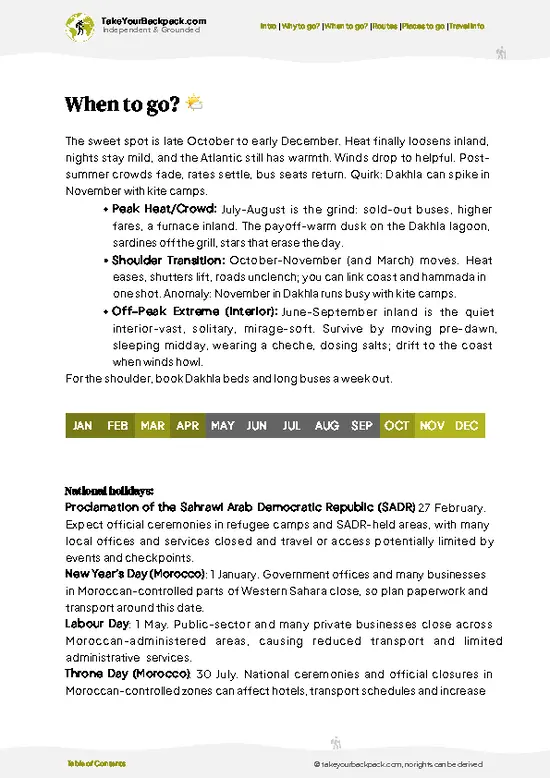
source: climatestotravel.comJANJanuary: highly recommended for travelingFEBFebruary: highly recommended for travelingMARMarch: excellent for travelingAPRApril: excellent for travelingMAYMay: good for travelingJUNJune: fair for travelingJULJuly: below average for travelingAUGAugust: below average for travelingSEPSeptember: good for travelingOCTOctober: excellent for travelingNOVNovember: highly recommended for travelingDECDecember: highly recommended for traveling
when-to-go

✈️ The backpacker research shortcutWestern Sahara Travel Guide

An offline-friendly backpacking guide with optimized travel routes, ranked highlights, transport advice, and the best areas to stay.
example page 0 from our offline Travel Guide for Western Sahara
example page 1 from our offline Travel Guide for Western Sahara
example page 2 from our offline Travel Guide for Western Sahara
example page 3 from our offline Travel Guide for Western Sahara
example page 4 from our offline Travel Guide for Western Sahara
example page 5 from our offline Travel Guide for Western Sahara
example page 6 from our offline Travel Guide for Western Sahara
example page 7 from our offline Travel Guide for Western Sahara
The digital guide (117 pages) contains:
22 highlights, ranked by travel appeal
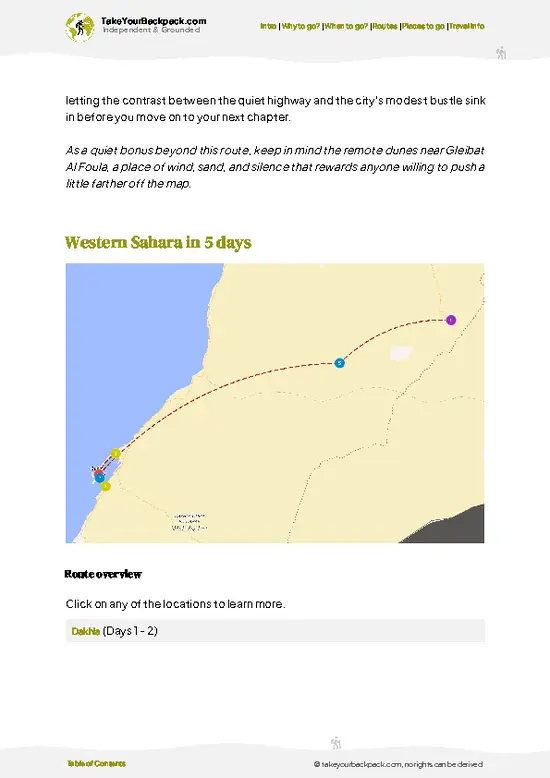
Optimized 2, 3 & 5-day travel routes
Cities, national parks, landmarks, beaches
How to get around
Offline-friendly for travel without Wi-Fi
👉 Click to see all 30+ guide features

📅 Plan smarter in minutes, not weeks
Month by month travel advice
Festivals & national holidays
Budget expectations

🗺️ Go to the right places, skip the overrated ones
Honest pros & cons of destinations
Top hikes, parks & viewpoints
Lesser-known places most travelers miss
Clear “worth it vs skip it” guidance

🛏️ Travel smoothly without rookie mistakes
Best areas to stay
Transport systems explained simply
Common scams & safety advice
SIM cards, money & practical tips

🌍 Understand the country, not just visit it
Culture & traditions
52 Essential phrases & customs
Festivals worth planning around
Traveler-friendly historical context
Insights that make places more meaningful

📱 Built for real travel conditions
Fully downloadable PDF
Works completely offline
Optimized for phone use
Useful in remote areas & buses
Everything in one place
Save weeks of stressful planning
Get instant access to your full guide. 30‑day money-back guarantee.


By proceeding you agree to our terms.
Sent to your inbox immediately after payment • 100% Secure Checkout
Best Backpacking Travel Advisor 2025 tourism awardBest Backpacking
Travel Advisor
2025
What others say about Take Your Backpack Guides:
⭐⭐⭐⭐⭐
Fantastic, amazing amount of information!
⭐⭐⭐⭐⭐
My goodness this is amazing, it's what I've been looking for hats off too you!
⭐⭐⭐⭐⭐
I think this is absolutely BRILLIANT
⭐⭐⭐⭐
Very complete and informative. It's still missing places, but I gotta to commend you
⭐⭐⭐⭐⭐
This is truly amazing, thank you, can't wait to explore it with my kids!
⭐⭐⭐⭐⭐
Awesome resource, thank you!
⭐⭐⭐⭐⭐
This is amazing! Can't wait to explore the ones I haven't seen
⭐⭐⭐⭐
I love this! Well done, great idea.
⭐⭐⭐⭐⭐
Thanks for taking the time to make this gem!
⭐⭐⭐⭐⭐
This might be the best website I've ever seen.
⭐⭐⭐⭐⭐
Congratulations, and thank you so much for your work; it's incredibly valuable.
⭐⭐⭐⭐
In all seriousness I think you did a great job pointing out the important spots
⭐⭐⭐⭐⭐
10/10 very good
⭐⭐⭐⭐⭐
As someone who's only just starting to visit regularly this is awesome, thank you.
⭐⭐⭐⭐
Thank you very much! I'm going to visit my dad, it's going to be very useful!
⭐⭐⭐⭐⭐
This is really cool! We'll be travelling for the first time and this definitely come in handy.
⭐⭐⭐⭐⭐
You are now our minister of culture, congratulations 👨‍💼
⭐⭐⭐⭐⭐
Just wanted to tell you that this is a pearl! Going to follow your recommendations.
⭐⭐⭐⭐⭐
This is so cool. I'll definitely be using the resource for my travels soon.
⭐⭐⭐⭐⭐
This is very impressive! Good work.
⭐⭐⭐⭐⭐
This is an amazing and informative site. Very well done!

🛏️ Where to stay?How to pick the right area

In Laayoune, the real backpacker action centers around the city’s northern districts, especially the area near Avenue Smara. This zone strikes a rare balance: it’s safe, bustling enough to meet fellow travelers, and offers budget-friendly lodging options, including a handful of hostels and guesthouses that cater to solo adventurers. The vibe here is low-key but social—think local cafés where you can sip mint tea, swap stories, and plan your next move without the pressure of tourist crowds.

Compared to the quieter southern neighborhoods, which feel more residential and less geared toward visitors, … read more 👉
In Laayoune, the real backpacker action centers around the city’s northern districts, especially the area near Avenue Smara. This zone strikes a rare balance: it’s safe, bustling enough to meet fellow travelers, and offers budget-friendly lodging options, including a handful of hostels and guesthouses that cater to solo adventurers. The vibe here is low-key but social—think local cafés where you can sip mint tea, swap stories, and plan your next move without the pressure of tourist crowds.

Compared to the quieter southern neighborhoods, which feel more residential and less geared toward visitors, the northern districts provide a better mix of accessibility and interaction. You’re close to markets, public transport, and a few informal eateries where you can stretch your dirham without sacrificing flavor. Comfort here is modest but reliable, which is exactly what you want when you’re prioritizing value and connection over luxury.

Venturing into the city center or southern parts means sacrificing that social pulse and budget ease for a more sterile, less traveler-friendly environment. So, if you want to maximize your time meeting people and minimizing hassle, the northern corridor near Avenue Smara is your strategic base camp in Laayoune.

🚌 Getting aroundHow to get from A to B

Laayoune moves at its own rhythm—neither a frantic rush nor a laid-back drift. It’s a city where time feels elastic, shaped by the desert’s slow pulse but punctuated by the practical demands of daily life. You won’t find a hyper-efficient metro or a rigid timetable here. Instead, the flow is a blend of informal hustle and patient waiting, where intuition and local knowledge often trump strict schedules. Understanding this flow is your first win: it lets you navigate the city’s transport options with a sense of control rather than frustration.


  • Walking: The most reliable and cost-free way to get around, especially in the compact city center. Streets are straightforward but watch for uneven sidewalks and occasional sand drifts. Walking lets you absorb the city’s texture at your own pace—no
read more 👉
Laayoune moves at its own rhythm—neither a frantic rush nor a laid-back drift. It’s a city where time feels elastic, shaped by the desert’s slow pulse but punctuated by the practical demands of daily life. You won’t find a hyper-efficient metro or a rigid timetable here. Instead, the flow is a blend of informal hustle and patient waiting, where intuition and local knowledge often trump strict schedules. Understanding this flow is your first win: it lets you navigate the city’s transport options with a sense of control rather than frustration.


  • Walking: The most reliable and cost-free way to get around, especially in the compact city center. Streets are straightforward but watch for uneven sidewalks and occasional sand drifts. Walking lets you absorb the city’s texture at your own pace—no schedule, no fare, just you and the street.


  • Grand Taxi: Shared taxis are the backbone of Laayoune’s transit. They run on flexible schedules, departing when full, so timing is unpredictable but frequent. Expect to pay around 10-20 MAD for intra-city rides. These taxis offer a rougher ride—no air conditioning and often packed—but they’re fast and cheap, perfect if you’re willing to trade comfort for speed and budget.


  • Petit Taxi: Smaller, more private rides within the city limits. They’re metered but fares are low, usually under 30 MAD for most trips. Petit taxis run from early morning until about 10 PM. They provide more comfort and direct routes than grand taxis but cost a bit more. Ideal if you want a quicker, less crowded option without breaking the bank.


  • Bus: Limited and somewhat irregular, the bus system covers key routes but don’t expect strict adherence to schedules. Fares hover around 5-10 MAD. Buses are slow but offer a glimpse into local daily life and are the cheapest motorized option. Best for those with flexible time and a taste for local color.


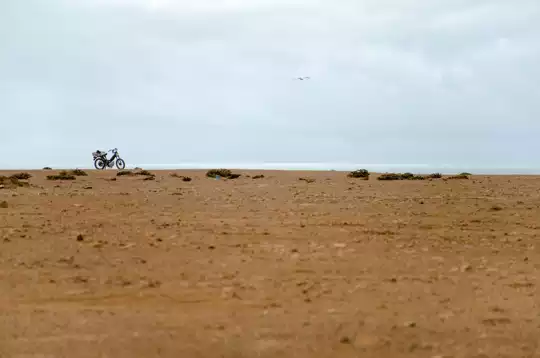
  • Rental Scooter or Bike: Not widespread but available through a few local vendors. Offers maximum freedom and speed for short distances, with rental costs around 100-150 MAD per day. Requires confidence navigating city traffic and uneven roads. A solid choice if you want to blend speed, comfort, and independence without relying on public transit.


In Laayoune, every transit choice is a trade-off between time, money, and comfort. Walking costs nothing but demands time and stamina. Grand taxis save time and money but sacrifice comfort. Petit taxis balance comfort and cost but run on a limited schedule. Buses are the cheapest motorized option but slow and unpredictable. Rental scooters offer freedom and speed but require a bit of daring and upfront cash. Knowing these trade-offs lets you pick your battles and win your daily commute.

👛 Costs (as of 17 February 2026)What things cost and how to budget

Backpacking in Laayoune, Western Sahara, presents a unique cost landscape shaped by its remote location and limited tourist infrastructure. Understanding the trade-offs here means knowing where your money goes and what you get in return.
  • Dorm Accommodation (High Season): Expect to pay around €15-€25 per night. Options are sparse, often basic but clean, with limited amenities. High season can push prices up due to demand from regional travelers.
  • Dorm Accommodation (Off-Season): Prices drop to about €10-€15. Fewer travelers mean more negotiating power, but also fewer choices. Comfort levels remain modest.
  • Meals: Local eateries offer meals for €3-€7. Street food and small cafes provide filling, authentic dishes at the lower end, while tourist-oriented spots push prices higher. Self-catering
read more 👉
Backpacking in Laayoune, Western Sahara, presents a unique cost landscape shaped by its remote location and limited tourist infrastructure. Understanding the trade-offs here means knowing where your money goes and what you get in return.
  • Dorm Accommodation (High Season): Expect to pay around €15-€25 per night. Options are sparse, often basic but clean, with limited amenities. High season can push prices up due to demand from regional travelers.
  • Dorm Accommodation (Off-Season): Prices drop to about €10-€15. Fewer travelers mean more negotiating power, but also fewer choices. Comfort levels remain modest.
  • Meals: Local eateries offer meals for €3-€7. Street food and small cafes provide filling, authentic dishes at the lower end, while tourist-oriented spots push prices higher. Self-catering is rare but possible in some guesthouses.
  • Local Transport: Shared taxis and minibuses dominate, costing roughly €0.50-€1 per trip within the city. They’re frequent but can be crowded and irregular, demanding flexibility.
  • City Transport Pass: No formal city transport pass exists. Budget travelers rely on pay-per-ride options, which keeps costs low but requires time management.
  • Basic Activities/Entry Fees: Cultural sites and museums charge minimal fees, typically €1-€3. Organized tours are rare and expensive, so independent exploration is the norm.
  • Miscellaneous Expenses: Budget around €2-€5 daily for essentials like water, snacks, and occasional small purchases. Internet access is limited and can be costly if needed frequently.

Laayoune’s daily backpacking budget ranges roughly between €20 and €40. You’re trading off comfort and convenience for authenticity and low costs, with the biggest savings coming from simple accommodation and local transport. The key is embracing the slower pace and limited options as part of the experience rather than a drawback.


source: visitmorocco.com
⚠️ Prices can change and everyone travels differently, so take this as a rough guide. Hope it helps you plan your adventure!

🚌 Day tripsShort trips worth adding

Laayoune is a strategic base for exploring the unique landscapes and cultures of Western Sahara. With a bit of planning, you can dive into experiences that are both enriching and accessible.

Dakhla Peninsula
A trip to the Dakhla Peninsula is a must. Just a three-hour drive from Laayoune, this stretch of land offers stunning views of the Atlantic Ocean and the Sahara. You can indulge in kite surfing or simply relax on the beach. The vibe is laid-back, and the seafood is fresh and delicious. Expect to spend around 200 MAD on transport and a bit more if you decide to grab a meal. The best time to visit is from October to April when the winds are perfect for water sports. First-timers often underestimate the time needed for the drive, so leave early to maximize your beach time.


Boujdourread more 👉
Laayoune is a strategic base for exploring the unique landscapes and cultures of Western Sahara. With a bit of planning, you can dive into experiences that are both enriching and accessible.

Dakhla Peninsula
A trip to the Dakhla Peninsula is a must. Just a three-hour drive from Laayoune, this stretch of land offers stunning views of the Atlantic Ocean and the Sahara. You can indulge in kite surfing or simply relax on the beach. The vibe is laid-back, and the seafood is fresh and delicious. Expect to spend around 200 MAD on transport and a bit more if you decide to grab a meal. The best time to visit is from October to April when the winds are perfect for water sports. First-timers often underestimate the time needed for the drive, so leave early to maximize your beach time.


Boujdour
About an hour south of Laayoune, Boujdour is a charming coastal town that feels like a step back in time. The local market is a treasure trove of spices, textiles, and handicrafts. You can wander through the streets, soaking in the local culture, and enjoy a meal at a small café for under 50 MAD. The best months to visit are spring and fall, when the weather is mild. A common mistake is to rush through; take your time to chat with locals and savor the atmosphere.
👉 Explore Boujdour

Tifnit
If you’re up for a longer journey, Tifnit is about a four-hour drive but worth every minute. This small fishing village is known for its picturesque beach and vibrant local life. You can hike along the cliffs or simply enjoy the sunset over the ocean. Budget around 300 MAD for transport and snacks. The ideal time to go is during the cooler months, from November to March. Many first-timers miss the turn-off to the beach, so keep your eyes peeled for signs.


Oued Eddahab
A hidden treasure, Oued Eddahab is a river valley about two hours from Laayoune. It’s a great spot for birdwatching, especially if you’re into photography. The lush greenery contrasts beautifully with the desert landscape. Expect to spend around 150 MAD on transport. The best time to visit is during the spring when migratory birds are abundant. Newcomers often overlook this area, thinking it’s just desert, but it’s a refreshing change of scenery.


These day trips from Laayoune offer a mix of adventure, culture, and relaxation. Each one is a chance to step out of your comfort zone while keeping your budget intact.
Want to know what more Western Sahara offers?
The Western Sahara Travel Guide describes 22 highlights, from cities to national parks, from beaches to hikes

Get the Travel Guide -

🍲 FoodLocal Flavors for Backpackers

In Laayoune, food and drinks are a vibrant tapestry of flavors and traditions. You can’t miss trying couscous, a staple dish often served on Fridays, fluffy and aromatic, paired with tender meat and vegetables. Another must-try is tagine, a slow-cooked stew that bursts with spices, often featuring local fish or lamb.

Street food is where the action is. Vendors line the bustling markets, offering sfenj, a sweet, doughnut-like treat, perfect for a quick snack. Grab a cup of mint tea—it’s not just a drink; it’s a ritual. Locals pour it from a height, creating a frothy top, and you’ll find it served throughout the day, often accompanied by lively conversation.

Dining here is casual and communal. Expect to share dishes, a practice that fosters connection. When invited to someone’s home, bring … read more 👉
In Laayoune, food and drinks are a vibrant tapestry of flavors and traditions. You can’t miss trying couscous, a staple dish often served on Fridays, fluffy and aromatic, paired with tender meat and vegetables. Another must-try is tagine, a slow-cooked stew that bursts with spices, often featuring local fish or lamb.

Street food is where the action is. Vendors line the bustling markets, offering sfenj, a sweet, doughnut-like treat, perfect for a quick snack. Grab a cup of mint tea—it’s not just a drink; it’s a ritual. Locals pour it from a height, creating a frothy top, and you’ll find it served throughout the day, often accompanied by lively conversation.

Dining here is casual and communal. Expect to share dishes, a practice that fosters connection. When invited to someone’s home, bring a small gift, like pastries, to show appreciation.

The atmosphere is relaxed, with cafés buzzing in the evenings, where you can sip tea and watch the world go by. Embrace the local customs, and you’ll find that every meal is a chance to connect with the heart of Laayoune.

🛡️ SafetySafety Tips and Common Scams in Laayoune

Laayoune is generally safe for travelers, but a few situational awareness tips can enhance your experience. The city is laid-back, yet it’s wise to stay alert in crowded markets or during local events. Keep your belongings close, especially in busy areas where pickpockets might operate.

If you’re traveling solo, consider your evening plans. While the streets are usually calm, it’s best to stick to well-lit areas and avoid wandering too far from your accommodation after dark.

Scams are rare, but be cautious of overly friendly locals offering unsolicited help. Politely decline if someone tries to guide you without your request; it’s often a prelude to a sales pitch.

Everyday annoyances include occasional language barriers, so brush up on a few basic Arabic phrases. This can ease interactions … read more 👉
Laayoune is generally safe for travelers, but a few situational awareness tips can enhance your experience. The city is laid-back, yet it’s wise to stay alert in crowded markets or during local events. Keep your belongings close, especially in busy areas where pickpockets might operate.

If you’re traveling solo, consider your evening plans. While the streets are usually calm, it’s best to stick to well-lit areas and avoid wandering too far from your accommodation after dark.

Scams are rare, but be cautious of overly friendly locals offering unsolicited help. Politely decline if someone tries to guide you without your request; it’s often a prelude to a sales pitch.

Everyday annoyances include occasional language barriers, so brush up on a few basic Arabic phrases. This can ease interactions and show respect for the local culture. Carry yourself confidently, and you’ll navigate Laayoune like a pro.

Other Sahrawi cities near Laayoune

Explore more nearby:

  • El Aaiun—administrative center, desert outskirts, wide boulevards, local souks| 2 km away
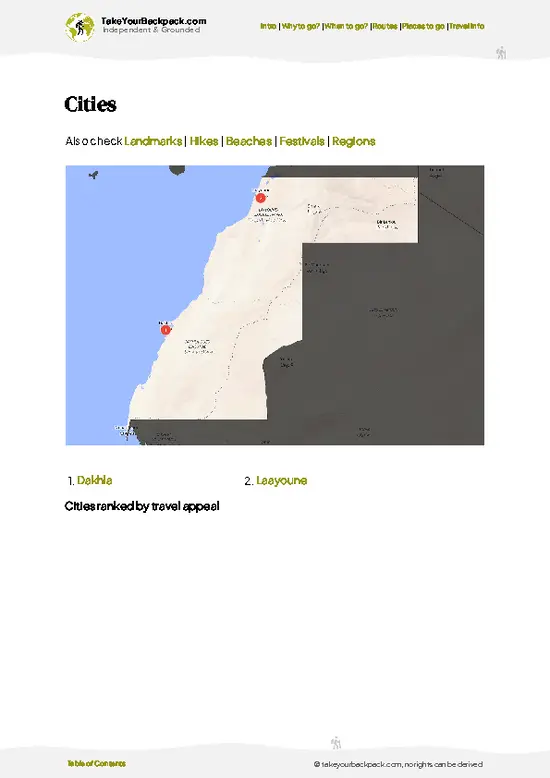
  • Dakhla—Atlantic lagoon, windsurfing spots, Saharan coastline, seafood markets| 296 km away

💡 Not sure where to go next?
Create a personalized itinerary for Western Sahara including Laayoune and the places that fit your trip.

Generate my itinerary

👉 Discover all cities

Or checkout all Western Sahara has to offer (think cities, towns, villages, national parks, hikes, beaches, festivals)
Country photo of Western Sahara

We 💚 feedbackParting advice and final tips

Laayoune has a raw, unfiltered vibe that’s hard to find elsewhere. The best surprise? The warmth of the locals. They’re curious and welcoming, eager to share stories over mint tea. Just a heads-up: the infrastructure can be a bit rough around the edges. Don’t expect luxury, but embrace the simplicity. It’s a place where you can feel the pulse of the Sahara. Dive in, and you might just find a piece of yourself in the desert sands.

✍️ Help improve this page!
The information on this page is based on in-depth research, insights shared by experienced travelers, and feedback from the local travel community in Western Sahara. While every effort is made to keep the information accurate and current, conditions can change — so if you spot anything incorrect or outdated, please get in touch.


🙋‍♂️ Give feedback

👋 Meet the founderWho’s Behind Take Your Backpack?

Johan, backpacker and founder of TakeYourBackpackHi, I’m Johan (Netherlands 🇳🇱), the creator of TakeYourBackpack. Over the past decade, I’ve backpacked through 80+ countries across six continents, gaining extensive experience with independent travel, long-term trips, and overland routes.

This site is built on a combination of firsthand travel experience and carefully curated insights from other backpackers. Many guides are based on places I’ve personally visited, while others bring together tips, observations, and practical advice shared by trusted travelers I’ve met along the way.

The goal is to provide realistic, experience-driven guidance — not generic itineraries — so you can explore destinations with better context, clearer expectations, and more confidence.

Get full country guide •
Instant download • 22 highlights • Full Offline guide