×

Yemen🇾🇪 | attractionsBustan al-Qasimistepped fields, irrigation channels, mountain agriculture | things to do and best time to go

Explore Bab al-YemenExplore Old Walled City of Shibam

Backpacking in Bustan al-Qasimi
👌 Worth visitingattraction ranked #14
By Johan Kruseman 🇳🇱 | Updated October 15, 2026

Your boots crunch on ancient stone, the air thick with the scent of wild thyme and distant woodsmoke. Below, a patchwork of terraces clings to the cliffs, green against the sunburnt rock, while a falcon arcs overhead—utterly indifferent to your awe. Bustan al-Qasimi sits in the heart of Al-Hajjarah, high in Yemen’s Haraz Mountains. Forget the Instagram fantasy: yes, it’s remote, and yes, getting here is a logistical headache, but the payoff is raw, living history—no crowds, no gloss, just the pulse of a mountain village that’s been sculpting miracles from stone and soil for centuries. It’s not cheap or easy, but it’s the kind of place that makes every other “scenic view” feel like a screensaver.

Discover everything you want to know in the 📖 Yemen Travel Guide.
Safety warning

The current risk level for Yemen is high. Check the advice before going.


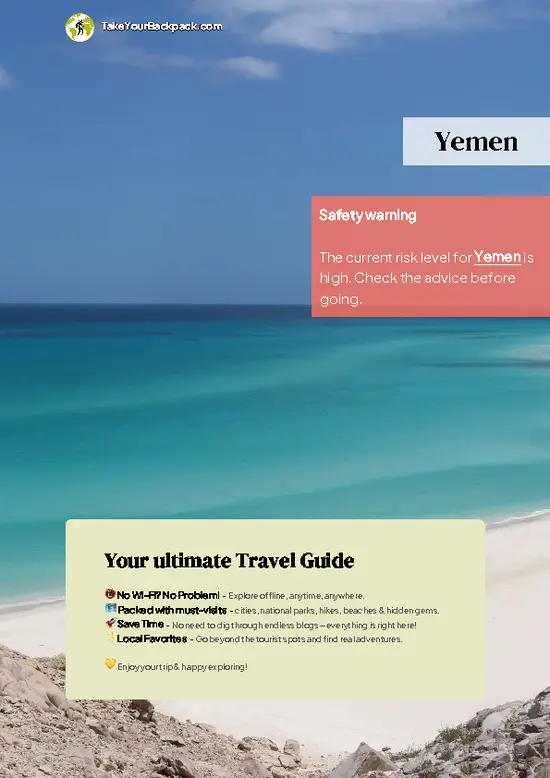
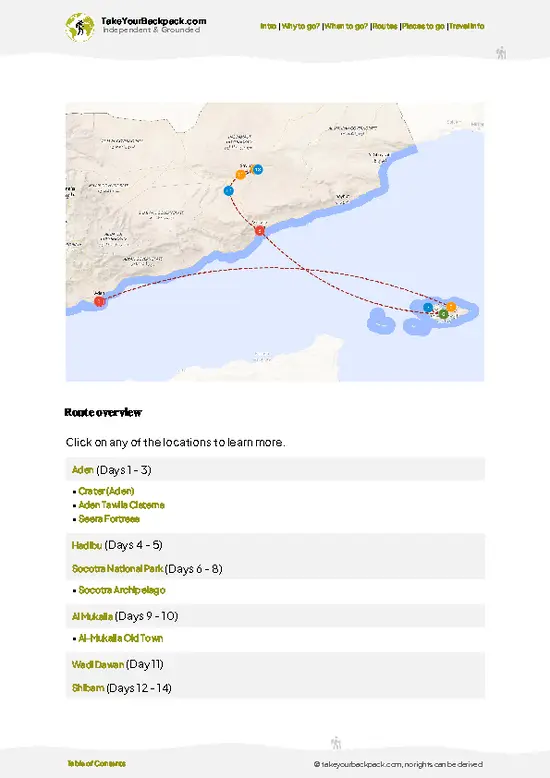
example page 0 from our offline Travel Guide for Yemen
example page 1 from our offline Travel Guide for Yemen
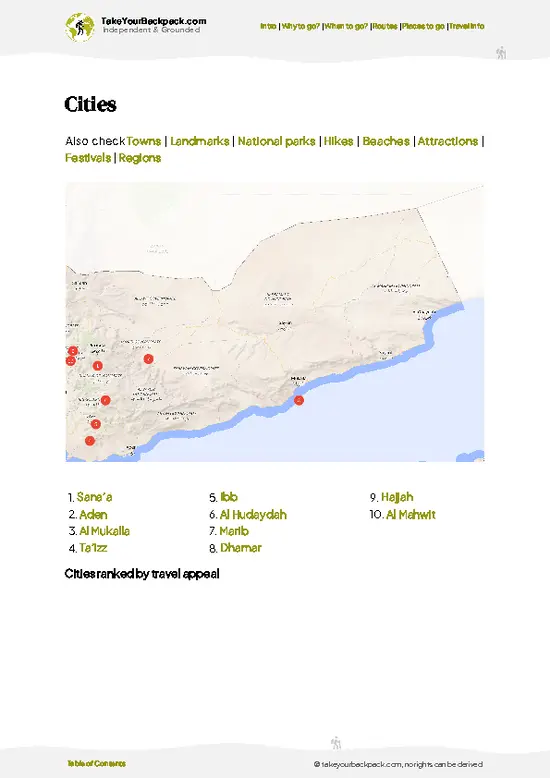
example page 2 from our offline Travel Guide for Yemen
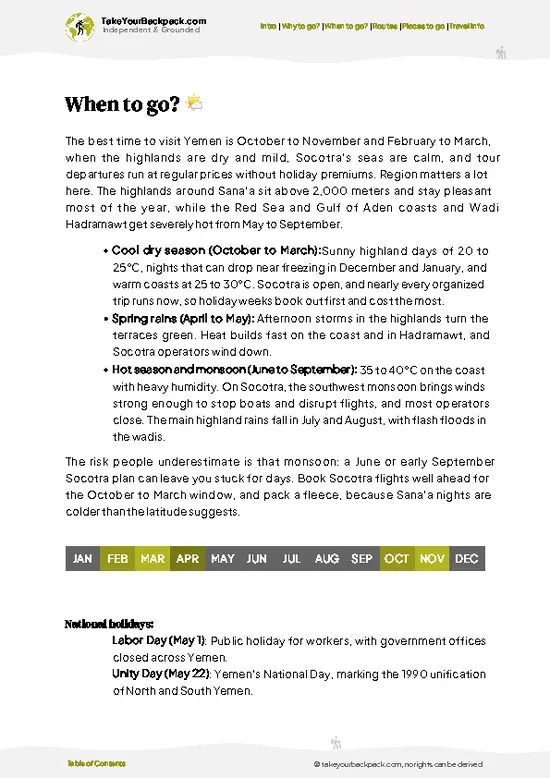
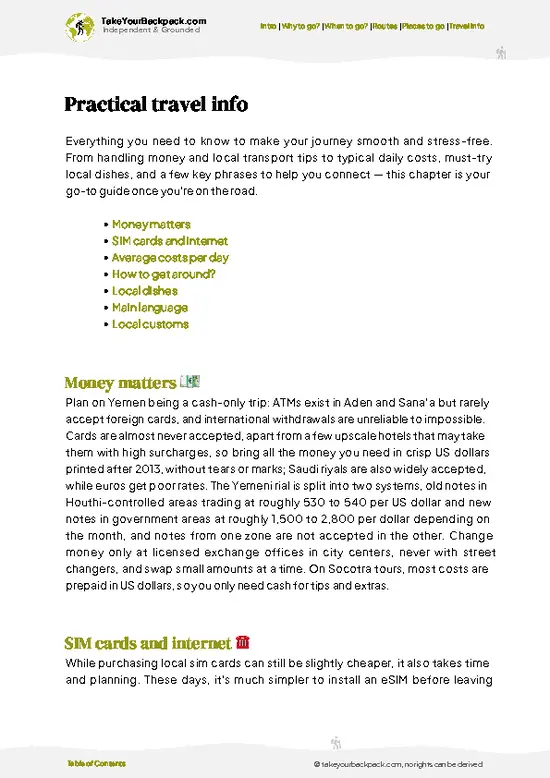
example page 3 from our offline Travel Guide for Yemen
example page 4 from our offline Travel Guide for Yemen
example page 5 from our offline Travel Guide for Yemen
example page 6 from our offline Travel Guide for Yemen
example page 7 from our offline Travel Guide for Yemen
Loading the map 🌍
CLICK TO FILTER
cities
towns
landmarks
national parks
hikes
beaches
attractions
festivals
regions
SHOW COUNTRY’S BESTSHOW ALL

✨ Why go?
Ranked #14 attraction in Yemen
What makes it a must-see attraction

The Bustan al-Qasimi in Yemen aren’t just another pretty spot to snap a photo—they’re a raw, living testament to centuries of ingenuity and survival in one of the world’s harshest climates. Yes, the crowds are sparse, and the infrastructure won’t pamper you like a polished tourist trap. But that’s exactly why backpackers carve out time here. The terraces are a masterclass in ancient agricultural engineering, clinging to steep mountainsides with a precision that still boggles the mind. Walking these paths, you’re not just seeing history—you’re feeling the pulse of a culture that thrived against all odds. It’s a milestone on any Yemen route because it demands effort, rewards with perspective, and leaves you with a story no Instagram filter can capture.

💡 HighlightsThe experiences that define the visit

The Terraced Hillside Engineering
Forget the Instagram-perfect symmetry—these terraces are a feat of survival, not just scenery. Carved into the mountains with hand tools, they’re a living lesson in Yemeni ingenuity. Stand on the edge and you’ll see centuries of sweat and strategy stacked beneath your boots. The view isn’t just pretty; it’s proof that humans can coax life from stone.


The Ancient Irrigation Channels (Falaj)
You’ll spot narrow stone channels snaking between the terraces. These aren’t decorative. They’re the arteries of the gardens, channeling precious water from mountain springs. Watch a local adjust a sluice gate and you’ll realize: this is high-stakes water management, not a quaint photo op. The system’s been working for generations—long before hashtags.


The Scent of Wild … read more 👉
The Terraced Hillside Engineering
Forget the Instagram-perfect symmetry—these terraces are a feat of survival, not just scenery. Carved into the mountains with hand tools, they’re a living lesson in Yemeni ingenuity. Stand on the edge and you’ll see centuries of sweat and strategy stacked beneath your boots. The view isn’t just pretty; it’s proof that humans can coax life from stone.


The Ancient Irrigation Channels (Falaj)
You’ll spot narrow stone channels snaking between the terraces. These aren’t decorative. They’re the arteries of the gardens, channeling precious water from mountain springs. Watch a local adjust a sluice gate and you’ll realize: this is high-stakes water management, not a quaint photo op. The system’s been working for generations—long before hashtags.


The Scent of Wild Herbs
Step off the main path and inhale. The air is thick with wild thyme, mint, and marjoram. Locals use these herbs for everything—tea, medicine, even bargaining chips at the market. The scent is sharp, earthy, and nothing like the bottled “nature” you get in a spa. It’s the real deal, and it clings to your clothes for days.


Sunset Over the Stone Walls
Here’s the honest truth: you’ll share the best sunset spots with a handful of locals, not a swarm of influencers. The light hits the terraces and the stone walls glow gold, then fade to blue. It’s not about the perfect shot—it’s about the hush that falls over the valley as the day ends. That’s the moment you’ll remember.
Spotted a mistake or missing something? Contact us.

🌤️ When to go?Weather, crowds, and seasonal trade-offs

  • Weather: The best time to visit Bustan al-Qasimi is between October and March when Yemen’s climate cools down. Expect daytime highs around 20-25°C (68-77°F), a relief from the scorching summer heat that can soar above 35°C (95°F).
  • Temperature: Nights can get chilly, dropping to 10-15°C (50-59°F) in winter months, so pack layers. Summer months (April to September) are brutally hot and not ideal for exploring outdoor terraces.
  • Daylight Hours: From November to February, daylight lasts about 10-11 hours, giving you ample time to explore without rushing, while summer offers longer days but punishing heat.
  • Crowds: Tourist numbers peak in winter, especially December and January, when locals and travelers flock to the gardens. Off-season visits (spring and autumn) offer more solitude but risk
… read more 👉
  • Weather: The best time to visit Bustan al-Qasimi is between October and March when Yemen’s climate cools down. Expect daytime highs around 20-25°C (68-77°F), a relief from the scorching summer heat that can soar above 35°C (95°F).
  • Temperature: Nights can get chilly, dropping to 10-15°C (50-59°F) in winter months, so pack layers. Summer months (April to September) are brutally hot and not ideal for exploring outdoor terraces.
  • Daylight Hours: From November to February, daylight lasts about 10-11 hours, giving you ample time to explore without rushing, while summer offers longer days but punishing heat.
  • Crowds: Tourist numbers peak in winter, especially December and January, when locals and travelers flock to the gardens. Off-season visits (spring and autumn) offer more solitude but risk hotter weather.
  • Seasonal Activities: Winter months bring local festivals and cultural events around the gardens, adding authentic flavor beyond the usual sightseeing.
  • Price Fluctuations: Expect higher accommodation and guide fees during peak winter months due to demand; visiting shoulder seasons like October or March can save money without sacrificing comfort.
Pro-tip: Aim for late October or early March to dodge crowds, enjoy mild weather, and catch local life in full swing without the premium price tag.


source: climatestotravel.comJANJanuary: highly recommended for travelingFEBFebruary: highly recommended for travelingMARMarch: highly recommended for travelingAPRApril: fair for travelingMAYMay: fair for travelingJUNJune: below average for travelingJULJuly: below average for travelingAUGAugust: below average for travelingSEPSeptember: fair for travelingOCTOctober: highly recommended for travelingNOVNovember: excellent for travelingDECDecember: highly recommended for traveling
when-to-go

✈️ The backpacker research shortcutYemen Travel Guide

An offline-friendly backpacking guide with optimized travel routes, ranked highlights, transport advice, and the best areas to stay.
example page 0 from our offline Travel Guide for Yemen
example page 1 from our offline Travel Guide for Yemen
example page 2 from our offline Travel Guide for Yemen
example page 3 from our offline Travel Guide for Yemen
example page 4 from our offline Travel Guide for Yemen
example page 5 from our offline Travel Guide for Yemen
example page 6 from our offline Travel Guide for Yemen
example page 7 from our offline Travel Guide for Yemen
The digital guide (223 pages) contains:
✅ 54 highlights, ranked by travel appeal
✅ Optimized 5, 10 & 15-day travel routes
✅ Cities, national parks, landmarks, beaches
✅ How to get around
✅ Offline-friendly for travel without Wi-Fi
👉 Click to see all 30+ guide features

📅 Plan smarter in minutes, not weeks
✅ Month by month travel advice
✅ Festivals & national holidays
✅ Budget expectations

🗺️ Go to the right places, skip the overrated ones
✅ Honest pros & cons of destinations
✅ Top hikes, parks & viewpoints
✅ Lesser-known places most travelers miss
✅ Clear “worth it vs skip it” guidance

🛏️ Travel smoothly without rookie mistakes
✅ Best areas to stay
✅ Transport systems explained simply
✅ Common scams & safety advice
✅ SIM cards, money & practical tips

🌍 Understand the country, not just visit it
✅ Culture & traditions
✅ 52 Essential phrases & customs
✅ Festivals worth planning around
✅ Traveler-friendly historical context
✅ Insights that make places more meaningful

📱 Built for real travel conditions
✅ Fully downloadable PDF
✅ Works completely offline
✅ Optimized for phone use
✅ Useful in remote areas & buses
✅ Everything in one place
Stop searching, start planning
Get instant access to your full guide. 30‑day money-back guarantee.
+ Add another guide for just

By proceeding you agree to our terms.
Sent to your inbox immediately after payment • 100% Secure Checkout
Best Backpacking Travel Advisor 2025 tourism awardBest Backpacking
Travel Advisor
2025
What others say about Take Your Backpack Guides:
⭐⭐⭐⭐⭐
Fantastic, amazing amount of information!
⭐⭐⭐⭐⭐
My goodness this is amazing, it's what I've been looking for hats off too you!
⭐⭐⭐⭐⭐
I think this is absolutely BRILLIANT
⭐⭐⭐⭐
Very complete and informative. It's still missing places, but I gotta to commend you
⭐⭐⭐⭐⭐
This is truly amazing, thank you, can't wait to explore it with my kids!
⭐⭐⭐⭐⭐
Awesome resource, thank you!
⭐⭐⭐⭐⭐
This is amazing! Can't wait to explore the ones I haven't seen
⭐⭐⭐⭐
I love this! Well done, great idea.
⭐⭐⭐⭐⭐
Thanks for taking the time to make this gem!
⭐⭐⭐⭐⭐
This might be the best website I've ever seen.
⭐⭐⭐⭐⭐
Congratulations, and thank you so much for your work; it's incredibly valuable.
⭐⭐⭐⭐
In all seriousness I think you did a great job pointing out the important spots
⭐⭐⭐⭐⭐
10/10 very good
⭐⭐⭐⭐⭐
As someone who's only just starting to visit regularly this is awesome, thank you.
⭐⭐⭐⭐
Thank you very much! I'm going to visit my dad, it's going to be very useful!
⭐⭐⭐⭐⭐
This is really cool! We'll be travelling for the first time and this definitely come in handy.
⭐⭐⭐⭐⭐
You are now our minister of culture, congratulations 👨‍💼
⭐⭐⭐⭐⭐
Just wanted to tell you that this is a pearl! Going to follow your recommendations.
⭐⭐⭐⭐⭐
This is so cool. I'll definitely be using the resource for my travels soon.
⭐⭐⭐⭐⭐
This is very impressive! Good work.
⭐⭐⭐⭐⭐
This is an amazing and informative site. Very well done!

🛏️ Where to stay?How to pick the right area

Bustan al-Qasimi draw a steady stream of visitors, but don’t expect a quiet retreat. The crowds can be thick, especially during peak seasons, and prices around the site tend to spike. If you’re backpacking on a budget, the key is to stay in the adjacent neighborhoods rather than right next to the gardens. Areas just a short walk away offer a more authentic vibe—locals going about their daily lives, street vendors selling fresh fruit, and small cafés where you can strike up conversations with fellow travelers without the tourist markup. These spots are safer and more social, perfect for solo backpackers … read more 👉
Bustan al-Qasimi draw a steady stream of visitors, but don’t expect a quiet retreat. The crowds can be thick, especially during peak seasons, and prices around the site tend to spike. If you’re backpacking on a budget, the key is to stay in the adjacent neighborhoods rather than right next to the gardens. Areas just a short walk away offer a more authentic vibe—locals going about their daily lives, street vendors selling fresh fruit, and small cafés where you can strike up conversations with fellow travelers without the tourist markup. These spots are safer and more social, perfect for solo backpackers craving connection without sacrificing convenience. You’ll dodge the inflated costs and tourist traps while still being close enough to soak in the gardens’ real charm when the crowds thin out at dawn or dusk.

👛 Costs (as of 15 October 2026)What things cost and how to budget

As of the latest available information, the entrance fee for Dar ai-Hajar, also known as the Rock Palace, is approximately 1,000 Yemeni Rials, which is about €2 to €3. Please note that prices may vary, and it's advisable to confirm the current fees upon arrival.

source: tourtravelworld.com
⚠️ Prices can change and everyone travels differently, so take this as a rough guide. Hope it helps you plan your adventure!

FAQCommon questions from travelers

2 to 3 hours is sufficient to explore Bustan al-Qasimi thoroughly. This allows time to enjoy the landscaped areas, terraces, and any onsite cultural displays without rushing.
Yes, the entrance fee is worth it for the unique blend of natural beauty and historical architecture. The fee is typically around $5, which supports maintenance and preservation efforts.
You can reach Bustan al-Qasimi by taxi from central Sana'a, approximately 10 kilometers away. Public transport options are limited, so a taxi or private car is the most practical choice.
⚠️ Things can change over time, so always validate details locally before you go.

Other Yemeni attractions near Bustan al-Qasimi

Explore more nearby:


💡 Not sure where to go next?
Create a personalized itinerary for Yemen including Bustan al-Qasimi and the places that fit your trip.

Generate my itinerary

👉 Discover all attractions

Or checkout all Yemen has to offer (think cities, towns, villages, national parks, hikes, beaches, festivals)
Country photo of Yemen

We 💚 feedbackParting advice and final tips

Al-Qasimi Gardens aren’t your typical postcard spot—expect a quiet, almost secretive vibe, not a bustling tourist magnet. The real magic is in the way the terraces cling to the cliffs, offering a raw, earthy connection to Yemen’s rugged beauty. Just watch your step; some paths are steep and unpolished, but that’s part of the charm.

✍️ Help improve this page!
The information on this page is based on in-depth research, insights shared by experienced travelers, and feedback from the local travel community in Yemen. While every effort is made to keep the information accurate and current, conditions can change — so if you spot anything incorrect or outdated, please get in touch.


🙋‍♂️ Give feedback

👋 Meet the founderWho’s Behind Take Your Backpack?

Johan, backpacker and founder of TakeYourBackpackHi, I’m Johan (Netherlands 🇳🇱), the creator of TakeYourBackpack. Over the past 3 decades, I’ve backpacked through 90+ countries across six continents, gaining extensive experience with independent travel, long-term trips, and overland routes.

This site is built on a combination of firsthand travel experience and carefully curated insights from other backpackers. Many guides are based on places I’ve personally visited, while others bring together tips, observations, and practical advice shared by trusted travelers I’ve met along the way.

The goal is to provide realistic, experience-driven guidance — not generic itineraries — so you can explore destinations with better context, clearer expectations, and more confidence.