×

Yemen🇾🇪 | attractionsZabid Historic Core and madrasasbrick alleys, ancient schools, mosque courtyards | things to do and best time to go

Explore Kawkaban Fortified Plateau and old gatesExplore Al-Mukalla Old Port Waterfront and historic quarter

Backpacking in Zabid Historic Core and madrasas
🏆 Top pickattraction ranked #4
By Johan Kruseman 🇳🇱 | Updated September 4, 2026

Forget the travel-brochure fantasy: Zabid’s historic core isn’t some polished, museum-grade relic—it’s a living, breathing, slightly crumbling maze where centuries-old madrasas still echo with the low hum of daily life. Here’s the twist: most backpackers don’t realize Zabid was once the intellectual engine of the Arab world, churning out scholars when Europe was still fumbling with the Dark Ages. Tucked in Yemen’s Tihama plain, southwest of Sana’a and a world away from the tourist conveyor belt, Zabid’s UNESCO status hasn’t brought crowds or cash. You’ll find more goats than tourists, and the “wow” comes not from manicured monuments, but from the raw, unfiltered sense of time travel—mudbrick alleys, faded Quranic calligraphy, and the feeling you’ve slipped through a crack in history. It’s cheap, yes, but the real cost is the effort: tricky permits, rough roads, and the need for local connections. Compared to Yemen’s more famous sites, Zabid is less postcard, more soul punch.

Discover everything you want to know in the 📖 Yemen Travel Guide.
Safety warning

The current risk level for Yemen is high. Check the advice before going.


Get your Yemen guide
67 ranked highlights, routes & tips, works offline (264 pages)
Loading the map 🌍
CLICK TO FILTER
cities
towns
landmarks
national parks
hikes
beaches
attractions
festivals
regions
SHOW COUNTRY’S BESTSHOW ALL

✨ Why go?
Ranked #4 attraction in Yemen
The unique appeal for travelers

Zabid Historic Core and its madrasas are not your typical postcard stop. Yes, it’s crowded and the infrastructure isn’t polished like some tourist magnets, but that’s exactly why it’s worth your grit. This place is a living archive of Islamic scholarship and Yemeni culture, with madrasas dating back over a millennium. The crumbling mud-brick architecture isn’t just old—it’s a testament to centuries of resilience and intellectual ferment. Backpackers who make the trek here aren’t just ticking off a UNESCO site; they’re stepping into a major milestone on Yemen’s cultural route, where history isn’t sanitized but raw and palpable. The effort-to-reward ratio is high: navigating narrow alleys and negotiating local hospitality feels like a mini-adventure, and the payoff is an authentic connection … read more 👉
Zabid Historic Core and its madrasas are not your typical postcard stop. Yes, it’s crowded and the infrastructure isn’t polished like some tourist magnets, but that’s exactly why it’s worth your grit. This place is a living archive of Islamic scholarship and Yemeni culture, with madrasas dating back over a millennium. The crumbling mud-brick architecture isn’t just old—it’s a testament to centuries of resilience and intellectual ferment. Backpackers who make the trek here aren’t just ticking off a UNESCO site; they’re stepping into a major milestone on Yemen’s cultural route, where history isn’t sanitized but raw and palpable. The effort-to-reward ratio is high: navigating narrow alleys and negotiating local hospitality feels like a mini-adventure, and the payoff is an authentic connection to a world few outsiders witness. Zabid isn’t about comfort or convenience—it’s about immersion, challenge, and the kind of deep cultural encounter that stays with you long after the dust settles.
Want to include Zabid Historic Core and madrasas in your Yemen route?
Create a personalized Yemen itinerary that includes Zabid Historic Core and madrasas and the places that fit your trip — based on your travel style, budget, and available time. Get your route in seconds.

Generate my trip

💡 HighlightsEssential experiences to have while visiting Zabid Historic Core and madrasas

Al-Asha’ir Mosque
Forget the Instagram filters—this is the real deal. Al-Asha’ir isn’t just old; it’s one of the oldest mosques in the Islamic world, with roots stretching back to the 7th century. The battered minaret and sun-bleached courtyard aren’t there for show—they’re the scars and wrinkles of a place that’s been a living, breathing center of faith for over a millennium. Step inside and you’ll feel the hush of centuries, not the click of camera shutters. The carved wooden doors and the cool, shadowy prayer hall are a masterclass in understatement. No velvet ropes, no curated lighting—just raw, unvarnished history.

The Maze of Mudbrick Alleys
Zabid’s historic core isn’t a museum; it’s a labyrinth. The alleys are tight, twisting, and unapologetically confusing. You’ll get lost—embrace it. … read more 👉
Al-Asha’ir Mosque
Forget the Instagram filters—this is the real deal. Al-Asha’ir isn’t just old; it’s one of the oldest mosques in the Islamic world, with roots stretching back to the 7th century. The battered minaret and sun-bleached courtyard aren’t there for show—they’re the scars and wrinkles of a place that’s been a living, breathing center of faith for over a millennium. Step inside and you’ll feel the hush of centuries, not the click of camera shutters. The carved wooden doors and the cool, shadowy prayer hall are a masterclass in understatement. No velvet ropes, no curated lighting—just raw, unvarnished history.

The Maze of Mudbrick Alleys
Zabid’s historic core isn’t a museum; it’s a labyrinth. The alleys are tight, twisting, and unapologetically confusing. You’ll get lost—embrace it. The mudbrick walls, patched and repatched for generations, are a living record of the city’s resilience. Here, the entertainment is in the navigation: dodging donkey carts, sidestepping kids playing football, and catching glimpses of daily life through half-open doors. This is the anti-theme park. No two corners are the same, and every turn feels like a secret.

The Madrasas of Zabid
This is where the city’s real magic hides. Zabid was once the intellectual engine of Yemen, and its madrasas—some still in use, others crumbling—are the proof. These aren’t sterile relics; they’re places where the air is thick with the ghosts of scholars and the scratch of ink on parchment. The architecture is quietly brilliant: geometric plasterwork, delicate arches, and courtyards that catch the morning light just right. If you’re lucky, you might hear the low murmur of a lesson drifting out into the street. It’s not staged for tourists; it’s the heartbeat of a city that once taught half the region to read.

Friday Market at the City Gates
Skip the souvenir stalls. The real show is the Friday market, where the city’s pulse is loudest. It’s chaotic, loud, and absolutely not sanitized for outsiders. You’ll see everything from sacks of spices to battered electronics, and the bargaining is a full-contact sport. This is where Zabid’s character comes out swinging—no curated experiences, just the raw, unfiltered energy of a city that’s been trading for centuries. If you want a taste of real Yemeni life, this is where you’ll find it.
Spotted a mistake or missing something? Contact us.
🌤️ When to go?Best time to visit Zabid Historic Core and madrasas


  • Weather: Yemen’s Zabid Historic Core bakes under a desert sun most of the year. The best window is from November to February when temperatures drop to a bearable 20-25°C (68-77°F). Outside this, expect scorching heat that saps your energy fast.

  • Temperature: Summer highs can soar above 40°C (104°F), making daytime exploration brutal. Nights cool off but not enough to compensate. Winter months offer a more comfortable range, with lows around 15°C (59°F), perfect for walking the ancient streets.

  • Daylight Hours: Daylight is fairly consistent year-round, roughly 11-12 hours daily. This means you can plan full days of wandering without worrying about early nightfall, regardless of when you visit.

  • Crowds: Zabid isn’t a tourist hotspot, so crowds are minimal year-round. The real challenge
read more 👉

  • Weather: Yemen’s Zabid Historic Core bakes under a desert sun most of the year. The best window is from November to February when temperatures drop to a bearable 20-25°C (68-77°F). Outside this, expect scorching heat that saps your energy fast.

  • Temperature: Summer highs can soar above 40°C (104°F), making daytime exploration brutal. Nights cool off but not enough to compensate. Winter months offer a more comfortable range, with lows around 15°C (59°F), perfect for walking the ancient streets.

  • Daylight Hours: Daylight is fairly consistent year-round, roughly 11-12 hours daily. This means you can plan full days of wandering without worrying about early nightfall, regardless of when you visit.

  • Crowds: Zabid isn’t a tourist hotspot, so crowds are minimal year-round. The real challenge is political instability, not tourists. Expect solitude but also limited services and occasional checkpoints.

  • Seasonal Activities: There’s no flashy festival calendar here. The charm lies in the slow, authentic rhythm of daily life and the chance to see madrasas and mosques without tourist distractions, especially in cooler months.

  • Price Fluctuations: Prices for accommodation and guides remain stable due to low tourism volume. No peak-season price hikes, but expect higher costs for security arrangements or special permits.


Pro-tip: Visit Zabid between November and February to dodge the heat and experience the city’s raw, unfiltered atmosphere without the hassle of crowds or inflated prices.


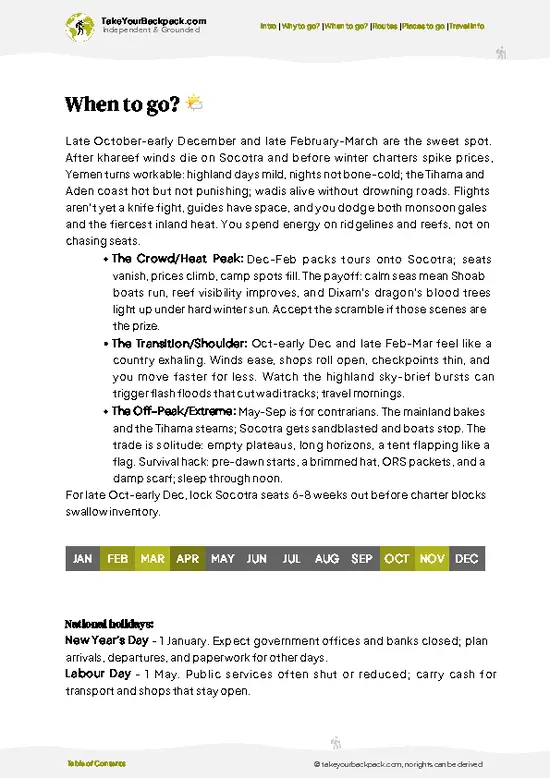
source: climatestotravel.comJANJanuary: excellent for travelingFEBFebruary: excellent for travelingMARMarch: good for travelingAPRApril: fair for travelingMAYMay: below average for travelingJUNJune: below average for travelingJULJuly: below average for travelingAUGAugust: below average for travelingSEPSeptember: fair for travelingOCTOctober: good for travelingNOVNovember: excellent for travelingDECDecember: excellent for traveling
when-to-go

✈️ The backpacker research shortcutYemen Travel Guide

An offline-friendly backpacking guide with optimized travel routes, ranked highlights, transport advice, and the best areas to stay.
example page 0 from our offline Travel Guide for Yemen
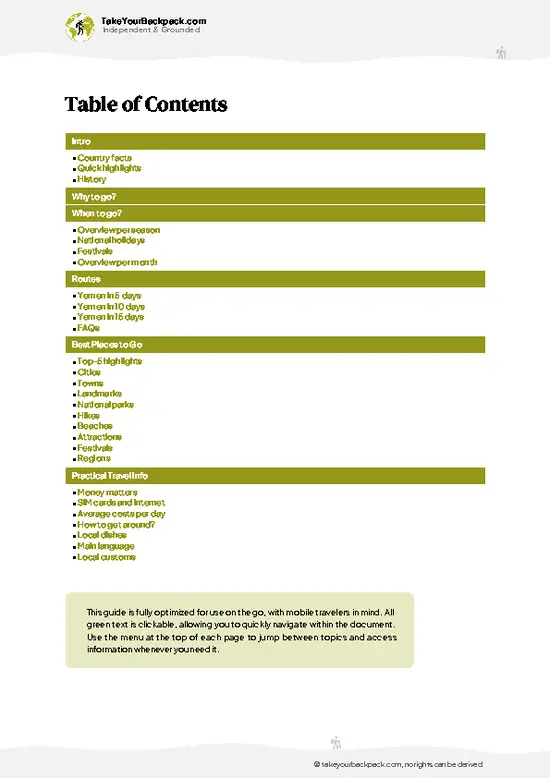
example page 1 from our offline Travel Guide for Yemen
example page 2 from our offline Travel Guide for Yemen
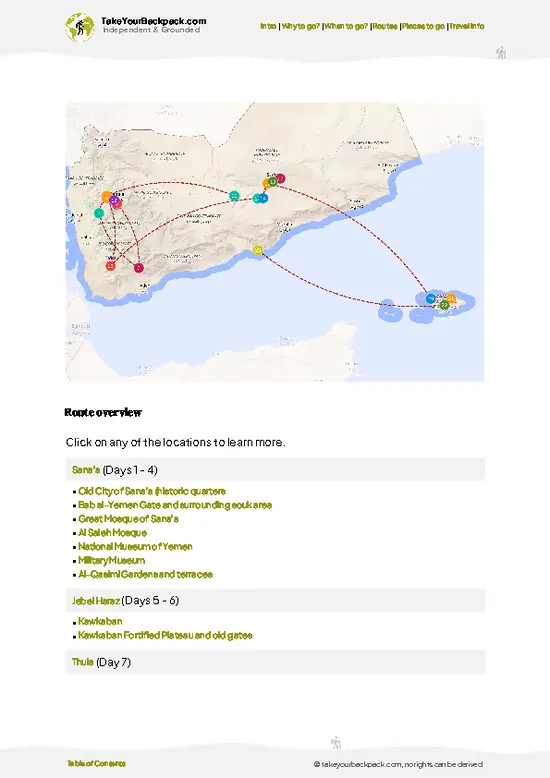
example page 3 from our offline Travel Guide for Yemen
example page 4 from our offline Travel Guide for Yemen
example page 5 from our offline Travel Guide for Yemen
example page 6 from our offline Travel Guide for Yemen
example page 7 from our offline Travel Guide for Yemen
The digital guide (264 pages) contains:
67 highlights, ranked by travel appeal
Optimized 5, 10 & 15-day travel routes
Cities, national parks, landmarks, beaches
How to get around
Offline-friendly for travel without Wi-Fi
👉 Click to see all 30+ guide features

📅 Plan smarter in minutes, not weeks
Month by month travel advice
Festivals & national holidays
Budget expectations

🗺️ Go to the right places, skip the overrated ones
Honest pros & cons of destinations
Top hikes, parks & viewpoints
Lesser-known places most travelers miss
Clear “worth it vs skip it” guidance

🛏️ Travel smoothly without rookie mistakes
Best areas to stay
Transport systems explained simply
Common scams & safety advice
SIM cards, money & practical tips

🌍 Understand the country, not just visit it
Culture & traditions
52 Essential phrases & customs
Festivals worth planning around
Traveler-friendly historical context
Insights that make places more meaningful

📱 Built for real travel conditions
Fully downloadable PDF
Works completely offline
Optimized for phone use
Useful in remote areas & buses
Everything in one place
Save weeks of stressful planning
Get instant access to your full guide. 30‑day money-back guarantee.
+ Add another guide for just US$7.80

By proceeding you agree to our terms.
Sent to your inbox immediately after payment • 100% Secure Checkout
Best Backpacking Travel Advisor 2025 tourism awardBest Backpacking
Travel Advisor
2025
What others say about Take Your Backpack Guides:
⭐⭐⭐⭐⭐
Fantastic, amazing amount of information!
⭐⭐⭐⭐⭐
My goodness this is amazing, it's what I've been looking for hats off too you!
⭐⭐⭐⭐⭐
I think this is absolutely BRILLIANT
⭐⭐⭐⭐
Very complete and informative. It's still missing places, but I gotta to commend you
⭐⭐⭐⭐⭐
This is truly amazing, thank you, can't wait to explore it with my kids!
⭐⭐⭐⭐⭐
Awesome resource, thank you!
⭐⭐⭐⭐⭐
This is amazing! Can't wait to explore the ones I haven't seen
⭐⭐⭐⭐
I love this! Well done, great idea.
⭐⭐⭐⭐⭐
Thanks for taking the time to make this gem!
⭐⭐⭐⭐⭐
This might be the best website I've ever seen.
⭐⭐⭐⭐⭐
Congratulations, and thank you so much for your work; it's incredibly valuable.
⭐⭐⭐⭐
In all seriousness I think you did a great job pointing out the important spots
⭐⭐⭐⭐⭐
10/10 very good
⭐⭐⭐⭐⭐
As someone who's only just starting to visit regularly this is awesome, thank you.
⭐⭐⭐⭐
Thank you very much! I'm going to visit my dad, it's going to be very useful!
⭐⭐⭐⭐⭐
This is really cool! We'll be travelling for the first time and this definitely come in handy.
⭐⭐⭐⭐⭐
You are now our minister of culture, congratulations 👨‍💼
⭐⭐⭐⭐⭐
Just wanted to tell you that this is a pearl! Going to follow your recommendations.
⭐⭐⭐⭐⭐
This is so cool. I'll definitely be using the resource for my travels soon.
⭐⭐⭐⭐⭐
This is very impressive! Good work.
⭐⭐⭐⭐⭐
This is an amazing and informative site. Very well done!

🛏️ Where to stay?Choosing the right base

Zabid’s Historic Core is a raw, intense experience, not a polished postcard. The reality? It’s not flooded with tourists, but it’s also not a carefree backpacker’s playground. Safety is a serious concern here, so your choice of where to stay isn’t just about convenience—it’s about navigating a place where the old world still holds tight, and modern comforts are scarce.

The best spots for backpackers are the neighborhoods hugging the core’s edges, where locals live and trade daily. These areas offer a gritty, authentic vibe—think narrow alleys, bustling markets, and the calls to prayer echoing … read more 👉
Zabid’s Historic Core is a raw, intense experience, not a polished postcard. The reality? It’s not flooded with tourists, but it’s also not a carefree backpacker’s playground. Safety is a serious concern here, so your choice of where to stay isn’t just about convenience—it’s about navigating a place where the old world still holds tight, and modern comforts are scarce.

The best spots for backpackers are the neighborhoods hugging the core’s edges, where locals live and trade daily. These areas offer a gritty, authentic vibe—think narrow alleys, bustling markets, and the calls to prayer echoing off centuries-old walls. It’s where you’ll find guesthouses that cater to budget travelers, often run by families who know the pulse of the city and can offer a level of security and social connection you won’t get deeper inside the historic zone.

Staying here means you’re close enough to wander Zabid’s madrasas and mosques at dawn, before the heat and crowds set in, but far enough to avoid the more intense, less tourist-friendly pockets. It’s a delicate balance—rough around the edges, yes, but that’s the point. This is Yemen’s soul, not a sanitized souvenir shop. If you’re after real, unfiltered history and human connection, this is where you want to be.

👛 Costs (as of 4 September 2026)What things cost and how to budget

As of the most recent estimates, visiting the Historic Town of Zabid, including its madrasas, typically costs between €10 and €25 per day. This range covers accommodation in local guesthouses, guided heritage visits, and modest fees for entry to preserved sites. Specific ticket prices for individual madrasas are not readily available; however, it's advisable to budget for travel logistics and local services when planning a multi-day heritage visit. ([takeyourbackpack.com](https://www.takeyourbackpack.com/backpacking-in-yemen/visit-zabid/?utm_source=openai))
⚠️ Prices can change and everyone travels differently, so take this as a rough guide. Hope it helps you plan your adventure!

FAQCommon questions from travelers

A visit to Zabid Historic Core and madrasas typically requires 3 to 4 hours to explore the main sites thoroughly. This allows time to see the ancient mosques, traditional houses, and the historic madrasas. Additional time may be needed if you want to engage with local guides or explore the surrounding town.
Yes, Zabid Historic Core and madrasas are worth the entrance fee, which is generally modest, around $5 to $10 USD. The site offers a unique glimpse into Yemen's medieval Islamic architecture and history, making it valuable for cultural and historical enthusiasts. The preservation of the site provides an authentic experience of a UNESCO World Heritage location.
To get to Zabid Historic Core and madrasas, travel to Zabid town, located about 100 kilometers northwest of Sana'a. The most common way is by road, using shared taxis or private cars from Sana'a or nearby cities. Zabid is accessible via the main highway connecting to the coastal city of Al Hudaydah.
⚠️ Things can change over time, so always validate details locally before you go.

Other Yemeni attractions near Zabid Historic Core and madrasas

Explore more nearby:


💡 Not sure where to go next?
Create a personalized itinerary for Yemen including Zabid Historic Core and madrasas and the places that fit your trip.

Generate my itinerary

👉 Discover all attractions

Or checkout all Yemen has to offer (think cities, towns, villages, national parks, hikes, beaches, festivals)
Country photo of Yemen

We 💚 feedbackSumming up the experience

Zabid isn’t for the faint-hearted or the Instagram crowd chasing polished ruins. It’s raw, dusty, and often overlooked for good reason—getting there takes grit, and the streets can feel deserted or oddly tense. But if you stick around, the real magic hits: centuries-old madrasas humming with quiet history, locals who’ll share stories if you listen, and a sense of stepping into a Yemen few outsiders ever see. It’s a slow burn, but one worth the effort.

✍️ Help improve this page!
The information on this page is based on in-depth research, insights shared by experienced travelers, and feedback from the local travel community in Yemen. While every effort is made to keep the information accurate and current, conditions can change — so if you spot anything incorrect or outdated, please get in touch.


🙋‍♂️ Give feedback

👋 Meet the founderWho’s Behind Take Your Backpack?

Johan, backpacker and founder of TakeYourBackpackHi, I’m Johan (Netherlands 🇳🇱), the creator of TakeYourBackpack. Over the past decade, I’ve backpacked through 80+ countries across six continents, gaining extensive experience with independent travel, long-term trips, and overland routes.

This site is built on a combination of firsthand travel experience and carefully curated insights from other backpackers. Many guides are based on places I’ve personally visited, while others bring together tips, observations, and practical advice shared by trusted travelers I’ve met along the way.

The goal is to provide realistic, experience-driven guidance — not generic itineraries — so you can explore destinations with better context, clearer expectations, and more confidence.

Get full Yemen guide •
Instant download • 67 highlights • Full Offline guide