×

Zambia🇿🇲 | townsItezhi-TezhiDam wall, Kafue gate, tigerfish, river cruises | things to do and best time to go

Explore ShangomboExplore Kalambo Falls

Backpacking in Itezhi-Tezhi
🌟 Highlighttown ranked #6
By Johan Kruseman 🇳🇱 | Updated October 22, 2026

Itezhi-Tezhi suits self-drivers, birders, anglers and slow travelers who want elephants and hippos without a national park crowd. If you need nightlife, ATMs that always work or a tick-list of sights, you will find it thin. The town sits in Zambia’s Central Province, at the eastern edge of Kafue National Park, right below the big dam wall on the Kafue River. Reaching it takes effort, but the road is paved from the main highway, and that keeps the visitor numbers low. Spend your time on the river, the dam viewpoint and the park gate, and skip hunting for town attractions, because there are few. Evenings are quiet, with lodge bars and campfires rather than hostels, so meeting other travelers means chatting at the park gate or on a boat. Best for independent adventurers on a flexible schedule. Wrong for anyone short on time.

Discover everything you want to know in the 📖 Zambia Travel Guide.


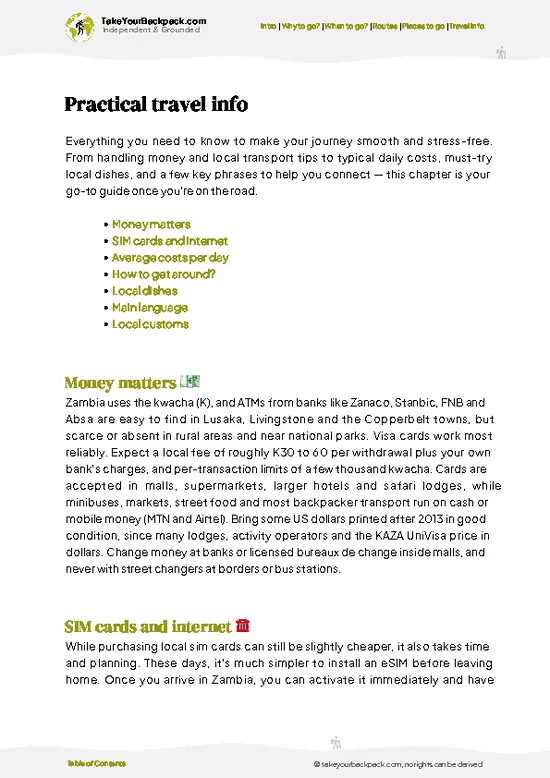
example page 0 from our offline Travel Guide for Zambia
example page 1 from our offline Travel Guide for Zambia
example page 2 from our offline Travel Guide for Zambia
example page 3 from our offline Travel Guide for Zambia
example page 4 from our offline Travel Guide for Zambia
example page 5 from our offline Travel Guide for Zambia
example page 6 from our offline Travel Guide for Zambia
example page 7 from our offline Travel Guide for Zambia
Loading the map 🌍
CLICK TO FILTER
cities
towns
landmarks
national parks
hikes
beaches
attractions
festivals
regions
SHOW COUNTRY’S BESTSHOW ALL

✨ Why go?
Ranked #6 town in Zambia
What makes it a must-see town

Itezhi-Tezhi works as the gateway to the southern end of Kafue National Park, and that is the whole reason to come. You arrive, stock up on fuel and supplies, then slip into the park for a night or three, or stay on the river and fish. The Kafue is Zambia’s largest park, and the stretch near the town gives you decent odds at lions, hippos and big herds of puku, usually with far fewer vehicles than in South Luangwa. Out on the water, a boat trip on the Kafue River or the Itezhi-Tezhi Dam reservoir shows you crocodiles, fish eagles and the odd elephant crossing. Most travelers stay one to three nights, longer if they camp inside the park. It is quiet, and the social side is lodge campsites and shared game drives. Self-drivers, birders, anglers and couples will love it. Hostel-hopping partiers should look elsewhere.

💡 HighlightsMust-see experiences and standout moments

  1. Itezhi-Tezhi Dam wall: The 1970s earth dam holds back the Kafue River and created the reservoir that now defines the area. Walk or drive near the wall for wide views of the water and the spillway. Go in the early morning or late afternoon for softer light and birds. Free to look at, 30 to 45 minutes.
  2. Kafue National Park main gate (Ngoma area): The southern entry to Zambia’s biggest park, where you pay fees and can book guides. Game drives here show puku, zebra, wildebeest, hippos and sometimes lions. Dry season, roughly May to October, gives the best viewing. Park fees run about US$20 to 30 per foreign visitor per day plus vehicle fees, and a drive takes 3 hours to a full day.
  3. Kafue River boat cruise: Lodges run sunset and morning cruises on the river below the dam. You glide past hippo pods,
… read more 👉
  1. Itezhi-Tezhi Dam wall: The 1970s earth dam holds back the Kafue River and created the reservoir that now defines the area. Walk or drive near the wall for wide views of the water and the spillway. Go in the early morning or late afternoon for softer light and birds. Free to look at, 30 to 45 minutes.
  2. Kafue National Park main gate (Ngoma area): The southern entry to Zambia’s biggest park, where you pay fees and can book guides. Game drives here show puku, zebra, wildebeest, hippos and sometimes lions. Dry season, roughly May to October, gives the best viewing. Park fees run about US$20 to 30 per foreign visitor per day plus vehicle fees, and a drive takes 3 hours to a full day.
  3. Kafue River boat cruise: Lodges run sunset and morning cruises on the river below the dam. You glide past hippo pods, crocodiles and kingfishers at eye level. Expect US$25 to 50 per person for 2 to 3 hours. Sunset is the favorite slot.
  4. Fishing on the Itezhi-Tezhi reservoir: The dam lake is known for tigerfish and bream, and lodges rent boats with guides. Tigerfish season is best in the cooler, drier months. Half-day trips cost roughly US$60 to 150 per boat, 4 to 6 hours.
  5. Nkala and Nalusanga-area village walks: Short visits to nearby Ila-speaking communities show cattle herding, fishing and crafts. Arrange through your lodge, offering a small payment of about US$5 to 15. Allow 1 to 2 hours, best in the morning.
Beyond town, day trips can reach the Busanga Plains region of Kafue National Park, the Kafue Flats wetlands near Namwala and the Hook Bridge area of the park, though the plains need a longer stay. Start with the park gate drive, because early-morning animals are most active and the dry dirt tracks are easiest then.
Spotted a mistake or missing something? Contact us.

🏘️ NeighborhoodsWhere things are and how it's laid out

Itezhi-Tezhi is small enough to cover on foot or by short ride, so pick your areas and go.
  • Town Center and Market: Start here. Stalls along the main road sell tomatoes, dried kapenta, airtime and fried dough, and the roadside eateries serve nshima with relish for a few dollars. Give it an hour, no more. Nothing is polished, which is the fun of it.
  • Dam Wall Area: Walk or ride out to the Itezhi-Tezhi Dam, built across the Kafue River. Standing on the approach you see the reservoir spread out and water pouring through the works below. Worth a morning, and the light is better early. Photography near the structure can draw attention from staff, so ask first.
  • Kafue River and Lake Shore: This is where the town earns its keep. Fishing canoes, hippo grunts at dusk and birds along the banks make it the
… read more 👉
Itezhi-Tezhi is small enough to cover on foot or by short ride, so pick your areas and go.
  • Town Center and Market: Start here. Stalls along the main road sell tomatoes, dried kapenta, airtime and fried dough, and the roadside eateries serve nshima with relish for a few dollars. Give it an hour, no more. Nothing is polished, which is the fun of it.
  • Dam Wall Area: Walk or ride out to the Itezhi-Tezhi Dam, built across the Kafue River. Standing on the approach you see the reservoir spread out and water pouring through the works below. Worth a morning, and the light is better early. Photography near the structure can draw attention from staff, so ask first.
  • Kafue River and Lake Shore: This is where the town earns its keep. Fishing canoes, hippo grunts at dusk and birds along the banks make it the best place to wander slowly. Expect rough tracks, so wear closed shoes.
  • Kafue National Park Gate Zone: Just beyond town, the park entrance is where your safari plans start. It is more a launch pad than a place to stroll, so skip it unless you have a vehicle or a booked trip.
Nightlife is a few local bars with loud music and cold Mosi. Skip any idea of clubbing and enjoy the quiet.

⌛️ 1 daySeeing the highlights in 24 hours

6:30 AM, Kafue National Park gate: Do not skip an early game drive. Cross the river bridge, pay fees and head into the southern park roads while animals are still active. Puku, zebra and hippos crowd the loops, and lions sometimes lie on the track. Plan about three hours.
10:00 AM, Breakfast at your lodge: Return for eggs and strong coffee on a riverside deck. Rest while the heat builds, and watch fish eagles over the water.
11:30 AM, Dam wall viewpoint: A short drive brings you to the Itezhi-Tezhi Dam wall. Walk along it for views of the spillway below and the huge reservoir above. It is quick and free.
1:00 PM, Lunch in town: Find simple local food near the main road, such as nshima with fish or chicken, and fill up on supplies and fuel before the afternoon.
3:00 PM, Ila village walk: Off the … read more 👉
6:30 AM, Kafue National Park gate: Do not skip an early game drive. Cross the river bridge, pay fees and head into the southern park roads while animals are still active. Puku, zebra and hippos crowd the loops, and lions sometimes lie on the track. Plan about three hours.
10:00 AM, Breakfast at your lodge: Return for eggs and strong coffee on a riverside deck. Rest while the heat builds, and watch fish eagles over the water.
11:30 AM, Dam wall viewpoint: A short drive brings you to the Itezhi-Tezhi Dam wall. Walk along it for views of the spillway below and the huge reservoir above. It is quick and free.
1:00 PM, Lunch in town: Find simple local food near the main road, such as nshima with fish or chicken, and fill up on supplies and fuel before the afternoon.
3:00 PM, Ila village walk: Off the standard route, ask your lodge to arrange a guided visit to a nearby village. You see homesteads, cattle, fishing nets and crafts, and a small payment goes to the hosts. Allow about 90 minutes.
5:00 PM, Kafue River sunset cruise: Finish on a boat, drifting past hippo pods as the sky turns orange. Back at camp, light a fire and listen for lions in the dark.

🌤️ When to go?Best time to visit Itezhi-Tezhi

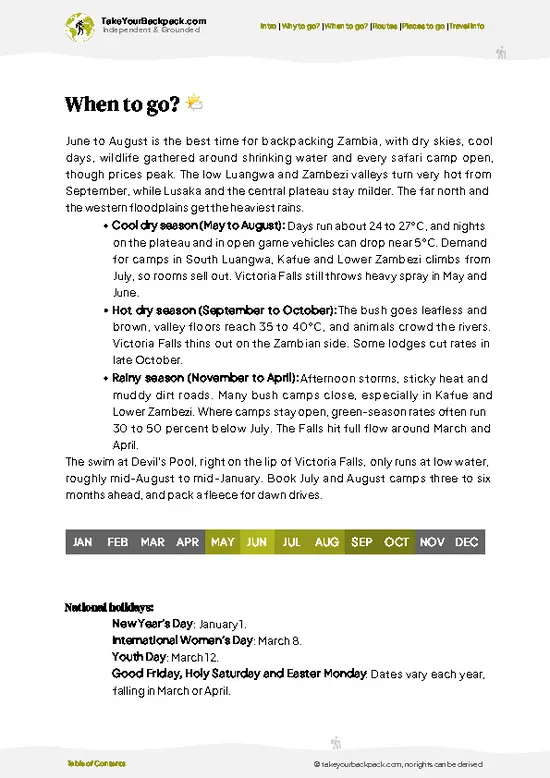
  • Cool Dry Season (May to August): Days run 24 to 28°C (75 to 82°F), nights drop to 6 to 10°C (43 to 50°F), and skies stay clear. Game gathers near the river, so wildlife viewing is strong. Mornings on open boats are chilly, so bring a fleece.
  • Hot Dry Season (September to October): Heat climbs to 32 to 37°C (90 to 99°F). Animals crowd the water, vegetation thins and spotting is easiest. Camps charge their highest rates and fill early.
  • Wet Season (November to April): Afternoon storms bring 27 to 31°C (81 to 88°F) and humidity. Some park tracks turn to mud or close, and some lodges shut. Birding peaks, the landscape turns green and prices drop sharply.
Daylight stays steady near 11 to 13 hours across the year. Book for June to August if you want guaranteed access and green-season discounts are not … read more 👉
  • Cool Dry Season (May to August): Days run 24 to 28°C (75 to 82°F), nights drop to 6 to 10°C (43 to 50°F), and skies stay clear. Game gathers near the river, so wildlife viewing is strong. Mornings on open boats are chilly, so bring a fleece.
  • Hot Dry Season (September to October): Heat climbs to 32 to 37°C (90 to 99°F). Animals crowd the water, vegetation thins and spotting is easiest. Camps charge their highest rates and fill early.
  • Wet Season (November to April): Afternoon storms bring 27 to 31°C (81 to 88°F) and humidity. Some park tracks turn to mud or close, and some lodges shut. Birding peaks, the landscape turns green and prices drop sharply.
Daylight stays steady near 11 to 13 hours across the year. Book for June to August if you want guaranteed access and green-season discounts are not your goal; arrive in May to catch dry roads before the crowds.


source: climatestotravel.comJANJanuary: fair for travelingFEBFebruary: fair for travelingMARMarch: fair for travelingAPRApril: good for travelingMAYMay: excellent for travelingJUNJune: excellent for travelingJULJuly: highly recommended for travelingAUGAugust: highly recommended for travelingSEPSeptember: highly recommended for travelingOCTOctober: highly recommended for travelingNOVNovember: fair for travelingDECDecember: fair for traveling
when-to-go

✈️ The backpacker research shortcutZambia Travel Guide

An offline-friendly backpacking guide with optimized travel routes, ranked highlights, transport advice, and the best areas to stay.
example page 0 from our offline Travel Guide for Zambia
example page 1 from our offline Travel Guide for Zambia
example page 2 from our offline Travel Guide for Zambia
example page 3 from our offline Travel Guide for Zambia
example page 4 from our offline Travel Guide for Zambia
example page 5 from our offline Travel Guide for Zambia
example page 6 from our offline Travel Guide for Zambia
example page 7 from our offline Travel Guide for Zambia
The digital guide (351 pages) contains:
✅ 89 highlights, ranked by travel appeal
✅ Optimized 5, 10 & 15-day travel routes
✅ Cities, national parks, landmarks, beaches
✅ How to get around
✅ Offline-friendly for travel without Wi-Fi
👉 Click to see all 30+ guide features

📅 Plan smarter in minutes, not weeks
✅ Month by month travel advice
✅ Festivals & national holidays
✅ Budget expectations

🗺️ Go to the right places, skip the overrated ones
✅ Honest pros & cons of destinations
✅ Top hikes, parks & viewpoints
✅ Lesser-known places most travelers miss
✅ Clear “worth it vs skip it” guidance

🛏️ Travel smoothly without rookie mistakes
✅ Best areas to stay
✅ Transport systems explained simply
✅ Common scams & safety advice
✅ SIM cards, money & practical tips

🌍 Understand the country, not just visit it
✅ Culture & traditions
✅ 52 Essential phrases & customs
✅ Festivals worth planning around
✅ Traveler-friendly historical context
✅ Insights that make places more meaningful

📱 Built for real travel conditions
✅ Fully downloadable PDF
✅ Works completely offline
✅ Optimized for phone use
✅ Useful in remote areas & buses
✅ Everything in one place
Stop searching, start planning
Get instant access to your full guide. 30‑day money-back guarantee.
+ Add another guide for just

By proceeding you agree to our terms.
Sent to your inbox immediately after payment • 100% Secure Checkout
Best Backpacking Travel Advisor 2025 tourism awardBest Backpacking
Travel Advisor
2025
What others say about Take Your Backpack Guides:
⭐⭐⭐⭐⭐
Fantastic, amazing amount of information!
⭐⭐⭐⭐⭐
My goodness this is amazing, it's what I've been looking for hats off too you!
⭐⭐⭐⭐⭐
I think this is absolutely BRILLIANT
⭐⭐⭐⭐
Very complete and informative. It's still missing places, but I gotta to commend you
⭐⭐⭐⭐⭐
This is truly amazing, thank you, can't wait to explore it with my kids!
⭐⭐⭐⭐⭐
Awesome resource, thank you!
⭐⭐⭐⭐⭐
This is amazing! Can't wait to explore the ones I haven't seen
⭐⭐⭐⭐
I love this! Well done, great idea.
⭐⭐⭐⭐⭐
Thanks for taking the time to make this gem!
⭐⭐⭐⭐⭐
This might be the best website I've ever seen.
⭐⭐⭐⭐⭐
Congratulations, and thank you so much for your work; it's incredibly valuable.
⭐⭐⭐⭐
In all seriousness I think you did a great job pointing out the important spots
⭐⭐⭐⭐⭐
10/10 very good
⭐⭐⭐⭐⭐
As someone who's only just starting to visit regularly this is awesome, thank you.
⭐⭐⭐⭐
Thank you very much! I'm going to visit my dad, it's going to be very useful!
⭐⭐⭐⭐⭐
This is really cool! We'll be travelling for the first time and this definitely come in handy.
⭐⭐⭐⭐⭐
You are now our minister of culture, congratulations 👨‍💼
⭐⭐⭐⭐⭐
Just wanted to tell you that this is a pearl! Going to follow your recommendations.
⭐⭐⭐⭐⭐
This is so cool. I'll definitely be using the resource for my travels soon.
⭐⭐⭐⭐⭐
This is very impressive! Good work.
⭐⭐⭐⭐⭐
This is an amazing and informative site. Very well done!

🛏️ Where to stay?How to pick the right area

The best area for a budget bed is the stretch near the town center and main road, with the riverside edge a close second. Itezhi-Tezhi has a limited supply of dorms, so expect basic guesthouses, a few campsites and simple lodges rather than a hostel scene. Beds near the center sit within walking distance of the bus stop, the market and food stalls, which matters when you arrive after a long road. Streets are quiet at night, with the occasional bar noise from a few spots. Riverside spots cost a little more but give you water views, birdsong and hippo sounds after dark. Camping is the cheapest route … read more 👉
The best area for a budget bed is the stretch near the town center and main road, with the riverside edge a close second. Itezhi-Tezhi has a limited supply of dorms, so expect basic guesthouses, a few campsites and simple lodges rather than a hostel scene. Beds near the center sit within walking distance of the bus stop, the market and food stalls, which matters when you arrive after a long road. Streets are quiet at night, with the occasional bar noise from a few spots. Riverside spots cost a little more but give you water views, birdsong and hippo sounds after dark. Camping is the cheapest route if you carry a tent, and many sites offer shared ablutions and a braai area. Pack a flashlight because power cuts happen. Book ahead for June to October, since the better budget rooms fill when park visitors arrive. Walk from the center after dark only in groups, and prefer places with a gate or a night guard.

🚌 Getting aroundGetting around like a local

From the bus stop on the main road, the center is a five-minute walk, since everything useful sits along one strip. Itezhi-Tezhi is compact, traffic is light, and public transport within town barely exists, so your own feet carry most of the load. Long-distance buses and minibuses arrive from Mumbwa, Lusaka and Namwala, and they run in daylight only.
  • Walking: Free, and the right call for the market, the main road and the shops. Heat and dust make midday walks a slog, so head out early or late.
  • Motorbike Taxis: Quick and cheap at about US$1 to 3 for a ride across town or to the dam. Agree the price first and ask the rider to slow down on gravel.
  • Shared Taxis and Minibuses: The way to reach Mumbwa and beyond, with fares around US$8 to 15 depending on the leg. They leave when full, mostly from morning
… read more 👉
From the bus stop on the main road, the center is a five-minute walk, since everything useful sits along one strip. Itezhi-Tezhi is compact, traffic is light, and public transport within town barely exists, so your own feet carry most of the load. Long-distance buses and minibuses arrive from Mumbwa, Lusaka and Namwala, and they run in daylight only.
  • Walking: Free, and the right call for the market, the main road and the shops. Heat and dust make midday walks a slog, so head out early or late.
  • Motorbike Taxis: Quick and cheap at about US$1 to 3 for a ride across town or to the dam. Agree the price first and ask the rider to slow down on gravel.
  • Shared Taxis and Minibuses: The way to reach Mumbwa and beyond, with fares around US$8 to 15 depending on the leg. They leave when full, mostly from morning to early afternoon, so aim to be at the stand by 8 a.m.
  • Hired Vehicle or Transfer: Park roads reward 4x4s with high clearance. Lodges and local drivers run transfers and game drives, typically US$60 to 150 a day split across the group. Worth the splurge, because public transport does not enter the park.
  • Boat: Operators on the Kafue River run cruises and fishing trips for about US$30 to 70 per person. Skip the longer packages unless wildlife is your goal, and pick a morning departure when animals are active.
Outside the dry season, expect washed-out sections and slower travel, so build slack into your plans.

👛 Costs (as of 22 October 2026)Money, prices, and spending tips

Itezhi-Tezhi costs about US$47 to 98 a day for a backpacker, with park activities pushing it higher. Prices are modest in town, but safaris and transfers drive up the total. Travelers pay in kwacha.
CategoryBudget RangeLocal Reality
Dorm accommodationUS$12 to 25Dorms are rare, so budget on a basic guesthouse bed or campsite, with higher rates June to October.
MealsUS$8 to 15Nshima with relish and chicken at local eateries is cheap, while lodge dinners cost more.
Local transportUS$3 to 10Motorbike taxis for short hops, shared minibuses for longer legs.
Basic activities/entry feesUS$20 to 40Park fees and shared boat or drive costs, averaged over a stay.
Miscellaneous expensesUS$4 to 8Water, airtime, snacks and a cold beer.
Total Daily BudgetUS$47 to 98About US$65 for a typical day in high season.
Camp … read more 👉
Itezhi-Tezhi costs about US$47 to 98 a day for a backpacker, with park activities pushing it higher. Prices are modest in town, but safaris and transfers drive up the total. Travelers pay in kwacha.
CategoryBudget RangeLocal Reality
Dorm accommodationUS$12 to 25Dorms are rare, so budget on a basic guesthouse bed or campsite, with higher rates June to October.
MealsUS$8 to 15Nshima with relish and chicken at local eateries is cheap, while lodge dinners cost more.
Local transportUS$3 to 10Motorbike taxis for short hops, shared minibuses for longer legs.
Basic activities/entry feesUS$20 to 40Park fees and shared boat or drive costs, averaged over a stay.
Miscellaneous expensesUS$4 to 8Water, airtime, snacks and a cold beer.
Total Daily BudgetUS$47 to 98About US$65 for a typical day in high season.
Camp rather than book rooms, and share vehicle and guide costs with other travelers to cut safari expenses sharply.


source: zambiatourism.com
⚠️ Prices can change and everyone travels differently, so take this as a rough guide. Hope it helps you plan your adventure!

🚌 Day tripsBest day trips from Itezhi-Tezhi

Itezhi-Tezhi works well as a base for short outings, mainly because the park and river are on its doorstep. Public transport is thin, so budget for shared costs.
Kafue National Park Game Drive:
The park gate is close, and a half-day drive can show elephants, antelope, hippos and plenty of birds. Park fees plus a guided vehicle usually total US$80 to 160 per person when split. The dry season from June to October gives the best viewing. First-timers often start late, so leave at dawn when animals are moving.
👉 Explore Kafue National Park
Itezhi-Tezhi Dam:
This is an easy half-day on foot or by motorbike taxi for about US$3 to 6 round trip. You see the reservoir, the wall and fishing activity below. Go in the morning when light is soft, and ask before taking photos near the works.

Kafue River Boat … read more 👉
Itezhi-Tezhi works well as a base for short outings, mainly because the park and river are on its doorstep. Public transport is thin, so budget for shared costs.
Kafue National Park Game Drive:
The park gate is close, and a half-day drive can show elephants, antelope, hippos and plenty of birds. Park fees plus a guided vehicle usually total US$80 to 160 per person when split. The dry season from June to October gives the best viewing. First-timers often start late, so leave at dawn when animals are moving.
👉 Explore Kafue National Park
Itezhi-Tezhi Dam:
This is an easy half-day on foot or by motorbike taxi for about US$3 to 6 round trip. You see the reservoir, the wall and fishing activity below. Go in the morning when light is soft, and ask before taking photos near the works.

Kafue River Boat Trip:
A two to three hour cruise costs about US$30 to 70 and gets you close to hippos, crocodiles and fish eagles. Dry months give the clearest wildlife viewing, and the quiet water at dawn is ideal. Bring sun protection, since there is little shade, and keep hands inside the boat.

🛡️ SafetyScams, Hazards, and Annoyances

Itezhi-Tezhi is a calm, small town where petty theft is the main risk and violent crime is rare. Keep phones and cash tucked away at the market and bus stop, and watch bags when loading minibuses. Solo travelers, women included, usually find people friendly, but avoid walking unlit roads after dark and take a motorbike taxi if you must move at night. The bigger risks are natural. Hippos and crocodiles live in the Kafue River, so stay back from the water's edge, especially at dusk, and do not swim. Inside the park, follow guide instructions and never leave your vehicle near wildlife. Scams are minor, mostly inflated prices for rides and tours, so settle fares first. Police checkpoints on the main road are routine, so carry a passport copy. Drink bottled or treated water and use repellent, since malaria is present.

FAQTraveler FAQ

Itezhi-Tezhi is worth visiting for Kafue National Park and the Kafue River rather than as a stopover. The park gate sits right by town, game drives start at roughly US$80 to 160 shared, and boat trips on the river cost about US$30 to 70. Skip it only if you have no time for wildlife.
Two to three days suit Itezhi-Tezhi well. That allows one day for a game drive in Kafue National Park, a morning for a river cruise and time to see the dam. Add a day if you plan longer park routes or fishing.
A day trip to Itezhi-Tezhi from a nearby city is hard because public transport is limited and roads are long. Lusaka is several hours away by road, so a return trip leaves little time on the ground. Plan at least one night to enjoy a game drive and reach the park early.
⚠️ Things can change over time, so always validate details locally before you go.

Other Zambian towns near Itezhi-Tezhi

Explore more nearby:

  • Namwala—Kafue Flats edge, Ila cattle, dugout fishing, pelicans| 42 km away
  • Kalomo—Railway platform, colonial streets, Iron Age mounds, braai stalls| 151 km away
  • Choma—Tonga museum, craft stalls, grill stalls, farm-belt stop| 156 km away

💡 Not sure where to go next?
Create a personalized itinerary for Zambia including Itezhi-Tezhi and the places that fit your trip.

Generate my itinerary

👉 Discover all towns

Or checkout all Zambia has to offer (think cities, towns, villages, national parks, hikes, beaches, festivals)
Country photo of Zambia

We 💚 feedbackWhat to keep in mind

Itezhi-Tezhi trips go wrong when travelers rush in for a single afternoon, then leave without seeing animals. Give it at least two nights, book one dawn drive and one river cruise, and carry cash, since card machines and signal can fail. I would also fill the tank before leaving the highway.

✍️ Help improve this page!
The information on this page is based on in-depth research, insights shared by experienced travelers, and feedback from the local travel community in Zambia. While every effort is made to keep the information accurate and current, conditions can change — so if you spot anything incorrect or outdated, please get in touch.


🙋‍♂️ Give feedback

👋 Meet the founderWho’s Behind Take Your Backpack?

Johan, backpacker and founder of TakeYourBackpackHi, I’m Johan (Netherlands 🇳🇱), the creator of TakeYourBackpack. Over the past 3 decades, I’ve backpacked through 90+ countries across six continents, gaining extensive experience with independent travel, long-term trips, and overland routes.

This site is built on a combination of firsthand travel experience and carefully curated insights from other backpackers. Many guides are based on places I’ve personally visited, while others bring together tips, observations, and practical advice shared by trusted travelers I’ve met along the way.

The goal is to provide realistic, experience-driven guidance — not generic itineraries — so you can explore destinations with better context, clearer expectations, and more confidence.