×

Zambia🇿🇲 | national parksKasanka National ParkFruit bat migration, Fibwe Hide, sitatunga swamp, Wasa Lake | things to do and best time to go

Explore Kafue National ParkExplore Liuwa Plain National Park

Backpacking in Kasanka
🌟 Highlightnational park ranked #6
By Johan Kruseman 🇳🇱 | Updated October 22, 2026

Kasanka rewards early planning: the park is privately managed by a trust, so you book your bed and entry before you roll in, and that is why the roads and hides are well kept and the crowds stay thin. Find it in the north of Zambia, in Central Province, roughly northeast of Mansa and a long haul from Lusaka. The big draw is the November to December straight-up spectacle of millions of straw-colored fruit bats, plus sitatunga in papyrus swamp and open miombo woodland. Walking is limited and mostly guided, and there are no big-cat crowds, so manage expectations. Go in with a flexible plan, hire a guide when walking is the point, and pack your own food. Day one: arrive by midday, drive to Fibwe Hide for the afternoon, then settle by the river for the evening chorus.

Discover everything you want to know in the 📖 Zambia Travel Guide.


example page 0 from our offline Travel Guide for Zambia
example page 1 from our offline Travel Guide for Zambia
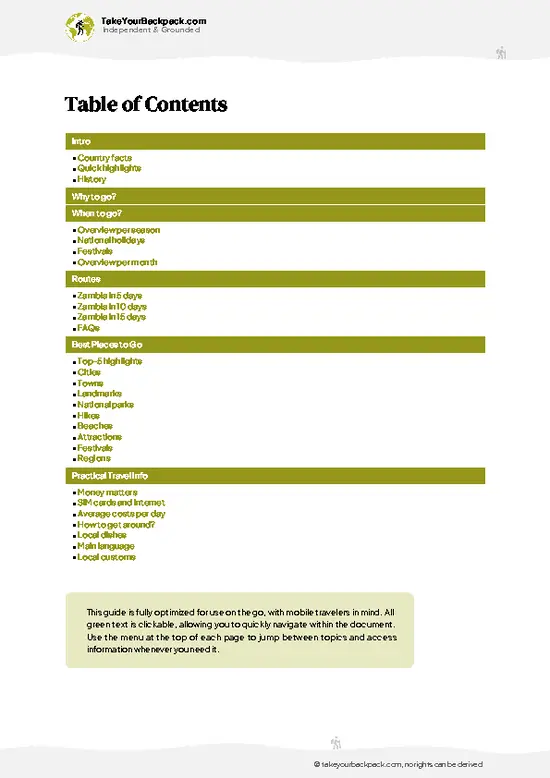
example page 2 from our offline Travel Guide for Zambia
example page 3 from our offline Travel Guide for Zambia
example page 4 from our offline Travel Guide for Zambia
example page 5 from our offline Travel Guide for Zambia
example page 6 from our offline Travel Guide for Zambia
example page 7 from our offline Travel Guide for Zambia
Loading the map 🌍
CLICK TO FILTER
cities
towns
landmarks
national parks
hikes
beaches
attractions
festivals
regions
SHOW COUNTRY’S BESTSHOW ALL

✨ Why go?
Ranked #6 national park in Zambia
Why Kasanka should be on your travel list

Kasanka National Park suits backpackers who want wild Africa without a minibus convoy. The park is small, about 450 square kilometers, so you can cover real ground in two or three days on foot, by bicycle where permitted, or on short drives with a self-drive vehicle. The Fibwe Hide, a tree platform high in a mature mahogany, gives you a front-row view over sitatunga country without paying for a guided package. The other reason is timing. From about late October to early December the straw-colored fruit bat migration draws up to roughly ten million bats to a patch of swamp forest, the biggest mammal migration on Earth by headcount. You can watch it independently from the evening bat-viewing spots, and nobody herds you along. Camping is the natural fit here, and self-catering keeps costs low in a place with no shops.

💡 HighlightsEssential experiences to have while exploring Kasanka

  1. Straw-colored fruit bat migration: From roughly late October to early December, millions of bats roost in Mushitu swamp forest at Kasanka’s heart. At dusk they pour out in black waves that blot the sky, and you hear the branches crack and smell them before the show begins.
  2. Fibwe Hide: A platform built into a huge tree, with views over the Kasanka wetland. It is a prime spot for sitatunga, one of the rare swamp antelopes, and for birds at first and last light.
  3. Wasa Lake: The park’s largest lake, ringed by reed beds and open woodland. Hippos grunt through the night, and the shore is good for lazy birding.
  4. Kasanka River: Walk or drive the river’s edge to find puku, waterbuck and a good range of waterbirds. The shoreline gives a calm, shaded setting for an afternoon wander.
  5. Miombo woodland drives:
… read more 👉
  1. Straw-colored fruit bat migration: From roughly late October to early December, millions of bats roost in Mushitu swamp forest at Kasanka’s heart. At dusk they pour out in black waves that blot the sky, and you hear the branches crack and smell them before the show begins.
  2. Fibwe Hide: A platform built into a huge tree, with views over the Kasanka wetland. It is a prime spot for sitatunga, one of the rare swamp antelopes, and for birds at first and last light.
  3. Wasa Lake: The park’s largest lake, ringed by reed beds and open woodland. Hippos grunt through the night, and the shore is good for lazy birding.
  4. Kasanka River: Walk or drive the river’s edge to find puku, waterbuck and a good range of waterbirds. The shoreline gives a calm, shaded setting for an afternoon wander.
  5. Miombo woodland drives: Quiet tracks cut through woodland and grass dambos. Look for roan antelope, bushbuck and, with patience, sable and elephant signs.
  6. Shoebill viewing in the Busanga-side swamps: In the right season, experienced guides can lead you toward rare shoebill habitat in the wetlands. It is a serious birding prize and a long shot worth planning.
  7. Night drives: Spotlighting with a guide turns up genets, civets, bushbabies and sometimes servals when the bush is active after dark.
Start with Fibwe Hide at first light, because the sitatunga are most active then and the hide is empty before breakfast.
Spotted a mistake or missing something? Contact us.

🌤️ When to go?Weather, crowds, and seasonal trade-offs

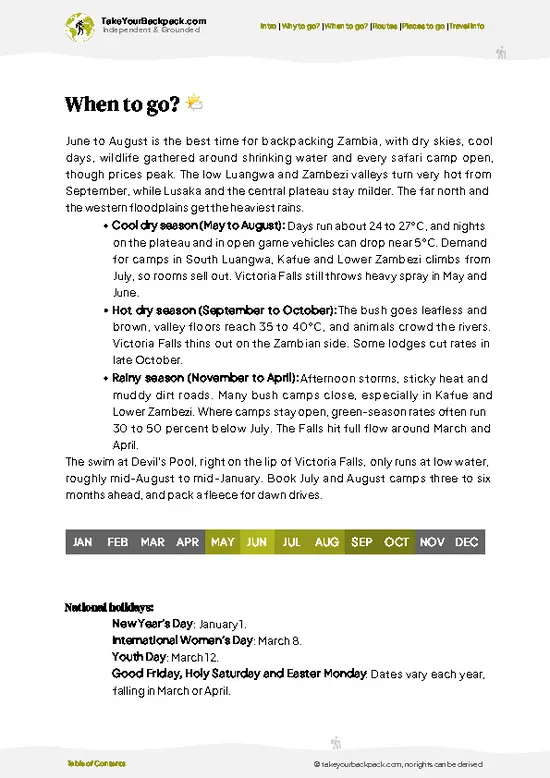
  • Bat Migration (late October to early December): Roughly 8 to 10 million straw-colored fruit bats gather in the Mushitu swamp forest, the main reason to come. Days hit 30 to 36°C (86 to 97°F) and it is humid, with early rains arriving by late November.
  • Cool Dry Season (May to August): Mornings run 8 to 14°C (46 to 57°F), afternoons 24 to 28°C (75 to 82°F). Roads are firm and sitatunga and hippo are easy to spot from the hides.
  • Hot Build-Up (September to mid-October): Temperatures climb to 32 to 38°C (90 to 100°F). Grass is short, game viewing is good and the park is quiet.
  • Rains (December to April): Expect 22 to 29°C (72 to 84°F), flooded tracks, closed sections and some lodges shut. Daylight stays near 12 to 13 hours all year, and rates drop sharply.
Book bat season camps months ahead, since the peak weeks fill, and pick weekdays if you can.

source: climatestotravel.comJANJanuary: fair for travelingFEBFebruary: fair for travelingMARMarch: fair for travelingAPRApril: fair for travelingMAYMay: highly recommended for travelingJUNJune: excellent for travelingJULJuly: excellent for travelingAUGAugust: excellent for travelingSEPSeptember: excellent for travelingOCTOctober: excellent for travelingNOVNovember: highly recommended for travelingDECDecember: fair for traveling
when-to-go

✈️ The backpacker research shortcutZambia Travel Guide

An offline-friendly backpacking guide with optimized travel routes, ranked highlights, transport advice, and the best areas to stay.
example page 0 from our offline Travel Guide for Zambia
example page 1 from our offline Travel Guide for Zambia
example page 2 from our offline Travel Guide for Zambia
example page 3 from our offline Travel Guide for Zambia
example page 4 from our offline Travel Guide for Zambia
example page 5 from our offline Travel Guide for Zambia
example page 6 from our offline Travel Guide for Zambia
example page 7 from our offline Travel Guide for Zambia
The digital guide (351 pages) contains:
✅ 89 highlights, ranked by travel appeal
✅ Optimized 5, 10 & 15-day travel routes
✅ Cities, national parks, landmarks, beaches
✅ How to get around
✅ Offline-friendly for travel without Wi-Fi
👉 Click to see all 30+ guide features

📅 Plan smarter in minutes, not weeks
✅ Month by month travel advice
✅ Festivals & national holidays
✅ Budget expectations

🗺️ Go to the right places, skip the overrated ones
✅ Honest pros & cons of destinations
✅ Top hikes, parks & viewpoints
✅ Lesser-known places most travelers miss
✅ Clear “worth it vs skip it” guidance

🛏️ Travel smoothly without rookie mistakes
✅ Best areas to stay
✅ Transport systems explained simply
✅ Common scams & safety advice
✅ SIM cards, money & practical tips

🌍 Understand the country, not just visit it
✅ Culture & traditions
✅ 52 Essential phrases & customs
✅ Festivals worth planning around
✅ Traveler-friendly historical context
✅ Insights that make places more meaningful

📱 Built for real travel conditions
✅ Fully downloadable PDF
✅ Works completely offline
✅ Optimized for phone use
✅ Useful in remote areas & buses
✅ Everything in one place
Stop searching, start planning
Get instant access to your full guide. 30‑day money-back guarantee.
+ Add another guide for just

By proceeding you agree to our terms.
Sent to your inbox immediately after payment • 100% Secure Checkout
Best Backpacking Travel Advisor 2025 tourism awardBest Backpacking
Travel Advisor
2025
What others say about Take Your Backpack Guides:
⭐⭐⭐⭐⭐
Fantastic, amazing amount of information!
⭐⭐⭐⭐⭐
My goodness this is amazing, it's what I've been looking for hats off too you!
⭐⭐⭐⭐⭐
I think this is absolutely BRILLIANT
⭐⭐⭐⭐
Very complete and informative. It's still missing places, but I gotta to commend you
⭐⭐⭐⭐⭐
This is truly amazing, thank you, can't wait to explore it with my kids!
⭐⭐⭐⭐⭐
Awesome resource, thank you!
⭐⭐⭐⭐⭐
This is amazing! Can't wait to explore the ones I haven't seen
⭐⭐⭐⭐
I love this! Well done, great idea.
⭐⭐⭐⭐⭐
Thanks for taking the time to make this gem!
⭐⭐⭐⭐⭐
This might be the best website I've ever seen.
⭐⭐⭐⭐⭐
Congratulations, and thank you so much for your work; it's incredibly valuable.
⭐⭐⭐⭐
In all seriousness I think you did a great job pointing out the important spots
⭐⭐⭐⭐⭐
10/10 very good
⭐⭐⭐⭐⭐
As someone who's only just starting to visit regularly this is awesome, thank you.
⭐⭐⭐⭐
Thank you very much! I'm going to visit my dad, it's going to be very useful!
⭐⭐⭐⭐⭐
This is really cool! We'll be travelling for the first time and this definitely come in handy.
⭐⭐⭐⭐⭐
You are now our minister of culture, congratulations 👨‍💼
⭐⭐⭐⭐⭐
Just wanted to tell you that this is a pearl! Going to follow your recommendations.
⭐⭐⭐⭐⭐
This is so cool. I'll definitely be using the resource for my travels soon.
⭐⭐⭐⭐⭐
This is very impressive! Good work.
⭐⭐⭐⭐⭐
This is an amazing and informative site. Very well done!

🛏️ Where to stay?Best areas to stay in Zambia

The cheapest bed in Kasanka National Park is a campsite, and all lodging sits inside the park because no town lies close by. Wasa Lodge, Luwombwa Lodge and Kasanka Baobab Camp are the main operators, each with different style and price. Pontoon Campsite and Fibwe Hide are popular bush camps. Basic campsites at Wasa and Luwombwa have shared ablutions, firewood and water, and you can pitch your own tent. Wasa Lodge has chalets with views over the Kasanka River floodplain and the Wasa Lake shore. Luwombwa offers rustic chalets. The Kasanka Trust, which manages the park, also arranges bookings and … read more 👉
The cheapest bed in Kasanka National Park is a campsite, and all lodging sits inside the park because no town lies close by. Wasa Lodge, Luwombwa Lodge and Kasanka Baobab Camp are the main operators, each with different style and price. Pontoon Campsite and Fibwe Hide are popular bush camps. Basic campsites at Wasa and Luwombwa have shared ablutions, firewood and water, and you can pitch your own tent. Wasa Lodge has chalets with views over the Kasanka River floodplain and the Wasa Lake shore. Luwombwa offers rustic chalets. The Kasanka Trust, which manages the park, also arranges bookings and transfers, and its staff will help with bush camp availability.

Bring your own food, drinking water supplies and cooking gear, because there is no shop in the park. Nearest supply towns are Serenje, on the Great North Road, and Mkushi. Both have basic guesthouses and markets, useful for a night before or after the park. Serenje is the usual stocking-up point, and Kapiri Mposhi lies farther south on the same highway. Travelers without a vehicle should arrange the final leg with the Trust in advance.

👛 Costs (as of 22 October 2026)How expensive it really is

Kasanka National Park costs roughly US$65 to 145 per person per day for a budget traveler camping and self-catering, with the transfer and park fees as the main expense.
CategoryBudget RangeLocal Reality
Park entrance (non-resident)US$15 to 25Charged per day; rates for Zambians and regional visitors are lower. Payable in kwacha or US dollars.
Camping (high season)US$10 to 20Basic sites at Wasa and Luwombwa; bush camps cost a bit more. Chalets run US$80 to 200 for two.
Vehicle feeUS$5 to 10Charged per vehicle per day.
Local transportUS$15 to 40Minibus to Serenje, then a pre-arranged transfer to the park gate.
Food and suppliesUS$10 to 20Buy in Serenje; nothing is sold in the park, so bring water, fuel and cooking gear.
ActivitiesUS$10 to 30Guided walks and hide visits; boat trips cost extra. Bat viewing
… read more 👉
Kasanka National Park costs roughly US$65 to 145 per person per day for a budget traveler camping and self-catering, with the transfer and park fees as the main expense.
CategoryBudget RangeLocal Reality
Park entrance (non-resident)US$15 to 25Charged per day; rates for Zambians and regional visitors are lower. Payable in kwacha or US dollars.
Camping (high season)US$10 to 20Basic sites at Wasa and Luwombwa; bush camps cost a bit more. Chalets run US$80 to 200 for two.
Vehicle feeUS$5 to 10Charged per vehicle per day.
Local transportUS$15 to 40Minibus to Serenje, then a pre-arranged transfer to the park gate.
Food and suppliesUS$10 to 20Buy in Serenje; nothing is sold in the park, so bring water, fuel and cooking gear.
ActivitiesUS$10 to 30Guided walks and hide visits; boat trips cost extra. Bat viewing in season sits within normal fees.
Total Daily BudgetUS$65 to 145About US$85 for a typical camping day.
⚠️ Prices can change and everyone travels differently, so take this as a rough guide. Hope it helps you plan your adventure!

🥾 TrailsPlan your hike in Kasanka: routes, terrain, and sights

Kasanka National Park is a place for short, guided or self-led walks rather than big multi-day treks, and its terrain is gentle: flat swamp edges, open dambo grassland and shaded miombo woodland. Difficulty is easy throughout, though sun and heat in the dry months make carrying water important.
  • Fibwe Hide walk: Short walk of around 1 to 2 hours return from the nearby camp area. Easy, flat track through woodland to a tree-top platform. Best at dawn for sitatunga and birds.
  • Bat roost walk: A guided evening walk of around 1 to 2 hours into the Mushitu forest edge during the migration season. Easy but
… read more 👉
Kasanka National Park is a place for short, guided or self-led walks rather than big multi-day treks, and its terrain is gentle: flat swamp edges, open dambo grassland and shaded miombo woodland. Difficulty is easy throughout, though sun and heat in the dry months make carrying water important.
  • Fibwe Hide walk: Short walk of around 1 to 2 hours return from the nearby camp area. Easy, flat track through woodland to a tree-top platform. Best at dawn for sitatunga and birds.
  • Bat roost walk: A guided evening walk of around 1 to 2 hours into the Mushitu forest edge during the migration season. Easy but humid, with uneven roots underfoot. The bats leave at dusk in huge numbers.
  • Wasa Lake shoreline: A relaxed ramble of roughly 2 hours along sandy and reedy shore. Easy, with hippo and waterbirds, and a guide is wise near the water.
  • Kasanka River bush walk: A half-day guided outing along open banks and riverine woodland. Easy to moderate, with puku, bushbuck and plenty of birds.
Getting to Kasanka National Park without your own vehicle takes planning. Public buses run along the main road to the region, but you will need to arrange a pickup from the gate or a nearby town for the last stretch. Roads inside are sandy and can be rough in the wet months, so a high-clearance vehicle helps. The park is quiet for most of the year and only gets busy during the bat season, when booking ahead matters. A daily conservation fee applies, and you pay in kwacha or US dollars.
⚠️ Hiking info can sometimes be outdated or inaccurate. Before you hit the trail, check the latest conditions with locals. If you do spot anything that's off, I'd love to hear from you, so I can update it for fellow travelers.

🛡️ SafetySafety Tips and Common Scams in Kasanka

Kasanka National Park is a calm, well-run place for hikers, but a few things deserve respect. Heat and humidity in October and November drain you quickly, so walk early, carry at least 3 liters of water and wear a hat. Malaria is present year-round, so take prophylaxis and cover up at dusk. Hippos, crocodiles and elephants live here. Never walk near water at night, keep your distance from hippos on land, and stay quiet and calm if you meet elephants. Walking is usually with a scout or on marked routes, so follow their pace and instructions. Tracks turn to mud in the rains, and tsetse flies are annoying in the woodland, so light long sleeves help. The tree-top hides are steep ladders, so wear closed shoes. Mobile signal is patchy, so tell the office your plans.

FAQCommon questions from travelers

Plan 3 to 4 days for Kasanka National Park, which gives time for two or three guided walks, a night at the Fibwe tree hide and a boat trip on the Kasanka River. During the bat migration from late October to early December, even 2 nights lets you see the evening exodus. Getting there from Lusaka takes about 6 to 7 hours by road, so a shorter stay feels rushed.
Kasanka National Park is difficult without a car, though possible with planning. Buses on the Great North Road stop at Serenje, about 1 to 2 hours from the gate, and the Kasanka Trust can arrange a pick-up for a fee, often US$30 to 60. Inside the park you walk, take boats or join guided drives, which are the only practical ways to see wildlife.
Yes, Kasanka National Park charges entrance fees of roughly US$15 to 25 per day for non-residents, plus a vehicle fee of around US$5 to 10. Camping is charged separately at about US$10 to 20 per person. No special hiking permit is needed, but you should book campsites and bat season stays in advance with the Kasanka Trust.
⚠️ Things can change over time, so always validate details locally before you go.

Other Zambian national parks near Kasanka

Explore more nearby:


💡 Not sure where to go next?
Create a personalized itinerary for Zambia including Kasanka and the places that fit your trip.

Generate my itinerary

👉 Discover all national parks

Or checkout all Zambia has to offer (think cities, towns, villages, national parks, hikes, beaches, festivals)
Country photo of Zambia

We 💚 feedbackSumming up the experience

Kasanka National Park trips go wrong when travelers show up for the bats and squeeze everything into one evening. Stay at least three nights instead. Spend mornings at Fibwe Hide for sitatunga, afternoons quiet by the water, and dusk at the roost. Bring insect repellent, a headlamp and plenty of snacks, since the nearest shop is a long drive away.

✍️ Help improve this page!
The information on this page is based on in-depth research, insights shared by experienced travelers, and feedback from the local travel community in Zambia. While every effort is made to keep the information accurate and current, conditions can change — so if you spot anything incorrect or outdated, please get in touch.


🙋‍♂️ Give feedback

👋 Meet the founderWho’s Behind Take Your Backpack?

Johan, backpacker and founder of TakeYourBackpackHi, I’m Johan (Netherlands 🇳🇱), the creator of TakeYourBackpack. Over the past 3 decades, I’ve backpacked through 90+ countries across six continents, gaining extensive experience with independent travel, long-term trips, and overland routes.

This site is built on a combination of firsthand travel experience and carefully curated insights from other backpackers. Many guides are based on places I’ve personally visited, while others bring together tips, observations, and practical advice shared by trusted travelers I’ve met along the way.

The goal is to provide realistic, experience-driven guidance — not generic itineraries — so you can explore destinations with better context, clearer expectations, and more confidence.