×

Zambia🇿🇲 | festivalsKuombokaLozi king, barge procession, Zambezi floodplain, royal drums | things to do and best time to go

Explore LuanshyaExplore Likumbi Lya Mize

Backpacking in Kuomboka
🏆 Top pickfestival ranked #1
By Johan Kruseman 🇳🇱 | Updated July 24, 2026

Forget the travel-brochure myth: Kuomboka isn’t some sanitized, Instagram-perfect parade. It’s a living, surging river migration—equal parts spectacle and survival story—anchored in the floodplains of Western Zambia, near Mongu. Every year, when the Zambezi River swells, the Lozi king and his people uproot their royal court and paddle a massive, hand-carved barge to higher ground. Drums thunder, dancers stomp, and the air thrums with raw, polyrhythmic energy—this is not background music, it’s the heartbeat of a people on the move. The crowd? Expect a wild mix: local families, Zambian urbanites, and a handful of wide-eyed travelers who’ve traded comfort for authenticity. The vibe is kinetic, muddy, and communal—think more riverbank tailgate than orderly festival. Kuomboka lasts a single, adrenaline-charged day, but the lead-up is unpredictable, and the logistics are not for the faint of heart. If you crave a festival that’s earned, not bought, Kuomboka delivers.

Discover everything you want to know in the 📖 Zambia Travel Guide.


Get your Zambia guide
91 ranked highlights, routes & tips, works offline (357 pages)
Loading the map 🌍
CLICK TO FILTER
cities
towns
landmarks
national parks
hikes
beaches
attractions
festivals
SHOW COUNTRY’S BESTSHOW ALL

✨ Why go?
Ranked #1 festival in Zambia
Why visitors keep coming back

Backpackers flock to Kuomboka in Zambia for a reason: it’s a cultural explosion that transforms the ordinary into the extraordinary. This festival, marking the annual migration of the Lozi king from the floodplains to higher ground, is a social energy powerhouse. You’re not just a spectator; you’re part of a temporary community that pulses with life.

The vibrant ceremonies and traditional music create an immersive experience that’s hard to replicate. You’ll find yourself dancing alongside locals, sharing stories, and tasting authentic dishes that make your taste buds sing. Plus, compared to similar events worldwide, Kuomboka is affordable. You can dive deep into the festivities without breaking the bank, leaving you with more funds for other adventures.

Planning your route around Kuomboka … read more 👉
Backpackers flock to Kuomboka in Zambia for a reason: it’s a cultural explosion that transforms the ordinary into the extraordinary. This festival, marking the annual migration of the Lozi king from the floodplains to higher ground, is a social energy powerhouse. You’re not just a spectator; you’re part of a temporary community that pulses with life.

The vibrant ceremonies and traditional music create an immersive experience that’s hard to replicate. You’ll find yourself dancing alongside locals, sharing stories, and tasting authentic dishes that make your taste buds sing. Plus, compared to similar events worldwide, Kuomboka is affordable. You can dive deep into the festivities without breaking the bank, leaving you with more funds for other adventures.

Planning your route around Kuomboka isn’t just about the festival itself; it’s about weaving it into a larger travel narrative. It fits perfectly into a journey through Zambia, allowing you to explore the wild beauty of the national parks and the rich history of towns like Livingstone. This festival isn’t just a stop; it’s a highlight that fuels your spirit for the road ahead.
Want to include Kuomboka in your Zambia route?
Create a personalized Zambia itinerary that includes Kuomboka and the places that fit your trip — based on your travel style, budget, and available time. Get your route in seconds.

Generate my trip

💡 HighlightsEssential experiences to have while celebrating the Kuomboka

  1. The Royal Canoe Procession — The heart of Kuomboka: a huge, ornately-decorated royal barge carrying the Litunga (Lozi king) as it’s paddled slowly from the flooded plains to higher ground. It’s not just a boat parade — the size, precision of the paddlers and the slow, deliberate movement across the water give it the feel of a living, breathing ritual tied to the river and the seasons.
  2. Thunderous Drumming and Dance — Constant, polyrhythmic drumming and call-and-response singing power the whole event, with dancers in vivid traditional dress performing choreographies passed down generations. The sound is physically immersive: it organizes the procession, marks key moments, and pulls everyone into the same pulse — you’ll feel it in your chest long after it’s over.
  3. Royal Regalia and Symbolic
read more 👉
  1. The Royal Canoe Procession — The heart of Kuomboka: a huge, ornately-decorated royal barge carrying the Litunga (Lozi king) as it’s paddled slowly from the flooded plains to higher ground. It’s not just a boat parade — the size, precision of the paddlers and the slow, deliberate movement across the water give it the feel of a living, breathing ritual tied to the river and the seasons.
  2. Thunderous Drumming and Dance — Constant, polyrhythmic drumming and call-and-response singing power the whole event, with dancers in vivid traditional dress performing choreographies passed down generations. The sound is physically immersive: it organizes the procession, marks key moments, and pulls everyone into the same pulse — you’ll feel it in your chest long after it’s over.
  3. Royal Regalia and Symbolic Rituals — Small but potent displays of symbolism — flags, banners, ceremonial paddles, and the Litunga’s own regalia — anchor the festival in Lozi identity and history. These items and the short rituals around them aren’t just theatre; they’re the community’s way of remembering why they move with the floods and who holds responsibility for the people and the land.
  4. Markets, Local Food and Crafts — Around the riverbanks you’ll find stalls selling smoked fish, maize dishes, locally woven goods and framed carvings — practical souvenirs and honest food. It’s the best place to try everyday Zambian festival food, chat with local makers, and pick up hats or baskets that actually travel well in a backpack.
  5. Riverbank Atmosphere and Night Celebrations — After the main ceremony the mood relaxes into a communal hangout: bonfires, singing into the night, informal dance-offs and families camping out by the river. That mix of solemn ritual and friendly after-party gives Kuomboka a warm, lived-in feel — you get ritual respect during the day and a real human, social vibe when the paddles are stowed.
Spotted a mistake or missing something? Contact us.

🌤️ When to go?When is the celebration of Kuomboka?


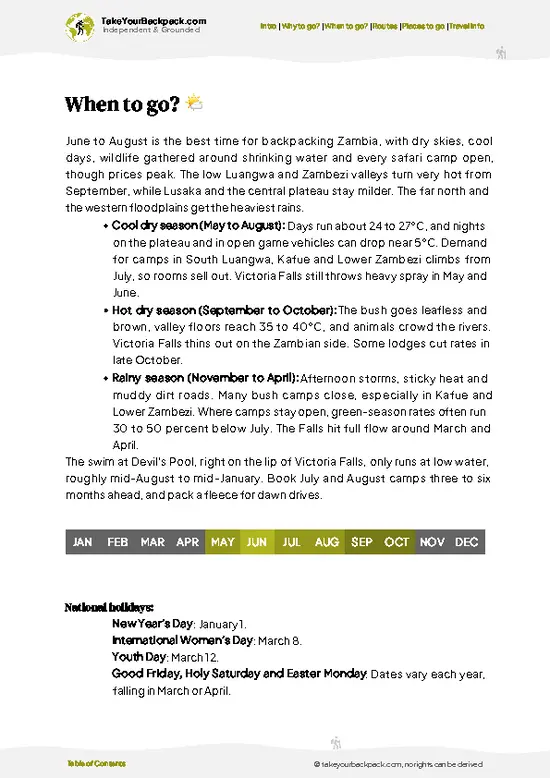
  • Topic: Weather – Kuomboka happens at the tail end of the rainy season, usually in late March or early April. Expect humid air and occasional downpours, but the landscape is lush and alive. Avoid the heavy rains of January and February that can bog down travel and dampen spirits.

  • Topic: Temperature – Daytime highs hover around 28-32°C (82-90°F), cooling to a comfortable 18-22°C (64-72°F) at night. Dress in layers to handle the warm days and cooler evenings without wasting energy on overheating or shivering.

  • Topic: Daylight Hours – Zambia sits near the equator, so daylight stays steady at about 12 hours. This means you can plan your festival activities without worrying about early sunsets cutting your exploration short.

  • Topic: Crowds – The festival draws a solid crowd, but arriving
read more 👉

  • Topic: Weather – Kuomboka happens at the tail end of the rainy season, usually in late March or early April. Expect humid air and occasional downpours, but the landscape is lush and alive. Avoid the heavy rains of January and February that can bog down travel and dampen spirits.

  • Topic: Temperature – Daytime highs hover around 28-32°C (82-90°F), cooling to a comfortable 18-22°C (64-72°F) at night. Dress in layers to handle the warm days and cooler evenings without wasting energy on overheating or shivering.

  • Topic: Daylight Hours – Zambia sits near the equator, so daylight stays steady at about 12 hours. This means you can plan your festival activities without worrying about early sunsets cutting your exploration short.

  • Topic: Crowds – The festival draws a solid crowd, but arriving early or late in the season can help you dodge the thickest tourist crush. Peak days around the main Kuomboka ceremony are packed, so book accommodations well in advance to avoid last-minute price hikes.

  • Topic: Seasonal Activities – Post-rainy season means the Zambezi River swells, powering the dramatic boat procession central to Kuomboka. This is prime time for wildlife spotting and river-based adventures, so syncing your visit with the festival maximizes your outdoor action.

  • Topic: Price Fluctuations – Expect a spike in local prices during Kuomboka, especially for lodging and transport. Lock in deals early and consider staying in nearby towns to stretch your budget without missing the festival’s pulse.


Pro-tip: Time your visit just as the rains ease and the festival kicks off—this balance keeps the crowds manageable, the weather workable, and the experience charged with authentic energy.


source: climatestotravel.comJANJanuary: not recommended for travelingFEBFebruary: not recommended for travelingMARMarch: highly recommended for travelingAPRApril: highly recommended for travelingMAYMay: not recommended for travelingJUNJune: not recommended for travelingJULJuly: not recommended for travelingAUGAugust: not recommended for travelingSEPSeptember: not recommended for travelingOCTOctober: not recommended for travelingNOVNovember: not recommended for travelingDECDecember: not recommended for traveling

✈️ The backpacker research shortcutZambia Travel Guide

An offline-friendly backpacking guide with optimized travel routes, ranked highlights, transport advice, and the best areas to stay.
example page 0 from our offline Travel Guide for Zambia
example page 1 from our offline Travel Guide for Zambia
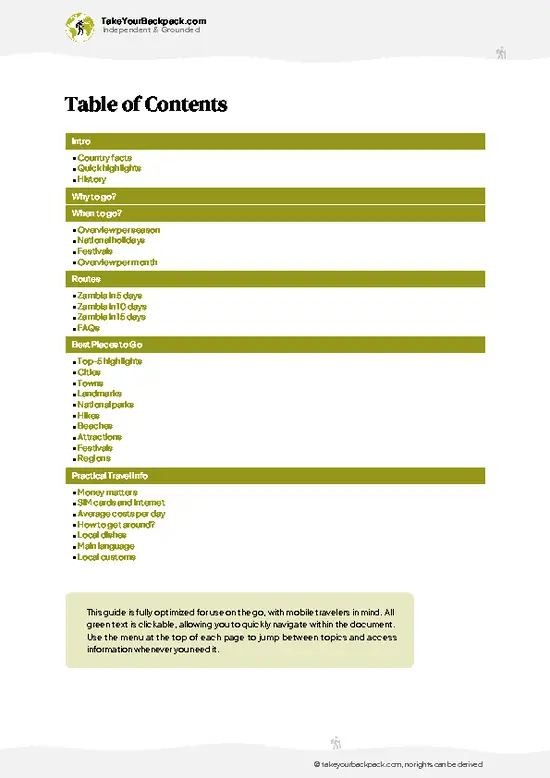
example page 2 from our offline Travel Guide for Zambia
example page 3 from our offline Travel Guide for Zambia
example page 4 from our offline Travel Guide for Zambia
example page 5 from our offline Travel Guide for Zambia
example page 6 from our offline Travel Guide for Zambia
example page 7 from our offline Travel Guide for Zambia
The digital guide (357 pages) contains:
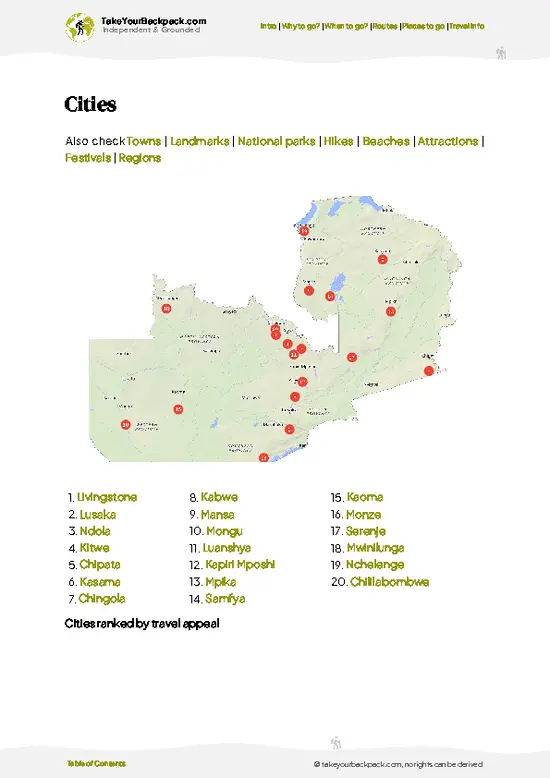
91 highlights, ranked by travel appeal
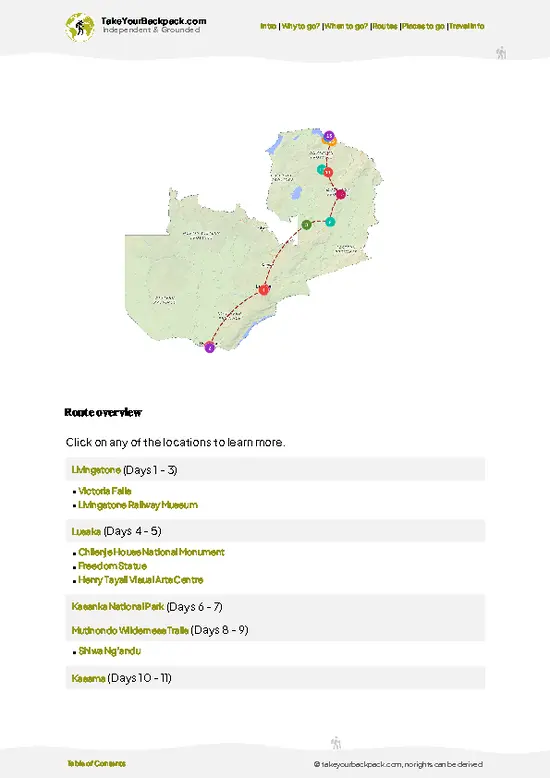
Optimized 5, 10 & 15-day travel routes
Cities, national parks, landmarks, beaches
How to get around
Offline-friendly for travel without Wi-Fi
👉 Click to see all 30+ guide features

📅 Plan smarter in minutes, not weeks
Month by month travel advice
Festivals & national holidays
Budget expectations

🗺️ Go to the right places, skip the overrated ones
Honest pros & cons of destinations
Top hikes, parks & viewpoints
Lesser-known places most travelers miss
Clear “worth it vs skip it” guidance

🛏️ Travel smoothly without rookie mistakes
Best areas to stay
Transport systems explained simply
Common scams & safety advice
SIM cards, money & practical tips

🌍 Understand the country, not just visit it
Culture & traditions
52 Essential phrases & customs
Festivals worth planning around
Traveler-friendly historical context
Insights that make places more meaningful

📱 Built for real travel conditions
Fully downloadable PDF
Works completely offline
Optimized for phone use
Useful in remote areas & buses
Everything in one place
Save weeks of stressful planning
Get instant access to your full guide. 30‑day money-back guarantee.


By proceeding you agree to our terms.
Sent to your inbox immediately after payment • 100% Secure Checkout
Best Backpacking Travel Advisor 2025 tourism awardBest Backpacking
Travel Advisor
2025
What others say about Take Your Backpack Guides:
⭐⭐⭐⭐⭐
Fantastic, amazing amount of information!
⭐⭐⭐⭐⭐
My goodness this is amazing, it's what I've been looking for hats off too you!
⭐⭐⭐⭐⭐
I think this is absolutely BRILLIANT
⭐⭐⭐⭐
Very complete and informative. It's still missing places, but I gotta to commend you
⭐⭐⭐⭐⭐
This is truly amazing, thank you, can't wait to explore it with my kids!
⭐⭐⭐⭐⭐
Awesome resource, thank you!
⭐⭐⭐⭐⭐
This is amazing! Can't wait to explore the ones I haven't seen
⭐⭐⭐⭐
I love this! Well done, great idea.
⭐⭐⭐⭐⭐
Thanks for taking the time to make this gem!
⭐⭐⭐⭐⭐
This might be the best website I've ever seen.
⭐⭐⭐⭐⭐
Congratulations, and thank you so much for your work; it's incredibly valuable.
⭐⭐⭐⭐
In all seriousness I think you did a great job pointing out the important spots
⭐⭐⭐⭐⭐
10/10 very good
⭐⭐⭐⭐⭐
As someone who's only just starting to visit regularly this is awesome, thank you.
⭐⭐⭐⭐
Thank you very much! I'm going to visit my dad, it's going to be very useful!
⭐⭐⭐⭐⭐
This is really cool! We'll be travelling for the first time and this definitely come in handy.
⭐⭐⭐⭐⭐
You are now our minister of culture, congratulations 👨‍💼
⭐⭐⭐⭐⭐
Just wanted to tell you that this is a pearl! Going to follow your recommendations.
⭐⭐⭐⭐⭐
This is so cool. I'll definitely be using the resource for my travels soon.
⭐⭐⭐⭐⭐
This is very impressive! Good work.
⭐⭐⭐⭐⭐
This is an amazing and informative site. Very well done!

🛏️ Where to stay?Best areas and accommodation options

When you’re gearing up for the Kuomboka Festival in Zambia, the right base can make all the difference. Head to Livingstone, a lively hub that’s not just about the falls. This town buzzes with backpackers, offering a mix of social vibes and safety. You’ll find plenty of budget-friendly spots where you can swap stories over a cold drink or plan your next adventure.

Another solid choice is the area around the Zambezi River. The views are killer, and the atmosphere is laid-back. You can meet fellow travelers while soaking in the river’s energy. Plus, you’re just a stone’s throw from the festival … read more 👉
When you’re gearing up for the Kuomboka Festival in Zambia, the right base can make all the difference. Head to Livingstone, a lively hub that’s not just about the falls. This town buzzes with backpackers, offering a mix of social vibes and safety. You’ll find plenty of budget-friendly spots where you can swap stories over a cold drink or plan your next adventure.

Another solid choice is the area around the Zambezi River. The views are killer, and the atmosphere is laid-back. You can meet fellow travelers while soaking in the river’s energy. Plus, you’re just a stone’s throw from the festival action.

Don’t overlook the outskirts of Mongu, either. It’s less touristy, giving you a more authentic feel of local life. Here, you can connect with the culture and traditions that make Kuomboka special. Just keep your wits about you; stick to well-lit areas at night and travel in groups when possible.

Choosing the right area to stay isn’t just about a roof over your head; it’s about setting the stage for unforgettable experiences. Prioritize safety and social opportunities, and you’ll preserve your energy and budget for the moments that truly matter.

👛 Costs (as of 1 July 2026)Typical daily expenses

The Kuomboka Festival in Zambia is a vibrant celebration, but navigating the costs can be tricky. Here’s how to budget wisely for this cultural experience.
  • Festival Tickets: Expect to pay around $10 to $20 for entry. Prices can vary based on seating and access to special areas. Buy tickets in advance to avoid last-minute price hikes.
  • Accommodation: Options range from budget hostels at $10 to $30 per night to mid-range hotels costing $50 to $100. Book early, especially during the festival, as places fill up fast.
  • Local Transport: Public transport is affordable. Minibus fares typically range from $1 to $5. If you prefer taxis, budget around $10 to $20 for short trips. Consider walking to soak in the atmosphere.
  • Food & Drinks: Street food is a steal, with meals costing $2 to $5. Restaurants will
read more 👉
The Kuomboka Festival in Zambia is a vibrant celebration, but navigating the costs can be tricky. Here’s how to budget wisely for this cultural experience.
  • Festival Tickets: Expect to pay around $10 to $20 for entry. Prices can vary based on seating and access to special areas. Buy tickets in advance to avoid last-minute price hikes.
  • Accommodation: Options range from budget hostels at $10 to $30 per night to mid-range hotels costing $50 to $100. Book early, especially during the festival, as places fill up fast.
  • Local Transport: Public transport is affordable. Minibus fares typically range from $1 to $5. If you prefer taxis, budget around $10 to $20 for short trips. Consider walking to soak in the atmosphere.
  • Food & Drinks: Street food is a steal, with meals costing $2 to $5. Restaurants will set you back $10 to $20 for a decent meal. Don’t miss local specialties, but keep an eye on hygiene.
  • Miscellaneous Expenses: Set aside $20 to $50 for souvenirs, tips, and unexpected costs. It’s easy to get caught up in the moment, so having a buffer helps.

Plan ahead, and you’ll keep your energy and budget intact for the festival’s highlights.


source: zambiatourism.com
⚠️ Prices can change and everyone travels differently, so take this as a rough guide. Hope it helps you plan your adventure!

🍲 FoodLocal Flavors for Backpackers

At the Kuomboka Festival in Zambia, food and drink are as vibrant as the celebrations themselves. You’ll find local specialties like nsima, a staple maize porridge, served with rich, flavorful relishes. Don’t miss out on fresh fish from the Zambezi River, grilled to perfection and bursting with flavor. Street stalls are everywhere, each offering a unique twist on traditional dishes.

For drinks, maheu, a fermented maize drink, is a must-try. It’s refreshing and slightly tangy, perfect for the warm festival days. If you’re feeling adventurous, grab a bottle of Chibuku, a local sorghum beer that’s as much about the experience as the taste.

Etiquette is key here. Be prepared to share your food; it’s a sign of camaraderie. Lines can get long, so patience is essential. Bring cash; while some … read more 👉
At the Kuomboka Festival in Zambia, food and drink are as vibrant as the celebrations themselves. You’ll find local specialties like nsima, a staple maize porridge, served with rich, flavorful relishes. Don’t miss out on fresh fish from the Zambezi River, grilled to perfection and bursting with flavor. Street stalls are everywhere, each offering a unique twist on traditional dishes.

For drinks, maheu, a fermented maize drink, is a must-try. It’s refreshing and slightly tangy, perfect for the warm festival days. If you’re feeling adventurous, grab a bottle of Chibuku, a local sorghum beer that’s as much about the experience as the taste.

Etiquette is key here. Be prepared to share your food; it’s a sign of camaraderie. Lines can get long, so patience is essential. Bring cash; while some vendors may accept cards, many prefer the simplicity of cash transactions. Serving sizes can vary, so don’t hesitate to ask for a taste before committing to a full portion.

Dive into the atmosphere, savor the flavors, and let the festival spirit fuel your adventure!

Other Zambian festivals near Kuomboka

Explore more nearby:

  • Likumbi Lya Mize—Makishi masquerade, Luvale initiation, wood carvings, masked dances| 147 km away
  • Lwiindi Gonde Ceremony—rain prayers, sacred hill, Tonga community, ancestral rituals| 453 km away
  • N’cwala—Ngoni harvest, chief’s tasting, warrior dances, maize rituals| 860 km away

💡 Not sure where to go next?
Create a personalized itinerary for Zambia including Kuomboka and the places that fit your trip.

Generate my itinerary

👉 Discover all festivals

Or checkout all Zambia has to offer (think cities, towns, villages, national parks, hikes, beaches, festivals)
Country photo of Zambia

We 💚 feedbackSumming up the experience

Kuomboka is a whirlwind of energy. The rhythmic beat of drums pulls you in, and the vibrant colors of the ceremony ignite your senses. But here’s the kicker: don’t underestimate the heat. Bring plenty of water and a hat; you’ll need it. The best surprise? The genuine warmth of the locals. They’ll share stories that make the experience feel personal. Embrace the chaos, and let it fuel your adventure. This isn’t just a festival; it’s a celebration of life.

✍️ Help improve this page!
The information on this page is based on in-depth research, insights shared by experienced travelers, and feedback from the local travel community in Zambia. While every effort is made to keep the information accurate and current, conditions can change — so if you spot anything incorrect or outdated, please get in touch.


🙋‍♂️ Give feedback

👋 Meet the founderWho’s Behind Take Your Backpack?

Johan, backpacker and founder of TakeYourBackpackHi, I’m Johan (Netherlands 🇳🇱), the creator of TakeYourBackpack. Over the past decade, I’ve backpacked through 80+ countries across six continents, gaining extensive experience with independent travel, long-term trips, and overland routes.

This site is built on a combination of firsthand travel experience and carefully curated insights from other backpackers. Many guides are based on places I’ve personally visited, while others bring together tips, observations, and practical advice shared by trusted travelers I’ve met along the way.

The goal is to provide realistic, experience-driven guidance — not generic itineraries — so you can explore destinations with better context, clearer expectations, and more confidence.

Get full Zambia guide •
Instant download • 91 highlights • Full Offline guide