×

Zambia🇿🇲 | beachesNdole Bay BeachCichlid snorkeling, freshwater diving, lakeside camping, kapenta lights | things to do and best time to go

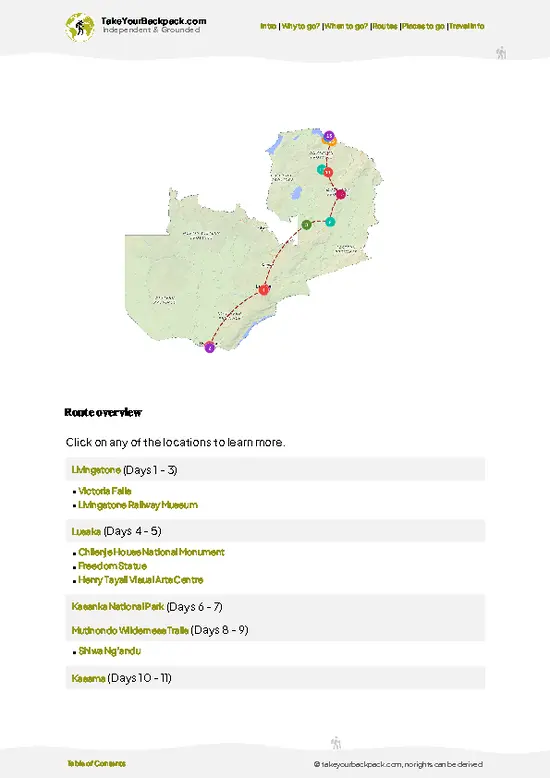
Explore Freedom StatueExplore Chipata

Backpacking in Ndole Bay Beach
🏆 Top pickbeach ranked #1
By Johan Kruseman 🇳🇱 | Updated October 22, 2026

Lake Tanganyika holds hundreds of cichlid species, and most of them live nowhere else on Earth, so the fish you can snorkel past at Ndole Bay Beach are a rarity. The beach sits on the Zambian shore of the lake, in the far north of Zambia, near the port town of Mpulungu. Dive in. The water is clear, freshwater, and calm enough for easy swimming, with no surf to speak of. Snorkeling and diving are the main draws, and they beat the sand itself, which is a modest, pebbly strip that you visit for the water, not for sunbathing. Crowds are rare, so you often get the bay almost alone, and the setting of lake, hills and fishing canoes is lovely. The vibe is quiet and sociable, built around a lakeside lodge and campsite. Food and beds are simple and affordable, but choices are few. Getting here takes effort on long northern roads, so bring cash and supplies before you arrive.

Discover everything you want to know in the 📖 Zambia Travel Guide.


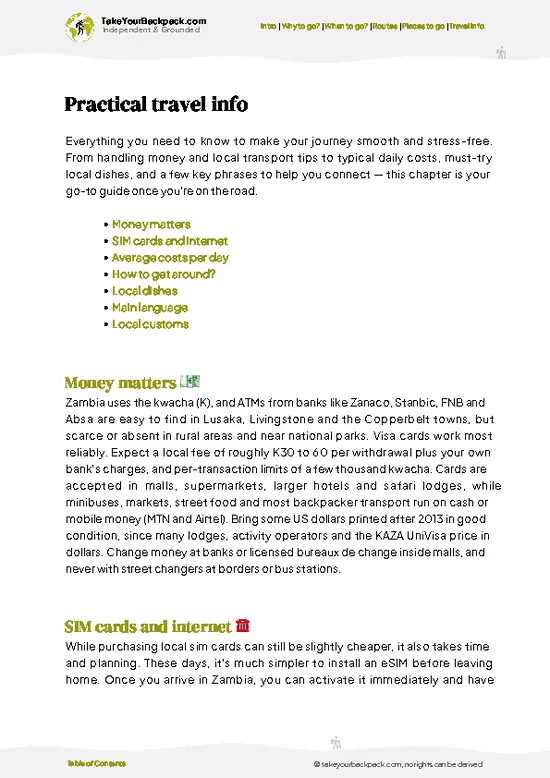
example page 0 from our offline Travel Guide for Zambia
example page 1 from our offline Travel Guide for Zambia
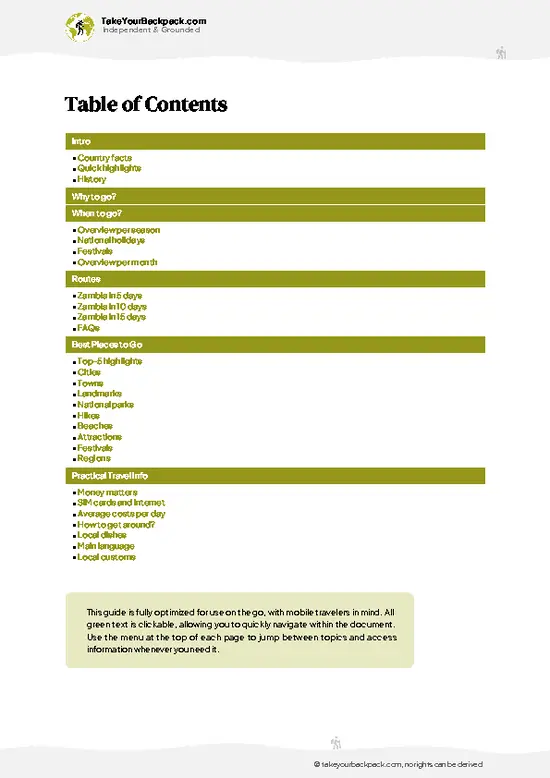
example page 2 from our offline Travel Guide for Zambia
example page 3 from our offline Travel Guide for Zambia
example page 4 from our offline Travel Guide for Zambia
example page 5 from our offline Travel Guide for Zambia
example page 6 from our offline Travel Guide for Zambia
example page 7 from our offline Travel Guide for Zambia
Loading the map 🌍
CLICK TO FILTER
cities
towns
landmarks
national parks
hikes
beaches
attractions
festivals
regions
SHOW COUNTRY’S BESTSHOW ALL

✨ Why go?
Ranked #1 beach in Zambia
Why visitors keep coming back

Ndole Bay Beach earns a stop because it turns a long push to the far north of Zambia into a few days of proper rest. Most backpackers who make it this far are heading to or from the Mpulungu lake port, and this bay gives you somewhere calmer than the town to recover, wash off road dust and sort your next move.
The real pull is the water. Lake Tanganyika’s endemic cichlids mean you can snorkel straight off the shore and see bright, territorial fish going about their business, which feels closer to a reef than a lake. Divers get a rare freshwater option, with courses and guided dives available through the lodge.
The social side is small but warm. With a lakeside campsite and a lodge deck, you end up talking to the few overlanders, volunteers and fellow backpackers passing through, and swapping … read more 👉
Ndole Bay Beach earns a stop because it turns a long push to the far north of Zambia into a few days of proper rest. Most backpackers who make it this far are heading to or from the Mpulungu lake port, and this bay gives you somewhere calmer than the town to recover, wash off road dust and sort your next move.
The real pull is the water. Lake Tanganyika’s endemic cichlids mean you can snorkel straight off the shore and see bright, territorial fish going about their business, which feels closer to a reef than a lake. Divers get a rare freshwater option, with courses and guided dives available through the lodge.
The social side is small but warm. With a lakeside campsite and a lodge deck, you end up talking to the few overlanders, volunteers and fellow backpackers passing through, and swapping notes on routes into Tanzania or back south. Nobody is in a hurry, and there is no party strip to compete with the lake. It is cheap to stay put, which makes a lazy extra day easy to justify.

💡 HighlightsDon't-miss highlights and experiences

  1. Snorkeling among Tanganyika cichlids: This is the reason to come. Wade in from the shore and you are quickly over rocks crowded with colorful cichlids, many of which exist only in this lake. Shell-dwelling species guard their homes in the sand, and the water is clear enough that you need no tour to enjoy it. Bring your own mask if you can.
  2. Freshwater diving: Diving in a lake this old and deep is an odd, memorable experience. The lodge runs dives and training, so beginners can try it and certified divers can explore rocky slopes full of fish life. Visibility is good, there are no tides, and the water is pleasantly warm.
  3. Kayaking and boat trips along the shore: Paddling the bay gives you a different angle on the coastline, with rocky points, small coves and fishing canoes drifting past. Boat trips
… read more 👉
  1. Snorkeling among Tanganyika cichlids: This is the reason to come. Wade in from the shore and you are quickly over rocks crowded with colorful cichlids, many of which exist only in this lake. Shell-dwelling species guard their homes in the sand, and the water is clear enough that you need no tour to enjoy it. Bring your own mask if you can.
  2. Freshwater diving: Diving in a lake this old and deep is an odd, memorable experience. The lodge runs dives and training, so beginners can try it and certified divers can explore rocky slopes full of fish life. Visibility is good, there are no tides, and the water is pleasantly warm.
  3. Kayaking and boat trips along the shore: Paddling the bay gives you a different angle on the coastline, with rocky points, small coves and fishing canoes drifting past. Boat trips stretch further along the lake, and they are a good way to see the shoreline villages from the water. Early morning is calmest.
  4. Watching the kapenta fishing lights: After dark, fishermen set out on the lake with bright lamps to draw in the small kapenta fish. From the shore, the scattered lights float across the black water like a second sky of low stars. It is a quiet evening ritual, best enjoyed with a cold drink and a camp chair.
  5. Lakeside camping and sunset deck time: Pitching a tent just above the water is how many travelers experience Ndole Bay Beach. Evenings revolve around the lodge deck, where the sky turns orange over the lake and conversation with other travelers comes easily. It is simple, unhurried and very sociable.
Swimming and watching the fishing lights at Ndole Bay Beach cost nothing, so those two are the cheapest ways to spend your time.
Spotted a mistake or missing something? Contact us.

🌤️ When to go?Choosing the right time of year

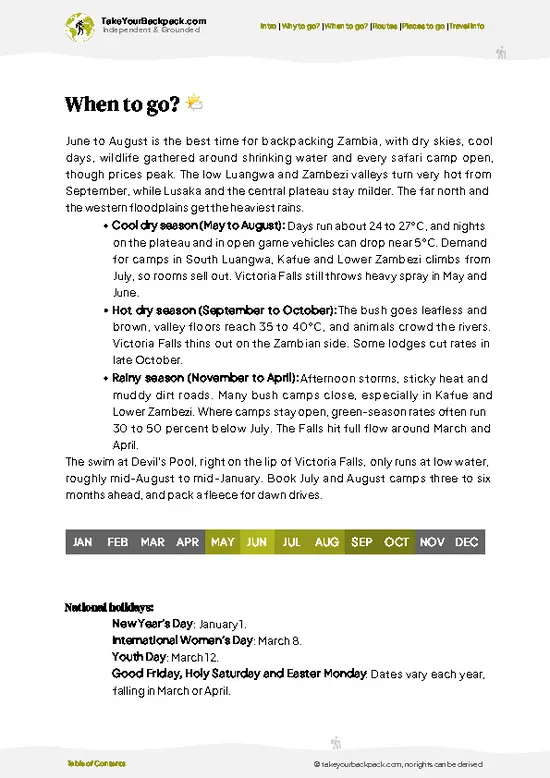
  • Dry Season (May to September): Lake Tanganyika is calmest from May to August, with sunny days of 26 to 29°C (79 to 84°F) and cooler nights of 16 to 19°C (61 to 66°F). Visibility for snorkeling is at its best, and you can count on rain-free beach days. Lodging prices hold steady, and crowds stay thin.
  • Hot Season (October to November): Heat builds to 31 to 34°C (88 to 93°F) and the air gets sticky before the first rains. Water is warm and clear enough for swimming, and the beach is quiet. Some budget lodges drop prices a little.
  • Rainy Season (December to April): Afternoon thunderstorms are common, highs sit at 27 to 30°C (81 to 86°F), and humidity is heavy. Dirt roads to the shoreline turn slick, and the lake can get choppy and murky near river mouths. Mosquitoes multiply. Daylight stays close
… read more 👉
  • Dry Season (May to September): Lake Tanganyika is calmest from May to August, with sunny days of 26 to 29°C (79 to 84°F) and cooler nights of 16 to 19°C (61 to 66°F). Visibility for snorkeling is at its best, and you can count on rain-free beach days. Lodging prices hold steady, and crowds stay thin.
  • Hot Season (October to November): Heat builds to 31 to 34°C (88 to 93°F) and the air gets sticky before the first rains. Water is warm and clear enough for swimming, and the beach is quiet. Some budget lodges drop prices a little.
  • Rainy Season (December to April): Afternoon thunderstorms are common, highs sit at 27 to 30°C (81 to 86°F), and humidity is heavy. Dirt roads to the shoreline turn slick, and the lake can get choppy and murky near river mouths. Mosquitoes multiply. Daylight stays close to 12 hours year-round, so you always have the same window for beach time.
  • Zambian Holidays: Easter and the August Unity weekend bring local families to the shore, and transport fills up.
Aim for June or July and book transport a day ahead on holiday weekends.


source: climatestotravel.comJANJanuary: fair for travelingFEBFebruary: fair for travelingMARMarch: fair for travelingAPRApril: fair for travelingMAYMay: highly recommended for travelingJUNJune: highly recommended for travelingJULJuly: good for travelingAUGAugust: good for travelingSEPSeptember: highly recommended for travelingOCTOctober: highly recommended for travelingNOVNovember: fair for travelingDECDecember: fair for traveling
when-to-go

✈️ The backpacker research shortcutZambia Travel Guide

An offline-friendly backpacking guide with optimized travel routes, ranked highlights, transport advice, and the best areas to stay.
example page 0 from our offline Travel Guide for Zambia
example page 1 from our offline Travel Guide for Zambia
example page 2 from our offline Travel Guide for Zambia
example page 3 from our offline Travel Guide for Zambia
example page 4 from our offline Travel Guide for Zambia
example page 5 from our offline Travel Guide for Zambia
example page 6 from our offline Travel Guide for Zambia
example page 7 from our offline Travel Guide for Zambia
The digital guide (351 pages) contains:
✅ 89 highlights, ranked by travel appeal
✅ Optimized 5, 10 & 15-day travel routes
✅ Cities, national parks, landmarks, beaches
✅ How to get around
✅ Offline-friendly for travel without Wi-Fi
👉 Click to see all 30+ guide features

📅 Plan smarter in minutes, not weeks
✅ Month by month travel advice
✅ Festivals & national holidays
✅ Budget expectations

🗺️ Go to the right places, skip the overrated ones
✅ Honest pros & cons of destinations
✅ Top hikes, parks & viewpoints
✅ Lesser-known places most travelers miss
✅ Clear “worth it vs skip it” guidance

🛏️ Travel smoothly without rookie mistakes
✅ Best areas to stay
✅ Transport systems explained simply
✅ Common scams & safety advice
✅ SIM cards, money & practical tips

🌍 Understand the country, not just visit it
✅ Culture & traditions
✅ 52 Essential phrases & customs
✅ Festivals worth planning around
✅ Traveler-friendly historical context
✅ Insights that make places more meaningful

📱 Built for real travel conditions
✅ Fully downloadable PDF
✅ Works completely offline
✅ Optimized for phone use
✅ Useful in remote areas & buses
✅ Everything in one place
Stop searching, start planning
Get instant access to your full guide. 30‑day money-back guarantee.
+ Add another guide for just

By proceeding you agree to our terms.
Sent to your inbox immediately after payment • 100% Secure Checkout
Best Backpacking Travel Advisor 2025 tourism awardBest Backpacking
Travel Advisor
2025
What others say about Take Your Backpack Guides:
⭐⭐⭐⭐⭐
Fantastic, amazing amount of information!
⭐⭐⭐⭐⭐
My goodness this is amazing, it's what I've been looking for hats off too you!
⭐⭐⭐⭐⭐
I think this is absolutely BRILLIANT
⭐⭐⭐⭐
Very complete and informative. It's still missing places, but I gotta to commend you
⭐⭐⭐⭐⭐
This is truly amazing, thank you, can't wait to explore it with my kids!
⭐⭐⭐⭐⭐
Awesome resource, thank you!
⭐⭐⭐⭐⭐
This is amazing! Can't wait to explore the ones I haven't seen
⭐⭐⭐⭐
I love this! Well done, great idea.
⭐⭐⭐⭐⭐
Thanks for taking the time to make this gem!
⭐⭐⭐⭐⭐
This might be the best website I've ever seen.
⭐⭐⭐⭐⭐
Congratulations, and thank you so much for your work; it's incredibly valuable.
⭐⭐⭐⭐
In all seriousness I think you did a great job pointing out the important spots
⭐⭐⭐⭐⭐
10/10 very good
⭐⭐⭐⭐⭐
As someone who's only just starting to visit regularly this is awesome, thank you.
⭐⭐⭐⭐
Thank you very much! I'm going to visit my dad, it's going to be very useful!
⭐⭐⭐⭐⭐
This is really cool! We'll be travelling for the first time and this definitely come in handy.
⭐⭐⭐⭐⭐
You are now our minister of culture, congratulations 👨‍💼
⭐⭐⭐⭐⭐
Just wanted to tell you that this is a pearl! Going to follow your recommendations.
⭐⭐⭐⭐⭐
This is so cool. I'll definitely be using the resource for my travels soon.
⭐⭐⭐⭐⭐
This is very impressive! Good work.
⭐⭐⭐⭐⭐
This is an amazing and informative site. Very well done!

🛏️ Where to stay?Choosing the right base

The best base for backpackers is Mpulungu, the lake port roughly 10 to 20 minutes by road or boat from the bay, where most budget beds and onward transport are found. Expect dorms or simple rooms for about US$8 to 20 a night, plus a few campsites for US$5 to 10 a person if you carry a tent. Mpulungu works because you can buy food, change money, and find boat captains in the market area, and because other travelers pass through on the way to the Kalambo Falls and the lake lodges. It is the social option, with evenings spent around the harbor bars and shared lodge kitchens.

For a quieter stay, … read more 👉
The best base for backpackers is Mpulungu, the lake port roughly 10 to 20 minutes by road or boat from the bay, where most budget beds and onward transport are found. Expect dorms or simple rooms for about US$8 to 20 a night, plus a few campsites for US$5 to 10 a person if you carry a tent. Mpulungu works because you can buy food, change money, and find boat captains in the market area, and because other travelers pass through on the way to the Kalambo Falls and the lake lodges. It is the social option, with evenings spent around the harbor bars and shared lodge kitchens.

For a quieter stay, look at the lodges and campsites strung along the shore west of the port. These have beach frontage, a lake breeze, and sunsets over the water, and it is easy to find other overlanders to share a braai or a boat trip with. The trade-off is that you must bring supplies from town and arrange your own transport for each trip. Staying right on the sand suits people with their own gear and time to spare. If you are moving fast, stay in Mpulungu and visit the bay by day.

🛡️ SafetyTraveler Safety Guide

Ndole Bay is a calm, sheltered stretch of Lake Tanganyika, and swimming is easy because there are no ocean-style rips, tides, or surf. The shore shelves gradually in places, but it drops off quickly near rocks, so test the depth before you dive. The bigger concerns are on land. Crocodiles and hippos live in parts of the lake and rivers feeding it, so swim only where villagers and lodge staff do, and skip dawn, dusk, and reedy river mouths. Bilharzia is a known risk in reedy shallows of African lakes, so choose open, clean sand. The sun is intense at this elevation near the equator, so cover up between late morning and mid-afternoon, and drink more water than seems necessary. Storms build quickly in the rainy season, so leave the water at the first thunder. Petty theft is uncommon but happens, … read more 👉
Ndole Bay is a calm, sheltered stretch of Lake Tanganyika, and swimming is easy because there are no ocean-style rips, tides, or surf. The shore shelves gradually in places, but it drops off quickly near rocks, so test the depth before you dive. The bigger concerns are on land. Crocodiles and hippos live in parts of the lake and rivers feeding it, so swim only where villagers and lodge staff do, and skip dawn, dusk, and reedy river mouths. Bilharzia is a known risk in reedy shallows of African lakes, so choose open, clean sand. The sun is intense at this elevation near the equator, so cover up between late morning and mid-afternoon, and drink more water than seems necessary. Storms build quickly in the rainy season, so leave the water at the first thunder. Petty theft is uncommon but happens, so keep phones and cash in a dry bag or leave them at your lodge.

FAQTraveler FAQ

Ndole Bay Beach lies on the Lake Tanganyika shore near Mpulungu, in Zambia’s far north, about 1,100 km from Lusaka by road. The usual route is a long bus from Lusaka to Kasama (around 12 to 14 hours, US$25 to 35), then another bus to Mpulungu (about 3 to 4 hours, US$8 to 12). From Mpulungu, a local taxi or a boat transfer covers the last stretch for roughly US$5 to 20, depending on the vehicle.
Swimming is the main draw at Ndole Bay Beach, with calm, warm freshwater at around 25 to 28°C (77 to 82°F) and no tidal surf. Snorkeling is good over rocky patches where colorful cichlids, found nowhere else, dart between the stones, and visibility is best from May to September. Surfing is not possible because there are no ocean waves, though kayaking and boat trips are easier. Avoid reedy shallows, where crocodiles and bilharzia are concerns.
Ndole Bay Beach is generally free to walk onto, since most of the shoreline is open public access. If the sand fronts a lodge or campsite, you may be asked for a small day fee of about US$2 to 5 or to buy a drink. Camping typically costs US$5 to 10 a person, and boat trips from the bay run about US$20 to 60 depending on distance and group size.
⚠️ Things can change over time, so always validate details locally before you go.

Where to go next

Ndole Bay Beach isn’t the only highlight in Zambia. Explore all what Zambia has to offer.
Country photo of Zambia

We 💚 feedbackWhat to keep in mind

Ndole Bay Beach works best as a slow stop after the long haul north, paired with a night or two in Mpulungu for supplies and onward plans toward Tanzania by lake or road. I would bring a mask and snorkel, pack enough cash and snacks, and give the bay at least two nights, because one day is gone before the fish even start to feel familiar.

✍️ Help improve this page!
The information on this page is based on in-depth research, insights shared by experienced travelers, and feedback from the local travel community in Zambia. While every effort is made to keep the information accurate and current, conditions can change — so if you spot anything incorrect or outdated, please get in touch.


🙋‍♂️ Give feedback

👋 Meet the founderWho’s Behind Take Your Backpack?

Johan, backpacker and founder of TakeYourBackpackHi, I’m Johan (Netherlands 🇳🇱), the creator of TakeYourBackpack. Over the past 3 decades, I’ve backpacked through 90+ countries across six continents, gaining extensive experience with independent travel, long-term trips, and overland routes.

This site is built on a combination of firsthand travel experience and carefully curated insights from other backpackers. Many guides are based on places I’ve personally visited, while others bring together tips, observations, and practical advice shared by trusted travelers I’ve met along the way.

The goal is to provide realistic, experience-driven guidance — not generic itineraries — so you can explore destinations with better context, clearer expectations, and more confidence.