×

Zambia🇿🇲 | citiesChipataGateway to Malawi, bustling markets, Ngoni heritage | things to do and best time to go

Explore Ndole Bay BeachExplore Kabwe

Backpacking in Chipata
🌟 Highlightcity ranked #5
By Johan Kruseman 🇳🇱 | Updated July 30, 2026

You land in Chipata and face the classic backpacker’s fork: do you rush straight to Malawi, or linger and let Chipata reveal its quirks? This isn’t a throwaway decision. Chipata sits in Zambia’s far east, a border town with one foot in Zambian rhythms and the other tapping to Malawian beats. For backpackers, Chipata is a crossroads—literally and figuratively. The city’s main drag is lined with Indian-owned shops, colonial-era buildings, and a market that’s more chaos than charm, but always alive. The pros: it’s cheap, safe by Zambian standards, and you’ll find a few other travelers swapping tips at the bus station or over a cold Mosi. The cons: nightlife is sparse, museums are forgettable, and the city’s energy is more functional than festive. Compared to Lusaka or Livingstone, Chipata is less polished, but it’s real—gritty, friendly, and refreshingly unpretentious.

Discover everything you want to know in the 📖 Zambia Travel Guide.


Get your Zambia guide
91 ranked highlights, routes & tips, works offline (357 pages)
Loading the map 🌍
CLICK TO FILTER
cities
towns
landmarks
national parks
hikes
beaches
attractions
festivals
SHOW COUNTRY’S BESTSHOW ALL

✨ Why go?
Ranked #5 city in Zambia
What sets this place apart

Chipata is a strategic stop for backpackers weaving through Zambia. It’s not just a place to pass through; it’s a basecamp for day trips to nearby highlights, making it a smart choice for those looking to maximize their time. The hostels here are budget-friendly and often buzzing with fellow travelers, creating a sense of community that’s hard to beat.

You’ll find affordable food options that range from local street eats to cozy cafes, ensuring you won’t break the bank while savoring the local flavors. The city is walkable, allowing you to explore its vibrant streets without the hassle of transport.

When the sun sets, the nightlife offers a laid-back vibe, perfect for unwinding after a day of adventure. Plus, Chipata’s easy onward travel options make it a breeze to continue your journey. … read more 👉
Chipata is a strategic stop for backpackers weaving through Zambia. It’s not just a place to pass through; it’s a basecamp for day trips to nearby highlights, making it a smart choice for those looking to maximize their time. The hostels here are budget-friendly and often buzzing with fellow travelers, creating a sense of community that’s hard to beat.

You’ll find affordable food options that range from local street eats to cozy cafes, ensuring you won’t break the bank while savoring the local flavors. The city is walkable, allowing you to explore its vibrant streets without the hassle of transport.

When the sun sets, the nightlife offers a laid-back vibe, perfect for unwinding after a day of adventure. Plus, Chipata’s easy onward travel options make it a breeze to continue your journey. If you’re after a blend of comfort and adventure, Chipata fits the bill, but if you’re in a rush, it might just be a quick stop on your route.
Want to include Chipata in your Zambia route?
Create a personalized Zambia itinerary that includes Chipata and the places that fit your trip — based on your travel style, budget, and available time. Get your route in seconds.

Generate my trip

💡 HighlightsPlaces and moments you shouldn't skip

Quick question before I dive in: I don’t have live web access—do you want a best-effort list based on my knowledge (I’ll be careful but might miss tiny recent openings), or would you prefer I wait while you confirm I can look up current local sources?
Spotted a mistake or missing something? Contact us.

🏘️ NeighborhoodsUnderstanding the local layout

Chipata is a vibrant hub in Zambia, offering a mix of local culture and practical amenities for backpackers. Here’s how the neighborhoods stack up:

Central Chipata
This area is the heart of the city. It’s bustling with markets and local eateries, making it perfect for those wanting to dive into Zambian life. Costs are moderate, and you can easily walk to most attractions. Nightlife is low-key, with a few bars and restaurants. Ideal for short stays.

Chadiza Road
A bit quieter, this neighborhood offers a more relaxed vibe. It’s slightly more residential, with guesthouses that provide good value. Walkability is decent, but you might need to rely on taxis for longer distances. Great for longer stays if you prefer a slower pace.

Kasama Road
This area is a gateway to nearby attractions, … read more 👉
Chipata is a vibrant hub in Zambia, offering a mix of local culture and practical amenities for backpackers. Here’s how the neighborhoods stack up:

Central Chipata
This area is the heart of the city. It’s bustling with markets and local eateries, making it perfect for those wanting to dive into Zambian life. Costs are moderate, and you can easily walk to most attractions. Nightlife is low-key, with a few bars and restaurants. Ideal for short stays.

Chadiza Road
A bit quieter, this neighborhood offers a more relaxed vibe. It’s slightly more residential, with guesthouses that provide good value. Walkability is decent, but you might need to rely on taxis for longer distances. Great for longer stays if you prefer a slower pace.

Kasama Road
This area is a gateway to nearby attractions, making it a strategic base. It’s a bit pricier but offers better transport links for day trips. The vibe is a mix of local and tourist, with a few lively spots for nightlife. Suitable for both short and longer visits.

Chipata East
A more suburban feel, this neighborhood is less touristy. It’s affordable and offers a glimpse into everyday life. Walkability is limited, so be prepared to use public transport. Best for those looking to immerse themselves in local culture for an extended period.

⌛️ 1 dayA smart one-day plan

Chipata, Zambia, is a lively hub that blends local culture with a touch of history. It’s not just a stopover; it’s a place where you can feel the pulse of everyday life. The city is known for its vibrant markets and friendly locals, making it a perfect spot for an immersive day trip.

Start your morning at the bustling Chipata Central Market. The aroma of fresh produce and local dishes fills the air as you wander through stalls brimming with colorful fruits and vegetables. Grab a breakfast of “nshima” (a staple maize dish) paired with a side of “chikanda,” a delicious groundnut cake. This is a chance to engage with vendors and soak in the local vibe.

After fueling up, head to the nearby Chipata Museum. It’s often overlooked by tourists, but it offers a fascinating glimpse into the region’s … read more 👉
Chipata, Zambia, is a lively hub that blends local culture with a touch of history. It’s not just a stopover; it’s a place where you can feel the pulse of everyday life. The city is known for its vibrant markets and friendly locals, making it a perfect spot for an immersive day trip.

Start your morning at the bustling Chipata Central Market. The aroma of fresh produce and local dishes fills the air as you wander through stalls brimming with colorful fruits and vegetables. Grab a breakfast of “nshima” (a staple maize dish) paired with a side of “chikanda,” a delicious groundnut cake. This is a chance to engage with vendors and soak in the local vibe.

After fueling up, head to the nearby Chipata Museum. It’s often overlooked by tourists, but it offers a fascinating glimpse into the region’s history, showcasing artifacts and exhibits that tell the story of the Ngoni people. Spend an hour or so here; it’s a small but enriching experience.

In the afternoon, take a stroll through the serene surroundings of the nearby Luangwa River. If you’re feeling adventurous, consider a guided walk to spot local wildlife. This area is less frequented by tourists, giving you a more intimate connection with nature.

As evening approaches, return to the city center and explore the local eateries. Try a traditional Zambian dinner at a local restaurant, where you can enjoy dishes like grilled fish or chicken, accompanied by a refreshing “maheu,” a fermented maize drink.

Chipata may not be on everyone’s radar, but it’s a city that rewards those who take the time to explore its heart. You’ll leave with a deeper understanding of Zambian culture and a few new friends along the way.
Turn your Chipata visit into an Zambia adventure
Build a complete Zambia route with Chipata, hidden gems, must-see destinations, and realistic travel times included.

Generate my trip

🌤️ When to go?When to go for the best experience


  • Weather: The dry season from May to October is your best bet. Expect clear skies and minimal rain, which means trails stay firm and rivers don’t swell unexpectedly. The wet season (November to April) brings heavy rains that can turn paths into mudslides and disrupt travel plans.

  • Temperature: Daytime temps hover around 20-25°C (68-77°F) in the dry months, perfect for hiking without overheating. Nights can dip to 10°C (50°F), so pack a warm layer. The wet season heats up to 30°C (86°F) or more, with humidity that can sap your energy fast.

  • Daylight Hours: Daylight is fairly consistent year-round, roughly 11-12 hours daily. Longer daylight in the dry season means more time to explore without rushing, a subtle but crucial advantage for backpackers.

  • Crowds: Chipata isn’t a tourist hotspot,
read more 👉

  • Weather: The dry season from May to October is your best bet. Expect clear skies and minimal rain, which means trails stay firm and rivers don’t swell unexpectedly. The wet season (November to April) brings heavy rains that can turn paths into mudslides and disrupt travel plans.

  • Temperature: Daytime temps hover around 20-25°C (68-77°F) in the dry months, perfect for hiking without overheating. Nights can dip to 10°C (50°F), so pack a warm layer. The wet season heats up to 30°C (86°F) or more, with humidity that can sap your energy fast.

  • Daylight Hours: Daylight is fairly consistent year-round, roughly 11-12 hours daily. Longer daylight in the dry season means more time to explore without rushing, a subtle but crucial advantage for backpackers.

  • Crowds: Chipata isn’t a tourist hotspot, so crowds are light year-round. However, local festivals during the dry season can bring a lively buzz—great for cultural immersion but plan accordingly if you prefer solitude.

  • Seasonal Activities: Dry months open up wildlife viewing and trekking opportunities. The rainy season, while challenging for hiking, turns the landscape lush and vibrant, ideal for photographers who don’t mind the wet.

  • Price Fluctuations: Accommodation and transport costs dip slightly in the wet season due to lower demand, but factor in potential delays and extra gear costs. The dry season commands a premium but delivers reliability and comfort.


Pro-tip: Prioritize the dry season for a smooth, comfortable trip—your time and energy are worth more than the small savings you might snag in the wet months.


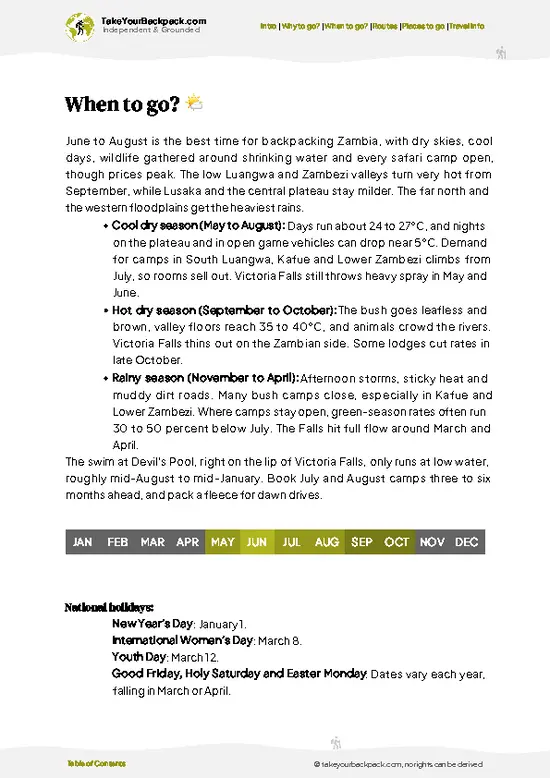
source: climatestotravel.comJANJanuary: fair for travelingFEBFebruary: fair for travelingMARMarch: fair for travelingAPRApril: fair for travelingMAYMay: excellent for travelingJUNJune: excellent for travelingJULJuly: excellent for travelingAUGAugust: excellent for travelingSEPSeptember: excellent for travelingOCTOctober: excellent for travelingNOVNovember: fair for travelingDECDecember: fair for traveling
when-to-go

✈️ The backpacker research shortcutZambia Travel Guide

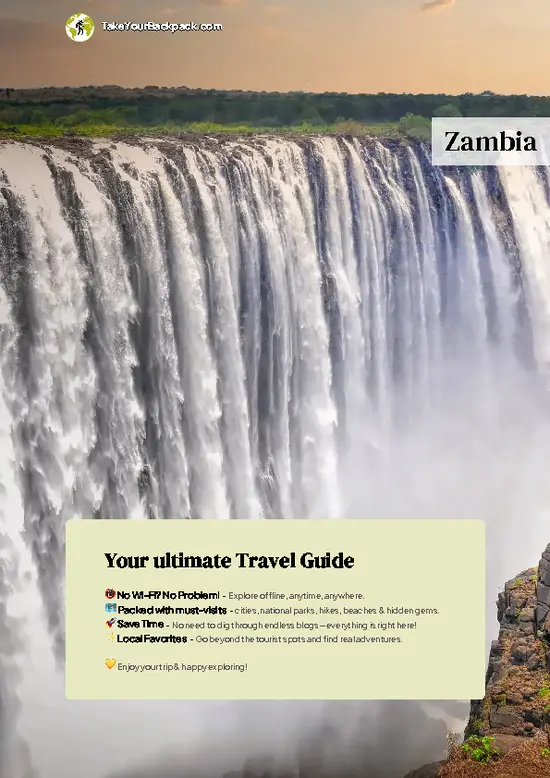
An offline-friendly backpacking guide with optimized travel routes, ranked highlights, transport advice, and the best areas to stay.
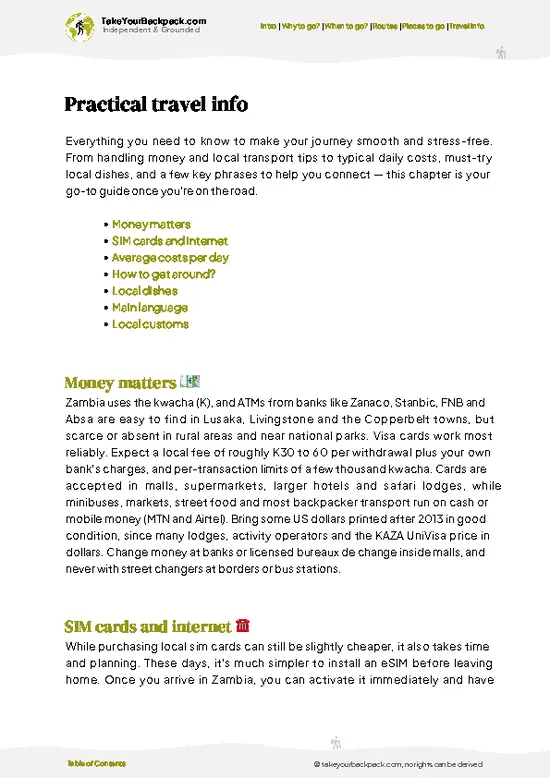
example page 0 from our offline Travel Guide for Zambia
example page 1 from our offline Travel Guide for Zambia
example page 2 from our offline Travel Guide for Zambia
example page 3 from our offline Travel Guide for Zambia
example page 4 from our offline Travel Guide for Zambia
example page 5 from our offline Travel Guide for Zambia
example page 6 from our offline Travel Guide for Zambia
example page 7 from our offline Travel Guide for Zambia
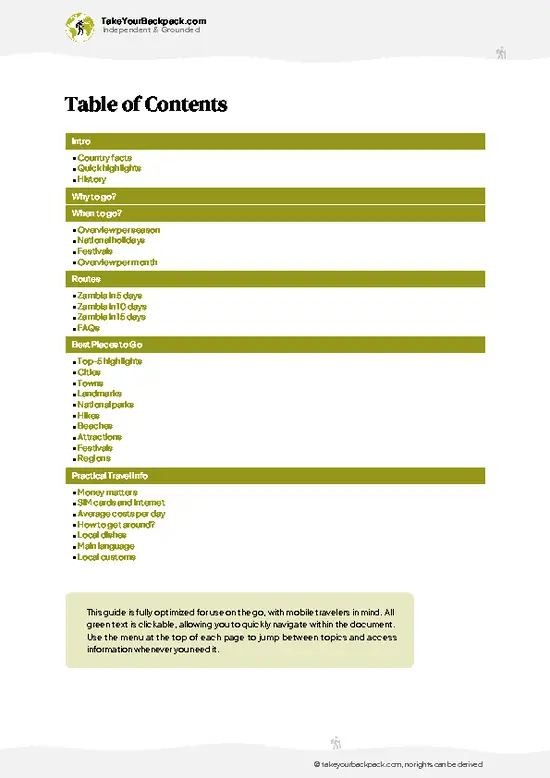
The digital guide (357 pages) contains:
91 highlights, ranked by travel appeal
Optimized 5, 10 & 15-day travel routes
Cities, national parks, landmarks, beaches
How to get around
Offline-friendly for travel without Wi-Fi
👉 Click to see all 30+ guide features

📅 Plan smarter in minutes, not weeks
Month by month travel advice
Festivals & national holidays
Budget expectations

🗺️ Go to the right places, skip the overrated ones
Honest pros & cons of destinations
Top hikes, parks & viewpoints
Lesser-known places most travelers miss
Clear “worth it vs skip it” guidance

🛏️ Travel smoothly without rookie mistakes
Best areas to stay
Transport systems explained simply
Common scams & safety advice
SIM cards, money & practical tips

🌍 Understand the country, not just visit it
Culture & traditions
52 Essential phrases & customs
Festivals worth planning around
Traveler-friendly historical context
Insights that make places more meaningful

📱 Built for real travel conditions
Fully downloadable PDF
Works completely offline
Optimized for phone use
Useful in remote areas & buses
Everything in one place
Save weeks of stressful planning
Get instant access to your full guide. 30‑day money-back guarantee.


By proceeding you agree to our terms.
Sent to your inbox immediately after payment • 100% Secure Checkout
Best Backpacking Travel Advisor 2025 tourism awardBest Backpacking
Travel Advisor
2025
What others say about Take Your Backpack Guides:
⭐⭐⭐⭐⭐
Fantastic, amazing amount of information!
⭐⭐⭐⭐⭐
My goodness this is amazing, it's what I've been looking for hats off too you!
⭐⭐⭐⭐⭐
I think this is absolutely BRILLIANT
⭐⭐⭐⭐
Very complete and informative. It's still missing places, but I gotta to commend you
⭐⭐⭐⭐⭐
This is truly amazing, thank you, can't wait to explore it with my kids!
⭐⭐⭐⭐⭐
Awesome resource, thank you!
⭐⭐⭐⭐⭐
This is amazing! Can't wait to explore the ones I haven't seen
⭐⭐⭐⭐
I love this! Well done, great idea.
⭐⭐⭐⭐⭐
Thanks for taking the time to make this gem!
⭐⭐⭐⭐⭐
This might be the best website I've ever seen.
⭐⭐⭐⭐⭐
Congratulations, and thank you so much for your work; it's incredibly valuable.
⭐⭐⭐⭐
In all seriousness I think you did a great job pointing out the important spots
⭐⭐⭐⭐⭐
10/10 very good
⭐⭐⭐⭐⭐
As someone who's only just starting to visit regularly this is awesome, thank you.
⭐⭐⭐⭐
Thank you very much! I'm going to visit my dad, it's going to be very useful!
⭐⭐⭐⭐⭐
This is really cool! We'll be travelling for the first time and this definitely come in handy.
⭐⭐⭐⭐⭐
You are now our minister of culture, congratulations 👨‍💼
⭐⭐⭐⭐⭐
Just wanted to tell you that this is a pearl! Going to follow your recommendations.
⭐⭐⭐⭐⭐
This is so cool. I'll definitely be using the resource for my travels soon.
⭐⭐⭐⭐⭐
This is very impressive! Good work.
⭐⭐⭐⭐⭐
This is an amazing and informative site. Very well done!

🛏️ Where to stay?Choosing the right base

In Chipata, the real backpacker sweet spot is the area around the town center, especially near the main market and along the Lusaka Road corridor. This zone strikes a smart balance between safety, social buzz, and budget-friendly options. It’s where you’ll find the most hostels and guesthouses catering to solo travelers and backpackers, so the vibe leans toward communal and easygoing. You’re close enough to local eateries and markets to dive into authentic Zambian street food without the hassle of long transport or dodgy neighborhoods.

Compared to the outskirts or more residential parts of Chipata, … read more 👉
In Chipata, the real backpacker sweet spot is the area around the town center, especially near the main market and along the Lusaka Road corridor. This zone strikes a smart balance between safety, social buzz, and budget-friendly options. It’s where you’ll find the most hostels and guesthouses catering to solo travelers and backpackers, so the vibe leans toward communal and easygoing. You’re close enough to local eateries and markets to dive into authentic Zambian street food without the hassle of long transport or dodgy neighborhoods.

Compared to the outskirts or more residential parts of Chipata, this central stretch offers a clear trade-off: you sacrifice some quiet for convenience and connection. But that’s a win if you want to meet fellow travelers, swap stories, and have a base that’s easy to navigate on foot or by shared taxi. The safety here is decent by Zambian standards, with a visible police presence and a steady flow of locals and tourists alike, which naturally discourages trouble.

If you stray too far into the suburbs, you’ll find fewer budget options and less of that social energy. So, for backpackers who want to maximize their time and comfort without blowing the budget, the town center area is the logical, high-value choice.

🚌 Getting aroundGetting around like a local

Chipata moves at its own rhythm—less a clockwork machine and more a pulse you feel in the streets. It’s a city where schedules exist but bend under the weight of human improvisation. Expect a blend of predictability and chaos, where a bus might leave on time or linger until it’s packed like a puzzle. Your best bet is to read the flow, not fight it. This is a place where time, money, and comfort don’t line up neatly; you’ll be constantly weighing what you’re willing to trade off to keep your trip moving forward without losing your mind or your wallet.


  • Walking: The ultimate zero-cost option. Chipata’s central areas are compact enough to explore on foot, giving you full control over your pace and route. It’s free, healthy, and immersive, but expect some uneven sidewalks and the occasional
read more 👉
Chipata moves at its own rhythm—less a clockwork machine and more a pulse you feel in the streets. It’s a city where schedules exist but bend under the weight of human improvisation. Expect a blend of predictability and chaos, where a bus might leave on time or linger until it’s packed like a puzzle. Your best bet is to read the flow, not fight it. This is a place where time, money, and comfort don’t line up neatly; you’ll be constantly weighing what you’re willing to trade off to keep your trip moving forward without losing your mind or your wallet.


  • Walking: The ultimate zero-cost option. Chipata’s central areas are compact enough to explore on foot, giving you full control over your pace and route. It’s free, healthy, and immersive, but expect some uneven sidewalks and the occasional dust cloud from passing traffic.


  • Local Minibuses (Buses): These are the backbone of Chipata’s transit. They run roughly from 6 AM to 7 PM, with fares around 2-5 ZMW depending on distance. They’re cheap and frequent but can be cramped and slow, especially during rush hours. Comfort is minimal, but the price and coverage make them indispensable for budget travelers.


  • Shared Taxis: Faster and more flexible than minibuses, shared taxis operate on main routes and leave when full. Expect to pay about 10-15 ZMW. They run from early morning until about 8 PM. These offer a middle ground—more comfort and speed, but at a higher price and less predictable departure times.


  • Motorcycle Taxis (Zambikes): For short hops or when you’re pressed for time, these are the quickest option. They’re available all day and night, with fares starting around 5 ZMW. They’re nimble and fast but less safe and comfortable, especially on rough roads or in bad weather.


  • Private Car Hire: The most comfortable and flexible, but also the priciest. Rates start at about 300 ZMW per day. Ideal if you want to maximize comfort and time efficiency, but it’s a significant budget hit and usually overkill for simple city travel.


Understanding these options as a trade-off matrix lets you play the system smartly. You can mix walking with minibuses for the best budget balance or splurge on a shared taxi when time is tight. Chipata’s transit isn’t about perfect schedules; it’s about reading the room, spotting the right moment, and choosing your battles between time, money, and comfort. That’s how you win here.

👛 Costs (as of 30 July 2026)Typical daily expenses

Backpacking in Chipata, Zambia, offers a clear trade-off between cost and comfort, with prices reflecting the city’s modest but evolving travel infrastructure. Here’s how your daily expenses typically break down:
  • Dorm Accommodation (High Season): Expect to pay around $10 to $15 per night in basic hostels or guesthouses. These spots fill up quickly during peak travel months, so prices edge higher due to demand.
  • Dorm Accommodation (Off-Season): Prices drop to about $7 to $10 per night when fewer travelers are around, giving you more negotiating power and quieter stays.
  • Meals: Street food and local eateries serve up filling meals for $2 to $5 each. If you opt for a mix of local dishes and occasional Western-style meals, budget around $8 to $12 daily for food.
  • Local Transport: Minibus taxis
read more 👉
Backpacking in Chipata, Zambia, offers a clear trade-off between cost and comfort, with prices reflecting the city’s modest but evolving travel infrastructure. Here’s how your daily expenses typically break down:
  • Dorm Accommodation (High Season): Expect to pay around $10 to $15 per night in basic hostels or guesthouses. These spots fill up quickly during peak travel months, so prices edge higher due to demand.
  • Dorm Accommodation (Off-Season): Prices drop to about $7 to $10 per night when fewer travelers are around, giving you more negotiating power and quieter stays.
  • Meals: Street food and local eateries serve up filling meals for $2 to $5 each. If you opt for a mix of local dishes and occasional Western-style meals, budget around $8 to $12 daily for food.
  • Local Transport: Minibus taxis and shared rides are the norm, costing roughly $0.50 to $1 per trip within the city. Budget about $2 to $4 daily if you move around frequently.
  • City Transport Pass: Chipata doesn’t have a formal city transport pass system, so daily transport costs depend entirely on individual rides and routes.
  • Basic Activities/Entry Fees: Most local attractions and cultural sites charge minimal fees, typically $1 to $3. Budget $3 to $6 daily if you plan to explore a few spots.
  • Miscellaneous Expenses: This includes bottled water, snacks, occasional internet access, or small tips. Set aside $2 to $5 daily for these extras.

In total, a realistic daily budget for backpacking in Chipata ranges from about $20 on a tight budget during the off-season to $35 or more if you lean into convenience and a bit more comfort during high season. This balance lets you decide where to save and where to splurge, turning your travel logistics into a strategic game you control.


source: zambiatourism.com
⚠️ Prices can change and everyone travels differently, so take this as a rough guide. Hope it helps you plan your adventure!

🚌 Day tripsShort trips worth adding

Chipata, Zambia, serves as a fantastic launchpad for day trips that blend adventure with cultural immersion. Here are some standout options that promise to enrich your experience without draining your wallet.

Nsumbu National Park
Just a three-hour drive from Chipata, Nsumbu National Park offers a slice of wilderness that feels worlds away. You can spot elephants, hippos, and a variety of bird species while hiking along the shores of Lake Tanganyika. The park’s remoteness means fewer tourists, allowing for a more intimate connection with nature. Budget around $10 for park entry and transportation, and consider visiting during the dry season (May to October) for the best wildlife sightings. A common mistake? Underestimating the time needed for the drive; leave early to maximize your day. … read more 👉
Chipata, Zambia, serves as a fantastic launchpad for day trips that blend adventure with cultural immersion. Here are some standout options that promise to enrich your experience without draining your wallet.

Nsumbu National Park
Just a three-hour drive from Chipata, Nsumbu National Park offers a slice of wilderness that feels worlds away. You can spot elephants, hippos, and a variety of bird species while hiking along the shores of Lake Tanganyika. The park’s remoteness means fewer tourists, allowing for a more intimate connection with nature. Budget around $10 for park entry and transportation, and consider visiting during the dry season (May to October) for the best wildlife sightings. A common mistake? Underestimating the time needed for the drive; leave early to maximize your day.
👉 Explore Nsumbu National Park

Chimwemwe Village
A mere 30-minute ride from Chipata, Chimwemwe Village offers an authentic glimpse into local life. Engage with artisans, learn about traditional crafts, and savor homemade meals. This trip is not just about sightseeing; it’s about connection. Expect to spend around $5 for transport and a small fee for any workshops. The best time to visit is during the harvest season (April to June) when the village is bustling with activity. First-timers often miss out on the chance to participate in local customs—don’t just observe; get involved!


Lundazi
About an hour’s drive from Chipata, Lundazi is known for its stunning landscapes and rich cultural heritage. Explore the local market, where you can find everything from fresh produce to handmade crafts. The vibrant atmosphere is a feast for the senses, and you can enjoy a meal for under $5. The ideal time to visit is during the cooler months (May to August) when the weather is pleasant. A common pitfall is not bargaining at the market; it’s part of the experience!
👉 Explore Lundazi

Mphangwe
Just over an hour from Chipata, Mphangwe is a tranquil spot along the Luangwa River. Here, you can enjoy fishing or simply relax by the water. The serenity is a welcome break from the hustle of city life. Expect to spend around $10 for transport and any fishing gear you might need. The best time to go is during the dry season when the river is calm. Many first-timers forget to bring snacks; pack a picnic to enhance your day!
Want to know what more Zambia offers?
The Zambia Travel Guide describes 91 highlights, from cities to national parks, from beaches to hikes

Get the Travel Guide -

🍲 FoodEating & Drinking in Chipata

In Chipata, local cuisine is a vibrant tapestry of flavors that tells the story of its people. You can’t visit without trying nsima, a staple made from ground maize, often served with relishes like sautéed greens or spicy stews. The texture is comforting, and it’s a communal dish, perfect for sharing.

Street food stalls are where the action is. Grab a samosa or chikanda, a unique cassava and groundnut snack, as you wander through bustling markets. The air is thick with the aroma of grilled meats, and you’ll find locals gathering around to enjoy their meals, creating a lively atmosphere that’s infectious.

When it comes to drinks, Chibuku, a traditional sorghum beer, is a must-try. It’s often enjoyed in large communal bowls, fostering a sense of camaraderie. Just remember, it’s customary … read more 👉
In Chipata, local cuisine is a vibrant tapestry of flavors that tells the story of its people. You can’t visit without trying nsima, a staple made from ground maize, often served with relishes like sautéed greens or spicy stews. The texture is comforting, and it’s a communal dish, perfect for sharing.

Street food stalls are where the action is. Grab a samosa or chikanda, a unique cassava and groundnut snack, as you wander through bustling markets. The air is thick with the aroma of grilled meats, and you’ll find locals gathering around to enjoy their meals, creating a lively atmosphere that’s infectious.

When it comes to drinks, Chibuku, a traditional sorghum beer, is a must-try. It’s often enjoyed in large communal bowls, fostering a sense of camaraderie. Just remember, it’s customary to share, so don’t be shy about joining in.

Etiquette here is relaxed; meals are often casual and communal. Embrace the local pace, savor each bite, and enjoy the rich flavors that Chipata has to offer.

🛡️ SafetyTraveler Safety Guide

Chipata is generally safe for backpackers, but a few situational awareness tips can enhance your experience. Stick to well-lit areas at night, especially if you’re solo. The main market can be bustling, but it’s also a hotspot for petty theft; keep your belongings close and avoid flashy displays of wealth.

Scams are rare, but some locals might offer unsolicited help, expecting a tip. Politely decline if you’re not interested. Everyday annoyances include aggressive street vendors; a firm but friendly “no, thank you” usually does the trick.

Overall, carry yourself confidently, engage with locals respectfully, and you’ll navigate Chipata smoothly. Embrace the vibrant atmosphere while staying alert, and you’ll find the city’s charm outweighs any minor inconveniences.

Other Zambian cities near Chipata

Explore more nearby:

  • Mpika—Great North Road junction, rail stop, gateway to waterfalls| 240 km away
  • Serenje—railway stop, forest reserves, central plateau| 265 km away
  • Kasama—Kalambo Falls access, Bemba culture, rural markets| 411 km away

💡 Not sure where to go next?
Create a personalized itinerary for Zambia including Chipata and the places that fit your trip.

Generate my itinerary

👉 Discover all cities

Or checkout all Zambia has to offer (think cities, towns, villages, national parks, hikes, beaches, festivals)
Country photo of Zambia

We 💚 feedbackKey takeaways before you go

Chipata has a laid-back vibe that feels like a breath of fresh air. The real surprise? The local markets. They pulse with life, offering everything from fresh produce to handmade crafts. Just be ready to haggle; it’s part of the fun. A small warning: the roads can be rough, so don’t rush your travel plans. Embrace the journey. You’ll find that the detours often lead to the best stories.

✍️ Help improve this page!
The information on this page is based on in-depth research, insights shared by experienced travelers, and feedback from the local travel community in Zambia. While every effort is made to keep the information accurate and current, conditions can change — so if you spot anything incorrect or outdated, please get in touch.


🙋‍♂️ Give feedback

👋 Meet the founderWho’s Behind Take Your Backpack?

Johan, backpacker and founder of TakeYourBackpackHi, I’m Johan (Netherlands 🇳🇱), the creator of TakeYourBackpack. Over the past decade, I’ve backpacked through 80+ countries across six continents, gaining extensive experience with independent travel, long-term trips, and overland routes.

This site is built on a combination of firsthand travel experience and carefully curated insights from other backpackers. Many guides are based on places I’ve personally visited, while others bring together tips, observations, and practical advice shared by trusted travelers I’ve met along the way.

The goal is to provide realistic, experience-driven guidance — not generic itineraries — so you can explore destinations with better context, clearer expectations, and more confidence.

Get full Zambia guide •
Instant download • 91 highlights • Full Offline guide