×

Zambia🇿🇲 | festivalsShimunenga CeremonyIla cattle drive, Kafue Flats, Maala village, full-moon drumming | things to do and best time to go

Explore Lwiindi Gonde CeremonyExplore Kazanga Ceremony

Backpacking in Shimunenga Ceremony
👍 Recommendedfestival ranked #7
By Johan Kruseman 🇳🇱 | Updated October 22, 2026

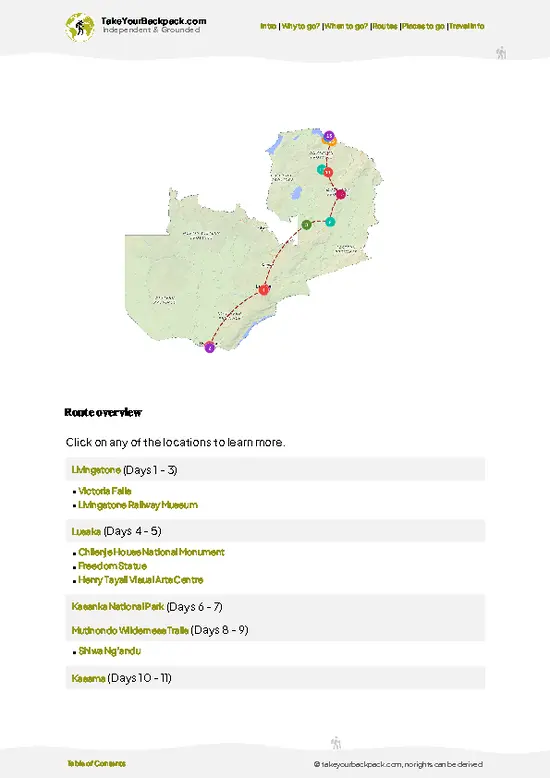
Shimunenga is a Ila people ceremony that centers on the Kafue Flats, where cattle are driven across the floodplain and men on horseback and on foot sing and chase the herd toward the village of Maala. It takes place in Zambia’s Southern Province, west of Lusaka and near Namwala district, close to the Kafue River. Expect a few days of drumming, praise songs, dancing, cattle parades and ritual honoring the ancestral chief Shimunenga, usually around the November full moon. The mood is communal and local, not staged for tourists, and the crowd is mostly Ila families with a thin scatter of researchers and curious travelers. Pack patience, a tent or a lodge booking, and cash. You will love it if you want authentic culture and can handle rough roads and little infrastructure. Skip it if you need schedules, comfort or polished shows.

Discover everything you want to know in the 📖 Zambia Travel Guide.


example page 0 from our offline Travel Guide for Zambia
example page 1 from our offline Travel Guide for Zambia
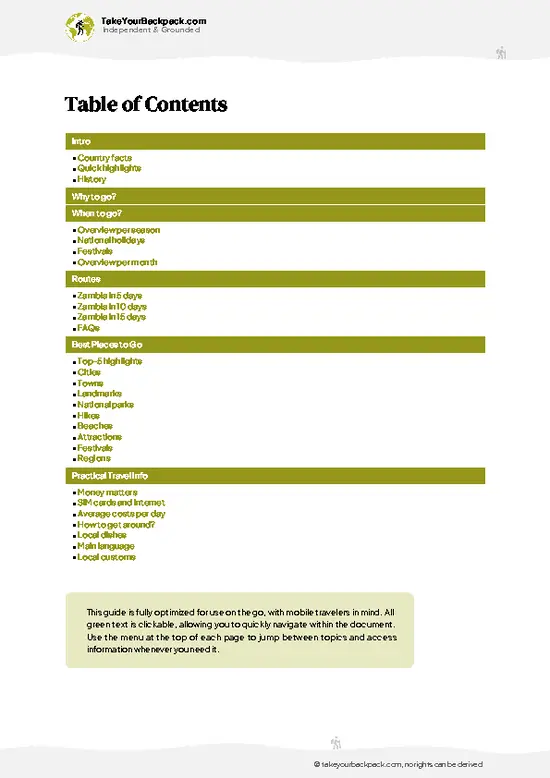
example page 2 from our offline Travel Guide for Zambia
example page 3 from our offline Travel Guide for Zambia
example page 4 from our offline Travel Guide for Zambia
example page 5 from our offline Travel Guide for Zambia
example page 6 from our offline Travel Guide for Zambia
example page 7 from our offline Travel Guide for Zambia
Loading the map 🌍
CLICK TO FILTER
cities
towns
landmarks
national parks
hikes
beaches
attractions
festivals
regions
SHOW COUNTRY’S BESTSHOW ALL

✨ Why go?
Ranked #7 festival in Zambia
What makes this festival worth celebrating

Shimunenga Ceremony is one of the few Zambian gatherings where a visitor can watch living ritual without a ticket booth between you and it. Backpackers route around it for the Kafue Flats setting, where a vast grassland horizon frames cattle and dancers, and for the chance to be absorbed into a temporary community of thousands who have walked, driven or ridden in from across Ila country. People talk, share food and point you toward the best viewing spot. The cultural access is the real draw. You see the cattle-herding men’s processions and mock charges, the women’s singing and the formal dress of the chief’s court, all rooted in the Ba-Ila relationship with cattle and ancestors. It also fits neatly into a longer loop with Lusaka, Kafue National Park and Livingstone, since the timing falls … read more 👉
Shimunenga Ceremony is one of the few Zambian gatherings where a visitor can watch living ritual without a ticket booth between you and it. Backpackers route around it for the Kafue Flats setting, where a vast grassland horizon frames cattle and dancers, and for the chance to be absorbed into a temporary community of thousands who have walked, driven or ridden in from across Ila country. People talk, share food and point you toward the best viewing spot. The cultural access is the real draw. You see the cattle-herding men’s processions and mock charges, the women’s singing and the formal dress of the chief’s court, all rooted in the Ba-Ila relationship with cattle and ancestors. It also fits neatly into a longer loop with Lusaka, Kafue National Park and Livingstone, since the timing falls before the heavy rains and gives you a clear reason to head into the central south.

💡 HighlightsKey sights and experiences for travelers

  1. The Cattle Procession and Mock Charge: Men drive and ride out with decorated herds across the floodplain, shouting and racing in a display of Ba-Ila pride in their cattle. It is loud, dusty and the best photograph of the event.
  2. The Chief’s Procession at Maala: Elders and the chief move through the village in formal dress, marking the spiritual heart of the ceremony and the tribute to Shimunenga.
  3. Women’s Singing and Dancing: Groups of women sing and clap in call-and-response rhythms that carry through the night, and visitors are often pulled into the circle.
  4. The Kafue Flats Landscape: The flat, wide floodplain around Maala is bird-rich and open, with cattle herds moving at the horizon, and it is worth walking out at dawn.
  5. Night Drumming Under the Full Moon: Gatherings continue into the evening
… read more 👉
  1. The Cattle Procession and Mock Charge: Men drive and ride out with decorated herds across the floodplain, shouting and racing in a display of Ba-Ila pride in their cattle. It is loud, dusty and the best photograph of the event.
  2. The Chief’s Procession at Maala: Elders and the chief move through the village in formal dress, marking the spiritual heart of the ceremony and the tribute to Shimunenga.
  3. Women’s Singing and Dancing: Groups of women sing and clap in call-and-response rhythms that carry through the night, and visitors are often pulled into the circle.
  4. The Kafue Flats Landscape: The flat, wide floodplain around Maala is bird-rich and open, with cattle herds moving at the horizon, and it is worth walking out at dawn.
  5. Night Drumming Under the Full Moon: Gatherings continue into the evening around fires and drums, giving the quieter, more social side of the event, with locals happy to explain the songs.
Start with the cattle procession, because it is the centerpiece and Shimunenga Ceremony crowds are thickest and the energy highest then, so you can find your bearings among the people and relax into the quieter rituals afterward.
Spotted a mistake or missing something? Contact us.

🌤️ When to go?When is the celebration of Shimunenga Ceremony?

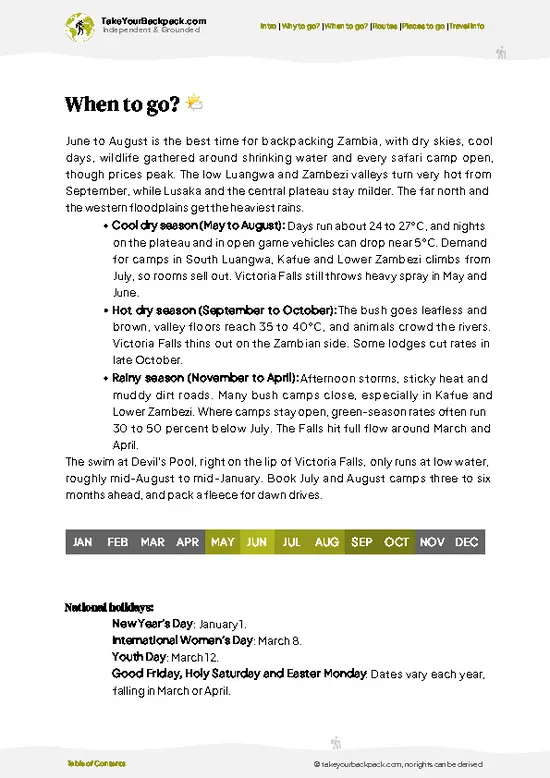
Shimunenga Ceremony is held by the Ila people at Maala, in the Namwala area of Southern Province, usually in late October or early November, over a few days that follow the lunar calendar and the chief’s announcement.
  • Best day: The main day, when men on horseback and cattle herders stream across the plains with singing and drumming, is the one to catch. Arrive the afternoon before to see the build-up.
  • Weather: It is hot and dry before the rains, with days of 32 to 38°C (90 to 100°F) and dust. Bring a wide hat, a scarf, water and closed shoes.
  • Booking: There are no tickets, but beds around Namwala and Mumbwa fill up, so reserve a week or two ahead. Prices can rise 20 to 40 percent.
  • Roads: Leave early, since the gravel turnoffs get dusty and slow as vehicles pile up. Plan to depart before late afternoon.
… read more 👉
Shimunenga Ceremony is held by the Ila people at Maala, in the Namwala area of Southern Province, usually in late October or early November, over a few days that follow the lunar calendar and the chief’s announcement.
  • Best day: The main day, when men on horseback and cattle herders stream across the plains with singing and drumming, is the one to catch. Arrive the afternoon before to see the build-up.
  • Weather: It is hot and dry before the rains, with days of 32 to 38°C (90 to 100°F) and dust. Bring a wide hat, a scarf, water and closed shoes.
  • Booking: There are no tickets, but beds around Namwala and Mumbwa fill up, so reserve a week or two ahead. Prices can rise 20 to 40 percent.
  • Roads: Leave early, since the gravel turnoffs get dusty and slow as vehicles pile up. Plan to depart before late afternoon.
Confirm the exact dates locally a few weeks before you travel, because they shift each year.


source: climatestotravel.comJANJanuary: not recommended for travelingFEBFebruary: not recommended for travelingMARMarch: not recommended for travelingAPRApril: not recommended for travelingMAYMay: not recommended for travelingJUNJune: not recommended for travelingJULJuly: not recommended for travelingAUGAugust: excellent for travelingSEPSeptember: not recommended for travelingOCTOctober: not recommended for travelingNOVNovember: not recommended for travelingDECDecember: not recommended for traveling

✈️ The backpacker research shortcutZambia Travel Guide

An offline-friendly backpacking guide with optimized travel routes, ranked highlights, transport advice, and the best areas to stay.
example page 0 from our offline Travel Guide for Zambia
example page 1 from our offline Travel Guide for Zambia
example page 2 from our offline Travel Guide for Zambia
example page 3 from our offline Travel Guide for Zambia
example page 4 from our offline Travel Guide for Zambia
example page 5 from our offline Travel Guide for Zambia
example page 6 from our offline Travel Guide for Zambia
example page 7 from our offline Travel Guide for Zambia
The digital guide (351 pages) contains:
✅ 89 highlights, ranked by travel appeal
✅ Optimized 5, 10 & 15-day travel routes
✅ Cities, national parks, landmarks, beaches
✅ How to get around
✅ Offline-friendly for travel without Wi-Fi
👉 Click to see all 30+ guide features

📅 Plan smarter in minutes, not weeks
✅ Month by month travel advice
✅ Festivals & national holidays
✅ Budget expectations

🗺️ Go to the right places, skip the overrated ones
✅ Honest pros & cons of destinations
✅ Top hikes, parks & viewpoints
✅ Lesser-known places most travelers miss
✅ Clear “worth it vs skip it” guidance

🛏️ Travel smoothly without rookie mistakes
✅ Best areas to stay
✅ Transport systems explained simply
✅ Common scams & safety advice
✅ SIM cards, money & practical tips

🌍 Understand the country, not just visit it
✅ Culture & traditions
✅ 52 Essential phrases & customs
✅ Festivals worth planning around
✅ Traveler-friendly historical context
✅ Insights that make places more meaningful

📱 Built for real travel conditions
✅ Fully downloadable PDF
✅ Works completely offline
✅ Optimized for phone use
✅ Useful in remote areas & buses
✅ Everything in one place
Stop searching, start planning
Get instant access to your full guide. 30‑day money-back guarantee.
+ Add another guide for just

By proceeding you agree to our terms.
Sent to your inbox immediately after payment • 100% Secure Checkout
Best Backpacking Travel Advisor 2025 tourism awardBest Backpacking
Travel Advisor
2025
What others say about Take Your Backpack Guides:
⭐⭐⭐⭐⭐
Fantastic, amazing amount of information!
⭐⭐⭐⭐⭐
My goodness this is amazing, it's what I've been looking for hats off too you!
⭐⭐⭐⭐⭐
I think this is absolutely BRILLIANT
⭐⭐⭐⭐
Very complete and informative. It's still missing places, but I gotta to commend you
⭐⭐⭐⭐⭐
This is truly amazing, thank you, can't wait to explore it with my kids!
⭐⭐⭐⭐⭐
Awesome resource, thank you!
⭐⭐⭐⭐⭐
This is amazing! Can't wait to explore the ones I haven't seen
⭐⭐⭐⭐
I love this! Well done, great idea.
⭐⭐⭐⭐⭐
Thanks for taking the time to make this gem!
⭐⭐⭐⭐⭐
This might be the best website I've ever seen.
⭐⭐⭐⭐⭐
Congratulations, and thank you so much for your work; it's incredibly valuable.
⭐⭐⭐⭐
In all seriousness I think you did a great job pointing out the important spots
⭐⭐⭐⭐⭐
10/10 very good
⭐⭐⭐⭐⭐
As someone who's only just starting to visit regularly this is awesome, thank you.
⭐⭐⭐⭐
Thank you very much! I'm going to visit my dad, it's going to be very useful!
⭐⭐⭐⭐⭐
This is really cool! We'll be travelling for the first time and this definitely come in handy.
⭐⭐⭐⭐⭐
You are now our minister of culture, congratulations 👨‍💼
⭐⭐⭐⭐⭐
Just wanted to tell you that this is a pearl! Going to follow your recommendations.
⭐⭐⭐⭐⭐
This is so cool. I'll definitely be using the resource for my travels soon.
⭐⭐⭐⭐⭐
This is very impressive! Good work.
⭐⭐⭐⭐⭐
This is an amazing and informative site. Very well done!

🛏️ Where to stay?Where staying makes the most sense

The most practical base is Namwala town, the district center, which has simple guesthouses, a market and local minibuses toward Maala. It is the safest and most sociable choice, because you will meet other visitors, researchers and Zambian families traveling for the ceremony.

If you want more comfort and a wider choice of food and company, Mumbwa is a larger town along the road from Lusaka, with more guesthouses and a livelier evening scene. It adds travel time on rough roads, so it suits you better if you are arriving in your own transport.

Camping near the festival grounds is sometimes possible … read more 👉
The most practical base is Namwala town, the district center, which has simple guesthouses, a market and local minibuses toward Maala. It is the safest and most sociable choice, because you will meet other visitors, researchers and Zambian families traveling for the ceremony.

If you want more comfort and a wider choice of food and company, Mumbwa is a larger town along the road from Lusaka, with more guesthouses and a livelier evening scene. It adds travel time on rough roads, so it suits you better if you are arriving in your own transport.

Camping near the festival grounds is sometimes possible with permission from the village headman, and it puts you inside the atmosphere with the sound of drums at night. Go with a small group, carry water and tell your hosts where you are. Solo travelers should keep to Namwala, where it is easier to link up with others for shared rides and the walk to the ceremony.

Teaming up with other travelers for taxis is the easiest way to keep costs down and arrive safely.

👛 Costs (as of 22 October 2026)How expensive it really is

Shimunenga Ceremony costs most independent travelers around US$45 to 70 a day, since there is no ticket and the main spending is on transport and beds near Namwala.
CategoryBudget RangeLocal Reality
Festival ticketsUS$0 to 5Attendance is generally free, though small donations or photography requests may arise.
AccommodationUS$15 to 35Basic guesthouses in Namwala or Mumbwa. Camping is cheaper if permitted. Prices rise during the ceremony.
Local transportUS$10 to 20Minibuses and shared taxis over rough roads, plus a short hire for the final stretch to Maala.
Food & drinksUS$6 to 12Nshima with meat at stalls is cheap. Drinks and bottled water add up in the heat.
Miscellaneous expensesUS$5 to 10Small gifts, phone credit, sunscreen and cash for local guides or photo permissions.
Total Daily BudgetUS$45
… read more 👉
Shimunenga Ceremony costs most independent travelers around US$45 to 70 a day, since there is no ticket and the main spending is on transport and beds near Namwala.
CategoryBudget RangeLocal Reality
Festival ticketsUS$0 to 5Attendance is generally free, though small donations or photography requests may arise.
AccommodationUS$15 to 35Basic guesthouses in Namwala or Mumbwa. Camping is cheaper if permitted. Prices rise during the ceremony.
Local transportUS$10 to 20Minibuses and shared taxis over rough roads, plus a short hire for the final stretch to Maala.
Food & drinksUS$6 to 12Nshima with meat at stalls is cheap. Drinks and bottled water add up in the heat.
Miscellaneous expensesUS$5 to 10Small gifts, phone credit, sunscreen and cash for local guides or photo permissions.
Total Daily BudgetUS$45 to 70Based on one day at high-season accommodation rates.


source: zambiatourism.com
⚠️ Prices can change and everyone travels differently, so take this as a rough guide. Hope it helps you plan your adventure!

🍲 FoodLocal Cuisine & Drinks

Food at Shimunenga Ceremony is rooted in Ila cattle country. Expect nshima, the thick maize porridge, served with beef stew, grilled meat, fresh or dried kapenta and leafy relishes. Local women and families sell plates from roadside stalls and under trees near the grounds, so food is simple and filling rather than polished.

The drink to know is munkoyo, a mildly sour, cloudy fermented maize drink, along with homemade traditional beer shared in big containers. Bottled sodas and commercial beer are also sold. Try a plate of nshima with beef eaten by hand, and sip munkoyo if it is offered. It is an easy way to start a conversation.

A few quirks help. Bring cash in small notes, because cards and mobile networks are unreliable. Wash your hands before eating, since sharing from a common bowl is … read more 👉
Food at Shimunenga Ceremony is rooted in Ila cattle country. Expect nshima, the thick maize porridge, served with beef stew, grilled meat, fresh or dried kapenta and leafy relishes. Local women and families sell plates from roadside stalls and under trees near the grounds, so food is simple and filling rather than polished.

The drink to know is munkoyo, a mildly sour, cloudy fermented maize drink, along with homemade traditional beer shared in big containers. Bottled sodas and commercial beer are also sold. Try a plate of nshima with beef eaten by hand, and sip munkoyo if it is offered. It is an easy way to start a conversation.

A few quirks help. Bring cash in small notes, because cards and mobile networks are unreliable. Wash your hands before eating, since sharing from a common bowl is normal. Accept offers politely, and ask before photographing people eating or drinking. Portions are generous, so share a plate if you are traveling in a pair. Carry your own water and snacks, because lines can be slow in the afternoon heat.

FAQTraveler FAQ

Shimunenga Ceremony takes place in late October or early November, depending on the lunar calendar and the chief’s announcement. It lasts several days at Maala in the Namwala area, Southern Province. Arrive the day before the main procession, and confirm exact dates locally a few weeks ahead.
Attending Shimunenga Ceremony is generally free, so your main costs are getting there and sleeping nearby. Expect guesthouses in Namwala or Mumbwa at about US$15 to 35 a night and meals at stalls for US$2 to 5. A realistic total is US$45 to 70 per day including transport.
Shimunenga Ceremony does not require advance tickets, since it is a community ritual of the Ila people rather than a ticketed event. What you do need to book ahead is a bed in Namwala or Mumbwa, ideally one to two weeks before. Bring cash, ask permission before taking photos and dress modestly.
⚠️ Things can change over time, so always validate details locally before you go.

Other Zambian festivals near Shimunenga Ceremony

Explore more nearby:

  • Lwiindi Gonde Ceremony—Tonga rain thanksgiving, Gwembe Valley, shrine rites, ngoma circles| 108 km away
  • Chakwela Makumbi Ceremony—Soli chief's reception, Chongwe village grounds, hand drums, chitenge crowds| 213 km away
  • Kazanga Ceremony—Lozi floodplain migration, Mongu, royal drum lines, Makishi troupes| 232 km away

💡 Not sure where to go next?
Create a personalized itinerary for Zambia including Shimunenga Ceremony and the places that fit your trip.

Generate my itinerary

👉 Discover all festivals

Or checkout all Zambia has to offer (think cities, towns, villages, national parks, hikes, beaches, festivals)
Country photo of Zambia

We 💚 feedbackFinal thoughts on celebrating the Shimunenga Ceremony

Shimunenga Ceremony suits curious, flexible travelers who like local rituals more than polished shows. Go with patience, sit with families, ask before photographing, and bring cash, sun protection and a sturdy tent. Skip it if you need schedules and comfort. Arrive a day early and you will understand far more.

✍️ Help improve this page!
The information on this page is based on in-depth research, insights shared by experienced travelers, and feedback from the local travel community in Zambia. While every effort is made to keep the information accurate and current, conditions can change — so if you spot anything incorrect or outdated, please get in touch.


🙋‍♂️ Give feedback

👋 Meet the founderWho’s Behind Take Your Backpack?

Johan, backpacker and founder of TakeYourBackpackHi, I’m Johan (Netherlands 🇳🇱), the creator of TakeYourBackpack. Over the past 3 decades, I’ve backpacked through 90+ countries across six continents, gaining extensive experience with independent travel, long-term trips, and overland routes.

This site is built on a combination of firsthand travel experience and carefully curated insights from other backpackers. Many guides are based on places I’ve personally visited, while others bring together tips, observations, and practical advice shared by trusted travelers I’ve met along the way.

The goal is to provide realistic, experience-driven guidance — not generic itineraries — so you can explore destinations with better context, clearer expectations, and more confidence.