×

Zambia🇿🇲 | townsSiavongaKariba Dam wall, tigerfish, sunset cruises, hillside lodges | things to do and best time to go

Explore KalomoExplore Mbala

Backpacking in Siavonga
🏆 Top picktown ranked #2
By Johan Kruseman 🇳🇱 | Updated October 22, 2026

Siavonga puts you on the shore of Lake Kariba with a swim, a sundowner and a view of the Zimbabwe escarpment all within a ten-minute walk of your bed. It sits in the south of Zambia, on the northern bank of the lake near Kariba Dam. Getting here from Lusaka is straightforward by minibus or bus, though the final descent is steep and winding. The town is small and spread out, so you won’t find a tight old center. You get lodges, a craft market, boat trips, crocodile and hippo spotting, and slow evenings rather than nightlife. Backpackers are few, so you meet people at campsites and on boat tours, not in dorm bars. Why is it spread out? The town climbs hillsides above the water, so distances look short but involve hills. Do as locals do and hop in a shared taxi. Carry cash kwacha before you arrive, because card machines and ATMs can be unreliable.

Discover everything you want to know in the 📖 Zambia Travel Guide.


example page 0 from our offline Travel Guide for Zambia
example page 1 from our offline Travel Guide for Zambia
example page 2 from our offline Travel Guide for Zambia
example page 3 from our offline Travel Guide for Zambia
example page 4 from our offline Travel Guide for Zambia
example page 5 from our offline Travel Guide for Zambia
example page 6 from our offline Travel Guide for Zambia
example page 7 from our offline Travel Guide for Zambia
Loading the map 🌍
CLICK TO FILTER
cities
towns
landmarks
national parks
hikes
beaches
attractions
festivals
regions
SHOW COUNTRY’S BESTSHOW ALL

✨ Why go?
Ranked #2 town in Zambia
Why visitors keep coming back

Siavonga earns its place on a route as the easiest spot in Zambia to stop moving for two or three days. The draw is Lake Kariba, one of the largest man-made lakes in the world, where you can paddle, fish for tigerfish, or join a sunset cruise past hippos and elephants grazing on the shore. Most backpackers arrive from Lusaka or the Zimbabwe side and stay briefly, but the pace here rewards a longer pause. Guesthouses and lakeside campsites are small and family-run, so you end up chatting with owners and the occasional overlander rather than a crowd. The Kariba Dam wall sits a short ride away and doubles as a border crossing, which makes Siavonga a practical hinge between Zambia and Zimbabwe. Slow travelers, anglers, solo travelers who like quiet and anyone recovering from long bus days will … read more 👉
Siavonga earns its place on a route as the easiest spot in Zambia to stop moving for two or three days. The draw is Lake Kariba, one of the largest man-made lakes in the world, where you can paddle, fish for tigerfish, or join a sunset cruise past hippos and elephants grazing on the shore. Most backpackers arrive from Lusaka or the Zimbabwe side and stay briefly, but the pace here rewards a longer pause. Guesthouses and lakeside campsites are small and family-run, so you end up chatting with owners and the occasional overlander rather than a crowd. The Kariba Dam wall sits a short ride away and doubles as a border crossing, which makes Siavonga a practical hinge between Zambia and Zimbabwe. Slow travelers, anglers, solo travelers who like quiet and anyone recovering from long bus days will be happy. If you need nightlife, hostels packed with backpackers or big sights, treat it as a one-night stop and move on. The hot, humid climate makes the water a daily necessity, not an extra.

💡 HighlightsTop highlights of Siavonga

  1. Kariba Dam Wall viewpoint: The 128-meter concrete arch is what put this region on the map, and the Zambian side offers a clear look along its curve. Go in the morning for cooler light and fewer vehicles. Viewing from the approach is usually free, allow 30 to 60 minutes, and carry your passport as there is a border post.
  2. Lake Kariba sunset cruise: Small boats head out past islands and drowned tree stumps, with hippos and crocodiles near the shore and elephants sometimes drinking at dusk. Go late afternoon. Expect around US$20 to 40 per person for 2 to 3 hours, depending on operator and group size.
  3. Siavonga Craft Market: Local vendors sell wood carvings, baskets and fabrics near the town center. Visit mid-morning when stalls are fully set up, and bargain politely. Browsing is free, and an hour
… read more 👉
  1. Kariba Dam Wall viewpoint: The 128-meter concrete arch is what put this region on the map, and the Zambian side offers a clear look along its curve. Go in the morning for cooler light and fewer vehicles. Viewing from the approach is usually free, allow 30 to 60 minutes, and carry your passport as there is a border post.
  2. Lake Kariba sunset cruise: Small boats head out past islands and drowned tree stumps, with hippos and crocodiles near the shore and elephants sometimes drinking at dusk. Go late afternoon. Expect around US$20 to 40 per person for 2 to 3 hours, depending on operator and group size.
  3. Siavonga Craft Market: Local vendors sell wood carvings, baskets and fabrics near the town center. Visit mid-morning when stalls are fully set up, and bargain politely. Browsing is free, and an hour is plenty. Bring small notes.
  4. Lakeshore swimming and kayaking: Several lodges let you paddle or swim from their shorelines, though you should only enter the water where the staff say it is safe, as crocodiles live in the lake. Early morning is calmest. Kayak hire usually costs US$10 to 20, and 1 to 2 hours covers it.
  5. Tigerfish angling on the lake: Kariba is known for fighting tigerfish, and local guides take visitors out at dawn when fish are active. Expect roughly US$50 to 120 for a half-day trip including gear, which takes 3 to 5 hours. Even beginners can try.
For day trips, Siavonga works as a launch point for Lake Kariba islands, Lusitu and the Zambezi Valley, plus Lower Zambezi National Park by longer road transfer. The sunset cruise and the dam wall combine well in one day, with the dam in the morning and the boat at dusk.
Spotted a mistake or missing something? Contact us.

🏘️ NeighborhoodsHow different areas shape the experience

Siavonga sprawls along the Lake Kariba shore in a few distinct pockets, and you can cover each in a morning if you pace yourself. Distances are short but hilly, so plan your steps around the heat.
  • Town Center and Market: The compact core sits on the hill above the lake, with the main market, shops, banks and ATMs. Grab grilled chicken, nshima with kapenta (tiny dried lake sardines) or fresh bread from the stalls. It's walkable, but the climb back up is steep, so go early. Prices are lowest here because local shoppers set them.
  • Lakeshore Strip: Lodges, bars and jetties line the waterfront east and west of the center. Swim where lodges allow it, watch the sun drop behind the hills and order fresh bream. Crocodiles and hippos live in Kariba, so stay out of the water at unmanaged spots and swim
… read more 👉
Siavonga sprawls along the Lake Kariba shore in a few distinct pockets, and you can cover each in a morning if you pace yourself. Distances are short but hilly, so plan your steps around the heat.
  • Town Center and Market: The compact core sits on the hill above the lake, with the main market, shops, banks and ATMs. Grab grilled chicken, nshima with kapenta (tiny dried lake sardines) or fresh bread from the stalls. It's walkable, but the climb back up is steep, so go early. Prices are lowest here because local shoppers set them.
  • Lakeshore Strip: Lodges, bars and jetties line the waterfront east and west of the center. Swim where lodges allow it, watch the sun drop behind the hills and order fresh bream. Crocodiles and hippos live in Kariba, so stay out of the water at unmanaged spots and swim only at lodge pools or designated areas. Walking works for short stretches, but a taxi saves you at night.
  • Harbor and Kariba Dam Side: Boats leave from here for fishing, houseboat trips and sunset cruises. The Kariba Dam wall and its border post sit a short drive north, so hop in a taxi for the view over the gorge. Expect quiet evenings and a lot of waiting around for boats to fill, so arrange your cruise the day before.
  • Crocodile Farm Road: Out on the edge of town you will find the crocodile farm and quieter villages. Distances here are too long to walk in the sun, so negotiate a taxi round trip and see everything in one go.

⌛️ 1 dayWhat you can realistically do in a day

7:00 AM, Lakeshore at your lodge: Start by the water while the air is cool and the lake is calm, because the hippos and birds are most active now. Take a coffee, walk the shoreline and stay out of the water unless your lodge confirms it is safe.
9:00 AM, Kariba Dam Wall: Take a shared taxi or ride up to the border-side approach to see the huge arch and the gorge below. Photograph the curve of the wall and the water on one side, then check the visitor area if open. Bring your passport.
11:30 AM, Siavonga Craft Market: Head back into town and spend an hour among the carvings, baskets and bright cloth. Prices start high, so counter politely. Buy something small that packs well.
1:00 PM, Lunch in town: Find a local spot serving grilled kapenta or bream with nshima. Eat slowly, as the midday heat … read more 👉
7:00 AM, Lakeshore at your lodge: Start by the water while the air is cool and the lake is calm, because the hippos and birds are most active now. Take a coffee, walk the shoreline and stay out of the water unless your lodge confirms it is safe.
9:00 AM, Kariba Dam Wall: Take a shared taxi or ride up to the border-side approach to see the huge arch and the gorge below. Photograph the curve of the wall and the water on one side, then check the visitor area if open. Bring your passport.
11:30 AM, Siavonga Craft Market: Head back into town and spend an hour among the carvings, baskets and bright cloth. Prices start high, so counter politely. Buy something small that packs well.
1:00 PM, Lunch in town: Find a local spot serving grilled kapenta or bream with nshima. Eat slowly, as the midday heat is strongest and it is the right time to rest.
3:00 PM, Fishing village shoreline: This is the less-visited part of the day. Walk or ride to a kapenta landing area outside the main lodge strip, where nets are mended and boats prepared for the night. Ask before photographing people, and expect a friendly reception if you do.
5:00 PM, Sunset cruise: Board a small boat from a lodge jetty and drift past islands and drowned trees. Watch for elephants and hippos, and keep your hands inside the boat. The light over the escarpment fades slowly.
7:30 PM, Dinner at a lakeside lodge: Finish with a meal on a terrace over the dark water. Walk back with a flashlight, as paths are unlit.

🌤️ When to go?Choosing the right time of year

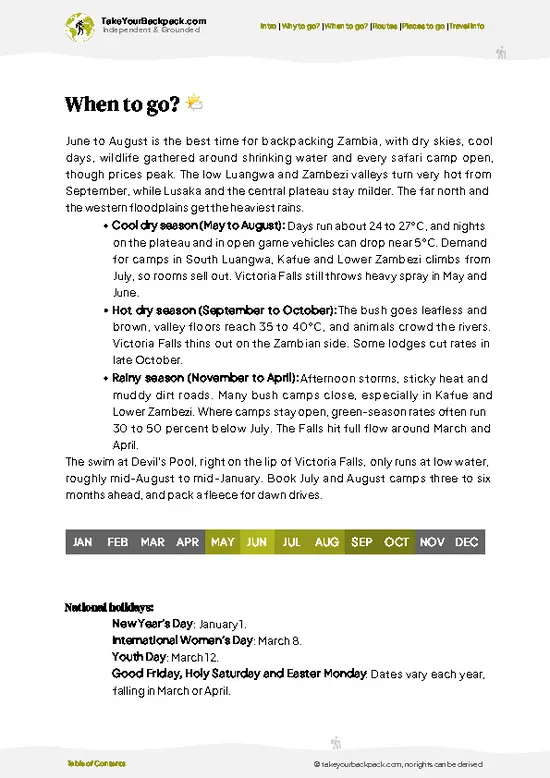
May to August is the most comfortable window for Siavonga, with dry days around 25 to 29°C (77 to 84°F) and cool nights near 12 to 16°C (54 to 61°F). Lake breezes make mornings on a boat feel chilly, so layers help.
  • Hot Dry Season (September to November): Temperatures climb to 33 to 40°C (91 to 104°F), and the Zambezi Valley bakes. Swimming and early starts are great, but afternoons are brutal. Lodges drop rates here, and fishing is at its best.
  • Rainy Season (December to March): Humid highs of 30 to 35°C (86 to 95°F) arrive with heavy afternoon storms. Roads to nearby villages turn muddy, and the lake looks lush. Prices fall and few other travelers are around.
  • Cool Dry Season (April to August): Crisp, clear and busiest on weekends and school holidays. Daylight lasts about 11 to 12 hours, and
… read more 👉
May to August is the most comfortable window for Siavonga, with dry days around 25 to 29°C (77 to 84°F) and cool nights near 12 to 16°C (54 to 61°F). Lake breezes make mornings on a boat feel chilly, so layers help.
  • Hot Dry Season (September to November): Temperatures climb to 33 to 40°C (91 to 104°F), and the Zambezi Valley bakes. Swimming and early starts are great, but afternoons are brutal. Lodges drop rates here, and fishing is at its best.
  • Rainy Season (December to March): Humid highs of 30 to 35°C (86 to 95°F) arrive with heavy afternoon storms. Roads to nearby villages turn muddy, and the lake looks lush. Prices fall and few other travelers are around.
  • Cool Dry Season (April to August): Crisp, clear and busiest on weekends and school holidays. Daylight lasts about 11 to 12 hours, and rates peak.
Book weekend stays ahead in July and August, when Lusaka families drive down.


source: climatestotravel.comJANJanuary: fair for travelingFEBFebruary: fair for travelingMARMarch: fair for travelingAPRApril: fair for travelingMAYMay: highly recommended for travelingJUNJune: highly recommended for travelingJULJuly: excellent for travelingAUGAugust: excellent for travelingSEPSeptember: highly recommended for travelingOCTOctober: highly recommended for travelingNOVNovember: fair for travelingDECDecember: fair for traveling
when-to-go

✈️ The backpacker research shortcutZambia Travel Guide

An offline-friendly backpacking guide with optimized travel routes, ranked highlights, transport advice, and the best areas to stay.
example page 0 from our offline Travel Guide for Zambia
example page 1 from our offline Travel Guide for Zambia
example page 2 from our offline Travel Guide for Zambia
example page 3 from our offline Travel Guide for Zambia
example page 4 from our offline Travel Guide for Zambia
example page 5 from our offline Travel Guide for Zambia
example page 6 from our offline Travel Guide for Zambia
example page 7 from our offline Travel Guide for Zambia
The digital guide (351 pages) contains:
✅ 89 highlights, ranked by travel appeal
✅ Optimized 5, 10 & 15-day travel routes
✅ Cities, national parks, landmarks, beaches
✅ How to get around
✅ Offline-friendly for travel without Wi-Fi
👉 Click to see all 30+ guide features

📅 Plan smarter in minutes, not weeks
✅ Month by month travel advice
✅ Festivals & national holidays
✅ Budget expectations

🗺️ Go to the right places, skip the overrated ones
✅ Honest pros & cons of destinations
✅ Top hikes, parks & viewpoints
✅ Lesser-known places most travelers miss
✅ Clear “worth it vs skip it” guidance

🛏️ Travel smoothly without rookie mistakes
✅ Best areas to stay
✅ Transport systems explained simply
✅ Common scams & safety advice
✅ SIM cards, money & practical tips

🌍 Understand the country, not just visit it
✅ Culture & traditions
✅ 52 Essential phrases & customs
✅ Festivals worth planning around
✅ Traveler-friendly historical context
✅ Insights that make places more meaningful

📱 Built for real travel conditions
✅ Fully downloadable PDF
✅ Works completely offline
✅ Optimized for phone use
✅ Useful in remote areas & buses
✅ Everything in one place
Stop searching, start planning
Get instant access to your full guide. 30‑day money-back guarantee.
+ Add another guide for just

By proceeding you agree to our terms.
Sent to your inbox immediately after payment • 100% Secure Checkout
Best Backpacking Travel Advisor 2025 tourism awardBest Backpacking
Travel Advisor
2025
What others say about Take Your Backpack Guides:
⭐⭐⭐⭐⭐
Fantastic, amazing amount of information!
⭐⭐⭐⭐⭐
My goodness this is amazing, it's what I've been looking for hats off too you!
⭐⭐⭐⭐⭐
I think this is absolutely BRILLIANT
⭐⭐⭐⭐
Very complete and informative. It's still missing places, but I gotta to commend you
⭐⭐⭐⭐⭐
This is truly amazing, thank you, can't wait to explore it with my kids!
⭐⭐⭐⭐⭐
Awesome resource, thank you!
⭐⭐⭐⭐⭐
This is amazing! Can't wait to explore the ones I haven't seen
⭐⭐⭐⭐
I love this! Well done, great idea.
⭐⭐⭐⭐⭐
Thanks for taking the time to make this gem!
⭐⭐⭐⭐⭐
This might be the best website I've ever seen.
⭐⭐⭐⭐⭐
Congratulations, and thank you so much for your work; it's incredibly valuable.
⭐⭐⭐⭐
In all seriousness I think you did a great job pointing out the important spots
⭐⭐⭐⭐⭐
10/10 very good
⭐⭐⭐⭐⭐
As someone who's only just starting to visit regularly this is awesome, thank you.
⭐⭐⭐⭐
Thank you very much! I'm going to visit my dad, it's going to be very useful!
⭐⭐⭐⭐⭐
This is really cool! We'll be travelling for the first time and this definitely come in handy.
⭐⭐⭐⭐⭐
You are now our minister of culture, congratulations 👨‍💼
⭐⭐⭐⭐⭐
Just wanted to tell you that this is a pearl! Going to follow your recommendations.
⭐⭐⭐⭐⭐
This is so cool. I'll definitely be using the resource for my travels soon.
⭐⭐⭐⭐⭐
This is very impressive! Good work.
⭐⭐⭐⭐⭐
This is an amazing and informative site. Very well done!

🛏️ Where to stay?Best areas to stay in Zambia

Stay along the lakeshore close to the town center for the best mix of cheap beds, safe walking and easy transport. Siavonga has few true hostels, so most budget travelers choose basic guesthouses, lodges with camping or simple chalets, typically US$12 to 30 a night, with a few dorm-style beds in some places.
The lakeshore side near the center suits most people. Taxis and minibuses are easy to find, restaurants and the market are a short walk, and the main road stays busy enough in the evening that returning to your room feels comfortable. Noise comes from bars on weekends, so ask for a room away … read more 👉
Stay along the lakeshore close to the town center for the best mix of cheap beds, safe walking and easy transport. Siavonga has few true hostels, so most budget travelers choose basic guesthouses, lodges with camping or simple chalets, typically US$12 to 30 a night, with a few dorm-style beds in some places.
The lakeshore side near the center suits most people. Taxis and minibuses are easy to find, restaurants and the market are a short walk, and the main road stays busy enough in the evening that returning to your room feels comfortable. Noise comes from bars on weekends, so ask for a room away from the music if you want to sleep.
The quieter edges, a few kilometers east or west, have camping spots and cheaper chalets with lake views, and the nights are silent apart from frogs and insects. The downside is a taxi to get anywhere, usually US$3 to 6 each way, and after dark you will not want to walk those stretches. Bring a tent if you want the lowest price.
Book ahead for weekends and holidays, when the town fills with families from Lusaka. Midweek, you can often walk in and negotiate a better rate.

🚌 Getting aroundTransportation options and practical tips

Siavonga has no train, and the minibus stop at the market sits at the top of town, about 1 to 2 km (0.6 to 1.2 miles) from most lakeside spots, so a short taxi ride or a downhill walk gets you to the shore. Most backpackers walk the center, then use taxis for anything spread out along the lake. Public transport is basic and runs mainly to Lusaka, so plan your day around that.
  • Walking: Free and good for the market, the main street and the nearby shoreline. The hills are steep and the sun is hot, so start early and carry water. Avoid walking on unlit roads after dark because wildlife and cars are both a risk.
  • Local Taxis: Plentiful around the market and lodges. A short hop costs about US$2 to 4, and rides to the dam wall or crocodile farm run roughly US$5 to 12. Agree the fare before you get in,
… read more 👉
Siavonga has no train, and the minibus stop at the market sits at the top of town, about 1 to 2 km (0.6 to 1.2 miles) from most lakeside spots, so a short taxi ride or a downhill walk gets you to the shore. Most backpackers walk the center, then use taxis for anything spread out along the lake. Public transport is basic and runs mainly to Lusaka, so plan your day around that.
  • Walking: Free and good for the market, the main street and the nearby shoreline. The hills are steep and the sun is hot, so start early and carry water. Avoid walking on unlit roads after dark because wildlife and cars are both a risk.
  • Local Taxis: Plentiful around the market and lodges. A short hop costs about US$2 to 4, and rides to the dam wall or crocodile farm run roughly US$5 to 12. Agree the fare before you get in, since there are no meters. Hire one for a half day and the driver will wait at each stop.
  • Minibuses to Lusaka: These depart when full from the bus stop, mostly in the morning, and the trip takes about 3 to 4 hours for roughly US$6 to 10. Arrive early because buses fill fast and few run after midday. Larger coaches from Lusaka sometimes run on the same route.
  • Boats: Water taxis and cruises leave from the harbor and lodge jetties. Sunset cruises run about US$15 to 30, and crossings toward the Zimbabwe side need immigration paperwork, so ask at the border post first.
A ride shared with locals costs less than a private taxi, so ask your lodge which drivers do shared runs.

👛 Costs (as of 22 October 2026)Typical daily expenses

Siavonga costs about US$51 a day for a backpacker who eats local, sleeps in budget lodges and uses shared transport. Lakeside lodges push prices up compared with other Zambian towns, especially on weekends.
CategoryBudget RangeLocal Reality
Dorm accommodationUS$12 to 20 (high season)Few true dorms. Expect a basic room, a camping spot or a shared chalet. Low season is US$10 to 16.
MealsUS$10 to 18Market nshima with kapenta or chicken costs US$2 to 4. Lodge restaurants charge US$7 to 12 for a main.
Local transportUS$4 to 10Short taxi hops cost US$2 to 4. Rides to the dam or crocodile farm run higher.
Basic activities/entry feesUS$5 to 15The crocodile farm costs about US$5 to 10. Boat cruises run US$20 to 40 and are the main splurge.
Miscellaneous expensesUS$3 to 6Water, snacks, a cold drink and a
… read more 👉
Siavonga costs about US$51 a day for a backpacker who eats local, sleeps in budget lodges and uses shared transport. Lakeside lodges push prices up compared with other Zambian towns, especially on weekends.
CategoryBudget RangeLocal Reality
Dorm accommodationUS$12 to 20 (high season)Few true dorms. Expect a basic room, a camping spot or a shared chalet. Low season is US$10 to 16.
MealsUS$10 to 18Market nshima with kapenta or chicken costs US$2 to 4. Lodge restaurants charge US$7 to 12 for a main.
Local transportUS$4 to 10Short taxi hops cost US$2 to 4. Rides to the dam or crocodile farm run higher.
Basic activities/entry feesUS$5 to 15The crocodile farm costs about US$5 to 10. Boat cruises run US$20 to 40 and are the main splurge.
Miscellaneous expensesUS$3 to 6Water, snacks, a cold drink and a SIM top-up.
Total Daily BudgetUS$34 to 69About US$51 a day
To save money, buy food at the market and share taxi rides with other travelers heading the same way.


source: zambiatourism.com
⚠️ Prices can change and everyone travels differently, so take this as a rough guide. Hope it helps you plan your adventure!

🚌 Day tripsEasy escapes and nearby places

Siavonga works well as a base for short trips since everything of interest is within an hour or two by road or water, and you can be back for sunset.
Kariba Dam Wall:
The 128-meter-high dam wall holds back one of the world's largest reservoirs, and the view down the gorge is worth the short ride. A taxi round trip with waiting time costs around US$10 to 20, and the visit takes an hour or two. Bring your passport because the border post controls access, and avoid photographing officials or security points.

Lake Kariba Cruise:
Half-day boat trips from the harbor head along the shoreline, where you can spot elephants, hippos and fish eagles. Expect to pay US$20 to 40 per person depending on group size. Go in the late afternoon for the best light and animal activity, and confirm the departure … read more 👉
Siavonga works well as a base for short trips since everything of interest is within an hour or two by road or water, and you can be back for sunset.
Kariba Dam Wall:
The 128-meter-high dam wall holds back one of the world's largest reservoirs, and the view down the gorge is worth the short ride. A taxi round trip with waiting time costs around US$10 to 20, and the visit takes an hour or two. Bring your passport because the border post controls access, and avoid photographing officials or security points.

Lake Kariba Cruise:
Half-day boat trips from the harbor head along the shoreline, where you can spot elephants, hippos and fish eagles. Expect to pay US$20 to 40 per person depending on group size. Go in the late afternoon for the best light and animal activity, and confirm the departure time the day before because many boats leave only when enough passengers show up.

Lake Kariba Crocodile Farm:
This farm on the edge of town lets you watch crocodiles of all sizes up close. Entry costs about US$5 to 10, and a taxi from the center runs US$5 to 8. Visit in the morning when the animals are more active, and listen to the keeper rather than leaning over the rails.

Lusaka Day Out:
If you need an ATM-rich city fix, the capital is a 3 to 4 hour ride each way, so leave at dawn. Minibuses cost US$6 to 10 each way. The mistake first-timers make is leaving too late and missing the last bus back, so check return times before you commit.
👉 Explore Lusaka

🛡️ SafetyStaying Safe: What Travelers Should Know

Siavonga is a calm lakeside town where the main risks are small-scale theft and the wildlife, not violence. Keep your phone and cash out of sight at the market, carry only what you need for the day and lock valuables in your room. Pickpockets work crowded stalls and minibus stops, so keep your bag in front of you.
Solo travelers, including women, generally manage fine, though you should take a taxi after dark since the roads are poorly lit and some stretches are steep. Hippos and crocodiles live in the lake, so never swim at unmanaged spots or walk the shoreline at night.
Expect some persistent offers from boat touts, craft sellers and taxi drivers. Agree prices upfront and a firm no, said with a smile, usually ends it. Police and border officials may check documents near the dam, so carry a copy of your passport.

FAQTraveler FAQ

Siavonga is worth a stay of its own, especially if you want a lake town with a swimming-friendly shoreline and a slow pace. Lake Kariba laps right at the town, Kariba Dam wall is a short drive away across the Zimbabwe border post area, and sunset boat cruises run at roughly US$15 to 30 a person. Backpackers who only pass through on the way to Lusaka miss the tiger fishing, the crocodile farm and the hot springs nearby.
Plan on two to three days in Siavonga. That gives you one day for a boat trip or fishing on Lake Kariba, one for the dam wall viewpoint and the Nyanga Hills views, and a slow day by the water. Add a fourth day only if you want to head for Lake Kariba islands or the Gwembe Valley villages, which need arranged transport costing around US$30 to 60.
Siavonga works as a day trip from Lusaka, about 190 kilometers (120 miles) away, with a drive of roughly 2.5 to 3.5 hours each way on the Chirundu road and the steep Kariba escarpment descent. Shared minibuses from Lusaka cost around US$8 to 12 one way, and a private car or taxi runs closer to US$80 to 130 return. A same-day return leaves only three or four hours at the lake, so staying one night is the better plan if you want a boat cruise.
⚠️ Things can change over time, so always validate details locally before you go.

Other Zambian towns near Siavonga

Explore more nearby:

  • Choma—Tonga museum, craft stalls, grill stalls, farm-belt stop| 186 km away
  • Kalomo—Railway platform, colonial streets, Iron Age mounds, braai stalls| 244 km away
  • Namwala—Kafue Flats edge, Ila cattle, dugout fishing, pelicans| 258 km away

💡 Not sure where to go next?
Create a personalized itinerary for Zambia including Siavonga and the places that fit your trip.

Generate my itinerary

👉 Discover all towns

Or checkout all Zambia has to offer (think cities, towns, villages, national parks, hikes, beaches, festivals)
Country photo of Zambia

We 💚 feedbackIs it worth it?

Siavonga works best as the rest stop in a longer Zambia and Zimbabwe loop, paired with Lusaka on one side and Victoria Falls or Lower Zambezi on the other. I would give it two nights, no more, and take a sunset cruise on the first evening. Bring insect repellent and cash, because the mosquitoes are persistent and machines are not.

✍️ Help improve this page!
The information on this page is based on in-depth research, insights shared by experienced travelers, and feedback from the local travel community in Zambia. While every effort is made to keep the information accurate and current, conditions can change — so if you spot anything incorrect or outdated, please get in touch.


🙋‍♂️ Give feedback

👋 Meet the founderWho’s Behind Take Your Backpack?

Johan, backpacker and founder of TakeYourBackpackHi, I’m Johan (Netherlands 🇳🇱), the creator of TakeYourBackpack. Over the past 3 decades, I’ve backpacked through 90+ countries across six continents, gaining extensive experience with independent travel, long-term trips, and overland routes.

This site is built on a combination of firsthand travel experience and carefully curated insights from other backpackers. Many guides are based on places I’ve personally visited, while others bring together tips, observations, and practical advice shared by trusted travelers I’ve met along the way.

The goal is to provide realistic, experience-driven guidance — not generic itineraries — so you can explore destinations with better context, clearer expectations, and more confidence.