
×

Zimbabwe🇿🇼 | hikesMavuradonha Wilderness TrailEscarpment ridgelines, miombo woodland, walking with elephants, sable glades | things to do and best time to go

Explore Matobo HillsExplore Zambezi River Walk

Backpacking in Mavuradonha Wilderness Trail
👍 Recommendedhike ranked #3
By Johan Kruseman 🇳🇱 | Updated October 22, 2026

Mavuradonha Wilderness Trail puts you in genuine big-game country without a vehicle, and it sits close enough to Harare for a long weekend. It lies in the north of Zimbabwe, on the Zambezi Escarpment in Mashonaland Central, roughly north of the capital. Expect steep rocky climbs, miombo woodland, long views over the Zambezi Valley and the chance of elephants, so this is a moderate-to-hard walk. Public transport gets you only as far as Centenary, and the last stretch to the gate needs a pre-arranged lift. On my way in, the minibus from Harare stopped dead on the road while a herd of goats took its time crossing, and the driver used the pause to sell me a bag of roasted groundnuts. The reward is a quiet escarpment with few other hikers. Unlike flat, busy Mana Pools, this is vertical walking, with a view from every ridge.

Discover everything you want to know in the 📖 Zimbabwe Travel Guide.
Best time to go: May - October
Duration: 3 days
Distance: 40 kilometers
Total ascent: 1200 meters


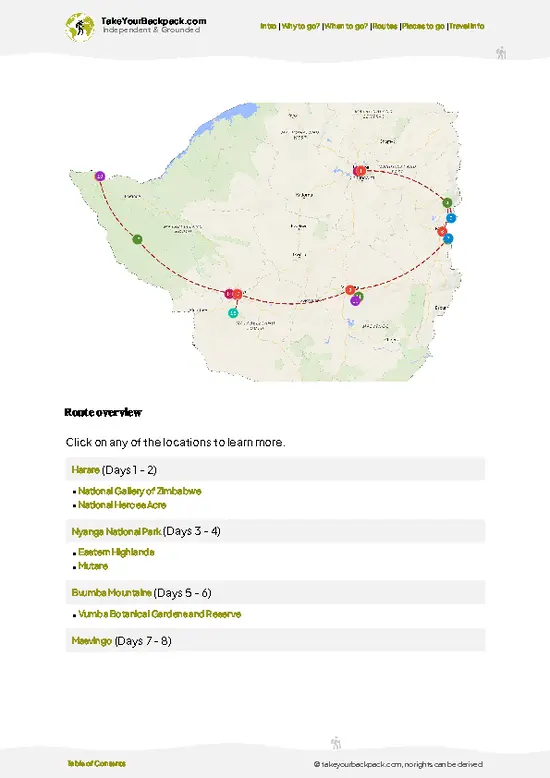
example page 0 from our offline Travel Guide for Zimbabwe
example page 1 from our offline Travel Guide for Zimbabwe
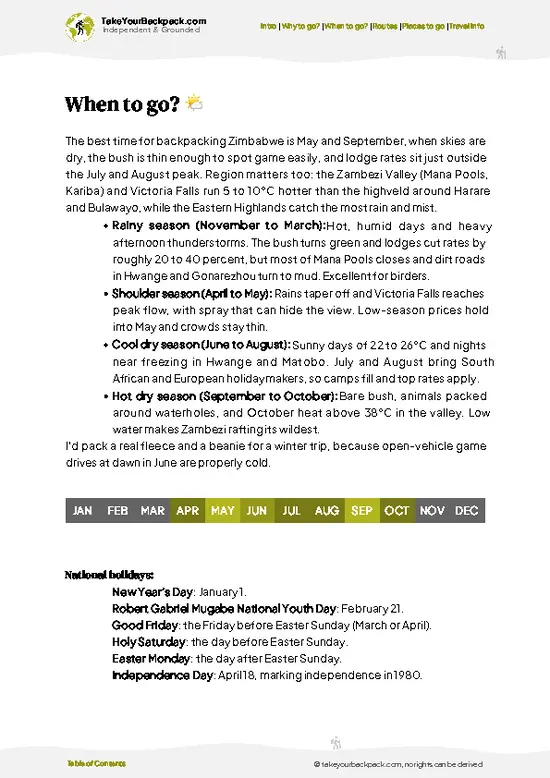
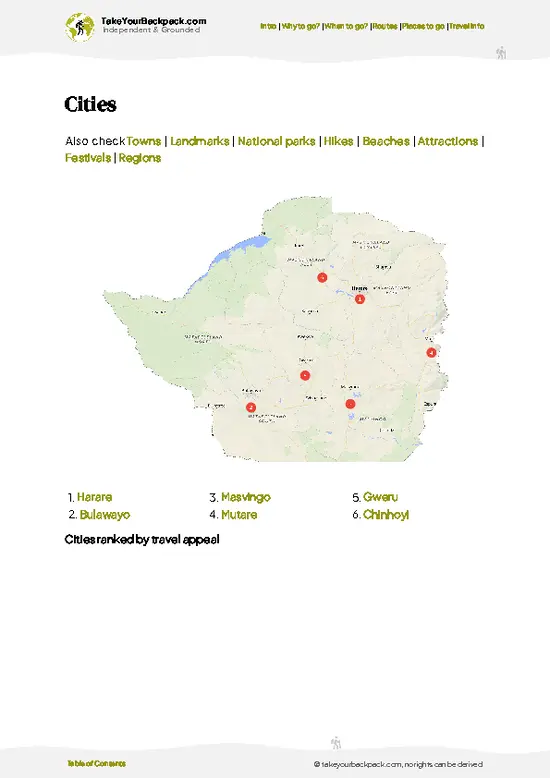
example page 2 from our offline Travel Guide for Zimbabwe
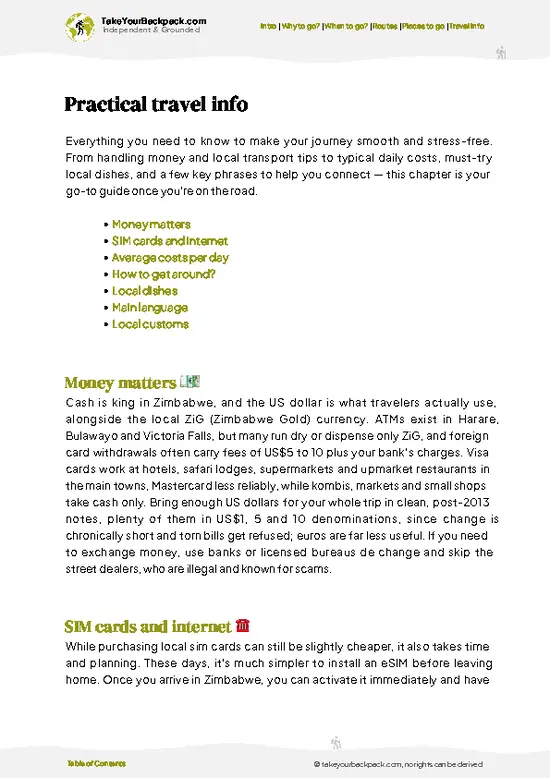
example page 3 from our offline Travel Guide for Zimbabwe
example page 4 from our offline Travel Guide for Zimbabwe
example page 5 from our offline Travel Guide for Zimbabwe
example page 6 from our offline Travel Guide for Zimbabwe
example page 7 from our offline Travel Guide for Zimbabwe
Loading the map 🌍
CLICK TO FILTER
cities
towns
landmarks
national parks
hikes
beaches
attractions
festivals
regions
SHOW COUNTRY’S BESTSHOW ALL

✨ Why go?
Ranked #3 hike in Zimbabwe
Why visitors keep coming back

Mavuradonha Wilderness Trail gives you walking safari terrain within reach of the capital, and that is the main draw. You hike with a guide through country where sable, klipspringer and elephant share the slopes, on foot and at a pace that lets you hear the woodland. The scenery stacks up fast: the Zambezi Escarpment drops away toward the valley floor and you get that panorama without a multi-week commitment. The distances flex too. You can book a night or two and still feel you have been somewhere remote, then slot the trail between Harare and a Zambezi Valley leg, such as Mana Pools or Kariba. Most trekkers here are Zimbabweans and residents, which makes it a good place to meet people who know the country and will tell you where to eat next. Nights at the base are dark and quiet. If you … read more 👉
Mavuradonha Wilderness Trail gives you walking safari terrain within reach of the capital, and that is the main draw. You hike with a guide through country where sable, klipspringer and elephant share the slopes, on foot and at a pace that lets you hear the woodland. The scenery stacks up fast: the Zambezi Escarpment drops away toward the valley floor and you get that panorama without a multi-week commitment. The distances flex too. You can book a night or two and still feel you have been somewhere remote, then slot the trail between Harare and a Zambezi Valley leg, such as Mana Pools or Kariba. Most trekkers here are Zimbabweans and residents, which makes it a good place to meet people who know the country and will tell you where to eat next. Nights at the base are dark and quiet. If you prefer solitude to a checklist of famous sights, this is where it is found.

💡 HighlightsMust-see experiences and standout moments

  1. Zambezi Escarpment Viewpoints: The ridgelines of the Mavuradonha range drop in steps toward the Zambezi Valley, and on clear days the haze-blue lowlands run to the horizon. This is the picture that brings most hikers here.
  2. Miombo Woodland on the Plateau: Msasa and other miombo trees close in over the path, and the leaves flush red and copper in the dry months before the rains. Birdsong is constant and the shade is welcome on climbs.
  3. Sable and Klipspringer Slopes: Rocky outcrops hold klipspringer perched on boulders, while sable antelope graze open glades. Walking quietly with a guide gives you far better odds than any vehicle would.
  4. Elephant Country: Elephants move through the valleys and drainage lines here, and fresh dung and trampled brush are common signs. Meeting them on foot is memorable
… read more 👉
  1. Zambezi Escarpment Viewpoints: The ridgelines of the Mavuradonha range drop in steps toward the Zambezi Valley, and on clear days the haze-blue lowlands run to the horizon. This is the picture that brings most hikers here.
  2. Miombo Woodland on the Plateau: Msasa and other miombo trees close in over the path, and the leaves flush red and copper in the dry months before the rains. Birdsong is constant and the shade is welcome on climbs.
  3. Sable and Klipspringer Slopes: Rocky outcrops hold klipspringer perched on boulders, while sable antelope graze open glades. Walking quietly with a guide gives you far better odds than any vehicle would.
  4. Elephant Country: Elephants move through the valleys and drainage lines here, and fresh dung and trampled brush are common signs. Meeting them on foot is memorable and needs your guide’s full attention.
  5. Night Sky at the Base Camp: With no town lights for miles, the Milky Way is clear above the escarpment, and hyena or nightjar calls fill the dark.
Mavuradonha Wilderness Trail costs the most in guide and camp fees, while the night sky over the camp costs nothing extra once you are there.
Spotted a mistake or missing something? Contact us.

🌤️ When to go?Choosing the right time of year

  • Cool Dry Season (May to August): This is the prime window for walking the Mavuradonha escarpment. Days run 22 to 27°C (72 to 81°F), and nights in the valley can fall to 7 to 10°C (45 to 50°F). Roughly 11 hours of light means starting early to finish before dark. Game is easier to spot as grass thins.
  • Hot Dry Season (September to October): Temperatures climb to 30 to 35°C (86 to 95°F) in the lowlands, and water sources shrink. Animals gather at the remaining pools, so sightings improve, but the climbs feel punishing after noon.
  • Rainy Season (November to March): Expect 25 to 30°C (77 to 86°F), afternoon storms, slick rock and muddy access roads. Grass grows tall, hiding wildlife. Operators may cut trips, and lodging is quietest and cheapest then.
  • Early Wet Shoulder (April): Hills turn green, rain
… read more 👉
  • Cool Dry Season (May to August): This is the prime window for walking the Mavuradonha escarpment. Days run 22 to 27°C (72 to 81°F), and nights in the valley can fall to 7 to 10°C (45 to 50°F). Roughly 11 hours of light means starting early to finish before dark. Game is easier to spot as grass thins.
  • Hot Dry Season (September to October): Temperatures climb to 30 to 35°C (86 to 95°F) in the lowlands, and water sources shrink. Animals gather at the remaining pools, so sightings improve, but the climbs feel punishing after noon.
  • Rainy Season (November to March): Expect 25 to 30°C (77 to 86°F), afternoon storms, slick rock and muddy access roads. Grass grows tall, hiding wildlife. Operators may cut trips, and lodging is quietest and cheapest then.
  • Early Wet Shoulder (April): Hills turn green, rain tapers off and the trails dry out. Crowds are minimal everywhere.
Book your trail dates at least two weeks ahead for June to August, when the few camps and guides fill with weekend groups from Harare.


source: climatestotravel.comJANJanuary: fair for travelingFEBFebruary: fair for travelingMARMarch: fair for travelingAPRApril: fair for travelingMAYMay: excellent for travelingJUNJune: excellent for travelingJULJuly: highly recommended for travelingAUGAugust: highly recommended for travelingSEPSeptember: highly recommended for travelingOCTOctober: highly recommended for travelingNOVNovember: fair for travelingDECDecember: fair for traveling
when-to-go

✈️ The backpacker research shortcutZimbabwe Travel Guide

An offline-friendly backpacking guide with optimized travel routes, ranked highlights, transport advice, and the best areas to stay.
example page 0 from our offline Travel Guide for Zimbabwe
example page 1 from our offline Travel Guide for Zimbabwe
example page 2 from our offline Travel Guide for Zimbabwe
example page 3 from our offline Travel Guide for Zimbabwe
example page 4 from our offline Travel Guide for Zimbabwe
example page 5 from our offline Travel Guide for Zimbabwe
example page 6 from our offline Travel Guide for Zimbabwe
example page 7 from our offline Travel Guide for Zimbabwe
The digital guide (265 pages) contains:
✅ 67 highlights, ranked by travel appeal
✅ Optimized 5, 10 & 15-day travel routes
✅ Cities, national parks, landmarks, beaches
✅ How to get around
✅ Offline-friendly for travel without Wi-Fi
👉 Click to see all 30+ guide features

📅 Plan smarter in minutes, not weeks
✅ Month by month travel advice
✅ Festivals & national holidays
✅ Budget expectations

🗺️ Go to the right places, skip the overrated ones
✅ Honest pros & cons of destinations
✅ Top hikes, parks & viewpoints
✅ Lesser-known places most travelers miss
✅ Clear “worth it vs skip it” guidance

🛏️ Travel smoothly without rookie mistakes
✅ Best areas to stay
✅ Transport systems explained simply
✅ Common scams & safety advice
✅ SIM cards, money & practical tips

🌍 Understand the country, not just visit it
✅ Culture & traditions
✅ 52 Essential phrases & customs
✅ Festivals worth planning around
✅ Traveler-friendly historical context
✅ Insights that make places more meaningful

📱 Built for real travel conditions
✅ Fully downloadable PDF
✅ Works completely offline
✅ Optimized for phone use
✅ Useful in remote areas & buses
✅ Everything in one place
Stop searching, start planning
Get instant access to your full guide. 30‑day money-back guarantee.
+ Add another guide for just

By proceeding you agree to our terms.
Sent to your inbox immediately after payment • 100% Secure Checkout
Best Backpacking Travel Advisor 2025 tourism awardBest Backpacking
Travel Advisor
2025
What others say about Take Your Backpack Guides:
⭐⭐⭐⭐⭐
Fantastic, amazing amount of information!
⭐⭐⭐⭐⭐
My goodness this is amazing, it's what I've been looking for hats off too you!
⭐⭐⭐⭐⭐
I think this is absolutely BRILLIANT
⭐⭐⭐⭐
Very complete and informative. It's still missing places, but I gotta to commend you
⭐⭐⭐⭐⭐
This is truly amazing, thank you, can't wait to explore it with my kids!
⭐⭐⭐⭐⭐
Awesome resource, thank you!
⭐⭐⭐⭐⭐
This is amazing! Can't wait to explore the ones I haven't seen
⭐⭐⭐⭐
I love this! Well done, great idea.
⭐⭐⭐⭐⭐
Thanks for taking the time to make this gem!
⭐⭐⭐⭐⭐
This might be the best website I've ever seen.
⭐⭐⭐⭐⭐
Congratulations, and thank you so much for your work; it's incredibly valuable.
⭐⭐⭐⭐
In all seriousness I think you did a great job pointing out the important spots
⭐⭐⭐⭐⭐
10/10 very good
⭐⭐⭐⭐⭐
As someone who's only just starting to visit regularly this is awesome, thank you.
⭐⭐⭐⭐
Thank you very much! I'm going to visit my dad, it's going to be very useful!
⭐⭐⭐⭐⭐
This is really cool! We'll be travelling for the first time and this definitely come in handy.
⭐⭐⭐⭐⭐
You are now our minister of culture, congratulations 👨‍💼
⭐⭐⭐⭐⭐
Just wanted to tell you that this is a pearl! Going to follow your recommendations.
⭐⭐⭐⭐⭐
This is so cool. I'll definitely be using the resource for my travels soon.
⭐⭐⭐⭐⭐
This is very impressive! Good work.
⭐⭐⭐⭐⭐
This is an amazing and informative site. Very well done!

🛏️ Where to stay?Where staying makes the most sense

If you enjoy meeting fellow travelers, consider choosing hostels with high ratings for atmosphere. On the other hand, if you prefer having your own space, a hotel might be a better option.

🥾 Hike detailsEverything you need to know before hiking Mavuradonha Wilderness Trail

Total Distance: Mavuradonha Wilderness Trail covers roughly 40 kilometers over a multi-day circuit, though routes can be shortened to day or overnight walks.
Estimated Duration: Plan on 3 days for the full walk, or 1 to 2 days for a shorter version.
Difficulty: Moderate to hard. Climbs are steep and rocky, paths are rough and the heat builds quickly in the lower valleys.
Starting Point: The trail begins at the Mavuradonha Wilderness base camp, north of Harare in Mashonaland Central.
  • Public Transport: Minibuses run from Harare to Centenary. From there you will need a pre-arranged pickup or a local
… read more 👉
Total Distance: Mavuradonha Wilderness Trail covers roughly 40 kilometers over a multi-day circuit, though routes can be shortened to day or overnight walks.
Estimated Duration: Plan on 3 days for the full walk, or 1 to 2 days for a shorter version.
Difficulty: Moderate to hard. Climbs are steep and rocky, paths are rough and the heat builds quickly in the lower valleys.
Starting Point: The trail begins at the Mavuradonha Wilderness base camp, north of Harare in Mashonaland Central.
  • Public Transport: Minibuses run from Harare to Centenary. From there you will need a pre-arranged pickup or a local lift to reach the gate.
  • Arrangements: Walks go with a guide, so book in advance with the camp.
Major Landmarks:
  • Escarpment Ridges: Open rock outcrops with long views toward the Zambezi Valley.
  • Base Camp: Your start and finish, with a place to sleep and eat.
  • Drainage Lines: Seasonal streams where wildlife gathers and tracks are easiest to read.
Terrain and Scenery: Rocky tracks, steep scrambles and broad ridges with wide views. Granite and quartz boulders litter the slopes and the footing needs attention.
Vegetation: Miombo woodland dominates, with msasa trees, tall grass and thicker riverine vegetation in the valleys. Grass can be high after the rains.
Wildlife: Sable, klipspringer, kudu, buffalo and elephant occur in the area, along with baboons and abundant birdlife. Leopard live here but are rarely seen. Follow your guide’s instructions closely around large animals.
⚠️ Hiking info can sometimes be outdated or inaccurate. Before you hit the trail, check the latest conditions with locals. If you do spot anything that's off, I'd love to hear from you, so I can update it for fellow travelers.

🛡️ SafetyTraveler Safety Guide

Mavuradonha is a wilderness area with real wildlife and almost no infrastructure, so the sensible approach is to go with the camp’s armed scout or guide. Elephants, buffalo and leopards live here, though you will mostly meet them as tracks and dung. If you see elephants, stop, stay downwind and back away quietly. Never walk between a herd and its calves. Terrain is steep and rocky along the escarpment, with loose scree on descents, so wear broken-in boots and use trekking poles. There are no signposts on many routes, which makes following your guide essential rather than optional. Carry at least three liters of water per person, since streams dry up by September, plus a hat and sunscreen. Midday heat in the valley catches first-timers off guard, so finish climbs before noon. Ticks and malaria … read more 👉
Mavuradonha is a wilderness area with real wildlife and almost no infrastructure, so the sensible approach is to go with the camp’s armed scout or guide. Elephants, buffalo and leopards live here, though you will mostly meet them as tracks and dung. If you see elephants, stop, stay downwind and back away quietly. Never walk between a herd and its calves. Terrain is steep and rocky along the escarpment, with loose scree on descents, so wear broken-in boots and use trekking poles. There are no signposts on many routes, which makes following your guide essential rather than optional. Carry at least three liters of water per person, since streams dry up by September, plus a hat and sunscreen. Midday heat in the valley catches first-timers off guard, so finish climbs before noon. Ticks and malaria mosquitoes are present, so bring repellent and ask your doctor about prophylaxis. Phone signal is patchy, so tell the camp your return time.

FAQCommon questions from travelers

Mavuradonha Wilderness Trail is usually walked as a 2 to 4 day trip, covering roughly 10 to 15 km per day. Day walks from the main camps run 3 to 6 hours. Overnight routes follow the escarpment above the Zambezi Valley and sleep at basic bush camps. The drive from Harare takes about 3 to 3.5 hours.
Mavuradonha Wilderness Trail is moderate, with a few strenuous stretches. Expect steep climbs on rocky ground, heat in the valley and no marked paths on many sections. Daily distances are manageable, but you need decent fitness for 5 to 7 hours on foot with a daypack. Hiking from May to August is far more comfortable than in the hot months.
Mavuradonha Wilderness Trail requires a guide, and you should book it through the local camps or the Mavuradonha Wilderness Park office, since walking alone near big game is not allowed. Park entry and guide fees typically total about US$10 to 30 per person per day, plus camping or chalet costs around US$15 to 40. Arrange it a week or two before arriving, as there is no formal permit office on the trail itself.
⚠️ Things can change over time, so always validate details locally before you go.

Other Zimbabwean hikes near Mavuradonha Wilderness Trail

Explore more nearby:

  • Matobo Hills—Granite domes, San rock art, guided rhino walks, balancing boulders| 551 km away
  • Zambezi River Walk—riverbank trails, floodplain scenery, birdlife, hippo pools

💡 Not sure where to go next?
Create a personalized itinerary for Zimbabwe including Mavuradonha Wilderness Trail and the places that fit your trip.

Generate my itinerary

👉 Discover all hikes

Or checkout all Zimbabwe has to offer (think cities, towns, villages, national parks, hikes, beaches, festivals)
Country photo of Zimbabwe

We 💚 feedbackParting advice and final tips

Mavuradonha Wilderness Trail is worth two nights minimum. One night only gets you tired legs and a glimpse, while three nights lets the escarpment settle in and gives you better odds with the animals. I would bring sturdy boots, a wide-brimmed hat and plenty of water, and I would arrange the lift from Centenary before leaving Harare.

✈️ When did I visit Zimbabwe?
I have backpacked Zimbabwe all the way back in 2001.

✍️ Help improve this page!
The information on this page is based on my own backpacking experience in Zimbabwe, supplemented with up-to-date research and feedback from other travelers. Travel details can change, so if you notice anything outdated or incomplete, feel free to let me know.


🙋‍♂️ Give feedback

👋 Meet the founderWho’s Behind Take Your Backpack?

Johan, backpacker and founder of TakeYourBackpackHi, I’m Johan (Netherlands 🇳🇱), the creator of TakeYourBackpack. Over the past 3 decades, I’ve backpacked through 90+ countries across six continents, gaining extensive experience with independent travel, long-term trips, and overland routes.

This site is built on a combination of firsthand travel experience and carefully curated insights from other backpackers. Many guides are based on places I’ve personally visited, while others bring together tips, observations, and practical advice shared by trusted travelers I’ve met along the way.

The goal is to provide realistic, experience-driven guidance — not generic itineraries — so you can explore destinations with better context, clearer expectations, and more confidence.