×

Zimbabwe🇿🇼 | best hikesDiscover the 4 Best hikes Across Zimbabwe

Zimbabwe offers a diverse tapestry of hikes that cater to every backpacker’s spirit. From the rugged Eastern Highlands to the iconic Zambezi River, each region presents unique challenges and breathtaking scenery. Seasonal shifts dramatically influence trail conditions, with the dry season revealing stunning vistas while the wet season can transform paths into muddy obstacles.

Choosing the right hike impacts not just your vibe but also your budget and safety. High-altitude trails demand fitness and recovery time, while easier routes provide cultural immersion without the strain. Understanding these nuances shapes your overall experience, ensuring that every step taken in Zimbabwe resonates with purpose and adventure.

By Johan Kruseman 🇳🇱 | Updated June 14, 2026
Explore the best beaches in Zimbabwe

Why go?Understanding Their Importance

Hiking in Zimbabwe offers a unique blend of terrain variety and cultural richness that sets it apart from other countries. The landscape ranges from the rugged Eastern Highlands to the vast savannas, each trail revealing a different facet of the country’s natural beauty. This diversity means hikers can experience everything from steep ascents to gentle walks, but it also introduces a trade-off: difficulty versus scenic reward. Steeper trails often yield breathtaking views, while easier paths may lack the dramatic vistas but allow for deeper engagement with local flora and fauna.

Altitude plays a significant role in the hiking experience. Higher elevations can challenge even seasoned trekkers, especially during the rainy season when trails become slippery and less accessible. This brings forth … read more 👉
Hiking in Zimbabwe offers a unique blend of terrain variety and cultural richness that sets it apart from other countries. The landscape ranges from the rugged Eastern Highlands to the vast savannas, each trail revealing a different facet of the country’s natural beauty. This diversity means hikers can experience everything from steep ascents to gentle walks, but it also introduces a trade-off: difficulty versus scenic reward. Steeper trails often yield breathtaking views, while easier paths may lack the dramatic vistas but allow for deeper engagement with local flora and fauna.

Altitude plays a significant role in the hiking experience. Higher elevations can challenge even seasoned trekkers, especially during the rainy season when trails become slippery and less accessible. This brings forth the consideration of season versus safety; planning hikes during the dry months can enhance safety but may limit the lush scenery that comes with the rains.

Trail infrastructure varies widely. Some paths are well-marked and maintained, while others require navigational skills and a sense of adventure. This disparity affects accessibility versus immersive experiences; well-trodden routes offer convenience, while less traveled paths provide a more authentic connection to the land and its history.

Ultimately, the choice to hike in Zimbabwe involves weighing travel time against depth of exploration. Longer journeys to remote areas can yield profound insights into the country’s cultural and ecological tapestry, making the effort worthwhile for those seeking a richer experience.
Behind the Scenes of Selection
The list of best hikes in Zimbabwe is created based on scenery, challenge, trail quality, landmarks, and overall enjoyment. If you feel a hike is missing in this list, please let us know.

When to go?Optimal Periods for Travel

Altitude and Trail Access

Zimbabwe’s diverse terrain means that altitude plays a significant role in hiking conditions. Higher elevations can lead to cooler temperatures, especially at night. The best hiking experiences often occur during the dry season, typically from May to October. During these months, trails are more accessible, and the risk of rain is minimal.

Daylight Hours

Daylight hours vary throughout the year, impacting hiking plans. In the dry season, longer days provide ample time for exploration. Conversely, the wet season, from November to April, brings shorter days and increased cloud cover, limiting visibility and hiking time.

Rainfall and Recovery Needs

Rainfall is a crucial factor. The wet season can make trails muddy and challenging, while the dry season offers firm … read more 👉

Altitude and Trail Access

Zimbabwe’s diverse terrain means that altitude plays a significant role in hiking conditions. Higher elevations can lead to cooler temperatures, especially at night. The best hiking experiences often occur during the dry season, typically from May to October. During these months, trails are more accessible, and the risk of rain is minimal.

Daylight Hours

Daylight hours vary throughout the year, impacting hiking plans. In the dry season, longer days provide ample time for exploration. Conversely, the wet season, from November to April, brings shorter days and increased cloud cover, limiting visibility and hiking time.

Rainfall and Recovery Needs

Rainfall is a crucial factor. The wet season can make trails muddy and challenging, while the dry season offers firm ground. However, the wet season also rejuvenates the landscape, creating lush scenery and vibrant wildlife. Recovery needs should be considered; hiking during the dry season allows for better hydration and less fatigue due to cooler temperatures at night.

Seasonal Constraints

Travelers should weigh the trade-offs of visiting during shoulder seasons. These months can offer fewer crowds and lower costs, but conditions may be unpredictable. Peak periods, particularly during school holidays, can lead to busier trails and higher prices, impacting the overall experience. Balancing safety with scenic reward is essential for an enriching hiking adventure in Zimbabwe.

hike hoppingPlanning Your Route Efficiently

General Routing Logic

To maximize your hiking experience in Zimbabwe, cluster hikes by region. Start in the eastern highlands, where trails like Nyanga and Chimanimani offer stunning vistas and varied terrain. Move westward toward the iconic Matobo Hills, then finish in the north with the dramatic landscapes of Hwange National Park. This flow minimizes backtracking and keeps travel time efficient.

Typical Time Needed

Allocate at least two to three days per major hiking area. This allows for acclimatization, exploration, and recovery. Each hike demands energy, so factor in rest days after strenuous treks. For example, after a challenging ascent in Chimanimani, a day of light walking or relaxation can recharge your batteries.

Common Planning Mistakes

Avoid cramming too many hikes into a … read more 👉

General Routing Logic

To maximize your hiking experience in Zimbabwe, cluster hikes by region. Start in the eastern highlands, where trails like Nyanga and Chimanimani offer stunning vistas and varied terrain. Move westward toward the iconic Matobo Hills, then finish in the north with the dramatic landscapes of Hwange National Park. This flow minimizes backtracking and keeps travel time efficient.

Typical Time Needed

Allocate at least two to three days per major hiking area. This allows for acclimatization, exploration, and recovery. Each hike demands energy, so factor in rest days after strenuous treks. For example, after a challenging ascent in Chimanimani, a day of light walking or relaxation can recharge your batteries.

Common Planning Mistakes

Avoid cramming too many hikes into a short timeframe. This leads to fatigue and missed opportunities for deeper engagement with the environment. Prioritize quality over quantity; a single, immersive hike can be more rewarding than several rushed ones.

Trade-Offs and Constraints

Consider the balance between speed and depth of experience. Rushing through hikes may save time but sacrifices the chance to connect with local culture and wildlife. Budget constraints can also affect comfort levels; investing in a guided tour may enhance safety and enrich the experience. Ultimately, strategic planning and flexibility are key to navigating Zimbabwe’s diverse hiking landscape.

The ListThe Best hikes of Zimbabwe

1 Eastern Highlands

misty peaks, montane forests, cool climate, remote villages

Traverse high-altitude trails through shifting cloud forests, passing waterfalls and rural communities set against a backdrop of granite ridges.

2 Matobo Hills

balancing rocks, San rock art, open savanna, wildlife sightings

Climb over granite outcrops and discover ancient rock paintings, with panoramic views and the chance to spot rhino in the wild.

3 Mavuradonha Wilderness Trail

deep gorges, miombo woodland, remote escarpment, seasonal streams

Follow rugged paths along a dramatic escarpment, navigating dense woodland and river valleys far from roads or settlements.

4 Zambezi River Walk

riverbank trails, floodplain scenery, birdlife, hippo pools

Stroll beside the Zambezi’s shifting channels, watching for wildlife and enjoying the ever-changing light on water and sandbanks.

zimbabwe-hike-zambezi-river-walk
© Google |
Loading the map 🌍

Expert viewInsights from Locals and Experts

Expert Commentary


Zimbabwe’s hiking landscape is a thrilling mix of rugged terrain, diverse ecosystems, and cultural richness. To truly savor what this country has to offer, aim for at least three to five hikes. This allows you to experience a variety of altitudes, terrains, and local cultures without feeling rushed. Each hike presents its own set of challenges and rewards, so let’s break down what you need to know.

Trail Logistics


Navigating Zimbabwe’s trails requires a keen understanding of logistics. Many trails are remote, and access can be limited. Expect to spend a good chunk of time getting to trailheads, often on bumpy, unpaved roads. This adds to your travel time, so factor in an extra hour or two for transfers. If you’re short on time, prioritize hikes that are closer to your … read more 👉

Expert Commentary


Zimbabwe’s hiking landscape is a thrilling mix of rugged terrain, diverse ecosystems, and cultural richness. To truly savor what this country has to offer, aim for at least three to five hikes. This allows you to experience a variety of altitudes, terrains, and local cultures without feeling rushed. Each hike presents its own set of challenges and rewards, so let’s break down what you need to know.

Trail Logistics


Navigating Zimbabwe’s trails requires a keen understanding of logistics. Many trails are remote, and access can be limited. Expect to spend a good chunk of time getting to trailheads, often on bumpy, unpaved roads. This adds to your travel time, so factor in an extra hour or two for transfers. If you’re short on time, prioritize hikes that are closer to your base.

The infrastructure varies widely. Some areas have well-marked trails and established campsites, while others are less developed. Always carry a reliable map and consider downloading offline navigation apps. Connectivity can be spotty, and you don’t want to get lost in the bush.

Altitude and Recovery


Altitude plays a significant role in your hiking experience. Many trails in Zimbabwe reach elevations that can leave you breathless, literally. If you’re not acclimatized, you might feel the effects at higher altitudes, especially in places like the Eastern Highlands. Plan your hikes with recovery in mind. After a strenuous day, give yourself time to rest and hydrate. This isn’t just about physical recovery; it’s also about soaking in the local culture and scenery.

If you’re tackling a multi-day hike, consider the trade-off between pushing your limits and enjoying the journey. A slower pace allows for deeper engagement with the environment and local communities, while a faster pace might mean more miles but less connection.

Difficulty and Pacing


Difficulty levels vary widely across hikes. Some trails are straightforward, while others demand technical skills and physical endurance. Know your limits and choose hikes that match your fitness level. If you’re a beginner, don’t shy away from asking locals for advice; they can provide insights that guide your choices.

Pacing is crucial. Zimbabwe’s heat can be intense, especially in the dry season. Start early to avoid the midday sun, and take regular breaks to recharge. Listen to your body; if you’re feeling fatigued, it’s okay to adjust your plans. The goal is to enjoy the experience, not just to tick off a list of hikes.

Safety and Cultural Considerations


Safety is paramount. Always hike with a buddy, and inform someone of your plans. Wildlife encounters can be thrilling but also dangerous. Keep a respectful distance and be aware of your surroundings.

Culturally, Zimbabwe is rich and diverse. Engage with local communities when possible. This adds depth to your journey and often leads to unexpected experiences. However, be mindful of local customs and practices. A little respect goes a long way in building rapport.

Budget and Value


Budgeting for hikes in Zimbabwe can be tricky. Costs can vary based on the trail, required permits, and whether you opt for guided experiences. While it might be tempting to cut costs, investing in a knowledgeable guide can enhance your experience significantly. They provide insights that enrich your understanding of the landscape and its history.

Ultimately, the trade-off between time, money, and comfort boils down to what you value most in your hiking experience. Choose wisely, and you’ll find that the journey is just as rewarding as the destination.

✈️ The backpacker research shortcutZimbabwe Travel Guide

An offline-friendly backpacking guide with optimized travel routes, ranked highlights, transport advice, and the best areas to stay.
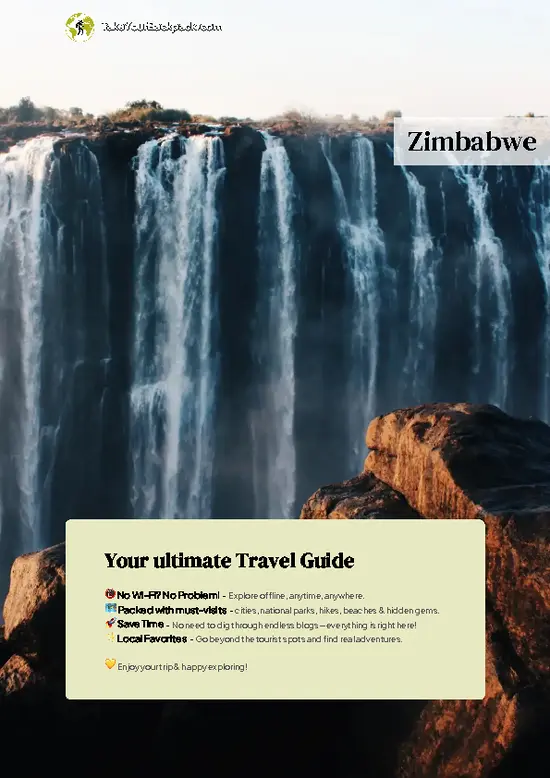
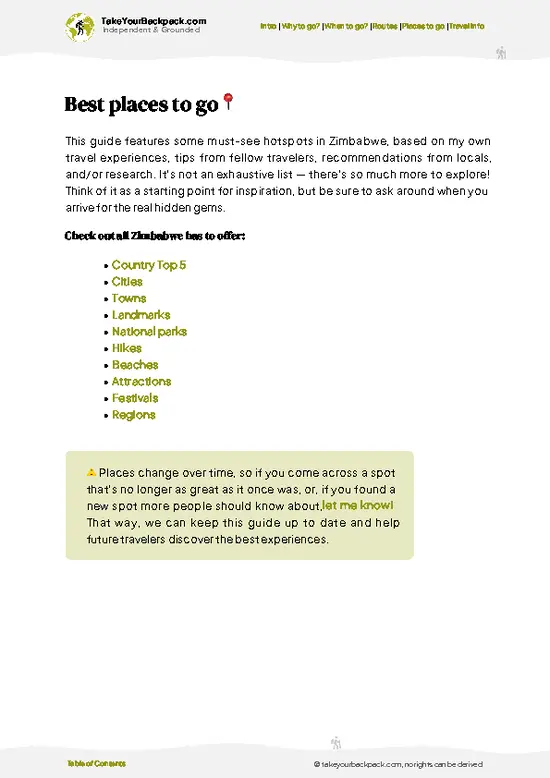
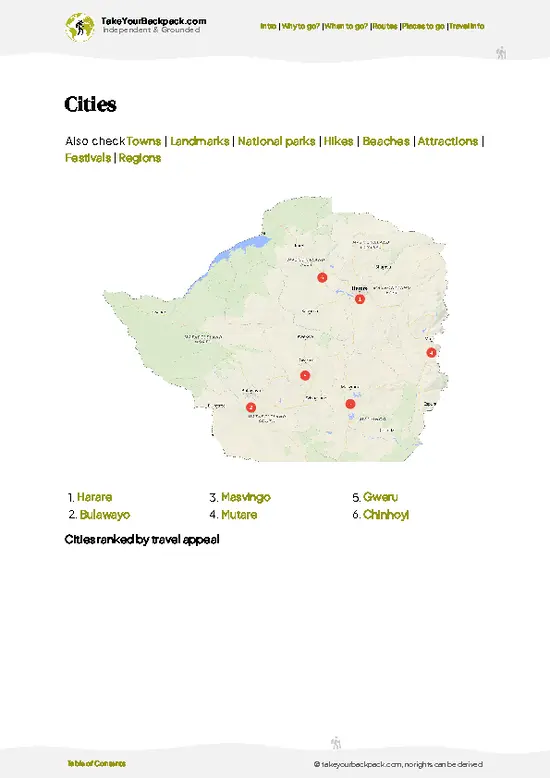
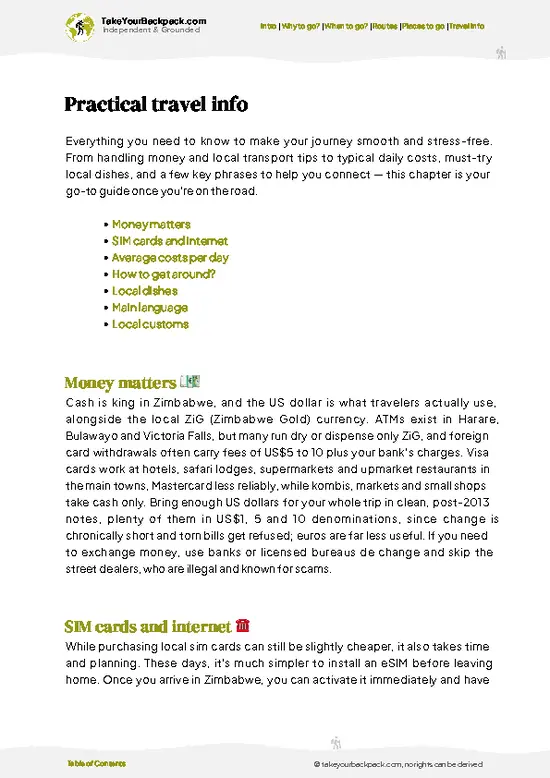
example page 0 from our offline Travel Guide for Zimbabwe
example page 1 from our offline Travel Guide for Zimbabwe
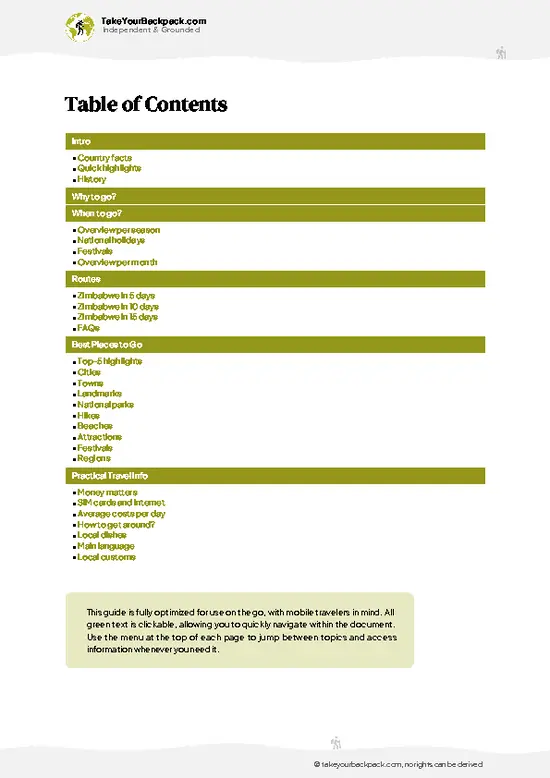
example page 2 from our offline Travel Guide for Zimbabwe
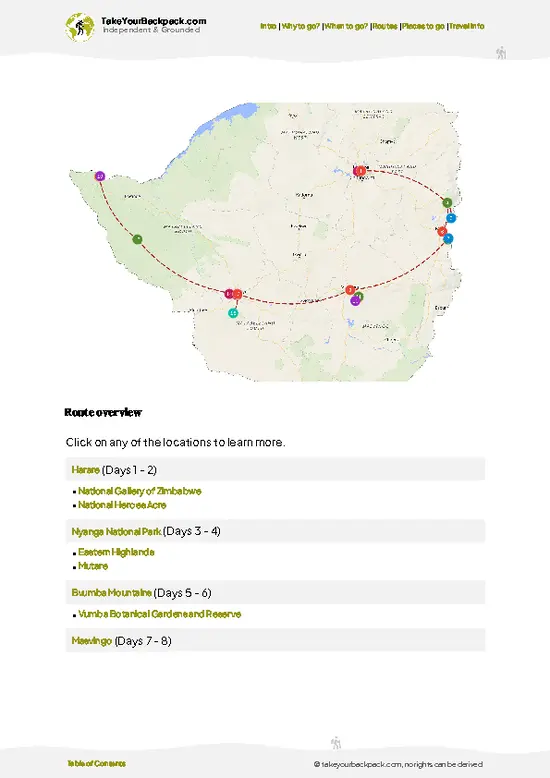
example page 3 from our offline Travel Guide for Zimbabwe
example page 4 from our offline Travel Guide for Zimbabwe
example page 5 from our offline Travel Guide for Zimbabwe
example page 6 from our offline Travel Guide for Zimbabwe
example page 7 from our offline Travel Guide for Zimbabwe
The digital guide (356 pages) contains:
90 highlights, ranked by travel appeal
Optimized 5, 10 & 15-day travel routes
Cities, national parks, landmarks, beaches
How to get around
Offline-friendly for travel without Wi-Fi
👉 Click to see all 30+ guide features

📅 Plan smarter in minutes, not weeks
Month by month travel advice
Festivals & national holidays
Budget expectations

🗺️ Go to the right places, skip the overrated ones
Honest pros & cons of destinations
Top hikes, parks & viewpoints
Lesser-known places most travelers miss
Clear “worth it vs skip it” guidance

🛏️ Travel smoothly without rookie mistakes
Best areas to stay
Transport systems explained simply
Common scams & safety advice
SIM cards, money & practical tips

🌍 Understand the country, not just visit it
Culture & traditions
52 Essential phrases & customs
Festivals worth planning around
Traveler-friendly historical context
Insights that make places more meaningful

📱 Built for real travel conditions
Fully downloadable PDF
Works completely offline
Optimized for phone use
Useful in remote areas & buses
Everything in one place
Save weeks of stressful planning
Get instant access to your full guide. 30‑day money-back guarantee.


By proceeding you agree to our terms.
Sent to your inbox immediately after payment • 100% Secure Checkout
Best Backpacking Travel Advisor 2025 tourism awardBest Backpacking
Travel Advisor
2025
What others say about Take Your Backpack Guides:
⭐⭐⭐⭐⭐
Fantastic, amazing amount of information!
⭐⭐⭐⭐⭐
My goodness this is amazing, it's what I've been looking for hats off too you!
⭐⭐⭐⭐⭐
I think this is absolutely BRILLIANT
⭐⭐⭐⭐
Very complete and informative. It's still missing places, but I gotta to commend you
⭐⭐⭐⭐⭐
This is truly amazing, thank you, can't wait to explore it with my kids!
⭐⭐⭐⭐⭐
Awesome resource, thank you!
⭐⭐⭐⭐⭐
This is amazing! Can't wait to explore the ones I haven't seen
⭐⭐⭐⭐
I love this! Well done, great idea.
⭐⭐⭐⭐⭐
Thanks for taking the time to make this gem!
⭐⭐⭐⭐⭐
This might be the best website I've ever seen.
⭐⭐⭐⭐⭐
Congratulations, and thank you so much for your work; it's incredibly valuable.
⭐⭐⭐⭐
In all seriousness I think you did a great job pointing out the important spots
⭐⭐⭐⭐⭐
10/10 very good
⭐⭐⭐⭐⭐
As someone who's only just starting to visit regularly this is awesome, thank you.
⭐⭐⭐⭐
Thank you very much! I'm going to visit my dad, it's going to be very useful!
⭐⭐⭐⭐⭐
This is really cool! We'll be travelling for the first time and this definitely come in handy.
⭐⭐⭐⭐⭐
You are now our minister of culture, congratulations 👨‍💼
⭐⭐⭐⭐⭐
Just wanted to tell you that this is a pearl! Going to follow your recommendations.
⭐⭐⭐⭐⭐
This is so cool. I'll definitely be using the resource for my travels soon.
⭐⭐⭐⭐⭐
This is very impressive! Good work.
⭐⭐⭐⭐⭐
This is an amazing and informative site. Very well done!

🛏️ Where to stay?Best Places to Stay in Zimbabwe

Yes. Hostels, backpacker lodges, budget guesthouses and campsites are common in major centres — Harare, Bulawayo and Victoria Falls — with limited basic options near national parks for camping or safari tents.

Harare — CBD gives the cheapest central options but can be noisy and less secure at night while northern residential suburbs are quieter, safer and better for cafes and transport; Bulawayo — city centre offers budget rooms with easy access to sights and buses but has quieter nightlife and mixed street safety; Victoria Falls — town centre and accommodation near the park put you closest to the falls, tours and lively nightlife yet are pricier in peak season; near parks (Hwange, Mana Pools) … read more 👉
Yes. Hostels, backpacker lodges, budget guesthouses and campsites are common in major centres — Harare, Bulawayo and Victoria Falls — with limited basic options near national parks for camping or safari tents.

Harare — CBD gives the cheapest central options but can be noisy and less secure at night while northern residential suburbs are quieter, safer and better for cafes and transport; Bulawayo — city centre offers budget rooms with easy access to sights and buses but has quieter nightlife and mixed street safety; Victoria Falls — town centre and accommodation near the park put you closest to the falls, tours and lively nightlife yet are pricier in peak season; near parks (Hwange, Mana Pools) expect remote, seasonal camps or basic safari camps and plan transfers and timing accordingly.

If you enjoy meeting fellow travelers, consider choosing hostels with high ratings for atmosphere. On the other hand, if you prefer having your own space, a hotel might be a better option.

ZimbabweExplore Zimbabwe

👋 Meet the founderWho’s Behind Take Your Backpack?

Johan, backpacker and founder of TakeYourBackpackHi, I’m Johan (Netherlands 🇳🇱), the creator of TakeYourBackpack. Over the past decade, I’ve backpacked through 80+ countries across six continents, gaining extensive experience with independent travel, long-term trips, and overland routes.

This site is built on a combination of firsthand travel experience and carefully curated insights from other backpackers. Many guides are based on places I’ve personally visited, while others bring together tips, observations, and practical advice shared by trusted travelers I’ve met along the way.

The goal is to provide realistic, experience-driven guidance — not generic itineraries — so you can explore destinations with better context, clearer expectations, and more confidence.

Get full Zimbabwe guide •
Instant download • 90 highlights • Full Offline guide