×

Zimbabwe🇿🇼 | regionsBvumba Mountains
misty forests, botanical gardens, granite outcrops | things to do and best time to go

Explore Malilangwe Wildlife ReserveExplore Honde Valley

Backpacking in Bvumba Mountains
🏆 Top pickregion ranked #1
By Johan Kruseman 🇳🇱 | Updated April 27, 2026

Your boots crunch through red earth, dew clings to your ankles, and the air smells like wet leaves and woodsmoke—then, out of nowhere, a troop of samango monkeys explodes from the canopy, shrieking and vanishing before you can even fumble for your camera. That’s the Bvumba Mountains: a pocket of Zimbabwe that feels like it’s hiding from the rest of the world, just southeast of Mutare, right up against the Mozambique border.

Bvumba is a jackpot for anyone who wants wild, misty mornings and afternoons spent wandering botanical gardens or sipping tea in faded colonial lodges. It’s cheaper than Victoria Falls, less hyped than Matobo, and the crowds are mostly local families or birdwatchers who know what’s up. Getting here is a bit of a mission—public transport is patchy, and you’ll probably end up hitching or bargaining with a taxi driver who thinks you’re lost. But that’s half the charm: you trade convenience for authenticity, and instead of souvenir stalls, you get mountain air, forest trails, and the kind of silence that makes you realize how loud your life usually is.

Discover everything you want to know in the 📖 Zimbabwe Travel Guide.
Loading the map 🌍
CLICK TO FILTER
city
town
unique site
national park
hike
beach
attraction
festival
region
SHOW COUNTRY‘S BESTSHOW ALL

✨ Why go?
Ranked #1 region in Zimbabwe
What makes this region worth visiting

The Bvumba Mountains in Zimbabwe are a backpacker’s playground, offering a unique blend of landscapes and experiences that make every moment count. You can hike through lush forests, explore rolling hills, and soak in breathtaking views without the hassle of constant relocation. This region is a transport dream; you can easily navigate between towns and trails, giving you the freedom to explore at your own pace.

What’s truly special here is the chance to mix nature and culture. Spend your mornings trekking through the mountains, then head into local villages in the afternoon. You’ll meet artisans and taste authentic dishes that tell the story of the land. This isn’t just sightseeing; it’s slow travel at its best.

By choosing the Bvumba Mountains, you’re not just ticking boxes on a travel … read more 👉
The Bvumba Mountains in Zimbabwe are a backpacker’s playground, offering a unique blend of landscapes and experiences that make every moment count. You can hike through lush forests, explore rolling hills, and soak in breathtaking views without the hassle of constant relocation. This region is a transport dream; you can easily navigate between towns and trails, giving you the freedom to explore at your own pace.

What’s truly special here is the chance to mix nature and culture. Spend your mornings trekking through the mountains, then head into local villages in the afternoon. You’ll meet artisans and taste authentic dishes that tell the story of the land. This isn’t just sightseeing; it’s slow travel at its best.

By choosing the Bvumba Mountains, you’re not just ticking boxes on a travel list. You’re investing your time in experiences that resonate. The variety of activities means you can dive deep into what interests you most, whether it’s birdwatching, visiting a local market, or simply enjoying a quiet moment with a view. This is where your journey becomes a rich tapestry of memories.
Get the complete Travel Guide for Zimbabwe
Everything organized for offline planning — routes, highlights, costs & tips

See what’s inside 👉

Get the Travel Guide -

💡 HighlightsDon't-miss highlights and experiences

  • Vumba Botanical Gardens — A proper old-school walkable garden on the Vumba plateau with a surprising mix of indigenous montane plants (proteas, cycads) and introduced ornamentals. Great for easy birding, short shaded trails and a mellow intro to the area’s flora — and useful if you want a low-effort half-day that still feels like “you’re in the highlands.”
  • Leopard Rock viewpoint — A classic granite outcrop that gives sweeping views down into Mozambique and across the Honde Valley on clear days. It’s one of those places where the light at dusk is ridiculous — photographers, sunset-watchers and anyone who likes a dramatic drop-off will love it.
  • Bvumba (Vumba) Forest Reserve — Pockets of misty montane forest threaded with little streams and fern gullies; prime habitat for the Eastern Highlands’
read more 👉
  • Vumba Botanical Gardens — A proper old-school walkable garden on the Vumba plateau with a surprising mix of indigenous montane plants (proteas, cycads) and introduced ornamentals. Great for easy birding, short shaded trails and a mellow intro to the area’s flora — and useful if you want a low-effort half-day that still feels like “you’re in the highlands.”
  • Leopard Rock viewpoint — A classic granite outcrop that gives sweeping views down into Mozambique and across the Honde Valley on clear days. It’s one of those places where the light at dusk is ridiculous — photographers, sunset-watchers and anyone who likes a dramatic drop-off will love it.
  • Bvumba (Vumba) Forest Reserve — Pockets of misty montane forest threaded with little streams and fern gullies; prime habitat for the Eastern Highlands’ specialist birds and quiet, mossy hikes. Walk slowly here — the orchids, squirrels and shy forest birds reward patience more than speed.
  • Mushroom Rocks — Weather-sculpted granite tors that look like giant stone mushrooms; compact, easy to scramble on and excellent for improvised picnics and photos. Hidden gem alert: most tourist buses pass them by, but locals use the area for weekend hangs and sunrise trips. (Personal favorite — raw, weirdly peaceful and off the beaten track.)
  • Castle Beacon ridge — A rocky spine offering higher-elevation ridge walks and panoramic points that feel wilder than the plateaus below. Fewer people do the full ridge route, so you’ll often have long stretches to yourself — bring windproof gear, it can get blustery.
  • Banti indigenous woodlands & fern glades — Small, lesser-known pockets of prime forest where local birders and families go for day trips. This is one of the quieter forested spots in the Vumba and a proper hidden gem if you want forest sounds without the main-trail crowds.
  • Village and farm-walks on the Vumba slopes — Walk through small-scale orchards, vegetable terraces and macadamia/banana plots and stop for a cup of tea with a household — practical cultural interaction that’s real (and benefits locals). Not a polished “experience” — it’s genuine, slow and good for learning how people make a living up here.
  • Birding around the granite outcrops and streams — The Bvumba is a hotspot for Eastern Highlands specialists; early-morning walks along the streams and up the rocky slopes often turn up species you won’t easily see elsewhere in Zimbabwe. Bring binoculars and a local guide if you want the best odds — the microhabitats change fast.
  • Sunset/long-ridge hikes to the Mozambique escarpment — Extended ridge walks that end with a drop-away view into the lowlands; the scale and atmosphere of the escarpment here feel unique to the Vumba. Overnight options are possible if you want star-filled skies and a dawn return.
  • Local craft stops & markets in Vumba villages — Small stalls and home workshops where artisans sell beading, woven goods and carved curios; perfect for buying something locally made and having a short, meaningful chat. Often overlooked by guidebook groups, this is a quiet cultural stop that supports families directly. (Hidden gem.)
Spotted a mistake or missing something? Contact us.

⌛️ 5 daysSeeing the highlights in 5 days

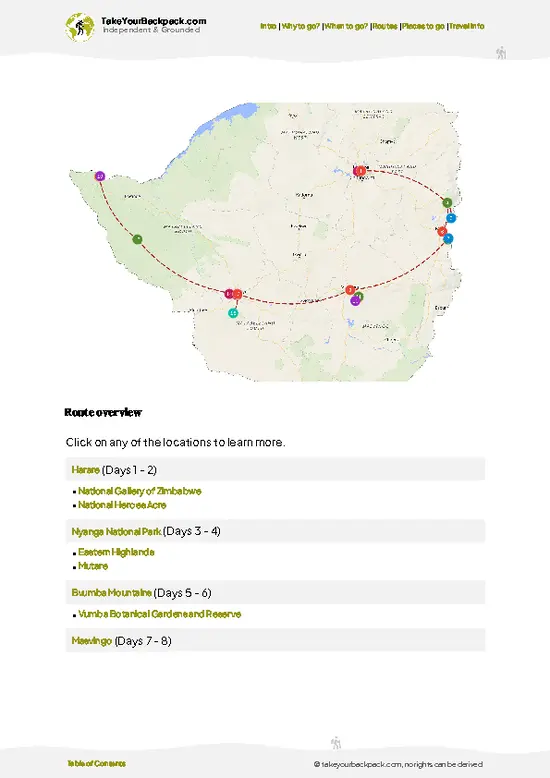
Day 1: Mutare
The journey kicks off in Mutare, the gateway to the Bvumba Mountains. You’ll want to spend a night here to acclimate and gather supplies. The local markets are a treasure trove of fresh produce and handmade crafts. Grab a few snacks and chat with the vendors; they’ll share stories that make you feel like you’re already part of the community. The transport options are straightforward: shared taxis or buses can whisk you up into the mountains the next day.

Day 2: Bvumba Mountains
Rise early and head into the Bvumba Mountains. The winding roads are a thrill, but they also dictate your pace. Expect to spend a good chunk of the day traveling, but the views are worth every minute. Once you arrive, settle into a cozy lodge. The air is crisp, and the scenery is lush. Spend the … read more 👉
Day 1: Mutare
The journey kicks off in Mutare, the gateway to the Bvumba Mountains. You’ll want to spend a night here to acclimate and gather supplies. The local markets are a treasure trove of fresh produce and handmade crafts. Grab a few snacks and chat with the vendors; they’ll share stories that make you feel like you’re already part of the community. The transport options are straightforward: shared taxis or buses can whisk you up into the mountains the next day.

Day 2: Bvumba Mountains
Rise early and head into the Bvumba Mountains. The winding roads are a thrill, but they also dictate your pace. Expect to spend a good chunk of the day traveling, but the views are worth every minute. Once you arrive, settle into a cozy lodge. The air is crisp, and the scenery is lush. Spend the afternoon exploring nearby trails. The flora here is unique, and you might even spot some rare birds.

Day 3: Nyanga National Park
Today’s a big one. You’ll need to catch a ride to Nyanga National Park, about an hour away. This is where the magic happens. The park is known for its dramatic landscapes and waterfalls. Hike to the top of Mount Nyangani for a panoramic view that’ll make you feel on top of the world. The transport back can be tricky, so plan your return trip carefully.

Day 4: Off-Path Reward – Chabuya
Take a detour to Chabuya, a small village that’s often overlooked. It’s a short ride from Nyanga, and the experience is pure gold. Engage with locals, learn about their traditions, and maybe even join in a cooking session. This is the kind of authentic experience that makes your trip memorable.

Day 5: Return to Mutare
Head back to Mutare for your final day. Reflect on your journey over a local meal. The transport back is straightforward, but give yourself plenty of time. The Bvumba Mountains are a hidden treasure, and this trip is a perfect blend of adventure and culture.

If you can only pick one day, make it Day 3 in Nyanga National Park. The combination of breathtaking hikes and the chance to connect with nature is what this region is all about. You’ll leave feeling rejuvenated and inspired.
Build the Right Itinerary
Use the Zimbabwe Travel Guide’s 5, 10 & 15-day routes as a starting point to plan a trip that actually works on the ground.

Get the Travel Guide -

🌤️ When to go?Weather, crowds, and seasonal trade-offs


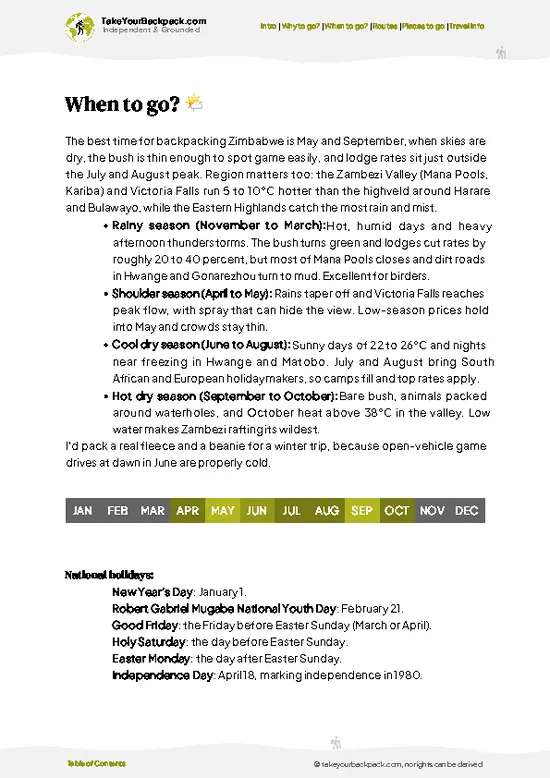
  • Topic: Weather – The dry season from May to September is your best bet. Expect crisp mornings and cool days, with temperatures hovering between 10°C and 22°C (50°F to 72°F). Avoid the wet season (November to March), when heavy rains can turn trails into mudslides and obscure those panoramic views.

  • Topic: Temperature – Nights can dip to near freezing in winter (June-August), so pack layers. Daytime temps are comfortable for hiking, rarely exceeding 22°C (72°F), which means no sweat-drenched misery on the climbs.

  • Topic: Daylight Hours – June and July offer shorter days, around 10-11 hours of daylight, so start early to maximize trekking time. By September, days stretch to about 12 hours, giving you more daylight to explore without rushing.

  • Topic: Crowds – Peak dry season draws local
read more 👉

  • Topic: Weather – The dry season from May to September is your best bet. Expect crisp mornings and cool days, with temperatures hovering between 10°C and 22°C (50°F to 72°F). Avoid the wet season (November to March), when heavy rains can turn trails into mudslides and obscure those panoramic views.

  • Topic: Temperature – Nights can dip to near freezing in winter (June-August), so pack layers. Daytime temps are comfortable for hiking, rarely exceeding 22°C (72°F), which means no sweat-drenched misery on the climbs.

  • Topic: Daylight Hours – June and July offer shorter days, around 10-11 hours of daylight, so start early to maximize trekking time. By September, days stretch to about 12 hours, giving you more daylight to explore without rushing.

  • Topic: Crowds – Peak dry season draws local tourists, especially around August. If you want the trails mostly to yourself, aim for May or September when the crowds thin but the weather stays solid.

  • Topic: Seasonal Activities – Birdwatchers, mark your calendar for September and October when migratory species arrive. The cooler months also bring clearer skies for stargazing, a must-do after a day on the trails.

  • Topic: Price Fluctuations – Accommodation and guided tours spike in July and August. Booking in shoulder months like May or September can save you a decent chunk of cash without sacrificing conditions.


Pro-tip: Hit the Bvumba Mountains in late May—dry trails, fewer people, and prices that won’t make your wallet wince. It’s the sweet spot where savvy backpackers get the best bang for their buck and boots.


source: climatestotravel.comJANJanuary: below average for travelingFEBFebruary: below average for travelingMARMarch: fair for travelingAPRApril: good for travelingMAYMay: excellent for travelingJUNJune: highly recommended for travelingJULJuly: highly recommended for travelingAUGAugust: good for travelingSEPSeptember: excellent for travelingOCTOctober: highly recommended for travelingNOVNovember: below average for travelingDECDecember: below average for traveling
zimbabwe-region-bvumba-mountains
© Google |

✈️ The backpacker research shortcutZimbabwe Travel Guide

An offline-friendly backpacking guide with optimized travel routes, ranked highlights, transport advice, and the best areas to stay.
example page 0 from our offline Travel Guide for Zimbabweexample page 1 from our offline Travel Guide for Zimbabweexample page 2 from our offline Travel Guide for Zimbabweexample page 3 from our offline Travel Guide for Zimbabweexample page 4 from our offline Travel Guide for Zimbabweexample page 5 from our offline Travel Guide for Zimbabwe
The digital guide (307 pages) contains:
90 highlights, ranked by travel appeal
Optimized 5, 10 & 15-day travel routes
Best neighborhoods to stay
How to get around
Offline-friendly for travel without Wi-Fi
👉 See all 30+ guide features

📅 Plan smarter in minutes, not weeks
Month by month travel advice
Festivals & national holidays
Budget expectations

🗺️ Go to the right places, skip the overrated ones
Honest pros & cons of destinations
Top hikes, parks & viewpoints
Lesser-known places most travelers miss
Clear “worth it vs skip it” guidance

🛏️ Travel smoothly without rookie mistakes
Best areas to stay
Transport systems explained simply
Common scams & safety advice
SIM cards, money & practical tips

🌍 Understand the country, not just visit it
Culture & traditions
52 Essential phrases & customs
Festivals worth planning around
Traveler-friendly historical context
Insights that make places more meaningful

📱 Built for real travel conditions
Fully downloadable PDF
Works completely offline
Optimized for phone use
Useful in remote areas & buses
Everything in one place
Save weeks of stressful planning
Get instant access to the full guide directly. 30-day money-back guarantee.


Sent to your inbox immediately after payment • 100% Secure Checkout
Best Backpacking Travel Advisor 2025 tourism awardBest Backpacking
Travel Advisor
2025
What others say about Take Your Backpack Guides:
⭐⭐⭐⭐⭐
Fantastic, amazing amount of information!
⭐⭐⭐⭐⭐
My goodness this is amazing, it's what I've been looking for hats off too you!
⭐⭐⭐⭐⭐
I think this is absolutely BRILLIANT
⭐⭐⭐⭐
Very complete and informative. It's still missing places, but I gotta to commend you
⭐⭐⭐⭐⭐
This is truly amazing, thank you, can't wait to explore it with my kids!
⭐⭐⭐⭐⭐
Awesome resource, thank you!
⭐⭐⭐⭐⭐
This is amazing! Can't wait to explore the ones I haven't seen
⭐⭐⭐⭐
I love this! Well done, great idea.
⭐⭐⭐⭐⭐
Thanks for taking the time to make this gem!
⭐⭐⭐⭐⭐
This might be the best website I've ever seen.
⭐⭐⭐⭐⭐
Congratulations, and thank you so much for your work; it's incredibly valuable.
⭐⭐⭐⭐
In all seriousness I think you did a great job pointing out the important spots
⭐⭐⭐⭐⭐
10/10 very good
⭐⭐⭐⭐⭐
As someone who's only just starting to visit regularly this is awesome, thank you.
⭐⭐⭐⭐
Thank you very much! I'm going to visit my dad, it's going to be very useful!
⭐⭐⭐⭐⭐
This is really cool! We'll be travelling for the first time and this definitely come in handy.
⭐⭐⭐⭐⭐
You are now our minister of culture, congratulations 👨‍💼
⭐⭐⭐⭐⭐
Just wanted to tell you that this is a pearl! Going to follow your recommendations.
⭐⭐⭐⭐⭐
This is so cool. I'll definitely be using the resource for my travels soon.
⭐⭐⭐⭐⭐
This is very impressive! Good work.
⭐⭐⭐⭐⭐
This is an amazing and informative site. Very well done!

🛏️ Where to stay?Best areas to stay in Zimbabwe

The Bvumba Mountains are a backpacker’s dream, offering a blend of nature and community that’s hard to beat. Start in Chipinge, a lively town that’s a gateway to the mountains. It’s safe, with friendly locals who are more than willing to share stories over a beer. The vibe here is relaxed, perfect for solo travelers looking to connect.

Next up, consider Mutare, the largest city nearby. It’s bustling, with markets and street food that’ll keep your taste buds dancing. The social scene is vibrant, making it easy to meet fellow travelers. Plus, it’s a great base for day trips into the mountains. … read more 👉
The Bvumba Mountains are a backpacker’s dream, offering a blend of nature and community that’s hard to beat. Start in Chipinge, a lively town that’s a gateway to the mountains. It’s safe, with friendly locals who are more than willing to share stories over a beer. The vibe here is relaxed, perfect for solo travelers looking to connect.

Next up, consider Mutare, the largest city nearby. It’s bustling, with markets and street food that’ll keep your taste buds dancing. The social scene is vibrant, making it easy to meet fellow travelers. Plus, it’s a great base for day trips into the mountains. Just hop on a local bus, and you’re in the thick of it.

For a more tranquil experience, check out Nyanga, a bit further afield but worth the trek. It’s quieter, surrounded by stunning landscapes. You’ll find fellow backpackers here, often sharing campfires and stories under the stars.

Timing is key. Visit during the dry season (May to October) for the best weather and fewer bugs. This way, you can hike, explore, and soak in the views without the hassle. Choose wisely, and you’ll unlock the true essence of the Bvumba Mountains.

🚌 Getting aroundMoving around without the hassle

The Bvumba Mountains are a world apart, where time seems to stretch and bend like the winding roads that carve through lush landscapes. Here, schedules are more of a suggestion than a rule. You’ll find yourself caught in a delightful dance between the chaos of local life and the serene beauty of nature. The air is thick with the scent of eucalyptus, and the sounds of chirping birds and rustling leaves create a soundtrack that invites you to slow down. Whether you’re hopping on a shared taxi or waiting for a bus that may or may not arrive on time, the flow here is all about intuition. Embrace it, and you’ll feel less like a tourist and more like a local.


  • Shared Taxis: These are your best bet for getting around quickly. They operate from early morning until around 6 PM, costing about $2 to
read more 👉
The Bvumba Mountains are a world apart, where time seems to stretch and bend like the winding roads that carve through lush landscapes. Here, schedules are more of a suggestion than a rule. You’ll find yourself caught in a delightful dance between the chaos of local life and the serene beauty of nature. The air is thick with the scent of eucalyptus, and the sounds of chirping birds and rustling leaves create a soundtrack that invites you to slow down. Whether you’re hopping on a shared taxi or waiting for a bus that may or may not arrive on time, the flow here is all about intuition. Embrace it, and you’ll feel less like a tourist and more like a local.


  • Shared Taxis: These are your best bet for getting around quickly. They operate from early morning until around 6 PM, costing about $2 to $5 depending on your destination. Expect a bit of a squeeze, but the camaraderie is part of the experience.


  • Buses: The local buses run on a loose schedule, usually starting around 7 AM and wrapping up by 5 PM. A ticket will set you back about $1 to $3. They’re slower but offer a chance to soak in the scenery and chat with locals. Just be prepared for a few unexpected stops!


  • Private Car Hire: If you’re looking for comfort and flexibility, consider hiring a car. Prices vary, but expect to pay around $50 to $80 per day. This option gives you the freedom to explore at your own pace, but fuel costs can add up.


  • Walking Trails: For the adventurous, many trails are accessible right from your accommodation. It’s free, and you’ll get to experience the stunning flora and fauna up close. Just make sure to carry enough water and snacks!


  • Bicycle Rentals: Renting a bike can be a fun way to explore the area. Prices hover around $10 per day. You’ll cover more ground than walking, and the fresh mountain air is invigorating.


Here’s a tactical tip: always ask locals about the best times to catch transport. They know the rhythms of the region better than any schedule. If you can, aim for early mornings or late afternoons when the locals are out and about. You’ll not only get a ride but also some insider stories that make the journey worthwhile.

🍲 FoodLocal Flavors for Backpackers

In the Bvumba Mountains, food is a celebration of local flavors and community spirit. You can’t miss trying sadza, a staple made from maize that’s often served with rich, savory stews. Pair it with nyama, grilled or stewed meat, and you’ll understand why it’s a favorite. The vegetable relishes here are vibrant, often featuring fresh greens like rape or pumpkin leaves, bursting with flavor.

For a true local experience, hit up the markets. Vendors sell everything from fresh produce to homemade snacks. The aroma of smoked fish wafts through the air, tempting you to grab a piece. Street food is also a must; look for samosas or chikanda, a traditional dish made from ground nuts and sweet potatoes, often sold by friendly locals.

When it comes to drinks, don’t overlook maheu, a fermented maize … read more 👉
In the Bvumba Mountains, food is a celebration of local flavors and community spirit. You can’t miss trying sadza, a staple made from maize that’s often served with rich, savory stews. Pair it with nyama, grilled or stewed meat, and you’ll understand why it’s a favorite. The vegetable relishes here are vibrant, often featuring fresh greens like rape or pumpkin leaves, bursting with flavor.

For a true local experience, hit up the markets. Vendors sell everything from fresh produce to homemade snacks. The aroma of smoked fish wafts through the air, tempting you to grab a piece. Street food is also a must; look for samosas or chikanda, a traditional dish made from ground nuts and sweet potatoes, often sold by friendly locals.

When it comes to drinks, don’t overlook maheu, a fermented maize drink that’s both refreshing and filling. If you’re feeling adventurous, try a local beer brewed from sorghum.

Dining here is relaxed. Expect to share meals and stories, and don’t be surprised if you’re invited to join in. Just remember, it’s polite to eat with your right hand, and sharing is a sign of friendship. Embrace the flavors and the warmth of the people; it’s all part of the experience.

Expanding your trip beyond this stop

Bvumba Mountains isn’t the only highlight in Zimbabwe. Explore all what Zimbabwe has to offer.
Country photo of Zimbabwe

We 💚 feedbackParting advice and final tips

The Bvumba Mountains are a slice of paradise, where the mist rolls in like a cozy blanket and the birdlife is nothing short of a symphony. You’ll feel like you’ve stumbled into a secret world. But here’s the catch: the roads can be a bit rough, and getting around might take longer than you expect. Embrace the slower pace; it’s part of the charm. Just pack your patience and enjoy the ride.

✈️ When did I visit Zimbabwe?
I have backpacked Zimbabwe all the way back in 2001.

✍️ Help improve this page!
The information on this page is based on my own backpacking experience in Zimbabwe, supplemented with up-to-date research and feedback from other travelers. Travel details can change, so if you notice anything outdated or incomplete, feel free to let me know.


🙋‍♂️ Give feedback

👋 Meet the founderWho’s Behind Take Your Backpack?

Johan, backpacker and founder of TakeYourBackpackHi, I’m Johan (Netherlands 🇳🇱), the creator of TakeYourBackpack. Over the past decade, I’ve backpacked through 80+ countries across six continents, gaining extensive experience with independent travel, long-term trips, and overland routes.

This site is built on a combination of firsthand travel experience and carefully curated insights from other backpackers. Many guides are based on places I’ve personally visited, while others bring together tips, observations, and practical advice shared by trusted travelers I’ve met along the way.

The goal is to provide realistic, experience-driven guidance — not generic itineraries — so you can explore destinations with better context, clearer expectations, and more confidence.

Get Full Country Guide |
Instant download • 90 highlights • Full Offline guide