×

Zimbabwe🇿🇼 | best regionsDiscover the 2 Best regions Across Zimbabwe

Zimbabwe’s regions are a tapestry of climate, landscapes, and cultural character that shape every backpacking adventure. From the savannahs of Hwange to the lush hills of the Eastern Highlands, each area offers distinct experiences that influence your journey. Seasonal nuances dictate wildlife sightings and accessibility, while regional differences affect your budget and safety.

Choosing the right region is crucial; it impacts the vibe of your travels, the ease of navigating local transport, and the depth of your cultural immersion. Whether you seek the thrill of independent travel in bustling cities or the tranquility of remote villages, understanding these dynamics will elevate your Zimbabwean experience.

By Johan Kruseman 🇳🇱 | last update: 26 April, 2026
Explore the best cities in Zimbabwe

Why go?Understanding Their Importance

Zimbabwe’s regions pulse with a unique climatic diversity that shapes every aspect of travel. From the savannas of the lowveld to the highlands of the Eastern Mountains, each area offers distinct weather patterns that influence the best times to explore. This diversity invites travelers to consider the trade-off between time spent in transit and the breadth of experiences available.

The cultural character of Zimbabwe is woven through its regions, each with its own traditions and histories. This rich tapestry can be both a blessing and a challenge. While some areas are easily accessible, others demand more effort to reach, rewarding those who invest the time with deeper, more immersive experiences.

Infrastructure plays a crucial role in shaping travel choices. Major roads connect key regions, … read more 👉
Zimbabwe’s regions pulse with a unique climatic diversity that shapes every aspect of travel. From the savannas of the lowveld to the highlands of the Eastern Mountains, each area offers distinct weather patterns that influence the best times to explore. This diversity invites travelers to consider the trade-off between time spent in transit and the breadth of experiences available.

The cultural character of Zimbabwe is woven through its regions, each with its own traditions and histories. This rich tapestry can be both a blessing and a challenge. While some areas are easily accessible, others demand more effort to reach, rewarding those who invest the time with deeper, more immersive experiences.

Infrastructure plays a crucial role in shaping travel choices. Major roads connect key regions, but the journey can be long and bumpy, impacting comfort levels. Travelers must weigh the convenience of quicker routes against the potential for richer encounters off the beaten path.

In terms of landscapes, Zimbabwe stands out with its breathtaking vistas and wildlife. However, the remoteness of some natural wonders means that reaching them can require significant planning and commitment. Understanding these constraints allows travelers to consciously choose their adventures, balancing accessibility with the desire for authentic exploration.
How the List Was Created
The list of best regions in Zimbabwe is created based on landscapes, local culture, attractions, vibes, and overall appeal. If you feel a region is missing in this list, please let us know.

When to go?Optimal Periods for Travel

Climate Variation
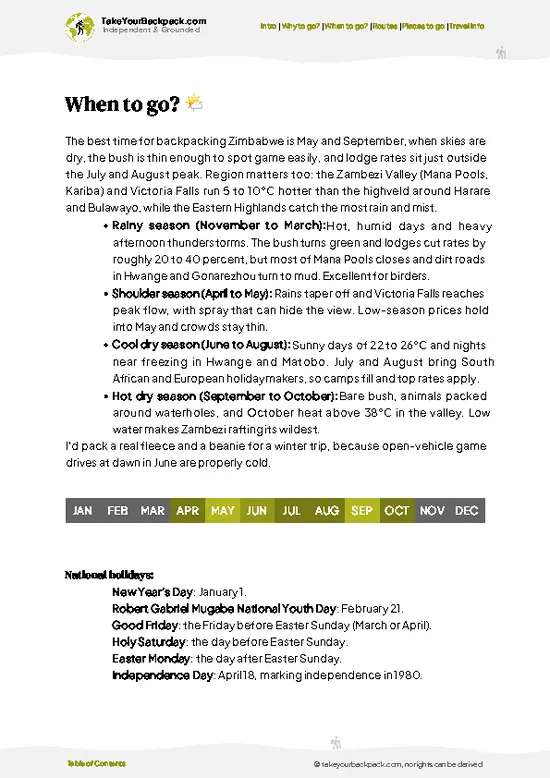
Zimbabwe’s climate shifts dramatically across its regions. The dry season, from May to October, offers clear skies and cooler temperatures, ideal for wildlife viewing. However, the wet season, from November to April, brings lush landscapes and vibrant wildlife activity, but also heavy rains that can hinder travel.

Optimal Months
The best months for a visit generally fall within the dry season. Wildlife congregates around water sources, making sightings more frequent. However, visiting during the shoulder months—just before or after the peak season—can provide a balance of fewer crowds and lower costs while still offering decent weather.

Shoulder Seasons
Shoulder seasons present trade-offs. While costs may dip, weather can be unpredictable. Rain can create muddy conditions, … read more 👉
Climate Variation
Zimbabwe’s climate shifts dramatically across its regions. The dry season, from May to October, offers clear skies and cooler temperatures, ideal for wildlife viewing. However, the wet season, from November to April, brings lush landscapes and vibrant wildlife activity, but also heavy rains that can hinder travel.

Optimal Months
The best months for a visit generally fall within the dry season. Wildlife congregates around water sources, making sightings more frequent. However, visiting during the shoulder months—just before or after the peak season—can provide a balance of fewer crowds and lower costs while still offering decent weather.

Shoulder Seasons
Shoulder seasons present trade-offs. While costs may dip, weather can be unpredictable. Rain can create muddy conditions, affecting accessibility and comfort. Yet, the landscapes are often at their most beautiful, bursting with life and color.

Peak Periods
Peak periods, particularly around major holidays or festivals, can lead to crowded attractions and inflated prices. Travelers should weigh the excitement of local celebrations against the potential for a less intimate experience.

Seasonal Constraints
Consider the impact of seasonal constraints on travel plans. The wet season can limit access to certain areas, while the dry season may lead to increased demand for accommodations. Understanding these dynamics allows for more informed choices, ensuring a rewarding journey through Zimbabwe’s diverse regions.

region hoppingPlanning Your Route Efficiently

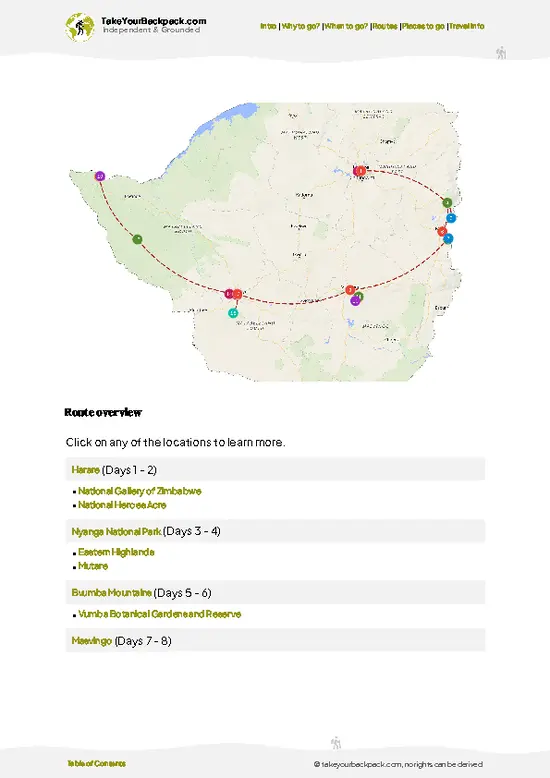
Zimbabwe’s regions offer a rich tapestry of experiences, and combining them requires strategic planning. Start by clustering regions based on proximity. The Victoria Falls area can serve as a launching pad. From there, head to Hwange National Park for wildlife encounters, then make your way to Matobo Hills for cultural and historical insights. This route flows naturally, minimizing travel time while maximizing exploration.

Typical stops should be spaced to allow for immersion. Allocate at least two days in each major region. This pacing ensures you soak in the atmosphere without feeling rushed. Common mistakes include trying to cram too many locations into a short timeframe, which leads to fatigue and missed experiences.

Consider the trade-offs: speed versus depth of experience. A faster … read more 👉
Zimbabwe’s regions offer a rich tapestry of experiences, and combining them requires strategic planning. Start by clustering regions based on proximity. The Victoria Falls area can serve as a launching pad. From there, head to Hwange National Park for wildlife encounters, then make your way to Matobo Hills for cultural and historical insights. This route flows naturally, minimizing travel time while maximizing exploration.

Typical stops should be spaced to allow for immersion. Allocate at least two days in each major region. This pacing ensures you soak in the atmosphere without feeling rushed. Common mistakes include trying to cram too many locations into a short timeframe, which leads to fatigue and missed experiences.

Consider the trade-offs: speed versus depth of experience. A faster pace may save time but sacrifices the chance to connect with local culture. Budget constraints can also dictate comfort levels; opting for public transport might save money but can lead to longer travel times.

Flexibility is key. Weather and local events can shift plans, so build in buffer days. Prioritize high-value experiences that resonate with personal interests, whether it’s wildlife, culture, or adventure. This approach transforms the journey into a rewarding exploration rather than a checklist of stops.

The ListThe Best regions of Zimbabwe

1 Bvumba Mountains

misty forests, botanical gardens, granite outcrops

Hike through cool, green highlands where rare plants thrive, and shifting mists reveal panoramic views across the Mozambique border.

zimbabwe-region-bvumba-mountains
© Google |

2 Honde Valley

tea estates, cascading rivers, rural villages

Follow winding roads past tea fields and waterfalls, meeting local communities and discovering a landscape shaped by agriculture and water.

Expert viewInsights from Locals and Experts

Geographic Diversity

Zimbabwe’s landscape is a patchwork of ecosystems, from savannahs to mountains, each region offering a distinct flavor of adventure. You’ll want to experience at least three regions to grasp the country’s essence fully. The Highveld, with its rolling hills, contrasts sharply with the arid Zambezi Valley. Each area demands a different approach to travel, so consider how much time you’re willing to invest.

The Highveld is accessible, but the roads can be rougher in the Zambezi Valley. If you’re short on time, prioritize the Highveld first; it’s easier to navigate and offers a rich cultural tapestry. However, if you’re after the thrill of the wild, the Zambezi Valley is worth the extra effort. Just be prepared for longer travel times and less reliable transport options. … read more 👉

Geographic Diversity

Zimbabwe’s landscape is a patchwork of ecosystems, from savannahs to mountains, each region offering a distinct flavor of adventure. You’ll want to experience at least three regions to grasp the country’s essence fully. The Highveld, with its rolling hills, contrasts sharply with the arid Zambezi Valley. Each area demands a different approach to travel, so consider how much time you’re willing to invest.

The Highveld is accessible, but the roads can be rougher in the Zambezi Valley. If you’re short on time, prioritize the Highveld first; it’s easier to navigate and offers a rich cultural tapestry. However, if you’re after the thrill of the wild, the Zambezi Valley is worth the extra effort. Just be prepared for longer travel times and less reliable transport options.

Transport Between Regions

Getting around Zimbabwe can be an adventure in itself. Public transport is available, but it’s often slow and unpredictable. If you’re on a tight schedule, consider renting a vehicle. This gives you the freedom to explore at your own pace, but it comes with the trade-off of higher costs. Budget travelers may opt for buses, but be ready for delays and cramped conditions.

The distances between regions can be deceptive. What looks like a short drive on a map can turn into a half-day journey due to road conditions. Factor in time for rest stops and the occasional breakdown. If you’re planning to cover multiple regions, allocate at least a week to avoid feeling rushed.

Cultural Variation

Zimbabwe is a mosaic of cultures, each region boasting its own traditions and languages. The Shona people dominate the Highveld, while the Ndebele culture flourishes in the southwest. Engaging with local communities can enrich your experience, but it requires a willingness to step outside your comfort zone.

Be mindful of cultural sensitivities. In rural areas, dress conservatively and approach interactions with respect. If you’re short on time, focus on regions where cultural experiences are more accessible, like the Highveld. However, if you can linger longer, the Ndebele region offers vibrant art and music that are worth the investment.

Pacing Trade-Offs

Pacing is crucial in Zimbabwe. The slower you go, the more you’ll absorb. If you rush through regions, you’ll miss the nuances that make each place unique. A week allows for a deeper dive into two or three regions, but if you’re pressed for time, you might only scratch the surface.

Consider your priorities. Are you after adrenaline-pumping activities or cultural immersion? If you lean toward adventure, the Zambezi Valley offers thrilling experiences but demands more time and energy. Conversely, if you prefer a laid-back exploration, the Highveld provides a smoother experience with plenty of cultural touchpoints.

Safety & Cultural Considerations

Safety is paramount. While Zimbabwe is generally safe for travelers, some areas require caution, especially after dark. Always stay informed about local conditions and heed advice from locals.

Cultural respect goes a long way. Engage with communities, but do so thoughtfully. Learning a few phrases in local languages can open doors and foster goodwill. If you’re short on time, focus on regions where you can easily connect with locals, enhancing your experience without overwhelming yourself.

In summary, Zimbabwe’s regions offer a rich tapestry of experiences, but the trade-offs between time, money, and comfort are real. Choose wisely, and you’ll find that the journey is as rewarding as the destination.

✈️ The ultimate backpacker shortcutZimbabwe Travel Guide

Skip weeks of research and hit the road with confidence. Get 297 pages of proven routes, transport advice, and real safety insights—built for your phone and 100% offline-ready.
example page 0 from our offline Travel Guide for Zimbabweexample page 1 from our offline Travel Guide for Zimbabweexample page 2 from our offline Travel Guide for Zimbabweexample page 3 from our offline Travel Guide for Zimbabweexample page 4 from our offline Travel Guide for Zimbabwe
🎒 Your 297-page offline travel companion
5, 10 & 15-day routes paced for real travel
90 ranked highlights with honest skip-it advice
Logistics solved: Best areas to stay & transport
Safety blueprints: Common local scams to avoid
No Wi-Fi? No problem: Phone-optimized offline PDF
👉 See all 30+ guide features

📅 Plan smarter in minutes, not weeks
Realistic travel times & pacing
Best months per region
Festivals & national holidays
Budget expectations

🗺️ Go to the right places, skip the overrated ones
90 ranked highlights across the country
Hidden gems beyond the tourist trail
Honest pros & cons of destinations
Top hikes, parks & viewpoints
Lesser-known places most travelers miss
Clear “worth it vs skip it” guidance

🛏️ Travel smoothly without rookie mistakes
Best areas to stay
Transport systems explained simply
Local transport tradeoffs
Common scams & safety advice
SIM cards, money & practical tips
What to expect before arrival

🌍 Understand the country, not just visit it
Culture & traditions
52 Essential phrases & customs
Festivals worth planning around
Traveler-friendly historical context
Insights that make places more meaningful

📱 Built for real travel conditions
Fully downloadable PDF
Works completely offline
Optimized for phone use
Useful in remote areas & buses
Everything in one place
Save weeks of stressful planning
Get instant access to the full guide directly. 30-day money-back guarantee.


Sent to your inbox immediately after payment • 100% Secure Checkout
Best Backpacking Travel Advisor 2025 tourism awardBest Backpacking
Travel Advisor
2025
What others say about Take Your Backpack Guides:
⭐⭐⭐⭐⭐
Fantastic, amazing amount of information!
⭐⭐⭐⭐⭐
My goodness this is amazing, it's what I've been looking for hats off too you!
⭐⭐⭐⭐⭐
I think this is absolutely BRILLIANT
⭐⭐⭐⭐
Very complete and informative. It's still missing places, but I gotta to commend you
⭐⭐⭐⭐⭐
This is truly amazing, thank you, can't wait to explore it with my kids!
⭐⭐⭐⭐⭐
Awesome resource, thank you!
⭐⭐⭐⭐⭐
This is amazing! Can't wait to explore the ones I haven't seen
⭐⭐⭐⭐
I love this! Well done, great idea.
⭐⭐⭐⭐⭐
Thanks for taking the time to make this gem!
⭐⭐⭐⭐⭐
This might be the best website I've ever seen.
⭐⭐⭐⭐⭐
Congratulations, and thank you so much for your work; it's incredibly valuable.
⭐⭐⭐⭐
In all seriousness I think you did a great job pointing out the important spots
⭐⭐⭐⭐⭐
10/10 very good
⭐⭐⭐⭐⭐
As someone who's only just starting to visit regularly this is awesome, thank you.
⭐⭐⭐⭐
Thank you very much! I'm going to visit my dad, it's going to be very useful!
⭐⭐⭐⭐⭐
This is really cool! We'll be travelling for the first time and this definitely come in handy.
⭐⭐⭐⭐⭐
You are now our minister of culture, congratulations 👨‍💼
⭐⭐⭐⭐⭐
Just wanted to tell you that this is a pearl! Going to follow your recommendations.
⭐⭐⭐⭐⭐
This is so cool. I'll definitely be using the resource for my travels soon.
⭐⭐⭐⭐⭐
This is very impressive! Good work.
⭐⭐⭐⭐⭐
This is an amazing and informative site. Very well done!

🛏️ Where to stay?Top Areas to Stay

Yes. Hostels, backpacker lodges, budget guesthouses and campsites are common in major centres — Harare, Bulawayo and Victoria Falls — with limited basic options near national parks for camping or safari tents.

Harare — CBD gives the cheapest central options but can be noisy and less secure at night while northern residential suburbs are quieter, safer and better for cafes and transport; Bulawayo — city centre offers budget rooms with easy access to sights and buses but has quieter nightlife and mixed street safety; Victoria Falls — town centre and accommodation near the park put you closest to the falls, tours and lively nightlife yet are pricier in peak season; near parks (Hwange, Mana Pools) … read more 👉
Yes. Hostels, backpacker lodges, budget guesthouses and campsites are common in major centres — Harare, Bulawayo and Victoria Falls — with limited basic options near national parks for camping or safari tents.

Harare — CBD gives the cheapest central options but can be noisy and less secure at night while northern residential suburbs are quieter, safer and better for cafes and transport; Bulawayo — city centre offers budget rooms with easy access to sights and buses but has quieter nightlife and mixed street safety; Victoria Falls — town centre and accommodation near the park put you closest to the falls, tours and lively nightlife yet are pricier in peak season; near parks (Hwange, Mana Pools) expect remote, seasonal camps or basic safari camps and plan transfers and timing accordingly.

If you enjoy meeting fellow travelers, consider choosing hostels with high ratings for atmosphere. On the other hand, if you prefer having your own space, a hotel might be a better option.

ZimbabweDiscover the Country

👋 Meet the authorWho’s Behind Take Your Backpack?

Johan, backpacker and founder of TakeYourBackpackHi, I’m Johan (Netherlands 🇳🇱), the creator of TakeYourBackpack. Over the past decade, I’ve backpacked through 80+ countries across six continents, gaining extensive experience with independent travel, long-term trips, and overland routes.

This site is built on a combination of firsthand travel experience and carefully curated insights from other backpackers. Many guides are based on places I’ve personally visited, while others bring together tips, observations, and practical advice shared by trusted travelers I’ve met along the way.

The goal is to provide realistic, experience-driven guidance — not generic itineraries — so you can explore destinations with better context, clearer expectations, and more confidence.

Get Full Country Guide |
Instant download • 90 highlights • Full Offline guide