×

Zimbabwe🇿🇼 | regionsHonde Valleytea estates, cascading rivers, rural villages | things to do and best time to go

Explore Bvumba MountainsExplore Chipinge

Backpacking in Honde Valley
👍 Recommendedregion ranked #2
By Johan Kruseman 🇳🇱 | Updated June 8, 2026

Here’s the curveball nobody tells you: Honde Valley isn’t the sleepy, off-grid Eden you’ll read about in most travel blogs—cell service is surprisingly decent, and you’ll spot more local tea pickers than backpackers, even in peak season. Tucked into Zimbabwe’s far eastern border, just below the Nyanga Highlands and brushing up against Mozambique, Honde Valley is a lush, steep-sided basin that feels like a secret passage between worlds. The landscape is all rolling tea estates, banana groves, and waterfalls that thunder after the rains. It’s cheap—if you’re happy with basic guesthouses or pitching a tent, your wallet will barely notice. But getting around is slow: public transport is sporadic, and hitching rides with tea trucks is a rite of passage, not a backup plan. The vibe is pure, unvarnished Zimbabwe—no touts, no Instagram crowds, just village markets and the kind of mountain air that makes you forget what day it is. Compared to the more famous Nyanga National Park, Honde Valley is rougher, greener, and far less polished. If you want authenticity over amenities, this is your patch.

Discover everything you want to know in the 📖 Zimbabwe Travel Guide.


Get your Zimbabwe guide
90 ranked highlights, routes & tips, works offline (355 pages)
Loading the map 🌍
CLICK TO FILTER
cities
towns
landmarks
national parks
hikes
beaches
attractions
festivals
regions
SHOW COUNTRY’S BESTSHOW ALL

✨ Why go?
Ranked #2 region in Zimbabwe
Reasons people choose to visit here

Backpackers flock to the Honde Valley in Zimbabwe for a blend of nature and culture that feels like a well-kept secret. The variety of landscapes here is staggering. You can hike through lush tea plantations, explore dense forests, and gaze at stunning mountain views—all without the hassle of constant relocation. This means you can really immerse yourself in the local vibe.

Transport is surprisingly flexible. You can hop on a local bus or even rent a bike to explore at your own pace. This freedom allows you to discover hidden spots that most tourists miss. Want to sip tea with local farmers? You can do that. Prefer to trek to a waterfall? Easy.

The beauty of slow travel here is that it encourages connection. You’re not just passing through; you’re engaging with the community. Whether it’s … read more 👉
Backpackers flock to the Honde Valley in Zimbabwe for a blend of nature and culture that feels like a well-kept secret. The variety of landscapes here is staggering. You can hike through lush tea plantations, explore dense forests, and gaze at stunning mountain views—all without the hassle of constant relocation. This means you can really immerse yourself in the local vibe.

Transport is surprisingly flexible. You can hop on a local bus or even rent a bike to explore at your own pace. This freedom allows you to discover hidden spots that most tourists miss. Want to sip tea with local farmers? You can do that. Prefer to trek to a waterfall? Easy.

The beauty of slow travel here is that it encourages connection. You’re not just passing through; you’re engaging with the community. Whether it’s a chat with a vendor or joining a traditional dance, these experiences add layers to your journey.

In Honde Valley, you’re not just a visitor; you’re part of a living tapestry of life. Choose wisely, and you’ll walk away with stories that last a lifetime.
Want to include Honde Valley in your Zimbabwe route?
Create a personalized Zimbabwe itinerary that includes Honde Valley and the places that fit your trip — based on your travel style, budget, and available time. Get your route in seconds.

Generate my trip

💡 HighlightsDon't-miss highlights and experiences

  1. Hauna Market (the weekday morning market)
    The real heartbeat of the valley — farmers, tea and macadamia traders, and women selling cooked greens, roasted maize and fresh bananas. Go early, watch the bargaining, try a plate of sadza with local relish, and you’ll leave with tasty, cheap food and a stack of local gossip. Great for photography and people-watching.
  2. Honde Valley escarpment viewpoints
    The big sweeping views that make the valley famous: long bands of green terraces, patchwork farms dropping into the mist, and the Mozambique hills beyond on clear days. Sunrise or late afternoon light is special. You won’t find these exact lowland vistas anywhere else in Zimbabwe — it’s the scale + the steep farming terraces that feel unique.
  3. Tea-estate walks and small factory visits
    The
read more 👉
  1. Hauna Market (the weekday morning market)
    The real heartbeat of the valley — farmers, tea and macadamia traders, and women selling cooked greens, roasted maize and fresh bananas. Go early, watch the bargaining, try a plate of sadza with local relish, and you’ll leave with tasty, cheap food and a stack of local gossip. Great for photography and people-watching.
  2. Honde Valley escarpment viewpoints
    The big sweeping views that make the valley famous: long bands of green terraces, patchwork farms dropping into the mist, and the Mozambique hills beyond on clear days. Sunrise or late afternoon light is special. You won’t find these exact lowland vistas anywhere else in Zimbabwe — it’s the scale + the steep farming terraces that feel unique.
  3. Tea-estate walks and small factory visits
    The valley’s working tea plantations are immersive: footpaths through clipped rows, workers picking leaves, and small processing sheds where you can watch with permission. It’s hands-on and honest — a working landscape rather than a manicured “tea tourist” set-up you get elsewhere.
  4. Macadamia orchards and drying yards (hidden gem)
    Honde grows a surprising amount of macadamias. These family-run orchards and drying sheds aren’t on glossy brochures, but if you ask around Hauna you can see nut-processing, learn how the farmers grade nuts, and often buy fresh macadamias cheaper than any shop price. Locals love showing visitors this.
  5. Honde River pools and gorge walks
    Small river gorges cut into the valley make for short hikes and natural swimming holes — perfect after a dusty road. Water levels are seasonal, so bring a drybag and ask villagers which pools are safe. It’s quietly dramatic country; not huge waterfalls, but intimate river scenery and plunges that feel private.
  6. Village homestays and farm-stay kitchens
    Booking a night or two with a family outside Hauna (or through a local contact) is one of the best ways to experience the valley: cooking on wood fires, evening stories, farm chores at dawn. It’s simple, rough around the edges, and gives a perspective you won’t get from a lodge.
  7. Montane/riverine birding pockets
    The valley’s mix of forest fragments, riverine strips and plantations supports a neat bird list — turacos, sunbirds, and a host of other Eastern Highlands specialties. Bring binoculars and a local guide if you want to find the quiet pockets where birds concentrate; these spots are small but rewarding.
  8. Seasonal village waterfalls and hidden trails (hidden gem)
    Away from the main roads are short, muddy tracks that lead to small, off-map waterfalls and cascades locals use for washing or cooling off. They’re often only impressive in the rainy season, but the walk through smallholder farms and forest edge is a lovely local experience and almost always empty of tourists.
  9. Smallholder banana and avocado terraces
    The way locals have terraced steep slopes for bananas, avocados and vegetables is a landscape feature in itself. Walk the minor lanes between plots, chat to farmers about irrigation and crop cycles, and watch the valley’s rural economy in action — you’ll see farming techniques adapted to this unusual microclimate.
  10. Roadside food stalls and craft corners (hidden gem)
    The simplest places often give the best local flavors: a lady frying samp, a stand selling piping-hot tea with milk, or a corner where women sell woven baskets and beadwork. Tourists pass them by; locals stop. Sample small treats, buy straight from makers, and you’ll take home both things and stories.


Personal favorite: the tea-estate walks and small factory visits — nothing beats following a narrow path through picked rows of tea and then watching leaves become tea in a warm, noisy shed.
Spotted a mistake or missing something? Contact us.

⌛️ 5 daysSeeing the highlights in 5 days

Day 1: Honde Valley

Start your journey in the Honde Valley, where the lush landscapes will immediately draw you in. The transport here is a mix of local taxis and shared minibuses, which can be a bit unpredictable. Embrace the slower pace; it’s part of the charm. Spend your day exploring the local markets and tasting the fresh produce. This sets the tone for your trip, allowing you to acclimate to the rhythm of the valley.

Day 2: Nyanga National Park

On day two, head to Nyanga National Park. The bus ride takes about an hour, but it’s worth every minute. The park is a treasure trove of hiking trails and stunning vistas. You’ll want to get an early start to beat the crowds. The transport options are limited, so plan your return carefully. This day is all about immersing yourself in nature, … read more 👉
Day 1: Honde Valley

Start your journey in the Honde Valley, where the lush landscapes will immediately draw you in. The transport here is a mix of local taxis and shared minibuses, which can be a bit unpredictable. Embrace the slower pace; it’s part of the charm. Spend your day exploring the local markets and tasting the fresh produce. This sets the tone for your trip, allowing you to acclimate to the rhythm of the valley.

Day 2: Nyanga National Park

On day two, head to Nyanga National Park. The bus ride takes about an hour, but it’s worth every minute. The park is a treasure trove of hiking trails and stunning vistas. You’ll want to get an early start to beat the crowds. The transport options are limited, so plan your return carefully. This day is all about immersing yourself in nature, with the chance to spot wildlife and enjoy the breathtaking scenery.

Day 3: Off-Path Reward - Vumba Mountains

Take a detour to the Vumba Mountains. It’s a short taxi ride, but the views are jaw-dropping. This area is less frequented by tourists, giving you a chance to connect with locals and experience authentic Zimbabwean culture. The gardens and viewpoints are serene, making it a perfect escape. Spend the afternoon wandering through the lush trails, and don’t skip the local tea houses for a refreshing break.

Day 4: Mutare

On day four, make your way to Mutare. The bus ride is about two hours, and it’s a bustling city with a different vibe. Explore the local art scene and visit the Mutare Museum. This day is about soaking in the urban energy and experiencing the local lifestyle. The transport here is more reliable, so you can move at a quicker pace.

Day 5: Return to Honde Valley

Wrap up your trip by returning to Honde Valley. This is your chance to revisit your favorite spots or discover something new. The transport back is straightforward, allowing you to reflect on your journey.

The must-do day? Day two in Nyanga National Park. It encapsulates the essence of the Honde Valley experience—nature, adventure, and a sense of peace that lingers long after you leave.
Turn your Honde Valley visit into an Zimbabwe adventure
Build a complete Zimbabwe route with Honde Valley, hidden gems, must-see destinations, and realistic travel times included.

Generate my trip

🌤️ When to go?Best time to visit Honde Valley


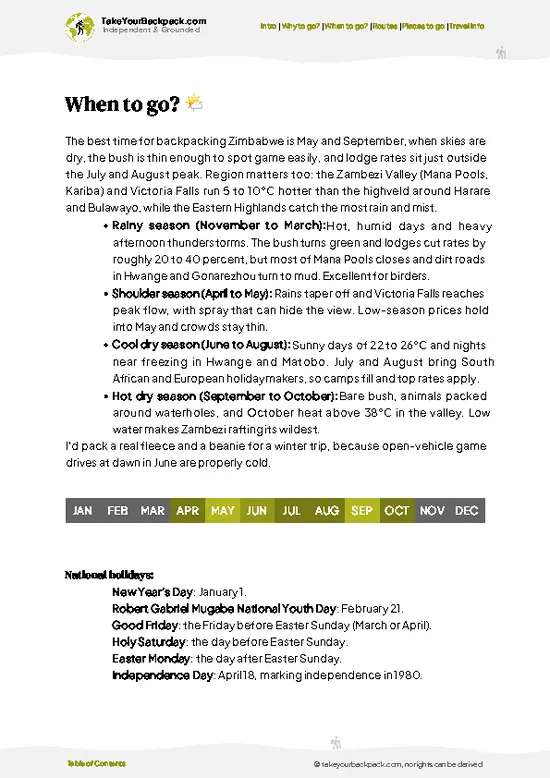
  • Weather: The dry season from May to October is your best bet. Expect clear skies and minimal rain, perfect for hiking and camping without the mud. The wet season (November to April) turns the valley lush but can make trails slippery and rivers swell.

  • Temperature: Daytime temps in the dry season hover around 20-25°C (68-77°F), cool and comfortable. Nights can dip to 5-10°C (41-50°F), so pack layers. Wet season days climb to 28-32°C (82-90°F), with sticky humidity that saps energy fast.

  • Daylight Hours: Around 11-12 hours year-round, but the dry season offers more consistent sunny mornings—prime time to hit the trails before the afternoon heat or sudden showers.

  • Crowds: Peak backpacker season is June to August when the weather is ideal. You’ll share the trails with more folks but still
read more 👉

  • Weather: The dry season from May to October is your best bet. Expect clear skies and minimal rain, perfect for hiking and camping without the mud. The wet season (November to April) turns the valley lush but can make trails slippery and rivers swell.

  • Temperature: Daytime temps in the dry season hover around 20-25°C (68-77°F), cool and comfortable. Nights can dip to 5-10°C (41-50°F), so pack layers. Wet season days climb to 28-32°C (82-90°F), with sticky humidity that saps energy fast.

  • Daylight Hours: Around 11-12 hours year-round, but the dry season offers more consistent sunny mornings—prime time to hit the trails before the afternoon heat or sudden showers.

  • Crowds: Peak backpacker season is June to August when the weather is ideal. You’ll share the trails with more folks but still avoid the tourist crush found in Zimbabwe’s main parks.

  • Seasonal Activities: Dry months open up birdwatching and game spotting as animals gather around shrinking waterholes. Wet months bring vibrant greenery and wildflowers but fewer visible animals.

  • Price Fluctuations: Expect higher prices for accommodation and guides during the dry season. Off-season offers bargains but comes with the risk of rain disrupting plans.


Pro-tip: Arrive late May or early June—before the crowds peak—to snag the best deals and enjoy crisp mornings that make every step feel like a secret victory.


source: climatestotravel.comJANJanuary: fair for travelingFEBFebruary: fair for travelingMARMarch: fair for travelingAPRApril: good for travelingMAYMay: highly recommended for travelingJUNJune: excellent for travelingJULJuly: excellent for travelingAUGAugust: excellent for travelingSEPSeptember: highly recommended for travelingOCTOctober: highly recommended for travelingNOVNovember: fair for travelingDECDecember: fair for traveling
when-to-go

✈️ The backpacker research shortcutZimbabwe Travel Guide

An offline-friendly backpacking guide with optimized travel routes, ranked highlights, transport advice, and the best areas to stay.
example page 0 from our offline Travel Guide for Zimbabwe
example page 1 from our offline Travel Guide for Zimbabwe
example page 2 from our offline Travel Guide for Zimbabwe
example page 3 from our offline Travel Guide for Zimbabwe
example page 4 from our offline Travel Guide for Zimbabwe
example page 5 from our offline Travel Guide for Zimbabwe
example page 6 from our offline Travel Guide for Zimbabwe
example page 7 from our offline Travel Guide for Zimbabwe
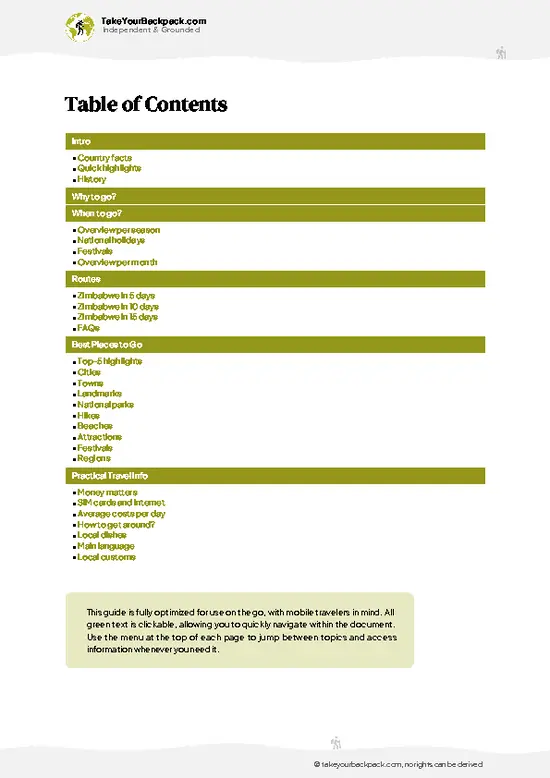
The digital guide (355 pages) contains:
90 highlights, ranked by travel appeal
Optimized 5, 10 & 15-day travel routes
Cities, national parks, landmarks, beaches
How to get around
Offline-friendly for travel without Wi-Fi
👉 Click to see all 30+ guide features

📅 Plan smarter in minutes, not weeks
Month by month travel advice
Festivals & national holidays
Budget expectations

🗺️ Go to the right places, skip the overrated ones
Honest pros & cons of destinations
Top hikes, parks & viewpoints
Lesser-known places most travelers miss
Clear “worth it vs skip it” guidance

🛏️ Travel smoothly without rookie mistakes
Best areas to stay
Transport systems explained simply
Common scams & safety advice
SIM cards, money & practical tips

🌍 Understand the country, not just visit it
Culture & traditions
52 Essential phrases & customs
Festivals worth planning around
Traveler-friendly historical context
Insights that make places more meaningful

📱 Built for real travel conditions
Fully downloadable PDF
Works completely offline
Optimized for phone use
Useful in remote areas & buses
Everything in one place
Save weeks of stressful planning
Get instant access to your full guide. 30‑day money-back guarantee.


By proceeding you agree to our terms.
Sent to your inbox immediately after payment • 100% Secure Checkout
Best Backpacking Travel Advisor 2025 tourism awardBest Backpacking
Travel Advisor
2025
What others say about Take Your Backpack Guides:
⭐⭐⭐⭐⭐
Fantastic, amazing amount of information!
⭐⭐⭐⭐⭐
My goodness this is amazing, it's what I've been looking for hats off too you!
⭐⭐⭐⭐⭐
I think this is absolutely BRILLIANT
⭐⭐⭐⭐
Very complete and informative. It's still missing places, but I gotta to commend you
⭐⭐⭐⭐⭐
This is truly amazing, thank you, can't wait to explore it with my kids!
⭐⭐⭐⭐⭐
Awesome resource, thank you!
⭐⭐⭐⭐⭐
This is amazing! Can't wait to explore the ones I haven't seen
⭐⭐⭐⭐
I love this! Well done, great idea.
⭐⭐⭐⭐⭐
Thanks for taking the time to make this gem!
⭐⭐⭐⭐⭐
This might be the best website I've ever seen.
⭐⭐⭐⭐⭐
Congratulations, and thank you so much for your work; it's incredibly valuable.
⭐⭐⭐⭐
In all seriousness I think you did a great job pointing out the important spots
⭐⭐⭐⭐⭐
10/10 very good
⭐⭐⭐⭐⭐
As someone who's only just starting to visit regularly this is awesome, thank you.
⭐⭐⭐⭐
Thank you very much! I'm going to visit my dad, it's going to be very useful!
⭐⭐⭐⭐⭐
This is really cool! We'll be travelling for the first time and this definitely come in handy.
⭐⭐⭐⭐⭐
You are now our minister of culture, congratulations 👨‍💼
⭐⭐⭐⭐⭐
Just wanted to tell you that this is a pearl! Going to follow your recommendations.
⭐⭐⭐⭐⭐
This is so cool. I'll definitely be using the resource for my travels soon.
⭐⭐⭐⭐⭐
This is very impressive! Good work.
⭐⭐⭐⭐⭐
This is an amazing and informative site. Very well done!

🛏️ Where to stay?Best areas and accommodation options

When you’re diving into the Honde Valley, you want to be where the vibe is right and the locals are welcoming. Start in Chipinge. This town is your launchpad. It’s safe, and you’ll find a mix of backpackers and locals hanging out. The markets buzz with energy, and you can snag fresh produce or local crafts. Plus, it’s a great spot to connect with other travelers over a cold drink.

Next up, consider Mutare. It’s a bit larger, but that means more options for socializing. The backpacker scene here is vibrant, and you’ll find plenty of cafes where you can swap stories with fellow adventurers. The … read more 👉
When you’re diving into the Honde Valley, you want to be where the vibe is right and the locals are welcoming. Start in Chipinge. This town is your launchpad. It’s safe, and you’ll find a mix of backpackers and locals hanging out. The markets buzz with energy, and you can snag fresh produce or local crafts. Plus, it’s a great spot to connect with other travelers over a cold drink.

Next up, consider Mutare. It’s a bit larger, but that means more options for socializing. The backpacker scene here is vibrant, and you’ll find plenty of cafes where you can swap stories with fellow adventurers. The proximity to the Eastern Highlands makes it a strategic base for day trips, so you’re not just stuck in one place.

If you’re feeling adventurous, check out Nyanga. It’s quieter, but the scenery is breathtaking. You’ll meet fellow hikers and nature lovers. The trails are calling, and the community is tight-knit. Just remember, the best experiences often come from stepping a little off the beaten path. Embrace the local culture, and you’ll leave with stories that last a lifetime.

🚌 Getting aroundHow to get around Honde Valley

Honde Valley is a world where time feels fluid, like a river meandering through lush landscapes. Schedules? They’re more of a suggestion than a rule. You’ll find a rhythm here that dances between the chaos of local life and the serene beauty of nature. The locals are friendly, and the vibe is relaxed, but don’t expect to be whisked away on a precise timetable. Instead, embrace the spontaneity; it’s part of the charm. You’ll discover that the journey is just as rewarding as the destination, and the right transport options can elevate your experience from ordinary to extraordinary.


  • Shared Minibuses (Kombi): These are the lifeblood of local transport. They run frequently, usually from dawn until dusk, with fares around $1-3 depending on distance. Expect a lively atmosphere, but be prepared
read more 👉
Honde Valley is a world where time feels fluid, like a river meandering through lush landscapes. Schedules? They’re more of a suggestion than a rule. You’ll find a rhythm here that dances between the chaos of local life and the serene beauty of nature. The locals are friendly, and the vibe is relaxed, but don’t expect to be whisked away on a precise timetable. Instead, embrace the spontaneity; it’s part of the charm. You’ll discover that the journey is just as rewarding as the destination, and the right transport options can elevate your experience from ordinary to extraordinary.


  • Shared Minibuses (Kombi): These are the lifeblood of local transport. They run frequently, usually from dawn until dusk, with fares around $1-3 depending on distance. Expect a lively atmosphere, but be prepared to squeeze in with fellow travelers. They’re quick, but don’t expect luxury—this is all about the experience.


  • Private Taxis: For a bit more comfort, private taxis are available. Fares can range from $10-20 for short trips within the valley. They’re more reliable in terms of timing, and you can negotiate the price. Perfect for when you want to avoid the hustle and bustle of the kombis.


  • Bicycle Rentals: If you’re feeling adventurous, renting a bike can cost around $5-10 per day. It’s a fantastic way to explore the valley at your own pace. Just be ready for some hills; the views are worth the effort. Plus, you’ll have the freedom to stop wherever you like.


  • Walking: Sometimes, the best way to soak in the beauty of Honde Valley is on foot. Many trails are accessible, and you can wander through local villages and lush landscapes. It’s free, and you’ll connect with the community in a way that no vehicle can offer.


  • Motorbike Taxis (Boda Boda): For a thrill, hop on a motorbike taxi. Prices vary but expect to pay around $2-5 for short distances. They’re fast and can navigate the narrow paths that cars can’t. Just hold on tight!


To navigate Honde Valley efficiently, my tactical tip is to embrace the kombis for longer distances but keep a private taxi number handy for those moments when you need to get somewhere quickly. Always negotiate your fare upfront to avoid surprises. And don’t forget to chat with locals; they’ll often point you to the best transport options and hidden spots that aren’t in any guidebook.

🍲 FoodWhat to Eat & Drink

In the Honde Valley, food is more than sustenance; it’s a celebration of culture. You can’t miss trying sadza, a staple made from maize meal, often served with a rich relish of greens or meat. The flavors are earthy, grounding you in the region’s agricultural roots. Pair it with nyama, grilled meat seasoned to perfection, and you’ll understand why locals gather around fires to share meals.

For a true taste of local life, hit the markets. Vendors sell everything from fresh fruits to homemade snacks. The aroma of roasted groundnuts fills the air, tempting you to grab a handful. Street food is where the magic happens; look for samosas or bunny chow, a hollowed-out loaf filled with spicy curry. It’s messy, it’s fun, and it’s a rite of passage.

When it comes to drinks, don’t overlook maheu, a … read more 👉
In the Honde Valley, food is more than sustenance; it’s a celebration of culture. You can’t miss trying sadza, a staple made from maize meal, often served with a rich relish of greens or meat. The flavors are earthy, grounding you in the region’s agricultural roots. Pair it with nyama, grilled meat seasoned to perfection, and you’ll understand why locals gather around fires to share meals.

For a true taste of local life, hit the markets. Vendors sell everything from fresh fruits to homemade snacks. The aroma of roasted groundnuts fills the air, tempting you to grab a handful. Street food is where the magic happens; look for samosas or bunny chow, a hollowed-out loaf filled with spicy curry. It’s messy, it’s fun, and it’s a rite of passage.

When it comes to drinks, don’t overlook maheu, a fermented maize drink that’s both refreshing and slightly tangy. It’s a local favorite, perfect for cooling off after a day of exploring.

Dining here is casual. Expect to share tables and stories. Etiquette is simple: eat with your hands, and don’t rush. Enjoy the community vibe; meals are a time to connect. Embrace the experience, and you’ll leave with more than just a full belly.

Where to go next

Honde Valley isn’t the only highlight in Zimbabwe. Explore all what Zimbabwe has to offer.
Country photo of Zimbabwe

We 💚 feedbackKey takeaways before you go

Honde Valley is a slice of paradise, with its lush tea plantations and the warm smiles of locals that make you feel right at home. But here’s the kicker: getting around can be a challenge. Roads are rough, and public transport is limited. If you’re up for some adventure and a bit of patience, the experience is worth every bump. Just pack your sense of humor and a good map.

✈️ When did I visit Zimbabwe?
I have backpacked Zimbabwe all the way back in 2001.

✍️ Help improve this page!
The information on this page is based on my own backpacking experience in Zimbabwe, supplemented with up-to-date research and feedback from other travelers. Travel details can change, so if you notice anything outdated or incomplete, feel free to let me know.


🙋‍♂️ Give feedback

👋 Meet the founderWho’s Behind Take Your Backpack?

Johan, backpacker and founder of TakeYourBackpackHi, I’m Johan (Netherlands 🇳🇱), the creator of TakeYourBackpack. Over the past decade, I’ve backpacked through 80+ countries across six continents, gaining extensive experience with independent travel, long-term trips, and overland routes.

This site is built on a combination of firsthand travel experience and carefully curated insights from other backpackers. Many guides are based on places I’ve personally visited, while others bring together tips, observations, and practical advice shared by trusted travelers I’ve met along the way.

The goal is to provide realistic, experience-driven guidance — not generic itineraries — so you can explore destinations with better context, clearer expectations, and more confidence.

Get full Zimbabwe guide •
Instant download • 90 highlights • Full Offline guide