×

Zimbabwe🇿🇼 | national parksChinhoyi Caves National Parklimestone caves, cobalt-blue pool, underground passages | things to do and best time to go

Explore Kyle Recreational ParkExplore Domboshava National Monument

Backpacking in Chinhoyi Caves
👍 Recommendednational park ranked #11
By Johan Kruseman 🇳🇱 | Updated May 21, 2026

Your boots crunch on limestone gravel, the air cool and sharp, echoing with the drip of water from somewhere deep below. Chinhoyi Caves National Park sits just off the main Harare-Chirundu highway, about two hours northwest of Zimbabwe’s capital. This isn’t a big-game safari stop; it’s a pocket of blue-green mystery, famous for its cobalt pool and cathedral-like silence. The hiking is short but steep, more about descent than distance, and the wildlife is mostly birds and the odd monkey. Entry fees are reasonable, but camping is basic—think cold showers and the occasional goat wandering through. Compared to the wild drama of Mana Pools or the herds of Hwange, Chinhoyi is quieter, stranger, and best for travelers who appreciate geology over game drives. I’ve never seen it crowded, but don’t expect solitude—local families love it on weekends.

Discover everything you want to know in the 📖 Zimbabwe Travel Guide.


Get your Zimbabwe guide
90 ranked highlights, routes & tips, works offline (356 pages)
Loading the map 🌍
CLICK TO FILTER
cities
towns
landmarks
national parks
hikes
beaches
attractions
festivals
regions
SHOW COUNTRY’S BESTSHOW ALL

✨ Why go?
Ranked #11 national park in Zimbabwe
Reasons people choose to explore here

Backpackers flock to Chinhoyi Caves National Park for its unique blend of independent exploration and affordable options. The park is a haven for those who prefer to roam without a guide. You can easily navigate the trails on your own, soaking in the stunning limestone formations and crystal-clear pools.

Budget-conscious travelers will appreciate the nearby camping and hostel options, which keep costs low while offering a chance to connect with fellow adventurers. The park features a variety of trails, catering to both casual walkers and those seeking a more challenging hike.

Self-guided exploration is not just possible; it’s encouraged. You’ll find that the park’s layout allows you to set your own pace, making it ideal for those who want to linger at their favorite spots. Just be aware … read more 👉
Backpackers flock to Chinhoyi Caves National Park for its unique blend of independent exploration and affordable options. The park is a haven for those who prefer to roam without a guide. You can easily navigate the trails on your own, soaking in the stunning limestone formations and crystal-clear pools.

Budget-conscious travelers will appreciate the nearby camping and hostel options, which keep costs low while offering a chance to connect with fellow adventurers. The park features a variety of trails, catering to both casual walkers and those seeking a more challenging hike.

Self-guided exploration is not just possible; it’s encouraged. You’ll find that the park’s layout allows you to set your own pace, making it ideal for those who want to linger at their favorite spots. Just be aware of the entrance fees and any additional costs for activities like cave diving. Planning ahead can save you from unexpected expenses, ensuring your energy and budget are preserved for the experiences that truly matter.
Want to include Chinhoyi Caves National Park in your Zimbabwe route?
Create a personalized Zimbabwe itinerary that includes Chinhoyi Caves National Park and the places that fit your trip — based on your travel style, budget, and available time. Get your route in seconds.

Generate my trip

💡 HighlightsTop highlights of Chinhoyi Caves

  • Sleeping Pool (Blue Lake) — A surreal, cobalt-blue sinkhole that looks photoshopped in real life; the water is startlingly clear and seems to glow from below. This is the park’s signature sight and the best spot for photos and quiet staring (swimming is generally not allowed for safety).
  • Underwater Cave Diving Experience — World-famous among technical divers for deep, clear passages and stunning visibility; you’ll hear tales of cavern drops and sightlines that go forever. Not for beginners — dives require permits, guides, and proper certification, but it’s one of the most unique aquatic cave systems in Africa.
  • Stalactites and Rock Formations — Close-up views of delicate limestone curtains, pillars and overhangs that tell a slow, geological story. They’re surprisingly intricate for such
read more 👉
  • Sleeping Pool (Blue Lake) — A surreal, cobalt-blue sinkhole that looks photoshopped in real life; the water is startlingly clear and seems to glow from below. This is the park’s signature sight and the best spot for photos and quiet staring (swimming is generally not allowed for safety).
  • Underwater Cave Diving Experience — World-famous among technical divers for deep, clear passages and stunning visibility; you’ll hear tales of cavern drops and sightlines that go forever. Not for beginners — dives require permits, guides, and proper certification, but it’s one of the most unique aquatic cave systems in Africa.
  • Stalactites and Rock Formations — Close-up views of delicate limestone curtains, pillars and overhangs that tell a slow, geological story. They’re surprisingly intricate for such a compact site, and the formations glow in the soft cave light.
  • Bat Cave — A smaller chamber where colonies roost; at dusk the movement and sounds are a simple, atmospheric wildlife show. Great for quick wildlife watching without a long hike.
  • Lookout Platforms and Wooden Walkways — Built viewpoints frame the pool and cave rims perfectly, so you don’t need to be a climber to get dramatic views. Short, flat paths make this super accessible if you’re tired from travel but still want a solid nature hit.
  • Short Nature Trail & Picnic Area — A pleasant, easy loop through riverine trees with benches and braai spots — good for lunch, birdwatching, and a low-effort stroll. Handy for budget travelers who want to hang out longer without paying for a guide.
  • Birdlife and Small Mammals — Expect kingfishers, weavers and the occasional vervet monkey around the water and trees; not a safari, but lively and rewarding with a pair of binoculars. Quiet mornings are best if you actually want to spot them.
  • Personal favorite: Sleeping Pool (Blue Lake) — Nothing beats sitting on the lookout, watching that impossible blue and feeling tiny next to the cave—instant zen after days on the road.
Spotted a mistake or missing something? Contact us.

🌤️ When to go?Weather, crowds, and seasonal trade-offs


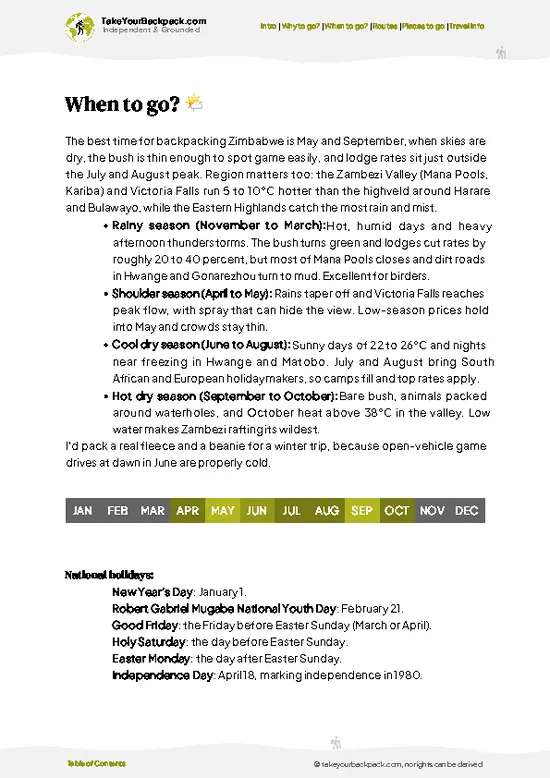
  • Weather: The dry season from May to October is your best bet. Expect clear skies and minimal rain, which means safer trails and better visibility in the caves. The wet season (November to April) brings heavy rains that can flood paths and obscure underwater views.

  • Temperature: Daytime temps hover around 20-25°C (68-77°F) in the dry season—comfortable for hiking and exploring. Nights can dip to 10°C (50°F), so pack layers. The wet season is warmer but muggy, often hitting 28-32°C (82-90°F), which can sap your energy fast.

  • Daylight Hours: Zimbabwe enjoys roughly 11-13 hours of daylight year-round. The dry season offers consistent daylight, giving you ample time for exploration without rushing.

  • Crowds: Peak tourist season aligns with the dry months, especially July and August. Expect
read more 👉

  • Weather: The dry season from May to October is your best bet. Expect clear skies and minimal rain, which means safer trails and better visibility in the caves. The wet season (November to April) brings heavy rains that can flood paths and obscure underwater views.

  • Temperature: Daytime temps hover around 20-25°C (68-77°F) in the dry season—comfortable for hiking and exploring. Nights can dip to 10°C (50°F), so pack layers. The wet season is warmer but muggy, often hitting 28-32°C (82-90°F), which can sap your energy fast.

  • Daylight Hours: Zimbabwe enjoys roughly 11-13 hours of daylight year-round. The dry season offers consistent daylight, giving you ample time for exploration without rushing.

  • Crowds: Peak tourist season aligns with the dry months, especially July and August. Expect more visitors then, which can affect the quietude of the caves. Off-peak months offer solitude but come with weather trade-offs.

  • Seasonal Activities: Dry season is ideal for diving and snorkeling in the cave pools, as water clarity peaks. Wet season reduces visibility and increases safety risks, limiting these activities.

  • Price Fluctuations: Accommodation and park fees tend to rise during the dry season due to demand. Visiting just before or after peak months can save money without sacrificing much on conditions.


Pro-tip: Aim for late May or early October—dry, fewer crowds, and better rates. It’s the sweet spot where you get the park’s best features without the hassle.


source: climatestotravel.comJANJanuary: fair for travelingFEBFebruary: fair for travelingMARMarch: fair for travelingAPRApril: fair for travelingMAYMay: highly recommended for travelingJUNJune: excellent for travelingJULJuly: excellent for travelingAUGAugust: excellent for travelingSEPSeptember: excellent for travelingOCTOctober: highly recommended for travelingNOVNovember: fair for travelingDECDecember: fair for traveling
when-to-go

✈️ The backpacker research shortcutZimbabwe Travel Guide

An offline-friendly backpacking guide with optimized travel routes, ranked highlights, transport advice, and the best areas to stay.
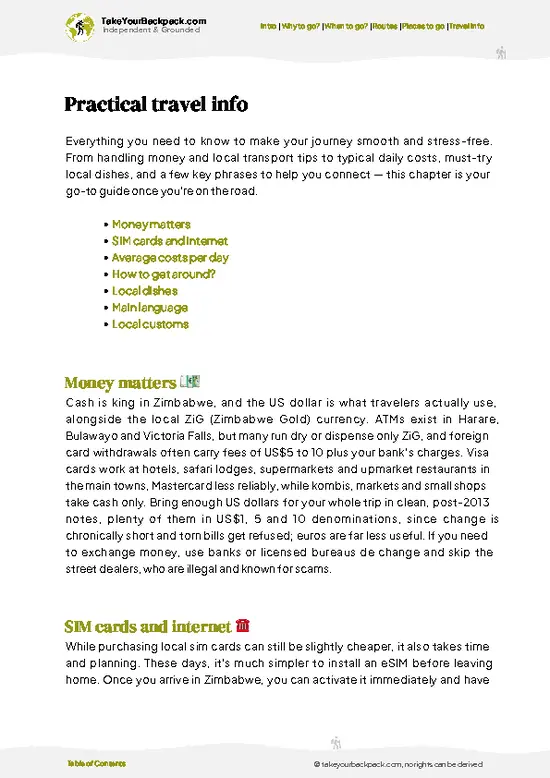
example page 0 from our offline Travel Guide for Zimbabwe
example page 1 from our offline Travel Guide for Zimbabwe
example page 2 from our offline Travel Guide for Zimbabwe
example page 3 from our offline Travel Guide for Zimbabwe
example page 4 from our offline Travel Guide for Zimbabwe
example page 5 from our offline Travel Guide for Zimbabwe
example page 6 from our offline Travel Guide for Zimbabwe
example page 7 from our offline Travel Guide for Zimbabwe
The digital guide (356 pages) contains:
90 highlights, ranked by travel appeal
Optimized 5, 10 & 15-day travel routes
Cities, national parks, landmarks, beaches
How to get around
Offline-friendly for travel without Wi-Fi
👉 Click to see all 30+ guide features

📅 Plan smarter in minutes, not weeks
Month by month travel advice
Festivals & national holidays
Budget expectations

🗺️ Go to the right places, skip the overrated ones
Honest pros & cons of destinations
Top hikes, parks & viewpoints
Lesser-known places most travelers miss
Clear “worth it vs skip it” guidance

🛏️ Travel smoothly without rookie mistakes
Best areas to stay
Transport systems explained simply
Common scams & safety advice
SIM cards, money & practical tips

🌍 Understand the country, not just visit it
Culture & traditions
52 Essential phrases & customs
Festivals worth planning around
Traveler-friendly historical context
Insights that make places more meaningful

📱 Built for real travel conditions
Fully downloadable PDF
Works completely offline
Optimized for phone use
Useful in remote areas & buses
Everything in one place
Save weeks of stressful planning
Get instant access to your full guide. 30‑day money-back guarantee.


By proceeding you agree to our terms.
Sent to your inbox immediately after payment • 100% Secure Checkout
Best Backpacking Travel Advisor 2025 tourism awardBest Backpacking
Travel Advisor
2025
What others say about Take Your Backpack Guides:
⭐⭐⭐⭐⭐
Fantastic, amazing amount of information!
⭐⭐⭐⭐⭐
My goodness this is amazing, it's what I've been looking for hats off too you!
⭐⭐⭐⭐⭐
I think this is absolutely BRILLIANT
⭐⭐⭐⭐
Very complete and informative. It's still missing places, but I gotta to commend you
⭐⭐⭐⭐⭐
This is truly amazing, thank you, can't wait to explore it with my kids!
⭐⭐⭐⭐⭐
Awesome resource, thank you!
⭐⭐⭐⭐⭐
This is amazing! Can't wait to explore the ones I haven't seen
⭐⭐⭐⭐
I love this! Well done, great idea.
⭐⭐⭐⭐⭐
Thanks for taking the time to make this gem!
⭐⭐⭐⭐⭐
This might be the best website I've ever seen.
⭐⭐⭐⭐⭐
Congratulations, and thank you so much for your work; it's incredibly valuable.
⭐⭐⭐⭐
In all seriousness I think you did a great job pointing out the important spots
⭐⭐⭐⭐⭐
10/10 very good
⭐⭐⭐⭐⭐
As someone who's only just starting to visit regularly this is awesome, thank you.
⭐⭐⭐⭐
Thank you very much! I'm going to visit my dad, it's going to be very useful!
⭐⭐⭐⭐⭐
This is really cool! We'll be travelling for the first time and this definitely come in handy.
⭐⭐⭐⭐⭐
You are now our minister of culture, congratulations 👨‍💼
⭐⭐⭐⭐⭐
Just wanted to tell you that this is a pearl! Going to follow your recommendations.
⭐⭐⭐⭐⭐
This is so cool. I'll definitely be using the resource for my travels soon.
⭐⭐⭐⭐⭐
This is very impressive! Good work.
⭐⭐⭐⭐⭐
This is an amazing and informative site. Very well done!

🛏️ Where to stay?Best areas and accommodation options

Chinhoyi Caves National Park offers limited accommodation options directly within the park itself. The park is primarily focused on its stunning limestone caves and the surrounding natural beauty, so don’t expect a full-fledged resort experience here.

For a more immersive experience, consider staying at the nearby town of Chinhoyi, about 10 kilometers away. There, you’ll find budget-friendly lodges and guesthouses that cater to backpackers. Places like the Chinhoyi Caves Motel offer basic amenities and a convenient location.

If you’re willing to venture a bit further, the town of Karoi, roughly … read more 👉
Chinhoyi Caves National Park offers limited accommodation options directly within the park itself. The park is primarily focused on its stunning limestone caves and the surrounding natural beauty, so don’t expect a full-fledged resort experience here.

For a more immersive experience, consider staying at the nearby town of Chinhoyi, about 10 kilometers away. There, you’ll find budget-friendly lodges and guesthouses that cater to backpackers. Places like the Chinhoyi Caves Motel offer basic amenities and a convenient location.

If you’re willing to venture a bit further, the town of Karoi, roughly 50 kilometers away, has additional options, including hostels and budget hotels. This can be a good base if you want to explore the area more broadly.

Be mindful of transport costs; local taxis can add up. It’s wise to plan your trips to the park in advance to maximize your time exploring the caves and minimize unnecessary expenses. Prioritize your energy and budget for the experiences that truly matter—like the breathtaking views inside the caves.

👛 Costs (as of 12 June 2025)Travel costs and budget guide for Chinhoyi Caves

Visiting Chinhoyi Caves National Park in Zimbabwe is an experience that can be both rewarding and budget-friendly if you plan wisely.

Entrance fees typically range from $5 to $10 USD for international visitors. Local residents often pay a lower rate, around $2 to $5 USD. This fee grants you access to the caves and surrounding park areas, where you can explore fascinating limestone formations and crystal-clear pools.

If you’re considering a guided tour, expect to pay an additional $10 to $30 USD, depending on the length and depth of the tour. Guides can enhance your experience with insights about the caves’ history and geology.

Transportation costs can vary. If you’re coming from Harare, a bus ticket might set you back around $10 to $15 USD. Private taxis or rideshares will be more expensive, … read more 👉
Visiting Chinhoyi Caves National Park in Zimbabwe is an experience that can be both rewarding and budget-friendly if you plan wisely.

Entrance fees typically range from $5 to $10 USD for international visitors. Local residents often pay a lower rate, around $2 to $5 USD. This fee grants you access to the caves and surrounding park areas, where you can explore fascinating limestone formations and crystal-clear pools.

If you’re considering a guided tour, expect to pay an additional $10 to $30 USD, depending on the length and depth of the tour. Guides can enhance your experience with insights about the caves’ history and geology.

Transportation costs can vary. If you’re coming from Harare, a bus ticket might set you back around $10 to $15 USD. Private taxis or rideshares will be more expensive, often exceeding $50 USD for the journey.

Food options within the park are limited. Budget around $5 to $15 USD for a meal at nearby eateries. Packing snacks can help stretch your budget and keep your energy up for exploring.

Plan for additional costs like parking fees if you’re driving, which can be around $2 to $5 USD.

Be mindful of cash availability. Credit cards are not widely accepted, so having enough cash on hand is crucial.

Overall, a day trip to Chinhoyi Caves can be done for under $50 USD if you manage your choices wisely. This way, you can focus on enjoying the stunning natural beauty without worrying about unexpected expenses.


source: zimparks.org.zw
⚠️ Prices can change and everyone travels differently, so take this as a rough guide. Hope it helps you plan your adventure!

🥾 TrailsBest hikes in Chinhoyi Caves national park

Chinhoyi Caves National Park offers some unique hiking opportunities that blend stunning scenery with intriguing geological features. The park is famous for its limestone caves and crystal-clear pools, creating a surreal landscape that’s hard to beat. As you hike, you might find yourself navigating rocky terrain mixed with lush vegetation, making it both a visual treat and a bit of a workout. Wildlife is also on the cards—keep an eye out for various bird species and maybe even some monkeys swinging through the trees.

One of the designated trails you might want to check out is the Chinhoyi Caves read more 👉
Chinhoyi Caves National Park offers some unique hiking opportunities that blend stunning scenery with intriguing geological features. The park is famous for its limestone caves and crystal-clear pools, creating a surreal landscape that’s hard to beat. As you hike, you might find yourself navigating rocky terrain mixed with lush vegetation, making it both a visual treat and a bit of a workout. Wildlife is also on the cards—keep an eye out for various bird species and maybe even some monkeys swinging through the trees.

One of the designated trails you might want to check out is the Chinhoyi Caves Trail. Here are the details:
  • Length: 2 km
  • Estimated Duration: 1-2 hours
  • Difficulty Level: Easy
  • Key Features: Stunning views of the caves, crystal-clear pools, and opportunities for photography
  • Terrain: Mostly flat with some rocky sections; well-marked paths

Getting to the park is fairly straightforward. You can catch a bus from Harare, which takes about two hours, and then it’s a short taxi ride to the entrance. It’s not usually overcrowded, so you can enjoy the tranquility of nature without feeling rushed. As for the entrance fee, it’s quite affordable, making it a solid option for budget travelers looking to explore Zimbabwe’s natural beauty. Just be sure to bring some cash, as card payments might not always be accepted.
⚠️ Hiking info can sometimes be outdated or inaccurate. Before you hit the trail, check the latest conditions with locals. If you do spot anything that's off, I'd love to hear from you, so I can update it for fellow travelers.

🛡️ SafetyStaying Safe: What Travelers Should Know

Chinhoyi Caves National Park is generally straightforward for backpackers, but a few practical considerations can enhance your experience. The weather can shift unexpectedly, so pack layers to stay comfortable. Mornings might be cool, while afternoons can heat up quickly.

The terrain is mostly manageable, but watch your footing on rocky paths and be prepared for some steep sections. Navigation is usually clear, but a map or GPS can help if you stray from the main trails.

Wildlife encounters are rare, but if you spot anything, keep your distance. Respect their space and avoid feeding animals.

First-timers often overlook hydration; carry enough water, especially on warmer days. Timing your hikes for early morning or late afternoon can help you avoid the heat and enjoy the park’s beauty without the crowds.

Other Zimbabwean national parks near Chinhoyi Caves

Explore more nearby:


💡 Not sure where to go next?
Create a personalized itinerary for Zimbabwe including Chinhoyi Caves and the places that fit your trip.

Generate my itinerary

👉 Discover all national parks

Or checkout all Zimbabwe has to offer (think cities, towns, villages, national parks, hikes, beaches, festivals)
Country photo of Zimbabwe

We 💚 feedbackSumming up the experience

Chinhoyi Caves National Park is a must-see for its stunning underground lakes and unique limestone formations. The eerie beauty of the caves is something you won’t forget. But be prepared: the park can get crowded, especially on weekends. Arrive early to snag a good spot and avoid the rush. This way, you’ll have the space to soak in the atmosphere without feeling rushed. Trust me, it’s worth the effort.

✈️ When did I visit Zimbabwe?
I have backpacked Zimbabwe all the way back in 2001.

✍️ Help improve this page!
The information on this page is based on my own backpacking experience in Zimbabwe, supplemented with up-to-date research and feedback from other travelers. Travel details can change, so if you notice anything outdated or incomplete, feel free to let me know.


🙋‍♂️ Give feedback

👋 Meet the founderWho’s Behind Take Your Backpack?

Johan, backpacker and founder of TakeYourBackpackHi, I’m Johan (Netherlands 🇳🇱), the creator of TakeYourBackpack. Over the past decade, I’ve backpacked through 80+ countries across six continents, gaining extensive experience with independent travel, long-term trips, and overland routes.

This site is built on a combination of firsthand travel experience and carefully curated insights from other backpackers. Many guides are based on places I’ve personally visited, while others bring together tips, observations, and practical advice shared by trusted travelers I’ve met along the way.

The goal is to provide realistic, experience-driven guidance — not generic itineraries — so you can explore destinations with better context, clearer expectations, and more confidence.

Get full Zimbabwe guide •
Instant download • 90 highlights • Full Offline guide