×

Zimbabwe🇿🇼 | national parksHwange National Parklarge elephant herds, open savanna, pumped waterholes | things to do and best time to go

Explore Gonarezhou National ParkExplore Mana Pools National Park

Backpacking in Hwange
🏆 Top picknational park ranked #1
By Johan Kruseman 🇳🇱 | Updated May 27, 2026

Your boots crunch over dry mopane leaves. A distant lion coughs—low, guttural, close enough to remind you that you’re not the only one awake. The air smells of dust and woodsmoke. This is Hwange National Park, sprawled across the northwest corner of Zimbabwe, just south of Victoria Falls and the Botswana border.

Hwange is the kind of place that strips away illusions. It’s Zimbabwe’s largest park, famous for elephants and wild dogs, but don’t expect manicured trails or easy logistics. Backpackers get raw Africa here: endless savanna, thorny bush, and the real possibility of seeing a herd of a hundred elephants at a waterhole. Hiking is limited—most movement is by guided vehicle, not on foot, for good reason. Entrance fees are higher than you’d guess, and public transport is patchy at best. Camping is allowed but basic, and budget lodges exist if you book ahead. It’s less crowded than Victoria Falls, but don’t expect solitude—just a quieter, more honest wildness. Compared to Matobo or Mana Pools, Hwange is less about dramatic scenery and more about sheer animal density. If you want comfort, look elsewhere. If you want the real thing, this is it.

Discover everything you want to know in the 📖 Zimbabwe Travel Guide.


Get your Zimbabwe guide
90 ranked highlights, routes & tips, works offline (356 pages)
Loading the map 🌍
CLICK TO FILTER
cities
towns
landmarks
national parks
hikes
beaches
attractions
festivals
regions
SHOW COUNTRY’S BESTSHOW ALL

✨ Why go?
Ranked #1 national park in Zimbabwe
Why Hwange should be on your travel list

Hwange National Park in Zimbabwe draws backpackers for several compelling reasons. First, the independent exploration is a major draw. With vast landscapes and diverse wildlife, you can roam freely, soaking in the sights without the constraints of a guided tour. This freedom allows you to connect with the environment on your terms.

Budget-conscious travelers appreciate the affordable camping options and hostels nearby. You can pitch a tent under the stars or find a cozy spot in a hostel, keeping costs low while still enjoying the park’s wonders. This setup is perfect for those who want to stretch their budget and invest in experiences rather than accommodations.

The trail variety is another highlight. Whether you’re into walking safaris or self-guided hikes, there’s something for everyone. … read more 👉
Hwange National Park in Zimbabwe draws backpackers for several compelling reasons. First, the independent exploration is a major draw. With vast landscapes and diverse wildlife, you can roam freely, soaking in the sights without the constraints of a guided tour. This freedom allows you to connect with the environment on your terms.

Budget-conscious travelers appreciate the affordable camping options and hostels nearby. You can pitch a tent under the stars or find a cozy spot in a hostel, keeping costs low while still enjoying the park’s wonders. This setup is perfect for those who want to stretch their budget and invest in experiences rather than accommodations.

The trail variety is another highlight. Whether you’re into walking safaris or self-guided hikes, there’s something for everyone. The well-marked trails cater to different skill levels, making it accessible for both novices and seasoned trekkers.

Lastly, Hwange is particularly suited for self-guided travelers. While tours are available, the park’s layout and resources empower you to navigate independently. This autonomy enhances your adventure, allowing for spontaneous detours and personal discoveries that guided tours often miss.
Want to include Hwange National Park in your Zimbabwe route?
Create a personalized Zimbabwe itinerary that includes Hwange National Park and the places that fit your trip — based on your travel style, budget, and available time. Get your route in seconds.

Generate my trip

💡 HighlightsThe experiences that define the visit

  • Huge elephant herds on the plains — Hwange is famous for enormous family groups and bulls that roam the open savanna. Seeing dozens (sometimes hundreds) of elephants at a single water point is raw and unforgettable — great for watching social behavior and photography.
  • Waterhole hides and night viewing at Main Camp — man-made and natural waterholes concentrate animals, and hides let you watch close-up action without disturbing the wildlife. Nights here bring drama: elephants, buffalo and predators come in under the stars — my personal favorite for relaxed, up-close game viewing.
  • Painted Dog Conservation and wild dog opportunities — the area supports endangered African wild dogs and a strong conservation presence. If you care about rare species, this is one of the best places in Zimbabwe
read more 👉
  • Huge elephant herds on the plains — Hwange is famous for enormous family groups and bulls that roam the open savanna. Seeing dozens (sometimes hundreds) of elephants at a single water point is raw and unforgettable — great for watching social behavior and photography.
  • Waterhole hides and night viewing at Main Camp — man-made and natural waterholes concentrate animals, and hides let you watch close-up action without disturbing the wildlife. Nights here bring drama: elephants, buffalo and predators come in under the stars — my personal favorite for relaxed, up-close game viewing.
  • Painted Dog Conservation and wild dog opportunities — the area supports endangered African wild dogs and a strong conservation presence. If you care about rare species, this is one of the best places in Zimbabwe to learn about and sometimes sight these elusive hunters.
  • Pans and seasonal birdlife — scattered salt and freshwater pans turn into magnets for waders, flamingos and dozens of migrant species after rains. Birders can rack up a lot of lifers in the right season; the contrast between dry pans and sudden bird-filled wetlands is spectacular.
  • Mopane woodlands and ancient baobabs — the park isn’t just open plains: mopane and mixed woodlands give it texture, plus scattered giant baobabs that are striking at sunrise and sunset. Good for quieter game, landscape shots and a real sense of place.
  • Guided walking safaris and bushcraft — guided walks with an experienced ranger or tracker reveal tracks, dung, tiny life and plants you’d miss from a vehicle. It’s slower, a bit gritty, and hugely rewarding if you want to understand the bush by foot.
  • Big cat sightings — lions, leopards and cheetahs — Hwange supports solid predator populations. Lions are the most reliable, leopards are stealthy and rewarding when found, and cheetahs turn up on the open plains. Early mornings and late afternoons are the best times to hunt for them.
Spotted a mistake or missing something? Contact us.

Things to do around Hwange National Park

Ratings based on Tripadvisor reviews. When you book through this link, you support our work at no extra cost to you.

🌤️ When to go?Best time to explore Hwange


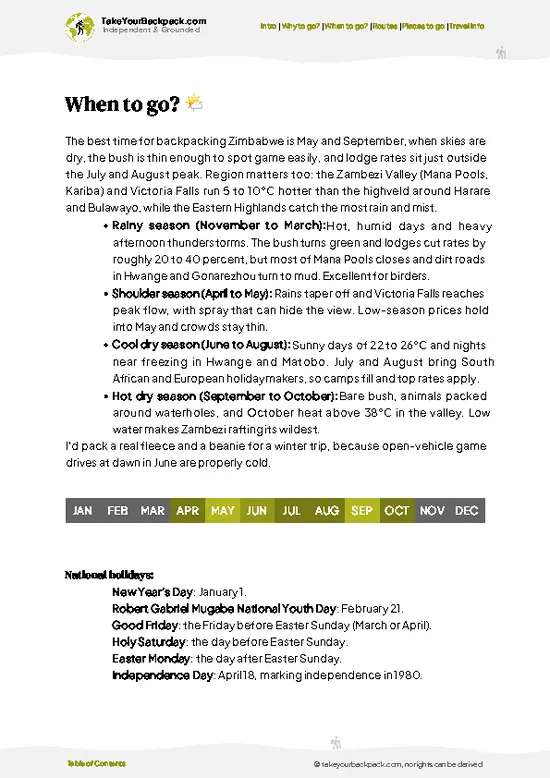
  • Weather: The dry season from May to October is the best time to visit Hwange. Rainfall is minimal, which means fewer muddy roads and better wildlife visibility as animals gather around waterholes. The wet season (November to April) brings heavy rains that can make trails slippery and some areas inaccessible.

  • Temperature: During the dry season, daytime temperatures range from 20°C to 30°C (68°F to 86°F), comfortable for hiking and game drives. Nights can get chilly, dropping to around 5°C to 10°C (41°F to 50°F), so pack layers. The wet season is hotter and more humid, often exceeding 30°C (86°F).

  • Daylight Hours: Daylight is fairly consistent year-round, roughly 11 to 12 hours daily. Early morning and late afternoon are prime times for wildlife spotting, so plan your activities around
read more 👉

  • Weather: The dry season from May to October is the best time to visit Hwange. Rainfall is minimal, which means fewer muddy roads and better wildlife visibility as animals gather around waterholes. The wet season (November to April) brings heavy rains that can make trails slippery and some areas inaccessible.

  • Temperature: During the dry season, daytime temperatures range from 20°C to 30°C (68°F to 86°F), comfortable for hiking and game drives. Nights can get chilly, dropping to around 5°C to 10°C (41°F to 50°F), so pack layers. The wet season is hotter and more humid, often exceeding 30°C (86°F).

  • Daylight Hours: Daylight is fairly consistent year-round, roughly 11 to 12 hours daily. Early morning and late afternoon are prime times for wildlife spotting, so plan your activities around these cooler, quieter hours.

  • Crowds: Peak visitor numbers align with the dry season, especially July and August. If you want fewer people, aim for May or September, when the weather is still good but the park is less busy.

  • Seasonal Activities: Dry months offer excellent game drives and walking safaris. Birdwatching peaks during the wet season when migratory species arrive, but expect muddy conditions and fewer mammals on the move.

  • Price Fluctuations: Accommodation and tour prices spike during the dry season’s peak months. Booking in shoulder months like May or September can save money without sacrificing much on wildlife viewing.


Pro-tip: Visit just before or after peak season to dodge crowds and high prices while still enjoying solid wildlife sightings and manageable weather.


source: climatestotravel.comJANJanuary: fair for travelingFEBFebruary: fair for travelingMARMarch: fair for travelingAPRApril: good for travelingMAYMay: highly recommended for travelingJUNJune: excellent for travelingJULJuly: excellent for travelingAUGAugust: excellent for travelingSEPSeptember: highly recommended for travelingOCTOctober: good for travelingNOVNovember: fair for travelingDECDecember: fair for traveling
zimbabwe-national-park-hwange-national-park
© Google |

✈️ The backpacker research shortcutZimbabwe Travel Guide

An offline-friendly backpacking guide with optimized travel routes, ranked highlights, transport advice, and the best areas to stay.
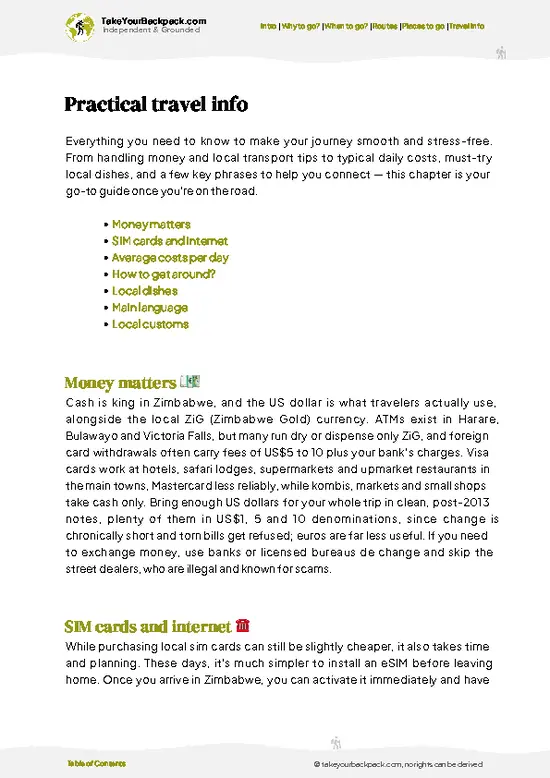
example page 0 from our offline Travel Guide for Zimbabwe
example page 1 from our offline Travel Guide for Zimbabwe
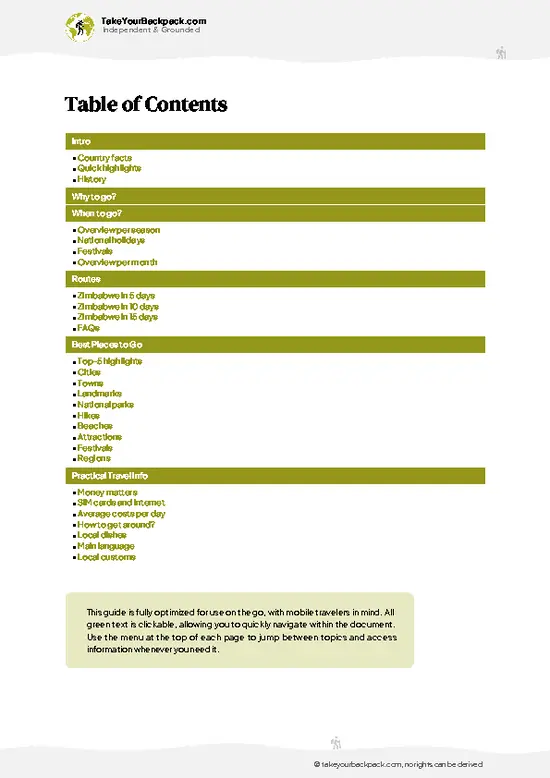
example page 2 from our offline Travel Guide for Zimbabwe
example page 3 from our offline Travel Guide for Zimbabwe
example page 4 from our offline Travel Guide for Zimbabwe
example page 5 from our offline Travel Guide for Zimbabwe
example page 6 from our offline Travel Guide for Zimbabwe
example page 7 from our offline Travel Guide for Zimbabwe
The digital guide (356 pages) contains:
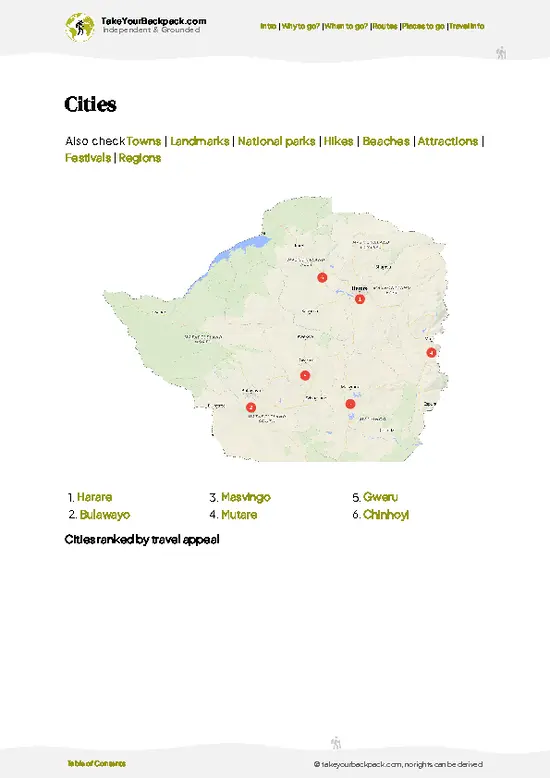
90 highlights, ranked by travel appeal
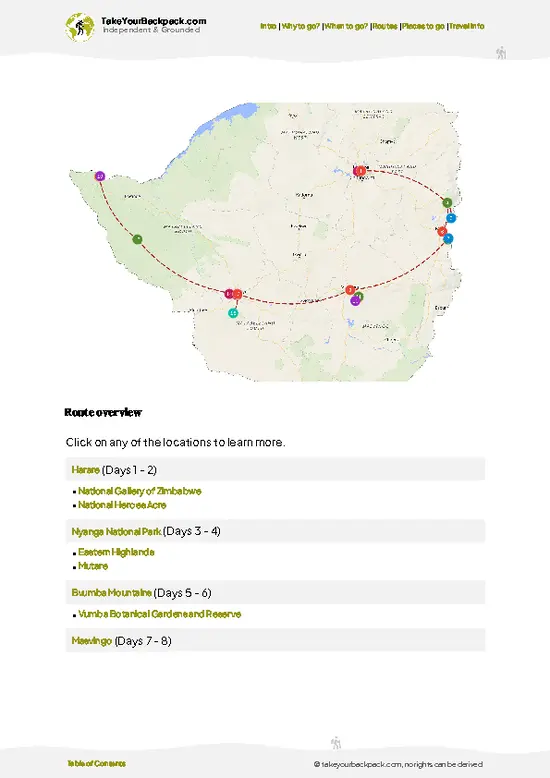
Optimized 5, 10 & 15-day travel routes
Cities, national parks, landmarks, beaches
How to get around
Offline-friendly for travel without Wi-Fi
👉 Click to see all 30+ guide features

📅 Plan smarter in minutes, not weeks
Month by month travel advice
Festivals & national holidays
Budget expectations

🗺️ Go to the right places, skip the overrated ones
Honest pros & cons of destinations
Top hikes, parks & viewpoints
Lesser-known places most travelers miss
Clear “worth it vs skip it” guidance

🛏️ Travel smoothly without rookie mistakes
Best areas to stay
Transport systems explained simply
Common scams & safety advice
SIM cards, money & practical tips

🌍 Understand the country, not just visit it
Culture & traditions
52 Essential phrases & customs
Festivals worth planning around
Traveler-friendly historical context
Insights that make places more meaningful

📱 Built for real travel conditions
Fully downloadable PDF
Works completely offline
Optimized for phone use
Useful in remote areas & buses
Everything in one place
Save weeks of stressful planning
Get instant access to your full guide. 30‑day money-back guarantee.


By proceeding you agree to our terms.
Sent to your inbox immediately after payment • 100% Secure Checkout
Best Backpacking Travel Advisor 2025 tourism awardBest Backpacking
Travel Advisor
2025
What others say about Take Your Backpack Guides:
⭐⭐⭐⭐⭐
Fantastic, amazing amount of information!
⭐⭐⭐⭐⭐
My goodness this is amazing, it's what I've been looking for hats off too you!
⭐⭐⭐⭐⭐
I think this is absolutely BRILLIANT
⭐⭐⭐⭐
Very complete and informative. It's still missing places, but I gotta to commend you
⭐⭐⭐⭐⭐
This is truly amazing, thank you, can't wait to explore it with my kids!
⭐⭐⭐⭐⭐
Awesome resource, thank you!
⭐⭐⭐⭐⭐
This is amazing! Can't wait to explore the ones I haven't seen
⭐⭐⭐⭐
I love this! Well done, great idea.
⭐⭐⭐⭐⭐
Thanks for taking the time to make this gem!
⭐⭐⭐⭐⭐
This might be the best website I've ever seen.
⭐⭐⭐⭐⭐
Congratulations, and thank you so much for your work; it's incredibly valuable.
⭐⭐⭐⭐
In all seriousness I think you did a great job pointing out the important spots
⭐⭐⭐⭐⭐
10/10 very good
⭐⭐⭐⭐⭐
As someone who's only just starting to visit regularly this is awesome, thank you.
⭐⭐⭐⭐
Thank you very much! I'm going to visit my dad, it's going to be very useful!
⭐⭐⭐⭐⭐
This is really cool! We'll be travelling for the first time and this definitely come in handy.
⭐⭐⭐⭐⭐
You are now our minister of culture, congratulations 👨‍💼
⭐⭐⭐⭐⭐
Just wanted to tell you that this is a pearl! Going to follow your recommendations.
⭐⭐⭐⭐⭐
This is so cool. I'll definitely be using the resource for my travels soon.
⭐⭐⭐⭐⭐
This is very impressive! Good work.
⭐⭐⭐⭐⭐
This is an amazing and informative site. Very well done!

🛏️ Where to stay?Best areas and accommodation options

Hwange National Park is a treasure trove of wildlife, but finding the right place to stay can make or break your experience. Inside the park, options are limited but worthwhile. The Hwange Main Camp offers basic accommodations, including campsites and chalets. It’s a solid choice for budget-conscious travelers who want to be close to the action. Just remember, facilities are basic, so come prepared.

If you prefer a bit more comfort, consider the private lodges like The Hide or Camelthorn Lodge. They provide a more upscale experience with guided safaris included. These places can be pricier, but … read more 👉
Hwange National Park is a treasure trove of wildlife, but finding the right place to stay can make or break your experience. Inside the park, options are limited but worthwhile. The Hwange Main Camp offers basic accommodations, including campsites and chalets. It’s a solid choice for budget-conscious travelers who want to be close to the action. Just remember, facilities are basic, so come prepared.

If you prefer a bit more comfort, consider the private lodges like The Hide or Camelthorn Lodge. They provide a more upscale experience with guided safaris included. These places can be pricier, but they often deliver on the wildlife experience, with waterholes right outside your door.

For those looking to stay outside the park, the nearby town of Victoria Falls is a popular base. It’s about a two-hour drive from Hwange. Here, you’ll find a range of accommodations, from hostels to mid-range hotels. The trade-off is that you’ll spend more time traveling to and from the park.

Keep in mind that park fees can add up, so factor those into your budget. Bring cash for entrance fees and any additional activities. Planning ahead will save you from unexpected costs and help you focus on the wildlife encounters that matter.

👛 Costs (as of 20 June 2025)Money, prices, and spending tips

Visiting Hwange National Park in Zimbabwe can be a rewarding experience, but it’s essential to be aware of the costs involved to avoid surprises.

Entry fees for the park typically range from $15 to $20 per person per day. This fee grants you access to the park’s vast landscapes and wildlife. However, if you’re planning to camp, expect to pay an additional $10 to $15 per night for a campsite.

Guided tours can vary widely in price. A half-day guided safari might cost around $50 to $100 per person. Full-day tours can range from $100 to $200, depending on the level of service and inclusions. Private guides will generally be on the higher end of that spectrum.

Accommodation options are diverse. Budget lodges start at about $30 to $50 per night. Mid-range lodges can range from $100 to $200, while … read more 👉
Visiting Hwange National Park in Zimbabwe can be a rewarding experience, but it’s essential to be aware of the costs involved to avoid surprises.

Entry fees for the park typically range from $15 to $20 per person per day. This fee grants you access to the park’s vast landscapes and wildlife. However, if you’re planning to camp, expect to pay an additional $10 to $15 per night for a campsite.

Guided tours can vary widely in price. A half-day guided safari might cost around $50 to $100 per person. Full-day tours can range from $100 to $200, depending on the level of service and inclusions. Private guides will generally be on the higher end of that spectrum.

Accommodation options are diverse. Budget lodges start at about $30 to $50 per night. Mid-range lodges can range from $100 to $200, while luxury lodges can soar to $300 or more per night. Always check what’s included in the price, as some lodges offer meals and guided tours, which can save you money in the long run.

Transportation is another factor. If you’re flying into Victoria Falls, expect to pay around $150 to $300 for a transfer to the park. Self-driving is an option, but fuel costs and vehicle rental should be factored in.

Lastly, keep in mind that park fees and accommodation prices can fluctuate based on the season. Planning ahead can help you avoid peak pricing and ensure you get the most value for your trip.


source: zimbabwetourism.net
⚠️ Prices can change and everyone travels differently, so take this as a rough guide. Hope it helps you plan your adventure!

🥾 TrailsHiking Hwange national park: highlights and difficulty

Hwange National Park is a hidden gem for hiking enthusiasts, offering a unique blend of stunning landscapes and diverse wildlife. The terrain varies from open savannahs to dense woodlands, making every step a new adventure. You’ll likely encounter elephants, lions, and a plethora of bird species as you wander through this vast wilderness. The park isn’t crisscrossed with well-marked trails, but there are some designated areas that make for great exploratory hikes.

One of the notable trails is the Sinamatella Trail. Here are the details:
  • Length: 10 km
  • Estimated Duration: 3-4 hours
  • Difficulty Level:
read more 👉
Hwange National Park is a hidden gem for hiking enthusiasts, offering a unique blend of stunning landscapes and diverse wildlife. The terrain varies from open savannahs to dense woodlands, making every step a new adventure. You’ll likely encounter elephants, lions, and a plethora of bird species as you wander through this vast wilderness. The park isn’t crisscrossed with well-marked trails, but there are some designated areas that make for great exploratory hikes.

One of the notable trails is the Sinamatella Trail. Here are the details:
  • Length: 10 km
  • Estimated Duration: 3-4 hours
  • Difficulty Level: Moderate
  • Key Features: Scenic viewpoints, wildlife sightings, and rich flora
  • Terrain: Mixed; some rocky areas and sandy paths

Another option is the Ngweshla Trail:
  • Length: 5 km
  • Estimated Duration: 2 hours
  • Difficulty Level: Easy
  • Key Features: Waterholes, birdwatching opportunities
  • Terrain: Flat and easy to navigate

Getting to Hwange is relatively straightforward. You can catch a bus from Bulawayo, which takes about 2-3 hours. The park isn’t usually overcrowded, so you can enjoy the tranquility of nature without feeling rushed. As for entrance fees, they’re quite reasonable, but it’s best to check the latest rates before you go. Just remember to bring enough cash, as card facilities can be hit or miss.
⚠️ Hiking info can sometimes be outdated or inaccurate. Before you hit the trail, check the latest conditions with locals. If you do spot anything that's off, I'd love to hear from you, so I can update it for fellow travelers.

🛡️ SafetyTraveler Safety Guide

Hwange National Park offers a generally straightforward experience for backpackers, but a few practical considerations can enhance your adventure. Weather can shift quickly, especially during the rainy season from November to March. Be prepared for sudden downpours and pack waterproof gear.

The terrain is mostly flat, but some trails can be uneven or sandy, which may slow your pace. Good hiking boots are essential for comfort and stability. While wildlife encounters are thrilling, remember to maintain a respectful distance. Elephants and other animals roam freely, so stay alert and follow park guidelines.

Navigating the park is manageable with marked trails, but a good map or GPS device is wise. Cell service can be spotty, so don’t rely solely on your phone. Lastly, hydration is key; carry … read more 👉
Hwange National Park offers a generally straightforward experience for backpackers, but a few practical considerations can enhance your adventure. Weather can shift quickly, especially during the rainy season from November to March. Be prepared for sudden downpours and pack waterproof gear.

The terrain is mostly flat, but some trails can be uneven or sandy, which may slow your pace. Good hiking boots are essential for comfort and stability. While wildlife encounters are thrilling, remember to maintain a respectful distance. Elephants and other animals roam freely, so stay alert and follow park guidelines.

Navigating the park is manageable with marked trails, but a good map or GPS device is wise. Cell service can be spotty, so don’t rely solely on your phone. Lastly, hydration is key; carry enough water, especially on warmer days. By staying aware and prepared, you’ll preserve your energy and budget for the moments that truly matter.

Other Zimbabwean national parks near Hwange

Explore more nearby:


💡 Not sure where to go next?
Create a personalized itinerary for Zimbabwe including Hwange and the places that fit your trip.

Generate my itinerary

👉 Discover all national parks

Or checkout all Zimbabwe has to offer (think cities, towns, villages, national parks, hikes, beaches, festivals)
Country photo of Zimbabwe

We 💚 feedbackIs it worth it?

Hwange National Park is a wildlife lover’s dream. The sheer number of elephants roaming the plains is something you won’t forget. But here’s the catch: the heat can be relentless, especially in the dry season. Plan your activities for early morning or late afternoon to avoid the worst of it. Stay hydrated and pace yourself. It’s all about enjoying the experience without burning out. Trust me, those golden hours are worth every effort.

✈️ When did I visit Zimbabwe?
I have backpacked Zimbabwe all the way back in 2001.

✍️ Help improve this page!
The information on this page is based on my own backpacking experience in Zimbabwe, supplemented with up-to-date research and feedback from other travelers. Travel details can change, so if you notice anything outdated or incomplete, feel free to let me know.


🙋‍♂️ Give feedback

👋 Meet the founderWho’s Behind Take Your Backpack?

Johan, backpacker and founder of TakeYourBackpackHi, I’m Johan (Netherlands 🇳🇱), the creator of TakeYourBackpack. Over the past decade, I’ve backpacked through 80+ countries across six continents, gaining extensive experience with independent travel, long-term trips, and overland routes.

This site is built on a combination of firsthand travel experience and carefully curated insights from other backpackers. Many guides are based on places I’ve personally visited, while others bring together tips, observations, and practical advice shared by trusted travelers I’ve met along the way.

The goal is to provide realistic, experience-driven guidance — not generic itineraries — so you can explore destinations with better context, clearer expectations, and more confidence.

Get full Zimbabwe guide •
Instant download • 90 highlights • Full Offline guide