×

Zimbabwe🇿🇼 | festivalsMatobo Heritage FestivalGranite domes, San rock art, clan stories, Ndebele and Kalanga dance | things to do and best time to go

Explore Kariba Tiger Fishing TournamentExplore Matobo Hills

Backpacking in Matobo Heritage
👌 Worth visitingfestival ranked #9
By Johan Kruseman 🇳🇱 | Updated October 22, 2026

Matobo Heritage Festival suits culture-curious backpackers who like rock art, community storytelling and slow dirt-road exploring, and it will feel thin for anyone chasing big-name stages or all-night parties. It takes place in Zimbabwe’s southwest, in the Matobo Hills south of Bulawayo, where granite domes and balancing boulders frame the programme of traditional dance, music, crafts and heritage talks. Expect a small, friendly crowd of locals, researchers and independent travelers over a short run of days. Worth it for the context alone. I’d ask a local guide at the gate to name the clan history behind each dance, because it turns a good show into a story you can follow. Arrive early on day one, wander the craft stalls, catch an afternoon performance, then climb a nearby dome and watch the boulders turn gold.

Discover everything you want to know in the 📖 Zimbabwe Travel Guide.


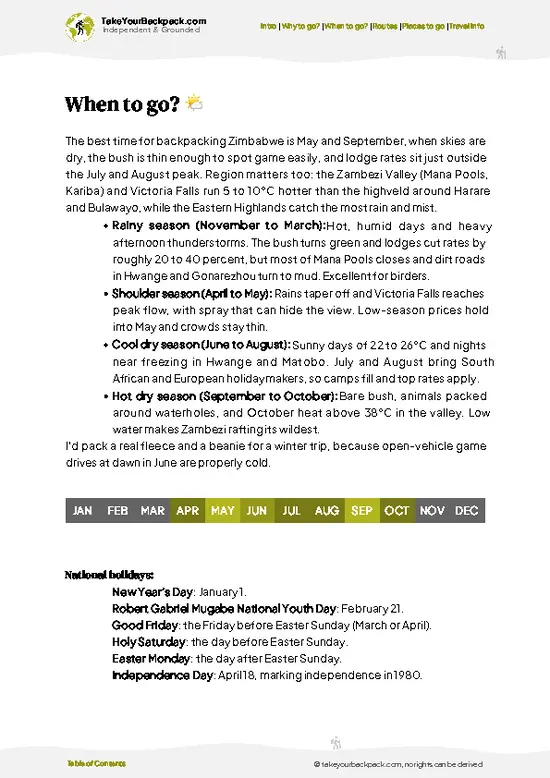
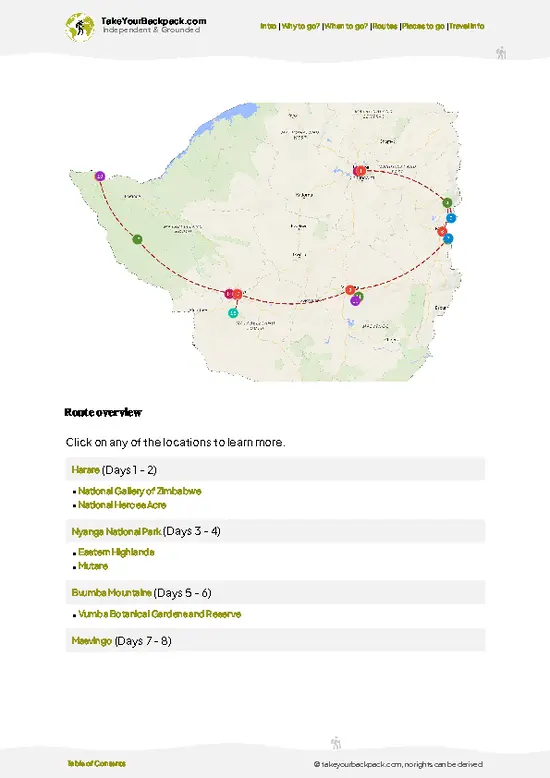
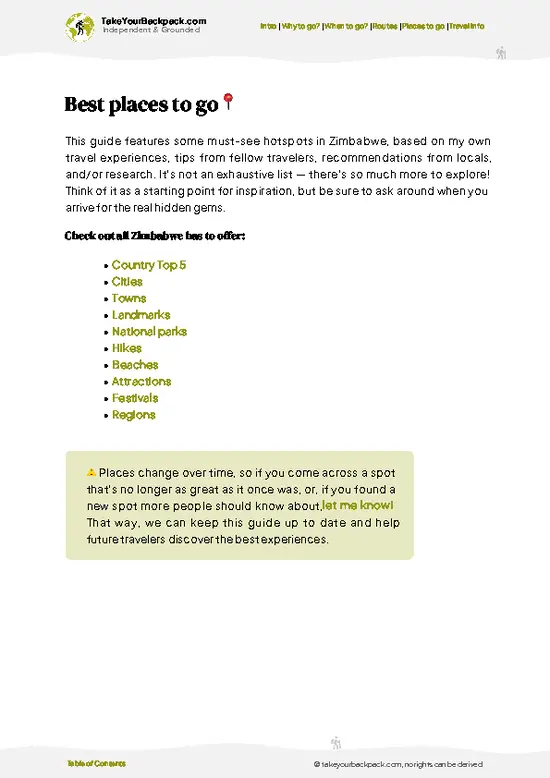
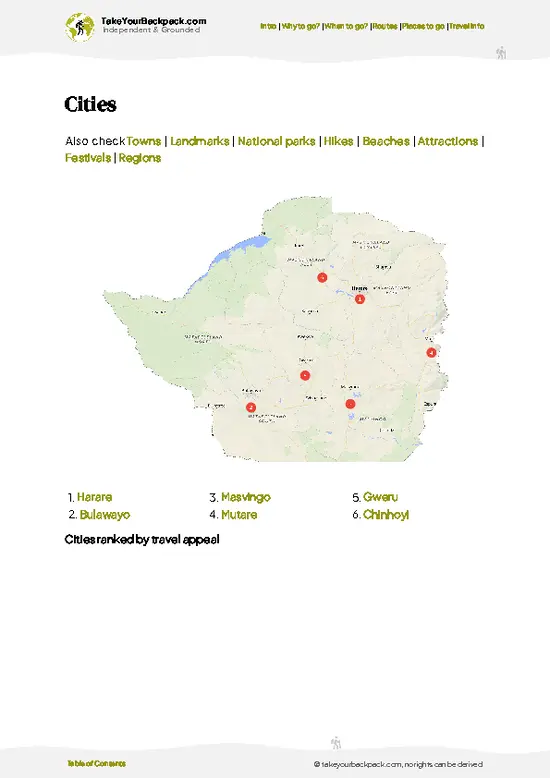
example page 0 from our offline Travel Guide for Zimbabwe
example page 1 from our offline Travel Guide for Zimbabwe
example page 2 from our offline Travel Guide for Zimbabwe
example page 3 from our offline Travel Guide for Zimbabwe
example page 4 from our offline Travel Guide for Zimbabwe
example page 5 from our offline Travel Guide for Zimbabwe
example page 6 from our offline Travel Guide for Zimbabwe
example page 7 from our offline Travel Guide for Zimbabwe
Loading the map 🌍
CLICK TO FILTER
cities
towns
landmarks
national parks
hikes
beaches
attractions
festivals
regions
SHOW COUNTRY’S BESTSHOW ALL

✨ Why go?
Ranked #9 festival in Zimbabwe
What makes it a must-see festival

Matobo Heritage Festival gives you a reason to see the Matobo Hills with people who actually live around them. Backpackers plan around it for the community performances by local dance troupes, where you can watch, ask questions and often join in, which beats any staged cultural show. Guides, craftspeople and elders are in one place, so conversations about rock art, rainmaking sites and the legacy of Cecil Rhodes’s grave at World’s View come with real local opinions attached. It also fits neatly into a Zimbabwe loop. Bulawayo is the natural gateway, the national park is close for rhino tracking, and Victoria Falls and Hwange sit farther northwest. Because the crowd is small and mostly local, you meet people quickly, and the whole thing feels more like a gathering than a spectacle. Bring cash in small notes for food and crafts.

💡 HighlightsKey sights and experiences for travelers

  1. Traditional dance and music performances: Troupes from surrounding communities perform Ndebele and Kalanga dances to drums and song, and the best sets pull the audience in.
  2. Matobo Hills rock art visits: Guided walks take you to painted shelters such as Nswatugi Cave, where San paintings of animals and figures cover the granite.
  3. World’s View (Malindidzimu): A sacred hilltop with huge views over the boulder-strewn landscape, and the burial place of Cecil Rhodes. Local guides explain its spiritual importance as well.
  4. Craft and food stalls: Baskets, carvings and beadwork sit beside pots of sadza, stews and roasted maize. Chatting with the makers is half the fun.
  5. Storytelling and heritage talks: Elders and guides discuss rainmaking shrines, oral history and conservation of the hills, giving context
… read more 👉
  1. Traditional dance and music performances: Troupes from surrounding communities perform Ndebele and Kalanga dances to drums and song, and the best sets pull the audience in.
  2. Matobo Hills rock art visits: Guided walks take you to painted shelters such as Nswatugi Cave, where San paintings of animals and figures cover the granite.
  3. World’s View (Malindidzimu): A sacred hilltop with huge views over the boulder-strewn landscape, and the burial place of Cecil Rhodes. Local guides explain its spiritual importance as well.
  4. Craft and food stalls: Baskets, carvings and beadwork sit beside pots of sadza, stews and roasted maize. Chatting with the makers is half the fun.
  5. Storytelling and heritage talks: Elders and guides discuss rainmaking shrines, oral history and conservation of the hills, giving context to everything you see on the trails.
Matobo Heritage Festival itself is mostly pay-as-you-go, but park entry and guided rock art walks need to be arranged ahead through a Matobo guide or lodge.
Spotted a mistake or missing something? Contact us.

Things to do around Matobo Heritage Festival

Ratings based on Tripadvisor reviews. When you book through this link, you support our work at no extra cost to you.

🌤️ When to go?When is the celebration of Matobo Heritage Festival?

Matobo Heritage Festival is held in the Matobo Hills near Bulawayo, usually over a weekend in the cooler months, and the exact dates shift from year to year with the organizers’ calendar.
  • Best day: Saturday carries the main program of dance, music and cultural talks, so it has the most atmosphere. Sunday is calmer and easier for talking with performers.
  • Weather: Days run about 22 to 27°C (72 to 81°F), and nights in the hills can fall to 5 to 8°C (41 to 46°F). Rain is rare. Bring a warm jacket, a hat, sunscreen and sturdy shoes for granite paths.
  • Booking: Reserve beds two to four weeks ahead, since lodging in the hills is limited. Prices can rise 10 to 30 percent that weekend.
  • Roads: Leave Bulawayo early on Saturday to avoid slow convoys on the Kumalo and Matopos road, and head back before dark.
… read more 👉
Matobo Heritage Festival is held in the Matobo Hills near Bulawayo, usually over a weekend in the cooler months, and the exact dates shift from year to year with the organizers’ calendar.
  • Best day: Saturday carries the main program of dance, music and cultural talks, so it has the most atmosphere. Sunday is calmer and easier for talking with performers.
  • Weather: Days run about 22 to 27°C (72 to 81°F), and nights in the hills can fall to 5 to 8°C (41 to 46°F). Rain is rare. Bring a warm jacket, a hat, sunscreen and sturdy shoes for granite paths.
  • Booking: Reserve beds two to four weeks ahead, since lodging in the hills is limited. Prices can rise 10 to 30 percent that weekend.
  • Roads: Leave Bulawayo early on Saturday to avoid slow convoys on the Kumalo and Matopos road, and head back before dark.
Arrive Friday afternoon so you can settle in and still catch the first performances.


source: climatestotravel.comJANJanuary: not recommended for travelingFEBFebruary: not recommended for travelingMARMarch: not recommended for travelingAPRApril: not recommended for travelingMAYMay: excellent for travelingJUNJune: not recommended for travelingJULJuly: not recommended for travelingAUGAugust: not recommended for travelingSEPSeptember: not recommended for travelingOCTOctober: not recommended for travelingNOVNovember: not recommended for travelingDECDecember: not recommended for traveling

✈️ The backpacker research shortcutZimbabwe Travel Guide

An offline-friendly backpacking guide with optimized travel routes, ranked highlights, transport advice, and the best areas to stay.
example page 0 from our offline Travel Guide for Zimbabwe
example page 1 from our offline Travel Guide for Zimbabwe
example page 2 from our offline Travel Guide for Zimbabwe
example page 3 from our offline Travel Guide for Zimbabwe
example page 4 from our offline Travel Guide for Zimbabwe
example page 5 from our offline Travel Guide for Zimbabwe
example page 6 from our offline Travel Guide for Zimbabwe
example page 7 from our offline Travel Guide for Zimbabwe
The digital guide (265 pages) contains:
✅ 67 highlights, ranked by travel appeal
✅ Optimized 5, 10 & 15-day travel routes
✅ Cities, national parks, landmarks, beaches
✅ How to get around
✅ Offline-friendly for travel without Wi-Fi
👉 Click to see all 30+ guide features

📅 Plan smarter in minutes, not weeks
✅ Month by month travel advice
✅ Festivals & national holidays
✅ Budget expectations

🗺️ Go to the right places, skip the overrated ones
✅ Honest pros & cons of destinations
✅ Top hikes, parks & viewpoints
✅ Lesser-known places most travelers miss
✅ Clear “worth it vs skip it” guidance

🛏️ Travel smoothly without rookie mistakes
✅ Best areas to stay
✅ Transport systems explained simply
✅ Common scams & safety advice
✅ SIM cards, money & practical tips

🌍 Understand the country, not just visit it
✅ Culture & traditions
✅ 52 Essential phrases & customs
✅ Festivals worth planning around
✅ Traveler-friendly historical context
✅ Insights that make places more meaningful

📱 Built for real travel conditions
✅ Fully downloadable PDF
✅ Works completely offline
✅ Optimized for phone use
✅ Useful in remote areas & buses
✅ Everything in one place
Stop searching, start planning
Get instant access to your full guide. 30‑day money-back guarantee.
+ Add another guide for just

By proceeding you agree to our terms.
Sent to your inbox immediately after payment • 100% Secure Checkout
Best Backpacking Travel Advisor 2025 tourism awardBest Backpacking
Travel Advisor
2025
What others say about Take Your Backpack Guides:
⭐⭐⭐⭐⭐
Fantastic, amazing amount of information!
⭐⭐⭐⭐⭐
My goodness this is amazing, it's what I've been looking for hats off too you!
⭐⭐⭐⭐⭐
I think this is absolutely BRILLIANT
⭐⭐⭐⭐
Very complete and informative. It's still missing places, but I gotta to commend you
⭐⭐⭐⭐⭐
This is truly amazing, thank you, can't wait to explore it with my kids!
⭐⭐⭐⭐⭐
Awesome resource, thank you!
⭐⭐⭐⭐⭐
This is amazing! Can't wait to explore the ones I haven't seen
⭐⭐⭐⭐
I love this! Well done, great idea.
⭐⭐⭐⭐⭐
Thanks for taking the time to make this gem!
⭐⭐⭐⭐⭐
This might be the best website I've ever seen.
⭐⭐⭐⭐⭐
Congratulations, and thank you so much for your work; it's incredibly valuable.
⭐⭐⭐⭐
In all seriousness I think you did a great job pointing out the important spots
⭐⭐⭐⭐⭐
10/10 very good
⭐⭐⭐⭐⭐
As someone who's only just starting to visit regularly this is awesome, thank you.
⭐⭐⭐⭐
Thank you very much! I'm going to visit my dad, it's going to be very useful!
⭐⭐⭐⭐⭐
This is really cool! We'll be travelling for the first time and this definitely come in handy.
⭐⭐⭐⭐⭐
You are now our minister of culture, congratulations 👨‍💼
⭐⭐⭐⭐⭐
Just wanted to tell you that this is a pearl! Going to follow your recommendations.
⭐⭐⭐⭐⭐
This is so cool. I'll definitely be using the resource for my travels soon.
⭐⭐⭐⭐⭐
This is very impressive! Good work.
⭐⭐⭐⭐⭐
This is an amazing and informative site. Very well done!

🛏️ Where to stay?Best areas and accommodation options

Bulawayo is the smartest base for most backpackers, with the festival roughly 35 to 50 kilometers south and a ride of about 45 to 60 minutes. The suburbs around the city center and Suburbs near Hillside are the safest and most social areas, with guesthouses, backpacker-style dorms and shared taxis within easy reach. You meet other budget travelers over breakfast, share rides to the hills and have restaurants and ATMs close by. Stay here if you want the lowest prices and the most company.
The village of Matopos, at the edge of Matobo National Park, suits you if you prefer waking up in the granite … read more 👉
Bulawayo is the smartest base for most backpackers, with the festival roughly 35 to 50 kilometers south and a ride of about 45 to 60 minutes. The suburbs around the city center and Suburbs near Hillside are the safest and most social areas, with guesthouses, backpacker-style dorms and shared taxis within easy reach. You meet other budget travelers over breakfast, share rides to the hills and have restaurants and ATMs close by. Stay here if you want the lowest prices and the most company.
The village of Matopos, at the edge of Matobo National Park, suits you if you prefer waking up in the granite landscape. Options there are mostly campsites and small lodges, so the crowd is smaller and quieter, but you cut out the daily commute and can walk to evening gatherings. Book early, since beds are few.
Camping inside the park area is the cheapest choice and the most sociable once the festival fills the sites with fellow travelers. Bring your own food, a warm sleeping bag and a flashlight, and keep valuables locked in your tent or vehicle.

👛 Costs (as of 22 October 2026)Money, prices, and spending tips

Matobo Heritage Festival costs most backpackers about US$45 to 125 a day, with a typical total near US$78 when you stay in a Bulawayo dorm or guesthouse.
CategoryBudget RangeLocal Reality
Festival ticketsUS$5 to 20Entry is modest, and some cultural events are priced separately or by donation. Park fees at Matobo National Park are extra, roughly US$15 to 20 for foreigners.
AccommodationUS$15 to 45Dorms and camping sit at the low end, and guesthouses cost more that weekend as demand climbs.
Local transportUS$10 to 25Shared minibuses from Bulawayo are cheap, and a private taxi or hire for the day is the pricier but easier option.
Food & drinksUS$10 to 20Stall meals of sadza and grilled meat cost US$3 to 6, and beer is about US$1.50 to 3.
Miscellaneous expensesUS$5 to 15Crafts, a guide on the rock paintings
… read more 👉
Matobo Heritage Festival costs most backpackers about US$45 to 125 a day, with a typical total near US$78 when you stay in a Bulawayo dorm or guesthouse.
CategoryBudget RangeLocal Reality
Festival ticketsUS$5 to 20Entry is modest, and some cultural events are priced separately or by donation. Park fees at Matobo National Park are extra, roughly US$15 to 20 for foreigners.
AccommodationUS$15 to 45Dorms and camping sit at the low end, and guesthouses cost more that weekend as demand climbs.
Local transportUS$10 to 25Shared minibuses from Bulawayo are cheap, and a private taxi or hire for the day is the pricier but easier option.
Food & drinksUS$10 to 20Stall meals of sadza and grilled meat cost US$3 to 6, and beer is about US$1.50 to 3.
Miscellaneous expensesUS$5 to 15Crafts, a guide on the rock paintings sites and small tips add up quickly.
Total Daily BudgetUS$45 to 125About US$78 for a comfortable independent traveler.
⚠️ Prices can change and everyone travels differently, so take this as a rough guide. Hope it helps you plan your adventure!

🍲 FoodEating & Drinking in Matobo Heritage

Expect sadza with relish at the center of almost every plate, the stiff maize porridge you eat by hand, rolling a small ball and dipping it into stew, greens or beans. Stalls typically grill beef and chicken over charcoal, and smoky boerewors sausage is easy to find. Look for roasted maize cobs and sweet potatoes for a cheap snack between performances.
For authenticity, try sadza with ox tail or goat stew and any dried vegetables (idelele or okra dishes) cooked the Ndebele way. These taste like a home kitchen rather than a tourist menu. Drinks lean toward sodas, bottled water, Zambezi lager and traditional sorghum beer served in a shared container, so take a polite sip when it is passed to you.
Carry small US dollar notes, since many stalls do not take cards and change can be scarce. Lines build … read more 👉
Expect sadza with relish at the center of almost every plate, the stiff maize porridge you eat by hand, rolling a small ball and dipping it into stew, greens or beans. Stalls typically grill beef and chicken over charcoal, and smoky boerewors sausage is easy to find. Look for roasted maize cobs and sweet potatoes for a cheap snack between performances.
For authenticity, try sadza with ox tail or goat stew and any dried vegetables (idelele or okra dishes) cooked the Ndebele way. These taste like a home kitchen rather than a tourist menu. Drinks lean toward sodas, bottled water, Zambezi lager and traditional sorghum beer served in a shared container, so take a polite sip when it is passed to you.
Carry small US dollar notes, since many stalls do not take cards and change can be scarce. Lines build at midday, so eat early or late. Portions are generous, and sharing a plate with a new friend is normal and welcomed. Bring water and snacks for the walk between sites.

FAQTraveler FAQ

Matobo Heritage Festival is usually held over a weekend in the cooler months in the Matobo Hills, about 35 to 50 kilometers south of Bulawayo. The program normally runs two to three days, with Saturday as the main day. Exact dates change each year, so confirm with the organizers a month or two ahead.
Attending Matobo Heritage Festival typically costs US$5 to 20 for entry, plus park fees of roughly US$15 to 20 for foreign visitors. Budget travelers spend about US$60 to 95 a day including a Bulawayo bed, shared transport and stall food. Camping and shared rides bring that total down.
Matobo Heritage Festival does not usually require tickets far ahead, since most entry is paid at the gate or booked through local organizers. Beds are the real constraint, so reserve lodging in Bulawayo or Matopos two to four weeks early. Bring small US dollar notes, as cards are often not accepted.
⚠️ Things can change over time, so always validate details locally before you go.

Other Zimbabwean festivals near Matobo Heritage

Explore more nearby:


💡 Not sure where to go next?
Create a personalized itinerary for Zimbabwe including Matobo Heritage and the places that fit your trip.

Generate my itinerary

👉 Discover all festivals

Or checkout all Zimbabwe has to offer (think cities, towns, villages, national parks, hikes, beaches, festivals)
Country photo of Zimbabwe

We 💚 feedbackFinal thoughts on celebrating the Matobo Heritage

Matobo Heritage Festival will suit you best if you enjoy asking questions, eating what locals eat and walking slowly among rock shelters. If you need polished stages and nonstop nightlife, skip it. I would book a local guide for the day after, since the hills explain the festival better than any program.

✈️ When did I visit Zimbabwe?
I have backpacked Zimbabwe all the way back in 2001.

✍️ Help improve this page!
The information on this page is based on my own backpacking experience in Zimbabwe, supplemented with up-to-date research and feedback from other travelers. Travel details can change, so if you notice anything outdated or incomplete, feel free to let me know.


🙋‍♂️ Give feedback

👋 Meet the founderWho’s Behind Take Your Backpack?

Johan, backpacker and founder of TakeYourBackpackHi, I’m Johan (Netherlands 🇳🇱), the creator of TakeYourBackpack. Over the past 3 decades, I’ve backpacked through 90+ countries across six continents, gaining extensive experience with independent travel, long-term trips, and overland routes.

This site is built on a combination of firsthand travel experience and carefully curated insights from other backpackers. Many guides are based on places I’ve personally visited, while others bring together tips, observations, and practical advice shared by trusted travelers I’ve met along the way.

The goal is to provide realistic, experience-driven guidance — not generic itineraries — so you can explore destinations with better context, clearer expectations, and more confidence.