×

Zimbabwe🇿🇼 | best festivalsDiscover the 11 Best festivals Across Zimbabwe

Zimbabwe’s festival calendar runs on music, arts and heritage, and the experience changes sharply by region. Harare pulls the biggest crowds, with urban stages, city gigs and easy minibus or taxi access. Bulawayo moves at a slower, friendlier pace with a strong Ndebele and arts flavor. The Eastern Highlands and Victoria Falls add mountain air and tourist-ready logistics, though Falls prices run higher. Independent travelers can chase these events on a modest budget, since entry is often a few US dollars and most gatherings stay small enough to talk with performers. Pack cash, flex your dates and head out.

By Johan Kruseman 🇳🇱 | Updated October 23, 2026
Explore the best regions in Zimbabwe

Why go?Understanding Their Importance

Zimbabwe turns out festival energy because music is woven into daily life. Shona mbira and Ndebele choral and dance traditions sit beside sungura, jit and urban grooves, and the country’s long literary and visual arts scene feeds a steady run of gatherings. Independence-era history and a resilient creative community mean many events are organized by artists and local groups rather than big corporations. That gives you intimate crowds, direct contact with performers and prices that stay low.

Geography helps too. The high plateau keeps nights cool, the dry winter brings dependable skies, and compact distances between Harare, Bulawayo, the Eastern Highlands and Victoria Falls make a multi-region run realistic.

Know the limits before you commit. Dates shift, some events change venues or skip … read more 👉
Zimbabwe turns out festival energy because music is woven into daily life. Shona mbira and Ndebele choral and dance traditions sit beside sungura, jit and urban grooves, and the country’s long literary and visual arts scene feeds a steady run of gatherings. Independence-era history and a resilient creative community mean many events are organized by artists and local groups rather than big corporations. That gives you intimate crowds, direct contact with performers and prices that stay low.

Geography helps too. The high plateau keeps nights cool, the dry winter brings dependable skies, and compact distances between Harare, Bulawayo, the Eastern Highlands and Victoria Falls make a multi-region run realistic.

Know the limits before you commit. Dates shift, some events change venues or skip a year, and official announcements often land late and appear mainly on social media. Cash matters, since US dollars in small notes are widely used alongside local digital payments, and card machines fail often. Power cuts and patchy data happen, so download maps and keep a charged power bank. Public transport between cities is cheap but slow, with crowded minibuses and long-distance coaches that leave when full. Confirm each event close to the date, then go with an open mind and plenty of small bills.
Evaluating the Top Choices
The list of best festivals in Zimbabwe is created based on energy, traditions, crowd experience, activities, and overall excitement. If you feel a festival is missing in this list, please let us know.

When to go?Optimal Periods for Travel

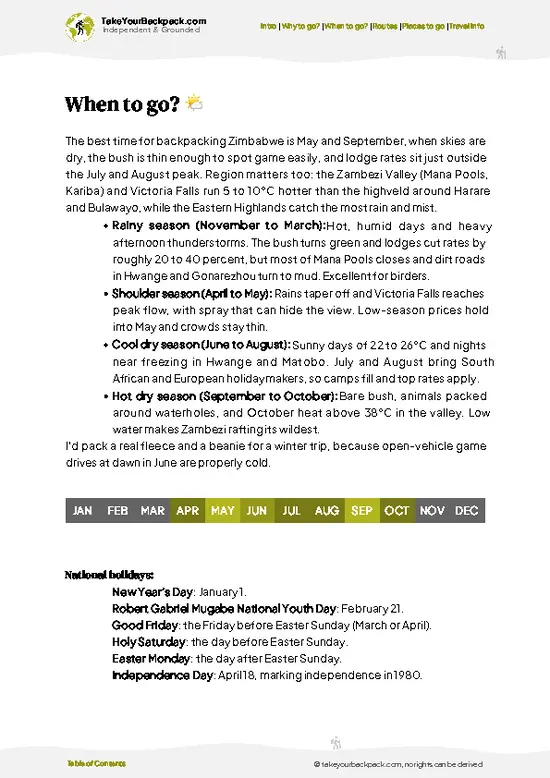
Best Months for Festivals: The best months are April to October, when the dry season brings clear skies, little rain and comfortable outdoor conditions. Over this stretch, daytime highs in Harare and Bulawayo range roughly from 20 to 28°C, and winter nights in June and July can fall to 5 to 10°C, colder in the highlands.

Shoulder Seasons and Wet Season: April to May and September to October are the shoulder months, with mild days and fewer visitors. September and October heat up fast, often reaching 30 to 35°C in Bulawayo and the Zambezi Valley, so carry water and sun protection. The rains run from about November to March, with most of the 600 to 900 mm annual rainfall in Harare falling then. Storms can flood dirt roads and cancel outdoor gigs, and the Eastern Highlands turn misty and slick. … read more 👉
Best Months for Festivals: The best months are April to October, when the dry season brings clear skies, little rain and comfortable outdoor conditions. Over this stretch, daytime highs in Harare and Bulawayo range roughly from 20 to 28°C, and winter nights in June and July can fall to 5 to 10°C, colder in the highlands.

Shoulder Seasons and Wet Season: April to May and September to October are the shoulder months, with mild days and fewer visitors. September and October heat up fast, often reaching 30 to 35°C in Bulawayo and the Zambezi Valley, so carry water and sun protection. The rains run from about November to March, with most of the 600 to 900 mm annual rainfall in Harare falling then. Storms can flood dirt roads and cancel outdoor gigs, and the Eastern Highlands turn misty and slick.

Crowds and Prices: Peak pressure comes around Victoria Falls in the dry months, especially July to August, when beds fill and rates climb by 20 to 40 percent. Harare and Bulawayo stay steady year-round, with dorm beds around US$10 to 20. Book Falls and Highlands lodging early for winter dates. Elsewhere, you can usually decide a week or two ahead and still find a bed.

festival hoppingPlanning Your Route Efficiently

How Long to Allow: A trip linking several festivals needs 10 to 16 days, enough to cover two or three regions without living on buses. Zimbabwe’s roads are decent on main routes but slow, and festival dates rarely line up neatly.

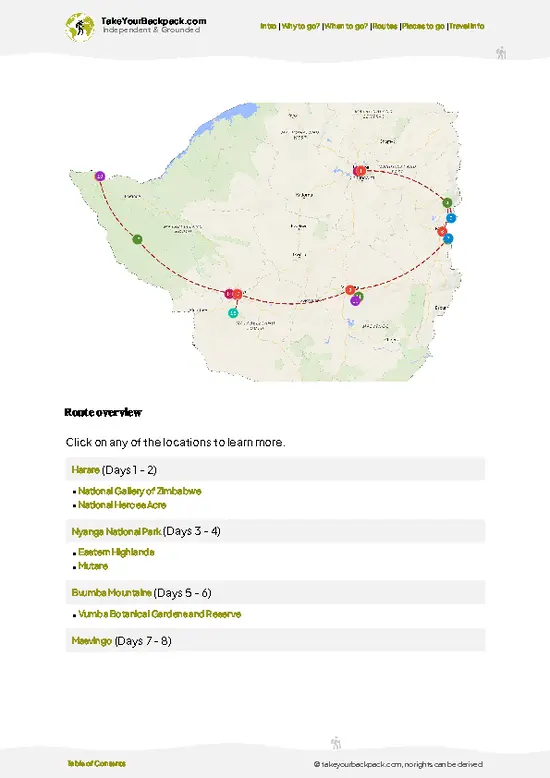
Which Regions Group Well: Start in Harare, the main arrival and transport hub, then loop east to the Eastern Highlands around Mutare and Nyanga, about 3 to 4 hours by road. Return west and continue to Bulawayo (roughly 5 to 7 hours by coach from Harare), then finish at Victoria Falls, another 5 to 6 hours by road or an overnight train when running. Flying the Bulawayo to Falls or Harare to Falls leg can save a day if time is tight. Going one direction, east to west, avoids backtracking and ends at the spot with the easiest international exits.

Pacing and Common … read more 👉
How Long to Allow: A trip linking several festivals needs 10 to 16 days, enough to cover two or three regions without living on buses. Zimbabwe’s roads are decent on main routes but slow, and festival dates rarely line up neatly.

Which Regions Group Well: Start in Harare, the main arrival and transport hub, then loop east to the Eastern Highlands around Mutare and Nyanga, about 3 to 4 hours by road. Return west and continue to Bulawayo (roughly 5 to 7 hours by coach from Harare), then finish at Victoria Falls, another 5 to 6 hours by road or an overnight train when running. Flying the Bulawayo to Falls or Harare to Falls leg can save a day if time is tight. Going one direction, east to west, avoids backtracking and ends at the spot with the easiest international exits.

Pacing and Common Mistakes: Give each stop 2 to 4 days, with an extra day around mountain and Falls destinations. The classic error is packing festival dates back to back across regions, then losing a day to a delayed coach or fuel shortage. Leave a buffer day between stops. Another is trusting a date from last year, so confirm it before booking transport. Travel in daylight, book Falls beds early in July and August, and keep cash for coach fares, which leave when full.

The ListThe Best festivals of Zimbabwe

1 Harare International Festival of the Arts

Harare Gardens lawn, six-day program, Reps Theatre, children’s workshops

Spread a blanket at the main stage after an afternoon of theater, craft browsing and family sessions scattered across central venues.

2 Victoria Falls Carnival

New Year’s Eve countdown, Falls spray, house and sungura, Zambezi cruises

Dance toward midnight to local and South African sounds, after a day walking the rainforest viewpoints or drifting past hippos on the river.

3 Harare International Carnival

Street parade, stilt walkers, Africa Unity Square, curbside food

Claim pavement space near the square and watch floats and costumed troupes pass within reach, then follow the drums to roasted maize and grilled meat.

4 Shoko Festival

Zimdancehall, hip-hop sets, street fashion, live graffiti

Follow shifting venues across Harare for packed rap and dancehall nights, then meet young designers and muralists whose work fills the daytime.

5 Intwasa Arts Festival

New Zimbabwean plays, multilingual stages, gallery shows, film screenings

Hop between Bulawayo halls to see new plays in Ndebele, Shona and English, then join daytime workshops and short film screenings.

6 Bulawayo Arts Festival

Marimba nights, Ndebele dance troupes, poetry sessions, grill stalls

Move between courtyards and stages to catch choirs, comedy and spoken word, then eat sadza and braaied meat from stalls run by the artists.

7 Chimanimani Arts Festival

Mountain camping, mbira and sungura, quartzite ridges, small-scale weekend

Camp near the Mozambique border, hear live bands up close, then hike to Bridal Veil Falls or up the quartzite ridges between sets.

8 Kariba Tiger Fishing Tournament

Tigerfish weigh-in, lakeshore braais, houseboats, Zambezi escarpment

Join the lakeshore scales as boats return with toothy catches, then share grilled kapenta and fishing stories with teams at the clubs.

9 Matobo Heritage Festival

Granite domes, San rock art, clan stories, Ndebele and Kalanga dance

Pair community dance with guided walks to painted shelters and a sacred hilltop, with elders explaining the history behind each place.

10 Mbira Festival

Mbira keys, hosho rattles, interlocking melodies, handmade instruments

Stand near the percussion to hear how the interlocking parts fit, then ask a maker to play an instrument before you buy one.

11 Jikinya Dance Festival

Hide skirts and rattles, school competitions, drumming circles

Watch troupes compete in the jikinya dance, join an open drumming circle, and see young performers carry traditions forward in front of loud, partisan crowds.

Loading the map 🌍

Expert viewInsights from Locals and Experts

How Many to Attend: Plan on two or three festivals in a single trip. That number leaves room for the slow transport, shifting dates and rest days Zimbabwe demands, and it still gives you a real spread of music, heritage and arts. Four or more means you spend your holiday on coaches and your budget on short-notice taxis, so the extra event rarely pays back.

Choosing Between Kinds: For the lowest cost and the closest contact with artists, favor community and arts events in Harare and Bulawayo. They need little planning, tickets often run US$3 to 15, and you can arrive the same day. Heritage and cultural gatherings in rural areas give the deepest experience, but they cost more in time, since you need extra transport and a local contact, and comfort is basic. Tourist-oriented events near Victoria … read more 👉
How Many to Attend: Plan on two or three festivals in a single trip. That number leaves room for the slow transport, shifting dates and rest days Zimbabwe demands, and it still gives you a real spread of music, heritage and arts. Four or more means you spend your holiday on coaches and your budget on short-notice taxis, so the extra event rarely pays back.

Choosing Between Kinds: For the lowest cost and the closest contact with artists, favor community and arts events in Harare and Bulawayo. They need little planning, tickets often run US$3 to 15, and you can arrive the same day. Heritage and cultural gatherings in rural areas give the deepest experience, but they cost more in time, since you need extra transport and a local contact, and comfort is basic. Tourist-oriented events near Victoria Falls are the easiest and most polished, though accommodation and food cost two to three times more. A backpacker with limited days gets the most from one city festival, one cultural or rural event and, if the budget allows, one Falls-area stop.

What It Costs: Expect US$30 to 60 a day in towns, covering a dorm bed or budget room (US$10 to 25), street food and simple restaurants (US$5 to 12), and local minibuses (US$1 to 5 per hop). Falls-area days run US$50 to 90. Budget US$5 to 25 per visit for entry, with extra for a local guide (US$10 to 30) or a taxi home after dark (US$5 to 15). Carry small US dollar notes, since change is scarce and card machines often fail.

Safety and Etiquette: Festival grounds are usually relaxed, but pickpocketing happens in crowds, so carry only what you need and keep your phone zipped. Arrange transport back before the final act, as taxis thin out late and minibuses stop early. Avoid walking alone in cities at night.

Respect matters. Ask before photographing performers, elders and ritual elements in rural events, and expect to be told no. Dress modestly, particularly at heritage gatherings, greet people before asking for anything, and follow the local lead on when to join in. Politics is a sensitive subject, so keep opinions about the government to yourself and skip photographing police, soldiers or official buildings. Confirm dates and venues a week ahead through organizers’ social pages, and keep a backup plan in case an event moves or is canceled.

✈️ The backpacker research shortcutZimbabwe Travel Guide

An offline-friendly backpacking guide with optimized travel routes, ranked highlights, transport advice, and the best areas to stay.
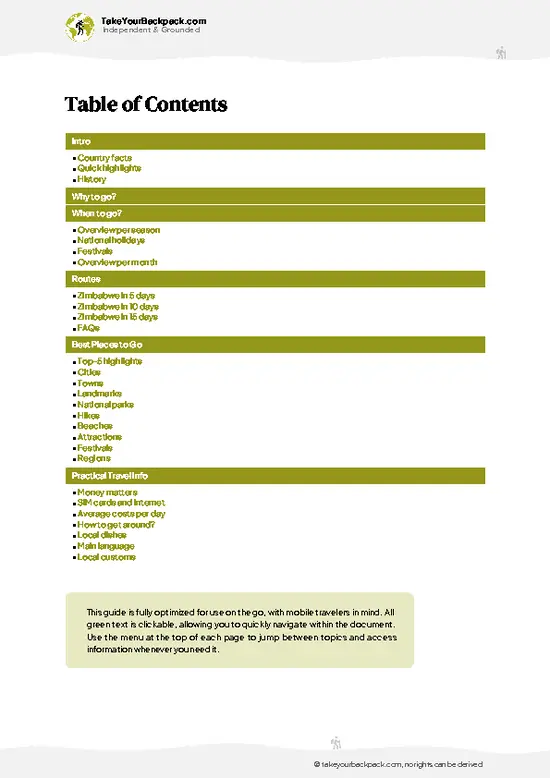
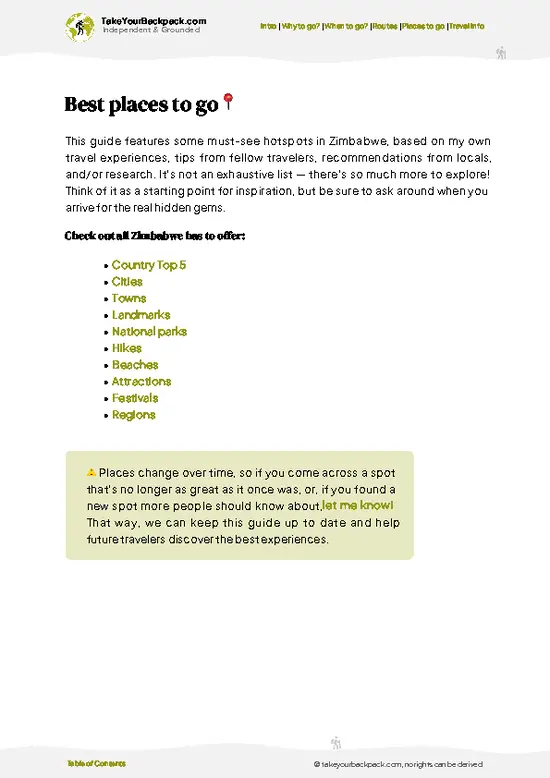
example page 0 from our offline Travel Guide for Zimbabwe
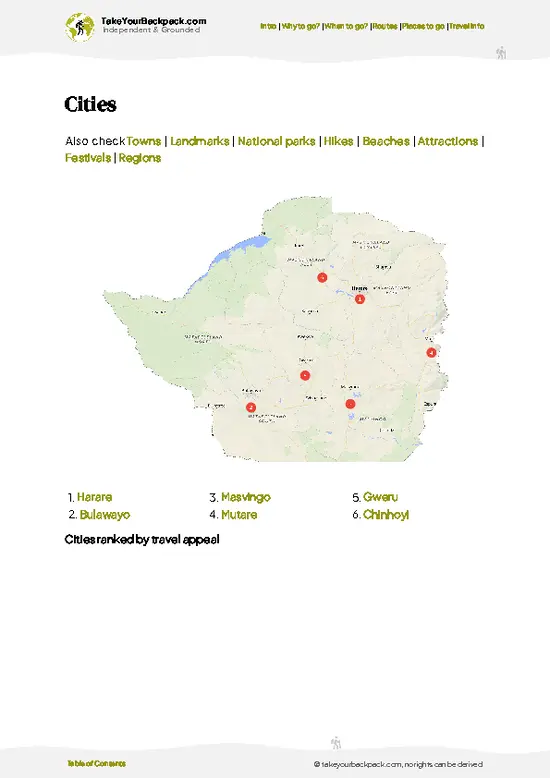
example page 1 from our offline Travel Guide for Zimbabwe
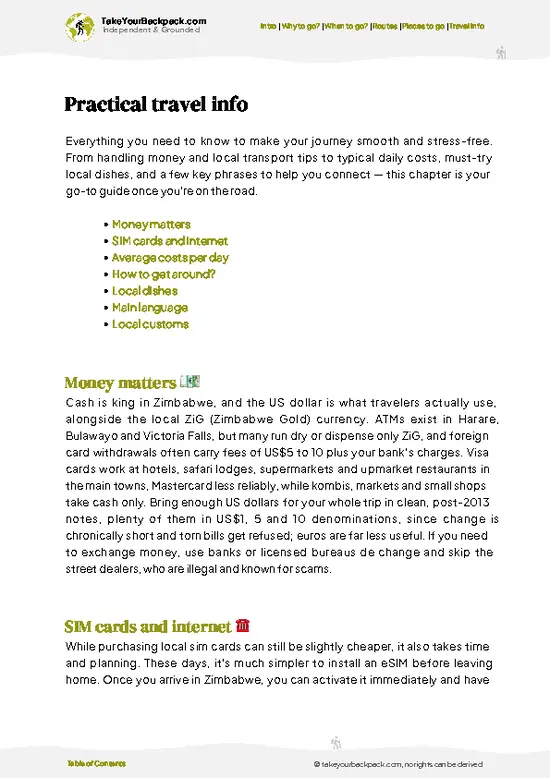
example page 2 from our offline Travel Guide for Zimbabwe
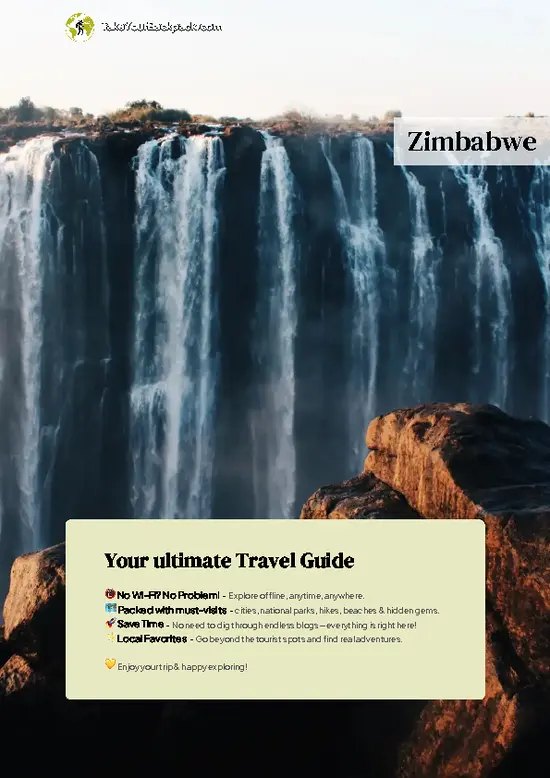
example page 3 from our offline Travel Guide for Zimbabwe
example page 4 from our offline Travel Guide for Zimbabwe
example page 5 from our offline Travel Guide for Zimbabwe
example page 6 from our offline Travel Guide for Zimbabwe
example page 7 from our offline Travel Guide for Zimbabwe
The digital guide (265 pages) contains:
✅ 67 highlights, ranked by travel appeal
✅ Optimized 5, 10 & 15-day travel routes
✅ Cities, national parks, landmarks, beaches
✅ How to get around
✅ Offline-friendly for travel without Wi-Fi
👉 Click to see all 30+ guide features

📅 Plan smarter in minutes, not weeks
✅ Month by month travel advice
✅ Festivals & national holidays
✅ Budget expectations

🗺️ Go to the right places, skip the overrated ones
✅ Honest pros & cons of destinations
✅ Top hikes, parks & viewpoints
✅ Lesser-known places most travelers miss
✅ Clear “worth it vs skip it” guidance

🛏️ Travel smoothly without rookie mistakes
✅ Best areas to stay
✅ Transport systems explained simply
✅ Common scams & safety advice
✅ SIM cards, money & practical tips

🌍 Understand the country, not just visit it
✅ Culture & traditions
✅ 52 Essential phrases & customs
✅ Festivals worth planning around
✅ Traveler-friendly historical context
✅ Insights that make places more meaningful

📱 Built for real travel conditions
✅ Fully downloadable PDF
✅ Works completely offline
✅ Optimized for phone use
✅ Useful in remote areas & buses
✅ Everything in one place
Stop searching, start planning
Get instant access to your full guide. 30‑day money-back guarantee.
+ Add another guide for just

By proceeding you agree to our terms.
Sent to your inbox immediately after payment • 100% Secure Checkout
Best Backpacking Travel Advisor 2025 tourism awardBest Backpacking
Travel Advisor
2025
What others say about Take Your Backpack Guides:
⭐⭐⭐⭐⭐
Fantastic, amazing amount of information!
⭐⭐⭐⭐⭐
My goodness this is amazing, it's what I've been looking for hats off too you!
⭐⭐⭐⭐⭐
I think this is absolutely BRILLIANT
⭐⭐⭐⭐
Very complete and informative. It's still missing places, but I gotta to commend you
⭐⭐⭐⭐⭐
This is truly amazing, thank you, can't wait to explore it with my kids!
⭐⭐⭐⭐⭐
Awesome resource, thank you!
⭐⭐⭐⭐⭐
This is amazing! Can't wait to explore the ones I haven't seen
⭐⭐⭐⭐
I love this! Well done, great idea.
⭐⭐⭐⭐⭐
Thanks for taking the time to make this gem!
⭐⭐⭐⭐⭐
This might be the best website I've ever seen.
⭐⭐⭐⭐⭐
Congratulations, and thank you so much for your work; it's incredibly valuable.
⭐⭐⭐⭐
In all seriousness I think you did a great job pointing out the important spots
⭐⭐⭐⭐⭐
10/10 very good
⭐⭐⭐⭐⭐
As someone who's only just starting to visit regularly this is awesome, thank you.
⭐⭐⭐⭐
Thank you very much! I'm going to visit my dad, it's going to be very useful!
⭐⭐⭐⭐⭐
This is really cool! We'll be travelling for the first time and this definitely come in handy.
⭐⭐⭐⭐⭐
You are now our minister of culture, congratulations 👨‍💼
⭐⭐⭐⭐⭐
Just wanted to tell you that this is a pearl! Going to follow your recommendations.
⭐⭐⭐⭐⭐
This is so cool. I'll definitely be using the resource for my travels soon.
⭐⭐⭐⭐⭐
This is very impressive! Good work.
⭐⭐⭐⭐⭐
This is an amazing and informative site. Very well done!

🛏️ Where to stay?Top Areas to Stay

Zimbabwe has a small but solid spread of backpacker lodges, garden hostels with dorms at roughly US$12 to 25 a night, and budget guesthouses, though you won’t find big party hostels. In Harare, the leafy northern suburbs of Avondale and Belgravia hold most budget beds, with cafés, a shopping center and the city’s best restaurants close by and a calm, walled-garden feel; Milton Park is cheaper and closer to downtown but quieter at night, while Borrowdale is safe and polished but pricey and far from the center. Victoria Falls town packs the best backpacker scene into walkable streets a short ride from the falls, with bars and adventure-booking desks on your doorstep (watch for elephants and warthogs … read more 👉
Zimbabwe has a small but solid spread of backpacker lodges, garden hostels with dorms at roughly US$12 to 25 a night, and budget guesthouses, though you won’t find big party hostels. In Harare, the leafy northern suburbs of Avondale and Belgravia hold most budget beds, with cafés, a shopping center and the city’s best restaurants close by and a calm, walled-garden feel; Milton Park is cheaper and closer to downtown but quieter at night, while Borrowdale is safe and polished but pricey and far from the center. Victoria Falls town packs the best backpacker scene into walkable streets a short ride from the falls, with bars and adventure-booking desks on your doorstep (watch for elephants and warthogs after dark), and in Bulawayo the Suburbs neighborhood offers quiet, good-value guesthouses a short taxi ride from the center and the museum.

If you enjoy meeting fellow travelers, consider choosing hostels with high ratings for atmosphere. On the other hand, if you prefer having your own space, a hotel might be a better option.

ZimbabweDiscover the Country

👋 Meet the founderWho’s Behind Take Your Backpack?

Johan, backpacker and founder of TakeYourBackpackHi, I’m Johan (Netherlands 🇳🇱), the creator of TakeYourBackpack. Over the past 3 decades, I’ve backpacked through 90+ countries across six continents, gaining extensive experience with independent travel, long-term trips, and overland routes.

This site is built on a combination of firsthand travel experience and carefully curated insights from other backpackers. Many guides are based on places I’ve personally visited, while others bring together tips, observations, and practical advice shared by trusted travelers I’ve met along the way.

The goal is to provide realistic, experience-driven guidance — not generic itineraries — so you can explore destinations with better context, clearer expectations, and more confidence.