×

Afghanistan Itinerary Planner

Build your own Afghanistan journey from the ground up, exactly the way you like to travel. Set your trip length, pick what matters most to you from cities & towns, villages, landmarks, national parks, hikes, beaches, and attractions, then choose your travel style and pace so every day feels right. Add a starting point in Kabul or a must-see like Band-e-Amir National Park, lock in any mandatory stops, and let the planner turn your choices into a complete, day-by-day route that fits your time, your energy, and your priorities.

Plan
your Trip


We build
your Route


Get your
Travel Plan

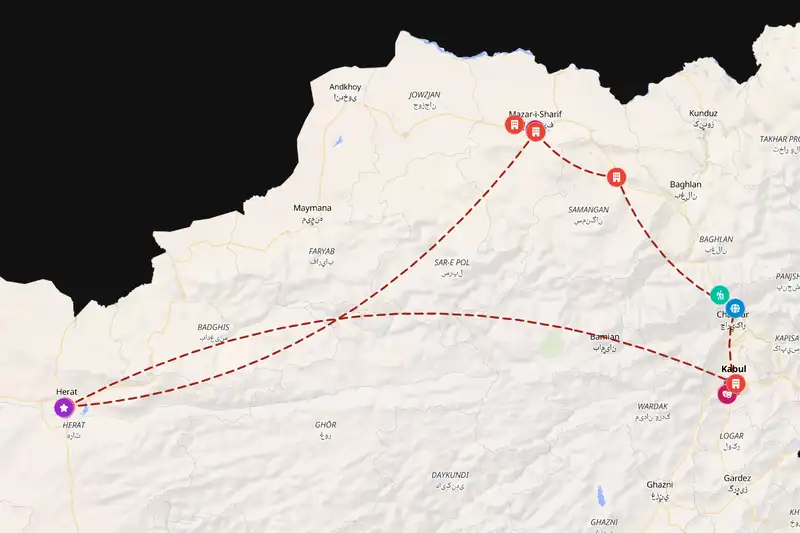
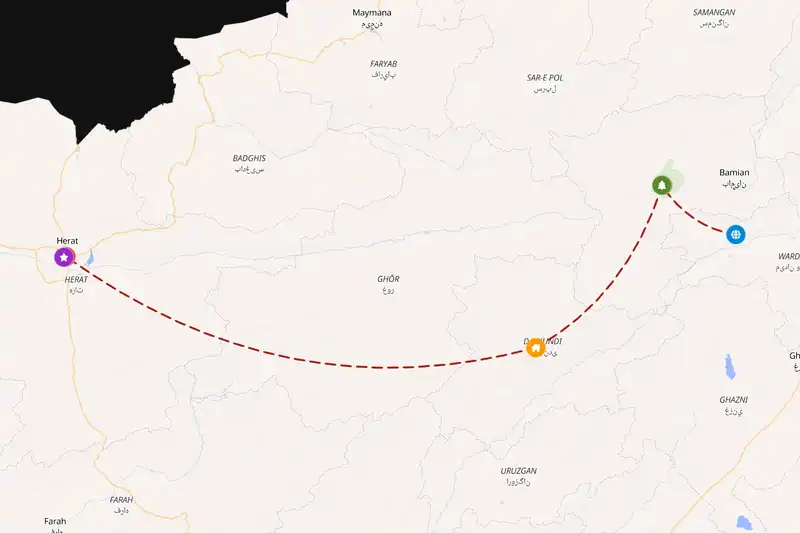
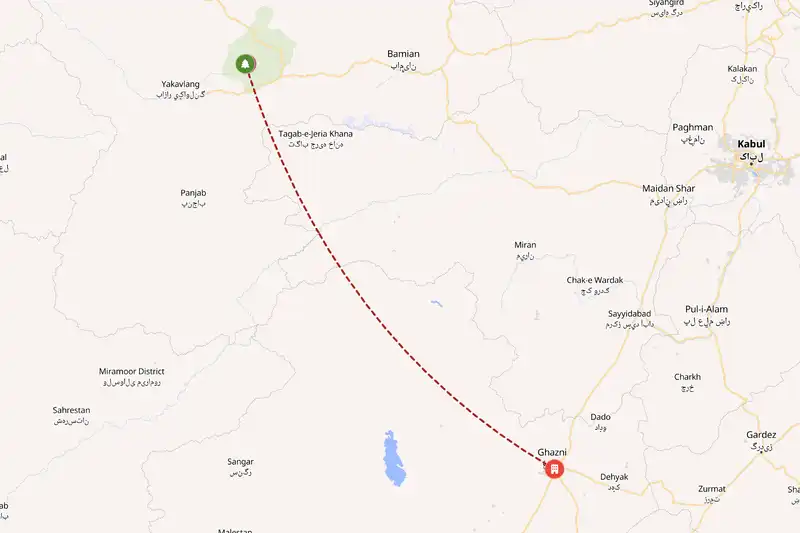
Example Afghanistan itinerary planner route
Build your own Afghanistan route
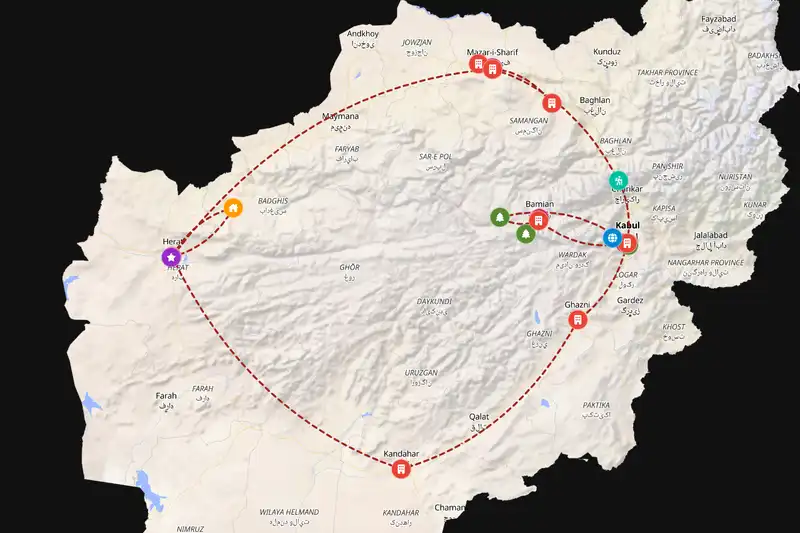
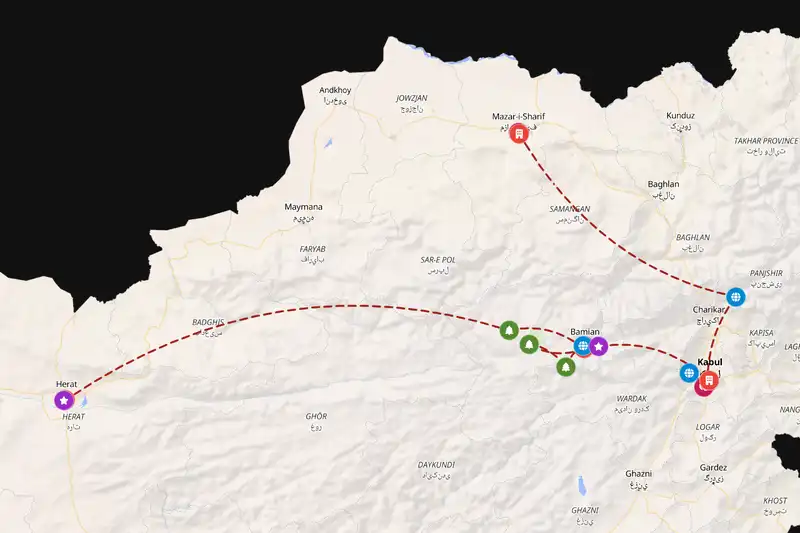
Example Afghanistan itinerary planner route
Build your own Afghanistan route
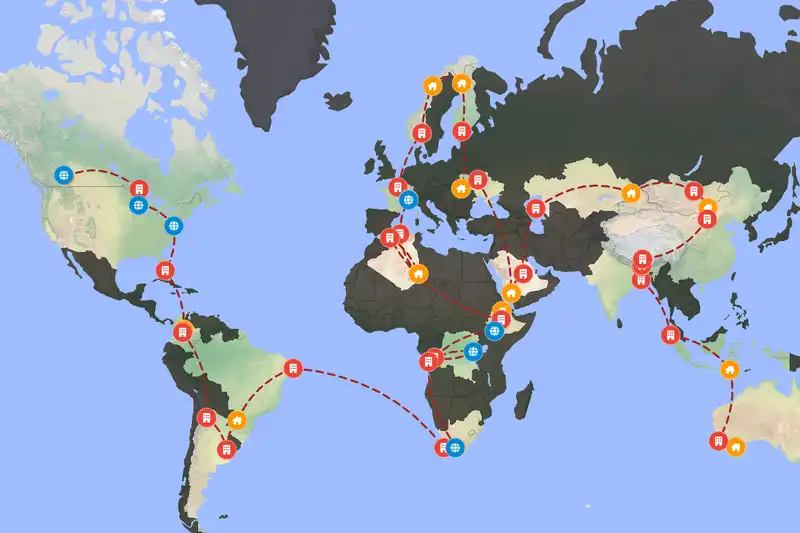
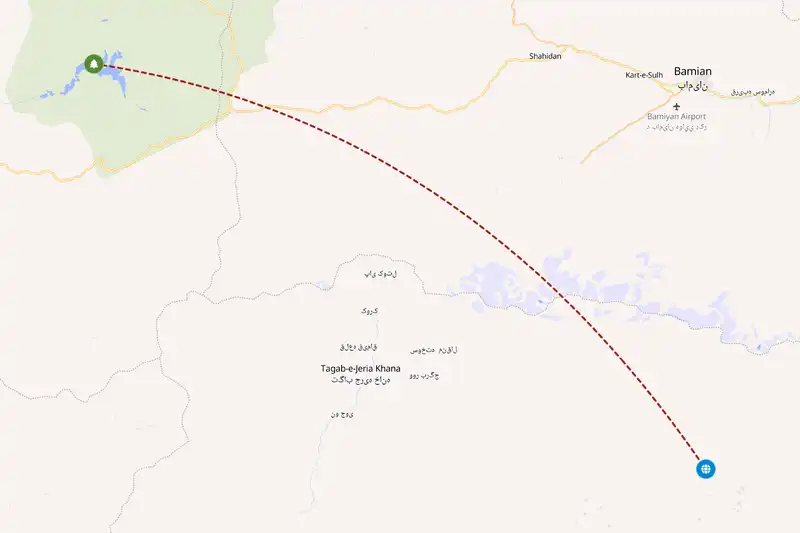
Example Afghanistan itinerary planner route
Build your own Afghanistan route
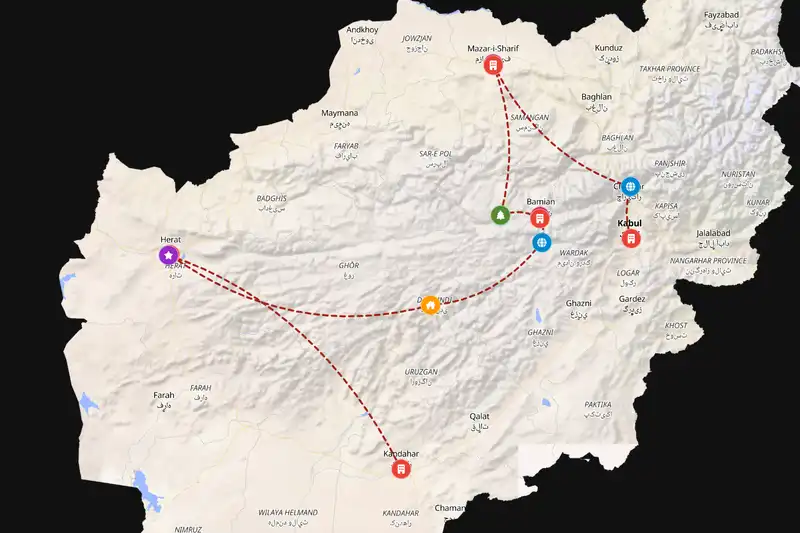
Example Afghanistan itinerary planner route
Build your own Afghanistan route

🇦🇫 AfghanistanCreate Your Itinerary

1 How many days will you travel?
2 What are your interests?
3 Travel speed
⚙️ Advanced options

🙋 FAQFrequently asked questions

A week lets you focus on one main region like Kabul and nearby valleys, two weeks gives you time to add places like Bamyan or Herat without rushing, and about three weeks lets you link several regions and build in rest days and buffer time for delays.
You can combine Afghanistan with Pakistan, Iran, or the Central Asian states like Uzbekistan and Tajikistan, as they share borders and regional routes, while Turkmenistan and China are also neighbors but usually involve stricter border and visa rules.

Build a multi-country route
Yes. Stops are sequenced to minimize backtracking and grouped by how close they are to each other, and your chosen travel pace (fast, normal, or slow) adjusts how much ground each day covers.
Absolutely. Adjust your trip length, interests, starting point, or travel style and generate a new route in seconds.
Yes, generating and viewing your route is completely free. An offline-friendly PDF version is available as an optional purchase which gives more detailed information for each location on your route.

🗺️ RegionsRegions worth knowing about

Afghanistan is big and slow to cross, and the main sights are scattered between wide valleys, high passes, and long empty stretches. Places that look close on a map, like Kabul and Bamiyan Valley, can still feel very far apart once you factor in distance, terrain, and how long it actually takes to move between them. The planner keeps things realistic by grouping nearby spots into the same leg of the trip, so you might explore Band-e-Amir National Park and a nearby village together rather than bouncing back and forth across the country. This helps you spend more time on the ground and less time worn out from long hauls, while still giving you the option to link bigger jumps, like heading out toward the Wakhan Corridor, only when it really makes sense in the flow of your route.

📈 StatisticsPlanner insights

Our set of curated travel destinations for Afghanistan

Cities & Towns: 13      Landmarks: 2      National Parks: 6      Hikes: 5      Attractions: 16     

Routes created by others

5

Routes created

12

Average trip length (days)

6

Average destinations

Most popular interests

  • 🌽 Villages (100%)
  • 🏞️ National Parks (100%)
  • 🌆 Cities & Towns (80%)
  • ⭐️ Landmarks (80%)
  • 🚶‍♀️ Hikes (80%)

Most included destinations

⚙️ How it worksFrom your choices to a finished itinerary

The planner starts by looking at how long you have, what kind of places you like, and how fast you want to move, then groups spots that sit close together on the map so you are not bouncing back and forth across Afghanistan and wasting days in transit. Once it has those clusters, it lays them out in a clear overall direction, like moving steadily west to east or looping through one region, so your route feels like a smooth journey instead of a zigzag of long, tiring transfers. Inside each cluster, it decides how much time to give each stop based on what it is and how much there is nearby, so a big city or town with several things around it usually becomes your base for a few nights, while smaller places nearby are slotted in as half-day or full-day side trips. If you chose cities, landmarks, and hikes, for example, it might have you stay longer in Kabul, using it as your hub, then send you out for shorter visits to nearby viewpoints or attractions, which makes the whole trip feel more relaxed and logical on the ground.