×

Afghanistan🇦🇫 | national parksBamyan Plateau Protected Landscapehigh-altitude grasslands, Buddhist heritage, panoramic escarpments | things to do and best time to go

Explore Koh-e-Baba Range TrailExplore Band-e-Amir National Park

Backpacking in Bamyan Plateau Protected Landscape
🌟 Highlightnational park ranked #3
By Johan Kruseman 🇳🇱 | Updated October 13, 2026

Your boots crunch through sun-baked soil, the air thin and cool, with a faint smell of dust and wild thyme as a kite circles overhead and the plateau drops away into a maze of ochre valleys. This is Bamyan Plateau National Park, high above the town of Bamyan in central Afghanistan’s Hazarajat region. For backpackers, it’s serious big-sky country: long, exposed hikes across rolling grassland and eroded cliffs, scattered marmots and occasional ibex, huge horizons, and almost no crowds. Access is the catch; roads are rough, public transport unreliable, and security conditions can shift, so this is not a casual side trip. Fees are low, camping is usually possible with local guidance, and basic guesthouses in Bamyan town keep costs down. Compared with Band-e Amir’s lakes or Shah Foladi’s sharper alpine feel, Bamyan Plateau is emptier, harsher, and more about quiet endurance than easy postcard scenery.

Discover everything you want to know in the 📖 Afghanistan Travel Guide.
Safety warning

The current risk level for Afghanistan is high. Check the advice before going.


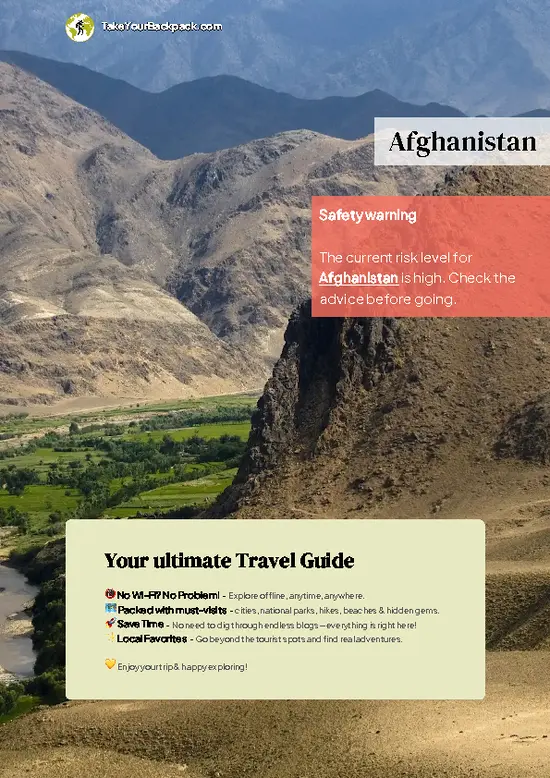
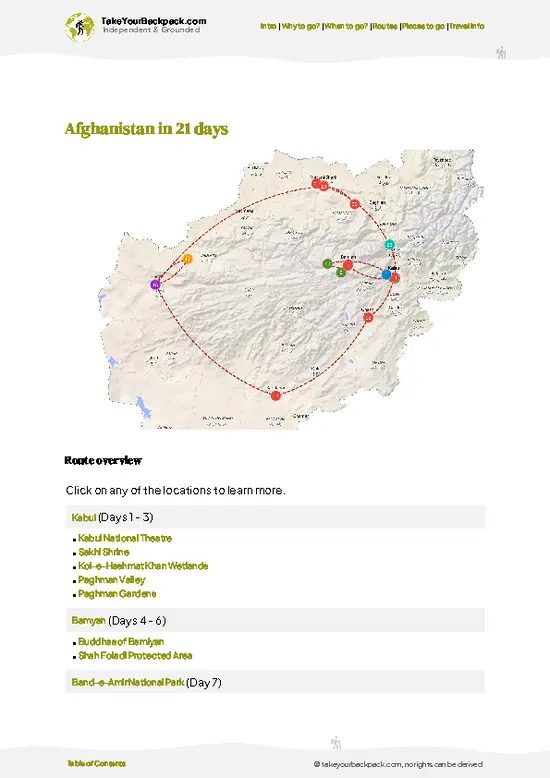
example page 0 from our offline Travel Guide for Afghanistan
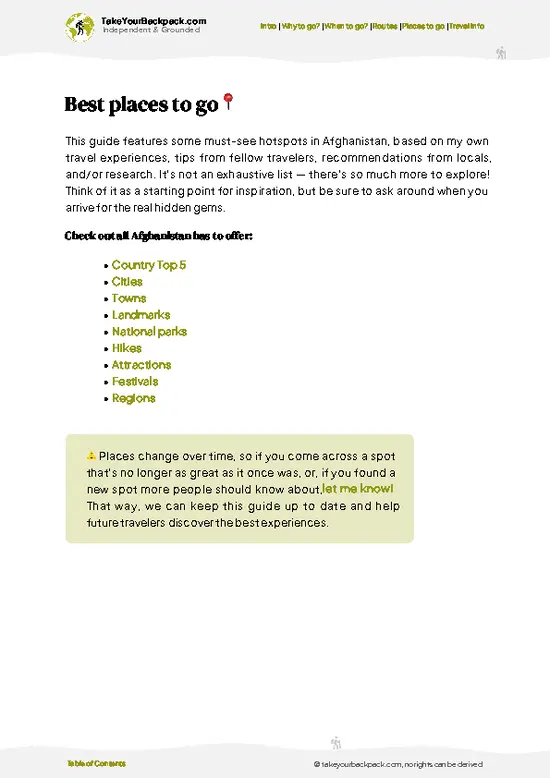
example page 1 from our offline Travel Guide for Afghanistan
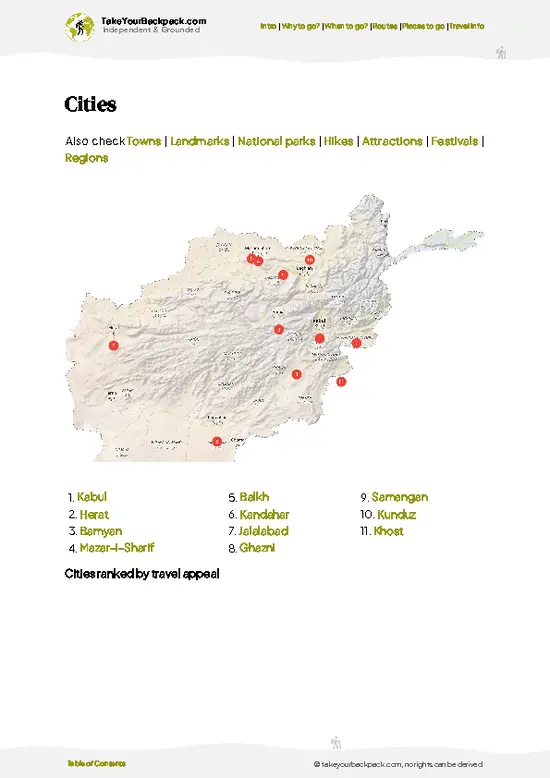
example page 2 from our offline Travel Guide for Afghanistan
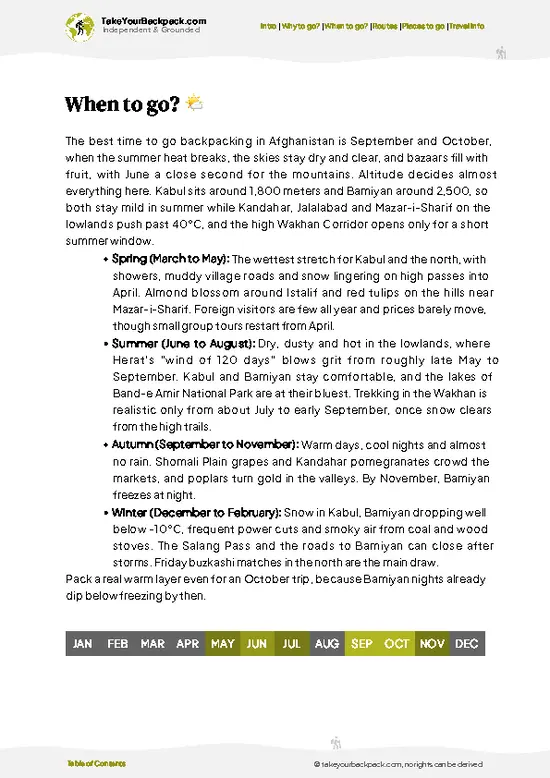
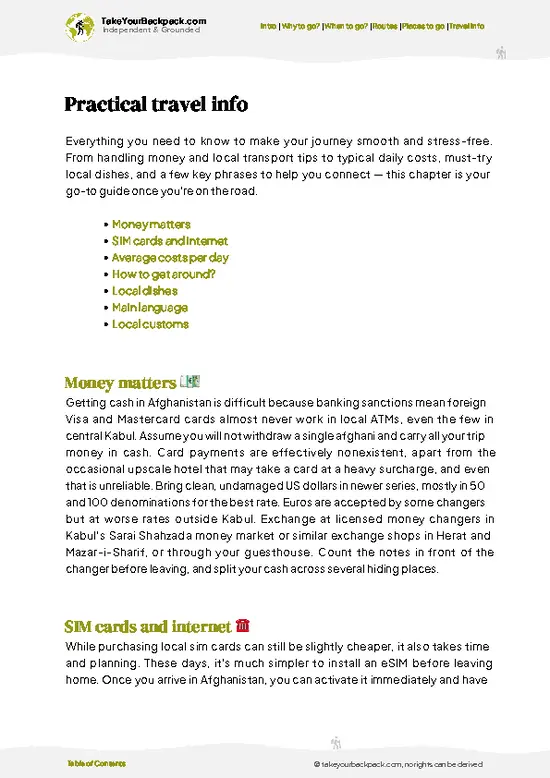
example page 3 from our offline Travel Guide for Afghanistan
example page 4 from our offline Travel Guide for Afghanistan
example page 5 from our offline Travel Guide for Afghanistan
example page 6 from our offline Travel Guide for Afghanistan
example page 7 from our offline Travel Guide for Afghanistan
Loading the map 🌍
CLICK TO FILTER
cities
towns
landmarks
national parks
hikes
attractions
festivals
regions
SHOW COUNTRY’S BESTSHOW ALL

✨ Why go?
Ranked #3 national park in Afghanistan
The unique appeal for travelers

Backpackers flock to Bamyan Plateau National Park for its unique blend of independent exploration and stunning landscapes. This park offers a chance to roam freely, making it ideal for those who prefer to chart their own course rather than follow a guide. The trail variety is impressive, ranging from gentle walks to more challenging hikes, catering to different skill levels and preferences.

Budget-conscious travelers will appreciate the camping options and nearby hostels, which keep costs low while providing a base to explore. The local hospitality is warm, and you’ll find that many accommodations are simple yet comfortable, allowing you to save your funds for experiences that matter.

Self-guided travelers thrive here. The well-marked trails and accessible maps mean you can navigate without … read more 👉
Backpackers flock to Bamyan Plateau National Park for its unique blend of independent exploration and stunning landscapes. This park offers a chance to roam freely, making it ideal for those who prefer to chart their own course rather than follow a guide. The trail variety is impressive, ranging from gentle walks to more challenging hikes, catering to different skill levels and preferences.

Budget-conscious travelers will appreciate the camping options and nearby hostels, which keep costs low while providing a base to explore. The local hospitality is warm, and you’ll find that many accommodations are simple yet comfortable, allowing you to save your funds for experiences that matter.

Self-guided travelers thrive here. The well-marked trails and accessible maps mean you can navigate without the need for a tour. However, be prepared for the unexpected; weather can change quickly, and some paths may be less maintained than you’d hope. Staying alert to these factors will help you conserve both your energy and budget for the breathtaking moments that truly define your adventure.

💡 HighlightsTop highlights of Bamyan Plateau Protected Landscape

  • The Buddha niches of Bamyan — The huge empty niches where the two giant Buddhas once stood are haunting and powerful: massive cliff faces, traces of polychrome plaster and scattered fragments give you a real sense of ancient scale and loss. The view across the valley from the niches at sunrise or sunset is unforgettable.
  • Shahr-e Gholghola (City of Screams) — Crumbling fortifications and a ruined medieval town clinging to a rocky spur, with carved stone, tunnels and stories of battles and earthquakes. It’s compact, atmospheric and easy to pair with a short hike, so you can feel the history under your boots.
  • Shahr-e Zuhak (The Red City) — A dramatic ridge-top castle with zigzag walls and towers that drop straight into the valley; the approach gives great panoramas and the ruins are fun to
… read more 👉
  • The Buddha niches of Bamyan — The huge empty niches where the two giant Buddhas once stood are haunting and powerful: massive cliff faces, traces of polychrome plaster and scattered fragments give you a real sense of ancient scale and loss. The view across the valley from the niches at sunrise or sunset is unforgettable.
  • Shahr-e Gholghola (City of Screams) — Crumbling fortifications and a ruined medieval town clinging to a rocky spur, with carved stone, tunnels and stories of battles and earthquakes. It’s compact, atmospheric and easy to pair with a short hike, so you can feel the history under your boots.
  • Shahr-e Zuhak (The Red City) — A dramatic ridge-top castle with zigzag walls and towers that drop straight into the valley; the approach gives great panoramas and the ruins are fun to explore. Bring sturdy shoes — the paths are steep but the views are worth the scramble.
  • Cave monasteries and rock art — Countless caves cut into the cliffs once housed monks and pilgrims; many still contain carved niches, faded murals or graffiti from centuries past. It’s a blend of archaeology and raw landscape you can wander through at a relaxed pace.
  • Bamyan Plateau vistas and seasonal wildflowers — The broad, bowl-like plateau has sweeping grasslands, terraced fields and dramatic cliffs; in spring you’ll find carpets of alpine wildflowers and a palette of ochres and greens. If you like big skies and quiet, this is your place.
  • Wildlife and pastoral life — The plateau supports high-altitude wildlife (think ibex and other mountain ungulates) and a variety of raptors, plus nomadic and semi-nomadic herders with their flocks. Wildlife sightings are sporadic — part of the charm is watching traditional pastoral life against a wild backdrop.
  • Hiking routes and viewpoint treks — Short day hikes connect the major sites (niches, Shahr-e Gholghola, Shahr-e Zuhak) and you can also push into quieter valleys for multi-hour walks. Trails are mostly unmarked, so bring a local guide or a map and enjoy routes that reward with solitude and wide-open views.
Spotted a mistake or missing something? Contact us.

🌤️ When to go?Weather, crowds, and seasonal trade-offs

  • Weather: The best window is late spring to early autumn, roughly May through September. Winters are brutal, with heavy snow making trails impassable. Summers bring dry, clear skies but can get hot during the day.
  • Temperature: Daytime highs in summer hover around 25-30°C (77-86°F), perfect for hiking. Nights drop sharply, often below 10°C (50°F), so pack layers. Spring and autumn are cooler, with daytime temps around 15-20°C (59-68°F) but nights can dip near freezing.
  • Daylight Hours: Long summer days offer up to 14-15 hours of light, maximizing trekking time. In spring and autumn, expect 10-12 hours, which still allows for solid day hikes but requires earlier starts.
  • Crowds: The park sees very few visitors year-round. Peak season brings a handful of local and international trekkers, but
… read more 👉
  • Weather: The best window is late spring to early autumn, roughly May through September. Winters are brutal, with heavy snow making trails impassable. Summers bring dry, clear skies but can get hot during the day.
  • Temperature: Daytime highs in summer hover around 25-30°C (77-86°F), perfect for hiking. Nights drop sharply, often below 10°C (50°F), so pack layers. Spring and autumn are cooler, with daytime temps around 15-20°C (59-68°F) but nights can dip near freezing.
  • Daylight Hours: Long summer days offer up to 14-15 hours of light, maximizing trekking time. In spring and autumn, expect 10-12 hours, which still allows for solid day hikes but requires earlier starts.
  • Crowds: The park sees very few visitors year-round. Peak season brings a handful of local and international trekkers, but you’ll rarely feel crowded. Off-season means near solitude but harsher conditions.
  • Seasonal Activities: Summer is prime for hiking and exploring the ancient Buddha niches. Spring offers wildflowers and melting snow-fed streams, while autumn brings crisp air and clear views. Winter is off-limits for most due to snow.
  • Price Fluctuations: Expect slightly higher costs for guides and accommodation in peak summer months. Off-season rates drop but factor in limited services and tougher access.
Pro-tip: Aim for late May or early September to dodge the heat and crowds while still enjoying reliable weather and open trails.


source: climatestotravel.comJANJanuary: below average for travelingFEBFebruary: below average for travelingMARMarch: fair for travelingAPRApril: good for travelingMAYMay: excellent for travelingJUNJune: excellent for travelingJULJuly: excellent for travelingAUGAugust: excellent for travelingSEPSeptember: highly recommended for travelingOCTOctober: good for travelingNOVNovember: fair for travelingDECDecember: below average for traveling
when-to-go

✈️ The backpacker research shortcutAfghanistan Travel Guide

An offline-friendly backpacking guide with optimized travel routes, ranked highlights, transport advice, and the best areas to stay.
example page 0 from our offline Travel Guide for Afghanistan
example page 1 from our offline Travel Guide for Afghanistan
example page 2 from our offline Travel Guide for Afghanistan
example page 3 from our offline Travel Guide for Afghanistan
example page 4 from our offline Travel Guide for Afghanistan
example page 5 from our offline Travel Guide for Afghanistan
example page 6 from our offline Travel Guide for Afghanistan
example page 7 from our offline Travel Guide for Afghanistan
The digital guide (204 pages) contains:
✅ 46 highlights, ranked by travel appeal
✅ Optimized 7, 14 & 21-day travel routes
✅ Cities, national parks, landmarks, beaches
✅ How to get around
✅ Offline-friendly for travel without Wi-Fi
👉 Click to see all 30+ guide features

📅 Plan smarter in minutes, not weeks
✅ Month by month travel advice
✅ Festivals & national holidays
✅ Budget expectations

🗺️ Go to the right places, skip the overrated ones
✅ Honest pros & cons of destinations
✅ Top hikes, parks & viewpoints
✅ Lesser-known places most travelers miss
✅ Clear “worth it vs skip it” guidance

🛏️ Travel smoothly without rookie mistakes
✅ Best areas to stay
✅ Transport systems explained simply
✅ Common scams & safety advice
✅ SIM cards, money & practical tips

🌍 Understand the country, not just visit it
✅ Culture & traditions
✅ 52 Essential phrases & customs
✅ Festivals worth planning around
✅ Traveler-friendly historical context
✅ Insights that make places more meaningful

📱 Built for real travel conditions
✅ Fully downloadable PDF
✅ Works completely offline
✅ Optimized for phone use
✅ Useful in remote areas & buses
✅ Everything in one place
Stop searching, start planning
Get instant access to your full guide. 30‑day money-back guarantee.
+ Add another guide for just

By proceeding you agree to our terms.
Sent to your inbox immediately after payment • 100% Secure Checkout
Best Backpacking Travel Advisor 2025 tourism awardBest Backpacking
Travel Advisor
2025
What others say about Take Your Backpack Guides:
⭐⭐⭐⭐⭐
Fantastic, amazing amount of information!
⭐⭐⭐⭐⭐
My goodness this is amazing, it's what I've been looking for hats off too you!
⭐⭐⭐⭐⭐
I think this is absolutely BRILLIANT
⭐⭐⭐⭐
Very complete and informative. It's still missing places, but I gotta to commend you
⭐⭐⭐⭐⭐
This is truly amazing, thank you, can't wait to explore it with my kids!
⭐⭐⭐⭐⭐
Awesome resource, thank you!
⭐⭐⭐⭐⭐
This is amazing! Can't wait to explore the ones I haven't seen
⭐⭐⭐⭐
I love this! Well done, great idea.
⭐⭐⭐⭐⭐
Thanks for taking the time to make this gem!
⭐⭐⭐⭐⭐
This might be the best website I've ever seen.
⭐⭐⭐⭐⭐
Congratulations, and thank you so much for your work; it's incredibly valuable.
⭐⭐⭐⭐
In all seriousness I think you did a great job pointing out the important spots
⭐⭐⭐⭐⭐
10/10 very good
⭐⭐⭐⭐⭐
As someone who's only just starting to visit regularly this is awesome, thank you.
⭐⭐⭐⭐
Thank you very much! I'm going to visit my dad, it's going to be very useful!
⭐⭐⭐⭐⭐
This is really cool! We'll be travelling for the first time and this definitely come in handy.
⭐⭐⭐⭐⭐
You are now our minister of culture, congratulations 👨‍💼
⭐⭐⭐⭐⭐
Just wanted to tell you that this is a pearl! Going to follow your recommendations.
⭐⭐⭐⭐⭐
This is so cool. I'll definitely be using the resource for my travels soon.
⭐⭐⭐⭐⭐
This is very impressive! Good work.
⭐⭐⭐⭐⭐
This is an amazing and informative site. Very well done!

🛏️ Where to stay?How to pick the right area

Bamyan Plateau National Park is a stunning area, but options for backpackers can be limited. There aren’t accommodations directly inside the park itself. Instead, you’ll want to base yourself in the nearby town of Bamyan.

Bamyan has a few budget-friendly guesthouses and hostels. The Bamyan Hotel is a solid choice, offering basic amenities and a friendly atmosphere. It’s a good spot to meet fellow travelers and share stories over a cup of tea. Another option is the Kabul Guesthouse, which provides a cozy environment and decent meals. Both places give you a chance to recharge before heading out … read more 👉
Bamyan Plateau National Park is a stunning area, but options for backpackers can be limited. There aren’t accommodations directly inside the park itself. Instead, you’ll want to base yourself in the nearby town of Bamyan.

Bamyan has a few budget-friendly guesthouses and hostels. The Bamyan Hotel is a solid choice, offering basic amenities and a friendly atmosphere. It’s a good spot to meet fellow travelers and share stories over a cup of tea. Another option is the Kabul Guesthouse, which provides a cozy environment and decent meals. Both places give you a chance to recharge before heading out for your adventures.

If you’re looking for something a bit more rustic, consider the Bamyan Eco Lodge. It’s a bit pricier but offers a unique experience with local culture woven in.

Be aware that prices can fluctuate, especially during peak seasons. Always confirm your booking in advance, as places can fill up quickly. Also, keep cash handy; many establishments don’t accept cards. This way, you’ll preserve your energy and budget for the breathtaking hikes and cultural experiences that await you in the park.

👛 Costs (as of 13 October 2026)Money, prices, and spending tips

Visiting Bamyan Plateau National Park in Afghanistan requires careful budgeting. Entry fees are typically around $5 to $10 USD for foreign visitors. This is a small price for access to breathtaking landscapes and rich history.

Accommodation options vary widely. Basic guesthouses can cost between $15 and $30 USD per night. If you prefer more comfort, mid-range hotels might charge $50 to $100 USD. Always check what amenities are included; some places may not offer hot water or Wi-Fi.

Transportation is another factor. Hiring a local guide or driver can range from $30 to $70 USD per day. This is often worth it for safety and local insights. Public transport is limited, so plan accordingly.

Food is generally affordable. Local meals can cost around $3 to $10 USD. However, if you opt for international … read more 👉
Visiting Bamyan Plateau National Park in Afghanistan requires careful budgeting. Entry fees are typically around $5 to $10 USD for foreign visitors. This is a small price for access to breathtaking landscapes and rich history.

Accommodation options vary widely. Basic guesthouses can cost between $15 and $30 USD per night. If you prefer more comfort, mid-range hotels might charge $50 to $100 USD. Always check what amenities are included; some places may not offer hot water or Wi-Fi.

Transportation is another factor. Hiring a local guide or driver can range from $30 to $70 USD per day. This is often worth it for safety and local insights. Public transport is limited, so plan accordingly.

Food is generally affordable. Local meals can cost around $3 to $10 USD. However, if you opt for international cuisine, expect to pay more, up to $20 USD per meal.

Keep in mind that prices can fluctuate based on the season and local conditions. Always carry cash, as ATMs are scarce. Prepare for potential extra costs, like park permits or guided tours, which can add $20 to $50 USD to your budget.

Being aware of these costs helps you focus on the experience rather than financial surprises.
⚠️ Prices can change and everyone travels differently, so take this as a rough guide. Hope it helps you plan your adventure!

🥾 TrailsScenic routes and wildlife spotting in Bamyan Plateau Protected Landscape

The Bamyan Plateau National Park in Afghanistan is a hidden gem for hikers looking to explore stunning landscapes and rich history. With its dramatic cliffs, lush valleys, and the iconic Buddhas of Bamyan, there’s plenty to feast your eyes on. The terrain varies from rocky outcrops to grassy plateaus, making it a mix of easy strolls and more challenging hikes. Wildlife enthusiasts might spot ibex or various bird species, adding a bit of excitement to your trek.

One of the notable trails is the Bamyan Valley Trail. Here are the details:
  • Length: 12 km
  • Estimated Duration: 4-5 hours
  • Difficulty Level:
… read more 👉
The Bamyan Plateau National Park in Afghanistan is a hidden gem for hikers looking to explore stunning landscapes and rich history. With its dramatic cliffs, lush valleys, and the iconic Buddhas of Bamyan, there’s plenty to feast your eyes on. The terrain varies from rocky outcrops to grassy plateaus, making it a mix of easy strolls and more challenging hikes. Wildlife enthusiasts might spot ibex or various bird species, adding a bit of excitement to your trek.

One of the notable trails is the Bamyan Valley Trail. Here are the details:
  • Length: 12 km
  • Estimated Duration: 4-5 hours
  • Difficulty Level: Moderate
  • Key Features: Stunning views of the valley, ancient caves, and the remnants of the giant Buddhas
  • Terrain: A mix of well-trodden paths and rocky sections

Getting to the park can be a bit of an adventure in itself. Public transport options are limited, but you can find shared taxis from Kabul to Bamyan, which takes around 6-8 hours. The vibe here isn’t exactly bustling; you’ll find it relatively quiet, which is perfect for soaking in the scenery without the crowds. As for entrance fees, they’re usually pretty minimal, but it’s a good idea to check in advance just to be safe.
⚠️ Hiking info can sometimes be outdated or inaccurate. Before you hit the trail, check the latest conditions with locals. If you do spot anything that's off, I'd love to hear from you, so I can update it for fellow travelers.

🛡️ SafetyStaying Safe: What Travelers Should Know

Bamyan Plateau National Park offers a rugged beauty that’s both inviting and challenging. Weather can shift quickly, so be prepared for sudden changes. Mornings might start crisp, but afternoons can bring heat or even rain. Layer your clothing and pack a reliable rain jacket.

The terrain varies significantly. Some trails are steep and rocky, requiring good footing and careful navigation. If you’re not comfortable with elevation, take your time. Altitude can affect anyone, so stay hydrated and ascend gradually.

Wildlife encounters are rare but possible. If you spot animals, keep your distance and avoid feeding them. This helps maintain their natural behavior and keeps you safe.

First-time visitors often underestimate the need for proper gear. Sturdy boots are essential, as are trekking poles … read more 👉
Bamyan Plateau National Park offers a rugged beauty that’s both inviting and challenging. Weather can shift quickly, so be prepared for sudden changes. Mornings might start crisp, but afternoons can bring heat or even rain. Layer your clothing and pack a reliable rain jacket.

The terrain varies significantly. Some trails are steep and rocky, requiring good footing and careful navigation. If you’re not comfortable with elevation, take your time. Altitude can affect anyone, so stay hydrated and ascend gradually.

Wildlife encounters are rare but possible. If you spot animals, keep your distance and avoid feeding them. This helps maintain their natural behavior and keeps you safe.

First-time visitors often underestimate the need for proper gear. Sturdy boots are essential, as are trekking poles for stability on uneven ground. Plan your hikes early in the day to avoid the heat and ensure you have ample daylight for your return. Respect the trails and leave no trace; this preserves the park’s integrity for future adventurers.

FAQTraveler FAQ

2 to 3 days are sufficient to explore Bamyan Plateau National Park thoroughly, including visits to the Buddha niches and surrounding cliffs. This allows time for hiking and photography without rushing. Longer stays are recommended if you want to explore nearby villages or trek further into the region.
No, visiting Bamyan Plateau National Park without a car is difficult due to limited public transport options and the remote location. Hiring a local driver or joining a tour is the most practical way to reach and navigate the park. Walking or biking is possible within the park but not for reaching it from Bamyan town.
Yes, an entrance fee is required, typically around 500 Afghanis (approximately $6 USD). Additionally, a permit may be needed for certain trekking routes or guided tours, which can be arranged locally in Bamyan town. Fees help support park maintenance and local communities.
⚠️ Things can change over time, so always validate details locally before you go.

Other Afghan national parks near Bamyan Plateau Protected Landscape

Explore more nearby:


💡 Not sure where to go next?
Create a personalized itinerary for Afghanistan including Bamyan Plateau Protected Landscape and the places that fit your trip.

Generate my itinerary

👉 Discover all national parks

Or checkout all Afghanistan has to offer (think cities, towns, villages, national parks, hikes, beaches, festivals)
Country photo of Afghanistan

We 💚 feedbackFinal thoughts on exploring Bamyan Plateau Protected Landscape

Bamyan Plateau National Park is a place that humbles you. The vastness of the landscape is breathtaking, but don’t underestimate the altitude; it can zap your energy faster than you think. The best surprise? The locals. Their warmth and stories add a rich layer to your experience. Just be mindful of the weather; it can change in an instant. Pack accordingly, and you’ll be set to soak in the serenity and history that this remarkable place offers.

✍️ Help improve this page!
The information on this page is based on in-depth research, insights shared by experienced travelers, and feedback from the local travel community in Afghanistan. While every effort is made to keep the information accurate and current, conditions can change — so if you spot anything incorrect or outdated, please get in touch.


🙋‍♂️ Give feedback

👋 Meet the founderWho’s Behind Take Your Backpack?

Johan, backpacker and founder of TakeYourBackpackHi, I’m Johan (Netherlands 🇳🇱), the creator of TakeYourBackpack. Over the past 3 decades, I’ve backpacked through 90+ countries across six continents, gaining extensive experience with independent travel, long-term trips, and overland routes.

This site is built on a combination of firsthand travel experience and carefully curated insights from other backpackers. Many guides are based on places I’ve personally visited, while others bring together tips, observations, and practical advice shared by trusted travelers I’ve met along the way.

The goal is to provide realistic, experience-driven guidance — not generic itineraries — so you can explore destinations with better context, clearer expectations, and more confidence.