×

Afghanistan🇦🇫 | festivalsEid al-Adhaanimal sacrifice, family feasts, mosque prayers | things to do and best time to go

Explore Afghan Independence DayExplore Eid al-Fitr

Backpacking in Eid al-Adha
👌 Worth visitingfestival ranked #6
By Johan Kruseman 🇳🇱 | Updated September 4, 2026

Eid al-Adha in Afghanistan used to move at a slower, softer pace: neighbors drifting between houses with plates of meat, kids roaming dusty streets in new clothes, prayer lines spilling calmly out of small mosques. Today, especially in Kabul and larger cities like Herat and Mazar-e Sharif, the same holiday hits harder: heavier security, more tension, and a sharper edge between joy and anxiety. Eid al-Adha isn’t a “festival site” but a nationwide religious event, with Qur’anic recitation instead of party music, family visits instead of crowds of strangers. The vibe is intimate, conservative, and deeply local, running for about three days. For backpackers, it’s worth experiencing only if you’re already in-country, moving carefully, and more interested in observing private tradition than chasing big public celebrations.

Discover everything you want to know in the 📖 Afghanistan Travel Guide.
Safety warning

The current risk level for Afghanistan is high. Check the advice before going.


Get your Afghanistan guide
55 ranked highlights, routes & tips, works offline (228 pages)
Loading the map 🌍
CLICK TO FILTER
cities
towns
landmarks
national parks
hikes
attractions
festivals
regions
SHOW COUNTRY’S BESTSHOW ALL

✨ Why go?
Ranked #6 festival in Afghanistan
The unique appeal for travelers

Backpackers often plan their routes around Eid al-Adha in Afghanistan for a reason. This festival isn’t just a date on the calendar; it’s a cultural explosion that transforms towns into vibrant hubs of social energy. Imagine the streets alive with laughter, music, and the aroma of traditional dishes wafting through the air. You’re not just a spectator; you’re part of a temporary community that welcomes you with open arms.

The affordability of participating in such events compared to similar festivals worldwide is a huge draw. You can immerse yourself in rich traditions without breaking the bank. Plus, the festival offers a unique lens into Afghan life, making it a must-experience for any traveler seeking authenticity.

Integrating Eid al-Adha into your longer travel plans adds depth to your … read more 👉
Backpackers often plan their routes around Eid al-Adha in Afghanistan for a reason. This festival isn’t just a date on the calendar; it’s a cultural explosion that transforms towns into vibrant hubs of social energy. Imagine the streets alive with laughter, music, and the aroma of traditional dishes wafting through the air. You’re not just a spectator; you’re part of a temporary community that welcomes you with open arms.

The affordability of participating in such events compared to similar festivals worldwide is a huge draw. You can immerse yourself in rich traditions without breaking the bank. Plus, the festival offers a unique lens into Afghan life, making it a must-experience for any traveler seeking authenticity.

Integrating Eid al-Adha into your longer travel plans adds depth to your journey. It’s a chance to connect with locals, share stories, and witness the resilience of a culture that thrives despite challenges. This isn’t just about the destination; it’s about the moments that shape your adventure.
Want to include Eid al-Adha in your Afghanistan route?
Create a personalized Afghanistan itinerary that includes Eid al-Adha and the places that fit your trip — based on your travel style, budget, and available time. Get your route in seconds.

Generate my trip

💡 HighlightsThe experiences that define the visit

  1. The communal Eid prayer (Eid Salah) — Big, open-air gatherings in mosque courtyards and town squares create a powerful sense of togetherness; the sea of traditional dress, the morning sun, and the unified prayers are as much a social ritual as a religious one, and it’s the clearest way to feel the festival’s communal pulse.
  2. The Qurbani sacrifice and meat-sharing — The ritual slaughter and the immediate, organized distribution of meat to relatives, neighbors and the poor is central: it’s practical, visible charity in action, and watching how communities coordinate and share is a window into Afghan values of generosity.
  3. Feasting on special dishes — Expect big, lingering meals: fragrant Kabuli pulao, dumplings like mantu, rich stews and sweet treats; food is the festival language here, and
read more 👉
  1. The communal Eid prayer (Eid Salah) — Big, open-air gatherings in mosque courtyards and town squares create a powerful sense of togetherness; the sea of traditional dress, the morning sun, and the unified prayers are as much a social ritual as a religious one, and it’s the clearest way to feel the festival’s communal pulse.
  2. The Qurbani sacrifice and meat-sharing — The ritual slaughter and the immediate, organized distribution of meat to relatives, neighbors and the poor is central: it’s practical, visible charity in action, and watching how communities coordinate and share is a window into Afghan values of generosity.
  3. Feasting on special dishes — Expect big, lingering meals: fragrant Kabuli pulao, dumplings like mantu, rich stews and sweet treats; food is the festival language here, and sampling home-cooked plates or joining a communal meal tells you far more than any guidebook.
  4. Family visits, gifts and hospitality — Eid is built around visiting elders, swapping warm greetings, and handing children Eidi (small gifts or money); the endless cups of chai, insistence on serving guests, and multi-household visiting make it a great time to see Afghan hospitality up close.
  5. Markets, new clothes and local performances — Streets and bazaars buzz with people buying new garments, jewelry and sweets, while regional music, poetry recitals and dances (think rubab, local folk tunes and community dances) add color and sound — a lively mix of commerce and culture unique to each place.
Spotted a mistake or missing something? Contact us.

🌤️ When to go?When is the celebration of Eid al-Adha?


  • Topic: Weather – Afghanistan’s climate during Eid al-Adha shifts depending on the lunar calendar, but it often falls in late spring to summer. Expect dry, hot days with temperatures soaring between 30-40°C (86-104°F). Prepare for intense sun and arid conditions that drain your energy fast.

  • Topic: Temperature – Daytime heat can be relentless, especially in southern regions. Nights cool down significantly, sometimes dropping to 15°C (59°F), so pack layers to stay comfortable from blistering afternoons to chilly evenings.

  • Topic: Daylight Hours – Long daylight stretches, often 13-15 hours, give you plenty of time to explore before and after festival events. Use early mornings and late afternoons to avoid the midday scorch.

  • Topic: Crowds – Eid al-Adha draws locals in full force, turning
read more 👉

  • Topic: Weather – Afghanistan’s climate during Eid al-Adha shifts depending on the lunar calendar, but it often falls in late spring to summer. Expect dry, hot days with temperatures soaring between 30-40°C (86-104°F). Prepare for intense sun and arid conditions that drain your energy fast.

  • Topic: Temperature – Daytime heat can be relentless, especially in southern regions. Nights cool down significantly, sometimes dropping to 15°C (59°F), so pack layers to stay comfortable from blistering afternoons to chilly evenings.

  • Topic: Daylight Hours – Long daylight stretches, often 13-15 hours, give you plenty of time to explore before and after festival events. Use early mornings and late afternoons to avoid the midday scorch.

  • Topic: Crowds – Eid al-Adha draws locals in full force, turning cities into vibrant hubs. Crowds spike around mosques and markets, so brace for bustling scenes that can slow your pace but enrich your experience.

  • Topic: Seasonal Activities – The festival’s core rituals dominate, but the season also offers opportunities for trekking in cooler highlands nearby. Balance your itinerary between cultural immersion and nature escapes to recharge.

  • Topic: Price Fluctuations – Expect prices for accommodation and transport to climb sharply during Eid. Book early or prepare to negotiate hard; the premium is the price of being part of a major cultural moment.


Pro-tip: Time your visit to catch the festival’s start or wind-down phases—less chaos, more authentic moments, and a better shot at snagging deals.


source: climatestotravel.comJANJanuary: not recommended for travelingFEBFebruary: not recommended for travelingMARMarch: not recommended for travelingAPRApril: not recommended for travelingMAYMay: not recommended for travelingJUNJune: not recommended for travelingJULJuly: highly recommended for travelingAUGAugust: highly recommended for travelingSEPSeptember: not recommended for travelingOCTOctober: not recommended for travelingNOVNovember: not recommended for travelingDECDecember: not recommended for traveling

✈️ The backpacker research shortcutAfghanistan Travel Guide

An offline-friendly backpacking guide with optimized travel routes, ranked highlights, transport advice, and the best areas to stay.
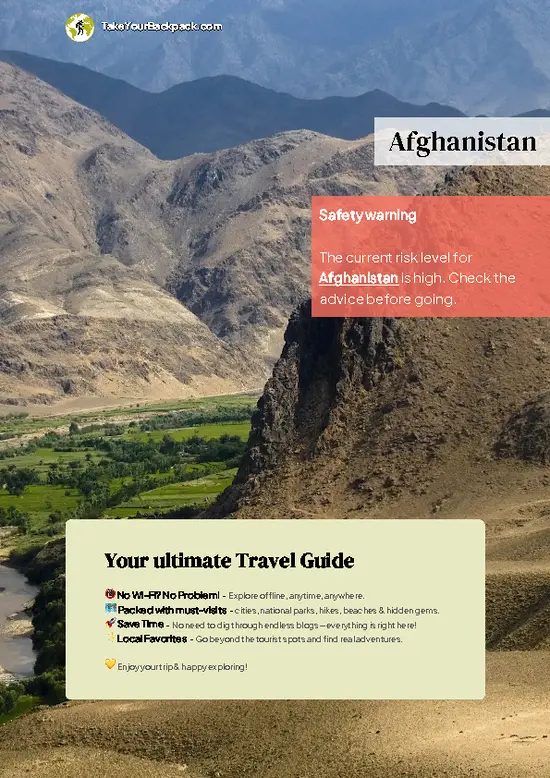
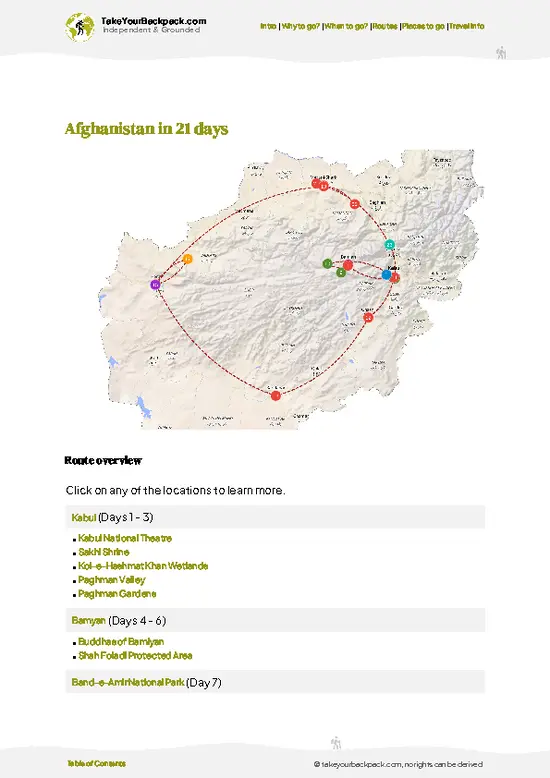
example page 0 from our offline Travel Guide for Afghanistan
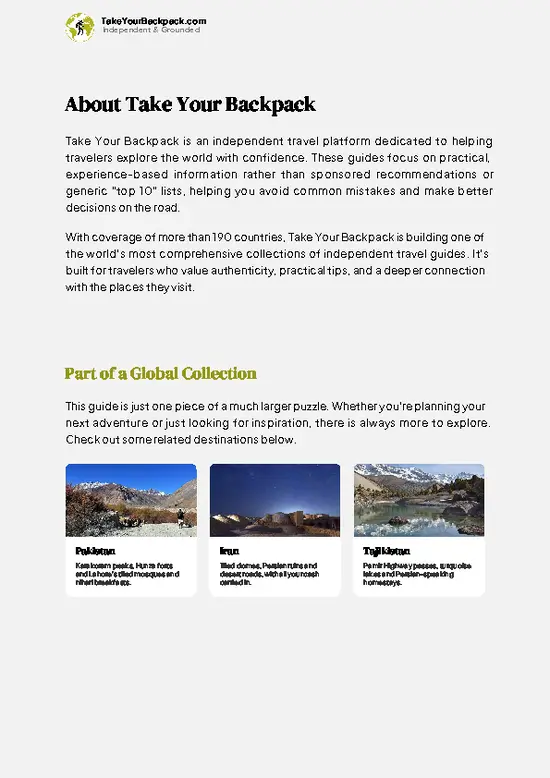
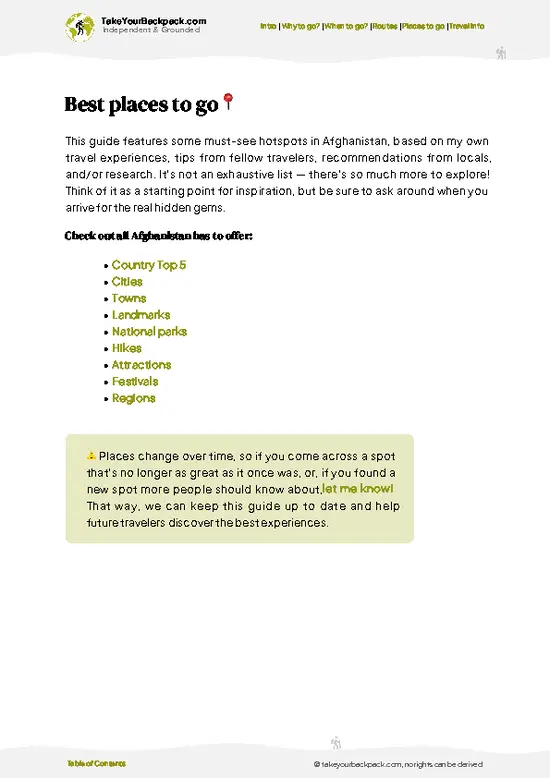
example page 1 from our offline Travel Guide for Afghanistan
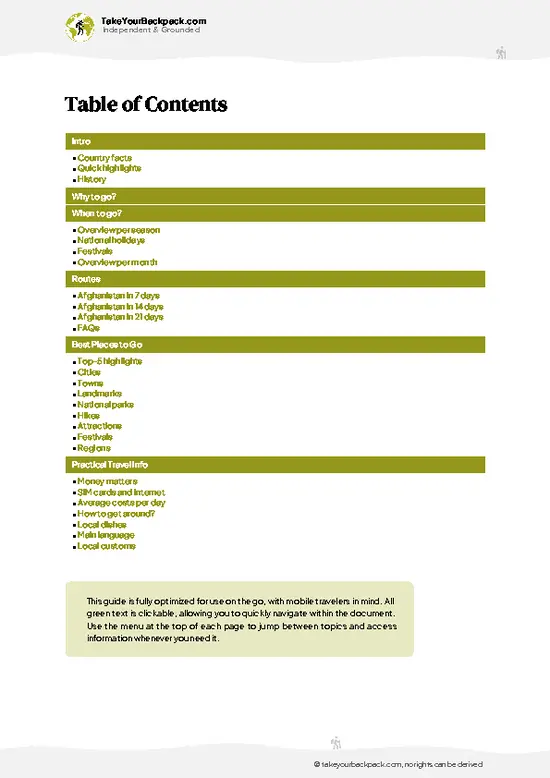
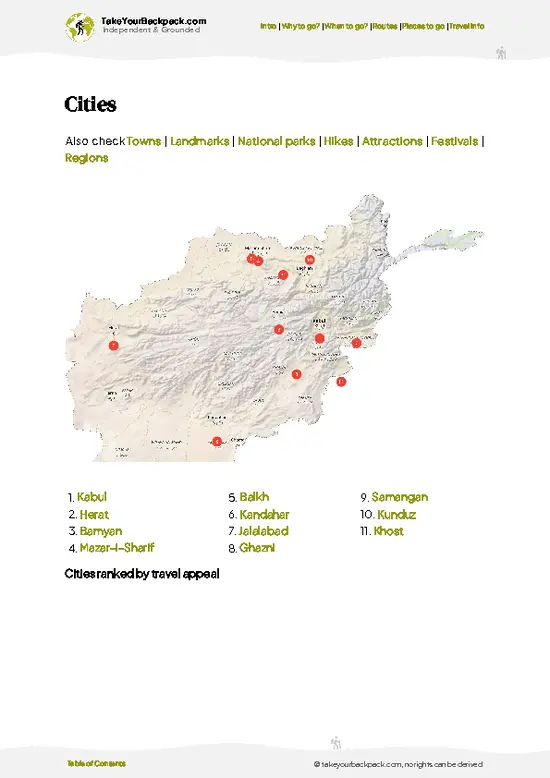
example page 2 from our offline Travel Guide for Afghanistan
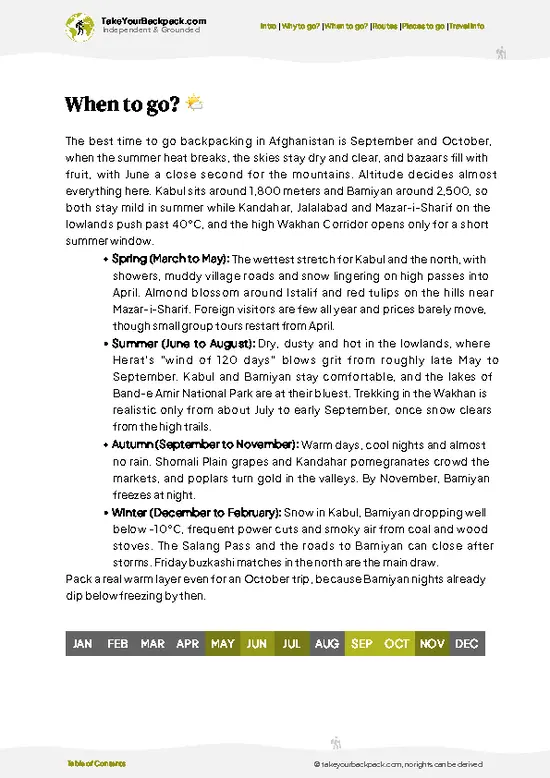
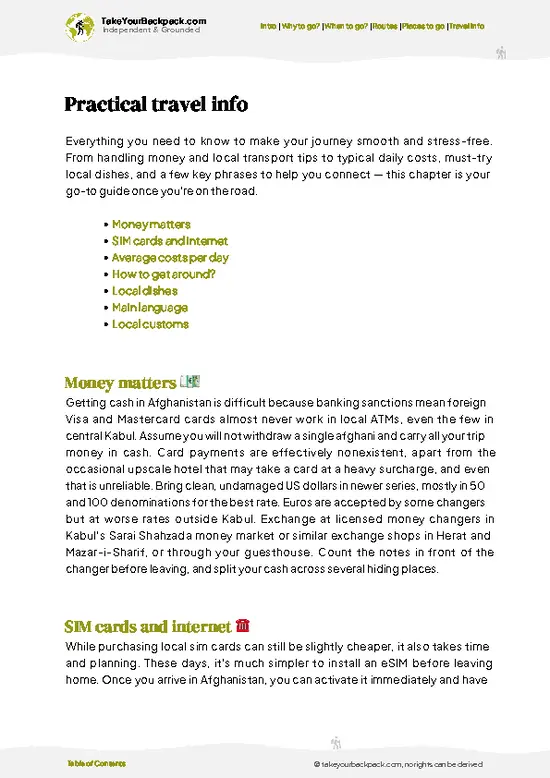
example page 3 from our offline Travel Guide for Afghanistan
example page 4 from our offline Travel Guide for Afghanistan
example page 5 from our offline Travel Guide for Afghanistan
example page 6 from our offline Travel Guide for Afghanistan
example page 7 from our offline Travel Guide for Afghanistan
The digital guide (228 pages) contains:
55 highlights, ranked by travel appeal
Optimized 7, 14 & 21-day travel routes
Cities, national parks, landmarks, beaches
How to get around
Offline-friendly for travel without Wi-Fi
👉 Click to see all 30+ guide features

📅 Plan smarter in minutes, not weeks
Month by month travel advice
Festivals & national holidays
Budget expectations

🗺️ Go to the right places, skip the overrated ones
Honest pros & cons of destinations
Top hikes, parks & viewpoints
Lesser-known places most travelers miss
Clear “worth it vs skip it” guidance

🛏️ Travel smoothly without rookie mistakes
Best areas to stay
Transport systems explained simply
Common scams & safety advice
SIM cards, money & practical tips

🌍 Understand the country, not just visit it
Culture & traditions
52 Essential phrases & customs
Festivals worth planning around
Traveler-friendly historical context
Insights that make places more meaningful

📱 Built for real travel conditions
Fully downloadable PDF
Works completely offline
Optimized for phone use
Useful in remote areas & buses
Everything in one place
Save weeks of stressful planning
Get instant access to your full guide. 30‑day money-back guarantee.
+ Add another guide for just US$7.80

By proceeding you agree to our terms.
Sent to your inbox immediately after payment • 100% Secure Checkout
Best Backpacking Travel Advisor 2025 tourism awardBest Backpacking
Travel Advisor
2025
What others say about Take Your Backpack Guides:
⭐⭐⭐⭐⭐
Fantastic, amazing amount of information!
⭐⭐⭐⭐⭐
My goodness this is amazing, it's what I've been looking for hats off too you!
⭐⭐⭐⭐⭐
I think this is absolutely BRILLIANT
⭐⭐⭐⭐
Very complete and informative. It's still missing places, but I gotta to commend you
⭐⭐⭐⭐⭐
This is truly amazing, thank you, can't wait to explore it with my kids!
⭐⭐⭐⭐⭐
Awesome resource, thank you!
⭐⭐⭐⭐⭐
This is amazing! Can't wait to explore the ones I haven't seen
⭐⭐⭐⭐
I love this! Well done, great idea.
⭐⭐⭐⭐⭐
Thanks for taking the time to make this gem!
⭐⭐⭐⭐⭐
This might be the best website I've ever seen.
⭐⭐⭐⭐⭐
Congratulations, and thank you so much for your work; it's incredibly valuable.
⭐⭐⭐⭐
In all seriousness I think you did a great job pointing out the important spots
⭐⭐⭐⭐⭐
10/10 very good
⭐⭐⭐⭐⭐
As someone who's only just starting to visit regularly this is awesome, thank you.
⭐⭐⭐⭐
Thank you very much! I'm going to visit my dad, it's going to be very useful!
⭐⭐⭐⭐⭐
This is really cool! We'll be travelling for the first time and this definitely come in handy.
⭐⭐⭐⭐⭐
You are now our minister of culture, congratulations 👨‍💼
⭐⭐⭐⭐⭐
Just wanted to tell you that this is a pearl! Going to follow your recommendations.
⭐⭐⭐⭐⭐
This is so cool. I'll definitely be using the resource for my travels soon.
⭐⭐⭐⭐⭐
This is very impressive! Good work.
⭐⭐⭐⭐⭐
This is an amazing and informative site. Very well done!

🛏️ Where to stay?Best areas to stay in Afghanistan

When you’re gearing up for the vibrant chaos of Eid al-Adha in Afghanistan, your choice of where to stay can make or break your experience. Head to Kabul’s Shar-e-Naw district. It’s buzzing with backpackers, local eateries, and shops. You’ll find a mix of travelers eager to share stories and tips. The energy here is palpable, especially during the festival, when the streets come alive with celebrations.

Another solid option is the historic area around the Bala Hissar fortress. This spot not only offers a glimpse into Afghanistan’s rich past but also a sense of community. You’ll meet fellow adventurers, … read more 👉
When you’re gearing up for the vibrant chaos of Eid al-Adha in Afghanistan, your choice of where to stay can make or break your experience. Head to Kabul’s Shar-e-Naw district. It’s buzzing with backpackers, local eateries, and shops. You’ll find a mix of travelers eager to share stories and tips. The energy here is palpable, especially during the festival, when the streets come alive with celebrations.

Another solid option is the historic area around the Bala Hissar fortress. This spot not only offers a glimpse into Afghanistan’s rich past but also a sense of community. You’ll meet fellow adventurers, and the views are a bonus. Just keep your wits about you; safety is paramount.

If you’re feeling adventurous, consider the outskirts of Bamiyan. The stunning landscapes and the famous Buddhas draw a crowd, and the local guesthouses are welcoming. You’ll find a blend of tranquility and excitement, especially during the festival when locals celebrate with feasts and festivities.

Stay connected with the locals. They’ll guide you to the best experiences, ensuring your energy and budget are spent on moments that truly matter.

👛 Costs (as of 4 September 2026)Travel costs and budget guide for Eid al-Adha

Eid al-Adha in Afghanistan is a vibrant cultural experience, but navigating the costs can be tricky. Here’s a breakdown to keep your budget intact while you soak in the festivities.
  • Festival Tickets: Entry to local celebrations is often free, but some organized events may charge a small fee. Expect to pay around $5 to $20 for special performances or activities. Always check in advance to avoid surprises.
  • Accommodation: Options range from basic guesthouses to mid-range hotels. Prices typically fall between $15 and $50 per night. Book ahead, especially during the festival, as places fill up quickly. Look for local recommendations to find the best value.
  • Local Transport: Getting around can be done via shared taxis or local buses. Budget about $1 to $5 for short rides. If you’re venturing further,
read more 👉
Eid al-Adha in Afghanistan is a vibrant cultural experience, but navigating the costs can be tricky. Here’s a breakdown to keep your budget intact while you soak in the festivities.
  • Festival Tickets: Entry to local celebrations is often free, but some organized events may charge a small fee. Expect to pay around $5 to $20 for special performances or activities. Always check in advance to avoid surprises.
  • Accommodation: Options range from basic guesthouses to mid-range hotels. Prices typically fall between $15 and $50 per night. Book ahead, especially during the festival, as places fill up quickly. Look for local recommendations to find the best value.
  • Local Transport: Getting around can be done via shared taxis or local buses. Budget about $1 to $5 for short rides. If you’re venturing further, consider hiring a private driver for around $30 to $50 a day. This can save you time and hassle.
  • Food & Drinks: Street food is a must-try and incredibly affordable. You can enjoy a meal for as little as $2 to $5. Dining at a mid-range restaurant will set you back about $10 to $20 per meal. Always stay hydrated; bottled water costs around $0.50 to $1.
  • Miscellaneous Expenses: Factor in costs for souvenirs, tips, and unexpected expenses. A budget of $10 to $30 should cover small purchases and gratuities. Keep some cash handy, as not all places accept cards.

Stay sharp and plan ahead. This festival is about connection and celebration, not financial surprises.


source: moci.gov.af
⚠️ Prices can change and everyone travels differently, so take this as a rough guide. Hope it helps you plan your adventure!

🍲 FoodLocal Cuisine & Drinks

At the Eid al-Adha festival in Afghanistan, food is more than sustenance; it’s a celebration of community and tradition. You’ll find grilled lamb and beef skewers sizzling over open flames, their smoky aroma drawing you in. Don’t miss the sheer khurma, a sweet dish made with vermicelli, milk, and dates—perfect for a post-feast treat.

Festival stalls buzz with activity. Locals serve naan fresh from clay ovens, and you can’t skip the pulao, a fragrant rice dish often adorned with raisins and nuts. Grab a cup of chai to wash it all down; it’s a ritual in itself, often shared among friends and strangers alike.

Be prepared for some quirks. Sharing is the name of the game here; you might find yourself invited to join a group for a meal. Lines can get long, so patience is key. Cash is king, especially … read more 👉
At the Eid al-Adha festival in Afghanistan, food is more than sustenance; it’s a celebration of community and tradition. You’ll find grilled lamb and beef skewers sizzling over open flames, their smoky aroma drawing you in. Don’t miss the sheer khurma, a sweet dish made with vermicelli, milk, and dates—perfect for a post-feast treat.

Festival stalls buzz with activity. Locals serve naan fresh from clay ovens, and you can’t skip the pulao, a fragrant rice dish often adorned with raisins and nuts. Grab a cup of chai to wash it all down; it’s a ritual in itself, often shared among friends and strangers alike.

Be prepared for some quirks. Sharing is the name of the game here; you might find yourself invited to join a group for a meal. Lines can get long, so patience is key. Cash is king, especially in bustling markets—leave your cards behind. Serving sizes can be generous, so pace yourself; it’s all about savoring the moment, not just the food. Dive in, and let the flavors of Eid al-Adha fuel your adventure!

FAQFrequently asked questions about Eid al-Adha

Eid al-Adha takes place on the 10th day of Dhu al-Hijjah, the 12th month of the Islamic lunar calendar, which shifts about 10-12 days earlier each year in the Gregorian calendar. The festival lasts for about 3 to 4 days in Afghanistan.
There is no cost to attend Eid al-Adha as it is a public religious festival celebrated widely across Afghanistan. Expenses may arise if you participate in the sacrificial ritual, where the price of a sheep or goat can range from $50 to $200 depending on the region and quality of the animal.
No, you do not need tickets in advance for Eid al-Adha. The festival is a public event celebrated in homes, mosques, and community spaces, so access is open to all without any formal entry requirements.
⚠️ Things can change over time, so always validate details locally before you go.

Other Afghan festivals near Eid al-Adha

Explore more nearby:

  • Eid al-Fitr—end of Ramadan, sweets, new clothes| 0 km away
  • Silk Road Festival—trade caravans, handicraft markets, music performances| 1 km away
  • Nowruz—spring equinox, Haft Mewa, open-air picnics| 2 km away

💡 Not sure where to go next?
Create a personalized itinerary for Afghanistan including Eid al-Adha and the places that fit your trip.

Generate my itinerary

👉 Discover all festivals

Or checkout all Afghanistan has to offer (think cities, towns, villages, national parks, hikes, beaches, festivals)
Country photo of Afghanistan

We 💚 feedbackIs it worth it?

Eid al-Adha in Afghanistan is electric. The streets pulse with laughter and the aroma of spiced lamb fills the air. You’ll find families gathering, sharing meals, and exchanging heartfelt greetings. But here’s the kicker: be ready for the unexpected. Some areas may have limited access, so plan ahead. The best surprise? The warmth of the locals. They’ll invite you in, share stories, and make you feel like family. Embrace the chaos; it’s where the real magic happens.

✍️ Help improve this page!
The information on this page is based on in-depth research, insights shared by experienced travelers, and feedback from the local travel community in Afghanistan. While every effort is made to keep the information accurate and current, conditions can change — so if you spot anything incorrect or outdated, please get in touch.


🙋‍♂️ Give feedback

👋 Meet the founderWho’s Behind Take Your Backpack?

Johan, backpacker and founder of TakeYourBackpackHi, I’m Johan (Netherlands 🇳🇱), the creator of TakeYourBackpack. Over the past decade, I’ve backpacked through 80+ countries across six continents, gaining extensive experience with independent travel, long-term trips, and overland routes.

This site is built on a combination of firsthand travel experience and carefully curated insights from other backpackers. Many guides are based on places I’ve personally visited, while others bring together tips, observations, and practical advice shared by trusted travelers I’ve met along the way.

The goal is to provide realistic, experience-driven guidance — not generic itineraries — so you can explore destinations with better context, clearer expectations, and more confidence.

Get full country guide •
Instant download • 55 highlights • Full Offline guide