×

Afghanistan🇦🇫 | regionsGhor ProvinceWind-swept plateaus, ruined fortresses, seasonal nomads | things to do and best time to go

Explore Darvaz ValleyExplore Khost Province

Backpacking in Ghor Province
👌 Worth visitingregion ranked #5
By Johan Kruseman 🇳🇱 | Updated June 4, 2026

Ten years ago, Ghor was the kind of place even hardcore overlanders skipped: rough roads, almost no guesthouses, security too shaky to justify the gamble. Today it’s calmer but still very raw, a highland province in central-western Afghanistan between Herat and Bamyan where you feel every kilometer you earn. For a backpacker, Ghor is all about big skies, cold nights, and ruined fortresses on lonely ridges; there’s almost zero tourist infrastructure, which keeps costs low but logistics slow and tiring. Shared taxis and pickups crawl between towns like Chaghcharan (Firozkoh), the main base, and smaller valleys where village life runs on its own clock. Compared with Herat’s architecture or Bamyan’s lakes, Ghor is harsher, poorer, and more conservative, but also more “backstage Afghanistan” than almost anywhere else if you’re willing to trade comfort for authenticity.

Discover everything you want to know in the 📖 Afghanistan Travel Guide.
Safety warning

The current risk level for Afghanistan is high. Check the advice before going.


Get your Afghanistan guide
72 ranked highlights, routes & tips, works offline (296 pages)
Loading the map 🌍
CLICK TO FILTER
cities
towns
landmarks
national parks
hikes
attractions
festivals
regions
SHOW COUNTRY’S BESTSHOW ALL

✨ Why go?
Ranked #5 region in Afghanistan
What makes this region worth visiting

Backpackers flock to Ghor Province for a blend of landscapes and experiences that keep the adventure fresh without the hassle of constant relocation. Imagine trekking through rugged mountains, then finding yourself in lush valleys dotted with traditional villages. You can soak up the culture of the locals while enjoying the stunning natural beauty—it’s a two-for-one deal that’s hard to beat.

Transport here is surprisingly flexible. You can hop on a shared taxi or even hitch a ride with locals, making it easy to explore at your own pace. This isn’t just about getting from point A to B; it’s about the journey itself. You’ll find yourself stopping to chat with shepherds or share tea with families, immersing yourself in the slow travel experience that’s so rewarding.

In Ghor, you’re not just … read more 👉
Backpackers flock to Ghor Province for a blend of landscapes and experiences that keep the adventure fresh without the hassle of constant relocation. Imagine trekking through rugged mountains, then finding yourself in lush valleys dotted with traditional villages. You can soak up the culture of the locals while enjoying the stunning natural beauty—it’s a two-for-one deal that’s hard to beat.

Transport here is surprisingly flexible. You can hop on a shared taxi or even hitch a ride with locals, making it easy to explore at your own pace. This isn’t just about getting from point A to B; it’s about the journey itself. You’ll find yourself stopping to chat with shepherds or share tea with families, immersing yourself in the slow travel experience that’s so rewarding.

In Ghor, you’re not just a tourist; you’re part of the landscape. The variety keeps you engaged, and the connections you make are what truly elevate your trip. Choose wisely, and you’ll walk away with stories that last a lifetime.
Want to include Ghor Province in your Afghanistan route?
Create a personalized Afghanistan itinerary that includes Ghor Province and the places that fit your trip — based on your travel style, budget, and available time. Get your route in seconds.

Generate my trip

💡 HighlightsEssential experiences to have while visiting Ghor Province

  1. Minaret of Jam — A 12th-century brick tower covered in fine geometric and Kufic inscriptions standing alone in a green gorge; it’s one of Afghanistan’s most remarkable medieval monuments and impossible to forget once you’ve seen its scale and ornament up close. (Remote and dramatic — bring a local guide and plan for a long, bumpy approach.)
  2. Ruins of Firozkoh (the Ghorid capital) — Scattered mounds, ruined walls and pottery sherds outside Chaghcharan that mark the medieval seat of the Ghorid dynasty; great for wandering, imagining palace layouts, and seeing where regional power once concentrated in a surprisingly sparse landscape.
  3. Chaghcharan bazaar and tea-houses — The provincial capital’s market is where daily life happens: sheep wool, handknotted rugs, local breads, and slow tea sessions.
read more 👉
  1. Minaret of Jam — A 12th-century brick tower covered in fine geometric and Kufic inscriptions standing alone in a green gorge; it’s one of Afghanistan’s most remarkable medieval monuments and impossible to forget once you’ve seen its scale and ornament up close. (Remote and dramatic — bring a local guide and plan for a long, bumpy approach.)
  2. Ruins of Firozkoh (the Ghorid capital) — Scattered mounds, ruined walls and pottery sherds outside Chaghcharan that mark the medieval seat of the Ghorid dynasty; great for wandering, imagining palace layouts, and seeing where regional power once concentrated in a surprisingly sparse landscape.
  3. Chaghcharan bazaar and tea-houses — The provincial capital’s market is where daily life happens: sheep wool, handknotted rugs, local breads, and slow tea sessions. It’s the best place to meet locals, watch trades, and pick up authentically made textiles without the tourist gloss.
  4. Lal wa Sarjangal highland valleys — A long, high plateau of terraced fields, walnut trees and Hazara villages; the landscape and community rhythms (seasonal grazing, family orchards) feel very specific to central Ghor and aren’t easily replicated elsewhere. (Hidden gem — mostly seen by locals.)
  5. Jam village and the surrounding hamlets — Small mud-brick villages clustered along the Jam River gorge where you can see traditional architecture, local irrigation, and everyday hospitality; visiting gives context to the Minaret of Jam and the living culture around it. (Hidden gem — low visitor numbers, high authenticity.)
  6. Tulak valley and mountain passes — Sweeping mountain approaches, small alpine meadows and shepherd tracks that reward hikers with quiet views over Ghor’s folded ranges; this is where you feel the province’s altitude and rural scale rather than any single monument.
  7. Dawlat Yar meadows and springs — Scattered, lush spring-fed meadows used for seasonal grazing and local picnics; a good place for short walks, wildflowers in season, and meeting families who spend summers here. (Hidden gem — popular with nearby villagers, little noticed by outsiders.)
  8. Aimaq and local nomad camp stays — Spend time with semi-nomadic shepherd households (felt tents, sheep herding, simple cooking) to experience traditional pastoral life — conversations over tea, watching feltwork, and learning seasonal patterns that tie directly to Ghor’s landscape.
  9. Traditional felt, kilim and wool workshops around Chaghcharan — Small-scale craft studios and home workshops where you can watch carding, felting and loom work; the techniques and motifs here are local and practical rather than made-for-tourists, so purchases and chats support real livelihoods.
  10. River gorges and day-hikes along Ghor’s tributaries (including the Jam River gorge) — Deep, narrow river cuts with layered cliffs, irrigated terraces and tiny villages tucked into the slopes; excellent for short hikes, photography, birdwatching and following ancient mule tracks between settlements.
Spotted a mistake or missing something? Contact us.

⌛️ 5 daysA smart one-week plan

Day 1: Chaghcharan
The journey kicks off in Chaghcharan, the capital of Ghor Province. This town serves as your logistical hub, where you can gather supplies and acclimate to the altitude. Spend the day exploring local bazaars and sampling traditional Afghan dishes. The transport system here is basic but functional; you’ll find shared taxis and local buses that can take you to nearby villages. This is your chance to soak in the local culture and prepare for the adventures ahead.

Day 2: Firozkoh
From Chaghcharan, head to Firozkoh, a short ride away. This ancient city is rich in history and offers a glimpse into Ghor’s past. The roads are rough, so expect a bumpy ride, but the scenery is worth it. You’ll see stunning landscapes and perhaps even catch a glimpse of local shepherds tending … read more 👉
Day 1: Chaghcharan
The journey kicks off in Chaghcharan, the capital of Ghor Province. This town serves as your logistical hub, where you can gather supplies and acclimate to the altitude. Spend the day exploring local bazaars and sampling traditional Afghan dishes. The transport system here is basic but functional; you’ll find shared taxis and local buses that can take you to nearby villages. This is your chance to soak in the local culture and prepare for the adventures ahead.

Day 2: Firozkoh
From Chaghcharan, head to Firozkoh, a short ride away. This ancient city is rich in history and offers a glimpse into Ghor’s past. The roads are rough, so expect a bumpy ride, but the scenery is worth it. You’ll see stunning landscapes and perhaps even catch a glimpse of local shepherds tending their flocks. Firozkoh is a great spot to stretch your legs and take in the architecture that tells stories of bygone eras.

Day 3: Off-Path Reward: The Minaret of Jam
Take a detour to the Minaret of Jam, a UNESCO World Heritage site. This stunning 12th-century minaret is a marvel of engineering and artistry. The journey involves a bit of off-roading, but the reward is immense. Standing at the base of this towering structure, you’ll feel the weight of history. It’s a perfect spot for photography and reflection, making the extra effort worthwhile.

Day 4: Pasaband
Travel to Pasaband, where the landscape shifts dramatically. The transport options are limited, so plan to leave early. This area is known for its breathtaking valleys and friendly locals. Engage with the community and perhaps join in on a traditional meal. The slower pace here allows for deeper connections and a more immersive experience.

Day 5: Return to Chaghcharan
Wrap up your trip by returning to Chaghcharan. Reflect on your journey and pick up any last-minute souvenirs. This day is crucial for regrouping and preparing for your next adventure. The must-do day is undoubtedly the visit to the Minaret of Jam; it encapsulates the essence of Ghor Province and makes the entire trip worthwhile.
Turn your Ghor Province visit into an Afghanistan adventure
Build a complete Afghanistan route with Ghor Province, hidden gems, must-see destinations, and realistic travel times included.

Generate my trip

🌤️ When to go?Best time to visit Ghor Province


  • Weather: Spring (April to June) and autumn (September to October) are your sweet spots. Temperatures hover between 15-25°C (59-77°F), avoiding the brutal summer heat and the harsh winter chill that can drop below freezing.

  • Temperature: Summer can spike to 35°C (95°F) or more, making daytime trekking a sweatbox. Winter nights plunge well below 0°C (32°F), so unless you’re packing serious cold-weather gear, skip those months.

  • Daylight Hours: Late spring and early autumn offer a solid 12-14 hours of daylight—enough time to cover ground without rushing, but not so long that you burn out.

  • Crowds: Ghor Province isn’t exactly a tourist hotspot, but local activity peaks during planting and harvest seasons. Visiting just before or after these times means quieter trails and more authentic encounters.
read more 👉

  • Weather: Spring (April to June) and autumn (September to October) are your sweet spots. Temperatures hover between 15-25°C (59-77°F), avoiding the brutal summer heat and the harsh winter chill that can drop below freezing.

  • Temperature: Summer can spike to 35°C (95°F) or more, making daytime trekking a sweatbox. Winter nights plunge well below 0°C (32°F), so unless you’re packing serious cold-weather gear, skip those months.

  • Daylight Hours: Late spring and early autumn offer a solid 12-14 hours of daylight—enough time to cover ground without rushing, but not so long that you burn out.

  • Crowds: Ghor Province isn’t exactly a tourist hotspot, but local activity peaks during planting and harvest seasons. Visiting just before or after these times means quieter trails and more authentic encounters.

  • Seasonal Activities: Spring brings blooming wildflowers and fresh mountain streams, while autumn offers crisp air and the chance to witness traditional harvest festivals—both add layers to your experience.

  • Price Fluctuations: Expect slightly higher costs during spring when locals gear up for planting and travel picks up. Autumn tends to be more budget-friendly with fewer visitors and stable prices.


Pro-tip: Arrive mid-April or late September to catch perfect weather, avoid local hustle, and snag better deals—your backpacker’s sweet spot in Ghor.


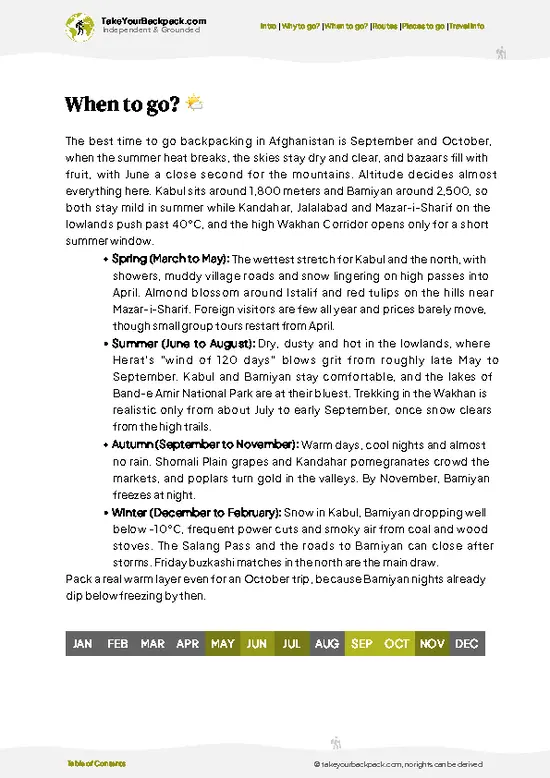
source: climatestotravel.comJANJanuary: below average for travelingFEBFebruary: below average for travelingMARMarch: fair for travelingAPRApril: excellent for travelingMAYMay: excellent for travelingJUNJune: highly recommended for travelingJULJuly: fair for travelingAUGAugust: fair for travelingSEPSeptember: excellent for travelingOCTOctober: excellent for travelingNOVNovember: good for travelingDECDecember: below average for traveling
when-to-go

✈️ The backpacker research shortcutAfghanistan Travel Guide

An offline-friendly backpacking guide with optimized travel routes, ranked highlights, transport advice, and the best areas to stay.
example page 0 from our offline Travel Guide for Afghanistan
example page 1 from our offline Travel Guide for Afghanistan
example page 2 from our offline Travel Guide for Afghanistan
example page 3 from our offline Travel Guide for Afghanistan
example page 4 from our offline Travel Guide for Afghanistan
example page 5 from our offline Travel Guide for Afghanistan
example page 6 from our offline Travel Guide for Afghanistan
example page 7 from our offline Travel Guide for Afghanistan
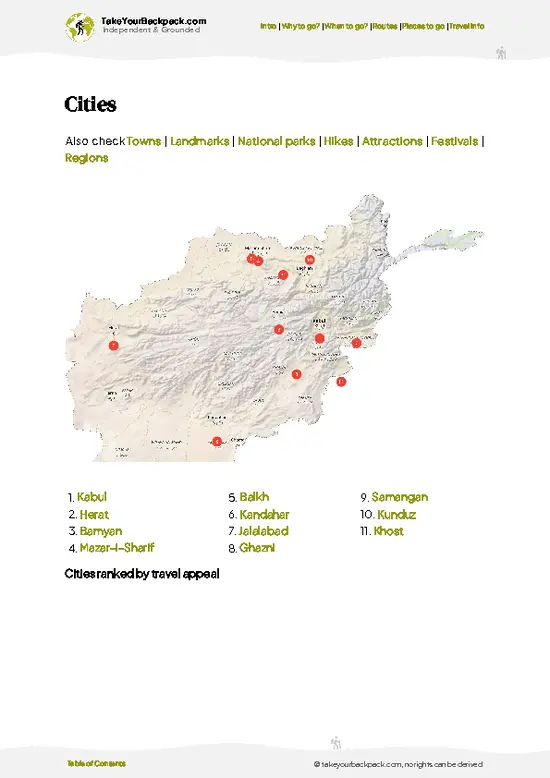
The digital guide (296 pages) contains:
72 highlights, ranked by travel appeal
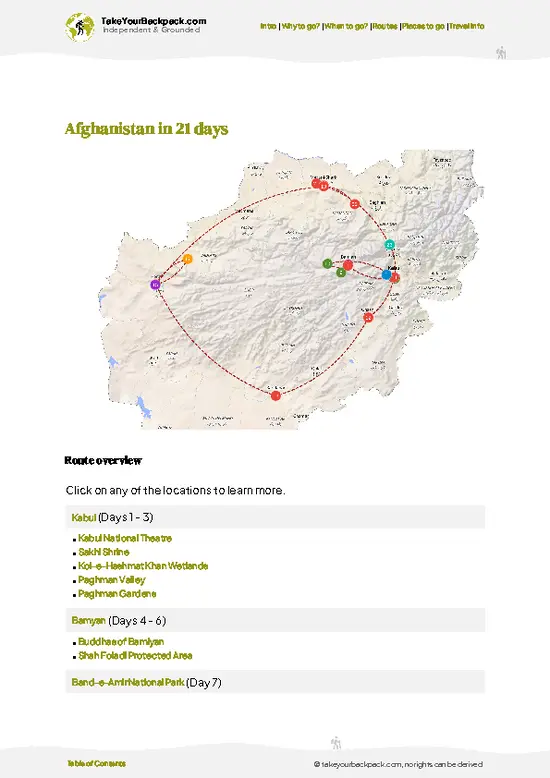
Optimized 7, 14 & 21-day travel routes
Cities, national parks, landmarks, beaches
How to get around
Offline-friendly for travel without Wi-Fi
👉 Click to see all 30+ guide features

📅 Plan smarter in minutes, not weeks
Month by month travel advice
Festivals & national holidays
Budget expectations

🗺️ Go to the right places, skip the overrated ones
Honest pros & cons of destinations
Top hikes, parks & viewpoints
Lesser-known places most travelers miss
Clear “worth it vs skip it” guidance

🛏️ Travel smoothly without rookie mistakes
Best areas to stay
Transport systems explained simply
Common scams & safety advice
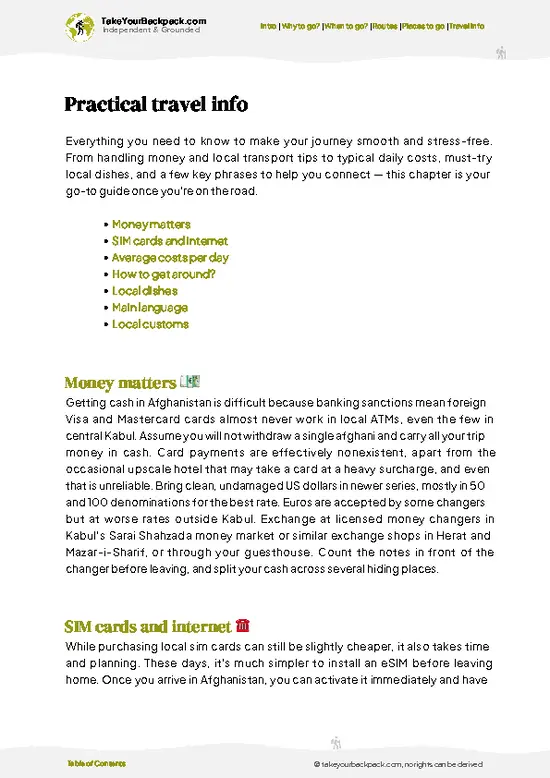
SIM cards, money & practical tips

🌍 Understand the country, not just visit it
Culture & traditions
52 Essential phrases & customs
Festivals worth planning around
Traveler-friendly historical context
Insights that make places more meaningful

📱 Built for real travel conditions
Fully downloadable PDF
Works completely offline
Optimized for phone use
Useful in remote areas & buses
Everything in one place
Save weeks of stressful planning
Get instant access to your full guide. 30‑day money-back guarantee.


By proceeding you agree to our terms.
Sent to your inbox immediately after payment • 100% Secure Checkout
Best Backpacking Travel Advisor 2025 tourism awardBest Backpacking
Travel Advisor
2025
What others say about Take Your Backpack Guides:
⭐⭐⭐⭐⭐
Fantastic, amazing amount of information!
⭐⭐⭐⭐⭐
My goodness this is amazing, it's what I've been looking for hats off too you!
⭐⭐⭐⭐⭐
I think this is absolutely BRILLIANT
⭐⭐⭐⭐
Very complete and informative. It's still missing places, but I gotta to commend you
⭐⭐⭐⭐⭐
This is truly amazing, thank you, can't wait to explore it with my kids!
⭐⭐⭐⭐⭐
Awesome resource, thank you!
⭐⭐⭐⭐⭐
This is amazing! Can't wait to explore the ones I haven't seen
⭐⭐⭐⭐
I love this! Well done, great idea.
⭐⭐⭐⭐⭐
Thanks for taking the time to make this gem!
⭐⭐⭐⭐⭐
This might be the best website I've ever seen.
⭐⭐⭐⭐⭐
Congratulations, and thank you so much for your work; it's incredibly valuable.
⭐⭐⭐⭐
In all seriousness I think you did a great job pointing out the important spots
⭐⭐⭐⭐⭐
10/10 very good
⭐⭐⭐⭐⭐
As someone who's only just starting to visit regularly this is awesome, thank you.
⭐⭐⭐⭐
Thank you very much! I'm going to visit my dad, it's going to be very useful!
⭐⭐⭐⭐⭐
This is really cool! We'll be travelling for the first time and this definitely come in handy.
⭐⭐⭐⭐⭐
You are now our minister of culture, congratulations 👨‍💼
⭐⭐⭐⭐⭐
Just wanted to tell you that this is a pearl! Going to follow your recommendations.
⭐⭐⭐⭐⭐
This is so cool. I'll definitely be using the resource for my travels soon.
⭐⭐⭐⭐⭐
This is very impressive! Good work.
⭐⭐⭐⭐⭐
This is an amazing and informative site. Very well done!

🛏️ Where to stay?Best areas to stay in Afghanistan

Ghor Province is a hidden chapter in Afghanistan’s story, and if you’re a backpacker, you’ll want to dive into its heart.

Start in Chaghcharan, the provincial capital. It’s a hub for travelers, with a mix of locals and fellow adventurers. The vibe here is relaxed, and you can easily strike up conversations over chai. The bustling bazaars are perfect for soaking in local culture while keeping your budget in check.

Next, consider Taywara. This town is a bit off the beaten path but offers a genuine glimpse into Afghan life. The hospitality here is unmatched. You’ll find friendly faces eager to … read more 👉
Ghor Province is a hidden chapter in Afghanistan’s story, and if you’re a backpacker, you’ll want to dive into its heart.

Start in Chaghcharan, the provincial capital. It’s a hub for travelers, with a mix of locals and fellow adventurers. The vibe here is relaxed, and you can easily strike up conversations over chai. The bustling bazaars are perfect for soaking in local culture while keeping your budget in check.

Next, consider Taywara. This town is a bit off the beaten path but offers a genuine glimpse into Afghan life. The hospitality here is unmatched. You’ll find friendly faces eager to share stories and meals. Plus, the surrounding landscapes are breathtaking, perfect for those spontaneous hikes.

Lastly, check out Dulaina. It’s smaller but has a tight-knit community feel. The locals are welcoming, and you’ll often find impromptu gatherings where you can join in.

Each of these spots offers a unique slice of Ghor, balancing safety and social opportunities. Choose wisely, and you’ll create memories that linger long after you’ve left.

🚌 Getting aroundTransportation options and practical tips

Ghor Province is a wild tapestry of rugged mountains and winding valleys, where the rhythm of travel feels more like a dance than a strict schedule. Here, you won’t find the sterile predictability of a train timetable; instead, it’s a blend of chaotic intuition and local wisdom. Buses and shared taxis come and go like the wind, often dictated by the whims of the drivers and the ebb and flow of passengers. You’ll need to embrace the unpredictability, but that’s part of the charm. Each journey is an adventure, a chance to connect with the land and its people in ways that rigid schedules can’t offer.


  • Shared Taxis: These are your go-to for flexibility. They typically run from early morning until sunset, costing around 100-200 AFN for short distances. Expect a bumpy ride, but you’ll get to your
read more 👉
Ghor Province is a wild tapestry of rugged mountains and winding valleys, where the rhythm of travel feels more like a dance than a strict schedule. Here, you won’t find the sterile predictability of a train timetable; instead, it’s a blend of chaotic intuition and local wisdom. Buses and shared taxis come and go like the wind, often dictated by the whims of the drivers and the ebb and flow of passengers. You’ll need to embrace the unpredictability, but that’s part of the charm. Each journey is an adventure, a chance to connect with the land and its people in ways that rigid schedules can’t offer.


  • Shared Taxis: These are your go-to for flexibility. They typically run from early morning until sunset, costing around 100-200 AFN for short distances. Expect a bumpy ride, but you’ll get to your destination faster than waiting for a bus.

  • Minibuses: A budget-friendly option, these run between major towns like Chaghcharan and Firozkoh. They leave when full, usually costing about 150 AFN. Comfort is basic, but the camaraderie with fellow travelers makes up for it.

  • Motorcycle Taxis: For the adventurous spirit, these are available in urban areas. Prices vary, but expect to pay around 50-100 AFN for short hops. They’re quick and can navigate through traffic, but hold on tight!

  • Private Cars: If you’re looking for comfort and a bit more control, hiring a private car is an option. Prices start at around 2,000 AFN for a day, but you’ll have the luxury of setting your own pace and itinerary.


Here’s the master tactical tip: always negotiate your fare before you hop in, especially with shared taxis and motorcycle taxis. It’s not just about saving money; it’s about establishing a rapport. A little friendly banter can go a long way in making your journey smoother and more enjoyable. Embrace the flow, and you’ll find that Ghor Province has a way of revealing its treasures to those who are willing to ride the waves of spontaneity.

🍲 FoodLocal Cuisine & Drinks

In Ghor Province, food is a celebration of local flavors and communal spirit. You can’t miss the Qabili Palau, a fragrant rice dish layered with tender lamb, carrots, and raisins. The aroma wafts through the air, pulling you into bustling markets where vendors proudly serve it. Pair it with Aush, a hearty noodle soup that warms you from the inside out, especially on chilly evenings.

Street food is where the magic happens. Grab a samosa from a vendor, crispy and golden, filled with spiced potatoes or lentils. It’s the perfect snack as you wander through the lively bazaars. Don’t overlook the chai—a milky, spiced tea that’s more than a drink; it’s an invitation to sit and chat with locals.

Dining here is a communal affair. Expect to share dishes, and don’t be surprised if you’re offered food … read more 👉
In Ghor Province, food is a celebration of local flavors and communal spirit. You can’t miss the Qabili Palau, a fragrant rice dish layered with tender lamb, carrots, and raisins. The aroma wafts through the air, pulling you into bustling markets where vendors proudly serve it. Pair it with Aush, a hearty noodle soup that warms you from the inside out, especially on chilly evenings.

Street food is where the magic happens. Grab a samosa from a vendor, crispy and golden, filled with spiced potatoes or lentils. It’s the perfect snack as you wander through the lively bazaars. Don’t overlook the chai—a milky, spiced tea that’s more than a drink; it’s an invitation to sit and chat with locals.

Dining here is a communal affair. Expect to share dishes, and don’t be surprised if you’re offered food before you even sit down. It’s customary to eat with your right hand, so embrace the messiness. Remember, meals are about connection, not just sustenance. Enjoy the flavors, the warmth, and the stories shared over a simple meal.

Other Afghan regions near Ghor Province

Explore more nearby:

  • Bamiyan Valley—Cliffside niches, Buddhist relics, highland lakes| 272 km away
  • Darvaz Valley—River gorges, forested slopes, Tajik borderlands| 385 km away
  • Paghman Valley—Alpine gardens, royal pavilions, picnic terraces| 401 km away

💡 Not sure where to go next?
Create a personalized itinerary for Afghanistan including Ghor Province and the places that fit your trip.

Generate my itinerary

👉 Discover all regions

Or checkout all Afghanistan has to offer (think cities, towns, villages, national parks, hikes, beaches, festivals)
Country photo of Afghanistan

We 💚 feedbackKey takeaways before you go

Ghor Province is raw and real, a place where the mountains whisper stories and the people welcome you like family. Don’t miss the sunrise over the Band-e Amir lakes; it’s a sight that’ll stick with you. But here’s the kicker: the roads can be rough, so brace yourself for a bumpy ride. Pack light, stay flexible, and let the unexpected be your guide. This isn’t just a trip; it’s an adventure that’ll change your perspective.

✍️ Help improve this page!
The information on this page is based on in-depth research, insights shared by experienced travelers, and feedback from the local travel community in Afghanistan. While every effort is made to keep the information accurate and current, conditions can change — so if you spot anything incorrect or outdated, please get in touch.


🙋‍♂️ Give feedback

👋 Meet the founderWho’s Behind Take Your Backpack?

Johan, backpacker and founder of TakeYourBackpackHi, I’m Johan (Netherlands 🇳🇱), the creator of TakeYourBackpack. Over the past decade, I’ve backpacked through 80+ countries across six continents, gaining extensive experience with independent travel, long-term trips, and overland routes.

This site is built on a combination of firsthand travel experience and carefully curated insights from other backpackers. Many guides are based on places I’ve personally visited, while others bring together tips, observations, and practical advice shared by trusted travelers I’ve met along the way.

The goal is to provide realistic, experience-driven guidance — not generic itineraries — so you can explore destinations with better context, clearer expectations, and more confidence.

Get full country guide •
Instant download • 72 highlights • Full Offline guide