×

Afghanistan🇦🇫 | citiesUruzgantribal center, rugged valleys, mud compounds | things to do and best time to go

Explore MehtarlamExplore Baghlan

Backpacking in Uruzgan
By Johan Kruseman 🇳🇱 | Updated June 4, 2026

Most people only know Uruzgan from news headlines and military maps, but that’s the wrong lens; what matters to a traveler is how remote, conservative, and logistically awkward it is, and whether that trade-off feels worth it. Uruzgan town sits in central Afghanistan, north of Kandahar, more a provincial hub than a destination. It’s dusty, low-rise, and functional, with basic markets and a slow, watchful rhythm rather than café culture or backpacker buzz. You come through here, if at all, as a transit stop or staging point for work-related travel, not as a classic backpacking base. Shared cars and rough roads dominate; walking is easy inside town but movement beyond it is constrained by security and local dynamics, not scenery. Costs are low, yet the lack of tourist infrastructure, near-zero foreign backpacker presence, and serious safety concerns make it far less relaxed than Kandahar or even Tarin Kowt, and not a practical stop for most independent travelers.

Discover everything you want to know in the 📖 Afghanistan Travel Guide.
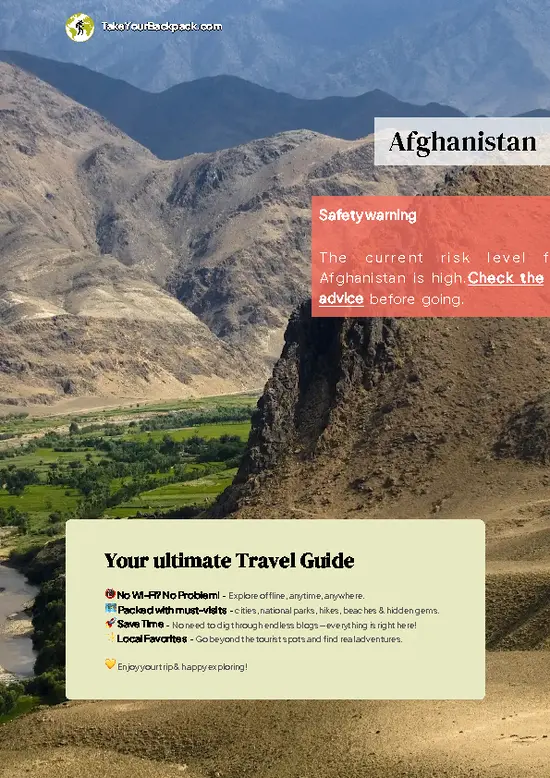
Safety warning

The current risk level for Afghanistan is high. Check the advice before going.


Get your Afghanistan guide
72 ranked highlights, routes & tips, works offline (296 pages)
Loading the map 🌍
CLICK TO FILTER
cities
towns
landmarks
national parks
hikes
attractions
festivals
regions
SHOW COUNTRY’S BESTSHOW ALL

✨ Why go?
Ranked #99 city in Afghanistan
Why visitors keep coming back

Backpackers flock to Uruzgan for its strategic location near stunning hikes and cultural sites. The walkable streets invite exploration, where you can soak in the local vibe and grab a bite of authentic Afghan cuisine at small eateries. Guesthouses here are cozy and affordable, perfect for solo travelers or small groups looking to connect. While some pass through quickly, others linger for a few days, enjoying the friendly atmosphere and the chance to share stories with fellow adventurers. It’s not a party town, but the social energy is palpable, making it ideal for those who appreciate a slower pace and meaningful interactions.
Want to include Uruzgan in your Afghanistan route?
Create a personalized Afghanistan itinerary that includes Uruzgan and the places that fit your trip — based on your travel style, budget, and available time. Get your route in seconds.

Generate my trip

💡 HighlightsPlaces and moments you shouldn't skip

Uruzgan is a province; its main city is Tarin Kowt (Tarinkot). Below are ten visitable highlights within Tarin Kowt that actually offer cultural, historic, or everyday life value.

  1. Tarin Kowt Bazaar (Central Market) — The heartbeat of the city: narrow stalls selling spices, dried fruit, basic hardware, and Afghan textiles. Great for people-watching, practicing a few Pashto phrases, and seeing the local economy in action.
  2. Provincial Jami (Friday) Mosque — The main mosque where the city gathers for Friday prayers. Even from the courtyard you can feel communal rhythms and see traditional architecture and dress; visit outside prayer times and be respectful of customs.
  3. Tarin Kowt Airfield — A small, functional airport that’s useful to watch the comings and goings of provincial life and to get
read more 👉
Uruzgan is a province; its main city is Tarin Kowt (Tarinkot). Below are ten visitable highlights within Tarin Kowt that actually offer cultural, historic, or everyday life value.

  1. Tarin Kowt Bazaar (Central Market) — The heartbeat of the city: narrow stalls selling spices, dried fruit, basic hardware, and Afghan textiles. Great for people-watching, practicing a few Pashto phrases, and seeing the local economy in action.
  2. Provincial Jami (Friday) Mosque — The main mosque where the city gathers for Friday prayers. Even from the courtyard you can feel communal rhythms and see traditional architecture and dress; visit outside prayer times and be respectful of customs.
  3. Tarin Kowt Airfield — A small, functional airport that’s useful to watch the comings and goings of provincial life and to get a sense of the town’s geography from the perimeter. Note: access past checkpoints may require permission.
  4. Governor’s Compound and Main Administrative Quarter — Civic architecture, flagpoles, and the administrative core of provincial life. It’s not a museum, but walking the outer areas tells you about local power, politics, and post-conflict reconstruction.
  5. The Old Quarter and Mud-brick Alleys — Low, earthen houses and tight lanes where daily life unfolds slowly: kids playing, women carrying water, rooftop views. It’s atmospheric and shows how traditional Afghan towns are built and lived in.
  6. Chaikhanas (Local Tea Houses) — Simple tea rooms where men gather to trade news, play backgammon, or debate politics. These are the best places to hear local stories and soak in social rhythms without any tourist gloss.
  7. Handicraft and Weaving Workshops — Small family-run studios where carpets, embroidered textiles, and simple woodwork are made. Visiting (with permission) supports local artisans and gives a glimpse into craft techniques that are still practiced by hand.
  8. Friday Livestock Market — A practical, noisy, and very Afghan experience: buyers and sellers haggle over sheep, goats, and camels. It’s as much about social ties and bargaining tradition as it is about trade.
  9. Municipal Park and Main Square — The everyday public space where families come in the evening, children play, and vendors set up. Good for slow observation and seeing how Tarin Kowt people unwind after a day’s work.
  10. Provincial Education/Cultural Campus — The local higher-education or cultural center (campus buildings, lecture halls, occasional public events). When there’s a public lecture, exhibition, or cultural program it’s a rare chance to see the city’s younger generation and civic life.


Nearby day-trip highlights you can realistically reach from Tarin Kowt include the valleys and villages of Chora district, the market town of Deh-Rawud, and traditional villages in Khas-Uruzgan — all good for seeing rural life, nomad routes, and mountain views if security and permissions allow.
Spotted a mistake or missing something? Contact us.
🏘️ NeighborhoodsWhere things are and how it's laid out

Uruzgan is a unique blend of rugged beauty and rich culture, offering backpackers a chance to experience Afghanistan’s heart. Here’s how to navigate its neighborhoods:

Downtown Uruzgan: This is the bustling core, where you’ll find local markets and street vendors. The vibe is energetic, with the scent of spices in the air. It’s walkable, but keep your wits about you. Great for short stays; you can soak up the local life quickly.

Shahidi: A quieter area, perfect for those seeking a more laid-back experience. The streets are lined with trees, offering a peaceful retreat. It’s less touristy, making it ideal for longer stays where you can really connect with the community.

Ghazni Road: This area is a bit more developed, with better transport links. It’s a good spot for nightlife, with cafes … read more 👉
Uruzgan is a unique blend of rugged beauty and rich culture, offering backpackers a chance to experience Afghanistan’s heart. Here’s how to navigate its neighborhoods:

Downtown Uruzgan: This is the bustling core, where you’ll find local markets and street vendors. The vibe is energetic, with the scent of spices in the air. It’s walkable, but keep your wits about you. Great for short stays; you can soak up the local life quickly.

Shahidi: A quieter area, perfect for those seeking a more laid-back experience. The streets are lined with trees, offering a peaceful retreat. It’s less touristy, making it ideal for longer stays where you can really connect with the community.

Ghazni Road: This area is a bit more developed, with better transport links. It’s a good spot for nightlife, with cafes and small restaurants. If you want a mix of action and accessibility, this is your go-to.

⌛️ 1 dayWhat you can realistically do in a day

Uruzgan, Afghanistan, is a tapestry of rugged beauty and resilient spirit. The town sits in a valley surrounded by the Hindu Kush mountains, where the air is crisp and the scent of earth mingles with the faint aroma of spices from local markets.

Start your morning with a stroll through the bustling bazaar. The vibrant colors of textiles and the chatter of vendors create an electric atmosphere. Grab a cup of chai from a local stall; the warmth will fuel your exploration. Afterward, head to the nearby hills for a hike. The trails offer stunning views of the valley and a chance to connect with the landscape.

In the afternoon, visit the ancient ruins of the Qala-i-Jangi fortress. This site, often overlooked by tourists, tells stories of the past through its crumbling walls and echoes of history. … read more 👉
Uruzgan, Afghanistan, is a tapestry of rugged beauty and resilient spirit. The town sits in a valley surrounded by the Hindu Kush mountains, where the air is crisp and the scent of earth mingles with the faint aroma of spices from local markets.

Start your morning with a stroll through the bustling bazaar. The vibrant colors of textiles and the chatter of vendors create an electric atmosphere. Grab a cup of chai from a local stall; the warmth will fuel your exploration. Afterward, head to the nearby hills for a hike. The trails offer stunning views of the valley and a chance to connect with the landscape.

In the afternoon, visit the ancient ruins of the Qala-i-Jangi fortress. This site, often overlooked by tourists, tells stories of the past through its crumbling walls and echoes of history. Spend some time reflecting on the resilience of the people who have lived here.

As evening approaches, return to the town center. Find a local eatery and savor a plate of kabuli pulao, fragrant rice topped with tender lamb and raisins. The day wraps up with the golden light of sunset casting long shadows over the mountains, a perfect end to a day well spent in Uruzgan.
Turn your Uruzgan visit into an Afghanistan adventure
Build a complete Afghanistan route with Uruzgan, hidden gems, must-see destinations, and realistic travel times included.

Generate my trip

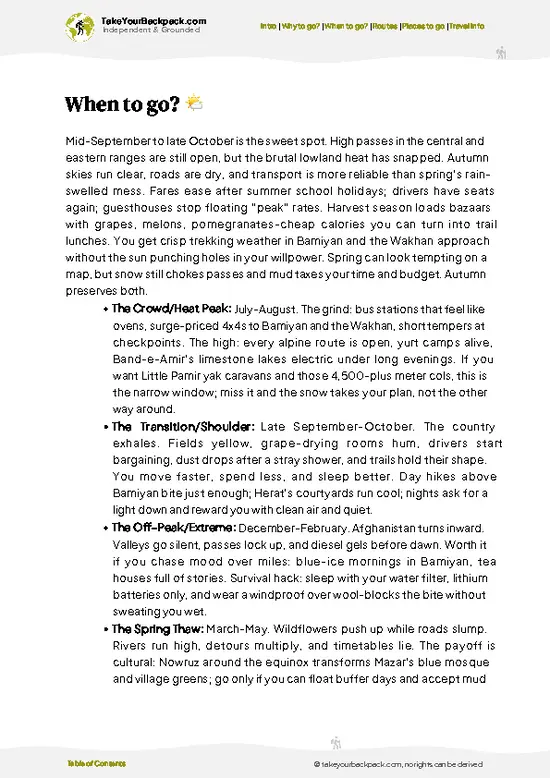
🌤️ When to go?Choosing the right time of year


  • Weather: Uruzgan’s summers scorch, often hitting 35-40°C (95-104°F), making midday trekking brutal. Winters dip below freezing, with snow blanketing the rugged terrain, limiting access and comfort.

  • Temperature: Spring (April-May) and autumn (September-October) offer a sweet spot—daytime highs around 20-25°C (68-77°F), cool nights, and breathable air that keeps your energy up without overheating.

  • Daylight Hours: Spring and autumn provide balanced daylight, roughly 12-14 hours, enough for long hikes but not so much that you lose track of time or rush through the landscape.

  • Crowds: Uruzgan isn’t a tourist hotspot, so you’ll mostly find solitude year-round. However, local festivals in spring can bring a lively, authentic buzz worth timing your visit for.

  • Seasonal Activities: Spring
read more 👉

  • Weather: Uruzgan’s summers scorch, often hitting 35-40°C (95-104°F), making midday trekking brutal. Winters dip below freezing, with snow blanketing the rugged terrain, limiting access and comfort.

  • Temperature: Spring (April-May) and autumn (September-October) offer a sweet spot—daytime highs around 20-25°C (68-77°F), cool nights, and breathable air that keeps your energy up without overheating.

  • Daylight Hours: Spring and autumn provide balanced daylight, roughly 12-14 hours, enough for long hikes but not so much that you lose track of time or rush through the landscape.

  • Crowds: Uruzgan isn’t a tourist hotspot, so you’ll mostly find solitude year-round. However, local festivals in spring can bring a lively, authentic buzz worth timing your visit for.

  • Seasonal Activities: Spring blossoms and autumn harvests color the valleys, offering vibrant photo ops and cultural encounters. Winter’s snow turns trails into a challenge, while summer’s heat demands early starts and slow afternoons.

  • Price Fluctuations: Costs remain relatively stable due to low tourism, but local prices for guides and supplies may rise slightly during festival seasons or harvest time when demand peaks.


Pro-tip: Aim for late April or early October—when the air smells fresh, the light softens the rugged landscape, and every step feels earned without the extremes of heat or cold.


source: climatestotravel.comJANJanuary: below average for travelingFEBFebruary: below average for travelingMARMarch: good for travelingAPRApril: excellent for travelingMAYMay: highly recommended for travelingJUNJune: fair for travelingJULJuly: fair for travelingAUGAugust: fair for travelingSEPSeptember: highly recommended for travelingOCTOctober: excellent for travelingNOVNovember: good for travelingDECDecember: below average for traveling
when-to-go

✈️ The backpacker research shortcutAfghanistan Travel Guide

An offline-friendly backpacking guide with optimized travel routes, ranked highlights, transport advice, and the best areas to stay.
example page 0 from our offline Travel Guide for Afghanistan
example page 1 from our offline Travel Guide for Afghanistan
example page 2 from our offline Travel Guide for Afghanistan
example page 3 from our offline Travel Guide for Afghanistan
example page 4 from our offline Travel Guide for Afghanistan
example page 5 from our offline Travel Guide for Afghanistan
example page 6 from our offline Travel Guide for Afghanistan
example page 7 from our offline Travel Guide for Afghanistan
The digital guide (296 pages) contains:
72 highlights, ranked by travel appeal
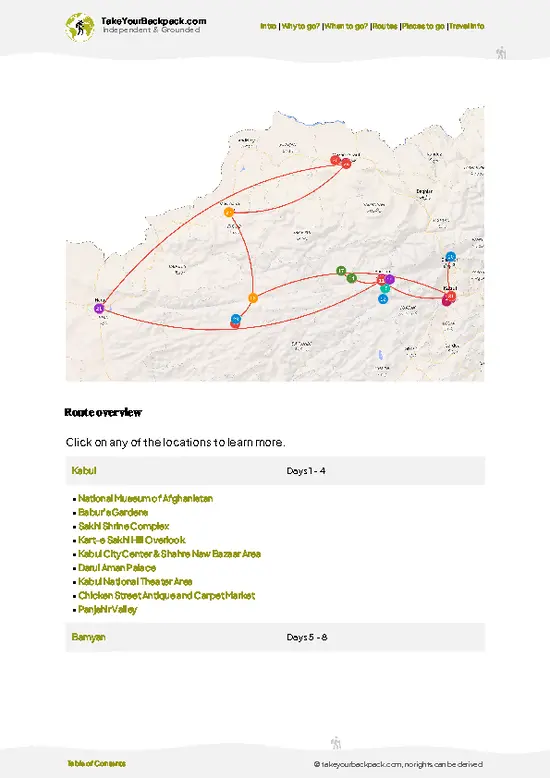
Optimized 7, 14 & 21-day travel routes
Cities, national parks, landmarks, beaches
How to get around
Offline-friendly for travel without Wi-Fi
👉 Click to see all 30+ guide features

📅 Plan smarter in minutes, not weeks
Month by month travel advice
Festivals & national holidays
Budget expectations

🗺️ Go to the right places, skip the overrated ones
Honest pros & cons of destinations
Top hikes, parks & viewpoints
Lesser-known places most travelers miss
Clear “worth it vs skip it” guidance

🛏️ Travel smoothly without rookie mistakes
Best areas to stay
Transport systems explained simply
Common scams & safety advice
SIM cards, money & practical tips

🌍 Understand the country, not just visit it
Culture & traditions
52 Essential phrases & customs
Festivals worth planning around
Traveler-friendly historical context
Insights that make places more meaningful

📱 Built for real travel conditions
Fully downloadable PDF
Works completely offline
Optimized for phone use
Useful in remote areas & buses
Everything in one place
Save weeks of stressful planning
Get instant access to your full guide. 30‑day money-back guarantee.


By proceeding you agree to our terms.
Sent to your inbox immediately after payment • 100% Secure Checkout
Best Backpacking Travel Advisor 2025 tourism awardBest Backpacking
Travel Advisor
2025
What others say about Take Your Backpack Guides:
⭐⭐⭐⭐⭐
Fantastic, amazing amount of information!
⭐⭐⭐⭐⭐
My goodness this is amazing, it's what I've been looking for hats off too you!
⭐⭐⭐⭐⭐
I think this is absolutely BRILLIANT
⭐⭐⭐⭐
Very complete and informative. It's still missing places, but I gotta to commend you
⭐⭐⭐⭐⭐
This is truly amazing, thank you, can't wait to explore it with my kids!
⭐⭐⭐⭐⭐
Awesome resource, thank you!
⭐⭐⭐⭐⭐
This is amazing! Can't wait to explore the ones I haven't seen
⭐⭐⭐⭐
I love this! Well done, great idea.
⭐⭐⭐⭐⭐
Thanks for taking the time to make this gem!
⭐⭐⭐⭐⭐
This might be the best website I've ever seen.
⭐⭐⭐⭐⭐
Congratulations, and thank you so much for your work; it's incredibly valuable.
⭐⭐⭐⭐
In all seriousness I think you did a great job pointing out the important spots
⭐⭐⭐⭐⭐
10/10 very good
⭐⭐⭐⭐⭐
As someone who's only just starting to visit regularly this is awesome, thank you.
⭐⭐⭐⭐
Thank you very much! I'm going to visit my dad, it's going to be very useful!
⭐⭐⭐⭐⭐
This is really cool! We'll be travelling for the first time and this definitely come in handy.
⭐⭐⭐⭐⭐
You are now our minister of culture, congratulations 👨‍💼
⭐⭐⭐⭐⭐
Just wanted to tell you that this is a pearl! Going to follow your recommendations.
⭐⭐⭐⭐⭐
This is so cool. I'll definitely be using the resource for my travels soon.
⭐⭐⭐⭐⭐
This is very impressive! Good work.
⭐⭐⭐⭐⭐
This is an amazing and informative site. Very well done!

🛏️ Where to stay?Choosing the right base

In Uruzgan, the best spot for backpackers is the central district around Tarinkot’s main bazaar. This area hums with daily life—the scent of fresh bread mingles with dust and spices, and locals gather in small tea shops where you can catch a friendly nod or a quick chat. It’s the safest pocket, with a steady police presence and a community used to visitors, which means you’re less likely to feel isolated or out of place. Hostels are scarce but small guesthouses here offer simple, affordable rooms where you can meet other travelers. Staying here means you’re steps from markets and local eateries, … read more 👉
In Uruzgan, the best spot for backpackers is the central district around Tarinkot’s main bazaar. This area hums with daily life—the scent of fresh bread mingles with dust and spices, and locals gather in small tea shops where you can catch a friendly nod or a quick chat. It’s the safest pocket, with a steady police presence and a community used to visitors, which means you’re less likely to feel isolated or out of place. Hostels are scarce but small guesthouses here offer simple, affordable rooms where you can meet other travelers. Staying here means you’re steps from markets and local eateries, making it easier to navigate and soak in the town’s pulse without unnecessary risk or hassle.

🚌 Getting aroundHow to get from A to B

Uruzgan moves at a pace shaped by the rugged landscape and the rhythms of rural Afghan life. There’s no clock here dictating your steps—more a pulse of necessity and local custom. The air carries dust and the faint scent of wood smoke, while the sun slices through the dry heat in sharp angles. You’ll find that getting around isn’t about strict schedules but about reading the moment, catching rides when they come, and walking with purpose through the uneven streets. This isn’t a place for the impatient, but those who lean into its flow find a raw, unfiltered connection to the land and its people.


  • Walking: The most reliable and immersive way to navigate Uruzgan’s compact villages and dusty roads. Expect uneven terrain and midday heat; early mornings or late afternoons offer cooler, softer
read more 👉
Uruzgan moves at a pace shaped by the rugged landscape and the rhythms of rural Afghan life. There’s no clock here dictating your steps—more a pulse of necessity and local custom. The air carries dust and the faint scent of wood smoke, while the sun slices through the dry heat in sharp angles. You’ll find that getting around isn’t about strict schedules but about reading the moment, catching rides when they come, and walking with purpose through the uneven streets. This isn’t a place for the impatient, but those who lean into its flow find a raw, unfiltered connection to the land and its people.


  • Walking: The most reliable and immersive way to navigate Uruzgan’s compact villages and dusty roads. Expect uneven terrain and midday heat; early mornings or late afternoons offer cooler, softer light for exploring.

  • Shared Minivans: These hop-on, hop-off vehicles run irregularly, often filling up before departure. Prices are low, but seats are tight and comfort minimal. Best to arrive early and be ready to wait.

  • Motorcycle Taxis: Quick and nimble through narrow paths, these are a budget-friendly option for short distances. Helmets are rare, so brace for dust and noise, but the speed beats walking when time is tight.

  • Local Bicycles: Renting a bike offers freedom and pace control, though roads can be rough. It’s a quiet way to absorb the landscape’s textures—just watch for loose gravel and sudden dips.

  • Occasional Private Car Hire: More expensive but faster and more comfortable, private cars are best for longer trips out of town or when timing is crucial. Negotiation skills come in handy here.

👛 Costs (as of 15 January 2026)Money, prices, and spending tips

Backpacking in Uruzgan, Afghanistan, demands a mindset tuned to simplicity and local rhythms, with costs reflecting the area’s remote and rugged nature.
  • Dorm Accommodation: Options are extremely limited and basic, often guesthouses or homestays rather than formal hostels. Expect to pay around $5 to $10 per night. Facilities are minimal, so prepare for spartan conditions and shared spaces.
  • Meals: Food costs are low but straightforward—think hearty, local staples like rice, bread, and stews. Street food or small local eateries will run about $2 to $5 per meal. Freshness and variety can be limited, so plan accordingly.
  • Local Transport: Public transport is scarce and informal, mostly relying on shared taxis or motorbikes. Daily transport expenses hover around $3 to $7, depending on distance
read more 👉
Backpacking in Uruzgan, Afghanistan, demands a mindset tuned to simplicity and local rhythms, with costs reflecting the area’s remote and rugged nature.
  • Dorm Accommodation: Options are extremely limited and basic, often guesthouses or homestays rather than formal hostels. Expect to pay around $5 to $10 per night. Facilities are minimal, so prepare for spartan conditions and shared spaces.
  • Meals: Food costs are low but straightforward—think hearty, local staples like rice, bread, and stews. Street food or small local eateries will run about $2 to $5 per meal. Freshness and variety can be limited, so plan accordingly.
  • Local Transport: Public transport is scarce and informal, mostly relying on shared taxis or motorbikes. Daily transport expenses hover around $3 to $7, depending on distance and negotiation skills. Walking is often the best way to soak in the environment and save money.
  • Basic Activities/Entry Fees: There are few formal tourist sites with entry fees. Any cultural or historical visits typically involve small local fees or donations, usually under $2. The real value is in exploring the landscape and villages, which costs nothing but time and respect.
  • Miscellaneous Expenses: This includes essentials like bottled water, snacks, or minor supplies. Budget around $2 to $4 daily, as options for packaged goods are limited and prices can vary.

The total daily budget for backpacking in Uruzgan generally falls between $14 and $28. This range reflects the area’s raw, off-the-beaten-path nature, where comfort is minimal but the experience is deeply grounded in local life. Planning for these costs means embracing simplicity and focusing on the authentic texture of the place rather than tourist conveniences.


source: afghanistan-tourism.org
⚠️ Prices can change and everyone travels differently, so take this as a rough guide. Hope it helps you plan your adventure!

🚌 Day tripsEasy escapes and nearby places

Uruzgan, Afghanistan, offers a unique base for day trips that blend adventure with cultural immersion. The rugged beauty and rich history are just waiting to be explored.

Shahidi Hassas
A short drive from Uruzgan, this village is a living testament to resilience. You’ll wander through narrow alleys, where the scent of freshly baked bread wafts from local homes. Engage with friendly villagers who are eager to share stories of their lives. The trip takes about an hour, and you can easily do it for under $10 if you hitch a ride with locals. Spring is ideal, as the wildflowers bloom, painting the landscape. A common mistake? Not taking the time to sit and chat; it’s the conversations that make this trip memorable.


Deh Rawood
This bustling market town is a sensory overload in the best … read more 👉
Uruzgan, Afghanistan, offers a unique base for day trips that blend adventure with cultural immersion. The rugged beauty and rich history are just waiting to be explored.

Shahidi Hassas
A short drive from Uruzgan, this village is a living testament to resilience. You’ll wander through narrow alleys, where the scent of freshly baked bread wafts from local homes. Engage with friendly villagers who are eager to share stories of their lives. The trip takes about an hour, and you can easily do it for under $10 if you hitch a ride with locals. Spring is ideal, as the wildflowers bloom, painting the landscape. A common mistake? Not taking the time to sit and chat; it’s the conversations that make this trip memorable.


Deh Rawood
This bustling market town is a sensory overload in the best way. The vibrant colors of spices and textiles will catch your eye, while the sounds of bargaining fill the air. It’s about a 90-minute drive, costing around $15 for transport. Visit in the early morning to experience the market at its liveliest. Many first-timers rush through; take a moment to sip tea with a vendor and soak in the atmosphere.


Ghazni
A bit further afield, Ghazni is a historical treasure. The ancient citadel stands tall against the backdrop of the mountains, whispering tales of the past. Expect a two-hour journey, with costs around $20. Autumn is perfect for this trip, as the air is crisp and the skies are clear. Don’t just snap photos; explore the ruins and imagine the lives once lived here. Many overlook the local eateries; don’t miss trying the kebabs!
👉 Explore Ghazni
Want to know what more Afghanistan offers?
The Afghanistan Travel Guide describes 72 highlights, from cities to national parks, from beaches to hikes

Get the Travel Guide -

🍲 FoodWhat to Eat & Drink

In Uruzgan, the food scene is a straightforward dive into hearty Afghan flavors. Expect to find Kabuli Pulao, a fragrant rice dish studded with raisins and carrots, often the centerpiece of any meal. The local bread, naan, is thick and perfect for scooping up stews like mantu—steamed dumplings filled with spiced meat. Backpackers usually eat where locals do: bustling markets and simple street stalls where the air is thick with the scent of grilled lamb and fresh herbs.

Drinking culture is modest—tea is king here, served strong and sweet in tiny glasses, a ritual of hospitality you’ll quickly appreciate. Alcohol is scarce and frowned upon, so lean into the tea breaks; they’re your social passport. Sharing a pot of tea with locals isn’t just about the drink—it’s a moment to slow down and connect, a rare comfort in a rugged place.

🛡️ SafetyTraveler Safety Guide

In Uruzgan, safety is about awareness and presence. The streets can feel quiet, but that doesn’t mean you should let your guard down. Stick to well-lit areas at night; shadows can hide more than just the night. Solo travelers should blend in—avoid flashy gear and keep conversations light.

Common scams are rare, but be cautious of overly friendly locals who might want to guide you for a fee. Trust your instincts; if something feels off, it probably is. Carry yourself confidently, and you’ll navigate the town with ease, soaking in its unique atmosphere while staying grounded.

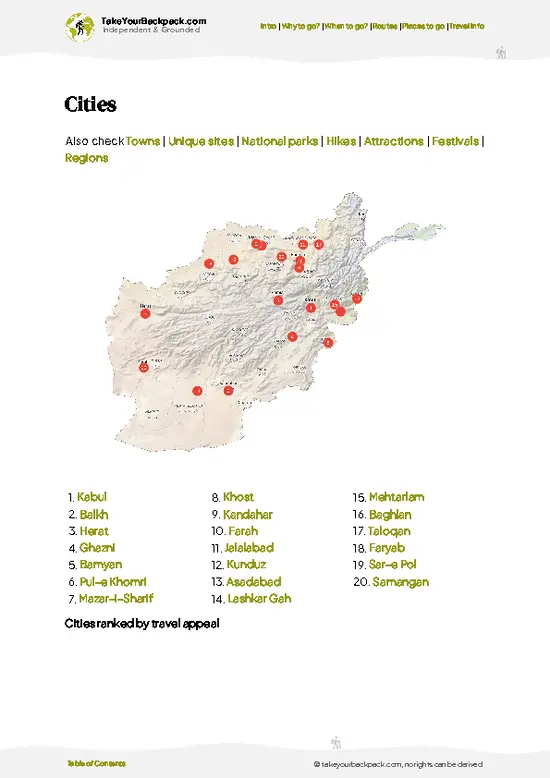
Other Afghan cities near Uruzgan

Explore more nearby:

  • Daikundi—remote valleys, Hazara villages, almond orchards| 83 km away
  • Kandahar—Pashtun stronghold, Sufi shrines, desert edge| 151 km away
  • Ghor—mountain fortress, remote plateau, sparse roads| 174 km away

💡 Not sure where to go next?
Create a personalized itinerary for Afghanistan including Uruzgan and the places that fit your trip.

Generate my itinerary

👉 Discover all cities

Or checkout all Afghanistan has to offer (think cities, towns, villages, national parks, hikes, beaches, festivals)
Country photo of Afghanistan

We 💚 feedbackIs it worth it?

Uruzgan’s raw beauty hits you like a gust of wind—unexpected and invigorating. The warmth of the locals is a genuine surprise; they share stories over steaming chai that linger long after you leave. Just be mindful of the altitude; it can sneak up on you. Embrace the challenge; it’s worth every moment.

✍️ Help improve this page!
The information on this page is based on in-depth research, insights shared by experienced travelers, and feedback from the local travel community in Afghanistan. While every effort is made to keep the information accurate and current, conditions can change — so if you spot anything incorrect or outdated, please get in touch.


🙋‍♂️ Give feedback

👋 Meet the founderWho’s Behind Take Your Backpack?

Johan, backpacker and founder of TakeYourBackpackHi, I’m Johan (Netherlands 🇳🇱), the creator of TakeYourBackpack. Over the past decade, I’ve backpacked through 80+ countries across six continents, gaining extensive experience with independent travel, long-term trips, and overland routes.

This site is built on a combination of firsthand travel experience and carefully curated insights from other backpackers. Many guides are based on places I’ve personally visited, while others bring together tips, observations, and practical advice shared by trusted travelers I’ve met along the way.

The goal is to provide realistic, experience-driven guidance — not generic itineraries — so you can explore destinations with better context, clearer expectations, and more confidence.

Get full country guide •
Instant download • 72 highlights • Full Offline guide