×

Afghanistan🇦🇫 | best citiesBest 10 cities in Afghanistan

Afghanistan’s cities are a tapestry of history, culture, and resilience, each offering a unique lens into the country’s soul. Major hubs like Kabul and Herat pulse with energy, showcasing vibrant markets and a rich tapestry of traditions. In contrast, smaller urban centers like Bamiyan and Mazar-i-Sharif provide a more laid-back vibe, perfect for backpacking and independent travel.

Understanding the regional nuances is crucial; cities in the north often experience harsher winters, while southern areas can be sweltering in summer. Your choice of city directly impacts your budget, safety, and ease of travel. For instance, Kabul offers a wealth of amenities but comes with higher costs and security concerns. Meanwhile, smaller cities can be more affordable and immersive, allowing for deeper cultural connections.

Navigating these options wisely ensures you preserve your energy and funds for the experiences that truly matter.

By Johan Kruseman 🇳🇱 | Updated June 3, 2026
Explore the best towns in Afghanistan

Why go?Why Travelers Love These Spots

Cities in Afghanistan are a tapestry of cultural diversity and historical depth, shaped by millennia of trade, conquest, and resilience. Unlike many countries, Afghanistan’s urban centers are not just places to visit; they are living chronicles of human experience. The Silk Road once coursed through these cities, bringing together influences from Persia, India, and Central Asia. This rich heritage is palpable in the architecture, languages, and traditions that coexist, making each city a unique microcosm of the nation’s identity.

However, travel in Afghanistan comes with its own set of challenges. The transport networks can be limited, affecting accessibility. Roads may be rugged, and public transport options sparse, which can lead to longer travel times. This means that while you might be … read more 👉
Cities in Afghanistan are a tapestry of cultural diversity and historical depth, shaped by millennia of trade, conquest, and resilience. Unlike many countries, Afghanistan’s urban centers are not just places to visit; they are living chronicles of human experience. The Silk Road once coursed through these cities, bringing together influences from Persia, India, and Central Asia. This rich heritage is palpable in the architecture, languages, and traditions that coexist, making each city a unique microcosm of the nation’s identity.

However, travel in Afghanistan comes with its own set of challenges. The transport networks can be limited, affecting accessibility. Roads may be rugged, and public transport options sparse, which can lead to longer travel times. This means that while you might be eager to explore multiple cities, the reality of getting from one to another can be time-consuming. The trade-off here is significant: fewer cities visited often means a deeper, more immersive experience in the ones you do choose to explore.

Geographically, Afghanistan’s mountainous terrain adds another layer of complexity. While these landscapes are breathtaking, they can also isolate communities, making some areas less accessible. The climate varies widely, with harsh winters and scorching summers, which can impact travel plans. Understanding these factors is crucial; they shape not only the logistics of your journey but also the depth of your engagement with local cultures.

In essence, Afghanistan’s cities are not just destinations; they are gateways to understanding a nation that has endured and evolved through centuries. The key is to approach them with an awareness of the constraints and trade-offs involved, ensuring that your journey is both enriching and respectful of the complexities that define this remarkable country.
How the List Was Created
The list of best cities in Afghanistan is created based on culture, vibe, attractions, transport ease, and local charm. If you feel a city is missing in this list, please let us know.

When to go?When to Plan Your Trip

Seasonality plays a crucial role in planning a visit to Afghanistan. The country experiences distinct seasons that significantly affect weather, crowds, and cultural events.

Spring is often considered one of the best times to visit. Temperatures are mild, making it comfortable for exploring. However, this season also attracts more tourists, especially during cultural festivals. Expect vibrant local celebrations, but be prepared for larger crowds and higher accommodation costs.

Summer brings intense heat, particularly in lowland areas. While some cities may become less crowded, the soaring temperatures can be uncomfortable for outdoor activities. This season is ideal for those who prefer solitude and lower prices, but it comes with the trade-off of potentially missing out on cultural events … read more 👉
Seasonality plays a crucial role in planning a visit to Afghanistan. The country experiences distinct seasons that significantly affect weather, crowds, and cultural events.

Spring is often considered one of the best times to visit. Temperatures are mild, making it comfortable for exploring. However, this season also attracts more tourists, especially during cultural festivals. Expect vibrant local celebrations, but be prepared for larger crowds and higher accommodation costs.

Summer brings intense heat, particularly in lowland areas. While some cities may become less crowded, the soaring temperatures can be uncomfortable for outdoor activities. This season is ideal for those who prefer solitude and lower prices, but it comes with the trade-off of potentially missing out on cultural events that thrive in cooler months.

Autumn offers a sweet spot for travelers. The weather is generally pleasant, and the summer crowds have thinned out. This is a prime time for photography, as the landscape transforms with fall colors. However, some cultural events may wind down, so travelers should check local calendars to avoid missing out.

Winter can be harsh, especially in mountainous regions. While some cities may see fewer tourists, the cold can limit outdoor exploration. This season is best for those seeking a unique experience, but travelers should be aware of potential travel disruptions due to snow and icy conditions.

Understanding these seasonal patterns helps in making informed decisions. Balancing the desire for ideal weather with the need to avoid crowds and costs is key. Each season has its own rhythm, and recognizing this can lead to a more rewarding experience.

city hoppingSuggested Travel Strategies

Traveling through Afghanistan’s cities requires strategic planning. Start by clustering your stops regionally. The country is divided into distinct areas, each with its own character. For example, you might group Kabul, Jalalabad, and Ghazni together in the east, while Herat, Mazar-i-Sharif, and Bamiyan can form a western loop. This approach minimizes travel time and maximizes your experience.

Consider the direction of travel. Moving from Kabul to the west or north is often more efficient than zigzagging across the country. The road conditions can vary dramatically, affecting travel times. Expect to spend several hours on the road between cities, so plan for at least half a day per stop. This pacing allows for exploration without feeling rushed.

Common mistakes include trying to see too read more 👉
Traveling through Afghanistan’s cities requires strategic planning. Start by clustering your stops regionally. The country is divided into distinct areas, each with its own character. For example, you might group Kabul, Jalalabad, and Ghazni together in the east, while Herat, Mazar-i-Sharif, and Bamiyan can form a western loop. This approach minimizes travel time and maximizes your experience.

Consider the direction of travel. Moving from Kabul to the west or north is often more efficient than zigzagging across the country. The road conditions can vary dramatically, affecting travel times. Expect to spend several hours on the road between cities, so plan for at least half a day per stop. This pacing allows for exploration without feeling rushed.

Common mistakes include trying to see too much too quickly. While it’s tempting to tick off multiple cities in a short time, this often leads to fatigue and missed experiences. Instead, focus on a few key locations and immerse yourself in their culture. This depth of experience will be more rewarding than a superficial glance at many places.

Trade-offs are inevitable. Speed versus depth is a constant balancing act. If budget allows, consider hiring local guides for deeper insights. This can enhance your understanding and appreciation of each city. However, be prepared for varying levels of comfort in transportation and accommodations. Prioritize what matters most: whether it’s comfort, budget, or the sheer thrill of adventure.

Flexibility is crucial. Conditions can change rapidly, so be ready to adjust your plans. A well-thought-out route will save energy and resources, allowing for those moments that truly matter. Embrace the journey, and let the cities of Afghanistan reveal their stories at your pace.

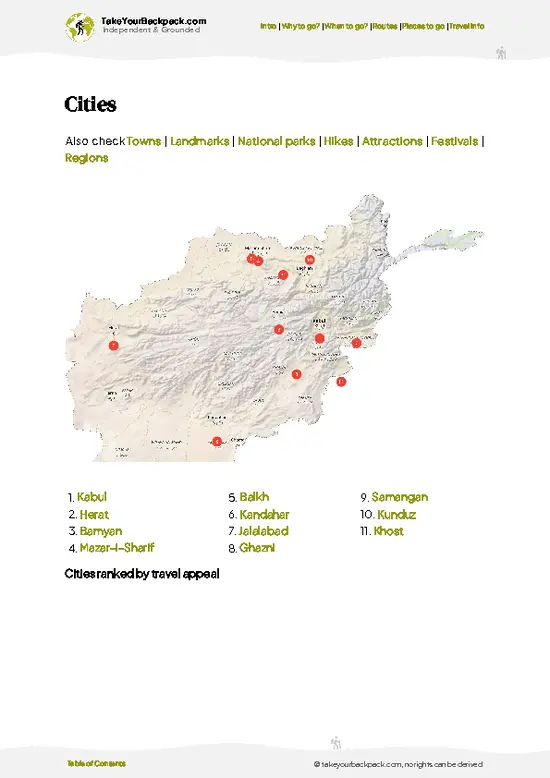
The ListTop cities of Afghanistan

1 Kabul

urban sprawl, hilltop forts, diverse neighborhoods

Navigate a city of contrasts, from bustling bazaars and hillside settlements to museums and reminders of recent history at every turn.

2 Balkh

ancient ruins, Sufi shrines, Silk Road legacy

Step into a town layered with history, where ancient sites and spiritual landmarks recall centuries of Silk Road exchange.

3 Herat

Timurid architecture, blue-tiled mosque, Persian influence

Wander shaded bazaars and courtyards, encountering centuries-old artistry, saffron markets, and a blend of Afghan and Iranian traditions.

4 Ghazni

medieval towers, archaeological sites, trade crossroads

Trace centuries of history among crumbling towers and layered ruins, with echoes of ancient trade routes still present in the streets.

5 Bamyan

cliffside niches, mountain valleys, Hazara heartland

Hike through high-altitude landscapes where ancient Buddhist remnants meet rural life, with panoramic views and a distinct cultural rhythm.

afghanistan-city-bamyan v6
© Google |

6 Pul-e Khomri

industrial hub, river valley, coal mines

Navigate a working town where industry and agriculture meet, with a river winding through fields and smokestacks on the horizon.

7 Mazar-i-Sharif

Blue Mosque, Nowruz festivities, Uzbek culture

Join crowds at the shrine square, witness spring celebrations, and sample northern cuisine in a city shaped by ethnic diversity.

8 Khost

Pashtun bazaars, borderland, mountain backdrop

Experience a lively market town set against rugged peaks, where cross-border trade and Pashtun customs shape the local rhythm.

9 Kandahar

Pashtun stronghold, Sufi shrines, desert edge

Experience a crossroads of trade and tradition, where mud-brick compounds and religious sites shape daily life on the southern plains.

10 Farah

desert plain, wide river, isolated outpost

Travel across open desert to a remote town where the Farah River cuts through emptiness and daily life feels shaped by distance.

11 Jalalabad

subtropical gardens, citrus orchards, river crossings

Travelers find a warmer climate, lush greenery, and a relaxed pace, with easy access to the Khyber Pass and local fruit markets.

12 Kunduz

northern crossroads, cotton fields, river plains

Pass through a city defined by agriculture and shifting control, with flat landscapes and a strategic position on northern trade routes.

13 Asadabad

river confluence, forested hills, Nuristani gateway

Cross into a green valley where rivers meet and the forested slopes mark the start of Nuristani lands and distinct local customs.

14 Lashkar Gah

Helmand River, canal systems, British relics

Trace irrigation channels through a city shaped by foreign intervention, with agricultural fields and reminders of colonial-era planning.

15 Mehtarlam

orchard valleys, Laghman province, rural bazaars

Wander through fertile valleys lined with orchards, where rural markets and agricultural life set the pace for visitors.

16 Baghlan

agricultural plain, sugar factories, transport junction

Pass through a fertile region known for its fields and industry, where roads converge and commerce shapes the town’s daily flow.

17 Taloqan

agricultural hub, riverbank villages, Tajik influence

Move through a quieter provincial center, where rural markets and riverside settlements reflect the rhythms of northeastern Afghanistan.

18 Faryab

northern plains, Turkmen villages, wheat fields

Travel across broad plains dotted with Turkmen settlements, where agriculture and open landscapes define the experience.

19 Sar-e Pol

foothill settlements, oil fields, mixed communities

Venture into a lesser-visited area where resource extraction and ethnic diversity shape the social and economic landscape.

20 Samangan

Buddhist caves, rocky hills, rural settlements

Explore a quiet region where ancient cave monasteries and rugged hills offer insight into Afghanistan’s Buddhist past.

21 Takhar

rice paddies, river valleys, provincial capital

Travelers find a patchwork of farmland and small towns, with a slower pace and access to the northern borderlands.

22 Ghor

mountain fortress, remote plateau, sparse roads

Venture into a high plateau where isolation is pronounced and ruined fortresses hint at a turbulent history.

23 Jawzjan

Turkmen bazaars, steppe landscape, Sheberghan city

Explore a region known for its flat horizons, carpet weaving, and a blend of Central Asian influences in daily life.

24 Parwan

mountain valleys, Bagram airfield, mixed communities

Travel through valleys north of Kabul, where diverse populations and the presence of a major airfield shape the local dynamic.

25 Laghman

river gorges, citrus groves, patchwork farms

Follow winding rivers through a region of citrus orchards and patchwork fields, where agriculture and water shape the local way of life.

26 Kapisa

mountain foothills, mixed ethnicities, ancient ruins

Discover a compact province where diverse communities and archaeological remains sit at the edge of the Hindu Kush.

27 Nimroz

desert border, Iranian trade, sparse settlements

Cross vast deserts to a border town shaped by trade routes and long distances, where settlements are few and the horizon feels endless.

Think you know Afghanistan?

Prove you’re a true local — uncover 17 lesser-known cities in Afghanistan that locals tend to keep to themselves.
Loading the map 🌍

Expert viewInsights from Locals and Experts

Transport Hubs
Navigating Afghanistan’s cities is a lesson in patience and adaptability. Major urban centers often serve as transport hubs, but don’t expect seamless connections. Roads can be rough, and public transport is a mixed bag. Buses and shared taxis are common, but schedules are more like suggestions. If you’re planning to hop between cities, factor in extra time for delays and unexpected detours. It’s not just about getting from A to B; it’s about the journey itself.

Consider the trade-off: you can rush through several cities, but you’ll miss the nuances of local life. Instead, aim for three to four cities, allowing at least a few days in each. This way, you can soak in the atmosphere, engage with locals, and truly appreciate the culture. You’ll find that the slower pace often … read more 👉
Transport Hubs
Navigating Afghanistan’s cities is a lesson in patience and adaptability. Major urban centers often serve as transport hubs, but don’t expect seamless connections. Roads can be rough, and public transport is a mixed bag. Buses and shared taxis are common, but schedules are more like suggestions. If you’re planning to hop between cities, factor in extra time for delays and unexpected detours. It’s not just about getting from A to B; it’s about the journey itself.

Consider the trade-off: you can rush through several cities, but you’ll miss the nuances of local life. Instead, aim for three to four cities, allowing at least a few days in each. This way, you can soak in the atmosphere, engage with locals, and truly appreciate the culture. You’ll find that the slower pace often leads to richer experiences, even if it means skipping a few places on your list.

Urban Pacing
Afghan cities pulse with a unique rhythm. Some are bustling with energy, while others feel more laid-back. Understanding this urban pacing is crucial for planning your visit. In larger cities, the pace can be frenetic, with markets overflowing and streets alive with chatter. In contrast, smaller towns may offer a more relaxed vibe, where time seems to stretch.

This difference affects how you plan your days. In a fast-paced city, you might find yourself overwhelmed by options, leading to decision fatigue. Conversely, in quieter areas, you might discover hidden treasures just by wandering. The trade-off here is between the excitement of a busy city and the tranquility of a smaller town. Choose wisely based on your energy levels and what you hope to gain from your experience.

Local Costs
Budgeting in Afghanistan requires a keen eye for local costs. While some cities may seem affordable, hidden expenses can add up quickly. Street food is a fantastic way to experience local flavors without breaking the bank, but be cautious about hygiene. Eating at local restaurants can be a delightful experience, but prices can vary widely based on location and popularity.

Expect to spend more in urban centers compared to rural areas. The trade-off here is between comfort and authenticity. You can splurge on a nicer hotel in a city, but you might miss out on the genuine interactions found in a guesthouse. Prioritize where you want to spend your money. If you’re keen on cultural experiences, lean towards budget accommodations that allow for more local engagement.

Exploring More Cities vs. Deeper Immersion
The temptation to cover as many cities as possible is strong, but it often leads to a superficial understanding of the culture. Each city has its own character, shaped by history and local traditions. If you rush through, you’ll miss the chance to connect with the people and the stories that make each place unique.

Consider the trade-off between quantity and quality. Visiting five cities in ten days might sound appealing, but you’ll likely leave feeling like you’ve only scratched the surface. Instead, focus on two or three cities, allowing yourself the time to engage with locals, explore markets, and perhaps even learn a few words of Dari or Pashto. This deeper immersion will enrich your experience and create lasting memories.

Safety & Cultural Considerations
Safety is paramount when traveling in Afghanistan. While many areas are welcoming, it’s essential to stay informed about local conditions. Always check travel advisories and connect with locals for real-time insights. Dress modestly and respect local customs; this goes a long way in building rapport.

The trade-off here is between comfort and cultural sensitivity. You might feel more at ease in Western-style clothing, but blending in can enhance your interactions. Be prepared for varying levels of hospitality; some places will embrace you, while others may be more reserved. Understanding these dynamics can help you navigate social situations more effectively.

Planning & Prioritizing Cities
When planning your itinerary, prioritize cities based on your interests. If you’re drawn to history, focus on areas rich in cultural heritage. For outdoor enthusiasts, consider cities that offer access to natural landscapes. Research local festivals or events that might align with your visit; these can provide unique insights into Afghan culture.

The trade-off lies in flexibility versus structure. A rigid itinerary can lead to disappointment if plans change, while too much flexibility can leave you feeling lost. Strike a balance by having a rough outline of your journey, but remain open to spontaneous adventures. This approach allows you to adapt to local recommendations and seize opportunities that arise.

In Afghanistan, the journey is as important as the destination. Embrace the challenges and rewards that come with exploring this complex and beautiful country. Each city offers a piece of the puzzle, and the more you engage, the clearer the picture becomes.

✈️ The backpacker research shortcutAfghanistan Travel Guide

An offline-friendly backpacking guide with optimized travel routes, ranked highlights, transport advice, and the best areas to stay.
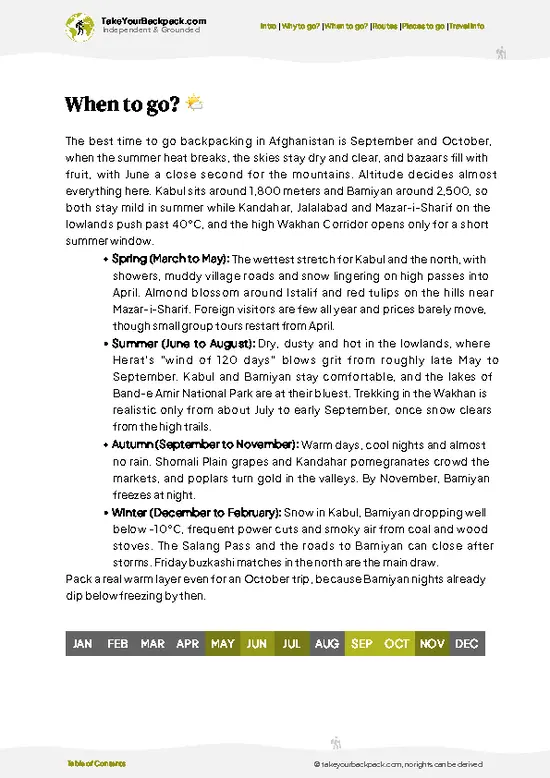
example page 0 from our offline Travel Guide for Afghanistanexample page 1 from our offline Travel Guide for Afghanistanexample page 2 from our offline Travel Guide for Afghanistanexample page 3 from our offline Travel Guide for Afghanistanexample page 4 from our offline Travel Guide for Afghanistanexample page 5 from our offline Travel Guide for Afghanistanexample page 6 from our offline Travel Guide for Afghanistanexample page 7 from our offline Travel Guide for Afghanistan
The digital guide (296 pages) contains:
72 highlights, ranked by travel appeal
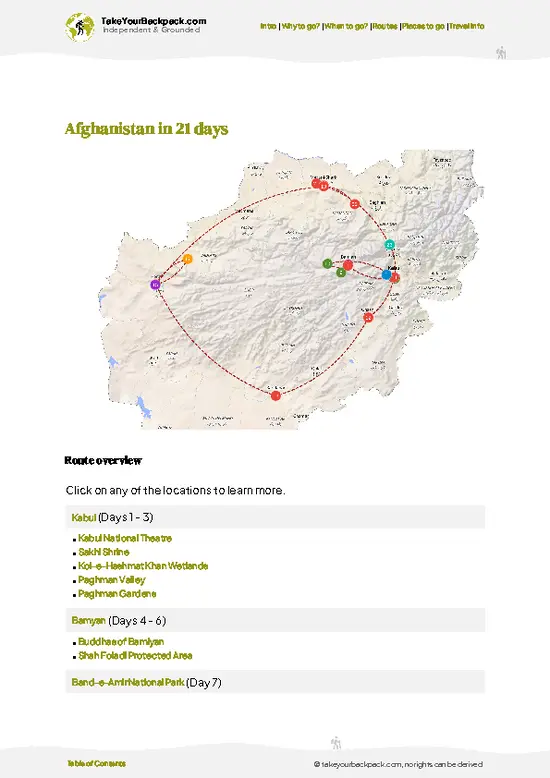
Optimized 7, 14 & 21-day travel routes
Cities, national parks, landmarks, beaches
How to get around
Offline-friendly for travel without Wi-Fi
👉 Click to see all 30+ guide features

📅 Plan smarter in minutes, not weeks
Month by month travel advice
Festivals & national holidays
Budget expectations

🗺️ Go to the right places, skip the overrated ones
Honest pros & cons of destinations
Top hikes, parks & viewpoints
Lesser-known places most travelers miss
Clear “worth it vs skip it” guidance

🛏️ Travel smoothly without rookie mistakes
Best areas to stay
Transport systems explained simply
Common scams & safety advice
SIM cards, money & practical tips

🌍 Understand the country, not just visit it
Culture & traditions
52 Essential phrases & customs
Festivals worth planning around
Traveler-friendly historical context
Insights that make places more meaningful

📱 Built for real travel conditions
Fully downloadable PDF
Works completely offline
Optimized for phone use
Useful in remote areas & buses
Everything in one place
Save weeks of stressful planning
Get instant access to your full guide. 30‑day money-back guarantee.


By proceeding you agree to our terms.
Sent to your inbox immediately after payment • 100% Secure Checkout
Best Backpacking Travel Advisor 2025 tourism awardBest Backpacking
Travel Advisor
2025
What others say about Take Your Backpack Guides:
⭐⭐⭐⭐⭐
Fantastic, amazing amount of information!
⭐⭐⭐⭐⭐
My goodness this is amazing, it's what I've been looking for hats off too you!
⭐⭐⭐⭐⭐
I think this is absolutely BRILLIANT
⭐⭐⭐⭐
Very complete and informative. It's still missing places, but I gotta to commend you
⭐⭐⭐⭐⭐
This is truly amazing, thank you, can't wait to explore it with my kids!
⭐⭐⭐⭐⭐
Awesome resource, thank you!
⭐⭐⭐⭐⭐
This is amazing! Can't wait to explore the ones I haven't seen
⭐⭐⭐⭐
I love this! Well done, great idea.
⭐⭐⭐⭐⭐
Thanks for taking the time to make this gem!
⭐⭐⭐⭐⭐
This might be the best website I've ever seen.
⭐⭐⭐⭐⭐
Congratulations, and thank you so much for your work; it's incredibly valuable.
⭐⭐⭐⭐
In all seriousness I think you did a great job pointing out the important spots
⭐⭐⭐⭐⭐
10/10 very good
⭐⭐⭐⭐⭐
As someone who's only just starting to visit regularly this is awesome, thank you.
⭐⭐⭐⭐
Thank you very much! I'm going to visit my dad, it's going to be very useful!
⭐⭐⭐⭐⭐
This is really cool! We'll be travelling for the first time and this definitely come in handy.
⭐⭐⭐⭐⭐
You are now our minister of culture, congratulations 👨‍💼
⭐⭐⭐⭐⭐
Just wanted to tell you that this is a pearl! Going to follow your recommendations.
⭐⭐⭐⭐⭐
This is so cool. I'll definitely be using the resource for my travels soon.
⭐⭐⭐⭐⭐
This is very impressive! Good work.
⭐⭐⭐⭐⭐
This is an amazing and informative site. Very well done!

🛏️ Where to stay?Where to Stay in Afghanistan

Hostels in Afghanistan are rare; budget accommodation in Afghanistan mostly means basic guesthouses or cheap hotels in major cities, so expect sparse facilities, arrival security checks, and stricter procedures than typical backpacker destinations.

In Kabul the most practical neighbourhoods are Wazir Akbar Khan (more secure and quieter, close to embassies but pricier), Shahr‑e‑Now (commercial hub with the most cheap guesthouses, markets and transport links but noisy), and Karte Parwan (near museums with quieter mid‑range options); prioritize safety and access to sights over nightlife, which is minimal.

Outside Kabul, central districts of Mazar‑i‑Sharif (near the shrine and bus terminals), … read more 👉
Hostels in Afghanistan are rare; budget accommodation in Afghanistan mostly means basic guesthouses or cheap hotels in major cities, so expect sparse facilities, arrival security checks, and stricter procedures than typical backpacker destinations.

In Kabul the most practical neighbourhoods are Wazir Akbar Khan (more secure and quieter, close to embassies but pricier), Shahr‑e‑Now (commercial hub with the most cheap guesthouses, markets and transport links but noisy), and Karte Parwan (near museums with quieter mid‑range options); prioritize safety and access to sights over nightlife, which is minimal.

Outside Kabul, central districts of Mazar‑i‑Sharif (near the shrine and bus terminals), Herat (old city near the citadel, culturally rich and quiet) and Kandahar (central district with very basic lodgings and frequent security checkpoints) offer the most budget choices; carry cash, confirm local security conditions before arrival, and plan contingency transport.

If you enjoy meeting fellow travelers, consider choosing hostels with high ratings for atmosphere. On the other hand, if you prefer having your own space, a hotel might be a better option.

AfghanistanMore of Afghanistan

👋 Meet the founderWho’s Behind Take Your Backpack?

Johan, backpacker and founder of TakeYourBackpackHi, I’m Johan (Netherlands 🇳🇱), the creator of TakeYourBackpack. Over the past decade, I’ve backpacked through 80+ countries across six continents, gaining extensive experience with independent travel, long-term trips, and overland routes.

This site is built on a combination of firsthand travel experience and carefully curated insights from other backpackers. Many guides are based on places I’ve personally visited, while others bring together tips, observations, and practical advice shared by trusted travelers I’ve met along the way.

The goal is to provide realistic, experience-driven guidance — not generic itineraries — so you can explore destinations with better context, clearer expectations, and more confidence.

Get full country guide •
Instant download • 72 highlights • Full Offline guide