v2.webp)
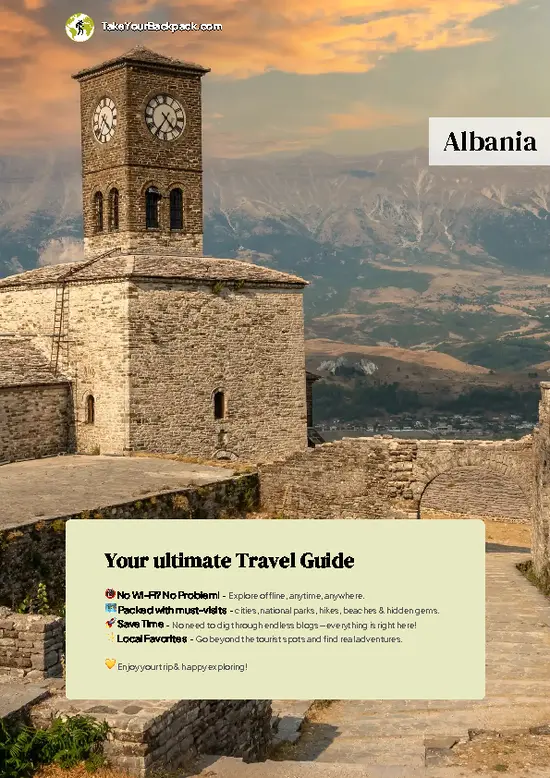
- Gjirokastër Castle — The town’s giant on the hill: a sprawling fortress with thick walls, dramatic views over the valley, and a jumble of rooms, ramparts and cannons. Inside you’ll find the open-air festival square and a military/armaments display that tells a lot about the region’s turbulent 20th century.
- UNESCO Old Town (stone houses and terraces) — Walking the steep cobbled lanes through the tightly packed stone “tower-houses” is the real reason people come. The layout, wooden balconies and preserved Ottoman-era façades give an immediate sense of place you can’t get from photos.
- Zekate House — One of Gjirokastër’s best-restored Ottoman merchant mansions: ornate woodwork, carved ceilings and a rooftop terrace with one of the best close-up views of the old town and castle. Good for architecture
- Gjirokastër Castle — The town’s giant on the hill: a sprawling fortress with thick walls, dramatic views over the valley, and a jumble of rooms, ramparts and cannons. Inside you’ll find the open-air festival square and a military/armaments display that tells a lot about the region’s turbulent 20th century.
- UNESCO Old Town (stone houses and terraces) — Walking the steep cobbled lanes through the tightly packed stone “tower-houses” is the real reason people come. The layout, wooden balconies and preserved Ottoman-era façades give an immediate sense of place you can’t get from photos.
- Zekate House — One of Gjirokastër’s best-restored Ottoman merchant mansions: ornate woodwork, carved ceilings and a rooftop terrace with one of the best close-up views of the old town and castle. Good for architecture lovers and photographers.
- Skenduli House — A more intimate, lived-in-feeling house museum with period furniture and family artifacts that show daily life in a wealthy Gjirokastrian household; quieter than Zekate but full of character.
- Ethnographic Museum — Traditional costumes, household items, tools and folklore objects displayed inside a classic stone house — useful context for how people in the region lived, worked and dressed before modernity.
- Enver Hoxha Birthplace (House-Museum) — The actual house where Albania’s 20th-century dictator was born is preserved as a museum. It’s a direct, sometimes uncomfortable way to engage with recent Albanian history and local memory politics.
- Old Bazaar (Pazar) and artisan workshops — Narrow market lanes with small shops and stalls selling carpets, silver filigree, handcrafts and local food. Great place to watch traditional crafts being made and to buy authentic souvenirs without the tourist gloss.
- Halveti Tekke (Teqeja e Halvetive) — A modest but atmospheric Sufi lodge tucked into the old town. It’s a peaceful spot that reveals the spiritual and social layers of Ottoman-era life in Gjirokastër.
- Clock Tower (Sahat Kulla) and nearby viewpoints — The town’s clock tower and several nearby lookout points give compact, classic panoramas over the jumble of stone roofs and the surrounding mountains — perfect for sunrise or late-afternoon light.
- Castle Festival Square & Military Exhibits — Inside the castle complex, the big stone square where the National Folk Festival is staged and the outdoor display of captured weaponry make for an oddly compelling mix of culture and militaria — an essential part of the Gjirokastër experience.
Spotted a mistake or missing something? Contact us.

Amazing Horse Riding Experience at Vjosa National Park in Permet

Rafting Vjosa River Gjirokastër Albania ARG

Vjosa River Rafting Albania – Est. 2012 Permet

Rafting Tour in Vjosa Wild River National Park

Guided Rafting Tour - Vjosa River National Park - Permet, Albania

Amazing Rafting Experience at Last Wild Vjosa River of Europe in Permet, Albania

Sarande: Permet 4x4 Tour, Rafting and Thermal baths

Rafting in Permet Albania

Vjosa River Rafting & Kayaking Adventure in Permet


 Best Backpacking
.jpg) Hi, I’m Johan (Netherlands 🇳🇱), the creator of TakeYourBackpack. Over the past decade, I’ve backpacked through 80+ countries across six continents, gaining extensive experience with independent travel, long-term trips, and overland routes.
Hi, I’m Johan (Netherlands 🇳🇱), the creator of TakeYourBackpack. Over the past decade, I’ve backpacked through 80+ countries across six continents, gaining extensive experience with independent travel, long-term trips, and overland routes.