v2.webp)
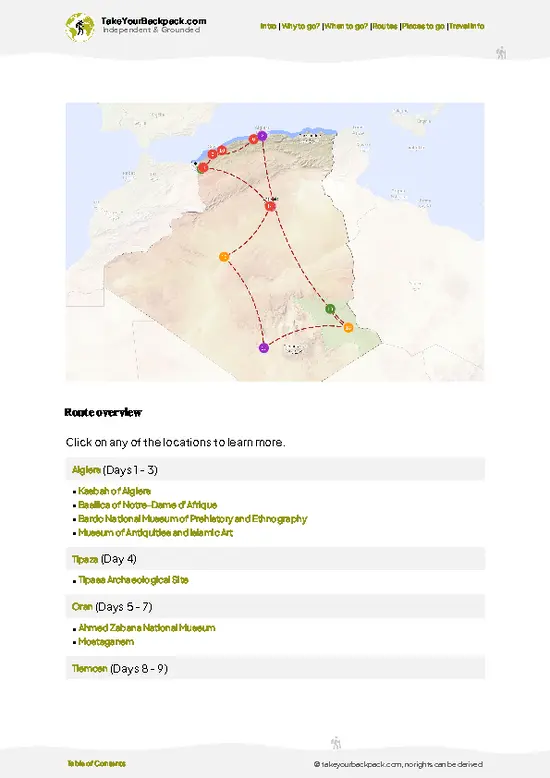
- Etienne Dinet Museum (Maison de Nasreddine Dinet): The house of the French painter who converted to Islam and is buried here holds his works and local pieces. Go in the morning. Entry is under US$2 and a visit takes about 1 hour.
- Dinet’s tomb and the old cemetery: A quiet, simple site tied to the town’s artistic story. Free, 20 to 30 minutes, best in the late afternoon.
- Oued Ksob and the old bridge: The riverbed and palm-lined banks are where locals stroll and kids play. Free, 30 to 45 minutes, best in early evening.
- Palm gardens (Les Jardins): Shaded paths between date palms and small plots, noticeably cooler than the streets. Free, about 1 hour, best in the morning.
- Ouled Naïl old quarter: Narrow lanes of mud-brick houses and doorways, with the weight of the town’s dancing and weaving heritage.
- Etienne Dinet Museum (Maison de Nasreddine Dinet): The house of the French painter who converted to Islam and is buried here holds his works and local pieces. Go in the morning. Entry is under US$2 and a visit takes about 1 hour.
- Dinet’s tomb and the old cemetery: A quiet, simple site tied to the town’s artistic story. Free, 20 to 30 minutes, best in the late afternoon.
- Oued Ksob and the old bridge: The riverbed and palm-lined banks are where locals stroll and kids play. Free, 30 to 45 minutes, best in early evening.
- Palm gardens (Les Jardins): Shaded paths between date palms and small plots, noticeably cooler than the streets. Free, about 1 hour, best in the morning.
- Ouled Naïl old quarter: Narrow lanes of mud-brick houses and doorways, with the weight of the town’s dancing and weaving heritage. Free, 1 to 2 hours.
- Souk and handicraft stalls: Burnous cloaks, woven carpets, silver jewelry and dates. Bargaining is expected. Budget US$5 to 20 for small purchases, 1 hour, mornings are liveliest.
- Sidi Slimane viewpoint: A short climb to look across rooftops to the dunes and the oasis. Free, about 45 minutes, best at dusk.
Spotted a mistake or missing something? Contact us.

 Best Backpacking
.jpg) Hi, I’m Johan (Netherlands 🇳🇱), the creator of TakeYourBackpack. Over the past 3 decades, I’ve backpacked through 90+ countries across six continents, gaining extensive experience with independent travel, long-term trips, and overland routes.
Hi, I’m Johan (Netherlands 🇳🇱), the creator of TakeYourBackpack. Over the past 3 decades, I’ve backpacked through 90+ countries across six continents, gaining extensive experience with independent travel, long-term trips, and overland routes.