v2.webp)
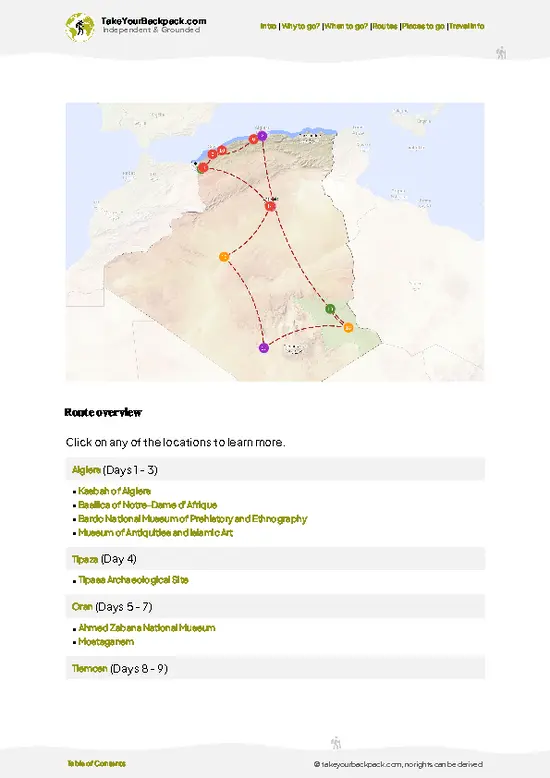
- Ksar and old town ruins: Crumbling mud-brick lanes and the remains of the old quarter show how the oasis lived before the French conquest. Free to wander, 1 to 2 hours, best in the early morning.
- Palmeraie (palm grove): Shaded paths between date palms and irrigated gardens, cool even at midday. Free, 1 hour, best late afternoon.
- Bab Essahra and the old gate area: A lived-in zone of crumbling gates and walls with local life around it. Free, 30 minutes.
- Marabout Sidi El Hadj Aissa: A local religious site tied to the Tijaniyya and Sufi traditions of the region. Exterior visit only for non-Muslims in most cases, free, 30 minutes.
- Rocky hill viewpoint over the town: A short climb gives a view across rooftops, palms and the desert edge. Free, 45 minutes, best at dusk.
- Central market: Dates, spices, mint,
- Ksar and old town ruins: Crumbling mud-brick lanes and the remains of the old quarter show how the oasis lived before the French conquest. Free to wander, 1 to 2 hours, best in the early morning.
- Palmeraie (palm grove): Shaded paths between date palms and irrigated gardens, cool even at midday. Free, 1 hour, best late afternoon.
- Bab Essahra and the old gate area: A lived-in zone of crumbling gates and walls with local life around it. Free, 30 minutes.
- Marabout Sidi El Hadj Aissa: A local religious site tied to the Tijaniyya and Sufi traditions of the region. Exterior visit only for non-Muslims in most cases, free, 30 minutes.
- Rocky hill viewpoint over the town: A short climb gives a view across rooftops, palms and the desert edge. Free, 45 minutes, best at dusk.
- Central market: Dates, spices, mint, bread and sheep wool goods in a busy daily scene. Free entry, 1 hour, best before 10 a.m.
- Dayet-style local museum area and cultural center: A small cultural venue with regional history displays. Around US$1 where open, 45 minutes.
Spotted a mistake or missing something? Contact us.

 Best Backpacking
.jpg) Hi, I’m Johan (Netherlands 🇳🇱), the creator of TakeYourBackpack. Over the past 3 decades, I’ve backpacked through 90+ countries across six continents, gaining extensive experience with independent travel, long-term trips, and overland routes.
Hi, I’m Johan (Netherlands 🇳🇱), the creator of TakeYourBackpack. Over the past 3 decades, I’ve backpacked through 90+ countries across six continents, gaining extensive experience with independent travel, long-term trips, and overland routes.