v2.webp)
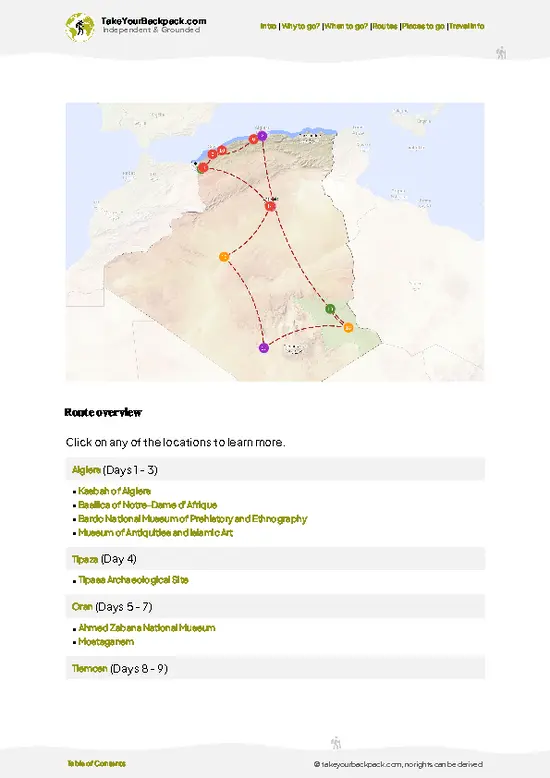
- Old Town Domes and Souf Architecture: Wander lanes of vaulted white-gray houses built to fend off heat and sand. Go early morning or late afternoon. Free, 1 to 2 hours.
- Grand Mosque (Sidi Salem area): A prominent landmark with a tall minaret, best viewed from outside in softer light. Free to look, 20 to 30 minutes. Dress modestly.
- Ghouts (Sunken Palm Gardens): Palms are planted in deep sand craters to reach groundwater, a farming method unique to the Souf. Visit mornings with a local guide. About US$5 to 10 for a guide, 1 to 2 hours.
- Souf Museum: Displays on regional crafts, dress and desert life that explain what you see outside. Usually about US$1 to 2, 45 minutes. Check opening hours locally.
- Central Market: Dates, spices, woven goods and the rugs the region is known for. Go in the morning,
- Old Town Domes and Souf Architecture: Wander lanes of vaulted white-gray houses built to fend off heat and sand. Go early morning or late afternoon. Free, 1 to 2 hours.
- Grand Mosque (Sidi Salem area): A prominent landmark with a tall minaret, best viewed from outside in softer light. Free to look, 20 to 30 minutes. Dress modestly.
- Ghouts (Sunken Palm Gardens): Palms are planted in deep sand craters to reach groundwater, a farming method unique to the Souf. Visit mornings with a local guide. About US$5 to 10 for a guide, 1 to 2 hours.
- Souf Museum: Displays on regional crafts, dress and desert life that explain what you see outside. Usually about US$1 to 2, 45 minutes. Check opening hours locally.
- Central Market: Dates, spices, woven goods and the rugs the region is known for. Go in the morning, before heat builds. Free entry, 1 hour.
- Dunes of the Grand Erg Oriental: Dunes rise at the edge of town. Come near dusk to climb and watch the sand cool. Free to walk, 1 to 2 hours. Short guided drives cost about US$15 to 30.
Spotted a mistake or missing something? Contact us.

 Best Backpacking
.jpg) Hi, I’m Johan (Netherlands 🇳🇱), the creator of TakeYourBackpack. Over the past 3 decades, I’ve backpacked through 90+ countries across six continents, gaining extensive experience with independent travel, long-term trips, and overland routes.
Hi, I’m Johan (Netherlands 🇳🇱), the creator of TakeYourBackpack. Over the past 3 decades, I’ve backpacked through 90+ countries across six continents, gaining extensive experience with independent travel, long-term trips, and overland routes.