v2.webp)
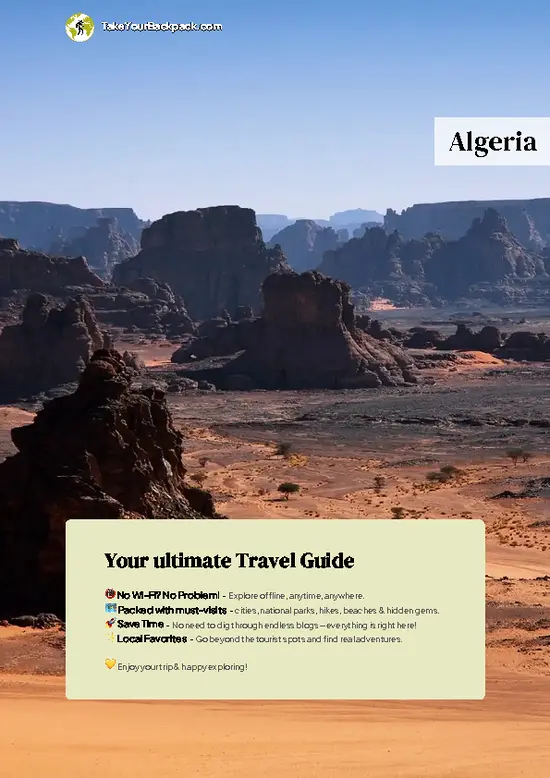
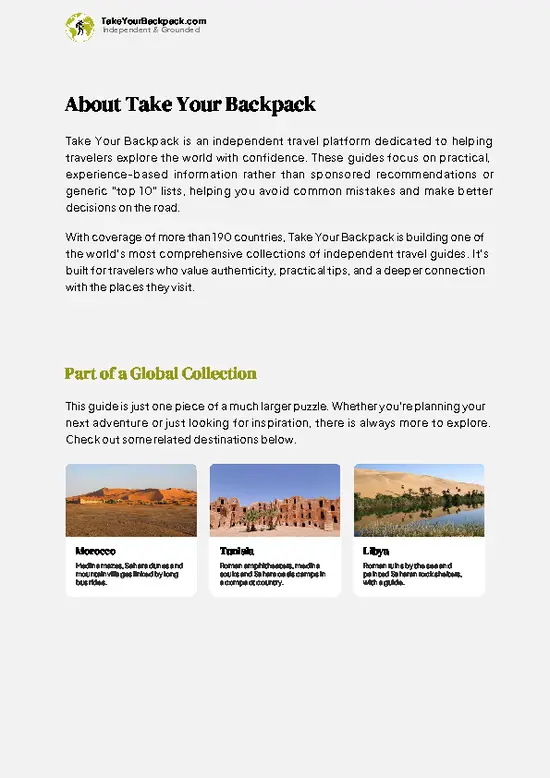
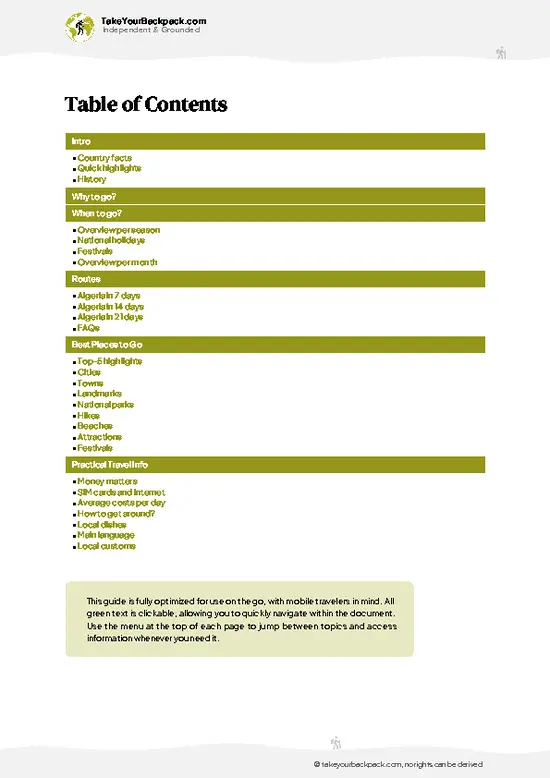
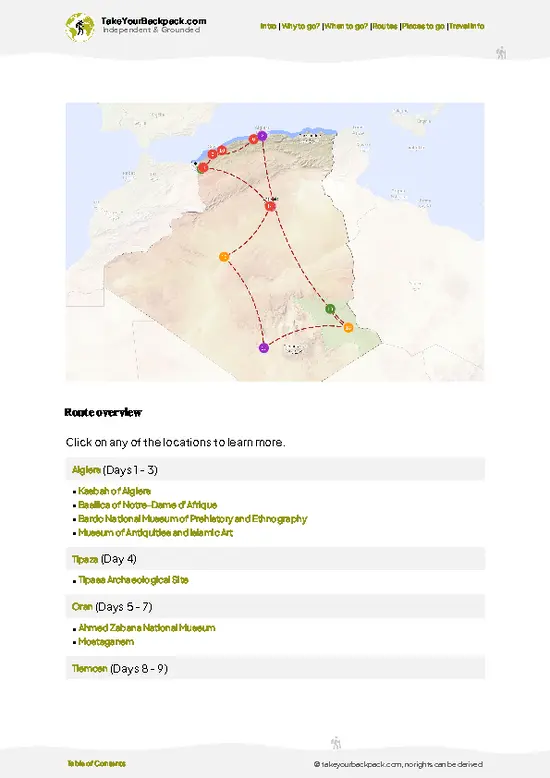
- Ksar of Ouargla: the old fortified quarter of narrow mud-brick lanes and small squares, where the city began. Go early morning or late afternoon, when the light is soft. Entry is free, and 1 to 2 hours is enough.
- Sedrata Ruins: the remains of the medieval Ibadi city of Sedrata, a short drive from town, with traces of carved plaster and a layout of streets half buried by dunes. Visit at dawn. A taxi costs roughly US$10 to 20 round trip, and you need 1 to 2 hours.
- Palm Grove Walk: irrigated gardens of date palms with orchards and small plots beneath them, cool and green against the sand. Mornings are best, free, and a 1 hour stroll is enough.
- Central Market: dates, spices, bread and everyday goods in a busy local market. Go in the morning for the full range. It is free to enter, with 45 minutes
- Ksar of Ouargla: the old fortified quarter of narrow mud-brick lanes and small squares, where the city began. Go early morning or late afternoon, when the light is soft. Entry is free, and 1 to 2 hours is enough.
- Sedrata Ruins: the remains of the medieval Ibadi city of Sedrata, a short drive from town, with traces of carved plaster and a layout of streets half buried by dunes. Visit at dawn. A taxi costs roughly US$10 to 20 round trip, and you need 1 to 2 hours.
- Palm Grove Walk: irrigated gardens of date palms with orchards and small plots beneath them, cool and green against the sand. Mornings are best, free, and a 1 hour stroll is enough.
- Central Market: dates, spices, bread and everyday goods in a busy local market. Go in the morning for the full range. It is free to enter, with 45 minutes to 1 hour suiting most visitors. Dates cost roughly US$2 to 5 a kilo.
- Ouargla Museum of the Sahara: a small museum on desert heritage, with local crafts and everyday objects. Open in daytime outside the midday heat. Expect a low fee of around US$1 to 2 and about 1 hour.
Spotted a mistake or missing something? Contact us.

 Best Backpacking
.jpg) Hi, I’m Johan (Netherlands 🇳🇱), the creator of TakeYourBackpack. Over the past 3 decades, I’ve backpacked through 90+ countries across six continents, gaining extensive experience with independent travel, long-term trips, and overland routes.
Hi, I’m Johan (Netherlands 🇳🇱), the creator of TakeYourBackpack. Over the past 3 decades, I’ve backpacked through 90+ countries across six continents, gaining extensive experience with independent travel, long-term trips, and overland routes.