×

American Samoa🇦🇸 | attractionsFagatogo MarketTaro and breadfruit stalls, palusami and oka, aiga bus hub, Saturday crowds | things to do and best time to go

Explore Jean P. Haydon MuseumExplore Tauese P.F. Sunia Ocean Center

Backpacking in Fagatogo Market
👌 Worth visitingattraction ranked #3
By Johan Kruseman 🇳🇱 | Updated October 15, 2026

Every aiga bus on Tutuila seems to end up here, and that is the first thing to understand. Fagatogo Market is the open-air produce pavilion on the Pago Pago harbor waterfront, in the center of American Samoa’s main town, and it doubles as the island’s bus hub. Walk the stalls for taro, green bananas, breadfruit and fresh coconuts, plus hot plates of palusami and oka. Go early, since the best stock is gone by late morning. Skip the craft tables unless you want a woven fan or a flower necklace, because the selection is small. Sunday is quiet, so plan around it. Nothing here is a headline sight, and it is not a place to spend a whole day. An hour is plenty. Food-curious travelers and people who like watching daily life will love it. Anyone chasing monuments or nightlife won’t.

Discover everything you want to know in the 📖 American Samoa Travel Guide.


example page 0 from our offline Travel Guide for American Samoa
example page 1 from our offline Travel Guide for American Samoa
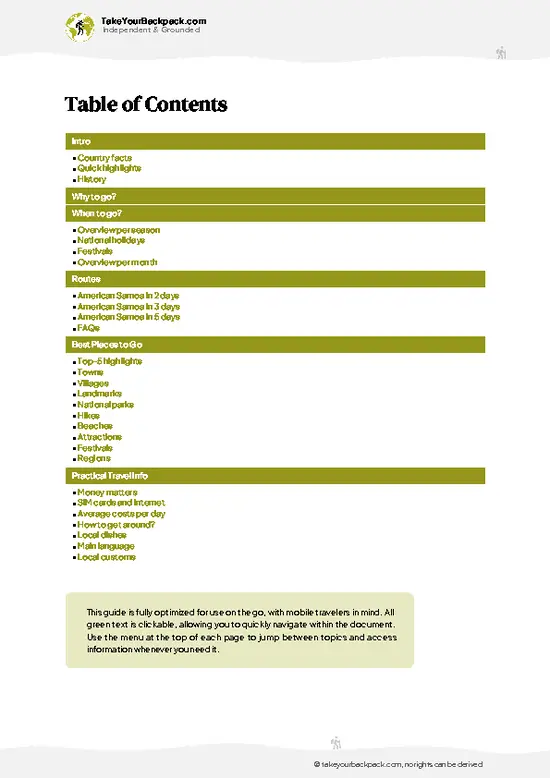
example page 2 from our offline Travel Guide for American Samoa
example page 3 from our offline Travel Guide for American Samoa
example page 4 from our offline Travel Guide for American Samoa
example page 5 from our offline Travel Guide for American Samoa
example page 6 from our offline Travel Guide for American Samoa
example page 7 from our offline Travel Guide for American Samoa
Loading the map 🌍
CLICK TO FILTER
towns
villages
landmarks
national parks
hikes
beaches
attractions
festivals
regions
SHOW COUNTRY’S BESTSHOW ALL

✨ Why go?
Ranked #3 attraction in American Samoa
The unique appeal for travelers

Fagatogo Market is where you see how Tutuila actually eats and moves. Farmers bring in taro, bananas and coconuts from villages along the island’s road, and you can buy a snack the same way locals do, from a stall, in small amounts, with a chat. That makes it a cheap, low-pressure first stop for anyone wanting to eat well without a restaurant.
It is also the center of the aiga bus network. The brightly painted, wood-bodied buses leave from here for the villages, so the market works as your launch pad for exploring the island. Even if you never buy a thing, you will be passing through, and you might as well arrive hungry.
The location helps too. The Fagatogo malae (village green) and the Jean P. Haydon Museum sit a short stroll away, which means you can fold a market visit into a loose, easy … read more 👉
Fagatogo Market is where you see how Tutuila actually eats and moves. Farmers bring in taro, bananas and coconuts from villages along the island’s road, and you can buy a snack the same way locals do, from a stall, in small amounts, with a chat. That makes it a cheap, low-pressure first stop for anyone wanting to eat well without a restaurant.
It is also the center of the aiga bus network. The brightly painted, wood-bodied buses leave from here for the villages, so the market works as your launch pad for exploring the island. Even if you never buy a thing, you will be passing through, and you might as well arrive hungry.
The location helps too. The Fagatogo malae (village green) and the Jean P. Haydon Museum sit a short stroll away, which means you can fold a market visit into a loose, easy morning in the old government and trading district. It is a small stop with a real local pulse, and it suits the island’s unhurried pace.

💡 HighlightsWhat this place is best known for

  1. Produce stalls under the market roof. This is what people come for. Tables hold stacked taro, breadfruit, green bananas, coconuts, papaya and pineapple, sold by growers who truck it in from villages around Tutuila. Bags are piled by the pile rather than weighed, so you point and haggle gently.
  2. Cooked Samoan food. Vendors sell palusami (taro leaves baked with coconut cream), oka (raw fish marinated in coconut milk and lime) and baked goods. Eat standing up beside the stall, the way locals do, and carry cash in small bills.
  3. Handicraft tables. Look for woven fans, pandanus mats, necklaces of seeds and shells, and carved wooden kava bowls (tanoa). Ask who made the piece, since a lot of the better work comes from families rather than factories.
  4. Saturday morning crowd. This is when the market is fullest
… read more 👉
  1. Produce stalls under the market roof. This is what people come for. Tables hold stacked taro, breadfruit, green bananas, coconuts, papaya and pineapple, sold by growers who truck it in from villages around Tutuila. Bags are piled by the pile rather than weighed, so you point and haggle gently.
  2. Cooked Samoan food. Vendors sell palusami (taro leaves baked with coconut cream), oka (raw fish marinated in coconut milk and lime) and baked goods. Eat standing up beside the stall, the way locals do, and carry cash in small bills.
  3. Handicraft tables. Look for woven fans, pandanus mats, necklaces of seeds and shells, and carved wooden kava bowls (tanoa). Ask who made the piece, since a lot of the better work comes from families rather than factories.
  4. Saturday morning crowd. This is when the market is fullest and loudest, with produce moving fast and people gathering to talk as much as to shop. Arrive early for the best choice, because the good fish and fresh baking go first.
  5. Jean P. Haydon Museum. A short walk away, this small museum in Fagatogo holds Samoan artifacts, tapa cloth, fishing gear and canoe pieces. It gives you the vocabulary for what you just saw on the market tables. Check the opening hours locally, as they are limited.
  6. Fagatogo Malae and the Fale Fono. The open village green beside the market is where ceremonies and gatherings take place, and the legislature building stands at its edge. It is a good place to sit in the shade with a coconut and watch the territory’s government quarter go about its day.
  7. Pago Pago Harbor waterfront. Step to the harbor edge and you see steep, jungle-covered ridges closing in around the water, with fishing boats and the occasional cargo ship at anchor. The light is best in the early morning, before cloud settles on the peaks.
  8. The aiga bus stop beside the market. Brightly painted local buses gather here, with carved wooden benches inside and music playing. Watching them load up with shoppers and bags of produce is a small show of its own, and you can hop on one to continue around the island.
Skip the harbor waterfront if time is short, since the same views are easier to enjoy from the road on the way out of town.
Spotted a mistake or missing something? Contact us.

🌤️ When to go?Choosing the right time of year

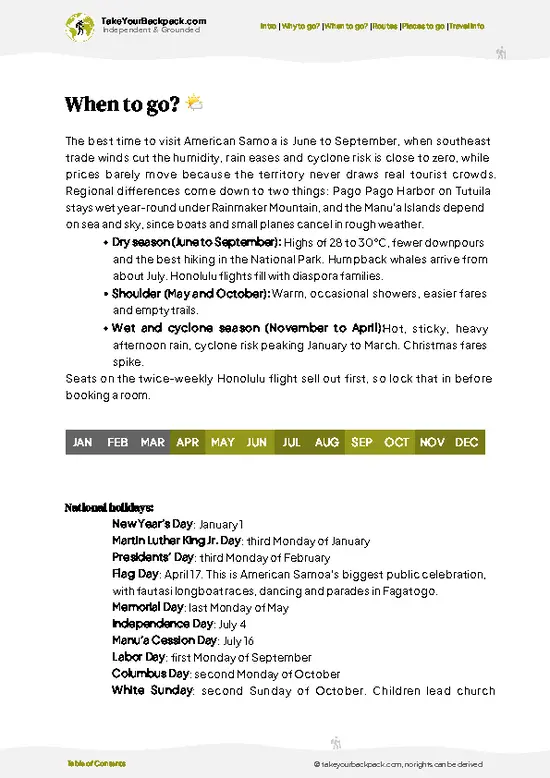
Saturday morning is the single best time to visit Fagatogo Market, because the produce stalls fill up before the sun gets hot. Vendors start setting out taro, bananas, breadfruit and fresh fish around dawn, and the best stock is gone by late morning.
  • Dry Season (May to October): Days run roughly 27 to 30°C (81 to 86°F) with lower humidity and less rain. Walking the waterfront stalls is comfortable, and this is the easiest period for pairing the market with hikes around Pago Pago Harbor.
  • Wet Season (November to April): Expect 28 to 31°C (82 to 88°F), heavy humid afternoons and sudden downpours. Covered stalls keep you dry, but cyclone warnings are possible, so check forecasts before planning.
  • Early Morning Hours: Daylight lasts about 11 to 13 hours all year, with sunrise near 6:30 a.m. Arrive
… read more 👉
Saturday morning is the single best time to visit Fagatogo Market, because the produce stalls fill up before the sun gets hot. Vendors start setting out taro, bananas, breadfruit and fresh fish around dawn, and the best stock is gone by late morning.
  • Dry Season (May to October): Days run roughly 27 to 30°C (81 to 86°F) with lower humidity and less rain. Walking the waterfront stalls is comfortable, and this is the easiest period for pairing the market with hikes around Pago Pago Harbor.
  • Wet Season (November to April): Expect 28 to 31°C (82 to 88°F), heavy humid afternoons and sudden downpours. Covered stalls keep you dry, but cyclone warnings are possible, so check forecasts before planning.
  • Early Morning Hours: Daylight lasts about 11 to 13 hours all year, with sunrise near 6:30 a.m. Arrive before 8 a.m. for the best selection and cooler air.
  • Flag Day Week (mid-April): Crowds and prices for rooms and rides climb during the island’s biggest festival. Book ahead.
Go on a weekday morning if you want quiet aisles, but Saturday has the most vendors.


source: climatestotravel.comJANJanuary: fair for travelingFEBFebruary: fair for travelingMARMarch: fair for travelingAPRApril: fair for travelingMAYMay: highly recommended for travelingJUNJune: excellent for travelingJULJuly: highly recommended for travelingAUGAugust: highly recommended for travelingSEPSeptember: highly recommended for travelingOCTOctober: fair for travelingNOVNovember: fair for travelingDECDecember: fair for traveling
american-samoa-attraction-fagatogo-market
© Google |

✈️ The backpacker research shortcutAmerican Samoa Travel Guide

An offline-friendly backpacking guide with optimized travel routes, ranked highlights, transport advice, and the best areas to stay.
example page 0 from our offline Travel Guide for American Samoa
example page 1 from our offline Travel Guide for American Samoa
example page 2 from our offline Travel Guide for American Samoa
example page 3 from our offline Travel Guide for American Samoa
example page 4 from our offline Travel Guide for American Samoa
example page 5 from our offline Travel Guide for American Samoa
example page 6 from our offline Travel Guide for American Samoa
example page 7 from our offline Travel Guide for American Samoa
The digital guide (141 pages) contains:
✅ 36 highlights, ranked by travel appeal
✅ Optimized 2, 3 & 5-day travel routes
✅ Cities, national parks, landmarks, beaches
✅ How to get around
✅ Offline-friendly for travel without Wi-Fi
👉 Click to see all 30+ guide features

📅 Plan smarter in minutes, not weeks
✅ Month by month travel advice
✅ Festivals & national holidays
✅ Budget expectations

🗺️ Go to the right places, skip the overrated ones
✅ Honest pros & cons of destinations
✅ Top hikes, parks & viewpoints
✅ Lesser-known places most travelers miss
✅ Clear “worth it vs skip it” guidance

🛏️ Travel smoothly without rookie mistakes
✅ Best areas to stay
✅ Transport systems explained simply
✅ Common scams & safety advice
✅ SIM cards, money & practical tips

🌍 Understand the country, not just visit it
✅ Culture & traditions
✅ 52 Essential phrases & customs
✅ Festivals worth planning around
✅ Traveler-friendly historical context
✅ Insights that make places more meaningful

📱 Built for real travel conditions
✅ Fully downloadable PDF
✅ Works completely offline
✅ Optimized for phone use
✅ Useful in remote areas & buses
✅ Everything in one place
Stop searching, start planning
Get instant access to your full guide. 30‑day money-back guarantee.
+ Add another guide for just

By proceeding you agree to our terms.
Sent to your inbox immediately after payment • 100% Secure Checkout
Best Backpacking Travel Advisor 2025 tourism awardBest Backpacking
Travel Advisor
2025
What others say about Take Your Backpack Guides:
⭐⭐⭐⭐⭐
Fantastic, amazing amount of information!
⭐⭐⭐⭐⭐
My goodness this is amazing, it's what I've been looking for hats off too you!
⭐⭐⭐⭐⭐
I think this is absolutely BRILLIANT
⭐⭐⭐⭐
Very complete and informative. It's still missing places, but I gotta to commend you
⭐⭐⭐⭐⭐
This is truly amazing, thank you, can't wait to explore it with my kids!
⭐⭐⭐⭐⭐
Awesome resource, thank you!
⭐⭐⭐⭐⭐
This is amazing! Can't wait to explore the ones I haven't seen
⭐⭐⭐⭐
I love this! Well done, great idea.
⭐⭐⭐⭐⭐
Thanks for taking the time to make this gem!
⭐⭐⭐⭐⭐
This might be the best website I've ever seen.
⭐⭐⭐⭐⭐
Congratulations, and thank you so much for your work; it's incredibly valuable.
⭐⭐⭐⭐
In all seriousness I think you did a great job pointing out the important spots
⭐⭐⭐⭐⭐
10/10 very good
⭐⭐⭐⭐⭐
As someone who's only just starting to visit regularly this is awesome, thank you.
⭐⭐⭐⭐
Thank you very much! I'm going to visit my dad, it's going to be very useful!
⭐⭐⭐⭐⭐
This is really cool! We'll be travelling for the first time and this definitely come in handy.
⭐⭐⭐⭐⭐
You are now our minister of culture, congratulations 👨‍💼
⭐⭐⭐⭐⭐
Just wanted to tell you that this is a pearl! Going to follow your recommendations.
⭐⭐⭐⭐⭐
This is so cool. I'll definitely be using the resource for my travels soon.
⭐⭐⭐⭐⭐
This is very impressive! Good work.
⭐⭐⭐⭐⭐
This is an amazing and informative site. Very well done!

🛏️ Where to stay?Where staying makes the most sense

The best base for the market is Fagatogo itself or neighboring Pago Pago, where you can walk to the stalls in minutes. Staying right on the harbor road means you can reach the market, the Jean P. Haydon Museum, the Fagatogo Malae (village green) and the main bus stops on foot, without paying for taxis.
Pago Pago village, just to the west at the head of the harbor, is the other sensible choice. It has the cannery-side stores, a few small eateries and easy access to the island’s colorful “aiga” buses heading east and west. Rooms here tend toward simple guesthouses and mid-range motels rather than … read more 👉
The best base for the market is Fagatogo itself or neighboring Pago Pago, where you can walk to the stalls in minutes. Staying right on the harbor road means you can reach the market, the Jean P. Haydon Museum, the Fagatogo Malae (village green) and the main bus stops on foot, without paying for taxis.
Pago Pago village, just to the west at the head of the harbor, is the other sensible choice. It has the cannery-side stores, a few small eateries and easy access to the island’s colorful “aiga” buses heading east and west. Rooms here tend toward simple guesthouses and mid-range motels rather than dorm-style hostels, so solo travelers should expect private rooms and meet people at the market, on buses and at the harbor eateries instead.
Utulei, along the harbor road toward the entrance, and Satala, across the harbor, are quieter and still within a short bus or taxi ride of the market. They suit travelers who want calmer evenings.
The airport area on the west side, near Tafuna and Nu’uuli, has more shops, restaurants and car rental options, but it is a 20 to 30 minute ride from the market. Choose it only if you plan to rent a car. Evenings in the harbor area are quiet, so a room with a kitchen or a nearby store helps.

👛 Costs (as of 15 October 2026)How expensive it really is

A realistic budget for a day built around Fagatogo Market is about US$91 to 220, since American Samoa uses the US dollar and lodging is the main expense.
CategoryBudget RangeLocal Reality
Market EntryUS$0Walking through the stalls is free. You pay only for what you buy.
Accommodation (High Season)US$70 to 130Simple motels and guesthouses around Pago Pago Harbor. Dorm beds are rare.
Market FoodUS$5 to 12Cooked plates, palusami, fried fish, koko Samoa and fresh fruit from vendors are cheap and filling.
Other MealsUS$10 to 25Takeout plates and small local restaurants. Imported groceries cost more than on the mainland US.
Local BusUS$1 to 3Aiga buses run along the harbor road. Fares are by distance and paid in cash, and service thins out on Sundays.
TaxiUS$0 to 20Short hops around the harbor cost a few
… read more 👉
A realistic budget for a day built around Fagatogo Market is about US$91 to 220, since American Samoa uses the US dollar and lodging is the main expense.
CategoryBudget RangeLocal Reality
Market EntryUS$0Walking through the stalls is free. You pay only for what you buy.
Accommodation (High Season)US$70 to 130Simple motels and guesthouses around Pago Pago Harbor. Dorm beds are rare.
Market FoodUS$5 to 12Cooked plates, palusami, fried fish, koko Samoa and fresh fruit from vendors are cheap and filling.
Other MealsUS$10 to 25Takeout plates and small local restaurants. Imported groceries cost more than on the mainland US.
Local BusUS$1 to 3Aiga buses run along the harbor road. Fares are by distance and paid in cash, and service thins out on Sundays.
TaxiUS$0 to 20Short hops around the harbor cost a few dollars. Airport transfers run higher.
Souvenirs and CraftsUS$5 to 30Handmade items such as woven fans, ula necklaces and carvings. Prices are usually negotiable only lightly.
Total Daily BudgetUS$91 to 220Per person, per day, in high season.
⚠️ Prices can change and everyone travels differently, so take this as a rough guide. Hope it helps you plan your adventure!

FAQCommon questions from travelers

Plan on 1 to 2 hours for Fagatogo Market itself. Walk the produce and fish stalls, then eat a cooked plate from a vendor. Add another hour if you also visit the Jean P. Haydon Museum and the Fagatogo Malae next door. Saturday morning has the busiest stalls, so arriving before 9 a.m. gives the full experience.
Yes, because there is no entrance fee at all, so the only cost is what you buy. A plate of cooked local food usually costs about US$5 to 12, and fresh fruit and crafts add a few more dollars. Saturday morning gives the most vendors and the best selection, and the market sits beside the museum and the village green.
Fagatogo sits on the south shore of Pago Pago Harbor on Tutuila, about 15 to 25 minutes by taxi from Pago Pago International Airport (Tafuna), depending on traffic. Taxis cost roughly US$15 to 25, and colorful aiga buses along the main road cost about US$1 to 3 per ride. Buses are scarce on Sundays. Once in town, the market is a short walk from the harbor road and nearby lodging.
⚠️ Things can change over time, so always validate details locally before you go.

Other American Samoan attractions near Fagatogo Market

Explore more nearby:


💡 Not sure where to go next?
Create a personalized itinerary for American Samoa including Fagatogo Market and the places that fit your trip.

Generate my itinerary

👉 Discover all attractions

Or checkout all American Samoa has to offer (think cities, towns, villages, national parks, hikes, beaches, festivals)
Country photo of American Samoa

We 💚 feedbackIs it worth it?

Fagatogo Market suits the traveler who likes eating on the move and learning a place through its food and its buses. I would show up early, bring small bills and a bag, and leave the afternoon free for the museum and the green. Skip it if you want a polished tourist market, because this one is a working local stop.

✍️ Help improve this page!
The information on this page is based on in-depth research, insights shared by experienced travelers, and feedback from the local travel community in American Samoa. While every effort is made to keep the information accurate and current, conditions can change — so if you spot anything incorrect or outdated, please get in touch.


🙋‍♂️ Give feedback

👋 Meet the founderWho’s Behind Take Your Backpack?

Johan, backpacker and founder of TakeYourBackpackHi, I’m Johan (Netherlands 🇳🇱), the creator of TakeYourBackpack. Over the past 3 decades, I’ve backpacked through 90+ countries across six continents, gaining extensive experience with independent travel, long-term trips, and overland routes.

This site is built on a combination of firsthand travel experience and carefully curated insights from other backpackers. Many guides are based on places I’ve personally visited, while others bring together tips, observations, and practical advice shared by trusted travelers I’ve met along the way.

The goal is to provide realistic, experience-driven guidance — not generic itineraries — so you can explore destinations with better context, clearer expectations, and more confidence.