×

American Samoa🇦🇸 | attractionsTauese P.F. Sunia Ocean CenterMarine sanctuary exhibits, Rose Atoll, Fagatele Bay, Utulei waterfront | things to do and best time to go

Explore Fagatogo MarketExplore Fagasa Bay

Backpacking in Tauese P.F. Sunia Ocean Center
🏆 Top pickattraction ranked #1
By Johan Kruseman 🇳🇱 | Updated October 15, 2026

Most travelers expect an aquarium, but the Tauese P.F. Sunia Ocean Center is the visitor center for the National Marine Sanctuary of American Samoa, built around exhibits, models and film rather than tanks of live fish. You’ll find it on the harbor shore at Utulei, in American Samoa’s capital area on Tutuila, just east of Fagatogo. Entry is free, and crowds are rare, so the real cost is an hour or two of your day. It won’t give you adrenaline, and if you’ve seen big-city science museums the scale will feel modest. What it does give you is context: why these reefs are protected, what lives on the remote islands you probably won’t reach, and how Samoan tradition shapes the marine rules. Go mid-morning when the heat starts to bite, spend an hour inside, then walk out to the waterfront and decide which sanctuary spot you’ll snorkel next.

Discover everything you want to know in the 📖 American Samoa Travel Guide.


example page 0 from our offline Travel Guide for American Samoa
example page 1 from our offline Travel Guide for American Samoa
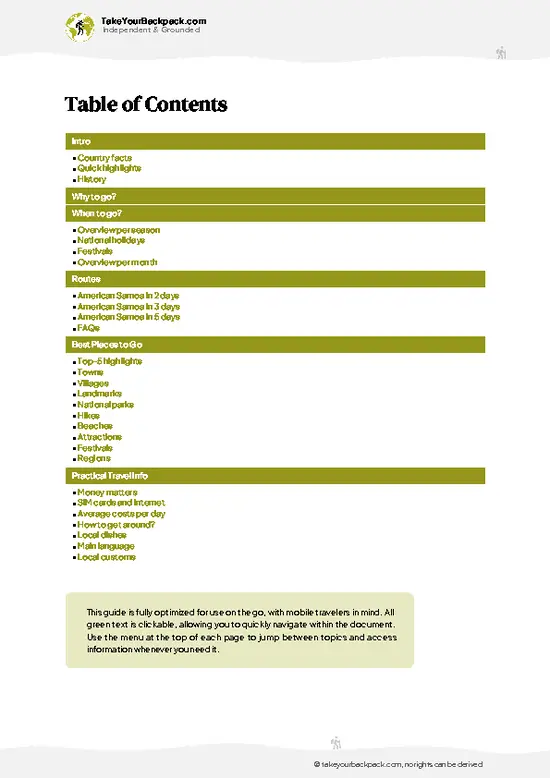
example page 2 from our offline Travel Guide for American Samoa
example page 3 from our offline Travel Guide for American Samoa
example page 4 from our offline Travel Guide for American Samoa
example page 5 from our offline Travel Guide for American Samoa
example page 6 from our offline Travel Guide for American Samoa
example page 7 from our offline Travel Guide for American Samoa
Loading the map 🌍
CLICK TO FILTER
towns
villages
landmarks
national parks
hikes
beaches
attractions
festivals
regions
SHOW COUNTRY’S BESTSHOW ALL

✨ Why go?
Ranked #1 attraction in American Samoa
What makes it a must-see attraction

Go because the center turns a blue patch on the map into something you can read. The sanctuary covers six separate areas across the territory, including Fagatele Bay on Tutuila’s southwest coast and the far-flung Muliava (Rose Atoll), a place almost no visitor will ever see in person. Standing in front of the displays, you get the faces of those spots: the fish, the coral and the turtles that nest there. That makes your own time in the water more informed, and it makes a ranger’s explanation of a reef closure make sense instead of feeling like red tape.

It is also one of the few places in town where Samoan knowledge and marine science share the same walls. The building carries the name of a former governor, Tauese P.F. Sunia, and the whole project reflects how local communities were pulled … read more 👉
Go because the center turns a blue patch on the map into something you can read. The sanctuary covers six separate areas across the territory, including Fagatele Bay on Tutuila’s southwest coast and the far-flung Muliava (Rose Atoll), a place almost no visitor will ever see in person. Standing in front of the displays, you get the faces of those spots: the fish, the coral and the turtles that nest there. That makes your own time in the water more informed, and it makes a ranger’s explanation of a reef closure make sense instead of feeling like red tape.

It is also one of the few places in town where Samoan knowledge and marine science share the same walls. The building carries the name of a former governor, Tauese P.F. Sunia, and the whole project reflects how local communities were pulled into the protection of their own reefs. On a route through Tutuila, it works as a calm, shaded stop that costs nothing, lets you out of the sun, and sets up every snorkel, hike and boat trip that follows.

💡 HighlightsEssential experiences to have while visiting Tauese P.F. Sunia Ocean Center

  1. The National Marine Sanctuary of American Samoa exhibit hall. This is what the center exists for, and it is the sight you would search for. The main hall is the visitor center for the sanctuary, which protects reefs around several islands, so you get the whole underwater map of the territory under one roof. It makes a good first hour before you go out and snorkel anything.
  2. Muliava (Rose Atoll) displays. Rose Atoll is the remote, uninhabited atoll at the far eastern edge of the Samoan archipelago, and almost nobody gets to visit it. The exhibits explain its pink coralline algae rim, the seabird colonies and the nesting green and hawksbill turtles. It is the nearest you will come to seeing it.
  3. Fagatele Bay story. Fagatele is a steep, collapsed volcanic crater open to the sea on the southwest coast,
… read more 👉
  1. The National Marine Sanctuary of American Samoa exhibit hall. This is what the center exists for, and it is the sight you would search for. The main hall is the visitor center for the sanctuary, which protects reefs around several islands, so you get the whole underwater map of the territory under one roof. It makes a good first hour before you go out and snorkel anything.
  2. Muliava (Rose Atoll) displays. Rose Atoll is the remote, uninhabited atoll at the far eastern edge of the Samoan archipelago, and almost nobody gets to visit it. The exhibits explain its pink coralline algae rim, the seabird colonies and the nesting green and hawksbill turtles. It is the nearest you will come to seeing it.
  3. Fagatele Bay story. Fagatele is a steep, collapsed volcanic crater open to the sea on the southwest coast, and its reef became protected well before the sanctuary grew. The center explains its coral recovery after cyclones and crown-of-thorns outbreaks. It helps you decide whether the bay is worth the effort of reaching it.
  4. Reef and species exhibits. Look for the displays on giant clams, parrotfish, sharks, humpback whales and sea turtles. These are the animals you have a real chance of meeting in the water around Tutuila, so you will recognize them when you do. Photos and models are at kid height and adult depth, so nobody gets bored.
  5. Pago Pago Harbor view from Utulei. The center sits on the harbor’s shore, and the water in front is a drowned volcanic crater. Stand on the waterfront and look across to the dark ridges and cloud-catching peaks around the bay. Late afternoon light turns the water a deep green and is the time for photographs.
  6. Utulei Beach next door. A short walk away is a narrow stretch of sand and grass used by local families, especially on weekends. You can watch kids launch into the harbor, with fishing boats and the occasional tuna vessel passing. Bring a towel if you want a swim, though the harbor is not clear-water snorkeling.
  7. Jean P. Haydon Museum. In nearby Fagatogo, this small museum shows Samoan tools, tapa cloth, fishing gear and everyday objects, and fills in the human side of the ocean story. It sits on the village green, so you can combine it with a loop through the town’s old government buildings.
  8. Fagatogo Marketplace. A short ride along the harbor road brings you to the open-air market where locals buy produce, palusami, coconut buns and island crafts. It is best in the morning, and it makes a better lunch stop than any restaurant near the center.
Most visitors skip the Utulei waterfront in the late afternoon, yet it is where you see families, kayaks and outrigger paddlers use the harbor the way the exhibits describe.
Spotted a mistake or missing something? Contact us.

🌤️ When to go?When to go for the best experience

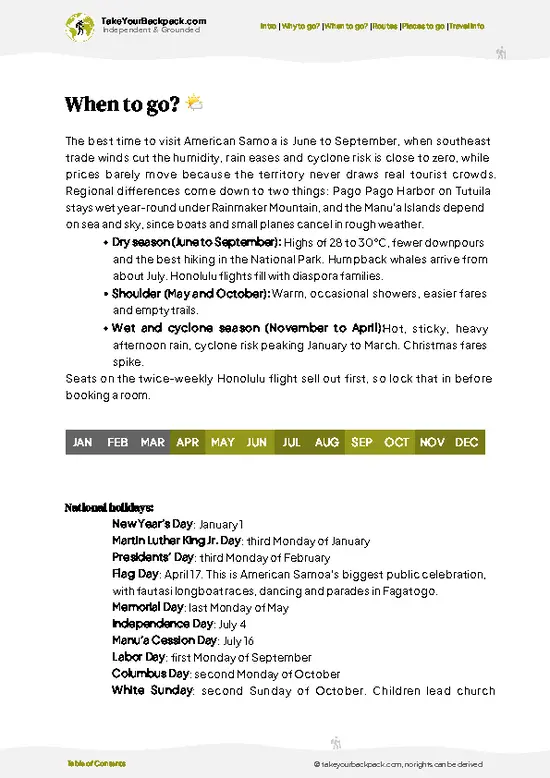
  • Dry Season (May to October): Lower humidity, 24 to 30°C (75 to 86°F), and calmer seas make the Ocean Center in Utulei the easiest to pair with a harbor walk or a Pago Pago Bay paddle. Rain still comes in short bursts, but muddy trails are rarer.
  • Wet Season (November to April): Expect 26 to 32°C (79 to 90°F), heavy downpours, and the cyclone season. A rainy afternoon is a good excuse to spend two hours indoors at the exhibits.
  • Whale Season (roughly June to September): Humpbacks pass the islands, and the center’s staff are most busy answering questions then.
  • Daylight and Crowds: Days run about 11 to 13 hours all year, with sunrise near 6:30 am and sunset near 6:30 pm. Visitor numbers stay low, and cruise ship days bring brief surges around the harbor.
  • Prices: Flights and rooms tighten slightly in
… read more 👉
  • Dry Season (May to October): Lower humidity, 24 to 30°C (75 to 86°F), and calmer seas make the Ocean Center in Utulei the easiest to pair with a harbor walk or a Pago Pago Bay paddle. Rain still comes in short bursts, but muddy trails are rarer.
  • Wet Season (November to April): Expect 26 to 32°C (79 to 90°F), heavy downpours, and the cyclone season. A rainy afternoon is a good excuse to spend two hours indoors at the exhibits.
  • Whale Season (roughly June to September): Humpbacks pass the islands, and the center’s staff are most busy answering questions then.
  • Daylight and Crowds: Days run about 11 to 13 hours all year, with sunrise near 6:30 am and sunset near 6:30 pm. Visitor numbers stay low, and cruise ship days bring brief surges around the harbor.
  • Prices: Flights and rooms tighten slightly in July and August and around Flag Day in April. Entry costs do not change.
Arrive on a weekday morning and note that the center opens Monday to Friday only, 9 am to 4 pm.


source: climatestotravel.comJANJanuary: fair for travelingFEBFebruary: fair for travelingMARMarch: fair for travelingAPRApril: fair for travelingMAYMay: excellent for travelingJUNJune: highly recommended for travelingJULJuly: highly recommended for travelingAUGAugust: highly recommended for travelingSEPSeptember: excellent for travelingOCTOctober: highly recommended for travelingNOVNovember: fair for travelingDECDecember: fair for traveling
when-to-go

✈️ The backpacker research shortcutAmerican Samoa Travel Guide

An offline-friendly backpacking guide with optimized travel routes, ranked highlights, transport advice, and the best areas to stay.
example page 0 from our offline Travel Guide for American Samoa
example page 1 from our offline Travel Guide for American Samoa
example page 2 from our offline Travel Guide for American Samoa
example page 3 from our offline Travel Guide for American Samoa
example page 4 from our offline Travel Guide for American Samoa
example page 5 from our offline Travel Guide for American Samoa
example page 6 from our offline Travel Guide for American Samoa
example page 7 from our offline Travel Guide for American Samoa
The digital guide (141 pages) contains:
✅ 36 highlights, ranked by travel appeal
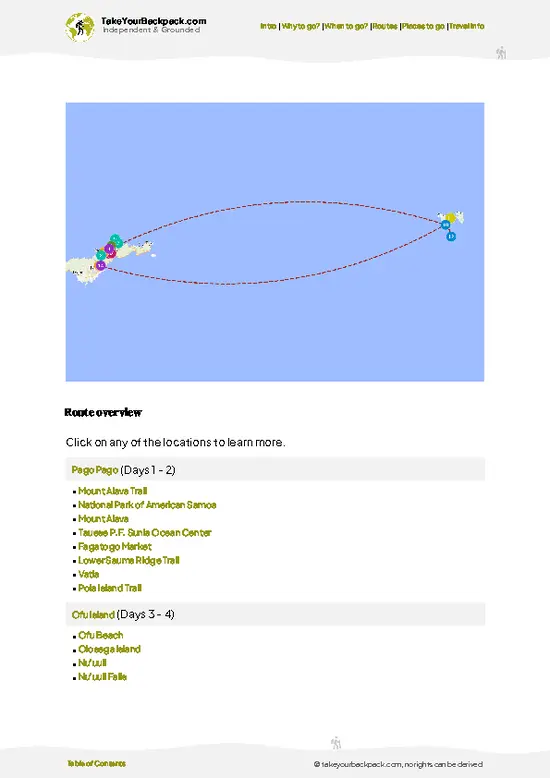
✅ Optimized 2, 3 & 5-day travel routes
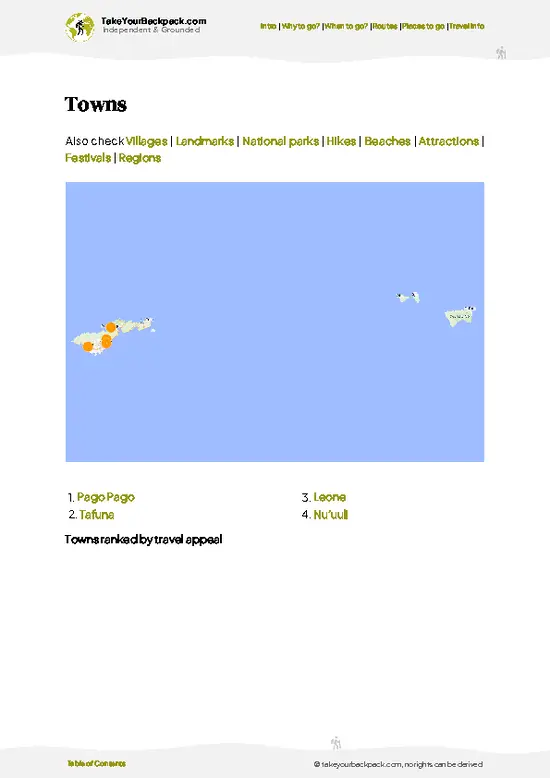
✅ Cities, national parks, landmarks, beaches
✅ How to get around
✅ Offline-friendly for travel without Wi-Fi
👉 Click to see all 30+ guide features

📅 Plan smarter in minutes, not weeks
✅ Month by month travel advice
✅ Festivals & national holidays
✅ Budget expectations

🗺️ Go to the right places, skip the overrated ones
✅ Honest pros & cons of destinations
✅ Top hikes, parks & viewpoints
✅ Lesser-known places most travelers miss
✅ Clear “worth it vs skip it” guidance

🛏️ Travel smoothly without rookie mistakes
✅ Best areas to stay
✅ Transport systems explained simply
✅ Common scams & safety advice
✅ SIM cards, money & practical tips

🌍 Understand the country, not just visit it
✅ Culture & traditions
✅ 52 Essential phrases & customs
✅ Festivals worth planning around
✅ Traveler-friendly historical context
✅ Insights that make places more meaningful

📱 Built for real travel conditions
✅ Fully downloadable PDF
✅ Works completely offline
✅ Optimized for phone use
✅ Useful in remote areas & buses
✅ Everything in one place
Stop searching, start planning
Get instant access to your full guide. 30‑day money-back guarantee.
+ Add another guide for just

By proceeding you agree to our terms.
Sent to your inbox immediately after payment • 100% Secure Checkout
Best Backpacking Travel Advisor 2025 tourism awardBest Backpacking
Travel Advisor
2025
What others say about Take Your Backpack Guides:
⭐⭐⭐⭐⭐
Fantastic, amazing amount of information!
⭐⭐⭐⭐⭐
My goodness this is amazing, it's what I've been looking for hats off too you!
⭐⭐⭐⭐⭐
I think this is absolutely BRILLIANT
⭐⭐⭐⭐
Very complete and informative. It's still missing places, but I gotta to commend you
⭐⭐⭐⭐⭐
This is truly amazing, thank you, can't wait to explore it with my kids!
⭐⭐⭐⭐⭐
Awesome resource, thank you!
⭐⭐⭐⭐⭐
This is amazing! Can't wait to explore the ones I haven't seen
⭐⭐⭐⭐
I love this! Well done, great idea.
⭐⭐⭐⭐⭐
Thanks for taking the time to make this gem!
⭐⭐⭐⭐⭐
This might be the best website I've ever seen.
⭐⭐⭐⭐⭐
Congratulations, and thank you so much for your work; it's incredibly valuable.
⭐⭐⭐⭐
In all seriousness I think you did a great job pointing out the important spots
⭐⭐⭐⭐⭐
10/10 very good
⭐⭐⭐⭐⭐
As someone who's only just starting to visit regularly this is awesome, thank you.
⭐⭐⭐⭐
Thank you very much! I'm going to visit my dad, it's going to be very useful!
⭐⭐⭐⭐⭐
This is really cool! We'll be travelling for the first time and this definitely come in handy.
⭐⭐⭐⭐⭐
You are now our minister of culture, congratulations 👨‍💼
⭐⭐⭐⭐⭐
Just wanted to tell you that this is a pearl! Going to follow your recommendations.
⭐⭐⭐⭐⭐
This is so cool. I'll definitely be using the resource for my travels soon.
⭐⭐⭐⭐⭐
This is very impressive! Good work.
⭐⭐⭐⭐⭐
This is an amazing and informative site. Very well done!

🛏️ Where to stay?Choosing the right base

Stay around Utulei, Fagatogo, or Pago Pago village, since the Ocean Center sits on the harbor road in Utulei and all three are within a short bus ride or walk.
Fagatogo: The most practical base. The main market, the Fagatogo Market, the bus stop cluster, banks, groceries, and cheap takeaway all sit within a few blocks, and it is the best place to meet other travelers heading to Ofu or Tutuila hikes. Evenings are quiet, so expect an early night rather than a bar scene.
Utulei: Closest to the center itself, with a calm waterfront and a small beach. Options are limited, so book ahead, but it feels … read more 👉
Stay around Utulei, Fagatogo, or Pago Pago village, since the Ocean Center sits on the harbor road in Utulei and all three are within a short bus ride or walk.
Fagatogo: The most practical base. The main market, the Fagatogo Market, the bus stop cluster, banks, groceries, and cheap takeaway all sit within a few blocks, and it is the best place to meet other travelers heading to Ofu or Tutuila hikes. Evenings are quiet, so expect an early night rather than a bar scene.
Utulei: Closest to the center itself, with a calm waterfront and a small beach. Options are limited, so book ahead, but it feels safe and local with easy walking along the bay.
Pago Pago village: Pair with the harbor and the cannery area, and with the buses to the east side. Accommodation is basic and mostly guesthouses and family-run rooms.
Nu’uuli: Further west near the airport belt, with more shopping, restaurants, and rental car agencies. Solo travelers who plan to drive around the island may prefer it, though it is less walkable.
The social scene in American Samoa is small, so you will meet people at guesthouse tables, on the bus, and at Sunday church services rather than in dorm common rooms. Stay near Fagatogo and you can reach nearly everything without a car.

👛 Costs (as of 15 October 2026)Typical daily expenses

A realistic budget for visiting the Ocean Center is US$90 to 165 a day, including a room, food, local buses, and the entry fee.
CategoryBudget RangeLocal Reality
Entry feeUS$0Entry is free.
Accommodation (high season)US$60 to 100Few hostels exist, so guesthouses and small motels in Pago Pago and Fagatogo set the price.
FoodUS$15 to 30Plate lunches and market snacks run US$6 to 12, and restaurant dinners cost more.
Local transportUS$2 to 10Colorful aiga buses cost about US$1 to 2 a ride, and taxis are pricier.
ExtrasUS$5 to 15Snorkel rental, snacks, or a small donation to conservation programs.
Total Daily BudgetUS$90 to 165Cheaper if you share rooms or cook your own meals.
Groceries are imported and cost more than on the US mainland. ATMs are available in Fagatogo, though many small stalls take only cash.
⚠️ Prices can change and everyone travels differently, so take this as a rough guide. Hope it helps you plan your adventure!

FAQCommon questions from travelers

Plan on one to two hours for the exhibits and a short walk around the harbor. Combine it with the nearby National Park of American Samoa visitor center in Pago Pago for a half-day. Most travelers pair it with the market in Fagatogo, about a ten-minute walk.
Yes, if you want context on the marine life and the Rose Atoll and Fagatele Bay areas before you snorkel or hike. Entry is free, and it takes about an hour or two. It is a better stop on a rainy day than on a perfect beach day.
Fly into Pago Pago International Airport (PPG) on Tutuila, then ride about 30 to 40 minutes east to Utulei on the harbor road. Aiga buses cost around US$1 to 2, and a taxi runs roughly US$25 to 35. Flights connect from Honolulu and Apia, and the center is a short walk from Fagatogo.
⚠️ Things can change over time, so always validate details locally before you go.

Other American Samoan attractions near Tauese P.F. Sunia Ocean Center

Explore more nearby:

  • Jean P. Haydon Museum—Fine mats, siapo bark-cloth, kava bowls, war clubs| 1 km away
  • Fagatogo Market—Taro and breadfruit stalls, palusami and oka, aiga bus hub, Saturday crowds| 1 km away

💡 Not sure where to go next?
Create a personalized itinerary for American Samoa including Tauese P.F. Sunia Ocean Center and the places that fit your trip.

Generate my itinerary

👉 Discover all attractions

Or checkout all American Samoa has to offer (think cities, towns, villages, national parks, hikes, beaches, festivals)
Country photo of American Samoa

We 💚 feedbackSumming up the experience

Pair the Ocean Center with the National Park of American Samoa visitor center in town, then do your snorkeling in Ofu or at Tutuila’s quieter beaches afterward. Seeing the sanctuary maps first changes how you read every reef. I would go early in your stay, before you commit to boat trips or the Fagatele Bay overlook, and I would bring a reef-safe sunscreen for the water afterward.

✍️ Help improve this page!
The information on this page is based on in-depth research, insights shared by experienced travelers, and feedback from the local travel community in American Samoa. While every effort is made to keep the information accurate and current, conditions can change — so if you spot anything incorrect or outdated, please get in touch.


🙋‍♂️ Give feedback

👋 Meet the founderWho’s Behind Take Your Backpack?

Johan, backpacker and founder of TakeYourBackpackHi, I’m Johan (Netherlands 🇳🇱), the creator of TakeYourBackpack. Over the past 3 decades, I’ve backpacked through 90+ countries across six continents, gaining extensive experience with independent travel, long-term trips, and overland routes.

This site is built on a combination of firsthand travel experience and carefully curated insights from other backpackers. Many guides are based on places I’ve personally visited, while others bring together tips, observations, and practical advice shared by trusted travelers I’ve met along the way.

The goal is to provide realistic, experience-driven guidance — not generic itineraries — so you can explore destinations with better context, clearer expectations, and more confidence.