×

American Samoa🇦🇸 | landmarksMount Alavaridge trail, WWII relics, harbor overlook | things to do and best time to go

Explore Matafao PeakExplore Nu’uuli Falls

Backpacking in Mount Alava
🏆 Top pickunique site ranked #1
By Johan Kruseman 🇳🇱 | Updated September 4, 2026

Most people online sell Mount Alava as “the” viewpoint of American Samoa; the surprise is that the real payoff isn’t the summit itself, it’s the long, sweaty ridge walk getting there. Mount Alava sits above Pago Pago Harbor inside the Tutuila unit of the National Park of American Samoa, basically looming over the island’s main bay. For backpackers, it’s a low-cost, high-effort objective: no entrance fee, just your legs, humidity, and a lot of stairs and roots. The views over the harbor and out to the open Pacific are huge, but you’re sharing them with almost no one; crowds are rare, especially compared to anything in Hawaii. The trail can be muddy, overgrown, and brutally hot, and public transport to the trailhead is limited, so it’s not “easy access” pretty. But if you want raw jungle, WWII history, and big-photo payoff without the circus, this is your hill.

Discover everything you want to know in the 📖 American Samoa Travel Guide.
Loading the map 🌍
CLICK TO FILTER
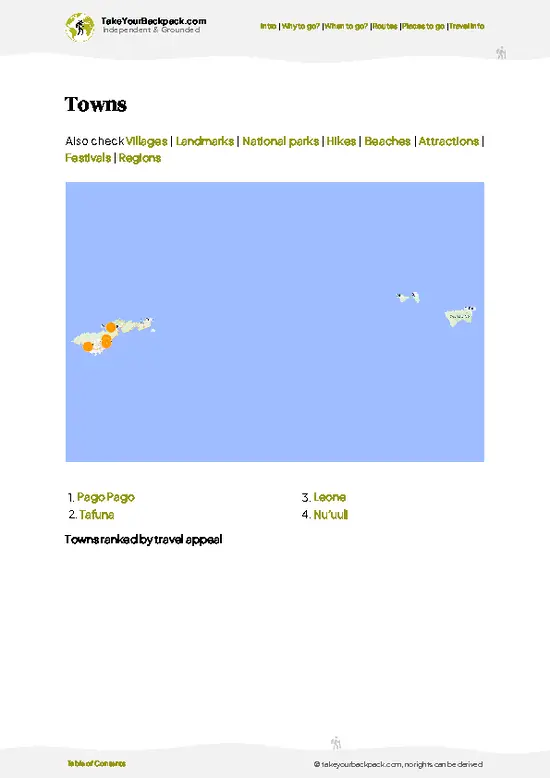
towns
villages
landmarks
national parks
hikes
beaches
attractions
festivals
regions
SHOW COUNTRY’S BESTSHOW ALL

✨ Why go?
Ranked #1 unique site in American Samoa
What sets this place apart

Mount Alava in American Samoa is a must-visit for backpackers who crave more than just a photo op. Sure, the crowds can be a buzzkill, especially during peak season, but the effort-to-reward ratio is off the charts. The hike is moderately challenging, but it’s not a death march. You’ll be rewarded with breathtaking views of the Pacific and the surrounding islands that you won’t find on any postcard.

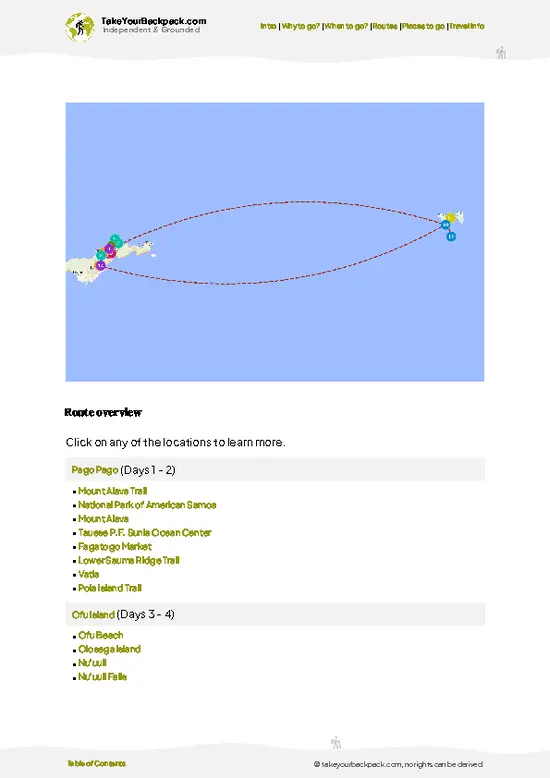
What sets Mount Alava apart is its uniqueness. Unlike other tourist traps, this spot offers a genuine glimpse into the island’s natural beauty and rich culture. You can easily fit it into a broader route, making it a perfect stop between exploring Pago Pago and the stunning beaches of Ofu.

And let’s talk cost: it’s practically free. Just grab some water and snacks, and you’re set. The experience … read more 👉
Mount Alava in American Samoa is a must-visit for backpackers who crave more than just a photo op. Sure, the crowds can be a buzzkill, especially during peak season, but the effort-to-reward ratio is off the charts. The hike is moderately challenging, but it’s not a death march. You’ll be rewarded with breathtaking views of the Pacific and the surrounding islands that you won’t find on any postcard.

What sets Mount Alava apart is its uniqueness. Unlike other tourist traps, this spot offers a genuine glimpse into the island’s natural beauty and rich culture. You can easily fit it into a broader route, making it a perfect stop between exploring Pago Pago and the stunning beaches of Ofu.

And let’s talk cost: it’s practically free. Just grab some water and snacks, and you’re set. The experience is about connecting with the land and the locals, not just ticking off another box on your travel list. So, lace up your boots and embrace the real magic of Mount Alava. It’s worth every step.
Want to include Mount Alava in your American Samoa route?
Create a personalized American Samoa itinerary that includes Mount Alava and the places that fit your trip — based on your travel style, budget, and available time. Get your route in seconds.

Generate my trip

💡 HighlightsTop highlights of Mount Alava

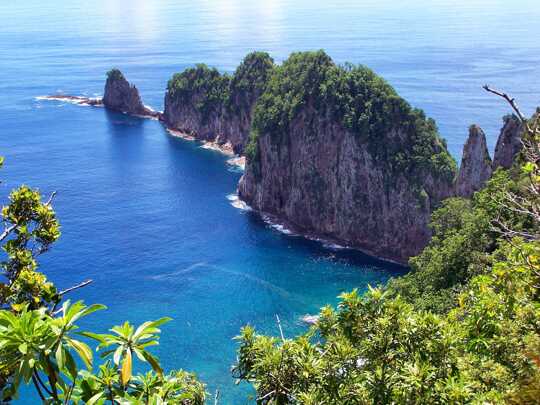
  • Panoramic view of Pago Pago Harbor and Rainmaker Mountain — The big reason people climb Alava: the harbor sits in a volcanic amphitheater and the lookout gives a jaw-dropping, postcard-ready view of the deep-water bay with the iconic Rainmaker (Mount Pioa) rising opposite.
  • Alava Ridge Trail — A true ridgeline walk with sudden drops, switchbacks and narrow spine sections. It’s compact but dramatic: you move from dense jungle to exposed viewpoints that change every few minutes.
  • Endemic rainforest and wildlife — The slope is prime native forest, full of plants you won’t see elsewhere in the U.S. territories and home to fruit bats and a chorus of forest birds. It’s a good place to notice how different Pacific island forests feel and smell.
  • World War II remnants — Scattered concrete ruins
read more 👉
  • Panoramic view of Pago Pago Harbor and Rainmaker Mountain — The big reason people climb Alava: the harbor sits in a volcanic amphitheater and the lookout gives a jaw-dropping, postcard-ready view of the deep-water bay with the iconic Rainmaker (Mount Pioa) rising opposite.
  • Alava Ridge Trail — A true ridgeline walk with sudden drops, switchbacks and narrow spine sections. It’s compact but dramatic: you move from dense jungle to exposed viewpoints that change every few minutes.
  • Endemic rainforest and wildlife — The slope is prime native forest, full of plants you won’t see elsewhere in the U.S. territories and home to fruit bats and a chorus of forest birds. It’s a good place to notice how different Pacific island forests feel and smell.
  • World War II remnants — Scattered concrete ruins and old military positions tucked into the greenery tell a quiet wartime story. They’re not polished museum pieces, but real, atmospheric reminders of the island’s strategic past.
  • Waterfalls, streams and mossy gullies — The trail crosses small streams and plunges beside shaded ravines where water collects in pools and little falls — a refreshing counterpoint to the ridge exposures.
  • Village overlooks and cultural context — From several viewpoints you can look down on working Samoan villages. It’s a chance to see fa’a Samoa (Samoan life) laid out below — houses, gardens and the patterns of everyday island living.
  • Sunrise, sunset and cloud-play over the harbor — Weather often creates dramatic effects: low cloud filling the bay, ribbons of mist, or golden light on the peaks. Catching one of these moments from the ridge is memorable and photogenic.
Spotted a mistake or missing something? Contact us.

🌤️ When to go?When to go for the best experience


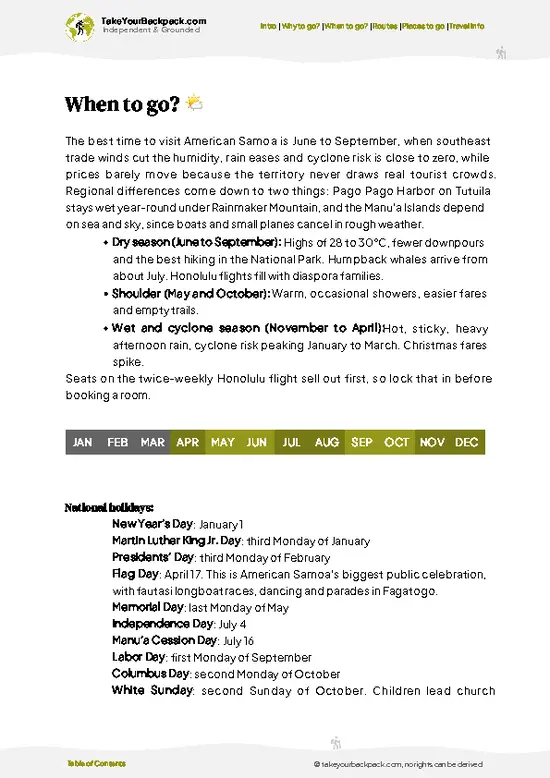
  • Weather: The best time to hit Mount Alava is during the dry season, roughly May to September. Expect less rain, which means clearer trails and views. The wet season (October to April) brings heavy tropical downpours that can turn paths into slippery mudslides—fun for no one.

  • Temperature: Temperatures hover between 24°C to 29°C (75°F to 85°F) year-round. It’s warm but not scorching, thanks to the ocean breeze. Early mornings and late afternoons can feel cooler, so pack a light layer.

  • Daylight Hours: Daylight stays pretty consistent, around 11 to 12 hours daily. That gives you a solid window for hiking without rushing, but start early to avoid the midday heat and maximize your trek.

  • Crowds: Mount Alava isn’t a tourist magnet, but weekends and local holidays see more hikers. Weekdays
read more 👉

  • Weather: The best time to hit Mount Alava is during the dry season, roughly May to September. Expect less rain, which means clearer trails and views. The wet season (October to April) brings heavy tropical downpours that can turn paths into slippery mudslides—fun for no one.

  • Temperature: Temperatures hover between 24°C to 29°C (75°F to 85°F) year-round. It’s warm but not scorching, thanks to the ocean breeze. Early mornings and late afternoons can feel cooler, so pack a light layer.

  • Daylight Hours: Daylight stays pretty consistent, around 11 to 12 hours daily. That gives you a solid window for hiking without rushing, but start early to avoid the midday heat and maximize your trek.

  • Crowds: Mount Alava isn’t a tourist magnet, but weekends and local holidays see more hikers. Weekdays offer a quieter, more personal experience. Don’t expect solitude like a remote wilderness, but it’s never overwhelming.

  • Seasonal Activities: Dry season aligns with local festivals and cultural events, adding a rich layer to your visit. You might catch traditional dances or markets in nearby villages, which are worth timing your trip around.

  • Price Fluctuations: American Samoa doesn’t have wild price swings. Accommodation and transport costs stay steady year-round, but booking during the dry season is smart to secure availability and avoid last-minute hikes in price.


Pro-tip: Aim for late May to early July—dry trails, manageable crowds, and a chance to sync your hike with local culture without the tourist gloss.


source: climatestotravel.comJANJanuary: fair for travelingFEBFebruary: fair for travelingMARMarch: fair for travelingAPRApril: fair for travelingMAYMay: excellent for travelingJUNJune: excellent for travelingJULJuly: highly recommended for travelingAUGAugust: highly recommended for travelingSEPSeptember: highly recommended for travelingOCTOctober: fair for travelingNOVNovember: fair for travelingDECDecember: fair for traveling
when-to-go

✈️ The backpacker research shortcutAmerican Samoa Travel Guide

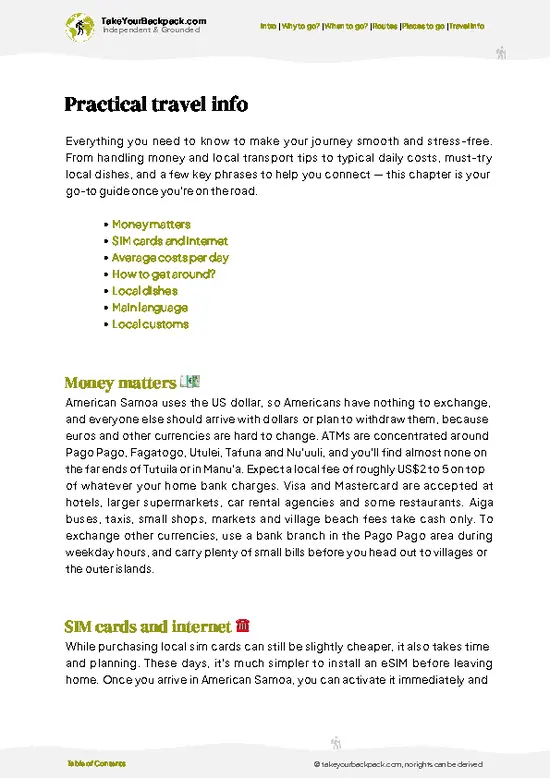
An offline-friendly backpacking guide with optimized travel routes, ranked highlights, transport advice, and the best areas to stay.
example page 0 from our offline Travel Guide for American Samoa
example page 1 from our offline Travel Guide for American Samoa
example page 2 from our offline Travel Guide for American Samoa
example page 3 from our offline Travel Guide for American Samoa
example page 4 from our offline Travel Guide for American Samoa
example page 5 from our offline Travel Guide for American Samoa
example page 6 from our offline Travel Guide for American Samoa
example page 7 from our offline Travel Guide for American Samoa
The digital guide (161 pages) contains:
37 highlights, ranked by travel appeal
Optimized 2, 3 & 5-day travel routes
Cities, national parks, landmarks, beaches
How to get around
Offline-friendly for travel without Wi-Fi
👉 Click to see all 30+ guide features

📅 Plan smarter in minutes, not weeks
Month by month travel advice
Festivals & national holidays
Budget expectations

🗺️ Go to the right places, skip the overrated ones
Honest pros & cons of destinations
Top hikes, parks & viewpoints
Lesser-known places most travelers miss
Clear “worth it vs skip it” guidance

🛏️ Travel smoothly without rookie mistakes
Best areas to stay
Transport systems explained simply
Common scams & safety advice
SIM cards, money & practical tips

🌍 Understand the country, not just visit it
Culture & traditions
52 Essential phrases & customs
Festivals worth planning around
Traveler-friendly historical context
Insights that make places more meaningful

📱 Built for real travel conditions
Fully downloadable PDF
Works completely offline
Optimized for phone use
Useful in remote areas & buses
Everything in one place
Save weeks of stressful planning
Get instant access to your full guide. 30‑day money-back guarantee.
+ Add another guide for just US$7.80

By proceeding you agree to our terms.
Sent to your inbox immediately after payment • 100% Secure Checkout
Best Backpacking Travel Advisor 2025 tourism awardBest Backpacking
Travel Advisor
2025
What others say about Take Your Backpack Guides:
⭐⭐⭐⭐⭐
Fantastic, amazing amount of information!
⭐⭐⭐⭐⭐
My goodness this is amazing, it's what I've been looking for hats off too you!
⭐⭐⭐⭐⭐
I think this is absolutely BRILLIANT
⭐⭐⭐⭐
Very complete and informative. It's still missing places, but I gotta to commend you
⭐⭐⭐⭐⭐
This is truly amazing, thank you, can't wait to explore it with my kids!
⭐⭐⭐⭐⭐
Awesome resource, thank you!
⭐⭐⭐⭐⭐
This is amazing! Can't wait to explore the ones I haven't seen
⭐⭐⭐⭐
I love this! Well done, great idea.
⭐⭐⭐⭐⭐
Thanks for taking the time to make this gem!
⭐⭐⭐⭐⭐
This might be the best website I've ever seen.
⭐⭐⭐⭐⭐
Congratulations, and thank you so much for your work; it's incredibly valuable.
⭐⭐⭐⭐
In all seriousness I think you did a great job pointing out the important spots
⭐⭐⭐⭐⭐
10/10 very good
⭐⭐⭐⭐⭐
As someone who's only just starting to visit regularly this is awesome, thank you.
⭐⭐⭐⭐
Thank you very much! I'm going to visit my dad, it's going to be very useful!
⭐⭐⭐⭐⭐
This is really cool! We'll be travelling for the first time and this definitely come in handy.
⭐⭐⭐⭐⭐
You are now our minister of culture, congratulations 👨‍💼
⭐⭐⭐⭐⭐
Just wanted to tell you that this is a pearl! Going to follow your recommendations.
⭐⭐⭐⭐⭐
This is so cool. I'll definitely be using the resource for my travels soon.
⭐⭐⭐⭐⭐
This is very impressive! Good work.
⭐⭐⭐⭐⭐
This is an amazing and informative site. Very well done!

🛏️ Where to stay?Where staying makes the most sense

Mount Alava in American Samoa is a stunning backdrop, but let’s get real about where to stay. The area around Pago Pago is your best bet. It’s the main hub, buzzing with life and a mix of locals and travelers. You’ll find a range of budget-friendly accommodations here, from guesthouses to shared spaces that foster a social vibe.

Staying in Pago Pago means you’re close to the harbor, where you can catch breathtaking views and enjoy local eateries without breaking the bank. The atmosphere is laid-back, perfect for solo backpackers looking to connect with others.

If you want a quieter experience, … read more 👉
Mount Alava in American Samoa is a stunning backdrop, but let’s get real about where to stay. The area around Pago Pago is your best bet. It’s the main hub, buzzing with life and a mix of locals and travelers. You’ll find a range of budget-friendly accommodations here, from guesthouses to shared spaces that foster a social vibe.

Staying in Pago Pago means you’re close to the harbor, where you can catch breathtaking views and enjoy local eateries without breaking the bank. The atmosphere is laid-back, perfect for solo backpackers looking to connect with others.

If you want a quieter experience, consider the neighborhoods near the National Park Visitor Center. It’s a bit more remote, but you’ll be surrounded by nature, and the hiking trails leading to Mount Alava are right at your doorstep. Just be aware that options here might be limited, so plan ahead.

Safety is generally good, but like anywhere, keep your wits about you. The real magic of this place isn’t just the mountain; it’s the community you’ll find in these areas. Embrace the local culture, and you’ll leave with stories that Instagram can’t capture.

👛 Costs (as of 4 September 2026)Travel costs and budget guide for Mount Alava

Visiting Mount Alava in American Samoa isn’t just about the breathtaking views; it’s also about understanding the costs involved. Here’s a breakdown of what you can expect to spend.
  • Transportation: Flights to American Samoa can range from $800 to $1,500 round-trip, depending on your departure city. Once you’re there, local transport options like taxis or rental cars can add another $50 to $100 per day. If you’re feeling adventurous, consider hitching a ride with locals; it’s a great way to connect.
  • Accommodation: Expect to pay between $100 and $250 per night for hotels or guesthouses. The higher end often includes more amenities and better locations. If you’re on a tight budget, look for hostels or campsites, which can be as low as $30 a night.
  • Food: Dining out can vary widely. Street food and
read more 👉
Visiting Mount Alava in American Samoa isn’t just about the breathtaking views; it’s also about understanding the costs involved. Here’s a breakdown of what you can expect to spend.
  • Transportation: Flights to American Samoa can range from $800 to $1,500 round-trip, depending on your departure city. Once you’re there, local transport options like taxis or rental cars can add another $50 to $100 per day. If you’re feeling adventurous, consider hitching a ride with locals; it’s a great way to connect.
  • Accommodation: Expect to pay between $100 and $250 per night for hotels or guesthouses. The higher end often includes more amenities and better locations. If you’re on a tight budget, look for hostels or campsites, which can be as low as $30 a night.
  • Food: Dining out can vary widely. Street food and local eateries might cost you around $10 to $20 per meal. If you opt for nicer restaurants, budget $25 to $50 per meal. Stocking up on groceries can help save money, especially if you have cooking facilities.
  • Park Fees: Access to Mount Alava itself is generally free, but if you plan to explore national parks or guided tours, expect to pay around $5 to $20 for entry or services. Guided hikes can be worth it for the local knowledge, costing anywhere from $50 to $100.
  • Miscellaneous: Don’t forget to budget for souvenirs, tips, and unexpected expenses. A safe estimate would be around $50 to $100 for these extras. It’s always good to have a little cushion for those spontaneous experiences.

Understanding these costs will help you plan better and make the most of your adventure at Mount Alava.


source: americansamoa.travel
⚠️ Prices can change and everyone travels differently, so take this as a rough guide. Hope it helps you plan your adventure!

FAQCommon questions from travelers

Mount Alava is a 491-meter (1,611 feet) peak located in the National Park of American Samoa, known for its panoramic views of Pago Pago Harbor and lush tropical rainforest.
Visiting Mount Alava typically requires about 3 to 4 hours for a round-trip hike, depending on your pace and time spent at the summit.
To get to Mount Alava, start from Pago Pago; the trailhead is accessible by a short drive or taxi to the National Park Visitor Center, where the Mount Alava Trail begins.
⚠️ Things can change over time, so always validate details locally before you go.

Other American Samoan landmarks near Mount Alava

Explore more nearby:

  • Matafao Peak—volcanic dome, rare flora, steep ascent| 4 km away
  • Nu’uuli Falls—jungle waterfall, freshwater pool, basalt cliffs| 6 km away
  • Aitulagi—ridge summit, panoramic ocean views, cloud forest edge| 12 km away

💡 Not sure where to go next?
Create a personalized itinerary for American Samoa including Mount Alava and the places that fit your trip.

Generate my itinerary

👉 Discover all landmarks

Or checkout all American Samoa has to offer (think cities, towns, villages, national parks, hikes, beaches, festivals)
Country photo of American Samoa

We 💚 feedbackKey takeaways before you go

Mount Alava is a breath of fresh air, literally and figuratively. Sure, the crowds can be a drag, especially if you hit peak times, but the real magic lies in the lush trails and the views that make you feel like you’re on top of the world. The best surprise? The local stories shared by the guides—they’re worth their weight in gold. Just be ready for a steep climb; it’s not for the faint of heart. But trust me, the payoff is pure bliss.

✍️ Help improve this page!
The information on this page is based on in-depth research, insights shared by experienced travelers, and feedback from the local travel community in American Samoa. While every effort is made to keep the information accurate and current, conditions can change — so if you spot anything incorrect or outdated, please get in touch.


🙋‍♂️ Give feedback

👋 Meet the founderWho’s Behind Take Your Backpack?

Johan, backpacker and founder of TakeYourBackpackHi, I’m Johan (Netherlands 🇳🇱), the creator of TakeYourBackpack. Over the past decade, I’ve backpacked through 80+ countries across six continents, gaining extensive experience with independent travel, long-term trips, and overland routes.

This site is built on a combination of firsthand travel experience and carefully curated insights from other backpackers. Many guides are based on places I’ve personally visited, while others bring together tips, observations, and practical advice shared by trusted travelers I’ve met along the way.

The goal is to provide realistic, experience-driven guidance — not generic itineraries — so you can explore destinations with better context, clearer expectations, and more confidence.

Get full country guide •
Instant download • 37 highlights • Full Offline guide