
×

American Samoa🇦🇸 | townsPago Pagoharbor views, government center, market stalls | things to do and best time to go

Explore Nu‘uuliExplore Tafuna

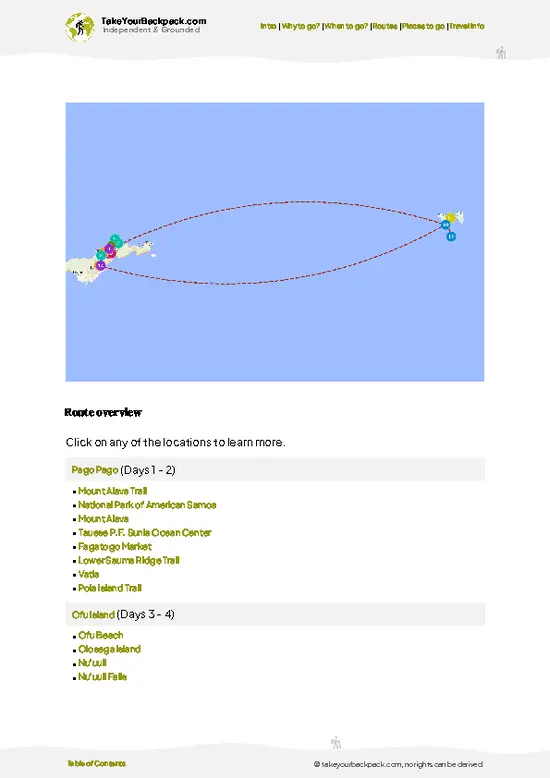
Backpacking in Pago Pago
🏆 Top picktown ranked #1
By Johan Kruseman 🇳🇱 | Updated July 15, 2026

Most people online talk about Pago Pago like it’s a sleepy, forgotten port, but the surprise is how dramatic it feels on the ground: a working harbor town squeezed between jungle walls and a flooded volcanic crater, where cargo cranes, church bells, and roosters all share the same humid air. Pago Pago sits on Tutuila Island in American Samoa, wrapped around the deep bay on the south side of the island, and it works less as a “city break” and more as your scruffy, practical base camp. You come here to catch the bus along the bay, stock up at supermarkets, and then launch into the national park trails, coastal villages, and ridgelines above town. It’s walkable in short stretches but strung-out along the water, so you end up mixing walking with cheap, informal buses and the odd taxi. Nights are quiet, with a few bars and grill joints rather than a hostel bar crawl, and you’ll meet more Peace Corps volunteers, seasonal workers, and long-stay oddballs than classic gap-year backpackers. Compared with smaller villages like Vaitogi or Afono, Pago Pago feels busier and more functional than idyllic, but it’s cheaper and easier for logistics, reasonably safe if you use normal street sense, and the trade-off is clear: you sleep in the fumes and neon so you can wake up close to the ridges, reefs, and rain-soaked green that actually brought you here.

Discover everything you want to know in the 📖 American Samoa Travel Guide.
Loading the map 🌍
CLICK TO FILTER
towns
villages
landmarks
national parks
hikes
beaches
attractions
festivals
regions
SHOW COUNTRY’S BESTSHOW ALL

✨ Why go?
Ranked #1 town in American Samoa
Reasons people choose to visit here

In Pago Pago, backpackers find a unique blend of convenience and authenticity that makes it a worthwhile stop. This town serves as a gateway to some of the best hikes in American Samoa, like the National Park trails that lead you through lush rainforests and up to breathtaking vistas. The beaches here are not just for lounging; they’re launching points for snorkeling and diving adventures.

Accommodations are typically small-scale, with guesthouses and hostels that foster a friendly, communal vibe. You’ll often find yourself sharing stories over a plate of local food, like fresh fish or taro, which adds to the sense of connection among travelers. The walkable streets make it easy to explore, whether you’re grabbing a coffee or heading to the market.

Most backpackers tend to linger for a … read more 👉
In Pago Pago, backpackers find a unique blend of convenience and authenticity that makes it a worthwhile stop. This town serves as a gateway to some of the best hikes in American Samoa, like the National Park trails that lead you through lush rainforests and up to breathtaking vistas. The beaches here are not just for lounging; they’re launching points for snorkeling and diving adventures.

Accommodations are typically small-scale, with guesthouses and hostels that foster a friendly, communal vibe. You’ll often find yourself sharing stories over a plate of local food, like fresh fish or taro, which adds to the sense of connection among travelers. The walkable streets make it easy to explore, whether you’re grabbing a coffee or heading to the market.

Most backpackers tend to linger for a few days, soaking in the laid-back atmosphere. This isn’t a party town; it’s perfect for slow travelers, hikers, and solo adventurers looking for a genuine experience. If you appreciate a place that feels both welcoming and unpretentious, Pago Pago might just be your next favorite stop.
Want to include Pago Pago in your American Samoa route?
Create a personalized American Samoa itinerary that includes Pago Pago and the places that fit your trip — based on your travel style, budget, and available time. Get your route in seconds.

Generate my trip

💡 HighlightsPlaces and moments you shouldn't skip

  • Pago Pago Harbor — The town’s natural deep-water harbor is the literal and cultural heart of Pago Pago: dramatic walls of green, working fishing boats, ferries, and unbeatable sunset views that sum up island life in one glance.
  • Mount Alava Trail (summit) — A steep, sweaty hike that pays off with sweeping panoramas of the harbor, WWII concrete relics tucked into the jungle, and a real sense of place. Do the round trip in sturdy shoes and take water.
  • Jean P. Haydon Museum — Small but essential: Samoan cultural exhibits, historical photos, and WWII artifacts. Great for grounding yourself before wandering the town and asking better questions of locals.
  • Fagatogo Market — The busiest market in town where vendors sell fresh fruit, pulaka, taro, baked goods and handmade crafts. Best in the morning
read more 👉
  • Pago Pago Harbor — The town’s natural deep-water harbor is the literal and cultural heart of Pago Pago: dramatic walls of green, working fishing boats, ferries, and unbeatable sunset views that sum up island life in one glance.
  • Mount Alava Trail (summit) — A steep, sweaty hike that pays off with sweeping panoramas of the harbor, WWII concrete relics tucked into the jungle, and a real sense of place. Do the round trip in sturdy shoes and take water.
  • Jean P. Haydon Museum — Small but essential: Samoan cultural exhibits, historical photos, and WWII artifacts. Great for grounding yourself before wandering the town and asking better questions of locals.
  • Fagatogo Market — The busiest market in town where vendors sell fresh fruit, pulaka, taro, baked goods and handmade crafts. Best in the morning — excellent for cheap bites and people-watching.
  • Pago Pago Fish Market & Wharf — Early morning fish auctions and a jumble of colorful boats. It’s noisy, smelly and honest — perfect for seeing the seafood economy that feeds the islands.
  • Utulei Beach Park — A small public beach and seafront park right in town. Locals picnic here, kids swim, and you can sit under a palm and watch harbor life roll by.
  • Veterans Memorial Stadium & Flagpole — Center of local sporting life and community events; catch a rugby or football match if you can. Also a quiet spot to read up on Samoan contributions to U.S. military history via the memorials.
  • The Fono (Legislative) Building & Fagatogo Waterfront — The political and historic core of the territory. Even just walking the waterfront and viewing the government buildings gives a feel for how local traditions and colonial history overlap.
  • Rainmaker Mountain viewpoints — You can’t climb much of the peak from town, but the viewpoints around the harbor bring you close to the clouds that give the mountain its name. Great for photos, short walks, and birdwatching.
  • Pago Pago Cruise Pier & Breakwater Walk — A simple, very visitable slice of local life: stroll the pier, watch cargo and cruise traffic, and take in unobstructed views of the harbor and surrounding peaks.
A few excellent day trips outside town: the tiny Aunu’u Island (short boat ride), the black-sand Alega Beach, and the National Park sites near Vatia with the dramatic Pola sea cliffs.
Spotted a mistake or missing something? Contact us.

🏘️ NeighborhoodsWhere things are and how it's laid out

Pago Pago is a vibrant hub in American Samoa, where the lush mountains meet the sea, and the local culture pulses through every street. Here’s how to navigate its neighborhoods like a pro.

Fagatogo: This is the heart of Pago Pago, where you’ll find the bustling market and local eateries. The vibe is lively, especially during the day. It’s walkable, making it easy to explore shops and grab a bite. Costs here are moderate, with plenty of budget-friendly options. Nightlife is low-key, perfect for those who prefer a quiet evening after a day of adventure. Ideal for short stays, as you can soak in the local culture quickly.

Nu’uuli: Just a short ride from Fagatogo, Nu’uuli offers a more laid-back atmosphere. The area is residential, with a few local cafes and shops. It’s less touristy, giving … read more 👉
Pago Pago is a vibrant hub in American Samoa, where the lush mountains meet the sea, and the local culture pulses through every street. Here’s how to navigate its neighborhoods like a pro.

Fagatogo: This is the heart of Pago Pago, where you’ll find the bustling market and local eateries. The vibe is lively, especially during the day. It’s walkable, making it easy to explore shops and grab a bite. Costs here are moderate, with plenty of budget-friendly options. Nightlife is low-key, perfect for those who prefer a quiet evening after a day of adventure. Ideal for short stays, as you can soak in the local culture quickly.

Nu’uuli: Just a short ride from Fagatogo, Nu’uuli offers a more laid-back atmosphere. The area is residential, with a few local cafes and shops. It’s less touristy, giving you a taste of everyday life. Walkability is decent, but having a bike or a rental car is better for exploring. Costs are lower here, making it a great option for longer stays if you want to immerse yourself in the community.

Pago Pago Harbor: This area is all about the views. The harbor is stunning, especially at sunset. It’s a bit more upscale, with some pricier dining options. While it’s not as walkable, the scenery makes it worth the trip. Perfect for those looking to indulge after a long hike. Nightlife is minimal, so it suits travelers seeking tranquility.

Each neighborhood has its own flavor, allowing you to tailor your experience based on what you seek—whether it’s culture, relaxation, or a bit of both.

⌛️ 1 dayHow to make the most of one day

Pago Pago, the capital of American Samoa, is a vibrant blend of rich culture and stunning natural beauty. Nestled between lush mountains and a sparkling harbor, this town offers a unique glimpse into Polynesian life, far from the typical tourist trail. The scent of saltwater mingles with the aroma of local cuisine, creating an atmosphere that feels both alive and welcoming.

Start your day with a visit to the local market in the early morning. The sun rises over the mountains, casting a golden hue on the bustling stalls. Here, you can find fresh fruits, like ripe papayas and fragrant coconuts, alongside handmade crafts. Engage with the vendors; their stories add depth to your experience. Grab a breakfast of taro and a cup of strong Samoan coffee, and soak in the vibrant energy around you.
read more 👉
Pago Pago, the capital of American Samoa, is a vibrant blend of rich culture and stunning natural beauty. Nestled between lush mountains and a sparkling harbor, this town offers a unique glimpse into Polynesian life, far from the typical tourist trail. The scent of saltwater mingles with the aroma of local cuisine, creating an atmosphere that feels both alive and welcoming.

Start your day with a visit to the local market in the early morning. The sun rises over the mountains, casting a golden hue on the bustling stalls. Here, you can find fresh fruits, like ripe papayas and fragrant coconuts, alongside handmade crafts. Engage with the vendors; their stories add depth to your experience. Grab a breakfast of taro and a cup of strong Samoan coffee, and soak in the vibrant energy around you.

In the afternoon, head to the National Park of American Samoa. It’s a short drive from the town center, and the lush trails beckon. Opt for the Lower Sauma Ridge Trail, which offers breathtaking views of the coastline. The air is thick with the scent of tropical flowers, and the sounds of birds fill the canopy above. This hike isn’t just about the destination; it’s about immersing yourself in the island’s natural beauty.

As the sun begins to dip, make your way to the village of Fagatogo. This area is often overlooked by tourists but is rich in local culture. Visit the Fagatogo Fish Market, where you can watch fishermen bring in their catch. The vibrant colors of the fish against the backdrop of the setting sun create a picturesque scene.

For dinner, indulge in local cuisine at a nearby eatery. Try the palusami, a dish made with taro leaves and coconut cream, while listening to the gentle lapping of waves. As night falls, the stars emerge, and the warm breeze carries the sounds of laughter and music from nearby homes. This is Pago Pago—an experience that lingers long after the day is done.
Turn your Pago Pago visit into an American Samoa adventure
Build a complete American Samoa route with Pago Pago, hidden gems, must-see destinations, and realistic travel times included.

Generate my trip

🌤️ When to go?Choosing the right time of year


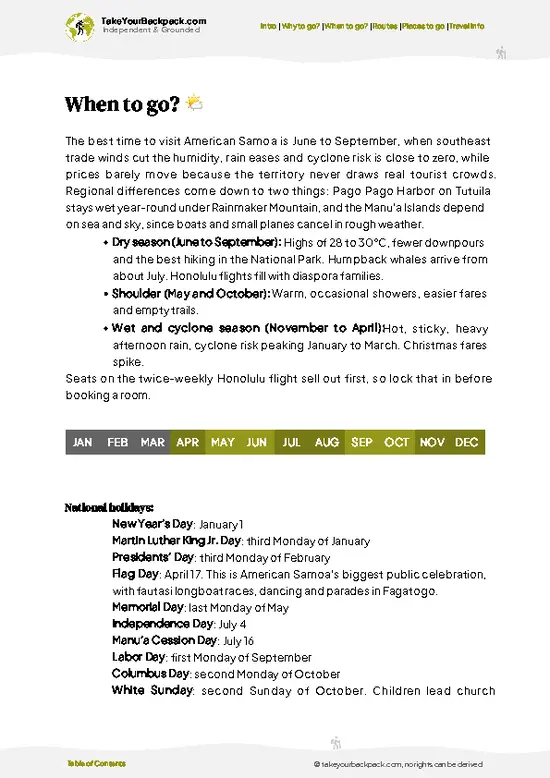
  • Topic: Weather – Pago Pago’s tropical climate means it’s warm year-round, but the wet season from November to April brings heavy rain and humidity that can turn trails into slippery mud baths. The dry season, May to October, offers clearer skies and less moisture, making hiking and exploring far more enjoyable.

  • Topic: Temperature – Expect steady warmth, with highs around 28–31°C (82–88°F) and lows rarely dipping below 23°C (73°F). The dry season feels less oppressive, while the wet season’s humidity can make the same temps feel sticky and draining.

  • Topic: Daylight Hours – Near the equator, daylight stays consistent year-round, roughly 12 hours a day. This means you don’t have to rush your adventures or worry about early sunsets cutting your hikes short.

  • Topic: Crowds – American Samoa
read more 👉

  • Topic: Weather – Pago Pago’s tropical climate means it’s warm year-round, but the wet season from November to April brings heavy rain and humidity that can turn trails into slippery mud baths. The dry season, May to October, offers clearer skies and less moisture, making hiking and exploring far more enjoyable.

  • Topic: Temperature – Expect steady warmth, with highs around 28–31°C (82–88°F) and lows rarely dipping below 23°C (73°F). The dry season feels less oppressive, while the wet season’s humidity can make the same temps feel sticky and draining.

  • Topic: Daylight Hours – Near the equator, daylight stays consistent year-round, roughly 12 hours a day. This means you don’t have to rush your adventures or worry about early sunsets cutting your hikes short.

  • Topic: Crowds – American Samoa isn’t a tourist hotspot, but the dry season sees a slight uptick in visitors, especially from July to September. You’ll find quieter trails and more local interaction outside these months.

  • Topic: Seasonal Activities – The dry season is prime for outdoor festivals, cultural events, and diving. The wet season limits water activities but offers lush, vibrant jungle scenes if you don’t mind the rain.

  • Topic: Price Fluctuations – Accommodation and flights tend to be pricier during the dry season’s peak months. Booking early or traveling shoulder season (May or October) can save you money without sacrificing good weather.


Pro-tip: Aim for late May or early October—when the rain eases, crowds thin, and prices dip—so you get the best of Pago Pago’s natural beauty without the hassle.


source: climatestotravel.comJANJanuary: fair for travelingFEBFebruary: fair for travelingMARMarch: fair for travelingAPRApril: fair for travelingMAYMay: highly recommended for travelingJUNJune: excellent for travelingJULJuly: excellent for travelingAUGAugust: excellent for travelingSEPSeptember: highly recommended for travelingOCTOctober: highly recommended for travelingNOVNovember: fair for travelingDECDecember: fair for traveling
american-samoa-city-pago-pago
© Google | Randolfo Santos

✈️ The backpacker research shortcutAmerican Samoa Travel Guide

An offline-friendly backpacking guide with optimized travel routes, ranked highlights, transport advice, and the best areas to stay.
example page 0 from our offline Travel Guide for American Samoa
example page 1 from our offline Travel Guide for American Samoa
example page 2 from our offline Travel Guide for American Samoa
example page 3 from our offline Travel Guide for American Samoa
example page 4 from our offline Travel Guide for American Samoa
example page 5 from our offline Travel Guide for American Samoa
example page 6 from our offline Travel Guide for American Samoa
example page 7 from our offline Travel Guide for American Samoa
The digital guide (161 pages) contains:
37 highlights, ranked by travel appeal
Optimized 2, 3 & 5-day travel routes
Cities, national parks, landmarks, beaches
How to get around
Offline-friendly for travel without Wi-Fi
👉 Click to see all 30+ guide features

📅 Plan smarter in minutes, not weeks
Month by month travel advice
Festivals & national holidays
Budget expectations

🗺️ Go to the right places, skip the overrated ones
Honest pros & cons of destinations
Top hikes, parks & viewpoints
Lesser-known places most travelers miss
Clear “worth it vs skip it” guidance

🛏️ Travel smoothly without rookie mistakes
Best areas to stay
Transport systems explained simply
Common scams & safety advice
SIM cards, money & practical tips

🌍 Understand the country, not just visit it
Culture & traditions
52 Essential phrases & customs
Festivals worth planning around
Traveler-friendly historical context
Insights that make places more meaningful

📱 Built for real travel conditions
Fully downloadable PDF
Works completely offline
Optimized for phone use
Useful in remote areas & buses
Everything in one place
Save weeks of stressful planning
Get instant access to your full guide. 30‑day money-back guarantee.


By proceeding you agree to our terms.
Sent to your inbox immediately after payment • 100% Secure Checkout
Best Backpacking Travel Advisor 2025 tourism awardBest Backpacking
Travel Advisor
2025
What others say about Take Your Backpack Guides:
⭐⭐⭐⭐⭐
Fantastic, amazing amount of information!
⭐⭐⭐⭐⭐
My goodness this is amazing, it's what I've been looking for hats off too you!
⭐⭐⭐⭐⭐
I think this is absolutely BRILLIANT
⭐⭐⭐⭐
Very complete and informative. It's still missing places, but I gotta to commend you
⭐⭐⭐⭐⭐
This is truly amazing, thank you, can't wait to explore it with my kids!
⭐⭐⭐⭐⭐
Awesome resource, thank you!
⭐⭐⭐⭐⭐
This is amazing! Can't wait to explore the ones I haven't seen
⭐⭐⭐⭐
I love this! Well done, great idea.
⭐⭐⭐⭐⭐
Thanks for taking the time to make this gem!
⭐⭐⭐⭐⭐
This might be the best website I've ever seen.
⭐⭐⭐⭐⭐
Congratulations, and thank you so much for your work; it's incredibly valuable.
⭐⭐⭐⭐
In all seriousness I think you did a great job pointing out the important spots
⭐⭐⭐⭐⭐
10/10 very good
⭐⭐⭐⭐⭐
As someone who's only just starting to visit regularly this is awesome, thank you.
⭐⭐⭐⭐
Thank you very much! I'm going to visit my dad, it's going to be very useful!
⭐⭐⭐⭐⭐
This is really cool! We'll be travelling for the first time and this definitely come in handy.
⭐⭐⭐⭐⭐
You are now our minister of culture, congratulations 👨‍💼
⭐⭐⭐⭐⭐
Just wanted to tell you that this is a pearl! Going to follow your recommendations.
⭐⭐⭐⭐⭐
This is so cool. I'll definitely be using the resource for my travels soon.
⭐⭐⭐⭐⭐
This is very impressive! Good work.
⭐⭐⭐⭐⭐
This is an amazing and informative site. Very well done!

🛏️ Where to stay?Choosing the right base

Pago Pago’s real backpacker pulse beats strongest around the central town area near the waterfront. This is where you’ll find the best mix of safety, social energy, and budget-friendly options. The streets here hum with local life—fishermen unloading their catch, vendors grilling fresh fish, and the salty tang of the harbor mixing with tropical blooms. Staying close to the waterfront means you’re never far from the heart of the action, where locals and travelers cross paths naturally.

Compared to the quieter, more residential neighborhoods that spread inland, the central zone offers a better … read more 👉
Pago Pago’s real backpacker pulse beats strongest around the central town area near the waterfront. This is where you’ll find the best mix of safety, social energy, and budget-friendly options. The streets here hum with local life—fishermen unloading their catch, vendors grilling fresh fish, and the salty tang of the harbor mixing with tropical blooms. Staying close to the waterfront means you’re never far from the heart of the action, where locals and travelers cross paths naturally.

Compared to the quieter, more residential neighborhoods that spread inland, the central zone offers a better chance to meet other backpackers and tap into the communal vibe. It’s not a party town by any stretch, but the small hostels and guesthouses here foster a laid-back atmosphere where swapping stories over a cold drink feels organic. The light here in the late afternoon is soft and golden, casting long shadows over the palm-lined streets—a perfect backdrop for unwinding after a day of exploring.

Venturing too far from this hub means losing that easy access to social spots and practical amenities. The further you go, the more isolated and car-dependent the neighborhoods become, which can dull the spontaneous encounters that make solo travel rewarding. So, anchor yourself near the waterfront’s modest bustle to unlock Pago Pago’s genuine rhythm without the hassle.

🚌 Getting aroundGetting around like a local

Pago Pago moves at its own rhythm—less a strict timetable, more a pulse you feel in the humid air and the slow sway of palm fronds. The town’s pace is shaped by the ocean’s tides and the sun’s climb, not by the tick of a clock. You’ll find that buses and boats don’t always show up on schedule, but they arrive with a kind of reliable unpredictability that locals navigate with a knowing smile. The scent of salt and diesel mingles with tropical blooms, and the streets hum quietly with the shuffle of feet and the occasional honk of a shared taxi. This is a place where patience pays off, and moving with the flow means you get to savor the moments between destinations.


  • Walking: Pago Pago’s compact center is best explored on foot. The air is thick with humidity, so start early to avoid the midday
read more 👉
Pago Pago moves at its own rhythm—less a strict timetable, more a pulse you feel in the humid air and the slow sway of palm fronds. The town’s pace is shaped by the ocean’s tides and the sun’s climb, not by the tick of a clock. You’ll find that buses and boats don’t always show up on schedule, but they arrive with a kind of reliable unpredictability that locals navigate with a knowing smile. The scent of salt and diesel mingles with tropical blooms, and the streets hum quietly with the shuffle of feet and the occasional honk of a shared taxi. This is a place where patience pays off, and moving with the flow means you get to savor the moments between destinations.


  • Walking: Pago Pago’s compact center is best explored on foot. The air is thick with humidity, so start early to avoid the midday heat. Walking lets you catch the salty breeze off the harbor and the vibrant chatter of market vendors without missing a beat. It’s free, flexible, and the best way to absorb the town’s laid-back vibe.


  • Public Buses (Fagogo Buses): These are the budget traveler’s backbone, running roughly from 6:00 AM to 6:00 PM. Expect a fare under $2, but don’t expect a strict schedule—buses leave when full, so timing is fluid. The ride is slow but scenic, winding through lush hills and coastal views, offering a real taste of local life.


  • Shared Taxis (Suvas): These minibuses fill up quickly and depart once packed, usually between 7:00 AM and 7:00 PM. They cost a bit more than buses, around $3-$4, but they’re faster and more direct. The interior can be cramped and hot, but the windows roll down to let in the ocean breeze. Perfect for when you want to cover ground without breaking the bank.


  • Ferries to Nearby Islands: For a day trip, ferries leave from the main dock, usually mid-morning and mid-afternoon. Tickets run about $10-$15. The ride is a refreshing break from the heat, with salt spray and panoramic views of Pago Pago Harbor. It’s a chance to see the islands’ rugged coastline and feel the wind in your hair—worth the extra effort and cost.


  • Rental Scooters: If you’re comfortable on two wheels, scooters offer freedom beyond the town limits. Rentals start around $25 per day. The roads can be narrow and winding, so caution is key, but the reward is a personal pace and access to hidden beaches and viewpoints that buses don’t reach.

👛 Costs (as of 28 July 2026)Travel costs and budget guide for Pago Pago

Backpacking in Pago Pago, American Samoa, means embracing a remote island vibe where costs reflect both the isolation and the local way of life. Here’s what you can expect to spend daily as an independent traveler.
  • Dorm Accommodation: Options are limited and basic, often in guesthouses or small hostels rather than large hostels. Expect to pay around $25-$40 USD per night. The rooms are simple, with minimal amenities, but clean and close to the waterfront or village center.
  • Meals: Food costs lean toward local markets and small eateries. A typical meal from a local café or food stand runs about $5-$8 USD. If you stick to fresh fish, taro, and tropical fruits, you’ll keep costs down. Western-style meals or imported goods push prices higher, around $10-$15 USD per meal.
  • Local Transport: Public
read more 👉
Backpacking in Pago Pago, American Samoa, means embracing a remote island vibe where costs reflect both the isolation and the local way of life. Here’s what you can expect to spend daily as an independent traveler.
  • Dorm Accommodation: Options are limited and basic, often in guesthouses or small hostels rather than large hostels. Expect to pay around $25-$40 USD per night. The rooms are simple, with minimal amenities, but clean and close to the waterfront or village center.
  • Meals: Food costs lean toward local markets and small eateries. A typical meal from a local café or food stand runs about $5-$8 USD. If you stick to fresh fish, taro, and tropical fruits, you’ll keep costs down. Western-style meals or imported goods push prices higher, around $10-$15 USD per meal.
  • Local Transport: Public transport is sparse. Most locals use shared taxis or minibuses, which cost roughly $1-$3 USD per short trip. Renting a scooter or bike is an option but expect to pay $20-$30 USD per day. Walking is often the best way to soak in the island’s atmosphere without extra cost.
  • Basic Activities/Entry Fees: Many natural attractions like beaches and hiking trails are free or have a nominal fee under $5 USD. Organized tours or cultural experiences can run $20-$50 USD, but independent exploration is the norm and the best way to connect with the island’s raw beauty.
  • Miscellaneous Expenses: Budget around $5-$10 USD for essentials like bottled water, snacks, or occasional internet access. Keep in mind that imported goods and electronics tend to be pricier due to shipping costs.

The daily budget for backpacking in Pago Pago typically falls between $40 and $80 USD. This range covers the essentials without cutting corners, letting you experience the island’s unique charm without surprises. The price reflects the balance between remote island logistics and the simple, authentic lifestyle you’ll find here.


source: americansamoa.travel
⚠️ Prices can change and everyone travels differently, so take this as a rough guide. Hope it helps you plan your adventure!

🚌 Day tripsShort trips worth adding

Pago Pago is a vibrant launchpad for unforgettable day trips in American Samoa, where the lush landscapes and rich culture beckon you to explore beyond the town.

1. Mount Alava Hike
This hike is a must for those who crave panoramic views. The trailhead is just a short drive from Pago Pago, taking about 30 minutes to reach. The ascent is steep but rewarding; you’ll sweat a bit, but the sight of the turquoise waters below makes it all worthwhile. Bring plenty of water and snacks, as the round trip can take around 3-4 hours. Aim for early morning to catch the sunrise filtering through the trees, illuminating the path ahead. A common mistake is underestimating the trail’s difficulty—wear sturdy shoes and be prepared for a workout.
👉 Explore Mount Alava

2. National Park of American Samoaread more 👉
Pago Pago is a vibrant launchpad for unforgettable day trips in American Samoa, where the lush landscapes and rich culture beckon you to explore beyond the town.

1. Mount Alava Hike
This hike is a must for those who crave panoramic views. The trailhead is just a short drive from Pago Pago, taking about 30 minutes to reach. The ascent is steep but rewarding; you’ll sweat a bit, but the sight of the turquoise waters below makes it all worthwhile. Bring plenty of water and snacks, as the round trip can take around 3-4 hours. Aim for early morning to catch the sunrise filtering through the trees, illuminating the path ahead. A common mistake is underestimating the trail’s difficulty—wear sturdy shoes and be prepared for a workout.
👉 Explore Mount Alava

2. National Park of American Samoa
Just a 45-minute ride from Pago Pago, this park is a treasure trove of biodiversity. You can spend the day hiking through lush rainforests, spotting unique wildlife, and enjoying pristine beaches. The park entrance is free, but budget for a packed lunch to savor on the beach. The best time to visit is during the dry season, from May to September, when the trails are less muddy. Many first-timers miss the chance to explore the less-traveled paths; don’t stick to the main routes—venture deeper for a more intimate experience with nature.
👉 Explore National Park of American Samoa

3. Ofu Beach
This beach is a slice of paradise, about an hour’s boat ride from Pago Pago. The journey is part of the adventure, with the boat ride offering stunning views of the coastline. Once you arrive, the soft sand and crystal-clear waters invite you to relax or snorkel among vibrant coral reefs. Expect to spend around $30 for the boat fare, and pack a picnic to enjoy on the beach. The best time to go is during the week when it’s less crowded. A common mistake is forgetting sunscreen; the sun can be intense, so slather it on generously.
👉 Explore Ofu Beach

4. Aunu’u Island
A short ferry ride from Pago Pago, Aunu’u is a peaceful escape. The island is small enough to explore in a few hours, with scenic views and friendly locals. You can walk around the island in about 2-3 hours, taking in the lush landscapes and unique cultural sites. The ferry costs around $10 round trip. Visit during the dry season for the best weather. Many first-timers overlook the local eateries; don’t miss trying the fresh fish at a small roadside stand.


Each of these trips offers a unique slice of American Samoa, making your base in Pago Pago not just a stopover, but a gateway to adventure.
Want to know what more American Samoa offers?
The American Samoa Travel Guide describes 37 highlights, from cities to national parks, from beaches to hikes

Get the Travel Guide -

🛡️ SafetySafety Tips and Common Scams in Pago Pago

In Pago Pago, American Samoa, the atmosphere is laid-back, but a few practical tips can enhance your experience. The town is generally safe, but like any place, a little awareness goes a long way. Stick to well-lit areas at night, especially if you’re solo. The harbor area is beautiful but can feel isolated after dark; it’s best to explore during daylight.

While scams are rare, be cautious of overly friendly locals offering unsolicited help. They may expect a tip for their “guidance.” If someone approaches you with a deal that sounds too good to be true—like discounted tours—trust your instincts.

Everyday annoyances can include the occasional stray dog or the slow pace of service in restaurants. Embrace it; this is part of the local charm. Carry a light-hearted attitude, and don’t rush. … read more 👉
In Pago Pago, American Samoa, the atmosphere is laid-back, but a few practical tips can enhance your experience. The town is generally safe, but like any place, a little awareness goes a long way. Stick to well-lit areas at night, especially if you’re solo. The harbor area is beautiful but can feel isolated after dark; it’s best to explore during daylight.

While scams are rare, be cautious of overly friendly locals offering unsolicited help. They may expect a tip for their “guidance.” If someone approaches you with a deal that sounds too good to be true—like discounted tours—trust your instincts.

Everyday annoyances can include the occasional stray dog or the slow pace of service in restaurants. Embrace it; this is part of the local charm. Carry a light-hearted attitude, and don’t rush. Engage with locals, but keep your belongings secure. A relaxed demeanor will help you blend in and enjoy the genuine warmth of the community.

Other American Samoan towns near Pago Pago

Explore more nearby:

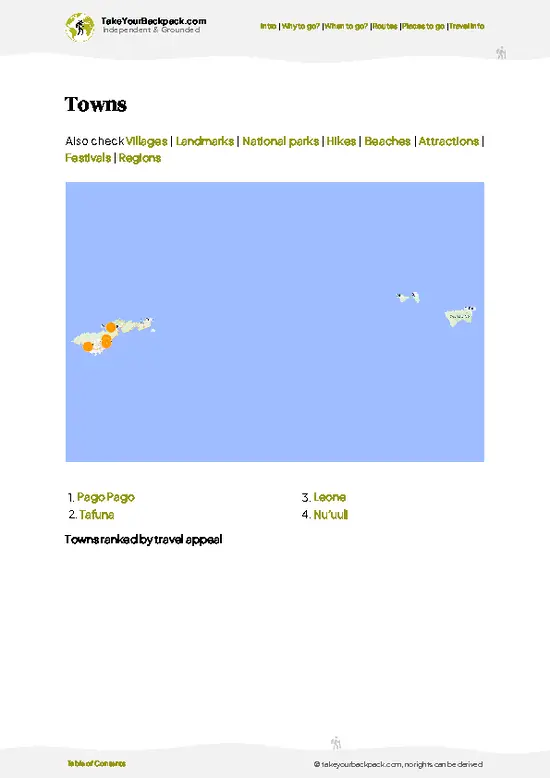
  • Nu‘uuli—bustling market, lagoon shoreline, local eateries| 5 km away
  • Tafuna—airport access, suburban sprawl, shopping centers| 6 km away
  • Leone—missionary church, tsunami memorials, broad bay views| 12 km away

💡 Not sure where to go next?
Create a personalized itinerary for American Samoa including Pago Pago and the places that fit your trip.

Generate my itinerary

👉 Discover all towns

Or checkout all American Samoa has to offer (think cities, towns, villages, national parks, hikes, beaches, festivals)
Country photo of American Samoa

We 💚 feedbackWhat to keep in mind

In Pago Pago, the air is thick with the scent of ocean salt and tropical blooms. The vibe? Laid-back yet vibrant, where locals greet you like family. Don’t miss the fresh fish at the market; it’s a game-changer. But a heads-up: the roads can be tricky, so take it slow. Embrace the rain—it’s part of the charm. Each drop adds to the lushness, making the landscape feel alive. Trust me, the payoff is worth every step.

✍️ Help improve this page!
The information on this page is based on in-depth research, insights shared by experienced travelers, and feedback from the local travel community in American Samoa. While every effort is made to keep the information accurate and current, conditions can change — so if you spot anything incorrect or outdated, please get in touch.


🙋‍♂️ Give feedback

👋 Meet the founderWho’s Behind Take Your Backpack?

Johan, backpacker and founder of TakeYourBackpackHi, I’m Johan (Netherlands 🇳🇱), the creator of TakeYourBackpack. Over the past decade, I’ve backpacked through 80+ countries across six continents, gaining extensive experience with independent travel, long-term trips, and overland routes.

This site is built on a combination of firsthand travel experience and carefully curated insights from other backpackers. Many guides are based on places I’ve personally visited, while others bring together tips, observations, and practical advice shared by trusted travelers I’ve met along the way.

The goal is to provide realistic, experience-driven guidance — not generic itineraries — so you can explore destinations with better context, clearer expectations, and more confidence.

Get full country guide •
Instant download • 37 highlights • Full Offline guide