×

Angola🇦🇴 | townsCazomboremote rivers, timber trade, eastern outpost | things to do and best time to go

Explore GabelaExplore Xangongo

Backpacking in Cazombo
👌 Worth visitingtown ranked #6
By Johan Kruseman 🇳🇱 | Updated July 30, 2026

Cazombo’s surprise: it’s quieter and greener than most expect, with the languid Zambezi River curling through town and mornings scented with woodsmoke and wildflowers—nothing like the dusty, chaotic border outpost you’ll find in most guides. Deep in Angola’s far east, near the Zambian border, Cazombo is less a destination than a threshold: a practical, low-key stopover for those crossing borders or chasing the river’s source. Don’t expect hostels or nightlife; you’ll find basic guesthouses, a slow market, and a pace that makes Luena feel like a metropolis. It’s walkable, safe by rural standards, and best for travelers who value raw, unvarnished Africa over amenities or crowds.

Discover everything you want to know in the 📖 Angola Travel Guide.


Get your Angola guide
90 ranked highlights, routes & tips, works offline (341 pages)
Loading the map 🌍
CLICK TO FILTER
cities
towns
landmarks
national parks
hikes
beaches
attractions
festivals
regions
SHOW COUNTRY’S BESTSHOW ALL

✨ Why go?
Ranked #6 town in Angola
Why visitors keep coming back

Cazombo serves as a gateway for backpackers exploring Angola’s wild beauty. Its convenient location near stunning hikes and the Zambezi River makes it a practical stop. You can easily access local trails that lead to breathtaking views, or take a short trip to nearby beaches for a refreshing dip. The town’s walkable streets invite you to wander, with small-scale guesthouses and hostels offering a cozy, communal vibe. Expect to share stories over local dishes that burst with flavor, enhancing the social atmosphere.

Travelers often linger a few days, soaking in the laid-back charm and connecting with fellow adventurers. This place is perfect for slow travelers and solo backpackers who appreciate a friendly, intimate setting. While nightlife isn’t the main draw, the warmth of the community … read more 👉
Cazombo serves as a gateway for backpackers exploring Angola’s wild beauty. Its convenient location near stunning hikes and the Zambezi River makes it a practical stop. You can easily access local trails that lead to breathtaking views, or take a short trip to nearby beaches for a refreshing dip. The town’s walkable streets invite you to wander, with small-scale guesthouses and hostels offering a cozy, communal vibe. Expect to share stories over local dishes that burst with flavor, enhancing the social atmosphere.

Travelers often linger a few days, soaking in the laid-back charm and connecting with fellow adventurers. This place is perfect for slow travelers and solo backpackers who appreciate a friendly, intimate setting. While nightlife isn’t the main draw, the warmth of the community and the surrounding nature make every moment feel rewarding. Cazombo is not just a stop; it’s a chance to breathe in Angola’s spirit.
Want to include Cazombo in your Angola route?
Create a personalized Angola itinerary that includes Cazombo and the places that fit your trip — based on your travel style, budget, and available time. Get your route in seconds.

Generate my trip

💡 HighlightsPlaces and moments you shouldn't skip

  • Luena/Zambezi riverfront (the quay) — The town hugs the upper Zambezi/Luena, and the riverfront is where daily life happens: fishermen launching at dawn, women washing clothes, boats coming and going. Great for a slow walk, people-watching, and catching boat transport to nearby villages.
  • Mercado Municipal (the town market) — The market is the best place to see local produce, smoked fish, and everyday trade. It’s noisy, colorful, and a real-time snapshot of local foodways and fabrics—bring small bills and a sense of curiosity.
  • Cazombo airstrip — Small, functional and characterful: the airstrip is how the town connects to the rest of Angola when flights run. Visiting gives a sense of the logistics of life in a remote provincial town and occasional aircraft movements are interesting to watch.
read more 👉
  • Luena/Zambezi riverfront (the quay) — The town hugs the upper Zambezi/Luena, and the riverfront is where daily life happens: fishermen launching at dawn, women washing clothes, boats coming and going. Great for a slow walk, people-watching, and catching boat transport to nearby villages.
  • Mercado Municipal (the town market) — The market is the best place to see local produce, smoked fish, and everyday trade. It’s noisy, colorful, and a real-time snapshot of local foodways and fabrics—bring small bills and a sense of curiosity.
  • Cazombo airstrip — Small, functional and characterful: the airstrip is how the town connects to the rest of Angola when flights run. Visiting gives a sense of the logistics of life in a remote provincial town and occasional aircraft movements are interesting to watch.
  • Town square / Praça and municipal buildings — The administrative heart of Cazombo, where people meet, local announcements are posted, and the town’s layered history is visible in building styles and public monuments. Good for seeing daily civic life and chatting with locals on a bench.
  • Parish church and mission area — Religious life plays a big role in town rhythms. The local parish (Catholic or Protestant congregations) is a community hub—attending a service or visiting the grounds offers insight into social networks and local traditions.
  • Ferry/boat landing — The working landing is more than transportation: it’s a place of informal trade, storytelling and bargaining. Short boat rides along the Luena/Zambezi from here are an accessible way to see riverine scenery and small riverside settlements.
  • Fishermen’s wharf and fish market — Early morning visits are best: watch nets being emptied, fish smoked and laid out, and local buyers haggle. It’s sensory and honest—great for photography and understanding local diets.
  • Local craft stalls and informal workshops — You won’t find polished souvenir shops, but scattered woodcarvers, basket-makers and textile sellers work in town. Buying here supports local craftspeople and gives a tangible link to regional techniques and materials.
  • Municipal stadium / football pitch — Football is a community ritual. If a match or youth game is on, it’s a lively, social event—cheap entertainment and a genuine way to meet people and feel local energy.
  • Neighborhood promenades and markets at dusk — The small lanes and evening food stalls that appear around the center are where you get the town’s flavor: grilled street food, informal music, and casual gatherings that reveal everyday life better than any guidebook.
A few easy day trips from Cazombo include short boat trips and visits to the nearby Zambezi/Luena floodplain and islands, small riverside fishing villages outside town, and the border area into neighbouring Zambia for cross-border markets and culture.
Spotted a mistake or missing something? Contact us.
🏘️ NeighborhoodsWhere things are and how it's laid out

Cazombo is a unique blend of cultures and landscapes, offering backpackers a chance to experience Angola’s heart. Here’s how to navigate its neighborhoods:

Centro: This is the bustling core of Cazombo. Expect a lively atmosphere with local markets and street vendors. It’s walkable, making it easy to explore on foot. Costs here are moderate, with plenty of budget-friendly eateries. The nightlife is vibrant, with bars that come alive after dark, perfect for short stays.

Baía de Cazombo: A quieter area along the river, this neighborhood is ideal for those seeking a peaceful retreat. The views are stunning, especially at sunset. It’s less walkable, so consider renting a bike or using local transport. Prices are slightly higher here, but the tranquility makes it worth it for longer stays.

Zona read more 👉
Cazombo is a unique blend of cultures and landscapes, offering backpackers a chance to experience Angola’s heart. Here’s how to navigate its neighborhoods:

Centro: This is the bustling core of Cazombo. Expect a lively atmosphere with local markets and street vendors. It’s walkable, making it easy to explore on foot. Costs here are moderate, with plenty of budget-friendly eateries. The nightlife is vibrant, with bars that come alive after dark, perfect for short stays.

Baía de Cazombo: A quieter area along the river, this neighborhood is ideal for those seeking a peaceful retreat. The views are stunning, especially at sunset. It’s less walkable, so consider renting a bike or using local transport. Prices are slightly higher here, but the tranquility makes it worth it for longer stays.

Zona Rural: Venture a bit further out for an authentic experience. This area showcases local life, with traditional homes and farms. It’s not as developed, so prepare for basic amenities. Costs are low, and the sense of community is palpable. Perfect for backpackers looking to immerse themselves in local culture for an extended period.

Each area offers a distinct flavor of Cazombo, making your journey richer and more rewarding.

⌛️ 1 day1-day itinerary for Cazombo

Cazombo, Angola, is a vibrant town where the Zambezi River flows with stories and the air is thick with the scent of grilled fish and spices. It’s a place where the rhythm of life feels both slow and electric, making it perfect for a day of exploration.

Start your morning at the bustling local market, Mercado Municipal. The colors of fresh produce and the chatter of vendors create an inviting atmosphere. Grab a breakfast of *pão com chouriço*—a local sausage roll—and sip on sweet, strong coffee while soaking in the lively scene. This is where you’ll feel the pulse of Cazombo.

In the afternoon, head to the nearby Kwanza River. The walk along the riverbank is peaceful, with the sound of water lapping against the shore. Here, you can visit the less-traveled neighborhood of Bairro da Paz, where … read more 👉
Cazombo, Angola, is a vibrant town where the Zambezi River flows with stories and the air is thick with the scent of grilled fish and spices. It’s a place where the rhythm of life feels both slow and electric, making it perfect for a day of exploration.

Start your morning at the bustling local market, Mercado Municipal. The colors of fresh produce and the chatter of vendors create an inviting atmosphere. Grab a breakfast of *pão com chouriço*—a local sausage roll—and sip on sweet, strong coffee while soaking in the lively scene. This is where you’ll feel the pulse of Cazombo.

In the afternoon, head to the nearby Kwanza River. The walk along the riverbank is peaceful, with the sound of water lapping against the shore. Here, you can visit the less-traveled neighborhood of Bairro da Paz, where you’ll find local artisans crafting beautiful woven baskets. Engaging with them offers a genuine glimpse into the culture that’s often missed by tourists.

As evening approaches, make your way to the riverside for sunset. The sky transforms into a canvas of oranges and purples, reflecting off the water. For dinner, seek out a local eatery serving *caldeirada*, a hearty fish stew. The warmth of the food and the laughter of locals will wrap around you like a comforting blanket.

Cazombo isn’t just a stop; it’s a chance to connect with the heart of Angola. Embrace the journey, and let the town’s spirit guide you.
Turn your Cazombo visit into an Angola adventure
Build a complete Angola route with Cazombo, hidden gems, must-see destinations, and realistic travel times included.

Generate my trip

🌤️ When to go?Best time to visit Cazombo


  • Weather: The dry season from May to September is your best bet. Expect clear skies and minimal rain, which means trails stay firm and the air feels crisp rather than muggy.

  • Temperature: Daytime temps hover around 20-25°C (68-77°F) during the dry months, perfect for trekking without overheating. Nights can dip to 10°C (50°F), so pack a warm layer.

  • Daylight Hours: Roughly 11 to 12 hours of daylight in the dry season, giving you ample time to explore without rushing the fading light.

  • Crowds: Cazombo is off the beaten path, so crowds are sparse year-round. Still, the dry season attracts a few more adventurous travelers, adding a subtle buzz without overwhelming solitude.

  • Seasonal Activities: Wildlife spotting peaks in the dry months when animals gather near water sources, making early
read more 👉

  • Weather: The dry season from May to September is your best bet. Expect clear skies and minimal rain, which means trails stay firm and the air feels crisp rather than muggy.

  • Temperature: Daytime temps hover around 20-25°C (68-77°F) during the dry months, perfect for trekking without overheating. Nights can dip to 10°C (50°F), so pack a warm layer.

  • Daylight Hours: Roughly 11 to 12 hours of daylight in the dry season, giving you ample time to explore without rushing the fading light.

  • Crowds: Cazombo is off the beaten path, so crowds are sparse year-round. Still, the dry season attracts a few more adventurous travelers, adding a subtle buzz without overwhelming solitude.

  • Seasonal Activities: Wildlife spotting peaks in the dry months when animals gather near water sources, making early mornings especially rewarding.

  • Price Fluctuations: Expect slightly higher prices during the dry season due to demand, but nothing that breaks the bank. The wet season offers cheaper stays but at the cost of muddy trails and limited access.


Pro-tip: Aim for late dry season—August to September—when the landscape is still lush from earlier rains but the weather is reliably dry, balancing comfort and scenery perfectly.


source: climatestotravel.comJANJanuary: fair for travelingFEBFebruary: fair for travelingMARMarch: fair for travelingAPRApril: good for travelingMAYMay: highly recommended for travelingJUNJune: highly recommended for travelingJULJuly: highly recommended for travelingAUGAugust: excellent for travelingSEPSeptember: excellent for travelingOCTOctober: good for travelingNOVNovember: fair for travelingDECDecember: fair for traveling
when-to-go

✈️ The backpacker research shortcutAngola Travel Guide

An offline-friendly backpacking guide with optimized travel routes, ranked highlights, transport advice, and the best areas to stay.
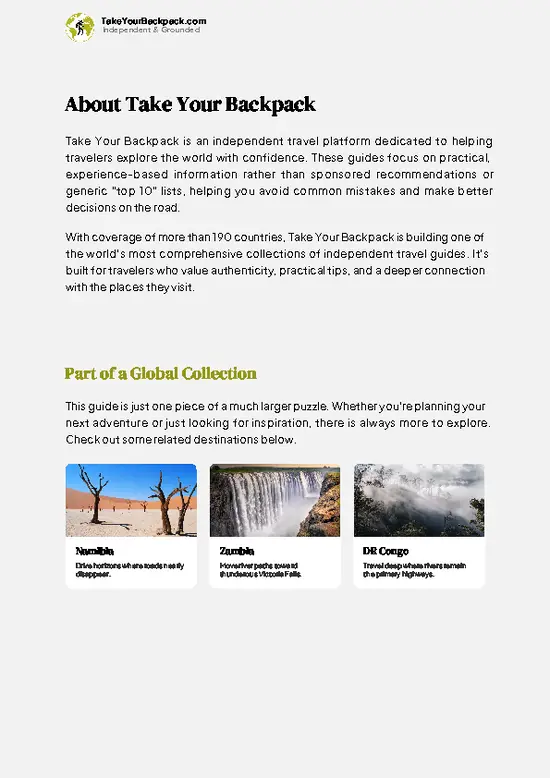
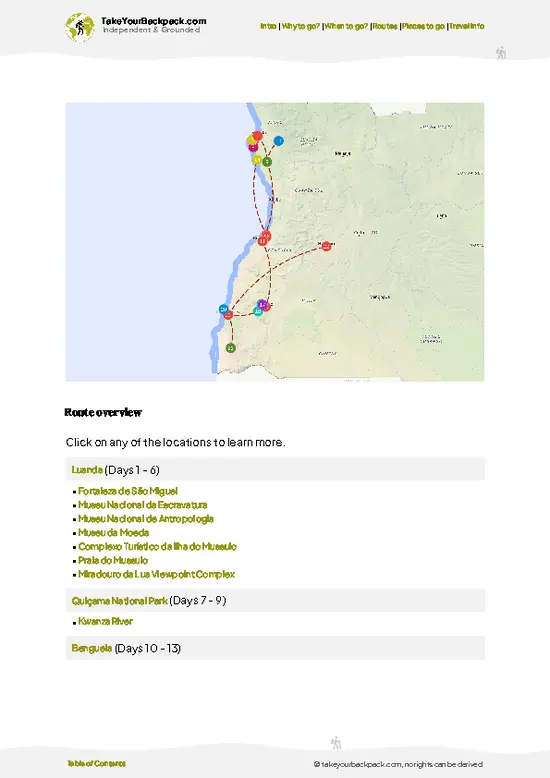
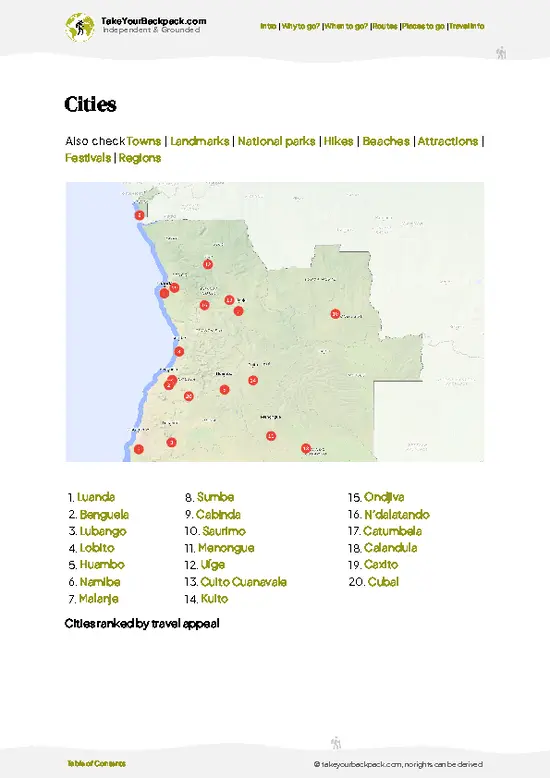
example page 0 from our offline Travel Guide for Angola
example page 1 from our offline Travel Guide for Angola
example page 2 from our offline Travel Guide for Angola
example page 3 from our offline Travel Guide for Angola
example page 4 from our offline Travel Guide for Angola
example page 5 from our offline Travel Guide for Angola
example page 6 from our offline Travel Guide for Angola
example page 7 from our offline Travel Guide for Angola
The digital guide (341 pages) contains:
90 highlights, ranked by travel appeal
Optimized 7, 14 & 21-day travel routes
Cities, national parks, landmarks, beaches
How to get around
Offline-friendly for travel without Wi-Fi
👉 Click to see all 30+ guide features

📅 Plan smarter in minutes, not weeks
Month by month travel advice
Festivals & national holidays
Budget expectations

🗺️ Go to the right places, skip the overrated ones
Honest pros & cons of destinations
Top hikes, parks & viewpoints
Lesser-known places most travelers miss
Clear “worth it vs skip it” guidance

🛏️ Travel smoothly without rookie mistakes
Best areas to stay
Transport systems explained simply
Common scams & safety advice
SIM cards, money & practical tips

🌍 Understand the country, not just visit it
Culture & traditions
52 Essential phrases & customs
Festivals worth planning around
Traveler-friendly historical context
Insights that make places more meaningful

📱 Built for real travel conditions
Fully downloadable PDF
Works completely offline
Optimized for phone use
Useful in remote areas & buses
Everything in one place
Save weeks of stressful planning
Get instant access to your full guide. 30‑day money-back guarantee.


By proceeding you agree to our terms.
Sent to your inbox immediately after payment • 100% Secure Checkout
Best Backpacking Travel Advisor 2025 tourism awardBest Backpacking
Travel Advisor
2025
What others say about Take Your Backpack Guides:
⭐⭐⭐⭐⭐
Fantastic, amazing amount of information!
⭐⭐⭐⭐⭐
My goodness this is amazing, it's what I've been looking for hats off too you!
⭐⭐⭐⭐⭐
I think this is absolutely BRILLIANT
⭐⭐⭐⭐
Very complete and informative. It's still missing places, but I gotta to commend you
⭐⭐⭐⭐⭐
This is truly amazing, thank you, can't wait to explore it with my kids!
⭐⭐⭐⭐⭐
Awesome resource, thank you!
⭐⭐⭐⭐⭐
This is amazing! Can't wait to explore the ones I haven't seen
⭐⭐⭐⭐
I love this! Well done, great idea.
⭐⭐⭐⭐⭐
Thanks for taking the time to make this gem!
⭐⭐⭐⭐⭐
This might be the best website I've ever seen.
⭐⭐⭐⭐⭐
Congratulations, and thank you so much for your work; it's incredibly valuable.
⭐⭐⭐⭐
In all seriousness I think you did a great job pointing out the important spots
⭐⭐⭐⭐⭐
10/10 very good
⭐⭐⭐⭐⭐
As someone who's only just starting to visit regularly this is awesome, thank you.
⭐⭐⭐⭐
Thank you very much! I'm going to visit my dad, it's going to be very useful!
⭐⭐⭐⭐⭐
This is really cool! We'll be travelling for the first time and this definitely come in handy.
⭐⭐⭐⭐⭐
You are now our minister of culture, congratulations 👨‍💼
⭐⭐⭐⭐⭐
Just wanted to tell you that this is a pearl! Going to follow your recommendations.
⭐⭐⭐⭐⭐
This is so cool. I'll definitely be using the resource for my travels soon.
⭐⭐⭐⭐⭐
This is very impressive! Good work.
⭐⭐⭐⭐⭐
This is an amazing and informative site. Very well done!

🛏️ Where to stay?Best areas and accommodation options

In Cazombo, the best spot for backpackers is the central district near the market and main square. This area hums with local life—vendors calling out, the scent of fresh cassava frying, and kids darting through narrow streets. It’s where you’ll find the few budget guesthouses and hostels that cater to solo travelers, offering a chance to meet others without the sterile feel of a big city hostel. Safety here is a relative term, but sticking to daylight hours and busy streets keeps things smooth. Compared to the quieter, more residential outskirts, this hub pulses with energy and connection, making … read more 👉
In Cazombo, the best spot for backpackers is the central district near the market and main square. This area hums with local life—vendors calling out, the scent of fresh cassava frying, and kids darting through narrow streets. It’s where you’ll find the few budget guesthouses and hostels that cater to solo travelers, offering a chance to meet others without the sterile feel of a big city hostel. Safety here is a relative term, but sticking to daylight hours and busy streets keeps things smooth. Compared to the quieter, more residential outskirts, this hub pulses with energy and connection, making it easier to navigate the town’s rhythm and unlock authentic interactions without the hassle of taxis or long walks.

🚌 Getting aroundHow to get around Cazombo

Cazombo moves at its own rhythm—less a clockwork town and more a place where time bends to the sun and the slow shuffle of daily life. The air carries the scent of earth and river, thick with humidity that softens the edges of hurried plans. Here, schedules are loose suggestions, not ironclad rules. You’ll find the pulse of the town in the chatter at the market, the occasional honk of a moto-taxi weaving through dusty streets, and the steady footsteps of locals who know every shortcut. To navigate Cazombo like a pro, you lean into this flow, blending patience with a sense of adventure.


  • Walking: The best way to absorb Cazombo’s character. Streets are compact but uneven, so sturdy shoes are a must. Walking lets you catch the smells of fresh cassava and hear the distant calls of river fishermen.
read more 👉
Cazombo moves at its own rhythm—less a clockwork town and more a place where time bends to the sun and the slow shuffle of daily life. The air carries the scent of earth and river, thick with humidity that softens the edges of hurried plans. Here, schedules are loose suggestions, not ironclad rules. You’ll find the pulse of the town in the chatter at the market, the occasional honk of a moto-taxi weaving through dusty streets, and the steady footsteps of locals who know every shortcut. To navigate Cazombo like a pro, you lean into this flow, blending patience with a sense of adventure.


  • Walking: The best way to absorb Cazombo’s character. Streets are compact but uneven, so sturdy shoes are a must. Walking lets you catch the smells of fresh cassava and hear the distant calls of river fishermen. No cost, just time and curiosity.

  • Moto-Taxi: The town’s unofficial lifeline. They start running around 6 AM and slow down after sunset. Fares are negotiable but generally under $1 for short hops. Fast and nimble, perfect for squeezing through narrow alleys or beating the midday heat.

  • Shared Minibus (Chap Chap): These minibuses run irregularly, often filling up before departure. Prices hover around $2-$3 for longer trips outside town. They’re a rough ride—bumpy and noisy—but the cheapest way to reach nearby villages or markets.

  • Bicycle Rental: A quiet, flexible option if you want to explore beyond the center. Rentals cost about $5 per day. The terrain is mostly flat but watch for potholes and stray dogs. Early morning rides offer cooler air and softer light for photos.

👛 Costs (as of 30 July 2026)How expensive it really is

Backpacking in Cazombo, Angola, means stepping into a place where infrastructure is sparse, and costs reflect both the challenge and the reward of traveling off the beaten path.
  • Dorm Accommodation: Options are extremely limited here. Expect to pay around €10-€15 per night if you find a basic guesthouse or a local hostel setup. These places are no-frills, often with shared bathrooms and minimal amenities, but they get you a safe place to crash.
  • Meals: Food costs are modest but depend heavily on where you eat. Street food and local markets offer meals for about €2-€4, featuring staples like rice, beans, and grilled fish or chicken. If you opt for a small restaurant, expect to pay closer to €5-€7 for a more substantial meal.
  • Local Transport: Public transport is rudimentary. Local minibuses
read more 👉
Backpacking in Cazombo, Angola, means stepping into a place where infrastructure is sparse, and costs reflect both the challenge and the reward of traveling off the beaten path.
  • Dorm Accommodation: Options are extremely limited here. Expect to pay around €10-€15 per night if you find a basic guesthouse or a local hostel setup. These places are no-frills, often with shared bathrooms and minimal amenities, but they get you a safe place to crash.
  • Meals: Food costs are modest but depend heavily on where you eat. Street food and local markets offer meals for about €2-€4, featuring staples like rice, beans, and grilled fish or chicken. If you opt for a small restaurant, expect to pay closer to €5-€7 for a more substantial meal.
  • Local Transport: Public transport is rudimentary. Local minibuses or shared taxis cost roughly €0.50-€1 per trip within town. For longer distances or private rides, prices can jump to €5-€10, reflecting the scarcity of vehicles and rough road conditions.
  • Basic Activities/Entry Fees: Organized tourist activities are rare. Entry fees to any local attractions or natural sites are minimal, usually under €2. Most exploration involves self-guided walks or river visits, which are free but require some local guidance or transport arrangements.
  • Miscellaneous Expenses: This covers essentials like bottled water, snacks, and occasional phone credit. Budget around €1-€3 daily, as clean water isn’t always guaranteed, and staying connected can be a small but necessary expense.

The total daily budget for backpacking in Cazombo hovers between €20 and €35. This range reflects the balance between basic comfort and the raw, off-grid nature of the town. The modest costs come with the trade-off of limited services and infrastructure, but they also open the door to an authentic, unfiltered experience far from typical tourist routes.


source: angola.org
⚠️ Prices can change and everyone travels differently, so take this as a rough guide. Hope it helps you plan your adventure!

🚌 Day tripsShort trips worth adding

Cazombo, Angola, is a backpacker’s dream base for exploring the wild beauty of the region. With its vibrant local culture and proximity to stunning landscapes, you’ll find plenty of worthwhile day trips that make the effort feel like a rewarding adventure.

1. The Zambezi River Cruise
Just a short drive from Cazombo, the Zambezi River offers a serene escape. Picture yourself gliding over the water, surrounded by lush banks and the distant calls of wildlife. The best time to go is during the dry season, from May to October, when the river is calm and the views are clear. Expect to spend around $15 for a half-day trip, including a local guide. Many first-timers underestimate the power of the sunset here; don’t miss it. The golden hues reflecting off the water are worth every minute.


2.read more 👉
Cazombo, Angola, is a backpacker’s dream base for exploring the wild beauty of the region. With its vibrant local culture and proximity to stunning landscapes, you’ll find plenty of worthwhile day trips that make the effort feel like a rewarding adventure.

1. The Zambezi River Cruise
Just a short drive from Cazombo, the Zambezi River offers a serene escape. Picture yourself gliding over the water, surrounded by lush banks and the distant calls of wildlife. The best time to go is during the dry season, from May to October, when the river is calm and the views are clear. Expect to spend around $15 for a half-day trip, including a local guide. Many first-timers underestimate the power of the sunset here; don’t miss it. The golden hues reflecting off the water are worth every minute.


2. Kuito Falls Adventure
A bit more off the beaten path, Kuito Falls is a hidden treasure. It takes about two hours to reach, but the journey through the rugged terrain is half the fun. Once there, the roar of the cascading water and the mist in the air create an exhilarating atmosphere. Bring a packed lunch to enjoy while soaking in the views. Costs hover around $10 for transport and entry. Many travelers overlook the importance of sturdy footwear; the trails can be slippery, so tread carefully.


3. Cultural Day in Cazombo
Stay local for a day and immerse yourself in the culture of Cazombo. Visit the bustling markets, where the scent of spices fills the air, and local artisans showcase their crafts. Spend a few hours chatting with residents; their stories add depth to your experience. This trip is free if you wander on your own, but consider budgeting $5 for snacks and small purchases. The best time to explore is early morning when the town is waking up, and the light is soft. Many backpackers rush through; take your time to soak it all in.
👉 Explore Cazombo

These trips not only enrich your experience but also connect you to the heart of Angola. Each adventure offers a unique glimpse into the region’s soul, making your time in Cazombo truly special.
Want to know what more Angola offers?
The Angola Travel Guide describes 90 highlights, from cities to national parks, from beaches to hikes

Get the Travel Guide -

🛡️ SafetyStaying Safe: What Travelers Should Know

Cazombo is generally safe, but staying aware is key. The bustling market can be a sensory overload—bright colors, the scent of spices, and the chatter of locals. Keep your belongings close; pickpocketing can happen in crowded areas.

If you’re solo, avoid wandering too far after dark. The streets can feel deserted, and it’s best to stick to well-lit areas.

Common scams are rare, but be cautious of overly friendly strangers offering unsolicited help. A polite but firm “no, thank you” usually suffices.

Carry yourself confidently, and engage with locals; they’re often eager to share their culture. A smile goes a long way, and being respectful will enhance your experience.

Other Angolan towns near Cazombo

Explore more nearby:

  • Cangandala—nature reserve, rare antelope, miombo woodland| 745 km away
  • Longonjo—railway stop, plateau views, local markets| 839 km away
  • Camabatela—coffee plantations, misty highlands, rural crossroads| 921 km away

💡 Not sure where to go next?
Create a personalized itinerary for Angola including Cazombo and the places that fit your trip.

Generate my itinerary

👉 Discover all towns

Or checkout all Angola has to offer (think cities, towns, villages, national parks, hikes, beaches, festivals)
Country photo of Angola

We 💚 feedbackKey takeaways before you go

Cazombo has a raw, unfiltered vibe that pulls you in. The river’s murmur mixes with the laughter of locals, creating a rhythm that feels alive. Don’t miss the market; the spices and fresh produce are a sensory feast. Just be ready for the heat—hydrate and pace yourself. Embrace the slow, and you’ll find the real magic in the moments between.

✍️ Help improve this page!
The information on this page is based on in-depth research, insights shared by experienced travelers, and feedback from the local travel community in Angola. While every effort is made to keep the information accurate and current, conditions can change — so if you spot anything incorrect or outdated, please get in touch.


🙋‍♂️ Give feedback

👋 Meet the founderWho’s Behind Take Your Backpack?

Johan, backpacker and founder of TakeYourBackpackHi, I’m Johan (Netherlands 🇳🇱), the creator of TakeYourBackpack. Over the past decade, I’ve backpacked through 80+ countries across six continents, gaining extensive experience with independent travel, long-term trips, and overland routes.

This site is built on a combination of firsthand travel experience and carefully curated insights from other backpackers. Many guides are based on places I’ve personally visited, while others bring together tips, observations, and practical advice shared by trusted travelers I’ve met along the way.

The goal is to provide realistic, experience-driven guidance — not generic itineraries — so you can explore destinations with better context, clearer expectations, and more confidence.

Get full Angola guide •
Instant download • 90 highlights • Full Offline guide