×

Angola🇦🇴 | townsCangandalaMalanje working town, park gateway, roadside grills | things to do and best time to go

Explore Namib DesertExplore Camabatela

Backpacking in Cangandala
👀 For curious travelerstown ranked #8
By Johan Kruseman 🇳🇱 | Updated October 16, 2026

Cangandala is a working town and municipality in Malanje Province, and the national park that shares its name is a separate, restricted sanctuary rather than a walk-in attraction. The town sits in northern-central Angola, roughly 30 km southeast of Malanje. Expect red laterite dust on your boots, diesel from passing trucks, the smell of charcoal smoke at dusk and the thump of a speaker somewhere behind a market stall. Visitor infrastructure is thin, so evenings are quiet and you will rarely meet other backpackers. Malanje city is the practical base with more beds and food, while Cangandala suits travelers who plan ahead, carry cash in kwanzas and want a stop on the road, not a polished one.

Discover everything you want to know in the 📖 Angola Travel Guide.


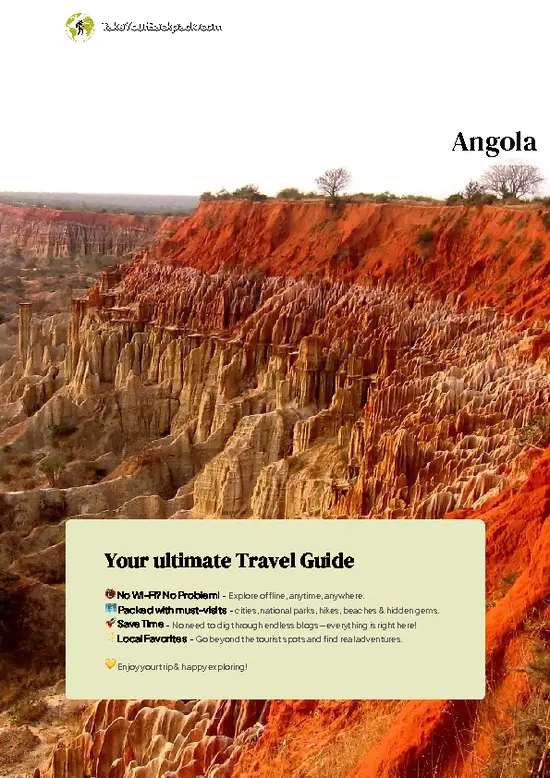
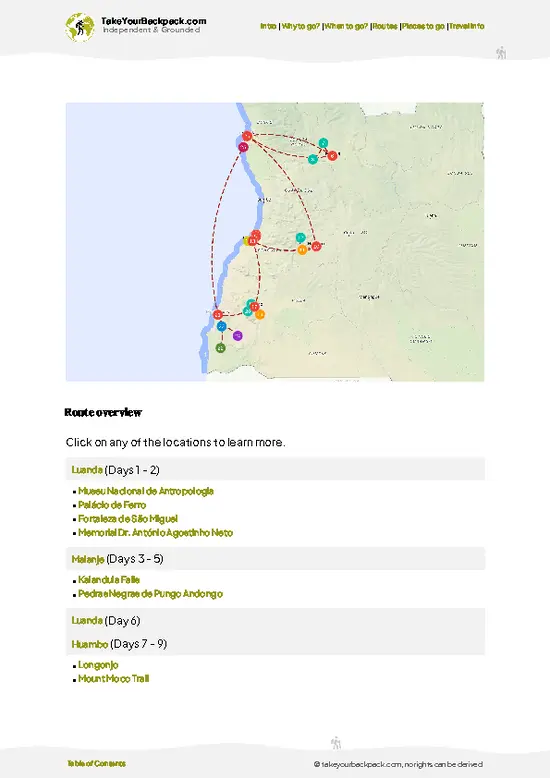
example page 0 from our offline Travel Guide for Angola
example page 1 from our offline Travel Guide for Angola
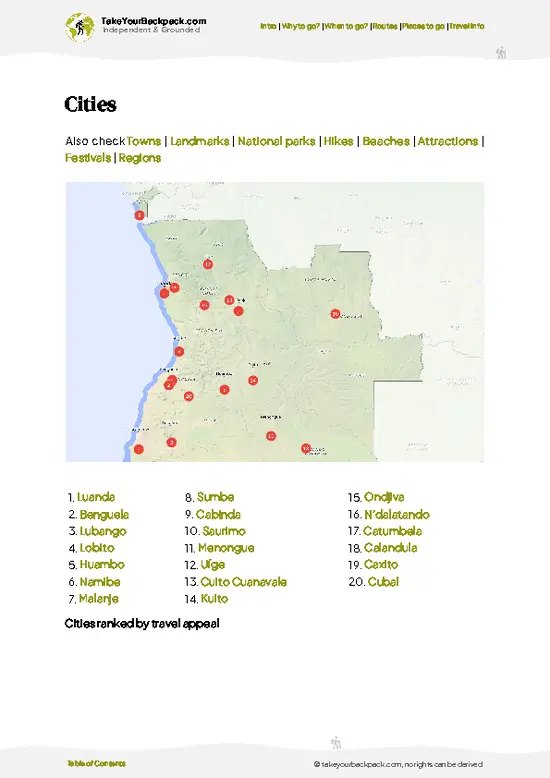
example page 2 from our offline Travel Guide for Angola
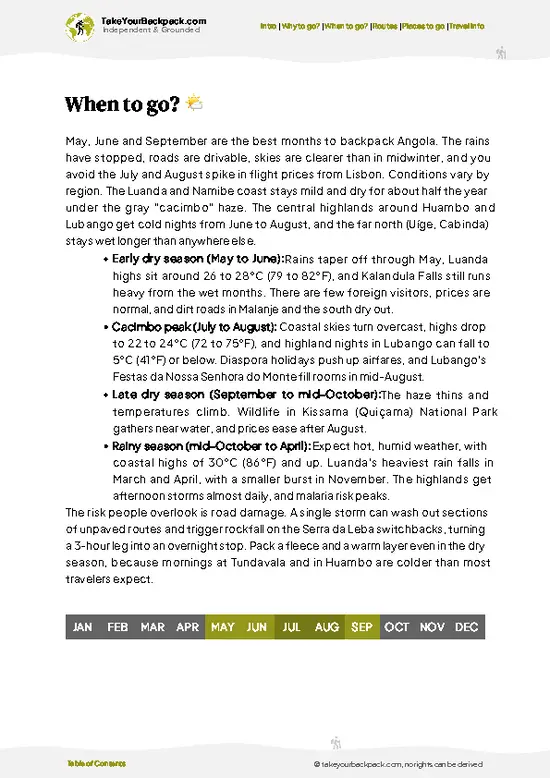
example page 3 from our offline Travel Guide for Angola
example page 4 from our offline Travel Guide for Angola
example page 5 from our offline Travel Guide for Angola
example page 6 from our offline Travel Guide for Angola
example page 7 from our offline Travel Guide for Angola
Loading the map 🌍
CLICK TO FILTER
cities
towns
landmarks
national parks
hikes
beaches
attractions
festivals
regions
SHOW COUNTRY’S BESTSHOW ALL

✨ Why go?
Ranked #8 town in Angola
What makes this town worth visiting

Cangandala earns a place on a route for one reason: the giant sable antelope, Angola’s national animal, survives in the protected woodland of Cangandala National Park. Seeing one is rare and needs a guide or conservation contact, so go for the effort, not a guarantee. The town works as a short stop of one night beyond Malanje, combined with sights such as Kalandula Falls. Slow travelers, wildlife enthusiasts and solo travelers comfortable with Portuguese will get the most from it. The social scene is low-key: local cafés, roadside grills and conversation with residents rather than hostel dorms. Bring cash, food supplies and patience, and you will find a side of Angola few visitors see.

💡 HighlightsWhat this place is best known for

  1. Cangandala National Park: A miombo woodland sanctuary created to protect the giant sable antelope, with tall grass, termite mounds and open glades. Access normally requires prior permission and a guide. Go in the dry season, roughly May to September, when visibility is better. Allow a half to full day.
  2. Town market: Stalls sell cassava, dried fish, tomatoes, fruit and basic goods, with the smell of smoke and frying dough hanging over it. Mornings are busiest. Snacks start at a few hundred kwanzas, and a plate of food costs a few thousand. Allow 1 hour.
  3. Roadside grills and local eateries: Grilled chicken or fish with funge and beans is the standard, eaten outdoors at plastic tables. Early evening is best, when the heat drops. Allow 1 hour.
Day trips from Cangandala reach Malanje city, Kalandula … read more 👉
  1. Cangandala National Park: A miombo woodland sanctuary created to protect the giant sable antelope, with tall grass, termite mounds and open glades. Access normally requires prior permission and a guide. Go in the dry season, roughly May to September, when visibility is better. Allow a half to full day.
  2. Town market: Stalls sell cassava, dried fish, tomatoes, fruit and basic goods, with the smell of smoke and frying dough hanging over it. Mornings are busiest. Snacks start at a few hundred kwanzas, and a plate of food costs a few thousand. Allow 1 hour.
  3. Roadside grills and local eateries: Grilled chicken or fish with funge and beans is the standard, eaten outdoors at plastic tables. Early evening is best, when the heat drops. Allow 1 hour.
Day trips from Cangandala reach Malanje city, Kalandula Falls and the black rock formations of Pungo Andongo. Start with the market in the morning, since talking to locals there is the easiest way to learn how to arrange park access.
Spotted a mistake or missing something? Contact us.
🏘️ NeighborhoodsHow different areas shape the experience

Cangandala is a small town in Malanje Province, and it is compact enough that you can read it on foot in an afternoon, though the heat decides your pace.
  • Main road and market area: The EN230 road to Malanje runs through the middle, and the market sits beside it. Expect red dust, diesel, charcoal smoke, grilled fish and the sweet smell of ripe bananas and mangoes. Stalls sell phone credit, cassava, beans and cold drinks. Go early, before 9 a.m., when the light is soft and the sellers are still setting up. An experienced traveler carries small kwanza notes, because vendors rarely have change for large ones.
  • Residential streets: Low houses, sandy lanes and shaded yards fill the blocks behind the road. Radios, roosters and children playing football are the soundtrack. Walking is easy but unlit after
… read more 👉
Cangandala is a small town in Malanje Province, and it is compact enough that you can read it on foot in an afternoon, though the heat decides your pace.
  • Main road and market area: The EN230 road to Malanje runs through the middle, and the market sits beside it. Expect red dust, diesel, charcoal smoke, grilled fish and the sweet smell of ripe bananas and mangoes. Stalls sell phone credit, cassava, beans and cold drinks. Go early, before 9 a.m., when the light is soft and the sellers are still setting up. An experienced traveler carries small kwanza notes, because vendors rarely have change for large ones.
  • Residential streets: Low houses, sandy lanes and shaded yards fill the blocks behind the road. Radios, roosters and children playing football are the soundtrack. Walking is easy but unlit after dark, so finish your wandering before sunset and carry a headlamp.
  • Railway and river edges: The edges of town fade into tall grass and farmland. It is quiet and good for photos at golden hour. Shade is scarce at midday, so bring water and a hat.
  • Nightlife: There is little beyond a few bars with warm beer, loud kizomba and plastic chairs. Go with a local contact, because places open and close without notice.

⌛️ 1 dayWhat you can realistically do in a day

Cangandala is a small place with one big idea: wildlife conservation in the middle of everyday rural Angola. Plan around the heat and local logistics.

7:30 AM: Breakfast in town. Find fresh bread and sweet tea or coffee near the main road. It is a good moment to ask residents about guides and park rules.

9:00 AM: Town market. Wander the stalls while the produce is fresh. Buy fruit, water and snacks for the day. Everything is within a short walk.

10:30 AM: Park headquarters or arranged guide meeting. If access has been organized in advance, drive or ride to the park edge for a guided look at the woodland and sable habitat. Wear long sleeves for tall grass.

1:00 PM: Lunch. Return to town for grilled fish or chicken with funge. Rest through the hottest hours.

3:30 PM: Village lanes off the main road. … read more 👉
Cangandala is a small place with one big idea: wildlife conservation in the middle of everyday rural Angola. Plan around the heat and local logistics.

7:30 AM: Breakfast in town. Find fresh bread and sweet tea or coffee near the main road. It is a good moment to ask residents about guides and park rules.

9:00 AM: Town market. Wander the stalls while the produce is fresh. Buy fruit, water and snacks for the day. Everything is within a short walk.

10:30 AM: Park headquarters or arranged guide meeting. If access has been organized in advance, drive or ride to the park edge for a guided look at the woodland and sable habitat. Wear long sleeves for tall grass.

1:00 PM: Lunch. Return to town for grilled fish or chicken with funge. Rest through the hottest hours.

3:30 PM: Village lanes off the main road. Walk the quieter back streets, away from the highway, to see houses, small farm plots and children playing football in the dust. Greet people first and ask before taking photos.

6:00 PM: Sunset by the road. Watch the light turn orange over the savanna while charcoal fires start up. Eat early and keep the evening quiet.

🌤️ When to go?Choosing the right time of year

The best time to visit Cangandala is the dry season, roughly May to September, when roads are firm and skies are clear.
  • Dry Season (May to September): Days reach 27 to 31°C (81 to 88°F) and nights drop to 15 to 19°C (59 to 66°F). Rain is almost absent, dust is common and daylight runs about 11.5 hours. Prices for transport stay steady.
  • Hot Transition (October to November): Humidity builds and temperatures climb to 30 to 34°C (86 to 93°F). First storms arrive, and afternoons turn heavy.
  • Rainy Season (December to April): Heavy downpours make dirt tracks slick and slow buses. Temperatures sit around 24 to 30°C (75 to 86°F). Fuel and food prices can rise when roads are damaged.
Plan to arrive in June or July and check road conditions locally before heading to the national park.

source: climatestotravel.comJANJanuary: fair for travelingFEBFebruary: fair for travelingMARMarch: fair for travelingAPRApril: fair for travelingMAYMay: highly recommended for travelingJUNJune: highly recommended for travelingJULJuly: highly recommended for travelingAUGAugust: highly recommended for travelingSEPSeptember: excellent for travelingOCTOctober: excellent for travelingNOVNovember: fair for travelingDECDecember: fair for traveling
angola-city-cangandala v1
© Google |

✈️ The backpacker research shortcutAngola Travel Guide

An offline-friendly backpacking guide with optimized travel routes, ranked highlights, transport advice, and the best areas to stay.
example page 0 from our offline Travel Guide for Angola
example page 1 from our offline Travel Guide for Angola
example page 2 from our offline Travel Guide for Angola
example page 3 from our offline Travel Guide for Angola
example page 4 from our offline Travel Guide for Angola
example page 5 from our offline Travel Guide for Angola
example page 6 from our offline Travel Guide for Angola
example page 7 from our offline Travel Guide for Angola
The digital guide (246 pages) contains:
✅ 71 highlights, ranked by travel appeal
✅ Optimized 7, 14 & 21-day travel routes
✅ Cities, national parks, landmarks, beaches
✅ How to get around
✅ Offline-friendly for travel without Wi-Fi
👉 Click to see all 30+ guide features

📅 Plan smarter in minutes, not weeks
✅ Month by month travel advice
✅ Festivals & national holidays
✅ Budget expectations

🗺️ Go to the right places, skip the overrated ones
✅ Honest pros & cons of destinations
✅ Top hikes, parks & viewpoints
✅ Lesser-known places most travelers miss
✅ Clear “worth it vs skip it” guidance

🛏️ Travel smoothly without rookie mistakes
✅ Best areas to stay
✅ Transport systems explained simply
✅ Common scams & safety advice
✅ SIM cards, money & practical tips

🌍 Understand the country, not just visit it
✅ Culture & traditions
✅ 52 Essential phrases & customs
✅ Festivals worth planning around
✅ Traveler-friendly historical context
✅ Insights that make places more meaningful

📱 Built for real travel conditions
✅ Fully downloadable PDF
✅ Works completely offline
✅ Optimized for phone use
✅ Useful in remote areas & buses
✅ Everything in one place
Stop searching, start planning
Get instant access to your full guide. 30‑day money-back guarantee.
+ Add another guide for just

By proceeding you agree to our terms.
Sent to your inbox immediately after payment • 100% Secure Checkout
Best Backpacking Travel Advisor 2025 tourism awardBest Backpacking
Travel Advisor
2025
What others say about Take Your Backpack Guides:
⭐⭐⭐⭐⭐
Fantastic, amazing amount of information!
⭐⭐⭐⭐⭐
My goodness this is amazing, it's what I've been looking for hats off too you!
⭐⭐⭐⭐⭐
I think this is absolutely BRILLIANT
⭐⭐⭐⭐
Very complete and informative. It's still missing places, but I gotta to commend you
⭐⭐⭐⭐⭐
This is truly amazing, thank you, can't wait to explore it with my kids!
⭐⭐⭐⭐⭐
Awesome resource, thank you!
⭐⭐⭐⭐⭐
This is amazing! Can't wait to explore the ones I haven't seen
⭐⭐⭐⭐
I love this! Well done, great idea.
⭐⭐⭐⭐⭐
Thanks for taking the time to make this gem!
⭐⭐⭐⭐⭐
This might be the best website I've ever seen.
⭐⭐⭐⭐⭐
Congratulations, and thank you so much for your work; it's incredibly valuable.
⭐⭐⭐⭐
In all seriousness I think you did a great job pointing out the important spots
⭐⭐⭐⭐⭐
10/10 very good
⭐⭐⭐⭐⭐
As someone who's only just starting to visit regularly this is awesome, thank you.
⭐⭐⭐⭐
Thank you very much! I'm going to visit my dad, it's going to be very useful!
⭐⭐⭐⭐⭐
This is really cool! We'll be travelling for the first time and this definitely come in handy.
⭐⭐⭐⭐⭐
You are now our minister of culture, congratulations 👨‍💼
⭐⭐⭐⭐⭐
Just wanted to tell you that this is a pearl! Going to follow your recommendations.
⭐⭐⭐⭐⭐
This is so cool. I'll definitely be using the resource for my travels soon.
⭐⭐⭐⭐⭐
This is very impressive! Good work.
⭐⭐⭐⭐⭐
This is an amazing and informative site. Very well done!

🛏️ Where to stay?Best areas and accommodation options

The best place to sleep in Cangandala is near the main road in the town center, where the few guesthouses and rooms for rent are concentrated. Accommodation is extremely limited, with no true hostel scene, so budget travelers rely on simple guesthouses and private rooms. Rooms here are plain, with a fan, a mosquito net if you are lucky, and sometimes a bucket shower when the water stops.

The center works because you can walk to the market for food and to the roadside where minibuses leave, so mornings are easy. It is also lit and has people around into the evening, which matters for safety. Expect … read more 👉
The best place to sleep in Cangandala is near the main road in the town center, where the few guesthouses and rooms for rent are concentrated. Accommodation is extremely limited, with no true hostel scene, so budget travelers rely on simple guesthouses and private rooms. Rooms here are plain, with a fan, a mosquito net if you are lucky, and sometimes a bucket shower when the water stops.

The center works because you can walk to the market for food and to the roadside where minibuses leave, so mornings are easy. It is also lit and has people around into the evening, which matters for safety. Expect noise from trucks, radios and roosters, and bring earplugs.

The alternative is staying in Malanje, about an hour or two away, which has far more beds, restaurants and reliable power, and treating Cangandala as a day visit. Experienced travelers book ahead by phone, carry cash in kwanza, and check for a generator, since power cuts are common.

🚌 Getting aroundGetting around like a local

The center of Cangandala is small enough to cross on foot in 10 to 15 minutes, and walking stops making sense once you head to the park entrance or outlying villages, where distances stretch across dusty tracks with no shade. Traffic is light apart from trucks thundering along the main road, and public transport is informal, so schedules are loose and vehicles leave when full.
  • Walking: Free and the best way to see the market and side streets. Sun is fierce from 11 a.m. to 3 p.m., so move early or late. Sidewalks are patchy, and trucks kick up red dust, so stay to the edge of the road.
  • Motorbike taxis (kupapatas): A short ride in town costs about 200 to 500 kwanza (roughly US$0.25 to 0.55). They are fast and cheap because there is no formal alternative. Agree the price before climbing on, and
… read more 👉
The center of Cangandala is small enough to cross on foot in 10 to 15 minutes, and walking stops making sense once you head to the park entrance or outlying villages, where distances stretch across dusty tracks with no shade. Traffic is light apart from trucks thundering along the main road, and public transport is informal, so schedules are loose and vehicles leave when full.
  • Walking: Free and the best way to see the market and side streets. Sun is fierce from 11 a.m. to 3 p.m., so move early or late. Sidewalks are patchy, and trucks kick up red dust, so stay to the edge of the road.
  • Motorbike taxis (kupapatas): A short ride in town costs about 200 to 500 kwanza (roughly US$0.25 to 0.55). They are fast and cheap because there is no formal alternative. Agree the price before climbing on, and ask for a helmet, which many riders do not have.
  • Shared minibuses (candongueiros): The blue and white vans run toward Malanje and Luanda along the EN230. A seat to Malanje costs roughly 1,000 to 2,000 kwanza (US$1 to 2.20) and takes 30 to 45 minutes. They fill up from early morning and rarely run after late afternoon, so travel before noon.
  • Chartered car with driver: The practical option for the park and rural sites, since public vehicles do not go there. Expect roughly US$60 to 120 per day including fuel. Split it with other travelers, and confirm the route and return time in advance because rainy-season tracks can be impassable.

👛 Costs (as of 16 October 2026)Travel costs and budget guide for Cangandala

Cangandala costs roughly US$35 to 70 a day for a backpacker, and lodging is the biggest swing factor. Prices are quoted in US dollars here for clarity, though locals pay in kwanza.
CategoryBudget RangeLocal Reality
Dorm accommodationUS$15 to 35No dorms exist, so you pay for a basic private room in a guesthouse.
MealsUS$8 to 15Grilled fish, chicken, funge and beans at market stalls and small restaurants.
Local transportUS$2 to 8Motorbike taxis and shared minibuses to Malanje.
Basic activities/entry feesUS$5 to 20Market walks are free, while park access and guides cost more.
Miscellaneous expensesUS$5 to 10Water, phone credit, snacks and small tips.
Total Daily BudgetUS$35 to 88Budget for about US$35 to 70 without a chartered car.
Buy food at the market rather than restaurants, and withdraw kwanza in Malanje, where ATMs are more reliable.
⚠️ Prices can change and everyone travels differently, so take this as a rough guide. Hope it helps you plan your adventure!

🚌 Day tripsEasy escapes and nearby places

Cangandala works as a base for a few focused day trips, but expect to arrange your own transport, since few routes have regular service.
Cangandala National Park: Home to the critically endangered giant sable antelope, this park lies right next to town. Seeing the animals is rare and needs a ranger or guide, so arrange access ahead through conservation contacts in Malanje. Allow a full day, and budget US$80 to 150 with a hired vehicle and guide. Go in the dry season when grass is lower. Many first-timers turn up without permission and get turned away.
👉 Explore Cangandala National Park
Malanje city: About 1 to 2 hours by shared minibus, costing roughly US$2 to 5 each way. The city has a lively market, restaurants and an ATM or two, which you will need. Leave before noon to catch afternoon vehicles … read more 👉
Cangandala works as a base for a few focused day trips, but expect to arrange your own transport, since few routes have regular service.
Cangandala National Park: Home to the critically endangered giant sable antelope, this park lies right next to town. Seeing the animals is rare and needs a ranger or guide, so arrange access ahead through conservation contacts in Malanje. Allow a full day, and budget US$80 to 150 with a hired vehicle and guide. Go in the dry season when grass is lower. Many first-timers turn up without permission and get turned away.
👉 Explore Cangandala National Park
Malanje city: About 1 to 2 hours by shared minibus, costing roughly US$2 to 5 each way. The city has a lively market, restaurants and an ATM or two, which you will need. Leave before noon to catch afternoon vehicles back, because the last ones thin out by late afternoon.
👉 Explore Malanje
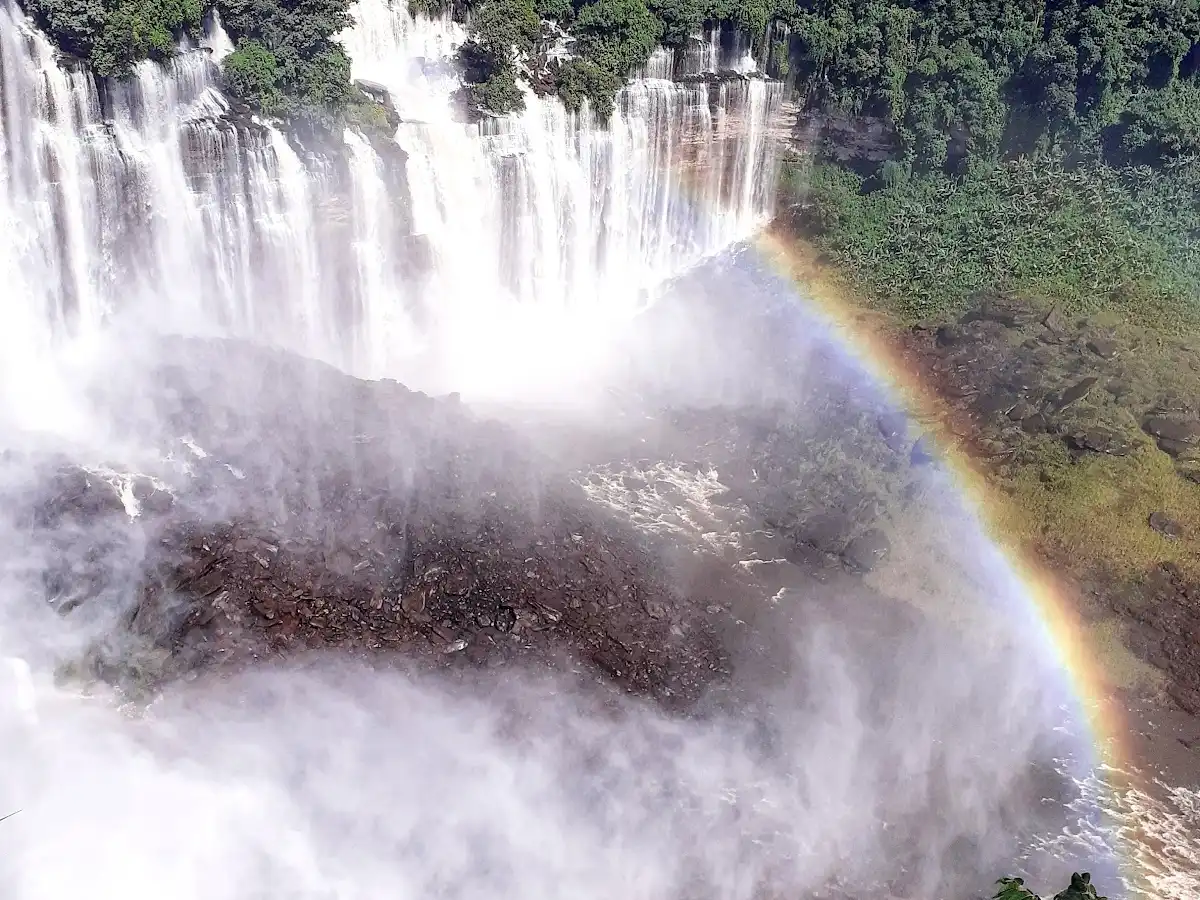
Kalandula Falls: One of Africa’s largest waterfalls by volume, about 400 meters wide and 105 meters high, a few hours away by road. Hire a car with driver and split the cost, around US$70 to 130 per person alone or less shared. Visit from March to June when the flow is thunderous, and go early for rainbows in the spray.
👉 Explore Kalandula Falls

🛡️ SafetyScams, Hazards, and Annoyances

Cangandala is broadly calm, and most problems are small ones. Petty theft can occur around the market, so keep your phone and cash in a front pocket and carry only what you need for the day. After dark, streets are poorly lit and uneven, so walk with a headlamp or take a motorbike taxi. Solo travelers, including women, generally report friendly curiosity, but it is wise to dress modestly and avoid walking alone late. Police or military checkpoints on the main road sometimes ask for ID, so carry a photocopy of your passport, and stay polite and patient. Some roadsides near the park and old conflict zones may still have unexploded ordnance, so stay on well-used paths and never step into untouched bush. Drink only bottled or treated water, and use repellent against malaria-carrying mosquitoes.

FAQFrequently asked questions about Cangandala

Cangandala is worth visiting if you care about wildlife conservation or want a rural stop in Malanje Province, but it is not a major sightseeing town. The draw is Cangandala National Park, home to the giant sable antelope, which is rarely seen and needs advance arrangements. Most travelers combine it with Malanje city and Kalandula Falls.
One night is enough for most travelers, and two days works if you arrange a guided visit to Cangandala National Park. The town itself has little to fill more time beyond the market and roadside eateries. Pair it with Malanje city, about a short drive away, for more accommodation and services.
Cangandala can be reached as a day trip from Malanje city, since the two are linked by the main road and the drive is typically one to two hours depending on conditions. From Luanda, around 350 km away, a day trip is too long and a night stay is more realistic. Hire a driver in Malanje and start early to allow time for the park.
⚠️ Things can change over time, so always validate details locally before you go.

Other Angolan towns near Cangandala

Explore more nearby:

  • Camabatela—Highland farm market, plateau tracks, parish square, Cuanza Norte stopover| 212 km away
  • Gabela—Coffee warehouses, disused rail yard, farm edge, Igreja Matriz| 254 km away
  • Longonjo—Morro do Longonjo, station mornings, Umbundu greetings, farm lanes| 369 km away

💡 Not sure where to go next?
Create a personalized itinerary for Angola including Cangandala and the places that fit your trip.

Generate my itinerary

👉 Discover all towns

Or checkout all Angola has to offer (think cities, towns, villages, national parks, hikes, beaches, festivals)
Country photo of Angola

We 💚 feedbackWhat to keep in mind

I expected an empty highway stop. What surprised me was how much people in Cangandala know about the giant sable, and how proud they are of it. Ask anyone and you get a story, not a shrug. Bring small kwanza notes, download offline maps, and arrange park access before you arrive. The reward is a slow evening that feels truly local.

✍️ Help improve this page!
The information on this page is based on in-depth research, insights shared by experienced travelers, and feedback from the local travel community in Angola. While every effort is made to keep the information accurate and current, conditions can change — so if you spot anything incorrect or outdated, please get in touch.


🙋‍♂️ Give feedback

👋 Meet the founderWho’s Behind Take Your Backpack?

Johan, backpacker and founder of TakeYourBackpackHi, I’m Johan (Netherlands 🇳🇱), the creator of TakeYourBackpack. Over the past 3 decades, I’ve backpacked through 90+ countries across six continents, gaining extensive experience with independent travel, long-term trips, and overland routes.

This site is built on a combination of firsthand travel experience and carefully curated insights from other backpackers. Many guides are based on places I’ve personally visited, while others bring together tips, observations, and practical advice shared by trusted travelers I’ve met along the way.

The goal is to provide realistic, experience-driven guidance — not generic itineraries — so you can explore destinations with better context, clearer expectations, and more confidence.