×

Angola🇦🇴 | best townsYour Guide to the 8 Best towns in Angola

In Angola, towns pulse with distinct rhythms, shaped by their geography and culture. From the coastal charm of Luanda to the rugged heart of Huambo, each locale offers a unique flavor that can significantly enhance your backpacking experience.

The regional differences are striking; coastal towns boast fresh seafood and vibrant markets, while inland areas reveal rich traditions and stunning landscapes. Seasonal nuances also play a role—rainy months can transform trails into muddy challenges, while dry seasons unveil breathtaking vistas.

Choosing the right town impacts everything: the vibe shifts from bustling urban life to tranquil rural settings, affecting your budget and safety. Walkability varies, too; some towns invite you to explore on foot, while others require a bit more planning. Ultimately, the right choice fosters deeper cultural immersion, allowing you to connect with locals and savor the essence of Angola.

By Johan Kruseman 🇳🇱 | Updated June 13, 2026
Explore the best villages in Angola

Why go?Understanding Their Importance

Angola’s towns pulse with a unique rhythm, shaped by a blend of cultural heritage and geographic diversity. Unlike many other countries, Angola’s towns reflect a rich tapestry of influences, from Portuguese colonial architecture to indigenous traditions. This fusion creates a vibrant atmosphere that invites exploration.

The pace of life in these towns often contrasts sharply with the frenetic energy of urban centers. Here, you can savor the slow unfolding of daily routines, where local markets brim with fresh produce and the scent of grilled fish wafts through the air. Culinary experiences are deeply rooted in tradition, with dishes that tell stories of the land and its people.

However, travel in Angola requires careful planning. The infrastructure can be challenging, with roads that vary … read more 👉
Angola’s towns pulse with a unique rhythm, shaped by a blend of cultural heritage and geographic diversity. Unlike many other countries, Angola’s towns reflect a rich tapestry of influences, from Portuguese colonial architecture to indigenous traditions. This fusion creates a vibrant atmosphere that invites exploration.

The pace of life in these towns often contrasts sharply with the frenetic energy of urban centers. Here, you can savor the slow unfolding of daily routines, where local markets brim with fresh produce and the scent of grilled fish wafts through the air. Culinary experiences are deeply rooted in tradition, with dishes that tell stories of the land and its people.

However, travel in Angola requires careful planning. The infrastructure can be challenging, with roads that vary from well-paved highways to rugged paths. This means that while some towns are easily accessible, others may demand a commitment of time and effort. The trade-off is significant: opting for a more remote town can lead to deeper cultural immersion but may also mean longer travel times and less certainty in logistics.

Climatic conditions also play a role in the travel experience. The dry season offers clearer skies and more comfortable temperatures, making it ideal for exploration. In contrast, the rainy season can transform trails into muddy challenges, affecting accessibility.

Ultimately, the towns of Angola matter because they encapsulate the spirit of a nation still finding its footing after years of conflict. They offer travelers a chance to engage with a culture that is both resilient and welcoming, making the effort to reach them worthwhile. Understanding these nuances will enrich the journey, turning each visit into a meaningful experience.
Behind the Scenes of Selection
The list of best towns in Angola is created based on charm, local culture, atmosphere, hidden gems, and visitor appeal. If you feel a town is missing in this list, please let us know.

When to go?Timing Your Visit for the Best Experience

Seasonality shapes the experience of towns across Angola. The dry season, typically from May to October, brings clear skies and cooler temperatures. This is when local life thrives. Streets buzz with activity. Markets overflow with fresh produce. Festivals celebrate culture and community. The atmosphere is electric, making it the prime time for exploration.

Weather plays a crucial role. The dry months offer comfortable conditions, ideal for wandering through towns and soaking in the local vibe. Daytime temperatures are warm but manageable, while evenings cool down, inviting outdoor gatherings. In contrast, the rainy season from November to April transforms the landscape. The air becomes thick with humidity, and downpours can disrupt travel plans. However, this season also brings lush greenery … read more 👉
Seasonality shapes the experience of towns across Angola. The dry season, typically from May to October, brings clear skies and cooler temperatures. This is when local life thrives. Streets buzz with activity. Markets overflow with fresh produce. Festivals celebrate culture and community. The atmosphere is electric, making it the prime time for exploration.

Weather plays a crucial role. The dry months offer comfortable conditions, ideal for wandering through towns and soaking in the local vibe. Daytime temperatures are warm but manageable, while evenings cool down, inviting outdoor gatherings. In contrast, the rainy season from November to April transforms the landscape. The air becomes thick with humidity, and downpours can disrupt travel plans. However, this season also brings lush greenery and vibrant flora, creating a different kind of beauty.

Optimal months for visiting align with the dry season. This is when towns are most accessible, and local events are plentiful. However, shoulder seasons—just before and after the peak months—can provide a unique experience. Fewer tourists mean a more intimate connection with the local culture. Prices may also drop, allowing for a more budget-friendly trip.

Trade-offs exist in every season. The rainy season, while less popular, offers a quieter experience. Travelers willing to brave the weather may find hidden charms and a slower pace of life. Peak periods, especially during major festivals, can lead to crowded streets and higher costs. Planning around these times is essential for a smoother experience.

Understanding these seasonal dynamics is key to making the most of a visit to Angola’s towns. Each season offers distinct rewards, shaping the rhythm of local life and the richness of the experience.

town hoppingHow to Combine towns Into One Trip

Traveling through Angola requires a thoughtful approach to maximize the experience while minimizing fatigue. Start by clustering towns within regions. For instance, the coastal towns of Luanda and Benguela offer a vibrant mix of urban life and beach relaxation. This pairing allows for a seamless transition from city to shore, with just a few hours of travel between them.

Routing logic should prioritize directionality. Moving south from Luanda to Benguela, then further to Lobito, creates a natural flow. Each stop can be explored in a day or two, allowing time to soak in local culture, savor fresh seafood, and enjoy the coastal sunsets. Expect to spend about 24 to 48 hours in each town to truly appreciate the local vibe without feeling rushed.

Common planning mistakes include trying to cram … read more 👉
Traveling through Angola requires a thoughtful approach to maximize the experience while minimizing fatigue. Start by clustering towns within regions. For instance, the coastal towns of Luanda and Benguela offer a vibrant mix of urban life and beach relaxation. This pairing allows for a seamless transition from city to shore, with just a few hours of travel between them.

Routing logic should prioritize directionality. Moving south from Luanda to Benguela, then further to Lobito, creates a natural flow. Each stop can be explored in a day or two, allowing time to soak in local culture, savor fresh seafood, and enjoy the coastal sunsets. Expect to spend about 24 to 48 hours in each town to truly appreciate the local vibe without feeling rushed.

Common planning mistakes include trying to cram too many towns into a short timeframe. This often leads to exhaustion and missed experiences. Instead, focus on quality over quantity. Choose a few key towns and immerse yourself in their unique offerings.

Trade-offs are inevitable. Speed may mean sacrificing depth of experience. Budget constraints can limit comfort, especially in remote areas where accommodations vary widely. Prioritize comfort in travel arrangements, as the roads can be challenging.

Flexibility is crucial. Allow for spontaneous detours or extended stays if a town captures interest. The reward lies in the unexpected moments—like discovering a local festival or sharing a meal with residents. Embrace the journey, and let the rhythm of Angola guide the adventure.

The ListThe Best towns of Angola

1 Ambriz

Atlantic coastline, fishing harbor, colonial-era ruins

Walk along the breezy shoreline, watch fishing boats return, and find remnants of past eras in this coastal settlement.

2 Xangongo

Kunene River, bridge crossing, semi-arid zone

Cross the Kunene and explore a riverside town where water, bridges, and dry landscapes meet at a key regional junction.

3 Gabela

coffee hills, colonial remnants, misty mornings

Wake to cool air and explore a hillside town where coffee production and traces of colonial history remain part of daily life.

angola-city-gabela
© Google |

4 Chibia

cattle markets, arid plains, southern crossroads

Encounter livestock trading and wide-open spaces in a town that serves as a meeting point for southern Angolan routes.

5 Longonjo

railway stop, plateau views, local markets

Pause at a highland town where the railway meets open vistas and daily commerce brings together travelers and residents.

6 Camabatela

coffee plantations, misty highlands, rural crossroads

Travel through rolling hills dotted with coffee farms and discover a quiet town that connects remote communities in Angola’s interior.

7 Cazombo

remote rivers, timber trade, eastern outpost

Reach Angola’s far east and discover a riverside town shaped by isolation, timber transport, and cross-border connections.

8 Cangandala

nature reserve, rare antelope, miombo woodland

Spot unique wildlife in a protected area where miombo forests and conservation efforts attract those seeking Angola’s natural diversity.

Loading the map 🌍

Expert viewPro Tips for Exploring the Best

Expert Commentary


Angola is a land of contrasts, where the pulse of urban life meets the rhythm of the wild. When planning your journey, consider visiting around five to seven towns. This range allows you to soak in the local culture while balancing travel time and logistics. Each town offers a unique slice of Angolan life, but the distances can be deceptive. Roads may be rough, and travel times can stretch longer than expected.

Start with the coastal towns. The salty breeze and the sound of waves crashing against the shore create an inviting atmosphere. Here, you’ll find vibrant markets filled with fresh fish and local crafts. The scent of grilled seafood wafts through the air, mingling with the chatter of vendors. But don’t be fooled by the allure of the coast; infrastructure can be patchy. … read more 👉

Expert Commentary


Angola is a land of contrasts, where the pulse of urban life meets the rhythm of the wild. When planning your journey, consider visiting around five to seven towns. This range allows you to soak in the local culture while balancing travel time and logistics. Each town offers a unique slice of Angolan life, but the distances can be deceptive. Roads may be rough, and travel times can stretch longer than expected.

Start with the coastal towns. The salty breeze and the sound of waves crashing against the shore create an inviting atmosphere. Here, you’ll find vibrant markets filled with fresh fish and local crafts. The scent of grilled seafood wafts through the air, mingling with the chatter of vendors. But don’t be fooled by the allure of the coast; infrastructure can be patchy. Expect to navigate some bumpy roads and limited public transport options. Renting a vehicle is often the best way to explore, but be prepared for a few surprises along the way.

Moving inland, the landscape shifts dramatically. The towns here are often surrounded by stunning natural beauty—rolling hills, lush valleys, and expansive savannas. The air is thick with the scent of earth after rain, and the sunsets paint the sky in hues of orange and purple. This is where you’ll find the heart of Angolan culture. Traditional music fills the air, and the warmth of the locals is palpable. However, the remoteness of these towns can pose challenges. Services may be limited, so stock up on essentials before venturing too far from urban centers.

Safety is a crucial consideration. While many areas are welcoming, some regions may have higher crime rates or political tensions. Always stay informed about local conditions and avoid traveling alone at night. Engaging with local guides can enhance your experience and provide insights that you might miss otherwise. They can help you navigate cultural nuances and ensure you’re respecting local customs.

As you plan your itinerary, prioritize towns based on your interests. If you’re drawn to history, seek out areas with colonial architecture and museums. For nature lovers, towns near national parks offer opportunities for hiking and wildlife spotting. The effort to reach these spots is often rewarded with breathtaking views and a sense of accomplishment. Picture yourself standing atop a hill, the vast landscape stretching before you, feeling the wind on your face. That’s the kind of moment that makes the journey worthwhile.

Budget considerations are also essential. Angola can be more expensive than neighboring countries, especially in tourist hotspots. Accommodations range from basic guesthouses to upscale hotels, so plan accordingly. Eating local food is a great way to save money while experiencing authentic flavors. Street food stalls often serve up delicious meals at a fraction of the cost of restaurants. Just be mindful of hygiene; choose busy stalls where food is freshly prepared.

Travel rhythm is another factor to keep in mind. The pace of life in Angola can be slower than what you might be used to. Embrace this; it’s part of the charm. Allow yourself to linger in a town, soak in the atmosphere, and connect with locals. You might find that the best experiences come from unplanned moments—a conversation with a fisherman, a spontaneous dance at a local festival, or simply watching the world go by from a café.

In terms of logistics, consider the time of year you’re visiting. The dry season, from May to October, is generally the best time for travel. Roads are more passable, and the weather is pleasant. However, this is also peak tourist season, so accommodations may fill up quickly. If you’re looking for a quieter experience, consider the shoulder months, but be prepared for the possibility of rain and muddy roads.

Ultimately, the towns of Angola offer a rich tapestry of experiences. Each one has its own story, its own rhythm. By choosing your destinations wisely and being prepared for the realities of travel here, you’ll uncover the soul of this remarkable country. The effort you invest in navigating its challenges will pay off in moments that linger long after you’ve returned home. Whether it’s the taste of a cold beer after a long day of hiking or the laughter shared with new friends, these are the memories that will stay with you.

✈️ The backpacker research shortcutAngola Travel Guide

An offline-friendly backpacking guide with optimized travel routes, ranked highlights, transport advice, and the best areas to stay.
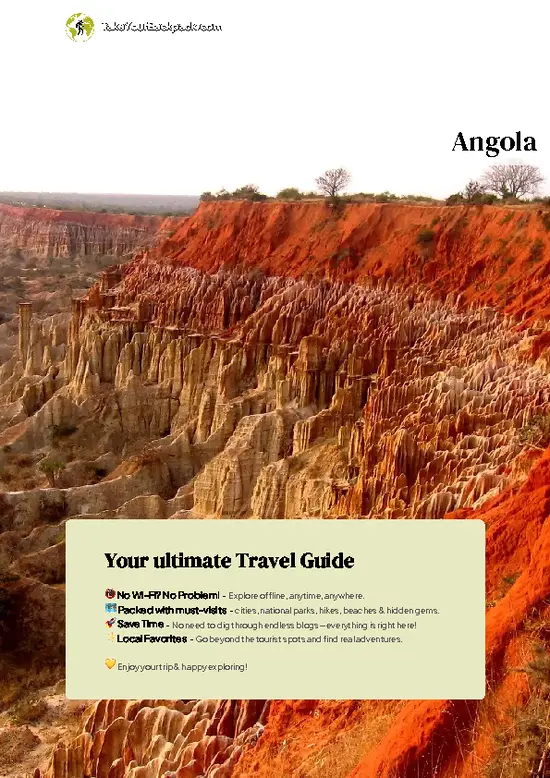
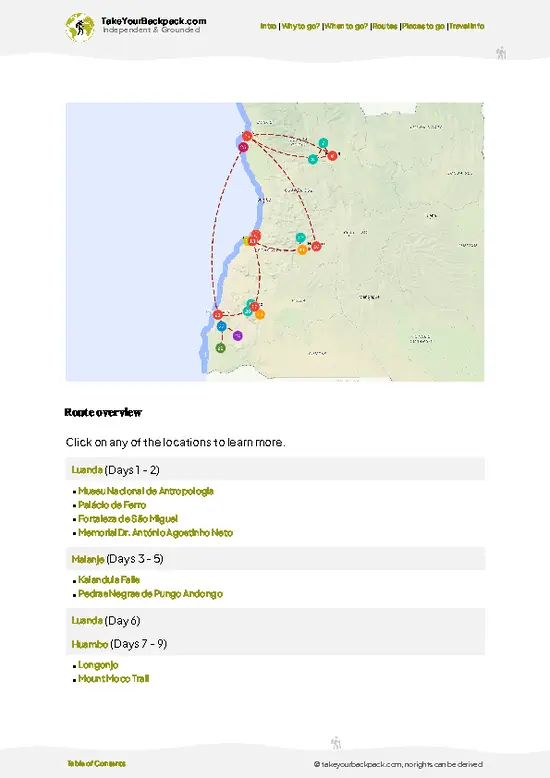
example page 0 from our offline Travel Guide for Angola
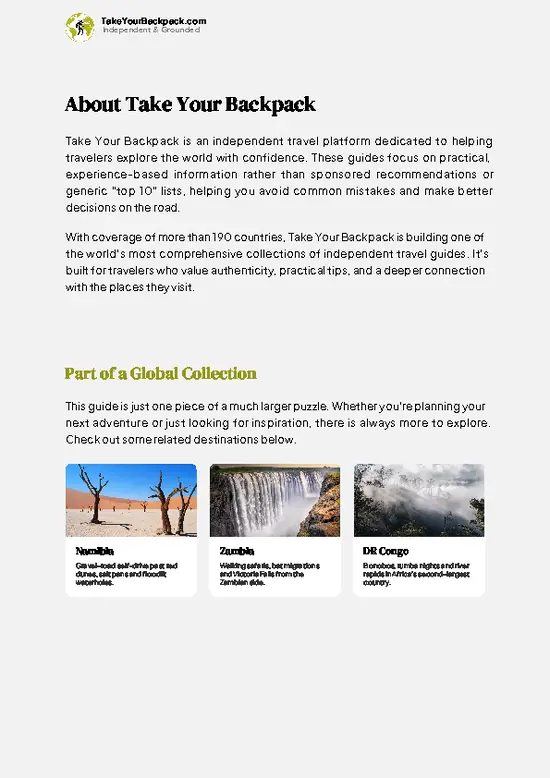
example page 1 from our offline Travel Guide for Angola
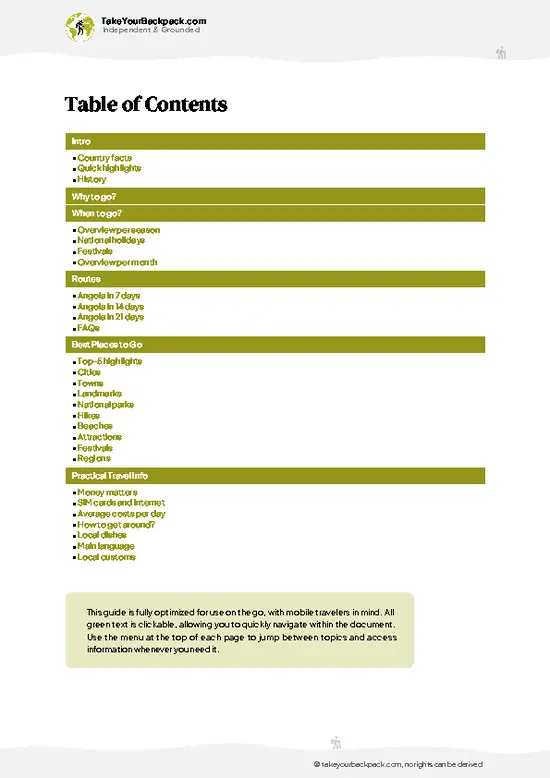
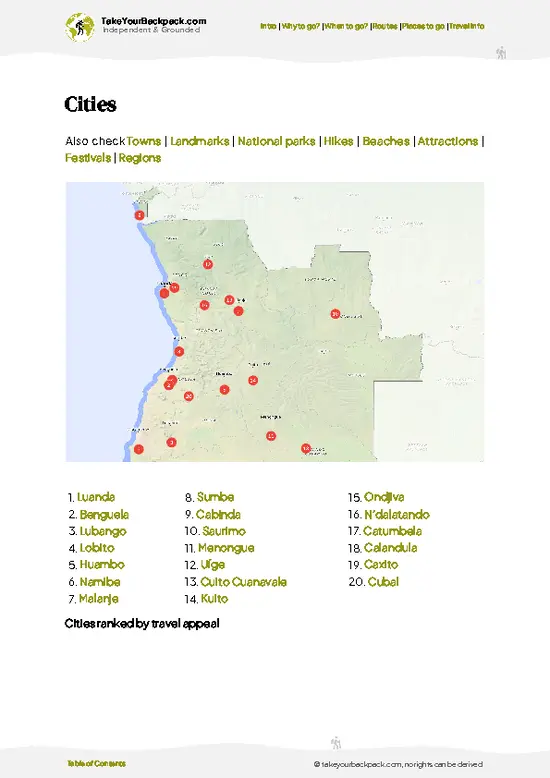
example page 2 from our offline Travel Guide for Angola
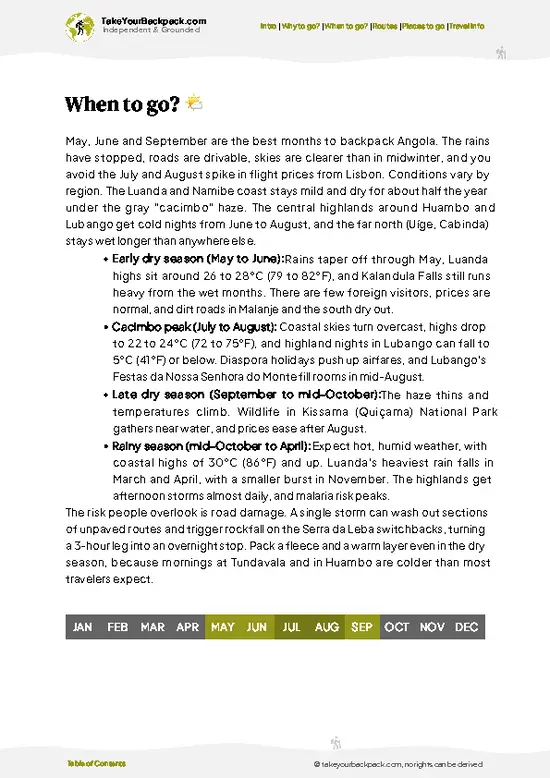
example page 3 from our offline Travel Guide for Angola
example page 4 from our offline Travel Guide for Angola
example page 5 from our offline Travel Guide for Angola
example page 6 from our offline Travel Guide for Angola
example page 7 from our offline Travel Guide for Angola
The digital guide (347 pages) contains:
91 highlights, ranked by travel appeal
Optimized 7, 14 & 21-day travel routes
Cities, national parks, landmarks, beaches
How to get around
Offline-friendly for travel without Wi-Fi
👉 Click to see all 30+ guide features

📅 Plan smarter in minutes, not weeks
Month by month travel advice
Festivals & national holidays
Budget expectations

🗺️ Go to the right places, skip the overrated ones
Honest pros & cons of destinations
Top hikes, parks & viewpoints
Lesser-known places most travelers miss
Clear “worth it vs skip it” guidance

🛏️ Travel smoothly without rookie mistakes
Best areas to stay
Transport systems explained simply
Common scams & safety advice
SIM cards, money & practical tips

🌍 Understand the country, not just visit it
Culture & traditions
52 Essential phrases & customs
Festivals worth planning around
Traveler-friendly historical context
Insights that make places more meaningful

📱 Built for real travel conditions
Fully downloadable PDF
Works completely offline
Optimized for phone use
Useful in remote areas & buses
Everything in one place
Save weeks of stressful planning
Get instant access to your full guide. 30‑day money-back guarantee.


By proceeding you agree to our terms.
Sent to your inbox immediately after payment • 100% Secure Checkout
Best Backpacking Travel Advisor 2025 tourism awardBest Backpacking
Travel Advisor
2025
What others say about Take Your Backpack Guides:
⭐⭐⭐⭐⭐
Fantastic, amazing amount of information!
⭐⭐⭐⭐⭐
My goodness this is amazing, it's what I've been looking for hats off too you!
⭐⭐⭐⭐⭐
I think this is absolutely BRILLIANT
⭐⭐⭐⭐
Very complete and informative. It's still missing places, but I gotta to commend you
⭐⭐⭐⭐⭐
This is truly amazing, thank you, can't wait to explore it with my kids!
⭐⭐⭐⭐⭐
Awesome resource, thank you!
⭐⭐⭐⭐⭐
This is amazing! Can't wait to explore the ones I haven't seen
⭐⭐⭐⭐
I love this! Well done, great idea.
⭐⭐⭐⭐⭐
Thanks for taking the time to make this gem!
⭐⭐⭐⭐⭐
This might be the best website I've ever seen.
⭐⭐⭐⭐⭐
Congratulations, and thank you so much for your work; it's incredibly valuable.
⭐⭐⭐⭐
In all seriousness I think you did a great job pointing out the important spots
⭐⭐⭐⭐⭐
10/10 very good
⭐⭐⭐⭐⭐
As someone who's only just starting to visit regularly this is awesome, thank you.
⭐⭐⭐⭐
Thank you very much! I'm going to visit my dad, it's going to be very useful!
⭐⭐⭐⭐⭐
This is really cool! We'll be travelling for the first time and this definitely come in handy.
⭐⭐⭐⭐⭐
You are now our minister of culture, congratulations 👨‍💼
⭐⭐⭐⭐⭐
Just wanted to tell you that this is a pearl! Going to follow your recommendations.
⭐⭐⭐⭐⭐
This is so cool. I'll definitely be using the resource for my travels soon.
⭐⭐⭐⭐⭐
This is very impressive! Good work.
⭐⭐⭐⭐⭐
This is an amazing and informative site. Very well done!

🛏️ Where to stay?Best Stay Options in Angola

Yes — Angola has some hostels and budget accommodation but options are limited and concentrated in a few cities; expect more guesthouse-style budget hotels than classic dorm hostels, higher prices in major centers, and variable service standards.

Most choices cluster in Luanda (central districts and business suburbs), and coastal towns such as Benguela/Lobito and Namibe (Moçâmedes); central Luanda gives easy access to sights and nightlife but brings heavy traffic and higher rates, business suburbs are quieter and safer but farther from attractions, and coastal towns are cheaper and better for beaches but have fewer evening services and limited transport links.

Carry cash, book ahead because … read more 👉
Yes — Angola has some hostels and budget accommodation but options are limited and concentrated in a few cities; expect more guesthouse-style budget hotels than classic dorm hostels, higher prices in major centers, and variable service standards.

Most choices cluster in Luanda (central districts and business suburbs), and coastal towns such as Benguela/Lobito and Namibe (Moçâmedes); central Luanda gives easy access to sights and nightlife but brings heavy traffic and higher rates, business suburbs are quieter and safer but farther from attractions, and coastal towns are cheaper and better for beaches but have fewer evening services and limited transport links.

Carry cash, book ahead because availability is sparse, and expect occasional basic-utility interruptions and tighter safety awareness in budget areas.

If you enjoy meeting fellow travelers, consider choosing hostels with high ratings for atmosphere. On the other hand, if you prefer having your own space, a hotel might be a better option.

AngolaWhere to Go Next

👋 Meet the founderWho’s Behind Take Your Backpack?

Johan, backpacker and founder of TakeYourBackpackHi, I’m Johan (Netherlands 🇳🇱), the creator of TakeYourBackpack. Over the past decade, I’ve backpacked through 80+ countries across six continents, gaining extensive experience with independent travel, long-term trips, and overland routes.

This site is built on a combination of firsthand travel experience and carefully curated insights from other backpackers. Many guides are based on places I’ve personally visited, while others bring together tips, observations, and practical advice shared by trusted travelers I’ve met along the way.

The goal is to provide realistic, experience-driven guidance — not generic itineraries — so you can explore destinations with better context, clearer expectations, and more confidence.

Get full Angola guide •
Instant download • 91 highlights • Full Offline guide